What Is the Cost of Living in Serbia vs Bulgaria?
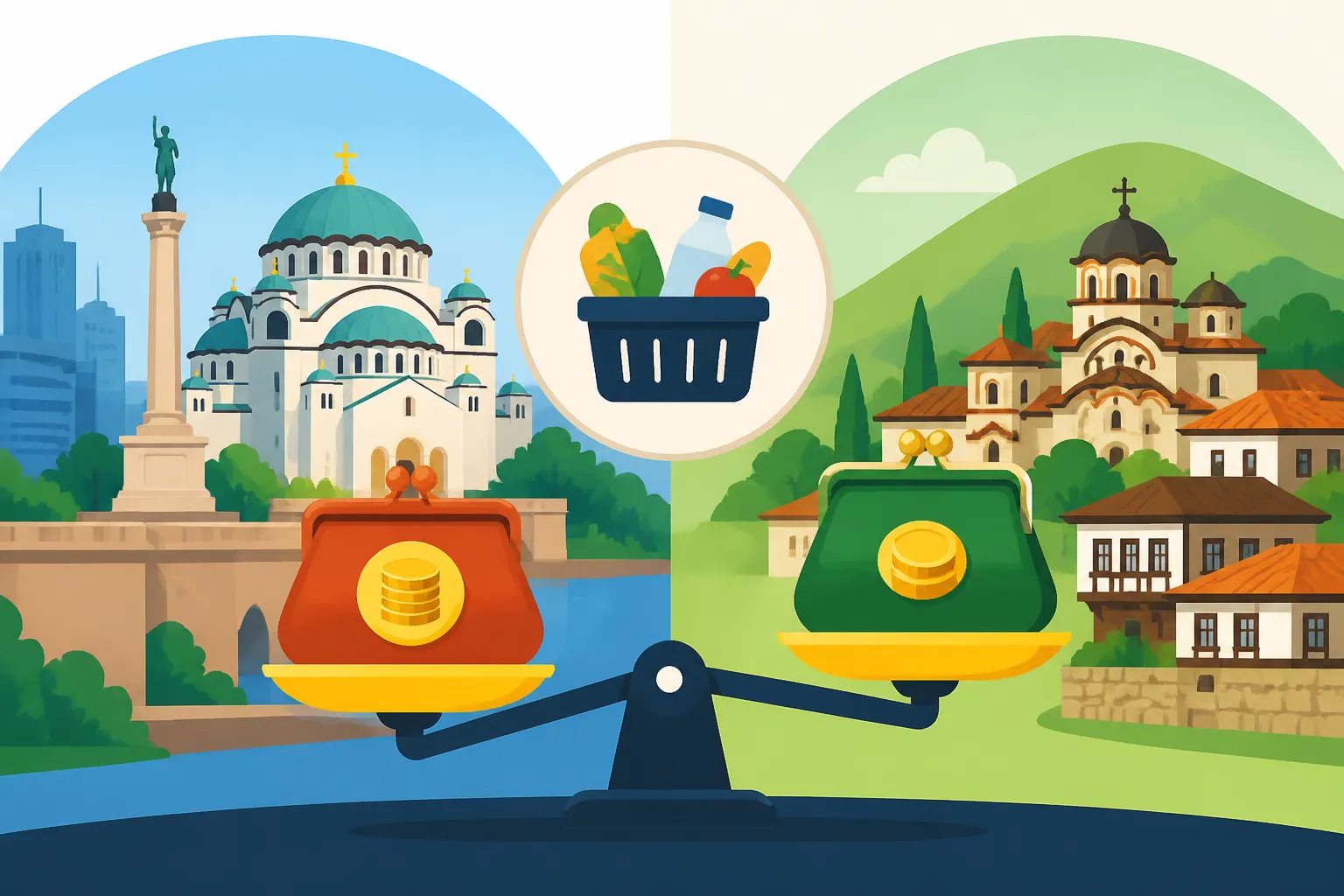
You're standing at a crossroads, aren't you? Serbia or Bulgaria? Both Balkan gems offer a compelling blend of rich culture, history, and a generally lower cost of living compared to Western Europe, making them incredibly attractive to expats. But how do you choose when your budget is a key factor? This guide is here to untangle the financial knots, giving you a real-world, expat-to-expat comparison of what your money can truly buy in Serbia versus Bulgaria.
The Grand Overview: Serbia vs. Bulgaria on Your Wallet
When you first start looking at moving abroad, the "cost of living" numbers can feel a bit abstract, can't they? You see percentages and averages, but what does that really mean for your daily coffee, your grocery run, or finding a decent flat? I've been there, staring at spreadsheets, trying to decipher if my hard-earned cash would stretch further in one place than another. Both Serbia and Bulgaria are undeniably affordable havens, but they have subtle differences that can add up over time.
General Affordability Trends
Generally speaking, both countries offer a significantly more budget-friendly lifestyle than most Western European nations. You'll find yourself pleasantly surprised by how far a modest income can take you, especially if you're earning a salary from a country with a stronger currency. However, it's fair to say that Serbia often edges out Bulgaria slightly in terms of overall lower costs for basic goods and services, particularly outside the capital cities. Bulgaria, being a full European Union member since 2007, has seen a gradual increase in prices, aligning more with broader EU market dynamics, especially for imported goods and certain services. This isn't to say Bulgaria is expensive, not at all, but those EU ties often translate to slightly higher baseline costs in some categories. For instance, you might find everyday essentials like milk or bread to be a few dinars cheaper in a Serbian supermarket than in its Bulgarian counterpart.
Initial Sticker Shock vs. Long-Term Living
My personal experience, and what I've heard from countless other expats, is that the initial sticker shock is almost non-existent in both countries if you're coming from a more expensive region. You'll marvel at the price of a delicious three-course meal for two in Belgrade or Sofia, thinking you've stumbled into a culinary steal. And you have! But as you settle in, the nuances become more apparent. For long-term living, the subtle differences in things like utility bills, public transport passes, or even the price of a local SIM card can start to add up. You'll find that if you embrace local markets for your produce and stick to locally produced goods, both countries remain incredibly cheap. But if you have a penchant for imported specialty items – that specific brand of almond milk, or your favorite French cheese – Bulgaria, with its EU supply chains, might sometimes offer them at a slightly more competitive price, or at least with more availability, than in Serbia where import duties can push prices up. When you're planning your move, don't forget that logistics can be a big part of the initial outlay. Services like Sirelo can really help you get competitive quotes for moving your belongings, whether you're headed to Belgrade or Sofia.
A Deep Dive into Daily Expenses
Let's get down to the nitty-gritty, because this is where the rubber meets the road. Abstract comparisons are one thing, but knowing the actual price of a pint of beer or your monthly rent makes all the difference. We'll compare the typical expenses across key categories, focusing on the capital cities (Belgrade and Sofia) as benchmarks, with notes on smaller cities where relevant.
Housing: Renting and Buying
This is almost always the biggest chunk of anyone's budget, and it's where the differences between Serbia and Bulgaria can be quite noticeable, especially if you're looking at prime locations.
Renting an Apartment
In Belgrade, for a decent one-bedroom apartment in a central area like Vračar or Stari Grad, you can expect to pay anywhere from €400 to €700 per month, sometimes more for a truly modern, high-end place. If you're willing to go a bit further out, say to New Belgrade, or choose a slightly older building, you can find something comfortable for €300-€500. In cities like Novi Sad or Niš, these prices drop significantly, often by 30-50%.
In Sofia, on the other hand, renting a similar one-bedroom apartment in a desirable central neighborhood like Lozenets or Ivan Vazov will generally set you back more, typically €500 to €850 per month. Again, moving to slightly less central areas or older buildings can bring this down to €400-€600. Prices in other major Bulgarian cities like Plovdiv or Varna are also lower, but often not quite as drastically as the drop from Belgrade to Novi Sad.
So, for renting, Serbia generally offers more bang for your buck, especially if you're open to living outside the absolute city center or in a secondary city. Understanding the nuances of How Much Does It Cost to Rent an Apartment in Belgrade in 2026? can give you a more precise picture for Serbia.
Buying Property
When it comes to buying property, both countries have seen prices rise in recent years, but the overall cost per square meter remains significantly lower than in Western Europe.
In Serbia, property prices in Belgrade for new-build apartments in good areas can range from €2,000 to €4,000+ per square meter. Older apartments in good locations might be €1,500-€2,500. Outside Belgrade, prices fall considerably, often below €1,000 per square meter in smaller towns. There are certain rules regarding What Are the Rules for Foreigners Buying Property in Serbia? but it is generally quite straightforward for citizens of many countries.
In Bulgaria, particularly in Sofia, you're looking at €1,800 to €3,500+ per square meter for new-builds in central areas. Plovdiv and Varna also have active markets, with prices ranging from €1,200 to €2,000 per square meter. While the prices can sometimes overlap, Sofia's prime real estate often reaches higher peaks than Belgrade's. Keep in mind that for both countries, taxes and notary fees are additional costs.
Groceries and Dining Out
This is a category where you can truly live like royalty on a budget in both nations, but with slight differences.
Grocery Shopping
For your weekly grocery haul, both Serbia and Bulgaria excel in offering fresh, seasonal produce at incredibly low prices, especially if you frequent local pijaca (markets) instead of just large supermarkets.
In Serbia, a weekly shop for a single person, focusing on local produce, bread, dairy, and some meat, could easily come in at €40-€60. Supermarkets like Maxi, Idea, or Lidl offer good value. Imported goods, however, can be pricier due to duties, so be prepared to adjust your shopping list if you're used to specific international brands.
In Bulgaria, a similar weekly shop might be slightly higher, perhaps €50-€75. Supermarkets like Billa, Kaufland, and Lidl are popular. While local produce is also cheap, being in the EU, Bulgaria might have a wider selection of European imported goods, and sometimes at slightly more competitive prices, than Serbia. Still, both are remarkably cheap compared to the West.
Dining Out
Oh, the joy of eating out in the Balkans! You can indulge frequently without breaking the bank in either country.
In Serbia, a casual meal at a local restaurant (kafana) can cost €7-€12 per person, including a drink. A three-course meal for two at a mid-range restaurant in Belgrade might be €30-€50. A local craft beer is typically €2.50-€4. Fast food, like a delicious pljeskavica from a street vendor, is a couple of euros.
In Bulgaria, similar prices apply, though perhaps leaning towards the higher end of the range. A casual meal might be €8-€15, and a mid-range dinner for two in Sofia could be €35-€60. A local beer will be around €2.50-€4. So, while both are great, you might notice that extra euro or two in Bulgaria.
Utilities and Connectivity
These are essential, and their costs can significantly impact your monthly budget.
Utility Bills
This is an area where Serbia generally has a clear advantage. Utilities in Serbia for an 85 sqm apartment (electricity, heating, water, garbage) typically range from €80 to €150 per month, heavily dependent on the season and your heating usage. Heating is usually the biggest variable, especially central heating in winter. You can learn more about How Do I Set Up Electricity After Moving to Serbia? or Understanding Water and Central Heating Bills in Serbia.
In Bulgaria, for a similar sized apartment, utility bills tend to be slightly higher, often falling in the €100 to €200 range. Electricity and heating costs, especially in Sofia, can be a bit steeper. Again, being an EU member often means higher regulatory costs and energy prices that align with broader European trends.
Internet and Mobile Service
Connectivity is crucial for modern life, and both countries offer reliable and affordable options.
In Serbia, a fast fibre optic internet package for your home can cost €20-€30 per month. Mobile plans with ample data, calls, and texts are typically €10-€20. Operators like Telekom Srbija, Yettel, and A1 are prevalent.
In Bulgaria, home internet packages are similarly priced, around €20-€35. Mobile plans are also very competitive, usually €10-€25. Operators include A1, Yettel (formerly Telenor), and Vivacom. If you're traveling between the two or across Europe, an eSIM from a provider like Airalo can be an absolute lifesaver, ensuring you're always connected without hunting for local SIMs. It's especially handy when you're first arriving and need to navigate.
Transportation Costs
Getting around is generally quite affordable in both Serbia and Bulgaria.
Public Transport
In Serbia, a monthly public transport pass in Belgrade costs around €25-€30. Single tickets are €0.80-€1. Taxis are also very reasonably priced compared to Western standards.
In Bulgaria, a monthly public transport pass in Sofia is similar, around €25-€30. Single tickets are also in the €0.80-€1 range. Taxis are also affordable, but always make sure the meter is on or agree on a price beforehand. For detailed insights on getting around Serbia, check out How to Use Public Transport in Belgrade
Car Ownership and Fuel
If you bring or buy a car, the costs are broadly similar, but with slight variations. Fuel prices in both countries fluctuate with global oil prices but are generally comparable to each other and slightly lower than in Western Europe. Expect to pay around €1.60-€1.80 per litre for petrol in both countries. Car insurance and registration fees are also relatively low in both, but Bulgaria, again, might have slightly higher requirements and costs due to EU regulations.
Healthcare and Wellness
Healthcare is a big one for expats, and both countries have their systems.
Healthcare Access
In Serbia, the public healthcare system (RFZO) is generally good but can involve long wait times and language barriers. Expats employed in Serbia contribute to the RFZO and can access it. Private healthcare is very affordable and popular among expats, with consultations often costing €25-€50. You can delve into How Serbia's Health System Works: The RFZO and Private Care Explained (2027) for a full rundown.
In Bulgaria, as an EU member, citizens and legally residing foreigners are generally covered by the National Health Insurance Fund (NHIF). However, many expats still opt for private health insurance to bypass queues and access English-speaking doctors. Private consultations are similarly priced, €30-€60. For those considering private options, How Much Does Private Health Insurance Cost in Serbia in 2026? might offer a useful comparison for expected premiums.
Gym Memberships and Wellness
Gym memberships in both countries are a fraction of the cost in many Western nations. In Belgrade, a monthly gym membership can range from €20 to €40. In Sofia, it's a similar story, perhaps €25 to €45. Wellness services like massages or spa treatments are also very affordably priced in both.
Entertainment and Lifestyle
This is where you can truly stretch your budget and enjoy life!
In Serbia, tickets to the cinema are around €5-€7. A concert or theatre performance might be €10-€30. Nightlife in Belgrade is legendary and very affordable, with drinks often costing €3-€6 in most bars. Historical sites and museums often have minimal entrance fees or are free.
In Bulgaria, entertainment costs are quite comparable. Cinema tickets are €6-€8. Cultural events are similarly priced. Sofia's nightlife is also vibrant, with drink prices often mirroring those in Belgrade.
Income vs. Outgo: Earning Potential and Disposable Income
It's all well and good to talk about how cheap things are, but it only really matters in relation to how much you're earning. If your income isn't keeping pace, even low costs can feel like a burden. This is where the Serbia vs. Bulgaria debate gets a little more complex.
Average Salaries and Job Markets
This is arguably the most significant factor impacting your overall financial picture.
In Serbia, the average net salary in Belgrade hovers around €900-€1000 per month as of early 2024, but this varies wildly by sector. The IT sector, for example, sees significantly higher salaries, often well over €1,500-€2,500+ for experienced professionals. Other sectors like teaching English can be €600-€900. While the cost of living is lower, local salaries in many sectors might not be as high as you'd find in the EU. You can get more insights on How Much Is the Average Salary in Serbia in 2026? and What Is the Average Salary in Serbia's Tech Sector?.
In Bulgaria, being an EU member has generally pushed average salaries higher, especially in competitive sectors. The average net salary in Sofia is often reported to be around €1,100-€1,300 per month. The IT sector, a major driver of the Bulgarian economy, offers excellent salaries, frequently exceeding €2,000-€3,000+ for experienced individuals. For many expats, especially those in tech or working for international companies, the earning potential in Bulgaria might be slightly better on average.
So, while Serbia might be cheaper to live in, if you're looking for local employment, Bulgaria often offers a higher average income, which can balance out its slightly higher costs. This is particularly true if you are a highly skilled professional in an in-demand industry.
Impact on Your Savings and Lifestyle
This is where your personal circumstances truly dictate which country wins.
If you're an expat earning a salary from abroad in a strong currency (USD, EUR, GBP), then Serbia's slightly lower cost of living will likely translate into more disposable income and greater savings potential. Your foreign salary will go further for rent, groceries, and leisure activities, leaving more in your pocket. You could enjoy a very comfortable, even luxurious, lifestyle on an income that would be considered modest in Western countries.
However, if your plan is to find employment locally, then Bulgaria's potentially higher average salaries, particularly in key sectors, might offer a better balance of income and expenditure, leading to a similar or even slightly better quality of life and savings potential, despite the marginally higher costs. For instance, if you secure an IT job paying €2,500 net in Sofia, you might find yourself with more surplus cash after expenses than if you earned €1,800 in Belgrade, even with Belgrade being a bit cheaper overall. It really boils down to your specific income stream.
Here's a quick comparison table for typical monthly expenses in the capital cities:
| Expense Category | Average in Belgrade, Serbia (EUR) | Average in Sofia, Bulgaria (EUR) | Notes |
|---|---|---|---|
| Rent (1-bed central) | €400 – €700 | €500 – €850 | Serbia generally more affordable for similar quality and location. |
| Utilities (85 sqm) | €80 – €150 | €100 – €200 | Serbia often cheaper, especially for heating. |
| Groceries (single) | €40 – €60 | €50 – €75 | Both very affordable, Bulgaria slightly higher for some items. |
| Public Transport (monthly) | €25 – €30 | €25 – €30 | Very similar in capital cities. |
| Internet (unlimited) | €20 – €30 | €20 – €35 | Comparable, both offer good value. |
| Mobile Plan (ample data) | €10 – €20 | €10 – €25 | Comparable. |
| Meal at local restaurant | €7 – €12 | €8 – €15 | Both excellent value, Bulgaria often at the higher end. |
| Mid-range dinner for two | €30 – €50 | €35 – €60 | Good value in both, Bulgaria sometimes a bit more. |
| Gym Membership | €20 – €40 | €25 – €45 | Affordable in both. |
| Beer (local pint) | €2.50 – €4 | €2.50 – €4 | Very similar. |
Note: These are average estimates and can vary significantly based on lifestyle, specific location, and personal choices.
Beyond the Numbers: Other Factors to Consider
Cost of living isn't just about hard numbers; it's about the entire experience. There are intangible factors and often overlooked administrative hurdles that can impact your financial and emotional well-being.
Administrative Fees and Residency Costs
Moving to a new country always involves paperwork and fees. These are often underestimated but can add up.
Visa and Residence Permits
For Serbia, securing a temporary residence permit (boravak) involves various fees, including application fees, administrative stamps, and potentially costs for sworn translations of documents. The process can sometimes be a bit opaque and require multiple trips to government offices, leading to additional transport and time costs. You'll definitely want to understand How to Apply for Temporary Residence (Privremeni Boravak) in Serbia or for those working, How to Apply for the Single Permit for Work and Residence in Serbia to budget effectively.
For Bulgaria, being an EU member means different rules for EU and non-EU citizens. For non-EU citizens, the visa and residence permit process (e.g., for work or study) also involves fees for applications, processing, and document authentication. While the process might be slightly more streamlined due to EU harmonization, it's still a bureaucratic maze with associated costs. Expect to pay similar amounts for these administrative fees in both countries.
Document Translations and Notarisation
Both countries will require official translations and notarization of your documents (birth certificates, marriage certificates, diplomas, etc.). This isn't a trivial cost. For each document, expect to pay €20-€50 for translation and additional fees for notarization or apostille stamps. This cost will be present whether you move to Serbia or Bulgaria, so factor in a few hundred euros for this initial administrative hurdle.
Quality of Life and Cultural Nuances
Money isn't everything, right? The day-to-day experience, the people, the atmosphere – these are invaluable.
Lifestyle and Environment
Serbia, particularly Belgrade, offers a vibrant, energetic atmosphere with a rich history and a strong sense of community. The pace of life can feel more relaxed than Western capitals, yet there's always something happening. Expats often rave about the friendly locals, delicious food, and lively nightlife. However, the air quality in winter, particularly in Belgrade, can be a concern due to heating and traffic, though efforts are being made to improve this.
Bulgaria, especially Sofia, also boasts a lively cultural scene and beautiful natural surroundings, with the Vitosha mountain range just outside the city. It often feels a bit more "European" due to its EU membership, which can mean more modern infrastructure and a wider array of international brands and services. However, some expats find the local bureaucracy can be just as challenging as in Serbia, and the overall pace of life can also be quite relaxed, which can be both a blessing and a curse!
Language and Integration
In both countries, learning some basic local phrases (Serbian or Bulgarian) will go a long way in endearing you to locals and navigating daily life. In larger cities, English is widely spoken among younger generations and in business circles, but outside of these areas, you'll find less English speakers. This is similar for both. From my experience, people in both countries are generally warm and welcoming once you make an effort to connect.
The Moving Process and Hidden Logistics
Don't forget the actual move itself. Transporting your life across borders has its own set of costs.
Shipping and Relocation
Whether you're moving a few boxes or an entire household, international shipping can be pricey. The cost will depend on the volume of your belongings, the distance, and the method of transport. Services like Sirelo can be a great resource here, allowing you to compare quotes from various international movers, potentially saving you a substantial amount. It's a fantastic tool to demystify one of the most stressful parts of moving abroad, regardless of your destination.
Initial Setup Costs
Beyond rent and utilities, remember the initial costs of setting up a home. Even if you rent a furnished apartment, you might need to buy kitchenware, linens, or small appliances. These costs are comparable in both countries, but generally much lower than in Western Europe. You can often find great deals on second-hand items or affordable new goods at local retailers like JYSK or Pepco.
So, while Serbia might offer a slightly cheaper baseline for many expenses, Bulgaria can counterbalance that with potentially higher earning opportunities for local employment. Your personal financial situation – whether you're earning remotely or seeking local work – will be the ultimate determinant of which country allows your money to stretch the furthest. Ultimately, both are fantastic choices for expats seeking an affordable and enriching life experience in the Balkans.
Disclaimer
The information provided in this article is for general informational purposes only and does not constitute financial, legal, or immigration advice. Costs and regulations in Serbia and Bulgaria are subject to change and can vary based on individual circumstances. We strongly recommend consulting with local experts, such as real estate agents, financial advisors, immigration lawyers, or tax professionals, for personalized advice before making any decisions related to moving or living in either country. While we strive to provide accurate and up-to-date information, we cannot guarantee its completeness or correctness at the time of your reading.