What Are the Rules for Foreigners Buying Property in Serbia?
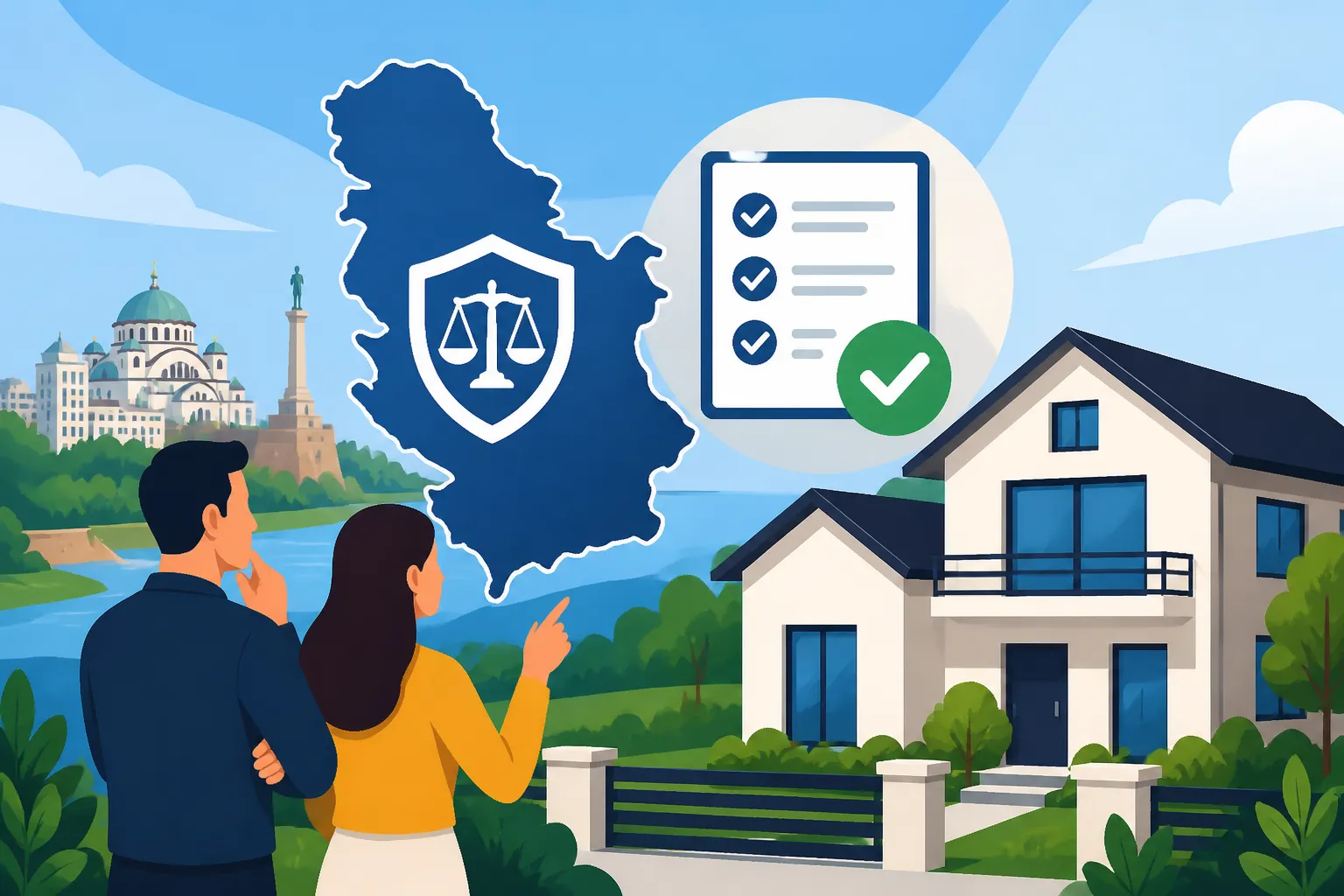
The dream of owning property in Serbia, whether it's a cozy apartment in the bustling heart of Belgrade, a tranquil house in Fruška Gora, or a plot of land with stunning views of the Danube, is a common one for many expats and digital nomads. However, the path to property ownership as a foreigner isn't always straightforward and can feel like navigating a labyrinth designed by Kafka. This guide aims to demystify the rules for foreigners buying property in Serbia, breaking down the legal framework, practical steps, and common pitfalls, so you can approach your property journey with confidence.
Understanding the Reciprocity Principle for Foreigners
One of the foundational rules for foreigners buying property in Serbia is the principle of reciprocity. This often sounds more complicated than it is, but essentially, it means that citizens of your country must also allow Serbian citizens to buy property in their country under similar conditions. Without this, property acquisition can become significantly more restricted.
What is Reciprocity and How Does It Apply?
Reciprocity is a cornerstone of international law and applies directly to real estate transactions in Serbia for non-Serbian citizens. The idea is simple: if a Serbian national can buy a house or apartment in your home country, then you, as a citizen of that country, should generally be able to buy property here in Serbia. This principle is governed by bilateral agreements or general practice between Serbia and other nations.
For instance, if you're from an EU member state, the path to property ownership in Serbia is usually quite smooth, as there are established agreements and practices that ensure reciprocity. Citizens of many other countries, particularly those with good diplomatic relations with Serbia, also enjoy a similar ease. The Ministry of Justice in Serbia maintains a list of countries with which reciprocity exists, and this list is frequently updated. It's always a good idea to verify the current status for your specific nationality. If you’re from a country with limited or no reciprocity, your options for direct ownership might be restricted, often requiring alternative legal structures like forming a Serbian company to hold the property. This adds a layer of complexity, but it's not an insurmountable barrier.
Exceptions to the Reciprocity Rule
While the reciprocity rule is generally quite broad, there are specific types of property that usually fall outside its scope, regardless of your nationality or the reciprocity status of your home country. Agricultural land is typically the most prominent exception. Serbian law places restrictions on foreign ownership of agricultural land, aiming to protect national food security and local farming interests.
This means that even if your country has full reciprocity with Serbia, you likely won't be able to purchase a large farm or extensive agricultural plots directly as a private individual. However, there are nuances. A smaller plot of land that is part of a residential property (like a garden or a small orchard attached to a house) might be permissible. The key distinction often lies in the primary designation and use of the land. If the land is classified purely as "agricultural," it’s generally off-limits for direct foreign private ownership. If your interest is in farming or agribusiness, you might still pursue options like long-term leases or establishing a Serbian company to acquire and manage such land, though this involves significant legal and administrative considerations. Understanding these finer points is crucial, and it’s where local legal advice becomes invaluable.
The Step-by-Step Property Purchase Process for Foreigners
Once you’ve established your eligibility, the real journey begins. Buying property in Serbia, like anywhere else, involves several distinct stages, from finding your ideal home to signing on the dotted line at the notary. While the general flow might feel familiar, certain elements are specific to the Serbian context and, for a foreigner, sometimes surprisingly manual. For those planning their relocation logistics alongside property purchase, considering international moving services like those found through Sirelo can help streamline the entire transition.
Finding and Securing Your Serbian Property
The first step, naturally, is finding the right property. This often starts with online portals like Nekretnine.rs or 4zida.rs, which are popular in Serbia and feature a wide range of listings, from city apartments to rural estates. While these platforms are great for browsing, engaging with a local real estate agent can be a game-changer, especially for foreigners. A good agent will not only have access to a broader selection of properties, including those not publicly listed, but also crucially, can guide you through the local market nuances and potential pitfalls. They can act as your translator and advocate, which is priceless when you’re dealing with Serbian-language documents and practices.
Once you’ve found a property you love, the next stage is securing it. This typically involves making an offer and, if accepted, signing a pre-contract (predgovor). This pre-contract outlines the key terms of the sale, including the price, payment schedule, and the deadline for signing the final purchase agreement. At this point, you’ll usually pay a deposit (kapara), which is typically 5-10% of the purchase price. This deposit signifies your commitment and is usually non-refundable if you back out without a valid reason specified in the pre-contract. Ensure that this pre-contract is meticulously drafted and, if possible, translated and reviewed by a lawyer fluent in both Serbian and your native language. This is a critical legal document, and rushing it can lead to headaches down the line. You might also want to look into how to find a reliable real estate agent in Serbia to ensure you have good support.
The Notary and Registration Process
The core of the property transfer in Serbia happens at the public notary (javni beležnik). Unlike some countries where a lawyer handles the entire conveyance, in Serbia, the notary plays a central and mandatory role in authenticating the sales contract. You and the seller, or your legally appointed representatives, must sign the final purchase agreement (kupoprodajni ugovor) in the presence of a public notary. The notary ensures that all legal requirements are met, that both parties understand the terms, and that the transaction adheres to Serbian law. They will also verify the identities of the parties and ensure the property is free of encumbrances.
After the contract is signed and notarized, the notary will electronically submit the documentation to the Cadastre (Republički geodetski zavod – RGZ), which is the official land registry. This is where your ownership is formally registered. The registration process itself can take some time, often several weeks or even months, depending on the municipality and the complexity of the case. Until your ownership is officially registered in the Cadastre, you are not considered the legal owner, even if you’ve paid the full price and have the keys. During this waiting period, you'll want to stay connected for updates and coordination, and an eSIM from a provider like Airalo can be very useful for reliable internet access on the go. While waiting, you might start exploring The Expat Guide to Setting Up Utilities (Electricity, Water, Heating) in Serbia for your new home. For a deeper dive into this stage, read How to Complete the Property Purchase and Notary Process in Serbia.
Navigating Legal and Administrative Hurdles
Even with the general steps laid out, the actual experience of buying property in Serbia can present a few unique hurdles for foreigners. Bureaucracy and language barriers are common culprits, making a solid support system essential.
Required Documents and Translations
Ah, documents! The expat’s constant companion in Serbia. To purchase property, you’ll need a stack of personal documents, including your passport, and potentially a Serbian tax identification number (PIB). The seller will also need to provide numerous documents related to the property, such as the title deed (list nepokretnosti), energy certificate, proof of payment for utilities, and often, a certificate from the local municipality confirming there are no outstanding debts or claims against the property.
A crucial point for foreigners: all documents that are not in Serbian will need to be officially translated by a sworn court translator (sudski tumač). This is non-negotiable for any legal procedure. Trying to cut corners here will only lead to delays and frustration. Moreover, certain documents originating from your home country might require an Apostille stamp or diplomatic legalization, depending on whether your country is a signatory to the Hague Apostille Convention. This process adds another layer of administrative effort and time. It’s always best to prepare these documents well in advance and verify their specific requirements with your lawyer or notary early in the process to avoid last-minute scrambles. For an idea of how to handle financial aspects, you might consider How to Get a Tax ID (PIB) as a Foreigner in Serbia.
The Role of Lawyers and Power of Attorney
For many expats, hiring a local Serbian lawyer isn't just a good idea; it's practically essential. A lawyer who specializes in real estate and international transactions can navigate the complex legal landscape, review all contracts (pre-contract and final agreement), conduct due diligence on the property, and represent your interests throughout the entire process. This due diligence is paramount; it involves checking the property's legal status in the Cadastre, verifying ownership, ensuring there are no outstanding mortgages or legal disputes, and confirming that the seller truly has the right to sell.
Furthermore, if you can’t be physically present in Serbia for every step, granting a power of attorney (punomoćje) to your lawyer is a common and highly practical solution. This allows them to act on your behalf, signing documents, making payments, and generally managing the purchase process without your constant presence. This power of attorney must also be notarized and, if issued abroad, often apostilled and translated. Trusting your lawyer is key here, so choose someone with a good reputation and clear communication skills, ideally someone who is fluent in English. For more context on the financial aspects, Understanding Property Ownership and the Market in Serbia (2026) offers valuable insights.
Financial Considerations and Ownership Structures
Beyond the legalities of who can buy what, the financial implications and how you structure your ownership are critical components for any foreign property buyer in Serbia. Understanding these elements can save you from unexpected costs and provide clarity on your long-term investment.
Property Taxes and Additional Costs
Buying property in Serbia involves several taxes and additional fees that foreigners need to budget for. The most significant is the Property Transfer Tax (porez na prenos apsolutnih prava), which is currently set at 2.5% of the market value of the property. This is typically paid by the buyer, though it can be negotiated. For brand-new properties being sold for the first time by a VAT-registered developer, there is no Property Transfer Tax; instead, VAT (PDV) is applied, usually at 10% of the sales price, and this is included in the purchase price.
Other costs include notary fees, which are regulated by law and depend on the property's value, but typically range from a few hundred to over a thousand euros for higher-value properties. There are also Cadastre registration fees (usually quite modest), and, if applicable, real estate agent fees (typically 2-3% plus VAT, usually split between buyer and seller or sometimes fully borne by the seller, but check your contract). Legal fees for your lawyer will vary depending on their services. Once you own the property, you'll also be subject to annual property tax (porez na imovinu), which is a local tax levied by the municipality. This tax is usually quite low compared to Western European standards. To dive deeper into these figures, check out The Complete Guide to Property and Transaction Taxes in Serbia (2026) and What Taxes Apply When Buying Property in Serbia?.
Here’s a simplified breakdown of typical purchase costs:
| Cost Item | Typical Rate/Amount | Payer (Usually) | Notes |
|---|---|---|---|
| Property Transfer Tax | 2.5% of market value | Buyer | Applies to resale properties. Not applicable if VAT is paid on new builds. |
| VAT (PDV) on New Builds | 10% of purchase price | Buyer | Included in price by developer. Replaces Property Transfer Tax. |
| Notary Fees | Regulated, based on property value | Buyer | Mandatory; ranges from a few hundred to over a thousand euros. |
| Real Estate Agent Fees | 2-3% + VAT (often split/negotiated) | Buyer/Seller | Highly variable; clarify upfront in agent agreement. |
| Legal Fees | Variable (negotiated with lawyer) | Buyer | Strongly recommended for due diligence and representation. |
| Cadastre Registration Fees | Modest (e.g., 5,000 – 15,000 RSD) | Buyer | Fee for officially registering your ownership. |
| Sworn Translator Fees | Variable (per page/document) | Buyer | For any documents not in Serbian or requiring translation. |
| Apostille/Legalisation | Variable (if documents from abroad require it) | Buyer | For foreign documents like Power of Attorney. |
Obtaining a Mortgage as a Foreigner
Securing a mortgage in Serbia as a foreigner can be more challenging than for a local citizen, but it's not impossible. Serbian banks generally have stricter lending criteria for non-residents due to the perceived higher risk. You’ll typically need to demonstrate a stable income, a good credit history (though international credit scores might not be directly recognized), and often a substantial down payment, sometimes as high as 30-50% of the property value.
Banks will require extensive documentation, including proof of income, employment contracts, bank statements, and often a valid Serbian temporary residence permit. They'll also perform their own property valuation. Interest rates for foreigners might also be slightly higher than for Serbian nationals. Some international banks with a presence in Serbia (e.g., Raiffeisen Bank, UniCredit Bank, OTP Bank) might be more accustomed to dealing with foreign applicants. It’s advisable to speak with several banks early in your property search to understand their specific requirements and eligibility criteria. Don't be surprised if the process feels a bit slow and requires a lot of paperwork; patience is a virtue here. If this is a path you're considering, How Do I Get a Mortgage to Buy Property in Serbia? provides more detailed information. For general financial planning, it's also useful to know How Much Does It Cost to Buy an Apartment in Belgrade?.
Alternative Ownership Structures for Non-Eligible Foreigners
If you find that your nationality doesn't benefit from reciprocity, or if you wish to purchase agricultural land, there are still avenues open to you, primarily by establishing a Serbian legal entity. The most common approach is to set up a limited liability company (DOO) in Serbia. A Serbian company, even if wholly foreign-owned, is considered a domestic legal entity and can typically acquire any type of property, including agricultural land.
This route, however, comes with its own set of responsibilities and costs. You’ll need to register the company, appoint a legal representative (which can be yourself), comply with Serbian corporate law, maintain accounting records, and pay corporate taxes. While it offers a solution to the reciprocity challenge, it transforms your property purchase from a personal transaction into a business investment with ongoing administrative and financial obligations. This option is usually more suitable for significant investments, business ventures, or long-term residents who are already engaged in commercial activities in Serbia. You might find relevant information on How Do I Register a Company in Serbia? or The Complete Guide to Working in Serbia as a Foreigner (2026) if this business route appeals to you.
Disclaimer
The information provided in this guide is intended for general informational purposes only and does not constitute legal, financial, or real estate advice. Laws and regulations in Serbia can change, and individual circumstances may vary. It is highly recommended to consult with a qualified Serbian lawyer, real estate agent, and financial advisor for personalized advice regarding your specific property purchase plans.