Understanding the Cost of International and Private Schools in Serbia
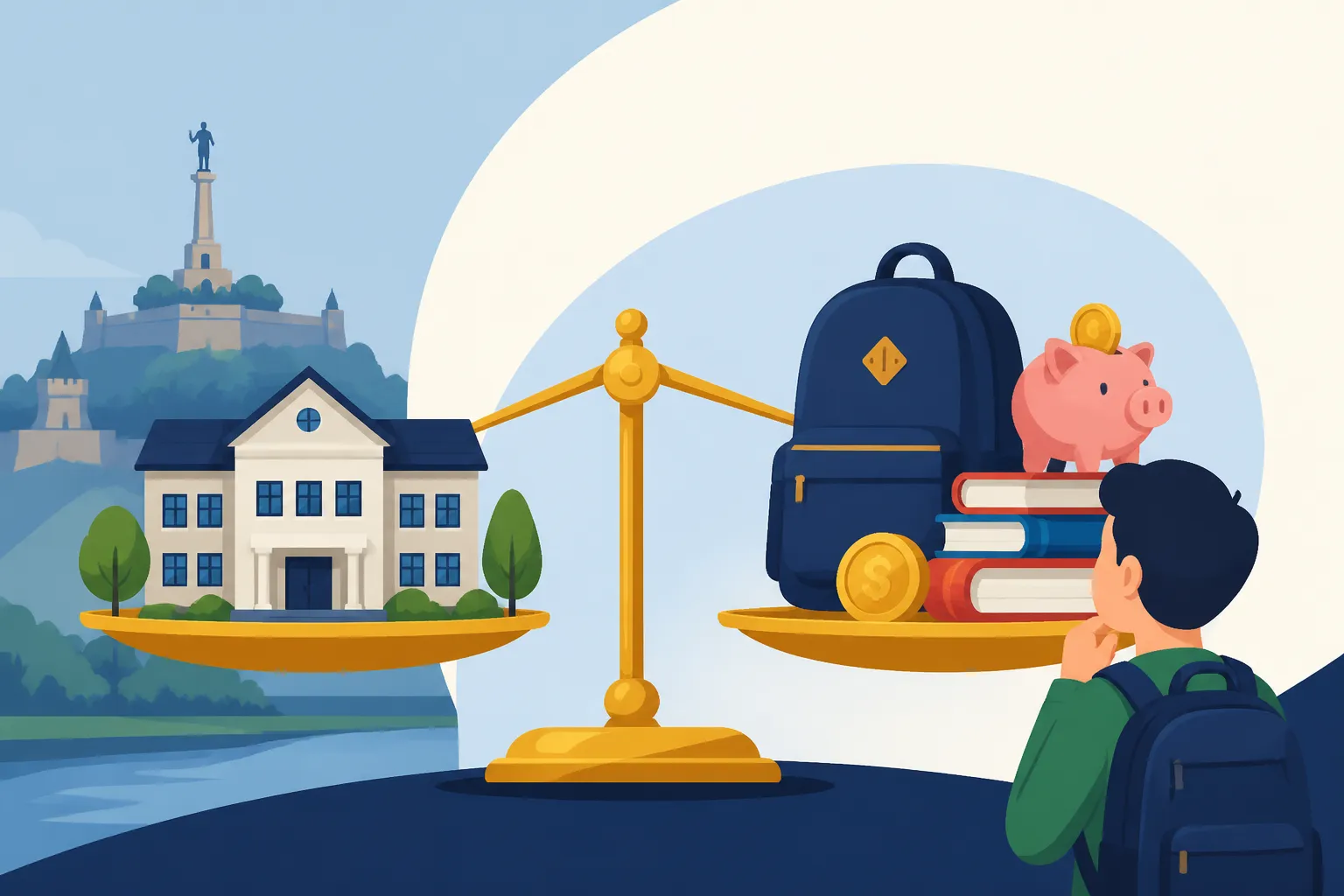
Navigating the education system in a new country can feel like solving a complex puzzle, especially when you're trying to figure out how to give your children the best start without breaking the bank. For many expat families arriving in Serbia, the question of schooling immediately brings up a big one: what are the real costs of international and private schools here? This guide is going to meticulously break down not just the tuition fees, but all those hidden extras and practical considerations so you can plan your family's future with confidence and clarity.
Why International and Private Schools are Often the Go-To for Expats
When you first arrive in a new country, ensuring your children settle in smoothly is often top of mind. For many expat families, international and private schools in Serbia offer a sense of familiarity, continuity, and often, a smoother transition than integrating into the local public school system. It's not just about the curriculum; it's about the entire ecosystem these institutions provide.
Maintaining Educational Continuity and Standards
One of the biggest drivers for choosing an international or private school is the desire to maintain a consistent educational path for your children. If your family is likely to move again, or if your children have been educated in specific systems (like the British, American, or International Baccalaureate programmes), these schools allow them to continue learning under a familiar framework. This means they won't fall behind or struggle to adapt to an entirely new teaching methodology, which can be a huge relief for both parents and kids. Furthermore, these schools often boast higher standards in terms of facilities, teacher-to-student ratios, and access to resources that might be less common in the public system, especially when considering more specialized subjects or extracurricular activities.
Language, Culture, and Community Support
Another significant advantage is the language of instruction. For most expat families, especially those who don't speak Serbian, an English-speaking environment is crucial. International schools provide this naturally, ensuring that academic subjects are taught in a language your child understands, preventing additional stress. Beyond language, these schools often foster a diverse, multicultural environment, mirroring the expat experience itself. Children can connect with peers from various backgrounds, making friends who understand what it's like to be an "outsider" or "newcomer." This can be an invaluable support system, not just for the students, but for parents too, as these schools often have strong parent communities that facilitate networking and information sharing. It’s also often easier to get insights and advice on other aspects of expat life, from where to find an English-speaking doctor to the ins and outs of local bureaucracy, when you're connected to this kind of network.
Key Factors Influencing Tuition Costs
The sticker price for tuition at international and private schools in Serbia isn't just pulled out of thin air. Several critical factors come into play, dictating the varying costs you'll encounter. Understanding these can help you anticipate expenses and choose a school that aligns with both your educational priorities and your budget.
Curriculum Type and Accreditation
The type of curriculum a school offers significantly impacts its operating costs and, by extension, its tuition fees. Schools offering internationally recognized curricula like the International Baccalaureate (IB), British Curriculum (IGCSE, A-Levels), or American Diploma programmes typically have higher costs. This is because these programmes require specific resources, often more specialized teachers who command higher salaries, and ongoing accreditation fees from their respective international bodies. For example, a school adhering strictly to the IB curriculum, with its comprehensive academic and personal development framework, will generally be more expensive than a private school offering a modified local curriculum with some English-language instruction. These accreditations are vital for ensuring the quality and transferability of education, especially if you anticipate future international moves or university applications abroad, but they come at a price.
School Facilities and Location
Location, location, location! Just like with housing, a school's address can influence its price tag. Schools situated in prime urban areas, particularly in Belgrade or Novi Sad, where land and rent are more expensive, tend to pass those costs onto parents through higher tuition. Beyond just the real estate, the quality and breadth of a school's facilities are major cost drivers. Think state-of-the-art science labs, extensive libraries, dedicated art and music studios, swimming pools, sports halls, and well-maintained playgrounds. Schools that invest heavily in these modern amenities and expansive campuses often justify higher fees by offering a richer, more comprehensive learning environment. For instance, a school with multiple sports fields and an Olympic-sized pool will inevitably have higher operational costs than one with more modest provisions. This is often where a significant portion of your tuition goes – funding the infrastructure that supports a high-quality learning experience.
Grade Level and Age of the Student
It's a common pattern across many international schools globally, and Serbia is no exception: the older your child, the higher the tuition fees usually become. This is primarily due to the increasing complexity of the curriculum and the resources required as students progress through different educational stages. Early years (preschool/kindergarten) often have lower fees, sometimes reflecting shorter days or less intensive academic programmes. As children move into primary school, fees generally increase to cover a broader curriculum and more structured learning. The most significant jump usually occurs at the secondary school level, particularly for high school students preparing for university entrance exams like the IB Diploma Programme or A-Levels. At this stage, schools require more specialized teachers (think Physics, Chemistry, Economics, advanced Literature), smaller class sizes for focused instruction, and more extensive career and university counselling services, all of which contribute to higher operational costs and, consequently, higher fees.
Breakdown of Common Fees Beyond Tuition
While tuition fees are the most substantial part of the cost pie, any expat family who has enrolled a child in an international or private school will tell you that it's rarely the only expense. There’s a whole array of additional fees that can add up quickly, sometimes surprisingly so. Budgeting effectively means understanding all these potential out-of-pocket costs.
Enrollment and Application Fees
Before your child even sets foot in a classroom, you'll likely encounter several upfront charges. An application fee is a non-refundable amount, typically a few hundred euros, that you pay simply to have your child considered for admission. It covers the administrative costs of processing paperwork, conducting assessments, and scheduling interviews. If your child is accepted, you’ll then usually be asked to pay a separate enrollment or registration fee. This is often a one-time, non-refundable charge that secures your child's place. These fees can range from a few hundred to over a thousand euros, depending on the school, and are crucial to factor into your initial move budget. Sometimes, there might also be a refundable capital levy or development fee, which is a contribution towards the school’s facilities and infrastructure, often returned when your child leaves the school, though terms vary widely. For families planning their relocation to Serbia, making sure you have these funds readily available is essential, perhaps using services like Sirelo to help organize the move itself, but ensuring you have liquid cash for these immediate school-related payments.
Uniforms, Textbooks, and School Supplies
Unless you're lucky enough to find a school without a uniform policy (rare for international schools), you'll need to factor in the cost of school uniforms. This isn't just one outfit; you'll likely need multiple sets, including regular uniforms, sports uniforms, and sometimes even specific items for events or colder weather. The initial outlay for a full uniform set can be several hundred euros. Beyond uniforms, textbooks are often an additional expense. While some schools include textbook rental in their fees, many require parents to purchase them, especially for secondary students who might need specialized subject books. These can easily run into a few hundred euros per year. And let's not forget general school supplies: notebooks, pens, pencils, art supplies, scientific calculators for older students, and technology like laptops or tablets, which are often a requirement rather than an option in today’s digitally integrated classrooms. These seemingly small costs can accumulate surprisingly fast throughout the academic year.
Transportation and Extracurricular Activities
The logistical challenge of getting your children to and from school is a real one, especially in a bustling city like Belgrade. Many international schools offer private bus services, which provide convenience and safety, but come at an additional cost. These services can range from €100 to €300 per month, depending on your location and the distance to the school. If you opt for public transport or driving, you’ll need to factor in those expenses, as well as the time commitment. Then there’s the wide world of extracurricular activities – sports clubs, music lessons, drama groups, robotics, language classes, and school trips. While some basic activities might be included in tuition, many specialized programmes or competitive teams carry extra fees for coaching, equipment, costumes, or competition entry. School trips, whether local excursions or international educational tours, are also significant additions to the budget, often costing hundreds or even thousands of euros for longer, international trips. These activities are invaluable for a child’s holistic development and social life, but they do require careful financial planning.
Specific School Examples and Their Price Ranges
To give you a clearer picture, let's dive into some of the prominent international and private schools in Serbia, particularly those popular with expat families, and discuss their typical fee structures. Keep in mind that these figures are approximate and can change annually, so always confirm directly with the school.
International Schools in Belgrade
Belgrade is home to the majority of international schools, catering to a diverse expat community. These schools typically offer globally recognized curricula and tend to be at the higher end of the price spectrum.
- International School of Belgrade (ISB): This is one of the most established and well-regarded international schools, offering the International Baccalaureate (IB) programme from early years to diploma. Known for its strong academic reputation and excellent facilities, ISB is generally one of the most expensive options. Annual tuition for elementary grades can start around €15,000-€20,000, while secondary and diploma programme fees can climb to €20,000-€25,000 or even higher. On top of this, expect significant one-time enrollment fees (often in the range of €2,000-€5,000) and other charges for capital levies, bus transport, and certain extracurriculars. It’s a premium experience with a price tag to match, aimed at families prioritizing a seamless, high-quality international education.
- British International School (BIS): Offering the English National Curriculum, IGCSEs, and A-Levels, BIS is another popular choice. Its tuition fees are competitive with ISB, often ranging from €10,000 to €20,000 annually, depending on the grade level. Similar to ISB, there are typically non-refundable registration fees and annual capital fees. BIS also has good facilities and a strong focus on British educational standards, making it attractive for UK expat families or those seeking a British-style education.
- Chartwell International School: Chartwell provides a British-based curriculum for children from nursery to secondary. Their fees tend to be slightly lower than ISB and BIS, with annual tuition often falling in the €8,000-€15,000 range. They also have an application fee and a registration fee. Chartwell is known for its nurturing environment and smaller class sizes, often appealing to families looking for a more intimate school setting while still adhering to international standards.
These schools usually have very professional admissions teams, often fluent in English, which can make the application process much smoother. For parents managing the complexities of moving, including setting up things like reliable internet and mobile data (perhaps with an eSIM from Airalo for instant connectivity upon arrival), contacting these schools directly and early is highly recommended. You can visit their websites or call their admissions offices for the most current and detailed fee schedules.
Other Private and Bilingual Schools
Beyond the larger, well-known international schools, Belgrade and other cities in Serbia offer a growing number of private and bilingual schools. These often provide a blend of international and local curricula, sometimes at a more accessible price point.
- Prima International School: Prima offers an international curriculum in English from early years to primary, with plans to expand. Their fees are generally lower than the top-tier international schools, potentially ranging from €5,000-€10,000 annually. They focus on inquiry-based learning and aim to provide a high-quality education that is perhaps a bit more affordable for some expat families.
- Ruđer Bošković School (International Section): While primarily a Serbian private school, Ruđer Bošković has an international section that teaches in English, following an international curriculum and preparing students for the IB Diploma. This can be a good option for families who want a strong academic environment that also integrates a touch of local culture. Tuition fees for their international programmes can be in the €7,000-€15,000 range.
- Smaller Private Schools: Throughout Belgrade and even in cities like Novi Sad, you'll find various smaller private schools. Some may offer bilingual programmes (Serbian and English), while others might be purely local private schools with a focus on specific educational philosophies. The costs for these can vary dramatically, from as low as €2,000-€5,000 per year for a local private school to €5,000-€10,000 for a more internationally oriented or bilingual option. However, it's crucial to thoroughly vet these smaller schools regarding accreditation, teacher qualifications, and their capacity to support expat children who may not speak Serbian fluently. Understanding how to enrol your child in a school in Serbia involves careful research of all these options.
It's vital to remember that these are just general ranges. Each school will have a detailed fee structure on their website, often updated annually, and they are usually very transparent about what’s included and what’s extra. Don't hesitate to ask for a full breakdown during your initial inquiries.
Additional Costs to Budget For
Just when you think you’ve accounted for everything, those little (and not-so-little) extra costs creep up. For expat families, these can be even more challenging to anticipate, especially when you're still getting to grips with the overall cost of living in Serbia.
Technology and Digital Learning Tools
In today's educational landscape, technology is not just an add-on; it's an integral part of learning. Most international schools have adopted digital learning platforms, and this often translates into requirements for specific devices. For example, many schools mandate that students from a certain grade level onward must have their own laptop or tablet. While some schools might provide devices, it's more common for parents to be responsible for purchasing them. A good quality laptop or tablet suitable for schoolwork can be an investment of €500-€1,500, and this doesn't include software licenses, protective cases, or potential repair costs. Furthermore, reliable home internet is a non-negotiable for homework and online research. You'll need to factor in the monthly cost of a robust internet package as part of your overall education budget. The ability to stay connected, perhaps even through a flexible data plan from Airalo, is also important for parents needing to coordinate with the school or access online resources while on the go.
After-School Care and Tutoring
For many working expat parents, the school day often doesn't align perfectly with their work schedules. This is where after-school care becomes essential. While some schools offer in-house programmes, these typically come with additional hourly or monthly fees. If a school doesn't offer it, or if you prefer a different arrangement, you might need to hire a private nanny or enroll your child in an external after-school club, both of which add to your expenses. Beyond general care, academic support might also be needed. Children transitioning between curricula or struggling with a particular subject might benefit from private tutoring. Tutors in Serbia, especially those experienced with international curricula, can charge anywhere from €15 to €40 per hour, depending on their qualifications and the subject. These costs can quickly accumulate, particularly if tutoring is needed on a regular basis.
Health and Wellness Services
While not directly a school fee, ensuring your child's health and wellness is an inseparable part of their educational journey. Most international schools will require proof of comprehensive health insurance. If you're relying on the Serbian public health system via the RFZO, you'll want to ensure your child has adequate coverage. Many expats opt for private health insurance for their children, which can offer faster access to specialists and English-speaking doctors, but this comes with its own monthly or annual premiums. Beyond insurance, you'll need to budget for regular doctor's visits, dental care, eye exams, and any necessary medications. While Serbia offers affordable healthcare, these are still out-of-pocket expenses that contribute to the overall cost of keeping your child healthy and ready to learn. For a deeper dive into healthcare specifics, you might find our guide on The Complete Guide to Healthcare in Serbia for Expats (2027) particularly useful.
Strategies for Managing Education Expenses
Let's be real, the cost of international education can be a significant chunk of any expat family's budget. But it doesn't mean it's insurmountable. With some careful planning and a bit of savvy, you can manage these expenses more effectively and ensure your child gets a great education without completely draining your bank account.
Exploring Scholarships and Financial Aid
While not as common as in some Western countries, some international and private schools in Serbia do offer scholarships or financial aid to deserving students. These are usually merit-based (academic, athletic, artistic talent) or need-based, designed to support families who demonstrate a genuine financial need. It's always worth inquiring directly with the admissions office about any available programmes. Don't assume that if a school is expensive, they don't offer assistance. Sometimes, a smaller, less prominent school might have more flexibility or specific grants available. The application process for these can be rigorous, often requiring essays, recommendations, and detailed financial disclosures, so be prepared to put in the effort. Getting an early start on this research during your relocation planning, perhaps using resources like Sirelo to organize your move logistics, could free up time for these important applications.
Budgeting and Long-Term Financial Planning
The most straightforward way to manage education costs is through meticulous budgeting and long-term financial planning. Start by creating a comprehensive spreadsheet that includes not just tuition, but all the potential additional fees we've discussed: application, enrollment, uniforms, textbooks, supplies, transportation, extracurriculars, technology, and health. Don't forget to include a buffer for unexpected costs, because those always seem to pop up! Factor these into your overall family budget alongside housing costs (like those detailed in The Complete Guide to Renting an Apartment in Serbia (2027)) and daily living expenses. Consider setting up a dedicated savings account specifically for education costs and contribute to it regularly. If your employer provides an education allowance, understand exactly what it covers and how it's disbursed. Planning several years in advance, especially for secondary education where costs often increase, will give you a clearer picture and help you make informed decisions about your family's financial future in Serbia. Understanding your overall tax obligations, as outlined in Understanding Income Tax and the Flat 10% Rate in Serbia (2026), will also help you determine your disposable income for these expenses.
Considering Alternative Educational Paths
International and private schools aren't the only option, especially if the costs prove too prohibitive. It's important to explore all avenues before making a final decision.
- Public Schools: For families planning a longer stay in Serbia and willing to embrace a more immersive cultural experience, public schools are tuition-free. The main hurdle is language, as instruction is primarily in Serbian. However, if your child is young, they can often adapt surprisingly quickly. Some public schools in more diverse areas might have experience with foreign students, and there are resources available to help with language acquisition. This route offers deep integration into Serbian society and can be incredibly rewarding, though it requires a significant commitment from both parents and children to overcome the language barrier.
- Homeschooling: While less common for expats, homeschooling is a viable option for some families. It offers maximum flexibility in terms of curriculum, schedule, and cost. However, it requires a dedicated parent or guardian to act as the primary educator and a commitment to providing a rich and stimulating learning environment. You'd also need to research the legal requirements for homeschooling in Serbia, which can be complex.
- Bilingual and Local Private Schools: As mentioned earlier, some private schools offer bilingual programmes (Serbian and English) or a modified local curriculum. These can often be more affordable than the large international schools while still providing some English instruction. For a younger child, starting in a bilingual environment could be a great bridge to eventual fluency in Serbian, potentially opening up public school options later, or at least making the private school fees more manageable. It’s a good middle-ground to consider if the fully international options are out of reach financially. When considering these options, also look at the availability of English-speaking communities in various neighbourhoods, which can greatly impact your overall experience and support network. Our guide on How to Find Family-Friendly Neighbourhoods in Belgrade might offer some geographical insights.
By carefully weighing these alternatives and aligning them with your family's unique needs, financial situation, and long-term plans, you can find an educational path in Serbia that feels right for everyone.
Disclaimer
Please remember that all information provided in this article, especially regarding school fees and costs, is intended for general informational purposes only and is subject to change. Educational institutions frequently update their fee structures, policies, and curriculum offerings. It is always recommended to contact the specific schools directly for the most current and accurate information relevant to your child's age and desired enrolment year. While we strive to provide realistic and up-to-date guidance, individual circumstances and market fluctuations can impact actual costs.