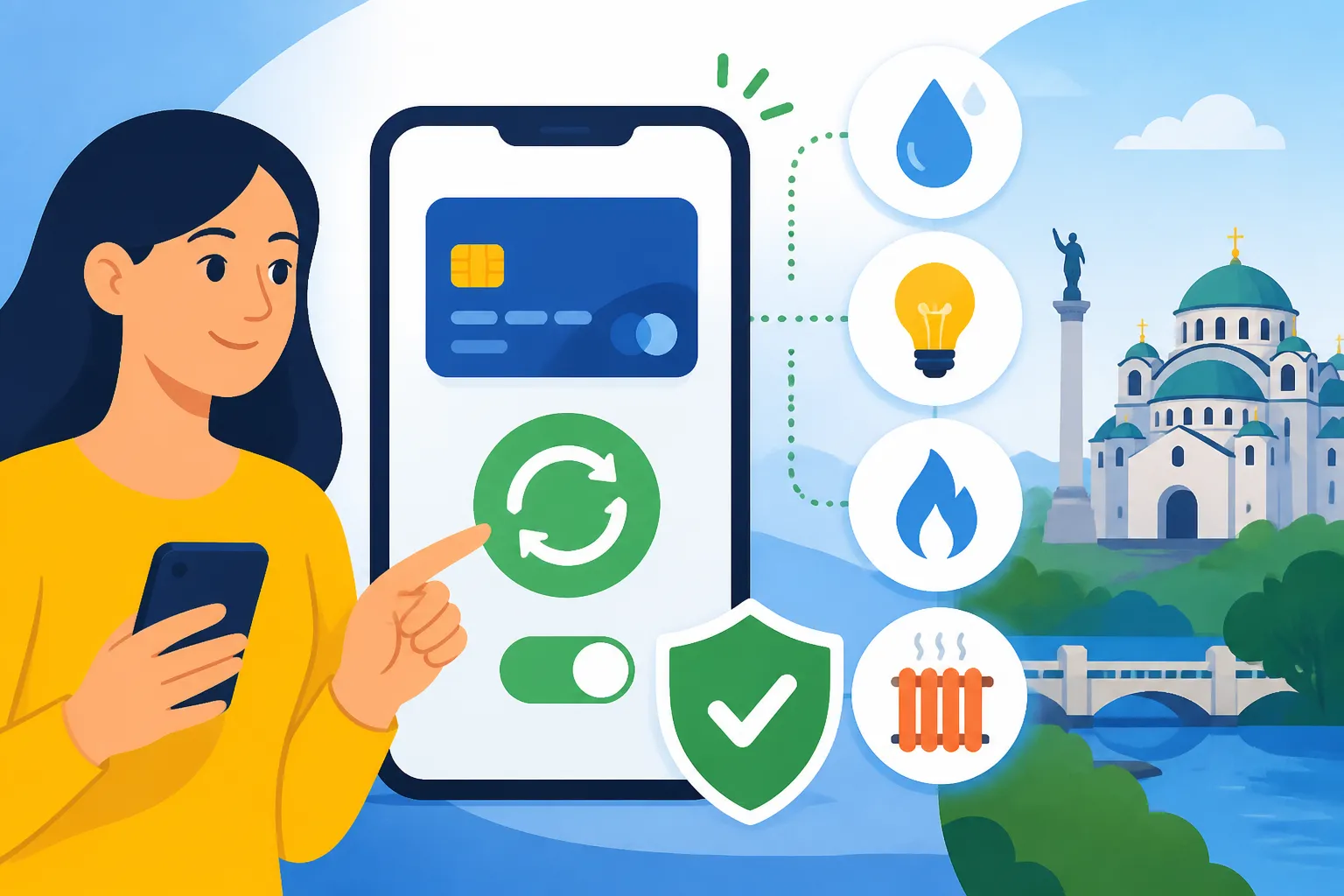
How Do I Set Up Auto-Pay for My Utility Bills in Serbia?
Moving to Serbia often means a new adventure, but it also means navigating a labyrinth of administrative tasks, and honestly, managing utility bills can feel like a whole new level of bureaucracy. Gone are the days of simple, one-click solutions you might be used to, and the fear of missing a payment or spending hours in a queue is real. This comprehensive guide will walk you through the ins and outs of setting up auto-pay for your utility bills in Serbia, helping you streamline your finances and reclaim your precious free time.
The Serbian Utility Landscape: More Than Just One Bill
When you first settle into Serbia, especially in larger cities like Belgrade or Novi Sad, you quickly realize that your utilities aren't just one neat package from a single provider. Oh no, that would be too easy! You'll be dealing with a handful of separate entities, each with their own billing cycles and, often, their own payment quirks. This fragmented system is one of the biggest initial hurdles for many newcomers.
Understanding Your Main Bills
Let's break down the main types of utility bills you'll encounter. Each one represents a crucial service, and each needs careful attention to ensure you don't end up in the dark, without water, or, perhaps worst of all, without internet! Getting a handle on these from day one is key, and it’s part of the comprehensive process of setting up utilities in Serbia.
Infostan: The Multi-Service Bill
In many urban areas, particularly Belgrade, Infostan is the grand orchestrator of many of your household expenses. It's not a utility provider itself, but rather a public enterprise that consolidates charges for several services into one monthly bill. This can include central heating, water supply, sewage, communal waste collection, building maintenance, and even cleaning services for common areas in your apartment building. It’s a convenient concept in theory, but it also means one large bill encompassing multiple vital services. You'll receive this bill, usually a rather thick envelope, in your mailbox around the middle of each month. Understanding water and central heating bills in Serbia often starts right here with your Infostan statement.
Electricity (EPS)
Your electricity bill comes directly from Elektroprivreda Srbije (EPS), the national electricity company. Unlike Infostan, which bundles things, electricity is a standalone bill. You'll get a separate invoice, typically monthly, which details your consumption. Meters are usually read once a month, but sometimes it’s estimated, leading to adjustments later. The invoice itself can be a bit daunting if you're not used to the format, but it clearly states the amount due and the payment deadline. This is one bill you absolutely cannot afford to miss, as power cuts can happen surprisingly quickly for unpaid accounts. How to Set Up Electricity (EPS) in Your Serbia Home is a topic that many expats dive into early on.
Internet, TV, and Mobile Phone Services
These are typically bundled services from private providers. The main players are Telekom Srbija (MTS), SBB, Yettel, and A1. Depending on your package, your internet, cable TV, and mobile phone lines might all be on one bill or separate ones. These bills are generally more straightforward than Infostan or EPS, and the providers themselves often have more modern, user-friendly approaches to payment, including better online portals. If you’re still sorting out your internet, remember that having a reliable connection is crucial, and learning How to Set Up Internet and Mobile Service in Serbia is a must. Many expats also find that knowing How to Choose a Mobile and Internet Provider in Serbia can save them a lot of headaches and money down the line.
The Traditional Payment Gauntlet: Why Auto-Pay is a Sanity Saver
Before we dive into the glorious world of auto-pay, it's important to understand the traditional methods of paying bills in Serbia. For many years, and still for a significant portion of the population, these methods involve a certain degree of ritual and physical presence. This is where the expat frustration often peaks, and why auto-pay isn't just a convenience, it's a genuine lifesaver for your mental health.
The Manual Grind: Post Offices and Bank Branches
The most common way to pay bills in Serbia is by taking your paper invoices to a post office (Pošta Srbije) or a bank branch. You walk in, take a number, wait your turn, hand over your pile of bills, and pay in cash. Sometimes, if you're lucky, they'll accept card payments.
The Reality Check for Expats:
- The Queue: Oh, the queues! Especially at the end of the month, or during peak hours, you can expect to spend a good chunk of your day waiting. This is time you'll never get back.
- The Language Barrier: While staff at some city centre locations might speak a little English, it's certainly not guaranteed. Trying to clarify a charge or understand a receipt in Serbian can be incredibly stressful.
- Carrying Cash: Many smaller post offices or kiosks might prefer or even require cash payments. This means making sure you have enough Dinars on hand, which can be an added logistical challenge if you're not used to carrying large amounts of local currency.
- Multiple Trips: If you have bills from different companies with different deadlines, you might find yourself making multiple trips throughout the month. It’s a chore.
When you're fresh off the plane, perhaps still sorting out your permanent residency or grappling with the logistics of moving all your belongings with a company like Sirelo, the last thing you want is to spend your first few weeks deciphering utility bills and standing in lines. This is where the appeal of auto-pay truly shines.
Setting Up Auto-Pay: Your Step-by-Step Guide to Financial Freedom
Okay, enough about the pain – let's talk about the solution! Setting up auto-pay, or what is often referred to as direct debit or recurring payments in Serbian banking, is entirely possible and highly recommended. It moves you from the "manual grind" to the "set it and forget it" camp. The key to this financial liberation lies primarily with your Serbian bank.
Step 1: Secure Your Serbian Bank Account and Online Banking
This is the absolute foundation. You cannot set up auto-pay for Serbian utilities without a local bank account and, critically, access to their online or mobile banking platform. If you haven't done this yet, prioritize it. Many expats wonder How to Choose the Best Bank for Expats in Serbia, and while options vary, major banks like Banca Intesa, Raiffeisen Banka, OTP Banka, and UniCredit Banka are generally expat-friendly and offer robust online services. Make sure you understand Understanding the Dinar (RSD) and Foreign Currency Accounts in Serbia when you open your account.
What to Look For in a Bank for Auto-Pay:
- Robust Online/Mobile Banking: This is non-negotiable. You'll manage your auto-pay here.
- English Language Support: Many banks offer English interfaces for their online banking, which is incredibly helpful.
- Direct Debit (Trajni Nalog) Options: Confirm with the bank that they support setting up recurring payments for utility bills. Most major banks do.
- SMS/Email Notifications: Opt for payment confirmations or alerts if available, so you know when a bill has been paid.
Once your account is open, ensure you've successfully set up online banking. This might involve downloading an app, getting a token device, or setting up two-factor authentication. This is crucial as you’ll be doing most of your auto-pay setup here. If you're stuck, refer to our guide on How to Set Up Online Banking with a Serbian Bank.
Step 2: Access Your Online Banking Portal
Log into your bank's online platform. Whether it’s via a web browser or their mobile app, this is where the magic happens. The exact navigation will differ slightly between banks, but the core functionality is usually under sections like "Payments," "Transfers," "Standing Orders," or "Direct Debits" (often translated as Trajni Nalog or Plaćanje Računa in Serbian).
Step 3: Find the Utility Payment or Direct Debit Section
Navigate through the menus. You're looking for a section specifically designed for paying bills or setting up recurring payments. Sometimes it's directly labeled "Utilities" ( Komunalije ) or "Bill Payments" (Plaćanje Računa).
Many Serbian banks have integrated systems that allow you to simply input a reference number ( poziv na broj ) from your utility bill, and the system automatically pulls up the details of the biller.
Step 4: Input Your Bill Details
This is where you'll need your physical (or digital) utility bills for reference. For each bill you want to auto-pay, you'll typically need the following information:
- Payment Recipient/Biller: This is the name of the utility company (e.g., JKP Infostan, JP EPS Snabdevanje, SBB d.o.o.).
- Account Number (Broj Računa Primaoca): This is the bank account number of the utility company where the payment needs to go. It’s usually a long string of numbers (e.g., 205-XXXXXXX-XX for Komercialna Banka, 265-XXXXXXX-XX for Raiffeisen, etc.).
- Reference Number (Poziv na Broj): This is absolutely critical. It’s a unique identifier on your bill that tells the utility company who paid and for what. Without it, your payment might not be correctly allocated to your account, leading to headaches. For Infostan, this is usually a series of numbers that uniquely identifies your apartment and billing period. For EPS, it’s also clearly marked. Do not skip this field or enter it incorrectly!
- Amount: When setting up auto-pay, you often have the option to set a maximum amount. This is a smart feature. For example, if your average electricity bill is 5,000 RSD, you might set the maximum to 7,000 RSD. This way, if a bill comes in significantly higher than expected (e.g., 15,000 RSD due to an error), the auto-payment won't process, giving you a chance to review it manually.
- Frequency: Monthly is the standard for utilities.
- Start Date: When you want the auto-pay to begin.
Example Scenario: Setting up Infostan Auto-Pay with Banca Intesa
- Log into Banca Intesa online banking.
- Navigate to "Plaćanja" (Payments) -> "Komunalije" (Utilities) or "Trajni Nalog" (Standing Order).
- Select "JKP Infostan Tehnologije" from the list of billers.
- Enter your unique Infostan subscriber number (found on your bill, usually labeled "poziv na broj" or similar). This subscriber number often links directly to your address and past bills.
- Set the maximum payment amount you're comfortable with (e.g., 10,000 RSD).
- Confirm the details. The bank system might even show you your previous Infostan bills to help verify.
Once confirmed, the bank will automatically deduct the bill amount (up to your specified maximum) each month on the due date.
Step 5: Verify and Confirm
After setting up each auto-pay, double-check all the details. It's a small effort upfront that can save you immense trouble later. Many banks will send an SMS or email confirmation of the setup.
It's a good practice to manually check your bank statement for the first 1-2 months after setting up auto-pay to ensure the payments are going through correctly and being received by the utility companies. You can often see this by checking your online bank statements under "Transfers" or "Payments."
Navigating Challenges and Important Considerations
While auto-pay is fantastic, it's not entirely without its nuances in Serbia. Being aware of potential pitfalls and best practices will help you manage your utilities smoothly.
When Auto-Pay Isn't an Option (Yet)
While most major utilities like Infostan and EPS, and all major internet/mobile providers, support auto-pay through Serbian banks, you might encounter a few exceptions:
- Smaller Local Providers: If you live in a very small town or have a niche service provider (e.g., a very local, independent building management company), they might not have the infrastructure for direct debits. In such cases, you might still need to pay manually via e-banking (manual transfer) or at a physical location.
- New Services: For new services, like a new mobile plan, the first bill might require a manual payment before auto-pay can be activated. Always check.
- Prepaid Services: Obviously, auto-pay isn't relevant for prepaid mobile plans or other services where you pay upfront. However, for initial connectivity while you're getting set up, something like an Airalo eSIM can be a handy way to stay connected and use banking apps.
Monitoring and Adjusting Your Auto-Pay
Even with auto-pay, vigilance is key.
Regularly Check Your Statements
Make it a habit to glance at your bank statements and, if possible, the online portals of your utility providers. This ensures that:
- Payments are being successfully deducted.
- The amounts are correct and within your expected range.
- There are no unexpected charges or errors.
Adjusting Maximum Limits
Utility costs can fluctuate, especially central heating in winter or electricity if you use more air conditioning in summer. If you consistently find your bills hitting or exceeding your auto-pay's maximum limit, you might need to adjust it upwards. Conversely, if your lifestyle changes and you expect lower bills, you can adjust it downwards for added security.
Understanding Bill Cycles and Due Dates
Serbian utility bills typically arrive mid-month and are due around the 25th to the end of the month. Auto-pay generally processes payments on or just before the due date, ensuring you're never late. However, if you set up a direct debit on the 20th for a bill due on the 25th, and the bill arrived on the 15th, it might not process until the next cycle. Always check the first few payment dates carefully.
Here's a quick comparison of traditional vs. auto-pay methods:
| Feature | Traditional Payment (Post Office/Bank Branch) | Auto-Pay (Via Serbian Bank Online) |
|---|---|---|
| Convenience | Low (requires physical presence, queues) | High (set once, then automatic) |
| Time Savings | None (time spent traveling, waiting) | Significant (zero time spent monthly) |
| Payment Method | Predominantly cash, some card acceptance | Direct deduction from your bank account |
| Language Barrier | High potential for issues with staff if you don't speak Serbian | Minimal (online banking often has English options) |
| Risk of Missing Payment | Moderate to High (easy to forget, lose bills) | Low (as long as funds are available) |
| Control/Oversight | High (you manually check each bill before payment) | Moderate (requires checking statements, can set max limits for security) |
| Cost | Small transaction fee per bill at post office/some banks | Often free or minimal fee per transaction from your bank |
| Setup Effort | Low (just turn up with bills) | Moderate (initial setup in online banking) |
This table clearly illustrates why many expats quickly move towards automated solutions. If you are still paying bills manually, our guide on How to Pay Your Utility Bills in Serbia might offer some interim solutions, but auto-pay should be your ultimate goal.
What if a Payment Fails?
Life happens. Maybe you forgot to transfer funds into your Serbian account, or there was a technical glitch. If an auto-payment fails:
- Check your bank's notifications: Most banks will notify you via SMS or email if a direct debit couldn't be processed.
- Act immediately: You'll need to make a manual payment. Log into your online banking and initiate a one-off transfer for the outstanding amount. Be sure to use the correct
poziv na brojand the exact amount. - Contact the utility provider (if necessary): If you're concerned about a service cut-off, particularly for electricity or internet, it might be worth calling the provider after making a manual payment to confirm receipt.
Don't let the administrative tasks of living abroad overwhelm you. Setting up auto-pay for your Serbian utility bills is one of the smartest moves you can make to simplify your expat life. It’s a little bit of effort upfront for a whole lot of peace of mind down the road.
Disclaimer
The information provided in this guide is intended for general informational purposes only and does not constitute financial, legal, or professional advice. While we strive to ensure the accuracy and timeliness of the content, laws, regulations, and banking procedures in Serbia are subject to change. Always consult with a qualified professional or the relevant institutions (your bank, utility providers, or a local legal/financial advisor) for advice tailored to your specific situation. We cannot be held responsible for any outcomes resulting from the use of this information.