How Reliable Is Public Transport in Serbia?
Living in a new country like Serbia, one of the first things you need to figure out is how to get around without your own set of wheels. Many of you expats moving here often wonder, "Just how reliable is public transport in Serbia?" It's a valid question, especially if you're used to highly punctual systems in Western Europe or North America. This guide is here to give you the honest, on-the-ground truth about navigating Serbia's public transport, sharing the good, the bad, and the sometimes baffling.
Belgrade's Public Transport System: An Overview
Belgrade's public transport system, GSP (Gradsko Saobraćajno Preduzeće), is vast, comprehensive, and definitely an experience. It’s the lifeblood of the city, moving hundreds of thousands of people every day, from the bustling city centre to the quiet suburbs. You’ll find a mix of buses, trams, and trolleybuses, each serving different purposes and routes. For many of us who've lived here for years, it's a love-hate relationship – you complain about it, but you also rely on it daily.
When you first arrive, the sheer number of lines and the somewhat chaotic nature of the bus stops can feel overwhelming. Unlike some cities with clear line numbers and digital displays everywhere, Belgrade often requires a bit more local knowledge or a good mapping app. But once you get the hang of it, you'll appreciate how far and wide it can take you, often to places you might not discover otherwise. It's truly a window into local life, from the early morning commuters to the late-night revelers heading home.
The Belgrade Bus Network: The Workhorse
Buses are undeniably the backbone of Belgrade's public transport. They cover almost every corner of the city, from the historic Stari Grad to the modern Novi Beograd and beyond, stretching out to surrounding towns and villages. With hundreds of lines, you're rarely more than a short walk from a bus stop, making them the most practical choice for many journeys. They can be incredibly frequent on major routes during peak hours, sometimes arriving every few minutes, but less so on quieter lines or late at night.
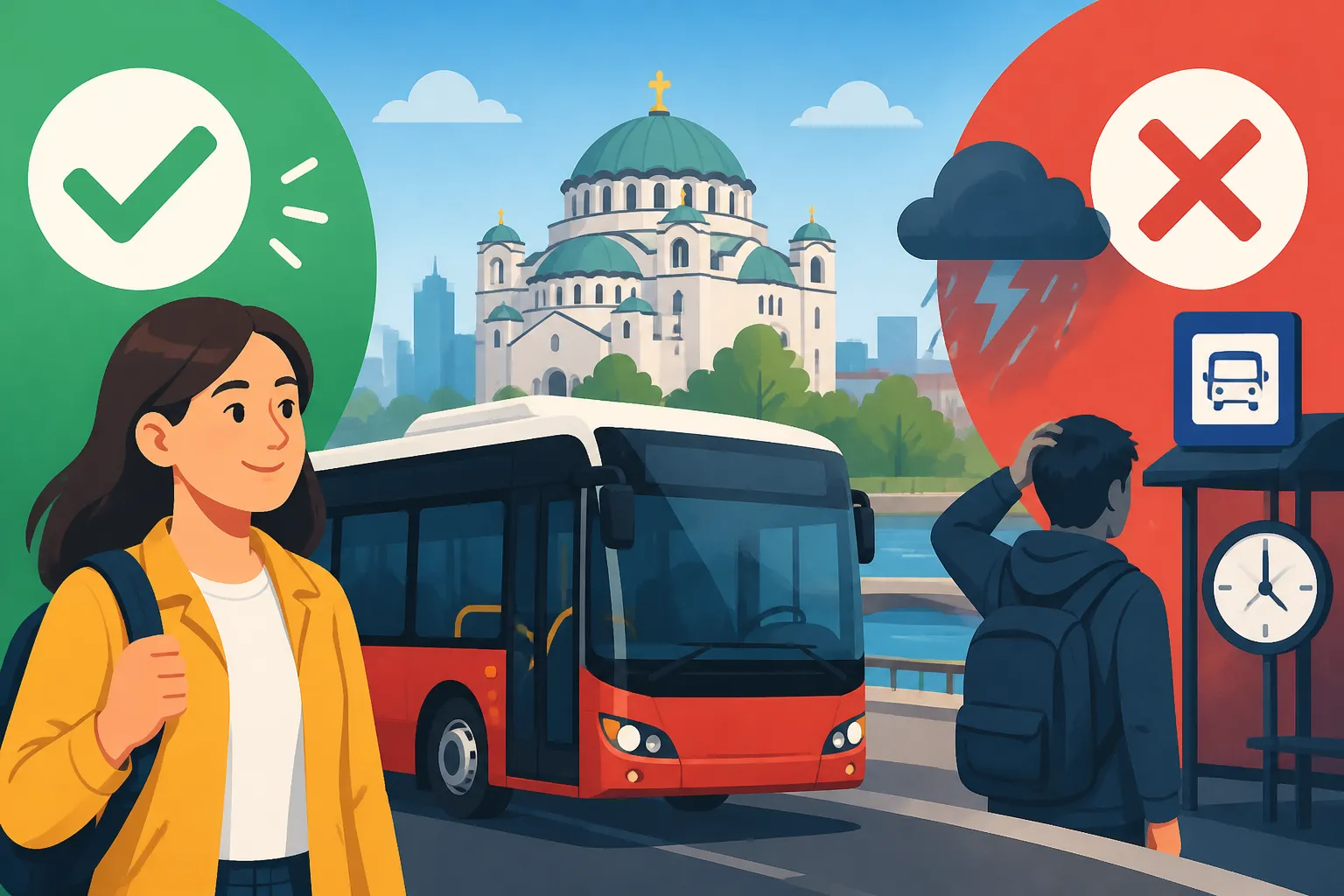
However, the "reliability" of the bus network is a mixed bag, especially if your definition involves precise adherence to a timetable. While there are schedules, heavy Belgrade traffic can often throw them completely off. You might find yourself waiting 20 minutes for a bus that was supposed to come every 7, only for three of them to show up at once. During rush hour, expect buses to be packed like sardines, particularly on popular routes like the 37 or 95. This is where patience becomes your best friend, and maybe a good book or podcast.
Trams and Trolleybuses: A Different Pace
Belgrade's trams and trolleybuses offer a slightly different flavour of public transport, often traversing specific, historically significant routes. Trams, with their distinctive clatter and clang, primarily operate along fixed tracks, serving areas like Bulevar Kralja Aleksandra, Kalemegdan, and around Novi Beograd. There's a certain old-world charm to riding some of the older tram models, though newer, more modern ones are also in service, offering a smoother and quieter ride. They tend to be a bit more predictable than buses since they're less affected by general road traffic congestion, staying on their dedicated tracks for much of their journey.
Trolleybuses, powered by overhead electric lines, run on specific routes and tend to feel like a hybrid between a bus and a tram, offering a quieter ride than their diesel counterparts. They are particularly useful for navigating the hilly parts of the city center, connecting areas like Slavija, Kalemegdan, and parts of Vračar. While they too can get caught in traffic, their fixed routes and electric power make them a somewhat more consistent option than the sprawling bus network. For newcomers, they might be easier to get the hang of than the endless bus lines, offering distinct visual cues along their paths.
Payment Systems and Tickets: BeogradPlus
For a long time, expats and locals alike navigated the slightly confusing BusPlus system. Now, Belgrade has transitioned to BeogradPlus, aiming for a more streamlined and transparent payment experience. The new system allows you to pay for your ride in several ways, which is a welcome improvement. You can still purchase a physical, personalised card (e.g., monthly passes) or an anonymous card (for single rides or top-ups) at kiosks, but increasingly, digital options are becoming popular.
One of the biggest changes is the ability to pay via SMS or through the official BeogradPlus app. For a single ride, you can send an SMS to a specific number (e.g., 9011 for 90-minute ticket) with the zone number, and you'll receive a confirmation SMS that serves as your ticket. This is incredibly convenient if you're caught without a physical card or need a quick ride. Using the app also allows you to buy various ticket types and manage your passes digitally. Always remember to validate your ticket when you board by tapping your card on the reader or ensuring your SMS/app ticket is ready for inspection. Not validating can result in a fine, and inspectors are quite common, especially during peak hours. You can read more about How to Use Public Transport in Belgrade for a deep dive into the practicalities.
Public Transport Beyond Belgrade: Novi Sad and Niš
While Belgrade certainly has the largest and most complex public transport system, Serbia's other major cities also have well-developed networks, albeit on a smaller, more manageable scale. Understanding these can be crucial if your expat journey takes you beyond the capital, perhaps to the charming city of Novi Sad or the historic Niš.
For intercity travel, buses are overwhelmingly the most popular and reliable option. The network connects virtually every town and city in Serbia, often with multiple daily departures. Trains are also available, particularly along major corridors, but their speed and coverage tend to be less extensive compared to the bus system.
Novi Sad's City Transport: Simpler, Smaller
Novi Sad, Serbia's second-largest city, offers a public transport system that feels a lot more relaxed and straightforward than Belgrade's bustling network. The city is smaller, flatter, and generally less congested, which translates to a more predictable bus service. JP GSP Novi Sad operates a network of city and suburban buses, covering all the key neighbourhoods and connecting to surrounding areas. The bus stops are usually clearly marked, and while digital timetables might not be as ubiquitous as you'd find in some Western cities, they are generally respected more than in Belgrade due to less traffic chaos.
Expats in Novi Sad often find it easy to adapt to the public transport here. Many of the city's attractions are within walking or cycling distance, but for longer commutes or reaching areas like Petrovaradin Fortress or the Liman neighbourhoods, the bus system is highly efficient. Payment is typically done via single tickets purchased directly from the driver or by using a monthly pass, which can be acquired at designated points. If you're pondering the best places to live, comparing The Best Places to Live in Serbia for Expats: A Complete Guide might help you decide if Novi Sad's calmer pace suits you.
Niš's Local Network: Getting Around the South
Moving south, Niš, the third-largest city, also relies heavily on its local bus network, operated by Niš-Ekspres and other smaller carriers. Similar to Novi Sad, the system in Niš is less overwhelming than Belgrade's. Buses connect the city centre with residential areas, the airport, and other key points of interest like the Niš Fortress or Ćele Kula. While the fleet might contain a mix of older and newer vehicles, the service is generally consistent and an affordable way to navigate the city.
For those living or visiting Niš, the public transport is adequate for daily needs. Timetables are more of a guideline than a strict rule, but given the city's size, delays are less pronounced than in Belgrade. Tickets are typically bought on board from the driver, making it a simple transaction. It’s worth noting that if you're travelling between these cities, a good internet connection on your phone is invaluable for checking schedules and routes. For seamless connectivity, an eSIM from a provider like Airalo can be a lifesaver, ensuring you're never stranded without data while trying to figure out your next connection.
Intercity Travel: Buses and Trains for Distant Journeys
When it comes to travelling between cities in Serbia, the bus network is by far the most reliable and extensive option. Major bus stations in cities like Belgrade (the Belgrade Bus Station, or BAS) and Novi Sad serve as hubs, offering frequent connections to almost every town and city across the country, as well as international routes. Buses are generally comfortable, well-maintained, and equipped for longer journeys. You can expect to pay a small fee for luggage storage under the bus, so keep some change handy. Purchasing tickets in advance, especially for popular routes or during holidays, is highly recommended to secure your spot.
Train travel, while less comprehensive than the bus network, has seen some significant improvements in recent years, especially with the introduction of new, modern trains on the Belgrade-Novi Sad line. These new trains offer a faster and more comfortable experience, making the journey between these two cities incredibly efficient. However, for other routes, trains can still be significantly slower than buses, and the network is not as extensive. It's best to check current schedules and travel times on the official Serbian Railways (Srbija Voz) website, as service can vary. Whether by bus or train, getting to know Understanding How to Move to Serbia Legally from Abroad is essential before planning your longer domestic travels.
The Expat Experience: Managing Expectations and Practical Tips
As an expat, coming from a country with a potentially different transport culture, navigating Serbia's public transport can be a steep learning curve. The key to a relatively stress-free experience lies in managing your expectations and arming yourself with practical tips. It's not always going to be like clockwork, but it gets the job done, usually with a dose of local charm.
Many of us have stories of waiting endlessly in the snow for a bus that never came, or cramming into a vehicle so full you couldn't see out the windows. These are part of the initiation rite. But you'll also find moments of unexpected kindness, a driver waiting an extra second for you to catch the bus, or a fellow passenger offering directions. It's a very human system, for better or worse.
Punctuality and Crowding: The Serbian Reality
Let's be blunt: if you're expecting Swiss-level punctuality, you're going to be disappointed. Public transport in Serbia, particularly in Belgrade, operates on its own unique rhythm. Traffic, especially during peak hours (roughly 7-9 AM and 3-6 PM), is a major factor, often leading to significant delays. Road construction, unforeseen accidents, or even just heavy pedestrian flow can grind things to a halt. While operators do their best, rigid adherence to a timetable is often an aspiration rather than a guarantee. This is particularly true for buses. Trams and trolleybuses, on their dedicated lines, fare a little better, but they are not immune to general city congestion.
Crowding is another inescapable reality, especially on popular routes and during peak times. You’ll experience buses so full you might wonder how anyone else could possibly fit, only to see more people squeeze in. Personal space is a luxury you'll sometimes have to forgo. While this can be uncomfortable, it's generally safe. However, in such crowded conditions, it’s always wise to be extra vigilant about your belongings to avoid pickpockets. Keep your valuables secure and out of easy reach.
Navigation and Apps: Staying Informed
Navigating the extensive public transport network, especially in Belgrade, would be a nightmare without modern tools. While physical maps exist, they quickly become outdated due to route changes or construction. This is where smartphone apps become your indispensable companions. Google Maps is surprisingly accurate for showing public transport routes and estimated arrival times in real-time, pulling data from the city's tracking systems. Moovit is another excellent option, offering detailed route planning, live tracking, and even service alerts.
To make the most of these apps, a reliable mobile internet connection is crucial. Having data on the go means you can check for delays, find alternative routes, and generally stay informed without panicking. For many expats, getting a local SIM card is a priority, but if you're just arriving or prefer the flexibility, an eSIM from a service like Airalo can get you connected instantly. This allows you to download your apps and start navigating the city from the moment you land, without the hassle of finding a local provider straight away. You can find more tips on How to Set Up Internet and Mobile Service in Serbia to ensure you're always connected.
Safety and Comfort: What to Expect
Generally speaking, public transport in Serbia is safe. Incidents of serious crime are rare, and locals use it daily without issue. However, like in any busy urban environment, petty crime such as pickpocketing can occur, particularly in crowded buses or trams. Always be aware of your surroundings, keep bags securely closed and in front of you, and avoid flashing valuables.
Comfort levels vary greatly depending on the vehicle. You'll encounter older buses and trams that might lack air conditioning in the summer or have less comfortable seating. On the flip side, newer vehicles are regularly introduced, especially in Belgrade, offering air-conditioning, more modern seating, and sometimes even Wi-Fi. It's a bit of a lottery, but the trend is towards modernization. During winter, buses are generally well-heated, providing a welcome respite from the cold. For a broader understanding of daily living, you might want to look at The Complete Guide to Cost of Living in Serbia for Expats, which often touches on transport costs as well.
Costs, Accessibility, and Future Outlook
Understanding the economic aspects and the practicalities for all users, including those with special needs, is important. Public transport in Serbia is incredibly affordable, a definite upside for expats managing their budgets. However, this affordability sometimes comes with trade-offs in terms of infrastructure and accessibility.
Looking forward, there’s a clear commitment to improving and modernizing the system, which bodes well for the future reliability and user experience.
Affordability: A Major Plus
One of the biggest advantages of public transport in Serbia, especially when compared to Western European or North American cities, is its sheer affordability. A single ride ticket in Belgrade, purchased via SMS or the app, is incredibly cheap. Monthly passes offer even better value, especially for regular commuters. This low cost significantly contributes to the overall Cost of Living in Serbia for Expats, making daily commutes and city exploration accessible to almost everyone, regardless of their budget.
This affordability is often a pleasant surprise for newcomers and helps balance out some of the frustrations related to punctuality or crowding. For many expats, the cost-effectiveness means that owning a car for city travel is often unnecessary, saving significantly on fuel, parking, and maintenance. Even when compared to other daily expenses, such as How Much Does It Cost to Rent an Apartment in Belgrade in 2026?, public transport remains a minor part of your monthly outgoings.
Accessibility Challenges: Not Always Smooth
While efforts are being made, accessibility remains a significant challenge for public transport in Serbia. Many older buses and trams are not equipped with ramps or designated spaces for wheelchairs or strollers, making it difficult for individuals with mobility impairments or parents with young children. Even on newer vehicles that do have ramps, drivers may not always activate them without being asked, or the ramp might not be fully functional.
Bus stops often lack proper curb cuts or shelters, and crowded platforms can be difficult to navigate. If you or a family member relies on a wheelchair, or if you're frequently out with a baby in a stroller, you'll need to factor these challenges into your daily planning. It's not impossible, but it requires more forethought and sometimes a bit of assistance from fellow passengers or the driver. When planning your initial setup in Serbia, it's a good idea to consider all aspects of daily life, including accessibility for services like utilities, as highlighted in guides like The Expat Guide to Setting Up Utilities (Electricity, Water, Heating) in Serbia.
Here's a quick overview of public transport comparison in major Serbian cities:
| Feature | Belgrade (GSP) | Novi Sad (JP GSP Novi Sad) | Niš (Niš-Ekspres) |
|---|---|---|---|
| Modes | Buses, Trams, Trolleybuses | Buses (City & Suburban) | Buses (City & Suburban) |
| Network Size | Extensive, Covers entire metro area | Moderate, Covers main city & suburbs | Moderate, Covers main city & suburbs |
| Punctuality | Varies greatly, often affected by traffic | Generally better, less traffic congestion | Fair, less severe delays than Belgrade |
| Crowding | High on popular routes, especially peak hours | Moderate, comfortable outside peak hours | Moderate, comfortable outside peak hours |
| Payment System | BeogradPlus (SMS, App, Card at Kiosks) | Tickets from Driver, Monthly Passes | Tickets from Driver |
| Affordability | Very low | Low | Low |
| Accessibility | Improving slowly, still significant challenges | Limited, older fleet poses issues | Limited, similar challenges to Novi Sad |
| Modernization | Ongoing, new vehicles periodically introduced | Gradual, mix of old and new fleet | Gradual, mix of old and new fleet |
The Road Ahead: Improvements and Investment
Despite its quirks and challenges, Serbian public transport is not static. There's a noticeable, albeit gradual, push towards modernization and improvement. In Belgrade, for instance, you'll see newer buses and trams slowly replacing older models, offering a more comfortable and environmentally friendly ride. Investment in new payment technologies, like the BeogradPlus app, signifies a move towards greater efficiency and user-friendliness. The government is also investing in infrastructure projects, such as new road construction and dedicated public transport lanes, which should, in theory, improve punctuality in the long run.
The future also holds the promise of a Belgrade Metro system, a project that has been discussed for decades but is now finally taking shape. While it's still many years away from full completion, the first lines are under construction, promising to revolutionize urban mobility in the capital, potentially offering a truly reliable, high-speed option. These developments, along with continuous efforts to streamline services and expand routes, suggest that the reliability of public transport in Serbia is on an upward trajectory, making it an increasingly viable and attractive option for residents and expats alike. To stay informed on how these changes might impact your daily life, keeping an eye on local news and expat forums, or consulting guides like Understanding the Belgrade Bus, Tram and Trolleybus Networks, can be very helpful.
Disclaimer
The information provided in this guide is for general informational purposes only and does not constitute professional advice. While we strive to keep the information up-to-date and correct, public transport systems, rules, and regulations in Serbia can change frequently. Always check official sources for the most current information.