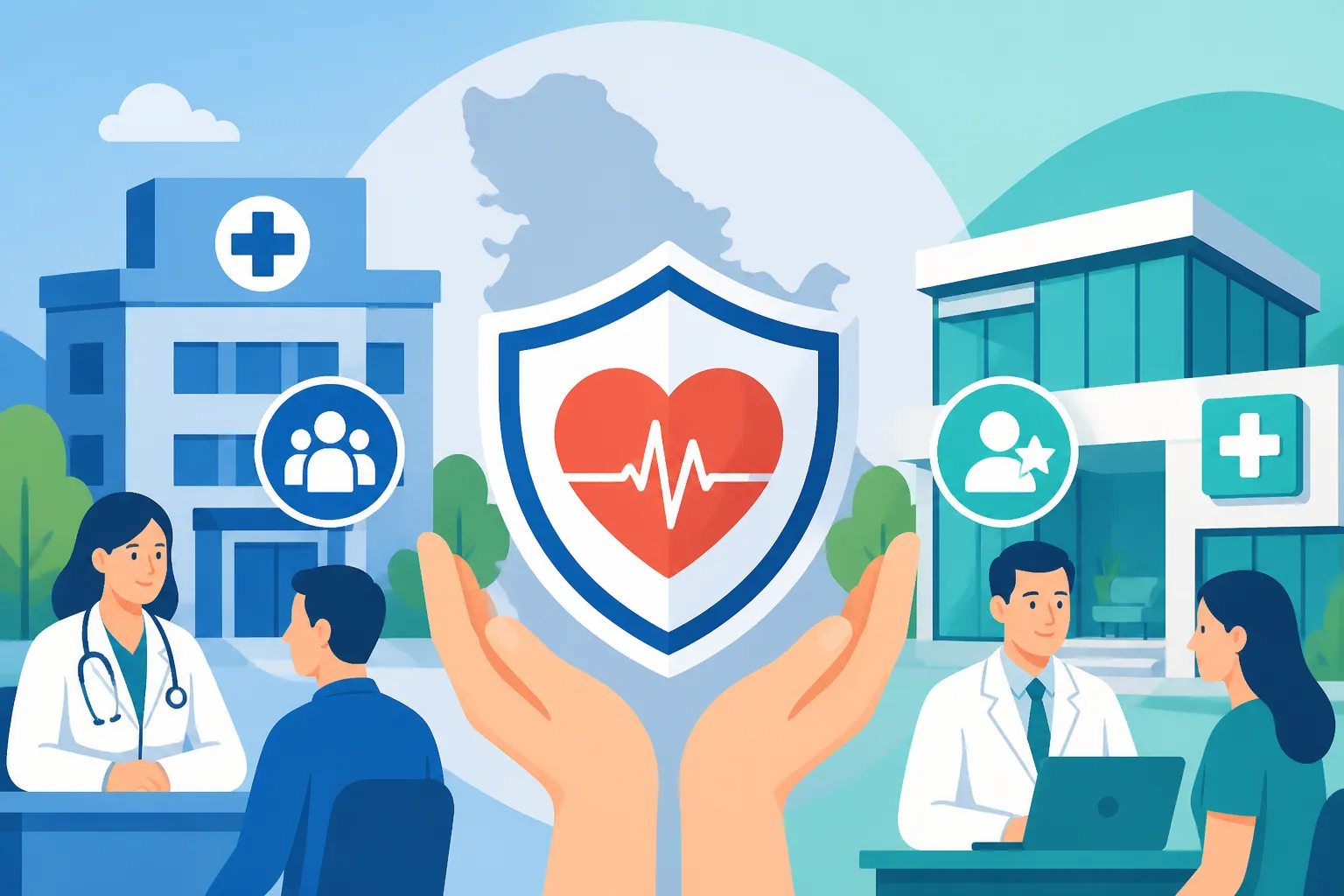
How Serbia’s Health System Works: The RFZO and Private Care Explained (2027)
Navigating the healthcare system in a new country can feel like trying to solve a Rubik's Cube blindfolded, and believe me, Serbia is no exception. Between the jargon, the different systems, and the inevitable administrative hurdles, it's easy to feel lost and anxious about what happens if you or your loved ones get sick. This comprehensive guide is here to demystify how Serbia's health system truly works, breaking down the public Republic Health Insurance Fund (RFZO) and private care options so you can make informed decisions and find peace of mind.
Understanding the Serbian Healthcare Landscape
Moving to Serbia, many expats quickly realize that healthcare isn't a one-size-fits-all situation. Unlike some countries with a purely public or private model, Serbia operates on a dual system. This means you have both a state-funded public health insurance system, managed by the RFZO, and a robust, increasingly popular private healthcare sector. For newcomers, understanding the nuances of each, and how they interact (or don't, in many cases), is absolutely crucial for ensuring you and your family are properly covered and cared for. It's not just about getting a doctor; it's about knowing which doctor, where, and how to access them when you really need to.
The Public System: RFZO Explained
The Republic Health Insurance Fund, or RFZO (Republički fond za zdravstveno osiguranje), is the cornerstone of public healthcare in Serbia. Think of it as the national health service, providing mandatory health insurance coverage for all employed citizens, self-employed individuals, and registered residents who pay contributions. This system is designed to offer universal access to basic medical care, including visits to general practitioners, specialists, hospital stays, and prescription medications (often with a co-payment). However, while it covers a wide range of services, the public system often comes with its own set of challenges, particularly for expats. These can include language barriers, longer wait times for specialist appointments, and a more bureaucratic approach to accessing care. The RFZO aims to ensure that no one is left without essential medical attention, but the patient experience can vary significantly depending on the facility and the specific medical need.
The Private Healthcare Sector: An Alternative Path
On the other side of the coin, Serbia boasts a thriving private healthcare sector that has seen significant growth in recent years. This parallel system offers an alternative for those seeking faster appointments, access to English-speaking doctors, more modern facilities, and a generally higher level of patient comfort and convenience. Private clinics and hospitals operate independently from the RFZO, meaning they are typically fee-for-service, though many expats opt for private health insurance to cover these costs. The private sector is particularly popular for routine check-ups, diagnostics, specialist consultations, and even complex surgeries, where the speed of access and personalized care can be a huge advantage. While more expensive, many expats find the investment in private care worthwhile for the peace of mind and quality of service it provides. It's a world away from the often crowded and sometimes impersonal experience of the public system, offering a different standard of care for those who can afford it or have appropriate insurance.
Navigating the Republic Health Insurance Fund (RFZO)
Diving into the RFZO can feel like entering a maze, especially if you're used to more streamlined processes in your home country. But don't despair; it's a navigable system once you understand the steps. The RFZO is designed to be the primary healthcare provider for anyone legally residing and contributing to the social security system in Serbia. However, simply having a residence permit isn't always enough; you need to actively register and ensure your contributions are being paid. This is often where the real headache begins for expats, as the requirements and paperwork can seem daunting.
Who is Eligible for RFZO Coverage?
Generally, if you are legally employed in Serbia, either by a Serbian company or as a registered entrepreneur (preduzetnik), you are mandatorily included in the RFZO system. This means that a portion of your salary or your monthly contributions (if self-employed) goes towards health insurance. Your employer is usually responsible for registering you and paying your contributions, but it's always a good idea to double-check. Dependents, such as spouses and children, can also be added to your RFZO coverage, provided they meet certain criteria and you complete the necessary paperwork. This ensures that your entire family has access to public healthcare. However, if you are a digital nomad working for a foreign company and not registered as an entrepreneur in Serbia, or simply living here without a formal work permit, you might not automatically qualify for RFZO coverage. In such cases, understanding other options, like voluntary contributions or private insurance, becomes paramount. Expats often ask, "Do Expats Have to Pay Health Insurance Contributions in Serbia?" The answer is generally yes, if you're legally employed or self-employed and registered here.
The RFZO Registration Process for Expats
Once you've secured your temporary residence permit and either started employment or registered your business, the next critical step is to register with the RFZO. This involves a trip to your local RFZO branch, which can be found in most larger towns and cities. The documentation required can include your passport, residence permit, proof of address (white card/prijava boravka), employment contract or proof of business registration, and often, an original birth certificate (with an apostille and certified translation if not originally in Serbian). The process can be time-consuming, involving multiple visits and a fair bit of waiting, which is why patience is definitely a virtue here. You'll fill out forms, submit your documents, and eventually, if all is in order, receive your health insurance card (zdravstvena knjižica). This card is your golden ticket to accessing public healthcare services. For a detailed walkthrough, check out our guide on how to register with the Republic Health Insurance Fund (RFZO) in Serbia.
What Exactly Does the RFZO Cover?
The RFZO provides comprehensive coverage for a wide array of medical services, making it a valuable safety net. This includes visits to your general practitioner (GP), consultations with specialists (usually requiring a referral from your GP), diagnostic tests, hospital stays, emergency care, and a significant portion of prescription medications. For example, if you need to see a cardiologist or undergo an MRI, your GP will typically issue a referral. Maternity and prenatal care in Serbia is also covered, which is a huge relief for expat families. Dental care, however, is often more limited, usually covering only basic procedures like extractions and fillings in public clinics, with more complex or cosmetic work requiring private payment. While coverage is broad, it's important to remember that certain services might have co-payments (participacija), which are small fees you pay out-of-pocket at the point of service. These fees are usually minimal, perhaps a few hundred dinars, but they are an important aspect of the public system to be aware of. Understanding the full scope is key to Navigating the Serbian Healthcare System: An Expat's Roadmap (2026).
The Role of Your GP (Izabrani Lekar) in Serbia
Your General Practitioner, or Izabrani Lekar (chosen doctor), is not just a doctor; they are the gatekeeper to the entire public healthcare system in Serbia. Once you're registered with the RFZO, selecting and registering with a GP at a Dom Zdravlja (health center) is the next mandatory step. This individual will be your first point of contact for almost all medical issues, from a common cold to more serious concerns requiring specialist attention. Without a registered GP, accessing most RFZO-covered services becomes incredibly difficult, if not impossible. It’s a system that relies heavily on this primary care relationship, and understanding its function is critical for any expat.
Choosing and Registering with a GP
Choosing your Izabrani Lekar is a personal decision, and while you have the right to choose, sometimes availability, location, and language skills might narrow your options. Public health centers (Dom Zdravlja) are distributed throughout cities and towns, and you'll typically register with one that's geographically convenient to your registered address. You'll usually visit the administration office at the Dom Zdravlja with your RFZO health card, passport, and residence permit. They will provide a list of available GPs, and you can then formally select one. It's perfectly acceptable to inquire if any doctors speak English, although this is not always guaranteed, especially outside of major cities like Belgrade or Novi Sad. Finding an English-speaking doctor in Serbia can make a world of difference for expats. The registration typically lasts for a year, after which you can re-elect the same GP or choose a new one. For detailed steps, refer to our guide on How to Choose a GP (Izabrani Lekar) at a Dom Zdravlja in Serbia.
Referrals to Specialists and Hospitals
This is where your GP's role as a gatekeeper truly comes into play. If your medical condition requires a specialist consultation – say, with a dermatologist, a cardiologist, or an orthopedist – you cannot simply walk into a specialist clinic under the RFZO system. You must first see your GP. They will assess your condition, and if deemed necessary, issue a referral (uput) to the appropriate specialist or hospital. This referral is a crucial document; without it, the specialist will not see you under your RFZO coverage, and you'd have to pay privately. The referral system is designed to manage the flow of patients and ensure that specialists are seeing cases that truly require their expertise. However, this also means that securing specialist appointments can sometimes involve longer wait times, especially for highly sought-after specialties or complex diagnostic procedures. It's a system that prioritizes methodical progression over rapid access. Our article on How Specialist and Hospital Referrals Work in Serbia offers more insights.
Understanding Co-Payments and Out-of-Pocket Costs
While the RFZO covers a vast majority of medical expenses, it's important to be aware of co-payments, known as participacija. These are small, nominal fees you'll be asked to pay at the point of service for certain consultations, diagnostic tests, or a portion of your prescription medications. For instance, a visit to your GP or a specialist might incur a co-payment of a few hundred dinars. Similarly, when picking up prescribed medication from a pharmacy, you might pay a percentage of the total cost, or a fixed small fee, while the RFZO covers the rest. These co-payments are generally very affordable and are a standard part of the public healthcare system. However, for services not covered at all by the RFZO, such as certain dental procedures, cosmetic treatments, or specific advanced diagnostic tests only available privately, you will be responsible for the full cost out-of-pocket. It’s always wise to clarify any potential co-payments or uncovered costs with your GP or the administrative staff before undergoing treatment. For a full breakdown of costs, refer to The Cost of Healthcare in Serbia: A Complete Breakdown for Foreigners (2026) and our cluster on Understanding Out-of-Pocket Healthcare Costs and Co-Payments in Serbia.
Exploring Private Healthcare Options in Serbia
For many expats, the private healthcare sector in Serbia offers a compelling alternative or supplement to the public RFZO system. It's where you might find a different level of comfort, speed, and personalized service, often with the added benefit of English-speaking staff. While it comes with a price tag, the perceived advantages often outweigh the cost for those who prioritize convenience and accessibility. It's a system designed to cater to those who prefer a more direct route to medical care without the typical bureaucratic hurdles of the public sector.
Benefits and Drawbacks of Private Clinics
The advantages of private clinics are numerous and often immediately appealing to expats. You can usually schedule appointments quickly, often for the same day or within a day or two, virtually eliminating the long wait times sometimes experienced in the public system. Private facilities are generally modern, well-equipped, and focus heavily on patient comfort and experience. Many private clinics actively employ English-speaking doctors and support staff, which significantly eases communication for non-Serbian speakers. Furthermore, you often have direct access to specialists without needing a GP referral, allowing for a more streamlined diagnostic and treatment process.
However, there are definite drawbacks. The most obvious is the cost. Private healthcare is entirely fee-for-service, meaning you pay for every consultation, test, and procedure. These costs can add up quickly, especially for ongoing conditions or complex treatments. While the quality is generally high, it's not universally superior to public care, particularly for critical emergencies where public hospitals often have more extensive resources. It’s important to research specific clinics and doctors, just as you would anywhere else.
Key Private Hospitals and Clinics in Major Cities
Serbia's major cities, especially Belgrade and Novi Sad, are home to a wide range of reputable private hospitals and clinics. In Belgrade, institutions like Acibadem Bel Medic and Euromedik are very popular choices, known for their comprehensive services, modern equipment, and often, English-speaking staff. Bel Medic, for instance, operates multiple polyclinics and a hospital, offering everything from general practice to specialized surgeries and advanced diagnostics. Euromedik also has numerous branches across Belgrade, providing a broad spectrum of medical services. For diagnostic imaging, clinics like MediGroup or MagnetiX are often recommended. In Novi Sad, you'll find similar offerings with clinics such as Poliklinika Consilium and Eliksir providing diverse medical services. These facilities often have transparent pricing, allowing you to inquire about costs upfront for various procedures and consultations. It's always a good idea to cross-reference reviews and ask for recommendations within the expat community to find the best fit for your specific needs. Understanding the Difference Between Public and Private Hospitals in Serbia can help you make a more informed choice.
Navigating Private Health Insurance
Given the costs associated with private healthcare, many expats opt for private health insurance plans. These plans can cover a significant portion, if not all, of your private medical expenses, providing financial security and peace of mind. There are several options available: local Serbian private insurance providers, international insurance companies, or even travel insurance plans that offer extended coverage for long-term stays.
Local Serbian insurers like Generali and Dunav Osiguranje offer various health insurance packages that can cover private clinic visits, diagnostics, and sometimes even a portion of hospital costs. These are often more affordable than international plans but might have limitations on choice of doctors or specific coverage details.
International health insurance providers, such as SafetyWing, are another popular choice among expats, especially digital nomads and those who travel frequently. SafetyWing, for example, offers flexible, affordable plans that are designed for global citizens, covering you not just in Serbia but also when you travel to other countries. This kind of international coverage is invaluable for expats who might be moving between countries or frequently visiting family back home. It often provides higher coverage limits and access to a wider network of private hospitals and clinics, both locally and internationally, though typically with a higher premium.
When choosing a plan, carefully examine what is covered (outpatient, inpatient, dental, maternity, pre-existing conditions), the deductibles, and the annual limits. It’s crucial to understand the claims process – whether you pay upfront and claim reimbursement, or if direct billing is an option with certain providers. For comprehensive advice, see our guide on Understanding Private Health Insurance Plans in Serbia and consider options like SafetyWing for a truly global safety net.
Emergency Medical Care in Serbia
Emergencies are scary enough without having to navigate an unfamiliar healthcare system. Knowing what to do and whom to call in a medical emergency in Serbia is paramount for any expat. While the country has a functioning emergency response system, understanding the differences between public and private options, and what to expect, can significantly reduce stress in a crisis.
Public vs. Private Emergency Services
In Serbia, true life-threatening emergencies are primarily handled by the public ambulance service and public hospital emergency departments. The public system is equipped to manage critical conditions, trauma, and acute illnesses, and they are legally obligated to provide care regardless of your insurance status. For instance, if you experience a heart attack, a severe accident, or any other critical situation, the public emergency services are your first port of call.
Private clinics, on the other hand, typically offer urgent care services for non-life-threatening conditions, such as high fevers, minor injuries, or sudden illnesses that require prompt attention but aren't critical. Some larger private hospitals, like Acibadem Bel Medic, do have their own emergency departments capable of handling a broader range of urgent cases, but they usually require payment upfront or confirmation of private insurance coverage. For critical emergencies, the public system is generally more robust in terms of intensive care units, specialized surgical teams, and blood banks. Emergency Medical Care in Serbia: What Every Expat Needs to Know is a must-read.
Understanding Emergency Numbers and Procedures
The universal emergency number in Serbia is 112, which can connect you to police, fire, and ambulance services. However, for a direct connection to medical emergency services, it's often more efficient to dial 194. This number connects you directly to the ambulance service (Hitna Pomoć).
When calling, try to remain calm and provide clear, concise information:
- Your location: Exact address, nearest landmarks, street name, and apartment number if applicable.
- Nature of the emergency: What happened? What are the symptoms?
- The patient's condition: Is the person conscious? Breathing?
- Your contact number: In case they need to call you back.
- Language: Politely ask if anyone speaks English. While not guaranteed, especially outside of Belgrade, many operators have basic English skills.
The ambulance will transport the patient to the nearest public hospital emergency department. Be prepared for potentially crowded waiting rooms and a triage system that prioritizes the most critical cases. Having a basic medical history, a list of current medications, and your insurance details readily available can expedite the process upon arrival.
Handling Medical Emergencies While Uninsured
If you find yourself in a medical emergency in Serbia without RFZO coverage or private health insurance, the public system will still provide immediate, life-saving care. No one will be denied treatment in a critical situation. However, once your condition is stabilized, you will be liable for the costs of treatment. This can include ambulance fees, hospital stays, consultations, and any medications administered. The bills for emergency care can accumulate quickly, and while Serbian healthcare costs are generally lower than in many Western countries, they can still be substantial.
For non-life-threatening emergencies that might be handled by private urgent care, payment will be required upfront. This is a critical reason why having some form of health insurance is not just advisable, but essential for expats in Serbia. Even a basic travel insurance plan that covers emergencies, such as those offered by SafetyWing, can prevent massive out-of-pocket expenses. It's crucial to understand your coverage status before an emergency strikes, to avoid unexpected financial burdens. For more information, check out our article on Understanding Emergency Numbers (194 and 112) and Ambulance Care in Serbia.
Comparing Public and Private Healthcare: A Clear Choice for Expats
When it comes to healthcare in Serbia, expats often find themselves weighing the pros and cons of the public RFZO system against the private sector. It's not always a straightforward choice, and what works best often depends on individual priorities, budget, and the specific medical situation. Understanding the key differences in accessibility, quality, and cost is crucial for making an informed decision that suits your needs. Ultimately, many expats find themselves using a hybrid approach, relying on the public system for mandatory coverage and supplementing it with private care for specific needs. Public vs Private Healthcare in Serbia: What Expats Need to Know delves deeper into this comparison.
Wait Times and Accessibility
One of the most significant distinctions between the two systems lies in wait times and accessibility. In the public RFZO system, appointments with general practitioners are usually available within a day or two, but getting a referral and subsequently an appointment with a specialist can involve substantial delays. For non-urgent procedures or consultations with highly sought-after specialists, wait times can stretch into weeks or even months. This can be particularly frustrating for expats used to more immediate access to specialized care. Public hospitals, especially for diagnostic tests like MRI or CT scans, also often have a backlog of patients.
The private sector, however, prides itself on speed and accessibility. You can typically book an appointment with a specialist directly, often for the same day or the next, without a referral. Diagnostic tests are usually performed much faster, sometimes within hours, reducing anxiety and allowing for quicker treatment. This immediate access is a major draw for expats who don't want to wait when they have a health concern.
Quality of Care and Facilities
The quality of medical care in Serbia, whether public or private, is generally good, with highly trained doctors and medical staff. However, the patient experience and facility standards can differ markedly. Public hospitals and health centers, while providing essential care, can sometimes feel dated, with older equipment and less comfortable environments. The focus is on functionality and treating the medical condition, often in a high-volume setting.
Private clinics and hospitals, by contrast, are usually modern, meticulously clean, and designed with patient comfort in mind. They often boast state-of-the-art diagnostic equipment and offer amenities that are more akin to Western private hospitals. Doctors in private practice often have more time for individual patients, leading to a more personalized consultation experience, which many expats highly value. The availability of English-speaking staff is also significantly higher in the private sector, alleviating communication barriers that can be a major source of stress in public facilities. This difference in environment and communication often leads expats to perceive private care as being of a higher "quality of service," even if the underlying medical expertise is comparable.
Cost Implications for Different Services
The cost is undeniably the biggest differentiating factor. The RFZO system, being publicly funded, means that most services are covered by your mandatory contributions, with only small co-payments required. This makes essential healthcare highly affordable and accessible for registered residents. However, services not fully covered, like extensive dental work, would be an out-of-pocket expense.
Private healthcare, on the other hand, comes with direct fees for every service. A general practitioner consultation might cost anywhere from 2,000 to 5,000 RSD (€17-€43), while specialist consultations can range from 3,000 to 8,000 RSD (€25-€68) or more. Diagnostic tests, procedures, and hospital stays can quickly escalate into hundreds or thousands of euros. This is why private health insurance is often a vital consideration for expats opting for private care. While it can be a significant upfront investment in premiums, it provides financial protection against unpredictable and potentially high medical bills. Without insurance, relying solely on private care means being prepared to pay substantial sums out-of-pocket, making it a less viable option for those on a tight budget.
Here’s a simplified comparison of RFZO vs. Private Healthcare in Serbia:
| Feature | RFZO (Public) | Private Healthcare |
|---|---|---|
| Eligibility | Employed/Self-employed residents, dependents | Anyone who can pay |
| Cost | Mandatory contributions + small co-payments | Fee-for-service; can be covered by private insurance |
| Wait Times | Potentially long for specialists & diagnostics | Generally short, often same/next day |
| Doctor Choice | Choose GP from Dom Zdravlja list; specialist by referral | Direct access to chosen specialists |
| Facilities | Functional, can be older, sometimes crowded | Modern, comfortable, often state-of-the-art |
| Language Support | Primarily Serbian; English not guaranteed | Higher likelihood of English-speaking staff |
| Emergency Coverage | Comprehensive for life-threatening emergencies | Urgent care for non-critical; some private ERs |
| Prescription Meds | Partially covered with co-payments | Full price (unless covered by private insurance) |
Practical Tips and Common Pitfalls for Expats
Adjusting to a new healthcare system is rarely seamless, and Serbia presents its unique set of challenges. As a veteran expat, I've seen countless newcomers stumble over the same hurdles. Being prepared and knowing what to expect can save you a lot of grief and frustration. From language barriers to navigating bureaucracy, a little foreknowledge goes a long way.
Language Barriers and How to Overcome Them
The language barrier is arguably one of the biggest challenges for expats in the Serbian healthcare system. While more and more medical professionals, especially younger ones and those in private clinics, speak English, it's by no means universal. In public Domovi Zdravlja and hospitals, particularly outside of Belgrade or Novi Sad, you might find that few staff members speak English. This can lead to misunderstandings, misdiagnoses, and general feelings of helplessness during what is already a vulnerable time.
To overcome this, consider a few strategies:
- Learn basic medical Serbian phrases: Even a few key terms can help.
- Use translation apps: Google Translate or similar apps can be invaluable for short phrases or understanding documents.
- Bring a Serbian-speaking friend or interpreter: For important appointments, having someone who can translate can be a lifesaver. Many expats rely on local friends or hire professional interpreters.
- Seek out English-speaking doctors: Actively search for clinics or GPs known to have English-speaking staff. Our guide on How to Find an English-Speaking Doctor in Serbia can be a great starting point.
- Prepare your symptoms in writing: Jot down your symptoms and medical history in English, and if possible, use an online translator to create a Serbian version. This can aid communication even if the doctor doesn't speak perfect English.
Documentation and Bureaucracy
Serbia, like many countries, has its fair share of bureaucracy, and the healthcare system is no exception. From registering with the RFZO to getting referrals, you'll encounter a paper-heavy system that requires specific documents, stamps, and signatures.
- Keep all your documents organized: Have a dedicated folder for your passport, residence permit, RFZO health card, white card (proof of address), any employment contracts, and medical records. Always bring originals and several copies.
- Apostille and translations: Be prepared for official documents (like birth certificates or marriage certificates) to require an apostille from your home country and a certified translation into Serbian by a sworn court interpreter. This is a common requirement for many administrative processes, including RFZO registration and adding dependents.
- Patience is key: Processes can take time, and you might be sent from one office to another for different stamps or signatures. Try to approach it with a calm attitude and allow ample time for administrative tasks. Don't expect things to move at the same pace as they might in your home country.
- Understand your residence status: Your residence status significantly affects RFZO enrolment in Serbia. For instance, temporary residents for work have different requirements than those on a student visa.
Managing Expectations and Finding Support
Perhaps the most crucial tip is to manage your expectations. The Serbian healthcare system, both public and private, functions differently from what you might be used to. It's not necessarily "worse" or "better," just different.
- Public system expectations: Be prepared for potential wait times, older facilities, and a less "customer service" oriented approach in the public sector. The focus is on providing necessary medical care efficiently to a large population.
- Private system expectations: While private clinics offer more comfort and speed, they are still within the Serbian context. Don't expect the exact same protocols or lavishness as top-tier private hospitals in Western Europe or North America, though many come very close.
- Build a support network: Connect with other expats. They are your best resource for recommendations for doctors, clinics, and navigating the system. Expat groups on social media (Facebook groups for "Expats in Belgrade" or "Digital Nomads Serbia" are goldmines) often share valuable, up-to-date information and tips.
- Consider a local contact: If you have Serbian friends or a trustworthy local contact, their assistance can be invaluable for making phone calls, clarifying information, or accompanying you to appointments.
- Proactive health management: Don't wait until you're very ill to seek care or understand the system. Get registered, know your options, and if possible, have a general check-up soon after arriving to establish a baseline and find a GP you're comfortable with. This proactive approach is part of Navigating the Serbian Healthcare System: An Expat's Roadmap (2026).
By understanding these nuances and preparing accordingly, you can navigate Serbia's healthcare system with much greater confidence and fewer unwelcome surprises.
Prescription Medications and Pharmacies in Serbia
Understanding how to get your prescriptions filled and where to find pharmacies is another essential piece of the healthcare puzzle for expats in Serbia. The pharmacy system is generally efficient and well-stocked, but there are a few local specifics you should be aware of, especially regarding prescription requirements and medication availability.
The Pharmacy System and Prescription Requirements
Pharmacies in Serbia, known as apoteka, are widely available in every city and town. You’ll find both independent pharmacies and larger chains such as Lilly Drogerie and Dr. Max. Many operate extended hours, and there are always several 24-hour pharmacies (dežurna apoteka) available in larger urban areas.
For most prescription medications, you will need a valid prescription (recept) issued by a Serbian doctor. If you are covered by the RFZO, your GP will issue an electronic prescription which is then digitally linked to your health insurance card. You simply present your health card at the pharmacy, and the pharmacist will access your prescription. For private doctor visits, you will receive a paper prescription which you then present. It’s important to note that prescriptions from foreign doctors are generally not accepted in Serbian pharmacies; you'll need to see a local doctor to get a Serbian prescription.
For certain over-the-counter medications (OTC) that might require a prescription in your home country (like some stronger painkillers or certain antibiotics), you might find that you can purchase them without a prescription in Serbia. However, this is at the discretion of the pharmacist and for specific drugs. It’s always best to consult with a doctor first, especially for antibiotics, to avoid antibiotic resistance. Our article on Understanding the Pharmacy System and Buying Medicines in Serbia has more detail.
Availability and Cost of Medications
The availability of medications in Serbia is generally good, with most common drugs and a wide range of generic equivalents readily accessible. If you're on a specific medication from your home country, it's wise to research its availability in Serbia or find a local equivalent before you need it. You can ask your Serbian GP or a pharmacist, often showing them the packaging or active ingredients. Occasionally, a specific brand might not be available, but a generic alternative with the same active ingredients usually is.
The cost of prescription medications can vary significantly depending on whether you're covered by the RFZO or paying privately.
- RFZO Coverage: For RFZO-covered medications, you'll typically pay a small co-payment (participacija) or a percentage of the drug's price, with the RFZO covering the rest. The exact co-payment amount can vary.
- Private Purchase: If you don't have RFZO coverage or are buying a non-covered medication, you'll pay the full retail price. Compared to many Western countries, medication costs in Serbia are often significantly lower, making it more affordable for those paying out-of-pocket. However, always verify the price before purchasing, especially for long-term medications. Are Prescription Medications Expensive in Serbia? This guide provides more insights into the costs.
It's also worth noting that Serbian pharmacists are highly trained and can offer advice on minor ailments and over-the-counter remedies. Don't hesitate to ask them for recommendations if you have a simple health concern. Many pharmacies also offer basic health checks like blood pressure measurements.
Disclaimer
The information provided in this guide is for general informational purposes only and does not constitute medical, legal, or professional advice. While we strive to keep the content accurate and up-to-date as of 2026, healthcare regulations, policies, and costs in Serbia can change. It is always recommended to consult with official government sources, legal professionals, and medical experts for advice tailored to your specific situation. Reliance on any information in this guide is solely at your own risk.