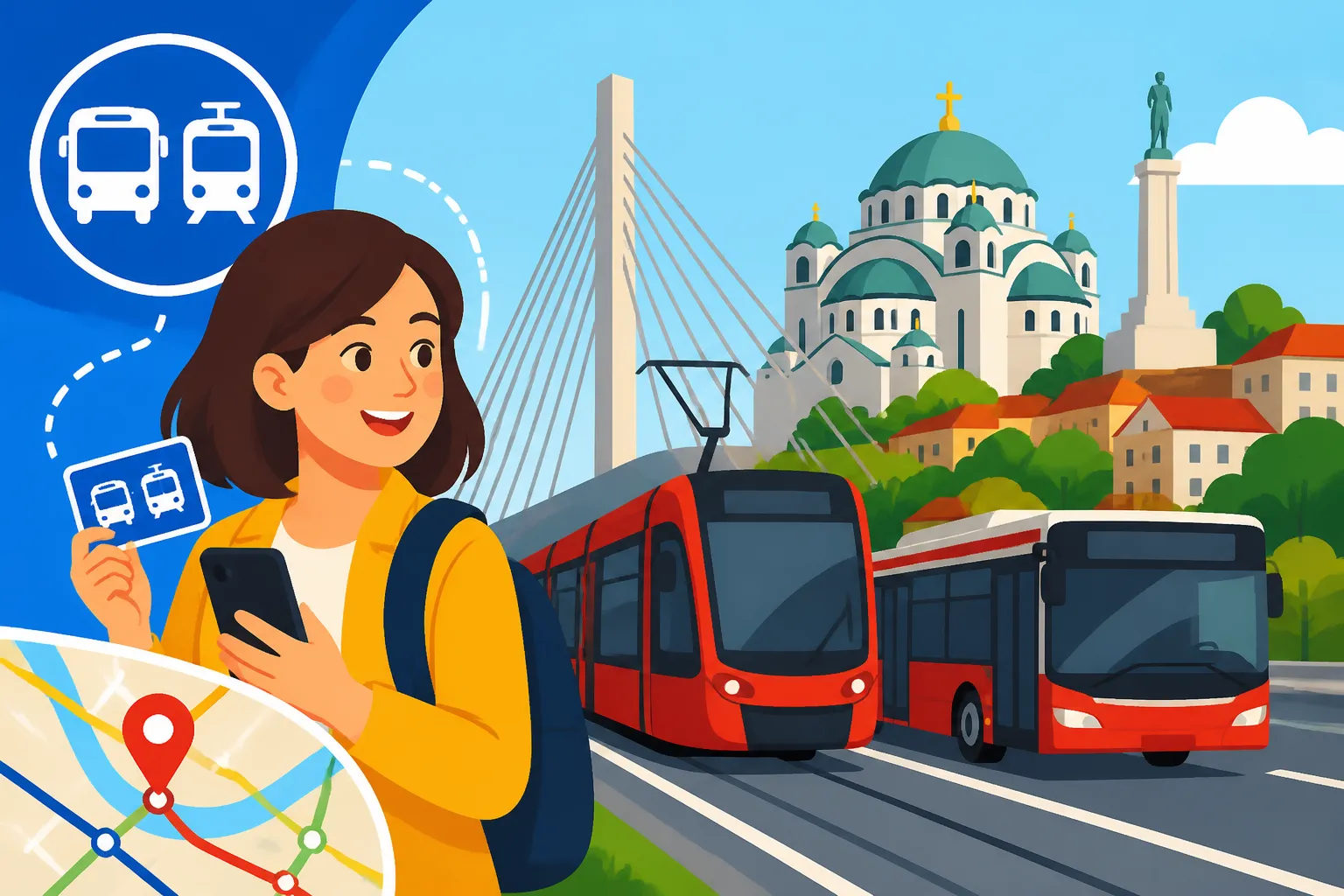
How to Use Public Transport in Belgrade
Moving to a new city, especially one as vibrant and bustling as Belgrade, can be overwhelming when it comes to figuring out how to get around. Forget the stress of navigating unfamiliar streets by car, finding parking in crowded areas like Stari Grad, or dealing with the ever-present Serbian traffic. Public transport here, despite its quirks and occasional frustrations that every long-term expat will grumble about, is genuinely your best friend. This guide will demystify Belgrade's public transport system, helping you confidently hop on a bus, tram, or trolleybus and explore the city like a local.
Getting Around Belgrade: An Overview of Public Transport
Belgrade’s public transportation system is vast and, once you get the hang of it, incredibly efficient for navigating the city. It’s a network that’s seen its share of changes over the years, from fare systems to route numbers, which can certainly make it a head-scratcher for newcomers. But trust me, once you understand the rhythm, you’ll appreciate how it connects every corner of this sprawling capital, often taking you right to where you need to be without the headache of driving.
The system is managed by GSP Beograd, the city's public transport company, and it primarily relies on a combination of buses, trams, and trolleybuses. These aren't just vehicles; they're mobile snapshots of daily life in Belgrade, carrying everyone from students heading to the University of Belgrade to grandmothers returning from the zelena pijaca (green market) with their overflowing bags. Embracing public transport isn’t just practical; it’s an immersion into the city’s pulse.
For those just moving here, especially before you even consider bringing your own car or getting a Serbian driving licence, understanding the public transport is paramount. It’s one of the first things you'll need to master to settle in, right alongside figuring out where to buy groceries or set up your utilities.
The Backbone: Buses, Trams, and Trolleybuses
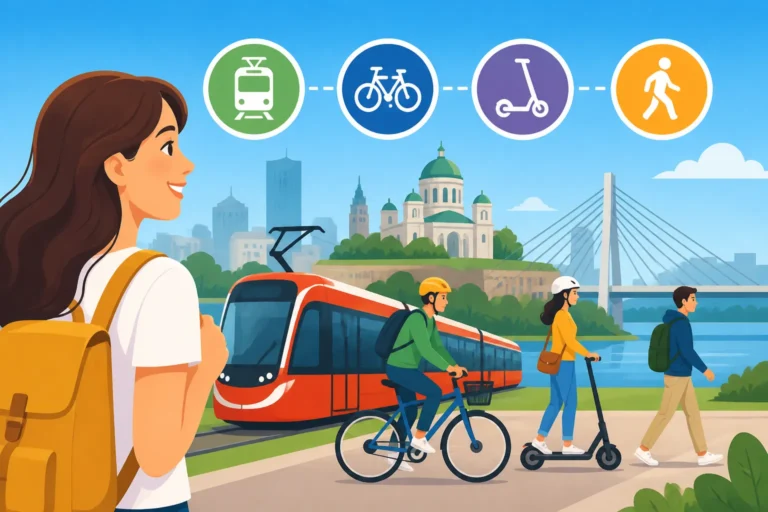
Belgrade’s public transport infrastructure is extensive, covering almost every neighborhood and connecting the inner city with its outer suburbs. You’ll quickly discover that buses are the workhorses of the network, reaching far and wide, while trams and trolleybuses often serve the more central areas and have routes that have remained largely unchanged for decades, offering a somewhat nostalgic ride through the city’s history.
The sheer number of lines can feel daunting at first glance. There are hundreds of bus lines, crisscrossing the city in every direction. Trams, though fewer in number, are iconic to Belgrade’s landscape, with their distinctive clatter and routes often running along main arteries like Kneza Miloša or Bulevar Kralja Aleksandra. Trolleybuses, powered by overhead electric lines, occupy a niche between buses and trams, offering an environmentally friendlier option on specific, established routes.
Getting to grips with the various types of vehicles is the first step. You'll notice modern, air-conditioned buses, but also older, sometimes less comfortable, models. Trams range from newer, sleek models to older ones that have been plying the same tracks for what feels like forever. Each has its own charm and challenges, but they all serve the same purpose: getting you from point A to point B.
Why Public Transport is Your Best Bet in Belgrade
Honestly, trying to drive and park in central Belgrade is an exercise in futility and frustration. Parking spots are rarer than a quiet café on Knez Mihailova on a Saturday afternoon, and the traffic, especially during rush hour, can be absolutely brutal. Expats often share war stories about spending more time looking for parking than actually enjoying their destination. This is where public transport truly shines.
It’s not just about avoiding traffic jams and parking nightmares. It’s also incredibly cost-effective. Compared to the price of petrol, car insurance, and the occasional parking fine, a monthly public transport pass is a steal. This is a significant factor in the overall cost of living in Serbia. Plus, it frees you from the stress of navigating unfamiliar streets and allows you to enjoy the city views from a different perspective.
Beyond the practicalities, there’s a certain freedom that comes with knowing you can hop on any bus, tram, or trolleybus and reach almost anywhere you need to go. It’s a huge step towards feeling truly settled in your new home. Many foreigners find that relying on public transport in their first 90 days of moving to Serbia allows them to defer the hassle and expense of car ownership until they’re more comfortable with the city.
A Brief History and Evolution of the System
Belgrade's public transport isn't just a modern convenience; it has a rich history that reflects the city's development. The first horse-drawn tram debuted in 1892, followed by electric trams in 1894, making Belgrade one of the early adopters in Europe. Buses joined the fleet in the 1920s, and trolleybuses in the 1940s, evolving with the city's growth.
Over the decades, the system has expanded, contracted during wars, and modernized as technology allowed. The network you see today is a product of continuous adaptation, always striving to meet the demands of a growing population. These historical layers are sometimes visible in the infrastructure itself – an old tram track peeking through a newly paved road, or the classic architecture of certain tram stops.
Understanding this lineage, even just a little, can give you a deeper appreciation for the system. It’s not just a means of transport; it’s a living part of Belgrade’s urban fabric, connecting past and present. The constant changes in fare systems, like the recent shift to the Beogradska Kartica, are part of this ongoing evolution, aiming to improve efficiency and user experience.
Decoding the Fare System: Beogradska Kartica
Ah, the fare system. This is often where expats first encounter a bit of a headache. For years, Belgrade used the "BusPlus" card system, which had its own learning curve. As of late 2023 and into 2024, the city transitioned to a new fare system and ticketing solution called Beogradska Kartica. This is designed to be more intuitive, but like any new system, it takes some getting used to. Forget cash on board; modern Belgrade public transport is all about cashless payments.
The Beogradska Kartica is essentially your digital wallet for public transport. It's crucial to understand how to get one, top it up, and validate it, otherwise, you risk a fine that can easily spoil your day. It’s a bit different from simply tapping a credit card on every journey, which many might be used to from other European capitals. Here, you'll need the designated card or use your mobile phone.
Don't let the initial confusion get to you. Every expat has been there, standing at a machine, fumbling with options, or trying to understand instructions in Serbian. It’s a rite of passage. Once you master the Beogradska Kartica, you'll feel like a true Belgrader, navigating the city with ease.
Obtaining Your Beogradska Kartica: Where and How
Getting your Beogradska Kartica is relatively straightforward, but it requires knowing the right places to go. You can't just pick one up on the bus. The most common places to get a physical card are kiosks (newsstands/tobacco shops) throughout the city, especially those branded with the "Beogradska Kartica" logo or operated by Moj Kiosk. These are plentiful and easy to spot.
When you go to a kiosk, you'll ask for a "Beogradska Kartica" and then specify if you want an "anonimna" (anonymous) card, which is rechargeable and transferable, or a personalized one. For most tourists and new expats, the anonymous card is the way to go initially. It costs a small fee for the card itself (typically around 250-300 RSD), and then you load money onto it. For those planning a longer stay, a personalized card offers benefits like monthly passes, which are much more economical. To get a personalized card, you'll usually need to go to a designated sales point, often at larger GSP customer service offices, and you'll need an ID (like your passport or residence permit) and a photo.
Hypothetical scenario: Imagine you’ve just landed in Belgrade and need to get from Nikola Tesla Airport (Aerodrom Nikola Tesla) into the city. While there are special airport buses, for general city travel, your first stop after dropping your bags might be a local kiosk to grab that anonymous Beogradska Kartica. It’s a small hurdle, but it unlocks the entire network.
Topping Up and Validation: The Daily Ritual
Once you have your Beogradska Kartica, keeping it topped up and properly validated is key. Topping up is simple: head back to any kiosk that sells public transport tickets. You hand them your card, tell them how much money you want to add (e.g., "Sto dinara molim" – 100 dinars please), and they'll load it onto your card. Always ask for a receipt.
Now for the crucial part: validation. Every single time you board a bus, tram, or trolleybus, you must validate your card by tapping it against one of the card readers inside the vehicle. These readers are usually located near the doors. When you tap, wait for the green light and a confirmation sound. This registers your journey and deducts the appropriate fare. If you’re using a time-based ticket (like a 90-minute ticket), the timer starts from that first validation.
Failing to validate can result in a fine if inspectors come aboard. They are quite diligent, and trust me, you don't want to get caught without a valid ticket. The fines are significantly higher than the cost of a ticket, and explaining yourself in broken Serbian won't always work. It's a system of trust, but that trust is backed up by regular checks. If you're relying on your phone with the official app, ensure you have sufficient data, perhaps with an eSIM from Airalo, to validate your ticket properly before you board.
Types of Tickets and Passes: Choosing What's Right for You
The Beogradska Kartica system offers flexibility, catering to different needs from single rides to monthly subscriptions. Understanding these options will help you choose the most economical and convenient way to travel.
The primary option for single journeys is a time-based ticket, typically valid for 90 minutes. This means you can make as many transfers as you need within that 90-minute window, provided you validate your card each time you board a new vehicle. This is perfect for short trips or if you have multiple connections.
For those staying longer, daily, weekly, or monthly passes loaded onto a personalized Beogradska Kartica are far more cost-effective. A monthly pass, in particular, offers unlimited travel for a flat fee and is generally the best value for residents. These passes often come in different categories based on zones, but for most city travel, the standard zone covers the vast majority of expat living and working areas.
There’s also the option of using your mobile phone app, MojBusPlus (or the new Beogradska Kartica app, depending on the latest update). You can register your card or directly buy virtual tickets and validate by scanning a QR code inside the vehicle. This is a convenient alternative to a physical card, but again, ensure your phone has battery and data.
Here’s a quick overview to help you decide:
| Ticket Type | Best For | Cost (Approx. RSD, 2024) | Notes |
|---|---|---|---|
| Single Ride (90 min) | Tourists, infrequent users, short multiple trips | 50-90 | Valid for unlimited transfers within 90 mins. Must validate each time. |
| Daily Pass | Short-term visitors, intense sightseeing | 250-350 | Unlimited travel for 24 hours. |
| Weekly Pass | Longer visits, exploring multiple areas | 800-1,200 | Unlimited travel for 7 days. |
| Monthly Pass (Personalized) | Residents, frequent commuters | 2,500-3,500 | Unlimited travel for a calendar month. Requires personalized card (ID, photo). Best value. |
| SMS Ticket (Specific zones) | Emergency, occasional use, no card | 50-90 (per zone) | Send SMS to a specific number. Less common now with the app/card. |
Always check the latest prices, as these can be subject to change. For a deeper dive into the overall cost of living, you might find "The Complete Guide to Cost of Living in Serbia for Expats (2026)" useful, where transport expenses are a key component.
Exploring Belgrade by Bus, Tram, and Trolleybus
Now that you've got your Beogradska Kartica sorted, it's time to actually use it! Belgrade's public transport vehicles are more than just a means to an end; they offer a unique way to experience the city, from the bustling streets of Novi Beograd to the historic charm of Zemun or the quieter residential areas further out. Each type of vehicle has its own characteristics, routes, and even a certain subculture among regular users.
Don't be shy; jump right in. The more you use the system, the more comfortable and intuitive it will become. You'll quickly learn which lines serve your favorite café, your workplace, or the local market. It’s all part of becoming a true Belgrader.
Belgrade's Extensive Bus Network: Your City Lifeline
The bus network is undeniably the most expansive part of Belgrade's public transport system. With hundreds of lines, buses reach virtually every corner of the city, from the most central hubs like Zeleni Venac or Slavija, to the far-flung residential blocks and industrial zones. If there’s a place in Belgrade you need to get to, chances are a bus goes there.
Bus stops are typically well-marked with a yellow sign indicating the lines that stop there. Digital displays at some busier stops provide real-time arrival information, which is a lifesaver when you're waiting in the cold or heat. Be prepared for buses to be quite crowded during peak hours (roughly 7-9 AM and 4-6 PM on weekdays). Personal space can be a luxury, but it's all part of the authentic Belgrade experience!
The bus network is particularly useful for connecting different parts of the city that trams and trolleybuses don't cover. For example, getting from Stari Grad to Novi Beograd often involves crossing one of the bridges via bus. Many major shopping centers, hospitals, and administrative buildings are best accessed by bus. For those exploring more about the transport network, "Understanding the Belgrade Bus, Tram and Trolleybus Networks" offers further details.
Trams and Trolleybuses: A Historic Ride with Modern Utility
While buses cover the sheer geographical spread, trams and trolleybuses offer a more concentrated, often charming, way to travel, particularly in the city center and some older neighborhoods. Trams, with their distinctive tracks, are a beloved part of Belgrade's urban landscape. Routes like Tram 2, which does a circular route around the city center, are almost a sightseeing tour in themselves.
Trams are excellent for navigating areas with heavy traffic, as they have their own dedicated tracks for much of their journey. They connect key areas such as Slavija Square, Kalemegdan Park (via the Studentski Trg stop), and Bulevar Kralja Aleksandra, a major thoroughfare. The experience of riding a tram can vary – some are newer and air-conditioned, while others are older, noisier, but full of character.
Trolleybuses operate on fixed routes, much like trams, but without tracks, drawing power from overhead electric lines. They are generally quieter than buses and provide a smooth ride. Routes often pass through central areas and up some of Belgrade's steeper hills, connecting places like Studentski Trg to Dedinje. While their network is smaller than the bus or tram system, they are vital for the areas they serve.
Understanding Routes, Stops, and Schedules
Deciphering the routes and schedules is fundamental to effective public transport use. Each bus, tram, and trolleybus line has a unique number. At every stop, you'll find a yellow sign listing the numbers of the lines that stop there, along with a schematic map of their routes and a list of all stops in both directions. While the signs are in Serbian, the names of major landmarks and streets are often quite recognizable.
Online resources and mobile apps are invaluable here. The official GSP Beograd website (gsp.rs) has route planners and schedules, though it's primarily in Serbian. However, apps like Moovit or Google Maps (more on these later) often integrate GSP data and provide real-time tracking, estimated arrival times, and English interfaces.
When waiting at a stop, pay attention to the direction of travel. Many stops serve both directions, so double-check the route map on the sign or the destination displayed on the front of the vehicle before boarding. Don't be afraid to ask a local if you're unsure – Serbians are generally very helpful, especially if you approach them politely.
Tools for Navigation: Apps and Real-Time Information
In the old days, navigating Belgrade's public transport meant relying solely on printed schedules and local knowledge. But thankfully, we're in the digital age, and a few good apps can transform your experience from a puzzling adventure into a smooth commute. These tools are indispensable for planning your journeys, checking real-time arrivals, and making sure you don't miss your stop.
Having reliable internet access on your phone is non-negotiable for using these apps effectively. This is where an eSIM from a provider like Airalo can be a lifesaver. You can get local data instantly upon arrival, ensuring you have the connectivity you need without hunting for a physical SIM card. It takes away one layer of stress in your initial days, allowing you to focus on getting around.
Essential Apps for Belgrade Public Transport
Forget carrying around physical maps that are probably outdated anyway. Your smartphone is your best friend when it comes to navigating Belgrade's public transport. There are a couple of apps that stand out:
- Moovit: This is arguably the most popular and comprehensive public transport app globally, and it works exceptionally well in Belgrade. Moovit provides real-time arrivals, step-by-step navigation, and integrates all modes of public transport (buses, trams, trolleybuses). You can enter your destination, and it will give you several route options, including estimated travel times and walking distances to stops. It even alerts you when to get off. This app is a true expat must-have.
- Google Maps: While not specifically a public transport app, Google Maps has significantly improved its public transport integration for Belgrade. It can show you bus and tram routes, estimated travel times, and even some real-time data, though it might not always be as granular as Moovit. It's a great backup and often familiar to new arrivals.
- Beogradska Kartica App (MojBusPlus/Current Official App): This is the official app for the fare system. It allows you to check your card balance, top up (if linked to a Serbian bank account or payment method), and in some iterations, buy and validate virtual tickets by scanning QR codes inside the vehicle. This is vital for managing your actual tickets.
- Bus Plus web platform (web.busplus.rs): While not an app, this web platform offers real-time vehicle tracking. You can enter the number of your stop (found on the yellow signs) and see exactly where the next buses, trams, or trolleybuses on your line are. It's a bit clunky on mobile but very accurate.
These apps, especially Moovit and Google Maps, are your co-pilots. They help you estimate journey times, avoid long waits, and generally reduce the anxiety of getting lost in an unfamiliar city. Make sure your phone is charged!
Reading Maps and Understanding Serbian Stop Names
Even with apps, understanding the basics of public transport maps and Serbian terminology for stops is incredibly helpful. The schematic maps at stops are simplified diagrams showing the sequence of stops. They won't show geographical accuracy but focus on the order of stops along a particular line.
Serbian stop names (stanice) are usually based on the street name, a nearby landmark, or a significant building. For instance, "Trg Republike" is easy to spot on the map as Republic Square, and many major stops like "Zeleni Venac" or "Slavija" are key transfer points that you'll quickly commit to memory. While the apps will show you the names in English or transliterated, hearing the conductor announce them (or seeing them on the digital display inside newer vehicles) will still be in Serbian.
A quick tip: learn a few key phrases. "Izvinite, da li je ovo stanica za…?" (Excuse me, is this the stop for…?) can be very useful. Most importantly, don't hesitate to pull out your phone and point to your destination on the map if you need help. Body language and a friendly smile go a long way in overcoming language barriers.
Dealing with Delays and Unexpected Changes
Belgrade's public transport, while generally reliable, is not immune to delays, especially during peak hours, heavy rain or snow, or unexpected street closures due to events or construction. This is just part of city life anywhere, but it can be particularly frustrating when you're on a tight schedule or don't know the alternative routes.
The best defense against delays is to build a little buffer time into your journey, especially for important appointments. Rely on your apps for real-time updates. If an app shows a significant delay, consider alternative routes suggested by the app or even switching to a different mode of transport like a taxi for a short leg of the journey.
Construction is a perpetual state in Belgrade, leading to frequent temporary route changes or stop relocations. Look out for yellow or orange signs at stops announcing diversions (izmena trasa) or temporary stops (privremena stanica). These are usually posted in Serbian, but the visual cues can often tell you what's happening. Sometimes, asking a local waiting at the stop is the fastest way to get clarity. They've likely dealt with it before!
Expat and Tourist Survival Guide for Belgrade's Public Transport
Riding public transport in Belgrade is an experience in itself. Beyond the technicalities of tickets and routes, there are unwritten rules, safety considerations, and cultural nuances that can make your journey smoother and more pleasant. As an expat, you'll pick these up over time, but a head start never hurts.
Remember, you're sharing a space with thousands of other people going about their daily lives. A little awareness and respect go a long way in blending in and having a positive experience. It's all part of adapting to living in Serbia.
Etiquette and Unwritten Rules of the Ride
Like any public space, Belgrade’s public transport has its own set of etiquette rules, some universal, some more local:
- Offer your seat to the elderly, pregnant women, or those with small children: This is a deeply ingrained custom and expected. You'll often see young people immediately offering their seats. It’s a sign of respect.
- Keep your voice down: Serbians generally speak in moderate tones on public transport. Avoid loud phone conversations or boisterous chatter.
- Don't block the doors: When waiting to exit, move towards the doors but don't block people from getting on or off. Let people alight first before you attempt to board.
- Watch your bags: Keep backpacks on your lap or between your feet, not on your back, especially in crowded vehicles. This frees up space and prevents accidental bumps.
- Don't put your feet on seats: It’s considered disrespectful and dirty.
- Patience is a virtue: Buses can be late, people can be slow, things can get crowded. Take a deep breath and go with the flow. Trying to rush or get visibly annoyed won't change anything and will only make you more stressed.
Following these unspoken rules will not only make your journey more pleasant but will also help you integrate more smoothly into the local culture.
Safety and Security: What to Watch Out For
Belgrade is generally a very safe city, and public transport is no exception. Violent crime is rare. However, like any major urban area, petty crime, particularly pickpocketing, can occur, especially in crowded buses or trams during peak hours.
Here’s how to stay safe:
- Be aware of your surroundings: Keep an eye on your bags and pockets. Don't leave your phone or wallet in an easily accessible back pocket or unzipped bag.
- Keep valuables secure: Use a cross-body bag or a backpack worn on your front in very crowded situations.
- Avoid flashing cash: Be discreet when taking out your wallet to top up your card or pay for something.
- Trust your gut: If a situation feels off, remove yourself. This is rare, but it's always good advice.
- Don't leave bags unattended: Especially when you're getting off, make sure you have all your belongings.
While these precautions are sensible, they are not meant to scare you. The vast majority of journeys on Belgrade's public transport are uneventful and safe. It's more about being street smart rather than constantly paranoid.
Overcoming Language Barriers and Asking for Help
Serbian isn't the easiest language to pick up, and while many younger Serbians, especially in Belgrade, speak English, older generations might not. This can sometimes create a small hurdle when you need assistance on public transport.
However, don't let the language barrier deter you from asking for help. Most Serbians are genuinely kind and willing to assist foreigners, even if it requires a bit of charades.
- Start with "Izvinite…" (Excuse me…): This is always a polite way to get someone's attention.
- Have your destination written down or on your phone: Pointing to a map or a written name is often clearer than trying to pronounce a complex Serbian street name.
- Look for younger people: They are more likely to speak English.
- Be patient and smile: A friendly demeanor can bridge many linguistic gaps.
You might be surprised by how many people will go out of their way to help you, even getting off at their stop to point you in the right direction. It’s part of the warmth of the Serbian people that many expats come to appreciate.
Beyond the Daily Commute: Special Considerations and Alternatives
Public transport isn't just for getting to work or running errands; it's also about navigating Belgrade's vibrant nightlife, ensuring accessibility for all, and understanding when other transport options might be better suited. As you settle into your new life here, you’ll find the system adapts to different needs.
From navigating late-night journeys to considering alternatives for specific situations, understanding the full spectrum of transport options enhances your mobility and independence in Belgrade. When planning a big move to Serbia, for instance, you'll likely rely on professional movers like Sirelo to handle your belongings, but for everything else, the city's transport is at your disposal.
Accessibility for Travellers with Special Needs
Belgrade's public transport system, while improving, still has room to grow regarding full accessibility for all. Newer buses and trams often come equipped with ramps or low floors to accommodate wheelchairs and strollers. However, older vehicles and some stops might still pose challenges.
- Look for newer vehicles: These are typically more accessible.
- Prioritize bus lines: Buses generally offer better accessibility than older trams or trolleybuses.
- Plan ahead: If you require specific accessibility features, try to research your route in advance using apps that might have this information or by calling GSP Beograd customer service.
- Don't hesitate to ask for help: Many passengers and drivers will be willing to assist with ramps or boarding if needed.
For families with young children and strollers, the same advice applies. While it might be a bit of a juggle, people are generally understanding and will make space. Patience and a proactive approach are key.
Night Lines and Weekend Services
Belgrade truly comes alive at night, and the public transport system extends its service to cater to the city's vibrant nightlife. After the regular daytime lines cease operation (usually around midnight or 1 AM), a network of dedicated night lines (noćne linije) takes over. These are almost exclusively buses.
Night lines operate less frequently than daytime services, typically every hour or half-hour, depending on the route. They often cover major arteries and connect popular nightlife spots with residential areas. Fares on night lines may sometimes differ slightly, so it’s always good to check your Beogradska Kartica balance or the relevant app. It’s a safe and affordable way to get home after enjoying a night out in Savamala or Dorćol, especially compared to the surge pricing of taxis late at night.
Weekend services generally follow a slightly reduced schedule compared to weekdays, especially on Sundays and public holidays. It's always a good idea to check the schedule on your app before heading out on a weekend, as waiting times might be longer.
Taxis, Ride-Sharing, and Other Transport Options
While public transport is excellent, there are times when a taxi or another private transport option is simply more convenient.
- Taxis: Belgrade has numerous taxi companies. It's always best to call a reputable company or use an app like Car:Go (which functions much like Uber/Lyft but uses licensed taxi drivers). Hailing a taxi on the street is possible, but always ensure the meter is running and that the driver seems legitimate. Avoid unmarked cars.
- Car:Go: This popular app offers fixed prices upfront and is very reliable. It's usually the go-to for many expats when they need a quick, hassle-free ride.
- Private car services: For airport transfers or special occasions, many private car services offer comfortable rides.
- Cycling: While Belgrade is becoming more bike-friendly, with some new bike lanes, it's not yet a cycling paradise. Hilly terrain and busy traffic can make it challenging for casual riders, but there are options for bike rentals for exploring specific areas like Ada Ciganlija.
- Scooters/E-scooters: Electric scooters have grown in popularity, offering a fast way to cover short to medium distances, especially when combined with public transport. Several apps allow you to rent them by the minute.
For those considering long-term vehicle ownership, remember that "Driving in Serbia: Licences, Registration and Rules for Expats (2027)" details the process for getting your own car on the road. However, for most day-to-day needs, especially in the city center, public transport, taxis, or ride-sharing will cover your bases.
Disclaimer
The information provided in this guide is for general informational purposes only and is subject to change. While we strive to keep the content up-to-date, public transport fares, routes, and regulations in Serbia can be updated by the authorities without prior notice. Always verify information with official sources such as GSP Beograd or the Beogradska Kartica website, or consult with local authorities for the most current details. We are not liable for any inaccuracies or changes that may occur.