Can I Walk Into a Clinic Without an Appointment in Serbia?
You've just woken up with a throbbing headache or a sudden, persistent cough, and the immediate thought that crosses your mind is, "Can I just walk into a clinic in Serbia and get this checked out?" Trust me, this is a question almost every expat has grappled with, navigating a healthcare system that might operate quite differently from what you're used to. This guide is here to shed light on your options, offering realistic advice on when and where you can walk into a medical facility without a prior appointment in Serbia, saving you a good deal of stress and confusion.
The Reality of Walk-Ins in Serbian Healthcare: Public vs. Private
The Serbian healthcare system, like many, has its quirks, and the feasibility of a walk-in appointment largely depends on whether you're looking at a public health institution (Dom Zdravlja) or a private clinic. Understanding this distinction is absolutely crucial for any expat trying to get medical attention on the fly.
Navigating the Dom Zdravlja Without an Appointment
The public healthcare system in Serbia is primarily structured around the concept of an "izabrani lekar" (chosen doctor), which is your general practitioner (GP). Once you've gone through the (sometimes lengthy) process to register with the Republic Health Insurance Fund (RFZO) in Serbia, and then ideally, register with a specific GP, your care is largely managed by them. This means that, officially, most visits to a Dom Zdravlja require a pre-booked appointment with your izabrani lekar.
However, life doesn't always go according to plan, does it? You can't always predict when you'll develop a fever or a strange rash. If you try to walk into a Dom Zdravlja without an appointment for a non-emergency issue, you're likely to face a few challenges. You might be told to come back with an appointment, or you could end up waiting for hours, hoping for a cancellation or for the doctor to squeeze you in during a spare moment. The receptionists are often the gatekeepers, and while some may be empathetic, their primary job is to manage scheduled patient flow. For instance, if you have a mild cold, a sore throat, or a routine check-up request, a walk-in is generally not recommended and might be fruitless.
There are exceptions, of course. For genuinely acute, non-life-threatening issues that arise suddenly, some Dom Zdravlja facilities have an 'urgent care' (dežurna služba) or 'first aid' (previjalište) section. These are designed to handle immediate concerns that can't wait for a scheduled appointment but aren't severe enough for an ambulance or hospital emergency room. Think about a minor injury like a deep cut that needs dressing, or a sudden, high fever that is making you feel quite unwell. Even then, prepare for potential queues and remember that the staff will prioritize true emergencies. It's a system that requires patience and a bit of luck if you haven't secured your official spot with a GP. If you're wondering How to Choose a GP (Izabrani Lekar) at a Dom Zdravlja in Serbia, it’s a good idea to sort this out sooner rather than later to avoid these walk-in predicaments.
The Flexibility of Private Clinics for Walk-Ins
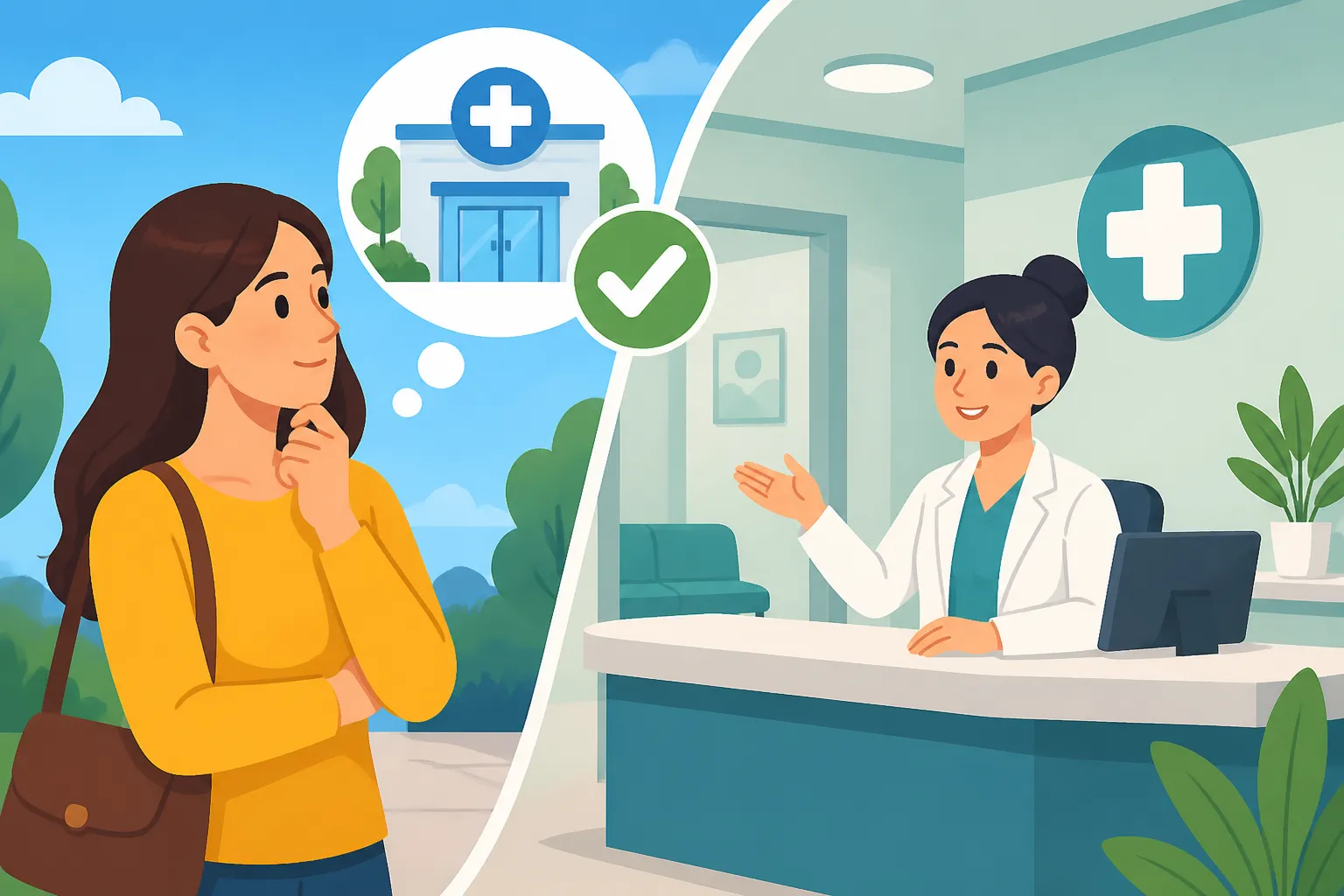
Now, this is where many expats find their comfort zone, especially when facing an unexpected illness. Private clinics in Serbia operate with much greater flexibility than their public counterparts. Many private clinics, especially in larger cities like Belgrade and Novi Sad, are accustomed to walk-in patients, particularly for general practitioner consultations or minor urgent issues. You’ll often find these clinics to be more modern, with shorter wait times, and a higher probability of finding English-speaking staff, which is a huge relief when you're feeling under the weather.
For example, large private healthcare networks such as Medigroup, Euromedik, or Acibadem Bel Medic often have dedicated urgent care sections or a system where you can be seen by a general practitioner relatively quickly without a pre-scheduled appointment. While calling ahead is always recommended to check availability and reduce your waiting time, many will accommodate you if they have a doctor free. If you suddenly develop an allergic reaction that isn't severe but needs attention, or wake up with severe ear pain, a private clinic is usually your best bet for prompt care without a prior booking.
The convenience comes with a cost, though. Unlike the public system where your RFZO contributions cover most expenses, you'll be paying out-of-pocket at a private clinic, unless you have private health insurance. This is where a good private health insurance plan, like those offered by SafetyWing, really comes into its own, providing a safety net for unexpected medical needs. The cost of a doctor's visit can vary, but generally, expect to pay anywhere from 3,000 to 6,000 RSD for a GP consultation, with specialists costing more. If you're trying to figure out How Much Does a Doctor Visit Cost in Serbia?, private clinics are almost always pricier than the nominal co-payments you might incur in the public system. The trade-off is often speed, comfort, and language accessibility.
When a Walk-In is Your Only Option: Emergencies and Acute Conditions
Sometimes, an issue arises that simply cannot wait for an appointment, even in the most efficient private clinic. Knowing the difference between an urgent, acute condition and a true medical emergency is paramount to getting the right care efficiently in Serbia.
Recognizing a True Medical Emergency in Serbia
Let's be absolutely clear: for true, life-threatening emergencies, you do not need an appointment anywhere. If you are experiencing symptoms of a heart attack (e.g., severe chest pain, shortness of breath, pain radiating to the arm), stroke (e.g., sudden numbness or weakness, confusion, difficulty speaking), severe trauma (e.g., from an accident), uncontrolled bleeding, or any condition that puts your life in immediate danger, you should do one of two things:
- Call an ambulance immediately by dialing 194. This is the emergency number for medical assistance in Serbia. Provide clear, concise information about the patient's condition and location.
- Head directly to the nearest hospital emergency room (Urgentni Centar). In Belgrade, major hospitals with emergency departments include the Urgentni Centar within the Clinical Centre of Serbia (Klinički Centar Srbije) or KBC Bežanijska Kosa.
In these critical situations, medical staff will prioritize your condition regardless of your residency status or whether you have RFZO coverage. The focus is on saving lives. However, be aware that you will eventually be responsible for the costs if you don't have public or private insurance. For more details on what to do in these situations, consult our guide on Emergency Medical Care in Serbia: What Every Expat Needs to Know. Knowing What Is the Emergency Phone Number in Serbia? is a fundamental piece of information every expat should have memorized or saved.
Acute, Non-Life-Threatening Issues: Dom Zdravlja vs. Private
There’s a broad spectrum of medical issues that are acute and uncomfortable but not immediately life-threatening. These are the tricky ones when considering a walk-in. We're talking about things like:
- A sudden, persistent migraine
- A severe ear infection or sore throat that appeared overnight
- A urinary tract infection causing significant discomfort
- A bad stomach bug with vomiting and diarrhea
- A sprained ankle that's painful but not broken
For these types of situations, your options for walk-ins differ depending on the system:
Public System (Dom Zdravlja): Some larger Dom Zdravlja facilities, particularly in urban areas, have a "dežurna služba" (on-call service) that operates outside regular working hours or specifically for acute cases. These departments are designed to see patients who have sudden, pressing health issues that cannot wait but do not warrant a hospital emergency room visit. You can walk into these. However, expect longer waiting times and potentially less individualized attention due compared to a scheduled appointment with your GP. The staff here might triage patients based on the severity of their condition, so you could still find yourself waiting while more urgent cases are attended to.
Private Clinics: For acute, non-life-threatening issues, private clinics are often the most pragmatic choice if you need immediate attention and don't want to deal with the public system's potential bureaucracy or wait times. Many private clinics have a dedicated urgent care or "dežurna" service that functions much like a walk-in clinic for general medical concerns. They are usually well-equipped to handle various ailments from infections to minor injuries. You'll likely be seen much faster than at a Dom Zdravlja. For these kinds of unpredictable events, having international travel or expat insurance from providers like SafetyWing can offer significant peace of mind, covering the costs of private urgent care when public options are overwhelmed or inaccessible. If you are still in the process of getting your RFZO sorted, or if you are here as a tourist, it's particularly important to know What Happens If I Get Sick Before I Register with the RFZO in Serbia?, and private options are often the only immediate solution.
Here's a quick comparison of walk-in scenarios:
| Scenario / Type of Clinic | Public Dom Zdravlja (Walk-in) | Private Clinic (Walk-in) |
|---|---|---|
| Routine Check-up | Highly unlikely; requires appointment with GP. | Possible, but appointment preferred; may be seen by available GP. |
| Mild Illness | Possible at "dežurna služba" for acute issues; long waits common. Often turned away by GP. | Generally very feasible; shorter waits. |
| Minor Injury | Possible at "previjalište" or "dežurna služba" for immediate care. | Very feasible; often dedicated urgent care services. |
| Prescription Refill | Not for a walk-in; must see GP for new prescription or renewal. | Possible if a doctor sees you and determines need, but typically requires consultation. |
| True Emergency | Go directly to hospital Urgentni Centar or call 194. | Go directly to hospital Urgentni Centar or call 194. (Private clinics are not ERs). |
| Cost | Minimal co-payment if RFZO insured; full cost if uninsured. | Full cost out-of-pocket or via private insurance. |
| Language | Serbian primarily; English rare. | More likely to find English-speaking staff. |
| Wait Times | Can be very long, unpredictable. | Generally much shorter. |
Practical Tips for a Smooth Walk-In Experience
Navigating healthcare in a new country can be daunting, and even more so when you need to walk into a clinic without a prior booking. A little preparation and knowing what to expect can make a world of difference.
Preparation is Key: Documents, Language, and Expectations
Before you even step out the door, gather some essentials. Always carry your passport or national ID card, and your Serbian residence permit (Boravak). If you are registered with the RFZO, make sure you have your health insurance card (zdravstvena knjižica or RFZO kartica) with you. These documents are fundamental for identification and proof of your legal status and insurance coverage. If you're still in the early days of your move and haven't secured your RFZO coverage, or if you're a tourist, a robust travel health insurance policy, such as SafetyWing, is absolutely non-negotiable. It's truly a lifesaver for unexpected medical bills.
When it comes to language, while many doctors in private clinics, especially in Belgrade, might speak English, this is less common in public Dom Zdravlja facilities, particularly outside the capital. Learning a few basic Serbian phrases can be incredibly helpful:
- "Potreban mi je doktor." (I need a doctor.)
- "Nemam zakazan termin." (I don't have an appointment.)
- "Osećam se loše." (I feel bad.)
- "Imam bol." (I have pain.)
- "Da li pričate engleski?" (Do you speak English?)
Even having Google Translate ready on your phone can bridge significant communication gaps. Be prepared for varying levels of English proficiency, and consider bringing a Serbian-speaking friend if your condition allows, especially for public facilities. Always maintain a polite and patient demeanor. Serbian bureaucracy, while often efficient in its own way, can feel slow to newcomers, and a calm approach will serve you better. Understanding the general process of Navigating the Serbian Healthcare System: An Expat's Roadmap (2027) can provide valuable context.
Alternatives to Walking In: Appointments and Telehealth
While this guide focuses on walk-ins, it's important to remember that they are often a last resort or for truly urgent situations. For most non-emergency medical needs, booking an appointment, even if it's for the next day, will almost always result in a smoother, less stressful experience.
Booking Appointments:
Many private clinics offer online booking systems or allow you to schedule an appointment via phone or email. This guarantees you a specific time slot, reduces your waiting time, and ensures a doctor is available to see you. Even for the public system, once you have an izabrani lekar, you can usually call your Dom Zdravlja to schedule an appointment. This is the official and most efficient way to access non-emergency care. Our guide on Health Insurance in Serbia: RFZO, Private and International Options Explained covers how different types of insurance factor into these appointments.
Telehealth and Online Consultations:
The landscape of healthcare is evolving, and Serbia is no exception. Several private clinics now offer telehealth or online consultation services, particularly for general consultations, prescription renewals, or follow-ups. This can be a fantastic option if your condition isn't severe enough to warrant a physical visit, or if you live in a more remote area. It saves you travel time and often allows for quicker access to a medical professional. If you're looking for How to Find an English-Speaking Doctor in Serbia, many of them operate within these private networks and might offer telehealth.
Pharmacies:
For very minor ailments like a common cold, mild indigestion, or simple pain relief, don't underestimate the role of local pharmacies ("apoteka"). Serbian pharmacists are highly knowledgeable and can offer advice and over-the-counter medications for a wide range of issues. They are often the first point of contact for many Serbians and can tell you if your symptoms warrant a doctor's visit. They are easy to walk into without an appointment, and many have at least one English-speaking staff member. Check out Understanding the Pharmacy System and Buying Medicines in Serbia for more on this.
Ultimately, while walking into a clinic in Serbia without an appointment is possible under certain circumstances, it's rarely the ideal scenario, especially in the public sector. Being prepared, understanding your options, and knowing when to go private for convenience will greatly improve your experience. While it might seem complicated at first, with a bit of knowledge, you'll be navigating the Serbian healthcare system like a seasoned local. For a broader financial perspective, you might find our article on The Cost of Healthcare in Serbia: A Complete Breakdown for Foreigners (2026) helpful.
Disclaimer
The information provided in this guide is for general informational purposes only and does not constitute medical or legal advice. Healthcare regulations and practices in Serbia can change, and individual circumstances vary. Always consult with a qualified medical professional for any health concerns and official government sources or legal professionals for the most up-to-date and specific advice regarding your healthcare and residency in Serbia.