How Do I Find a Trusted Pharmacy Near Me in Belgrade?
Finding a trusted pharmacy in a new city like Belgrade can feel like a daunting task, especially when you're not fluent in Serbian and a pressing health need arises. Navigating local healthcare systems, deciphering unfamiliar signs, and knowing where to go for reliable advice are common headaches for expats and tourists alike. This guide aims to clear up that confusion, offering you practical, real-world advice on how to confidently locate and utilize a trusted pharmacy in Belgrade, ensuring you always know where to turn for your medication and health needs.
Understanding Belgrade's Pharmacy Landscape for Expats
When you first arrive in Belgrade, you might be pleasantly surprised by the sheer number of pharmacies, or "apotekas" as they're known here. They're practically on every corner in many neighborhoods, recognizable by their ubiquitous green cross sign. While this abundance is a comfort, knowing which ones are truly reliable, especially when you're feeling unwell, is key.
The Ubiquity of Apotekas (Pharmacies) in Belgrade
Seriously, it won't take long before you spot an apoteka in Belgrade. Whether you're strolling through the bustling city center, exploring the charming streets of Vračar, or even venturing into residential areas, you'll likely see that bright green cross beckoning. This widespread presence is fantastic because it means you're rarely far from a place to get essential medications or advice. It’s not like in some countries where pharmacies are tucked away; here, they're a prominent and accessible part of daily life.
What this means for you, as a foreigner, is that you don't need to panic if you suddenly need something. Just keep an eye out for that familiar symbol. Often, the bigger chains like Lilly Drogerie, DM, or Benu Apoteka will have prominent storefronts, but there are also plenty of smaller, independent pharmacies run by local pharmacists. Both types are generally well-stocked, but there can be subtle differences in the range of specialist items or the level of English spoken, which we'll delve into a bit more. The important thing is that help is usually just around the corner, whether you're dealing with a sudden headache or a more chronic issue.
The Difference Between Public and Private Pharmacies (and Why It Matters)
Now, it’s not always obvious, but there can be a distinction between publicly owned pharmacies and private ones, though the lines have blurred over the years with privatization. Historically, public pharmacies (like some under "Apoteka Beograd") were the mainstays, offering a wide range of medications, often with a focus on generic options and standard services. They were, and still are, seen as very reliable, being part of the state healthcare system.
Private pharmacies, which now dominate the landscape (think chains like Benu, Galen Pharm, and sometimes even the pharmacy sections within larger supermarkets like Maxi or Idea, though those are less common for serious prescriptions), offer a more commercial approach. They often have a wider array of non-prescription items – everything from high-end cosmetics and dietary supplements to baby products and personal care items. While the quality of medication is regulated across the board, you might find more international brands or niche products in private pharmacies. For an expat, the primary difference you might notice is simply the branding and perhaps the availability of certain foreign-manufactured medications or more English-speaking staff, which can be a huge relief. Understanding the system for acquiring your medications, whether from public or private pharmacies, is a crucial part of navigating The Complete Guide to Healthcare in Serbia for Expats (2027).
Practical Steps to Locating a Trusted Pharmacy in Belgrade
When you're in an unfamiliar city, and especially if you're not feeling well, the last thing you want is to wander aimlessly looking for a pharmacy. Thankfully, with a few smart strategies, you can quickly pinpoint a trusted establishment in Belgrade.
Leveraging Online Tools and Apps
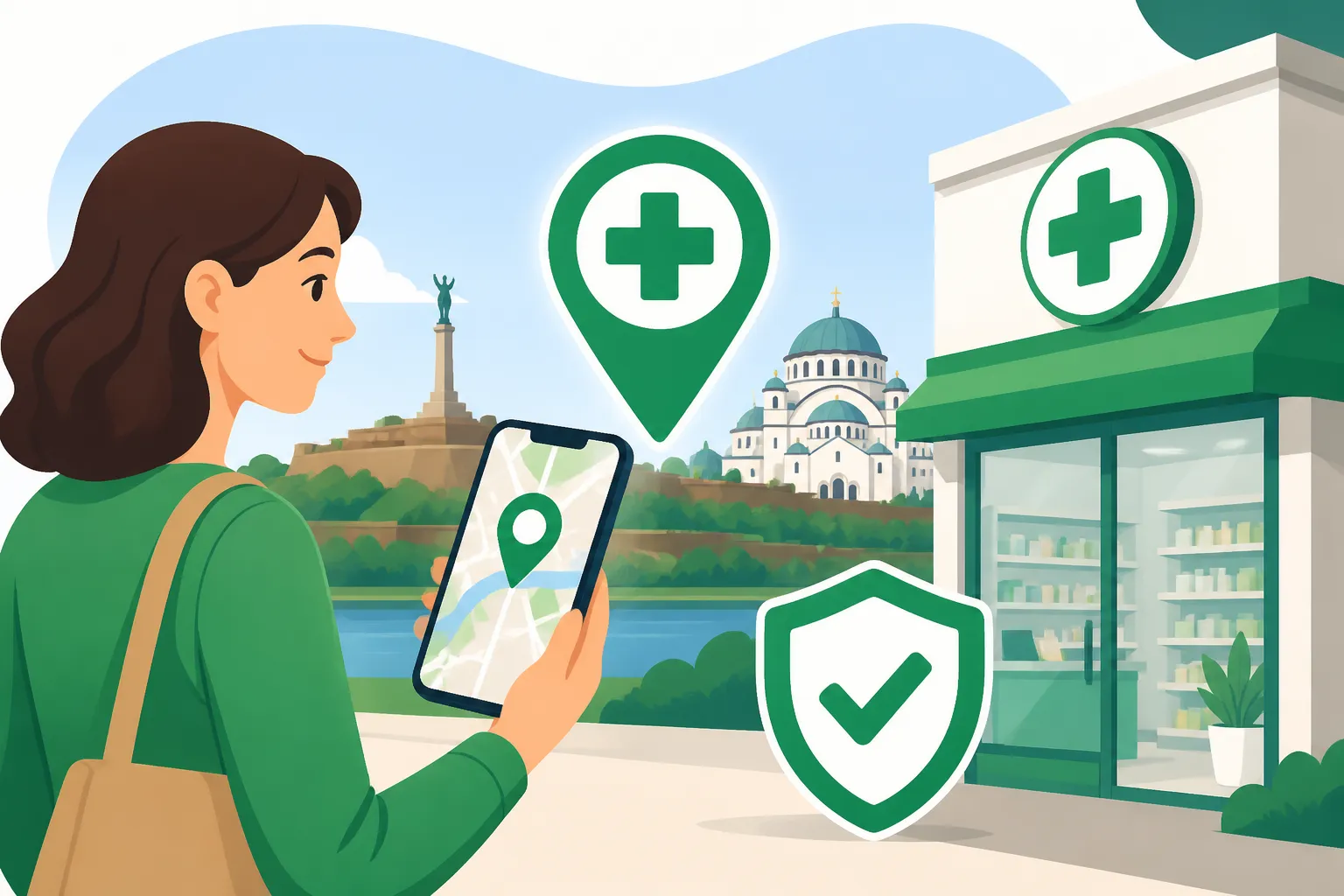
Your smartphone is your best friend here. The most straightforward way to find a pharmacy is by using Google Maps. Simply type "apoteka" or "pharmacy" into the search bar, and it will show you all the nearby options. What's fantastic about Google Maps is that it often displays opening hours, contact numbers, and crucially, user reviews. A pharmacy with a high rating and positive comments from other users, especially if some are in English, can be a good indicator of reliability and service quality.
When you're looking, pay close attention to the opening times. Most pharmacies operate during standard business hours, but many in central locations extend their hours, and some are open 24/7. For those late-night emergencies, explicitly search for "apoteka 24h" or "dežurna apoteka" (emergency pharmacy). Also, take a quick peek at the photos if available; a clean, well-organized interior can signal a professional establishment. While there isn't a dedicated "Belgrade Pharmacy Finder" app that's universally used by expats, relying on global tools like Google Maps is highly effective. Knowing how to efficiently use these tools can save you a lot of hassle and stress when you need medical supplies quickly, especially if you're experiencing a sudden illness before you've had a chance to register with the RFZO and a GP in Serbia (2026).
Asking for Recommendations and Local Insights
Never underestimate the power of word-of-mouth! Locals are an invaluable resource. If you're struggling to find a pharmacy or need one that's specifically known for good service or English-speaking staff, don't hesitate to ask. Your hotel receptionist, Airbnb host, or even a friendly waiter at a kafana can usually point you in the right direction. Just say "Gde je najbliža apoteka?" (Gde-yeh NYAHJ-bla-zha ah-poh-TEH-kah?) which means "Where is the nearest pharmacy?".
Beyond face-to-face interactions, expat online groups on platforms like Facebook are goldmines. Search for "Expats in Belgrade" or similar groups, and post your question. You'll often get immediate recommendations from people who have faced the exact same challenge. Many embassies in Belgrade also provide lists of recommended medical facilities, including pharmacies, that cater to foreigners. These personal recommendations are often the quickest way to find a truly trusted spot where you'll feel comfortable and understood, which is particularly important if you're new to the country and still figuring out How Serbia's Health System Works: The RFZO and Private Care Explained (2027).
Identifying 24/7 and Emergency Pharmacies (Dežurne Apoteke)
Emergencies don't follow a schedule, and neither should your access to medication. Belgrade has a system of 24/7 pharmacies, known as "dežurne apoteke," which are crucial to know about. These are scattered across the city and operate around the clock, every day of the year. While many smaller, neighborhood pharmacies will close in the evening, these emergency ones are always open.
Some of the most well-known 24/7 pharmacies in central Belgrade include Apoteka "Sveti Sava" at Nemanjina 2, Apoteka "Prvi Maj" at Kralja Milana 9, and Apoteka "Beograd" at Makenzijeva 27 (Slavija Square). These are not just for dire emergencies; they're also where you'd go if you suddenly remember you're out of a crucial daily medication late at night. It’s worth making a mental note of the closest 24/7 pharmacy to your home or accommodation. You can easily find the most up-to-date list by searching "dežurne apoteke Beograd" online, which often leads to local news sites or official pharmacy listings detailing the rotating schedule for other, non-24/7 pharmacies that might take turns staying open late. This information is a lifesaver for any expat, and forms a key part of knowing what to do in Emergency Medical Care in Serbia: What Every Expat Needs to Know.
| Feature | General Pharmacy (Regular Hours) | Dežurna Apoteka (24/7 Emergency Pharmacy) |
|---|---|---|
| Availability | Primarily daytime, some extended evening hours. | Always open, 24 hours a day, 7 days a week, including holidays. |
| Location | Ubiquitous in all neighborhoods. | Strategically located in key city areas, fewer in number. |
| Staffing | May vary in English proficiency; likely fewer staff late at night. | More likely to have staff accustomed to urgent situations, possibly better English, especially in central locations. |
| Stock | Standard range of prescription and over-the-counter medications, supplements, cosmetics. | Focus on essential medications; may have a slightly more limited non-essential range during off-hours. |
| Services | Standard dispensing, advice, some basic health checks. | Primarily focused on urgent dispensing; less emphasis on general consultation during peak emergency hours. |
| Typical Use Case | Routine prescriptions, common ailments, health and beauty products. | Unexpected illness, urgent medication refills, after-hours health concerns. |
What to Look For in a Trusted Pharmacy and Key Services
Beyond just finding a pharmacy, knowing what makes one "trusted" and what services to expect can significantly enhance your experience in the Serbian healthcare system. It’s more than just getting your pills; it's about getting good advice and reliable products.
English-Speaking Staff and Professionalism
This is often the number one concern for expats, and for good reason. Trying to explain your symptoms or understand medication instructions in a language you don't fully grasp can be incredibly stressful and even dangerous. While it's not guaranteed, many pharmacists in Belgrade, especially those in younger generations or those working in more central or tourist-heavy areas, do speak English. Look for signs that might indicate "English spoken" or simply start with a polite "Dobar dan, da li pričate engleski?" (Doh-bar dan, da-li PREE-cha-teh eng-LES-ki?) – "Good day, do you speak English?".
A trusted pharmacy will have staff who are not only competent in their medical knowledge but also patient and willing to help bridge any language gaps. They should be professional, offer clear explanations about dosages, potential side effects, and drug interactions. Don't be shy about asking questions; a good pharmacist is a vital part of your healthcare network, sometimes even acting as a first point of contact before you feel the need to see a doctor. This kind of communication is vital, whether you're understanding how specialist and hospital referrals work in Serbia or just picking up a common cold remedy.
Range of Medications and Over-the-Counter Options
Serbian pharmacies are generally well-stocked with a wide array of both prescription and over-the-counter (OTC) medications. For prescription drugs, you'll need a valid prescription from a Serbian doctor – either from a public health center (dom zdravlja) or a private clinic. If you have a foreign prescription, it's best to consult a local doctor first, as it might not be directly accepted. However, for a detailed look at this, you might want to read Prescription Medications and Pharmacies in Serbia: The Complete Guide.
When it comes to OTC options, you'll find everything from painkillers like paracetamol and ibuprofen, cold and flu remedies, allergy medications, and basic first-aid supplies. What might surprise you is that some medications that require a prescription in your home country might be available over the counter here, and vice versa. For example, some antibiotics can be obtained with a prescription, but pharmacists are quite strict about this. On the other hand, a variety of vitamins, supplements, and herbal remedies are widely available. If you're wondering can I buy antibiotics over the counter in Serbia?, the answer is usually no, but the pharmacist can advise on alternatives or direct you to a doctor. Many pharmacies also carry a range of international cosmetic and dermatological brands, often at competitive prices.
Beyond Medications: Additional Pharmacy Services
Think of pharmacies in Serbia as more than just places to pick up medicine; they're often community health hubs. Pharmacists are highly trained professionals who can offer valuable advice on minor ailments, symptoms, and general well-being. They can recommend suitable OTC treatments, suggest lifestyle adjustments, or even advise you on whether your symptoms warrant a doctor's visit. This is especially helpful if you're trying to figure out What Documents Do I Need to See a Doctor in Serbia? or navigate the initial steps of the healthcare system.
Many pharmacies also provide basic health checks, such as blood pressure measurement. You'll find a vast selection of dietary supplements, vitamins, herbal teas, and even specialized medical foods. For families, the baby care sections are often extensive, offering everything from infant formula to diapers and skincare products. These additional services make pharmacies an integral part of Navigating the Serbian Healthcare System: An Expat's Roadmap (2027) and a convenient first stop for many everyday health concerns, reinforcing the pharmacist's role as an accessible healthcare advisor.
Navigating Payment and Insurance Considerations
Understanding how to pay for your medications and what your health insurance covers is a crucial piece of the puzzle, preventing unwelcome surprises at the till.
Understanding Costs and Payment Methods
One of the pleasant discoveries for many expats in Serbia is the relatively affordable cost of medications, especially when compared to Western Europe or North America. Generic drugs, in particular, are quite budget-friendly. Even branded medications are often less expensive than what you might be used to. This affordability is a significant factor in Why Serbia Has Affordable Healthcare: The Expat Guide (2027).
Most pharmacies in Belgrade accept both cash (Serbian Dinars, RSD) and major credit/debit cards (Visa, Mastercard, Maestro). It's always a good idea to carry some cash, especially if you're venturing into smaller, independent pharmacies or if there's a rare issue with card machines. You'll typically pay for your medications directly at the counter. For a broader understanding of overall medical expenses, you can refer to The Cost of Healthcare in Serbia: A Complete Breakdown for Foreigners (2026), which covers everything from doctor visits to specialist care. Rest assured, you shouldn't encounter any hidden fees, and the price displayed is usually what you'll pay.
Using Private and Travel Health Insurance
If you're an expat, you might be covered by the Republic Health Insurance Fund (RFZO) if you're employed and registered. In this case, for prescription medications, you'll often have a co-payment (participacija) depending on the drug, which is usually a small fixed fee or a percentage of the total cost. However, many expats also opt for private health insurance or rely on international travel insurance.
For those with private or travel health insurance, the process at the pharmacy is usually "pay and claim." You'll pay for your medication upfront and then submit the receipt to your insurance provider for reimbursement. It's vital to always ask for an itemized receipt (fiskalni račun), which should clearly state the name of the medication, the cost, and the date. Some insurance providers, like SafetyWing, are very familiar with this process and offer clear instructions on how to submit claims. Make sure you understand your policy's terms regarding medication coverage, especially for pre-existing conditions or specific drug categories. Keeping detailed records of all your medical expenses, including pharmacy purchases, is crucial for smooth reimbursement. For an in-depth look at this, check out How to Claim Reimbursement from Private Insurance in Serbia.
Remember, while your international travel insurance or private expat plan, such as those offered by SafetyWing, might cover a range of unexpected medical expenses, including pharmacy costs, it's always best to familiarize yourself with the specific terms and conditions of your policy before you need to use it. Knowing you have reliable coverage, like that provided by SafetyWing, can offer immense peace of mind. For comprehensive information on different coverage options, including those beyond the RFZO, see Health Insurance in Serbia: RFZO, Private and International Options Explained.
Disclaimer
The information provided in this guide is intended for general informational purposes only and does not constitute medical advice. While we strive to provide accurate and up-to-date information, local regulations, prices, and availability can change. Always consult with a qualified healthcare professional for any health concerns or before making any decisions related to your health or treatment.