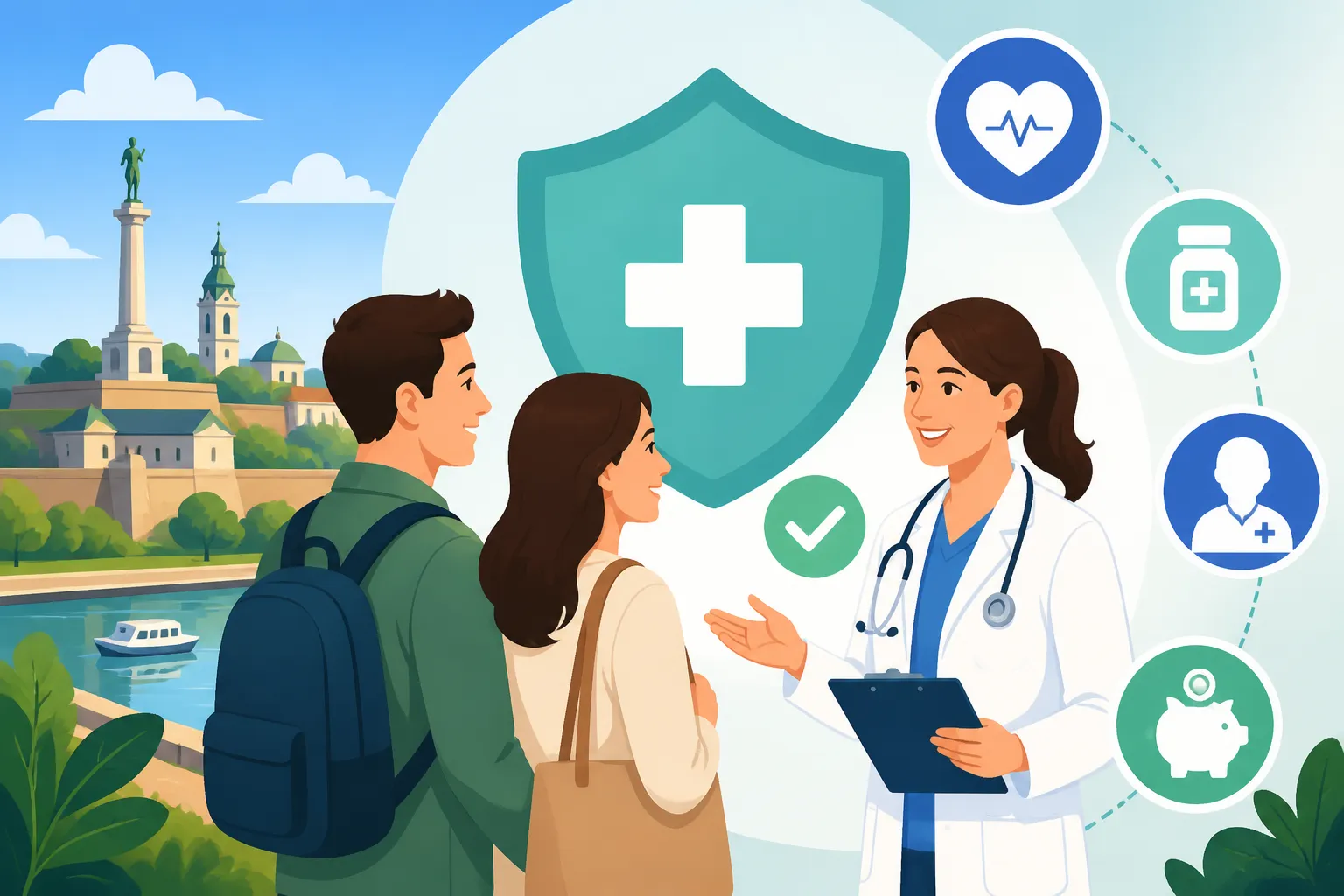
Why Serbia Has Affordable Healthcare: The Expat Guide (2027)
The dizzying array of healthcare systems and their associated costs can be one of the biggest sources of anxiety when you’re planning a move abroad. Many of us arrive in a new country braced for eye-watering medical bills, long waits, or complex insurance schemes. But what if I told you that in Serbia, accessing quality healthcare doesn't have to drain your life savings? This comprehensive guide will peel back the layers and explain exactly why Serbia's healthcare system stands out for its affordability, while still providing robust care for expats and locals alike.
The Serbian Healthcare System: An Overview for Expats
Navigating a new country's healthcare system can feel like learning a whole new language, and Serbia is no exception. Before we dive into the "why it's affordable" aspect, it's crucial to understand the fundamental structure. Serbia operates a dual healthcare system, meaning you have both public and private options available. For many expats, this flexibility is a huge advantage, allowing them to choose the level of care and speed of access that best suits their needs and budget.
Public vs. Private Healthcare: A First Look
Think of the public system as the backbone of Serbian healthcare. It’s primarily funded through mandatory contributions from salaries, and it aims to provide universal access to medical services for all insured residents. This includes general practitioner visits, specialist consultations, hospital stays, and prescription medications, often with minimal out-of-pocket costs. When you first arrive, particularly if you’re employed or self-employed, getting integrated into this system will be one of your initial priorities. It’s where you’ll typically find your local health center, known as a Dom Zdravlja, which is usually your first point of contact for non-emergency care.
On the flip side, the private healthcare sector in Serbia has seen significant growth over the last couple of decades. Private clinics and hospitals operate independently, offering a more streamlined experience, shorter waiting times, and often more modern facilities and equipment. While you pay directly for these services or through a private insurance plan, the costs are remarkably competitive, especially when compared to Western European or North American prices. Many expats find themselves using a hybrid approach, leveraging the affordability of the public system for routine care once registered, and turning to private clinics for quick appointments or specialized procedures when convenience is a priority. For a deeper dive into these options, check out our guide on Public vs Private Healthcare in Serbia: What Expats Need to Know.
The Role of the Republic Health Insurance Fund (RFZO)
At the heart of Serbia's public healthcare system is the Republic Health Insurance Fund, or RFZO (Republički fond za zdravstveno osiguranje). This is the government institution responsible for managing mandatory health insurance and ensuring that everyone contributing to the fund has access to medical services. If you're legally employed in Serbia, your employer will automatically deduct contributions from your salary and pay them to the RFZO on your behalf. If you're self-employed, you'll be responsible for making these contributions yourself.
Once you’re registered with the RFZO, you'll receive a health insurance card (often referred to as a "knjižica" or "zdravstvena kartica"). This card is your golden ticket to the public healthcare system. It allows you to register with a general practitioner (izabrani lekar) at your local Dom Zdravlja, access specialist care through referrals, and receive subsidized or free prescription medications. Without this registration, accessing public services can be complicated and will typically require you to pay out-of-pocket for everything, which can be significantly more expensive. Therefore, understanding the role of the RFZO and ensuring your timely registration is paramount for tapping into Serbia's affordable healthcare. Our guide on How to Register with the RFZO and a GP in Serbia (2027) provides a detailed walkthrough of this essential process.
Unpacking the Costs: Why Public Healthcare in Serbia is Budget-Friendly
Now, let's get to the crux of the matter: why exactly is public healthcare in Serbia so affordable, especially for expats who might be used to exorbitant fees elsewhere? It really boils down to a combination of systemic design, government subsidies, and the overall economic landscape of the country. These factors work in tandem to keep essential medical services within reach for almost everyone.
Mandatory Contributions and Access
The primary mechanism for funding public healthcare in Serbia is through mandatory social security contributions. These contributions are deducted directly from salaries for employees, or paid by self-employed individuals and entrepreneurs. Currently, the rate for health insurance contributions is set at a manageable percentage of your gross salary. This isn't a unique concept; many European countries operate on a similar model. However, in Serbia, the amount of these contributions, when compared to the average salary and the comprehensive coverage they provide, is where the affordability really shines.
What you get in return for these contributions is access to a wide array of services without additional charges, or with very minimal co-payments. This means a visit to your general practitioner, a consultation with a specialist (once referred), basic diagnostic tests, and even hospital stays are largely covered. This eliminates the uncertainty and financial burden that often comes with navigating a fee-for-service model. For instance, if you're earning a modest salary, your monthly health contributions will ensure you're covered for anything from a routine check-up to a more serious medical event, without having to worry about thousands of euros in unexpected bills. This is a stark contrast to systems where a single emergency room visit can leave you with a crippling debt, even if you have some form of insurance.
Low Co-Payments and Subsidies
Even with mandatory contributions, some healthcare systems still sting you with high co-payments for every service. Not so much in Serbia. The public healthcare system is characterized by remarkably low co-payments, known as participacija. For many services, such as a GP visit or a routine blood test, the co-payment is often a symbolic amount, usually a few hundred dinars (equivalent to a few euros). In many cases, for certain categories of patients or specific conditions, services are completely free.
Furthermore, the government heavily subsidizes the cost of many prescription medications. When you get a prescription from your RFZO-registered doctor, you'll often pay only a fraction of the actual cost at the pharmacy, with the RFZO covering the rest. This is especially impactful for individuals with chronic conditions who require ongoing medication. This subsidy system ensures that essential medicines are accessible to everyone, preventing a situation where people forgo necessary treatment due to cost. For expatriates, this can be a pleasant surprise, especially if you're used to paying full price for medications or navigating complex insurance reimbursement processes. Understanding Out-of-Pocket Healthcare Costs and Co-Payments in Serbia can help clarify these smaller fees.
Government Investment in Public Facilities
While the private sector flourishes, the Serbian government continues to invest in its public healthcare infrastructure. Major hospitals and health centers receive funding for equipment upgrades, renovations, and staffing. Although the public facilities might not always have the gleaming, five-star hotel aesthetics of some private clinics, they are generally well-equipped for most medical needs and staffed by highly trained medical professionals. The emphasis is on functionality and providing core medical services efficiently rather than luxury.
This sustained investment, coupled with lower operational costs compared to Western nations, allows public institutions to offer comprehensive services at a fraction of the price. The public system handles the vast majority of emergency cases, complex surgeries, and long-term care, making it an invaluable resource. This means that if you face a serious health issue requiring hospitalization or intricate procedures, the public system is there to provide the necessary care without the astronomical bills you might encounter elsewhere. It’s this foundational commitment to accessible public health that underpins much of Serbia's healthcare affordability.
The Private Healthcare Sector: Quality without Breaking the Bank
Many expats are accustomed to thinking of private healthcare as an exclusive, ultra-expensive option. While it's certainly a premium compared to the public system in Serbia, the private sector here offers a sweet spot: high-quality services, modern facilities, and often English-speaking staff, all at prices that remain remarkably competitive on an international scale. It truly allows for quality without necessarily breaking the bank.
Competitive Pricing in Private Clinics
One of the most appealing aspects of Serbia's private healthcare for expats is the pricing structure. A private specialist consultation, for example, which might cost several hundred euros in Western Europe or the US, often falls within the range of 30-70 euros in Belgrade or Novi Sad. Basic diagnostic tests like blood work, X-rays, or ultrasound scans are similarly affordable, typically costing anywhere from 10 to 50 euros per test, depending on complexity. Even more advanced procedures, such as MRI scans, are considerably cheaper. You could expect to pay around 150-250 euros for an MRI in a private Serbian clinic, which is a fraction of the cost in many other developed countries.
This competitive pricing is a significant draw for many expats who might not yet be fully integrated into the RFZO system or who simply prefer the speed and convenience of private care. It means that seeking a second opinion, getting a dental check-up, or seeing a dermatologist doesn't require a major financial decision or a long wait. Popular private clinic chains like Euromedik, Medigroup, and Health Care System in Belgrade offer extensive services at these accessible price points, making them go-to options for many foreigners.
Direct Access to Specialists and Modern Facilities
The private sector truly shines when it comes to accessibility and speed. In the public system, you typically need a referral from your izabrani lekar to see a specialist, and waiting times can sometimes be a factor, particularly for non-urgent appointments. In private clinics, however, you can usually book an appointment directly with a specialist of your choice, often for the same day or within a few days. This direct access is invaluable when you need timely care or want to consult with a specific expert.
Moreover, private facilities often boast very modern equipment and comfortable, patient-friendly environments. Many private hospitals and clinics are newly built or recently renovated, featuring state-of-the-art diagnostic machines and comfortable waiting areas. They often cater to an international clientele, with a higher likelihood of finding English-speaking doctors and administrative staff, which can significantly ease the stress of medical appointments when you're not fluent in Serbian. This blend of accessibility, modern amenities, and multilingual staff, combined with the reasonable costs, makes private healthcare a very attractive proposition for expats in Serbia. To explore your choices, our article on How to Use Major Hospitals and Clinics in Belgrade offers more specific details.
The Role of Private Health Insurance
While direct payment for private services is common due to their affordability, many expats also opt for private health insurance plans. These plans can further reduce out-of-pocket expenses and provide an additional layer of financial security, especially for more extensive or unforeseen medical needs. Private insurance in Serbia typically covers a range of services from specialist consultations and diagnostics to more complex treatments and hospitalization, depending on the policy chosen.
The cost of private health insurance in Serbia is also quite reasonable compared to international benchmarks. A comprehensive private plan for an individual might range from 50 to 150 euros per month, depending on age, coverage level, and pre-existing conditions. These plans often offer benefits like direct billing with partner clinics, eliminating the need for upfront payments and reimbursements. For digital nomads or those who are in Serbia temporarily, even international travel insurance providers like SafetyWing can provide adequate coverage for emergencies and basic medical needs before committing to a local plan or the RFZO. Understanding Private Health Insurance Plans in Serbia is key to making an informed decision about this option. Even for those not required to pay into the RFZO, having some form of private coverage provides immense peace of mind.
Pharmaceuticals and Dental Care: More Savings for Expats
Beyond general medical consultations and hospital care, two other critical areas where expats often find significant savings in Serbia are pharmaceuticals and dental care. The pricing structures in these sectors are generally very favorable compared to what many foreigners are used to, contributing greatly to the overall affordability of healthcare.
Affordable Medication Prices
One of the most noticeable differences for many expats in Serbia is the price of prescription medications. Thanks to a combination of government regulation, lower manufacturing costs, and an efficient supply chain, medicines are often considerably cheaper than in Western countries. This holds true for both generic and branded drugs. For those registered with the RFZO, many essential medications are heavily subsidized, meaning you pay only a small co-payment or sometimes nothing at all. Even for over-the-counter drugs or those purchased without an RFZO prescription at full price, the costs are generally much lower than international averages.
Pharmacies (apoteke) are ubiquitous in Serbian cities and towns, often operating 24/7 in larger urban centers like Belgrade. Pharmacists are highly knowledgeable and can offer advice on minor ailments. While some medications, particularly antibiotics, require a doctor's prescription, many common drugs for pain relief, colds, allergies, and digestive issues are readily available without one. This easy access and affordability mean that managing chronic conditions or simply treating a common cold doesn't impose a major financial burden. Our guide on Prescription Medications and Pharmacies in Serbia: The Complete Guide offers more detailed information on navigating the system.
The Cost-Effectiveness of Dental Procedures
Dental care is another area where Serbia truly shines in terms of affordability and quality. Many expats and even medical tourists specifically visit Serbia for dental work due to the significant cost savings. Routine check-ups, cleanings, and fillings are incredibly inexpensive compared to countries like the UK, Germany, or the US. For instance, a dental cleaning might cost between 20-40 euros, while a filling could range from 30-70 euros.
More complex procedures, such as root canals, crowns, implants, or orthodontic treatments, also come with a much smaller price tag. A dental crown, which might cost upwards of 800-1500 euros in some Western countries, can be found for 150-300 euros in Serbia, often utilizing high-quality materials and modern techniques. This makes comprehensive dental care, which is often excluded from standard health insurance plans or comes with high out-of-pocket costs elsewhere, remarkably accessible. There are numerous modern dental clinics across Serbia, particularly in Belgrade and Novi Sad, many of which cater to international patients and have English-speaking staff. Understanding Dental Care Costs in Serbia can help you budget for your oral health needs.
Economic Factors Influencing Healthcare Costs
The affordability of healthcare in Serbia isn't just about government policy or local pricing decisions; it's deeply rooted in broader economic factors that shape the cost structure of almost every service in the country. Understanding these underlying economic realities helps explain why medical care, from a simple check-up to complex surgery, remains accessible.
Lower Overhead and Operating Costs
One of the most significant factors contributing to lower healthcare costs in Serbia is the generally lower overhead and operating expenses for medical facilities, both public and private. This includes everything from rent and property costs to utilities, administrative expenses, and even the cost of medical supplies and equipment (though the latter often needs to be imported, the overall operational context helps). Compared to Western European capitals or major North American cities, the cost of running a clinic or a hospital in Belgrade or Novi Sad is substantially lower.
This lower operational burden allows medical institutions to offer their services at more competitive rates without compromising on profit margins or quality of care. It's a fundamental economic principle: if your fixed costs are lower, you can afford to charge less for your services. This economic reality benefits consumers directly, as the savings are often passed on in the form of more affordable treatments and consultations. It’s not about cutting corners, but about operating within a different economic framework that simply costs less at every level.
Wage Structures and Professional Fees
Another critical component of affordable healthcare in Serbia relates to wage structures and professional fees. While Serbian doctors, nurses, and other medical professionals are highly skilled and educated, their average salaries are generally lower than their counterparts in Western Europe or North America. This isn't unique to the medical field; it's a reflection of the overall average wage and cost of living in Serbia.
Naturally, personnel costs represent a significant portion of any healthcare provider's budget. With lower average salaries for medical staff, clinics and hospitals can keep their service fees down. This means that a specialist consultation fee isn't inflated to cover an exceptionally high hourly rate for the doctor. Instead, it reflects a more modest professional fee that is aligned with the local economic context. This doesn't imply a lack of quality or dedication; Serbian medical education is robust, and professionals are often trained to a high standard, with many having international experience. The difference is simply in the market value of labor within the Serbian economy.
Currency Exchange and Purchasing Power
For many expats, especially those earning salaries in stronger foreign currencies (like USD, EUR, GBP), the exchange rate works significantly in their favor. The Serbian Dinar (RSD) has a relatively stable but lower value compared to these major currencies. This means that when you convert your foreign income into Dinars to pay for local services, your purchasing power is significantly amplified.
What might seem like an affordable price in Dinars becomes even more budget-friendly when viewed through the lens of your higher-value foreign currency. This phenomenon isn't exclusive to healthcare; it applies to rent, groceries, dining out, and other services. However, it's particularly impactful in healthcare, where costs can quickly escalate. The favorable exchange rate essentially provides an additional discount, making an already affordable system even more attractive to those relocating from countries with higher earning potential. This dynamic contributes heavily to Why Serbia Has Affordable Healthcare: The Expat Guide (2027) in comparison to other nations.
Navigating the System for Maximum Savings
Understanding why Serbia's healthcare is affordable is one thing; learning how to navigate the system to truly maximize those savings is another. For expats, a strategic approach combining public and private options, along with appropriate insurance, can lead to efficient and cost-effective care.
Maximizing Public Health Benefits
For long-term residents and those employed in Serbia, fully integrating into the public healthcare system via the RFZO is the most effective way to ensure comprehensive, low-cost coverage. As mentioned, your employer will typically handle your contributions, or as a self-employed individual, you'll manage them yourself. Once you're registered and have chosen your general practitioner (izabrani lekar), make that doctor your first point of contact for all non-emergency health concerns. They are your gateway to the system, providing referrals to specialists and prescriptions for subsidized medications.
Don't underestimate the public Dom Zdravlja system for routine care, vaccinations, and even minor emergencies. While waiting times for certain specialist appointments might be longer than in private clinics, the core services are robust and virtually free once you’re insured. For parents, understanding Childhood Vaccination Schedules in Serbia is also crucial and these are typically administered through the public system at little to no cost. By using the public system for what it does best – comprehensive, subsidized basic and preventative care – you significantly reduce your overall medical expenses.
Strategic Use of Private Options
While the public system covers a lot, there will be times when the convenience, speed, or specialized nature of private healthcare is preferable. This is where strategic use comes in. If you need to see a specialist quickly, get a second opinion, or prefer the comfort and English-speaking staff of a private clinic, don't hesitate. The costs, as discussed, are very reasonable. For instance, if you're dealing with a sudden illness and can't get an immediate public appointment with your GP, a private clinic visit can offer quick diagnosis and treatment for a manageable fee.
Many expats use private clinics for dental work, optician services, or even specific diagnostic tests where they want faster results or more advanced equipment. This hybrid approach allows you to leverage the best of both worlds: the affordability of the public system for foundational care and the efficiency and comfort of the private sector for specific needs. It's about being informed and making conscious choices about where and how you seek treatment. This careful balance ensures you get excellent care without facing financial strain, a crucial part of Navigating the Serbian Healthcare System: An Expat's Roadmap.
The Value of Travel and Expat Insurance
For newcomers, especially those who are still in the process of obtaining their long-term residence and RFZO registration, or those on shorter stays, international travel or expat insurance is an absolute must. Providers like SafetyWing offer flexible plans that cover emergencies, medical evacuations, and even some routine care, acting as a crucial safety net before your local health insurance kicks in. This type of insurance can bridge the gap during your initial months, ensuring you're protected against unexpected medical costs.
Even for established expats, some international policies provide coverage for travel outside Serbia or for specific benefits not covered by the RFZO, such as high-end dental work or certain international prescriptions. Having this supplemental insurance can offer additional peace of mind, especially if you travel frequently or have specific healthcare needs that might benefit from broader international coverage. It’s an investment in your safety and financial security, ensuring that you're never caught off guard by medical expenses, no matter your residence status or travel plans.
Common Misconceptions About Healthcare Costs in Serbia
When you hear that healthcare is "affordable," especially if you're coming from a country with very high medical costs, it's natural to be a bit skeptical. Many expats arrive with preconceived notions or fears that don't quite align with the reality on the ground in Serbia. Let's debunk some common myths.
Dispelling Myths About Quality vs. Cost
The most prevalent misconception is often a direct link between low cost and low quality. People assume that if something is cheap, it must be inferior. This is simply not true for Serbian healthcare. While the aesthetic of some public facilities might not always match the gleaming, modern private clinics, the quality of medical training and the dedication of healthcare professionals are generally very high. Serbian doctors are well-educated, often trained in a robust university system, and many have experience working abroad in Western countries.
The affordability stems from the economic factors we've discussed – lower overheads, different wage structures, and a strong government commitment to public health – not from cutting corners on patient care or medical expertise. In fact, many Serbians and even foreigners from neighboring countries choose to have complex surgeries or treatments in Serbia precisely because they offer excellent value for money. Patients report positive experiences, effective treatments, and compassionate care across both public and private sectors. It's a system designed to be accessible, not necessarily luxurious, but effective nonetheless. Don't let the affordable price tag mislead you into thinking you're getting second-rate care; it's quite the opposite.
Understanding "Hidden" Costs (and how to avoid them)
Another common fear is the idea of "hidden" costs that suddenly appear, making the affordable system not so affordable after all. While it's true that navigating any new system requires diligence, the Serbian healthcare system is generally quite transparent about its costs, especially in the private sector. In public healthcare, once you're RFZO-insured, most costs are covered, with only minimal co-payments.
However, "hidden" costs often arise from a lack of understanding or preparation. For instance, if you try to access public specialist care without an RFZO registration and a referral from your izabrani lekar, you will be charged full price, which can be significantly higher. Similarly, if you require medication that is not on the RFZO's subsidized list, you'll pay full price at the pharmacy. The key to avoiding unexpected expenses is to understand How Serbia's Health System Works: The RFZO and Private Care Explained (2027) and actively engage with it. Register with the RFZO as soon as you're eligible, choose your GP, and always carry your health insurance card.
In the private sector, clinics are usually very upfront about their pricing. Always ask for a price list or an estimate before undergoing any procedure. If you have private insurance, confirm whether the clinic has a direct billing agreement with your provider or if you'll need to pay upfront and seek reimbursement. By taking these proactive steps, you can confidently navigate Serbia's healthcare landscape, enjoying its affordability without any unpleasant surprises.
| Service Category | Public System (RFZO Insured) | Private Clinic (Approximate EUR) | Notes |
|---|---|---|---|
| GP Consultation | ~2-5 EUR (co-payment) | 30-50 EUR | Public: Referral for specialists. Private: Direct access, often English-speaking. |
| Specialist Consultation | ~5-10 EUR (co-payment) | 40-70 EUR | Public: Requires GP referral. Private: No referral needed, shorter wait times. |
| Blood Tests (Basic Panel) | ~2-3 EUR (co-payment) | 10-30 EUR | Public: Covered with referral. Private: Often faster results. |
| Dental Cleaning | Limited coverage (few services) | 20-40 EUR | Most dental work is primarily private in practice for quality. |
| Simple Filling | Limited coverage (few services) | 30-70 EUR | High quality materials in private clinics. |
| MRI Scan | Covered (with referral) | 150-250 EUR | Public: Can have longer wait times. Private: Quick appointments. |
| Prescription Medications | Subsidized / Free | Full Price (still affordable) | Public: Significant savings for chronic conditions. Private: Available without RFZO prescription, but at full cost. |
| Emergency Room Visit | Free | Varies (often higher for self-paid) | Public: Primary choice for emergencies, comprehensive. Private: Limited ER services. |
Prices are estimates for 2026 and can vary based on location, specific clinic, and complexity of service.
Disclaimer
The information provided in this guide is intended for general informational purposes only and does not constitute medical, legal, or financial advice. While we strive to ensure accuracy and provide up-to-date information, healthcare systems, regulations, and costs in Serbia can change. Expats should always consult with official sources, healthcare providers, legal professionals, and financial advisors for personalized advice relevant to their specific situation. We strongly recommend verifying all critical information directly with the relevant Serbian authorities, such as the RFZO or the Ministry of Health, and trusted local experts.