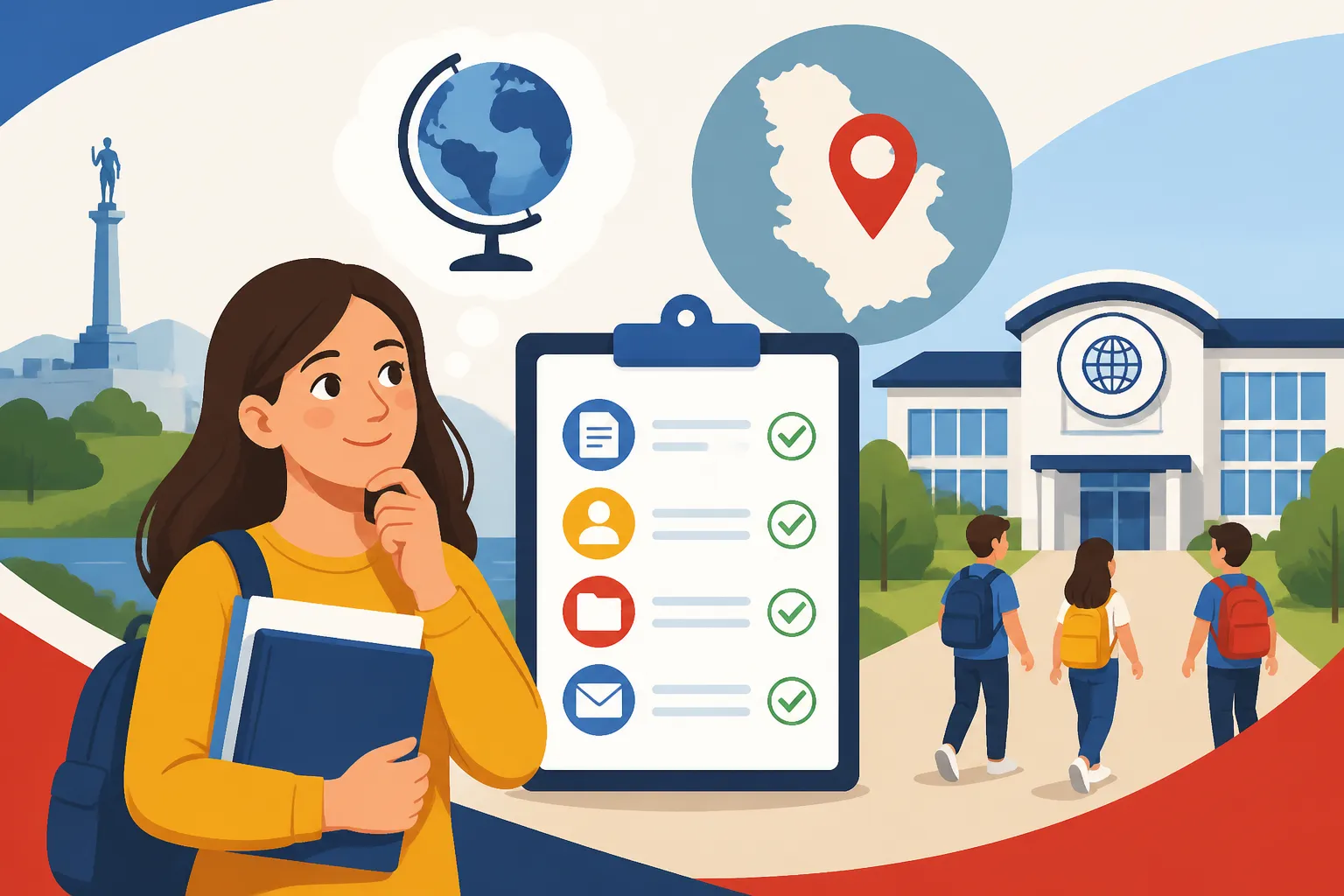
How Do I Apply for an International School Place in Serbia?
Moving to a new country with children brings a whole new layer of considerations, and for many expat parents arriving in Serbia, one of the biggest questions is: where will my kids go to school? The local system can feel daunting, especially if your children don't speak Serbian, and finding an international school place that fits your family's needs and aspirations can feel like a high-stakes scavenger hunt. This guide is here to untangle that process, offering a clear, empathetic roadmap to securing an international school place for your child in Serbia.
Demystifying International Schools in Serbia
When you're looking at schooling options for your children in a foreign land, the term "international school" often jumps to the top of the list. But what does that really mean in the Serbian context, and why do so many expat families gravitate towards them? Let's break it down.
What Makes Them "International"?
Firstly, international schools in Serbia, particularly in Belgrade, operate under different educational frameworks than the national curriculum. This means they typically follow globally recognised programmes like the International Baccalaureate (IB) Primary Years Programme (PYP), Middle Years Programme (MYP), and Diploma Programme (DP), or they might adhere to British curricula like the Cambridge International Examinations (IGCSE, A-Levels) or the American curriculum. The language of instruction is almost exclusively English, though some schools might offer French or German tracks.
What truly sets them apart is their multicultural environment. Your child will be sitting alongside students from dozens of different nationalities, and the teaching staff themselves are often international. This creates a vibrant, global atmosphere where diversity is celebrated, and children quickly learn to navigate different cultural perspectives. These schools are designed with the transient nature of expat life in mind, aiming to provide a seamless educational transition for children moving between countries, ensuring their academic progress remains consistent and their qualifications are recognised worldwide.
Why Expats Choose International Schools
For families making Serbia their home, whether temporarily or long-term, choosing an international school often boils down to several key advantages. The most obvious is the language barrier – if your children aren't fluent in Serbian, an English-speaking environment is essential for their immediate academic and social integration. It avoids the stress of language acquisition during an already significant life change.
Beyond language, there's the continuity of education. If your child has been following the British system in Dubai or the IB programme in Amsterdam, continuing that same curriculum in Belgrade makes their academic journey much smoother. This is vital when considering their future university applications or if you anticipate another move down the line. Moreover, these schools tend to have smaller class sizes, offering more individualised attention, and often boast a wider range of extracurricular activities, from robotics clubs to drama societies, which might not be as readily available or as diverse in local schools. They also foster a strong expat community, which can be invaluable for both parents and children in settling into a new country. You'll find that these schools often become the hub for social connections, supporting families in navigating life in Serbia.
Locations and Accessibility
Most of Serbia's international schools are concentrated in Belgrade, the capital city, which makes sense given it's the primary hub for expats and international businesses. You'll find many of the prominent ones nestled in green, residential areas known for their villas and quieter streets, such as Senjak, Dedinje, and Voždovac. The International School of Belgrade (ISB), Chartwell International School, the British International School (BIS), and Primrose International School are all well-established names that frequently come up in expat discussions.
While these neighborhoods are generally pleasant, accessibility is something you'll want to factor in when considering your family's daily routine. Traffic in Belgrade can be a real headache, especially during peak hours. Many international schools offer dedicated school bus services, which can be a lifesaver for parents juggling work and other commitments. If you plan to drive your children yourself, consider the proximity of the school to your chosen neighbourhood and your workplace. You'll want to think about How to Choose Between Belgrade, Novi Sad and Nis to Live In? as your decision here will greatly impact your daily commute to school. Public transport, while extensive, might not always be the most convenient option for young children or those carrying heavy backpacks. Remember to factor in your commute when planning your day, as you don't want to spend hours stuck in traffic just to get the kids to school.
The Step-by-Step Application Journey
Navigating the application process for an international school in Serbia can feel like a mini-project in itself. It's not just filling out a form; it requires careful planning, document gathering, and understanding the nuances of each institution.
Initial Research and Shortlisting
Before you even think about putting pen to paper, immerse yourself in the world of international schools in Serbia. Each school has its unique ethos, curriculum, and community feel. Start by visiting their official websites, poring over their "About Us" sections, and checking out their academic programmes. Do they offer the IB Diploma, A-Levels, or an American High School Diploma? How does their approach to early years education align with your philosophy?
Many schools offer virtual tours or open days, which can give you a better feel for the environment and staff, even if you're still abroad. Don't underestimate the power of expat forums and social media groups. You’ll often find parents sharing honest experiences, tips, and insights that you won’t get from a glossy brochure. Create a shortlist based on curriculum, location, academic reputation, and any specific programmes or support services your child might need. This initial legwork saves you time and ensures you're applying to schools that are a genuine fit.
Gathering Required Documentation
Ah, paperwork – the bane of every expat's existence! This is where you need to be meticulous. Every international school will have a list of required documents, and it's almost guaranteed to be extensive. Typically, you'll need:
- Application Form: Usually online.
- Passport Copies: For both the child and parents.
- Birth Certificate: This is crucial. In Serbia, for official matters, foreign documents often need to be apostilled (legalised for international use) in your home country and then officially translated into Serbian by a sworn court translator in Serbia. Sometimes, for school applications, English originals are sufficient, but confirm this with each school's admissions office.
- Previous School Records/Transcripts: Detailed reports from the last 1-3 academic years, translated into English if necessary.
- Recommendation Letters: From current teachers or school principals, especially for older students.
- Vaccination Records: Serbia takes health seriously, and you'll need to demonstrate your child's immunisation status. It's good to keep your The Complete Guide to Healthcare in Serbia for Expats (2027) handy as this forms a critical part of your family's integration.
- Photos: Passport-sized photographs of your child.
- Residence Permit or Proof of Application: While your child might not have their permanent residence permit (boravak) immediately, you'll likely need to show proof that you are actively seeking How to Get Temporary Residence (Boravak) in Serbia (2027) for your family.
- Medical Reports: Any relevant medical information, allergies, or special needs.
Start collecting these well in advance. Getting documents apostilled and translated can take time and involve multiple steps, so don't leave it until the last minute!
Navigating Admissions Tests and Interviews
Once your application is submitted and documents reviewed, many international schools will invite your child for admissions testing and/or an interview. This isn't just a formality; it's how schools assess your child's academic level, English proficiency, and readiness for their specific curriculum.
For younger children, this might be a play-based assessment to gauge their social skills and developmental stage. For primary and secondary students, expect tests in English (reading, writing, comprehension) and Mathematics. Don't panic – these tests are designed to understand where your child is, not to trick them. They're looking for potential and fit. Older students might also have an interview with a senior staff member, which is a chance for them to showcase their personality, interests, and motivation. For you as parents, there might be an interview as well, allowing the school to understand your expectations and how you plan to support your child's education. This interaction is also your opportunity to ask any lingering questions about the school’s philosophy, support systems, or how they handle common expat challenges.
Understanding Deadlines and Fees
International schools operate on their own academic calendars, which often align with Western school years (starting late August/early September). Application deadlines can vary significantly, with some of the most popular schools having waiting lists, especially for certain year groups. It’s always best to apply as early as possible, ideally 6-12 months before your desired start date, especially if you're aiming for a September intake.
The fee structure for international schools in Serbia can be complex. You'll typically encounter:
- Application Fee: A non-refundable fee paid upon submission of the application.
- Enrolment/Registration Fee: A one-time fee paid upon acceptance to secure your child's place. This is also often non-refundable.
- Annual Tuition Fees: This is the big one. It covers core academic programmes but often excludes extras. For a comprehensive overview, it's worth checking our guide on How Much Are International School Fees in Belgrade?
- Additional Costs: Be prepared for expenses like uniforms, school trips, extracurricular activities, lunch programmes, English as a Second Language (ESL) support, and bus services. These can add a significant amount to your overall bill.
It's crucial to get a full breakdown of all fees from the admissions office to avoid any surprises. Many schools offer various payment plans (annual, biannual, quarterly), which can help spread the financial burden.
Here’s a snapshot of typical international school offerings and approximate annual tuition ranges in Belgrade:
| School Name | Curriculum | Age Range | Estimated Annual Tuition (EUR) | Location (Belgrade) | Key Features |
|---|---|---|---|---|---|
| International School of Belgrade (ISB) | IB PYP, MYP, DP | 3-18 | 15,000 – 25,000+ | Senjak | Most established, highest diversity, large campus |
| Chartwell International School | British, IGCSE, A-Levels | 3-18 | 8,000 – 15,000+ | Dedinje | Strong academic focus, smaller class sizes |
| British International School (BIS) | British, IGCSE, A-Levels | 3-18 | 7,000 – 14,000+ | Dedinje/Voždovac | Emphasis on traditional British education |
| Primrose International School | British | 3-11 | 6,000 – 10,000+ | Zemun | Smaller, community-focused, early years specialisation |
| German School Belgrade (DSB) | German | 3-18 | 6,000 – 10,000+ | Senjak | Dual German/International curriculum, language immersion |
Note: These tuition fees are approximate annual ranges for 2024-2025 and can vary significantly based on grade level and additional services. Always confirm current rates directly with the schools.
Crucial Factors for Your Family's Decision
Choosing a school isn't just about academics; it's about finding the right fit for your child's overall well-being and your family's lifestyle. It's a significant investment, both financially and emotionally, so taking the time to weigh all options is key.
Curriculum Alignment and Academic Standards
The curriculum is probably the most significant academic consideration. If you're coming from a country where your child was on the American system, you might prefer a school that offers the American High School Diploma. If you're planning for them to attend a European university, an IB Diploma or A-Levels might be more advantageous. Understanding the nuances of each system is vital. The IB programme, for instance, fosters critical thinking and a global perspective, while the British curriculum often has a more structured, subject-specific approach.
Beyond the curriculum name, look into the school's academic results, university acceptance rates, and how they measure student progress. Do they offer support for gifted students or those needing extra help? Ask about their approach to homework, assessments, and parent-teacher communication regarding academic performance. Ultimately, you want a school that will challenge your child appropriately and prepare them for their next steps, wherever in the world that may be.
Cost, Value, and Financial Planning
Let's be blunt: international schools are expensive, and Serbia is no exception. While the overall cost of living in Serbia might be lower than in many Western countries, international school fees are benchmarked globally, not locally. As seen in the table above, annual tuition can range from a few thousand Euros to well over twenty thousand per child.
This is where your financial planning really comes into play. You need to budget not just for the tuition but for all those hidden extras – uniforms, books, school trips (which can sometimes be international), and extracurricular activities. If your company isn't covering these costs, you'll need a solid financial strategy. Consider the long-term implications, especially if you have multiple children or plan to stay in Serbia for several years. It’s worth checking out resources like The Complete Guide to Cost of Living in Serbia for Expats (2026) to integrate school costs into your overall budget, and understanding your tax situation through guides like How Much Income Tax Will I Pay in Serbia in 2026? will help you gauge your disposable income. Sometimes, the value offered by a smaller, less prominent international school might outweigh the prestige of a larger one, especially if it aligns better with your budget and your child’s needs.
Location, Logistics, and Lifestyle
The physical location of the school in Belgrade is a practical consideration that significantly impacts your daily life. Is it close to your home? What's the commute like during school rush hours? While some schools offer bus services, others might require you to manage drop-offs and pick-ups. How to Use Public Transport in Belgrade can be a useful resource, but often, having your own vehicle or using taxis might be more practical for school runs. If you're considering Driving in Serbia: Licences, Registration and Rules for Expats (2027), ensure you understand the local driving conditions.
Beyond the commute, think about how the school's location integrates with your family's lifestyle. Are there parks or activity centres nearby for after-school fun? Is the school itself in a safe, pleasant environment? A long, stressful commute can quickly erode the benefits of a great school, so balance the academic ideal with the practical realities of daily life in Belgrade.
Beyond Academics: Support and Community
A successful expat child isn't just academically proficient; they're also happy, well-adjusted, and feel a sense of belonging. This is where the non-academic aspects of an international school truly shine. Look into the pastoral care and counselling services available. Moving countries is tough, and children often need extra support to navigate the emotional complexities of change. Does the school have dedicated counsellors? Are they equipped to handle culture shock or homesickness?
If your child isn't a native English speaker, ask about their English as a Second Language (ESL) programme. How is it integrated into the curriculum? What support do they offer students who are new to the language? Equally important is the sense of community. Do parents feel welcome and included? Are there active parent associations or social events? For expats, these communities often become a vital support network, providing friendships, advice, and a shared understanding of life abroad. It’s important for both you and your child to feel connected.
Making the Transition Smoothly
Getting the school place is a huge hurdle overcome, but the journey doesn't end there. Making the actual transition smooth for your child and your family involves a bit more strategic planning and empathy.
Settling In and Making Friends
The first few weeks at a new school, especially in a new country, can be overwhelming for children. Encourage them to participate in school events and extracurricular clubs. These are often the easiest avenues for making new friends with shared interests. Many international schools have 'buddy' systems for new students, pairing them with an existing student who can show them the ropes.
For parents, connecting with the school community is just as important. Attend parent-teacher meetings, school fundraisers, and coffee mornings. These informal gatherings are invaluable for meeting other expat parents who understand exactly what you're going through. Building a support network for yourself will directly benefit your child, as a calmer, more connected parent makes for a more secure child. Don't be afraid to initiate playdates or social outings – everyone is usually keen to expand their circle.
Practicalities: Transport, Communication, and Supplies
Once enrolled, the daily grind begins. If your child is using the school bus, ensure you understand the routes and schedules. If you're driving, get familiar with the school's drop-off and pick-up procedures, which can often be chaotic during peak times. To stay connected, especially when you're out and about coordinating school runs, an eSIM from a provider like Airalo can be incredibly handy. It ensures you have reliable mobile data and connectivity from day one, without the hassle of local SIM card registration immediately upon arrival, making communication with the school or other parents seamless.
Schools typically use online portals or apps for communication regarding homework, school announcements, and academic progress. Make sure you understand how to access and use these. As for supplies, many schools provide a list, and you can find a good range of stationery and school essentials in Belgrade's larger supermarkets or dedicated stationery shops. Uniforms are usually purchased directly from the school or a designated supplier.
For official matters like How Do I Register My Address (Prijava) with the Police in Serbia or getting your residence permit sorted, having your essentials like reliable communication is key.
Relocation Support
Let's be honest, moving internationally with an entire family is a massive undertaking. From packing up your life to finding a new home and settling the kids into school, there are a million moving parts. It’s completely normal to feel overwhelmed. Utilising professional relocation services can drastically ease the burden, allowing you to focus on your family's emotional well-being and integration.
When relocating, comparing international movers is crucial. Services like Sirelo can be a fantastic resource, allowing you to get quotes from multiple reputable moving companies, compare their services, and read reviews from other expats. This ensures your belongings, and more importantly, your peace of mind, are in good hands. Their expertise in international moves, particularly to countries like Serbia, means they can help you navigate customs, shipping logistics, and door-to-door delivery, leaving you more time to help your children adjust to their new school and surroundings. Think of it as investing in your sanity during a chaotic time, giving you the bandwidth to truly focus on guiding your family through this exciting new chapter in Serbia, as highlighted in our guide The Complete Guide to Moving to Serbia: Your First 90 Days (2027).
Disclaimer
The information provided in this guide is intended for general informational purposes only and does not constitute professional advice. While we strive to ensure accuracy, regulations, school policies, and fees in Serbia can change frequently. Readers are strongly advised to verify all information with the relevant Serbian authorities, educational institutions, and legal professionals before making any decisions. We are not responsible for any inaccuracies or outdated information.