How Do I Get Medication Delivered to My Home in Serbia?
When you're settling into life in Serbia, or even just passing through, there's always a moment when you realise you need something from the pharmacy. Perhaps it's a chronic medication refill, an unexpected cold, or just some vitamins. The immediate thought for many of us, especially coming from countries with robust delivery services, is "Can I just get this delivered?" This guide is here to shed light on the reality of medication delivery in Serbia, navigating the local systems, and what options are truly available to you as a foreigner.
The Traditional Serbian Pharmacy System and Why Delivery Is Different
Moving to a new country often means recalibrating your expectations, and the pharmacy system here in Serbia is a prime example. Back home, you might be used to your local chemist offering a speedy delivery service, or perhaps even a subscription model that automatically sends your medications to your doorstep. Here, while things are certainly evolving, the traditional model still largely revolves around a physical visit to the apoteka.
For years, the standard way to get your medications, whether they were over-the-counter remedies or prescription-only drugs, was to walk into your local pharmacy. This face-to-face interaction is a deeply ingrained part of the healthcare culture, with pharmacists often playing a more active advisory role than you might be accustomed to elsewhere. They’re not just dispensers; they're a first point of contact for many minor ailments and health queries.
Standard Pharmacy Operations and Accessibility
Imagine this: you wake up with a nasty cough, or your child develops a fever in the middle of the night. Your first instinct might be to reach for your phone to find a delivery service. But here, the default action is to locate the nearest apoteka. In larger cities like Belgrade and Novi Sad, you'll find pharmacies on almost every other corner, and many of them operate 24 hours a day, seven days a week. This accessibility, in a physical sense, is fantastic. You can often walk in at 3 AM and find what you need.
The pharmacists themselves are usually incredibly helpful. While not all may be fluent, you'll often find English speakers, especially in the more expat-dense areas or major city centres. They're accustomed to foreign visitors and are usually patient and understanding when you're trying to explain your symptoms or medication needs. They can guide you on whether an item is over-the-counter or requires a prescription, which, as you'll quickly learn, can differ significantly from what you’re used to back home. For a deeper dive into what you can expect, I highly recommend checking out our comprehensive guide on Prescription Medications and Pharmacies in Serbia: The Complete Guide.
This system, while sometimes feeling a bit old-school, ensures that you almost always have immediate access to medical advice and products, even if it means a short trip out. It builds a sense of community trust, knowing you can pop in and chat with a professional about your health concerns without necessarily needing a doctor’s appointment for every little thing.
The Rise of Online Pharmacies and Delivery Services
Now, it’s not all about pounding the pavement. Like almost everywhere else in the world, the pandemic certainly accelerated the shift towards online services here in Serbia. While the traditional model remains strong, there’s a growing recognition of the convenience that online ordering and delivery can offer, particularly for busy expats or those with limited mobility.
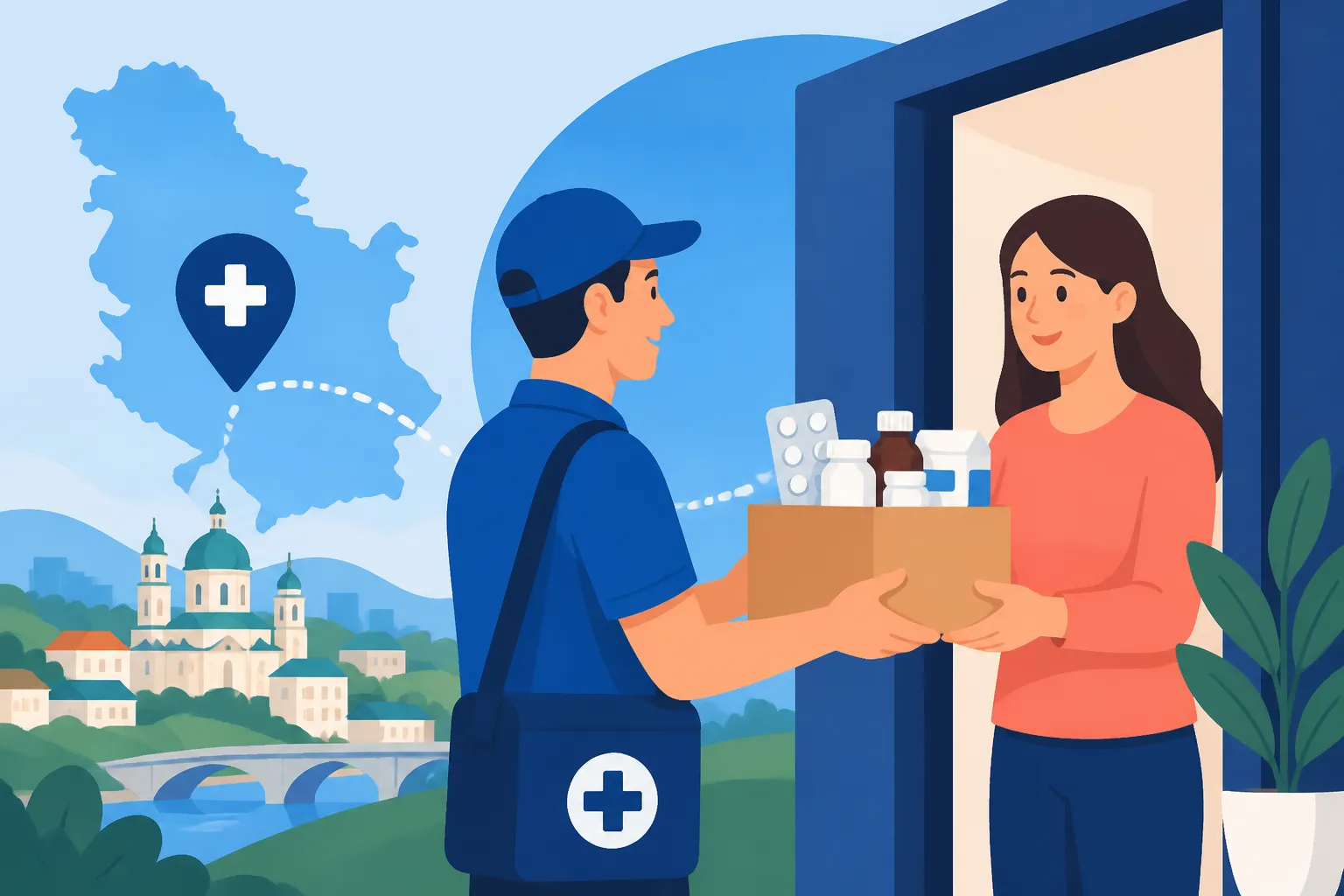
You’ll start to see major pharmacy chains and even independent pharmacies developing their online presence. This means websites where you can browse products, add them to a cart, and arrange for delivery. However, it's crucial to understand that this isn't a blanket service across all pharmacies. Some might offer click-and-collect, others might partner with third-party delivery services, and a select few have their own dedicated delivery infrastructure. The landscape is still evolving, so what’s available today might be different tomorrow, but the general trend is definitely moving towards more digital options.
The key distinction is often between over-the-counter (OTC) products – think paracetamol, cough syrups, vitamins, basic first-aid supplies – and prescription medications. The former is generally much easier to get delivered, while the latter involves a more complex process due to strict regulations that are designed to protect public health.
Navigating Online Pharmacies and Delivery Platforms in Serbia
So, you're ready to try and get something delivered. Great! It’s definitely possible, but it requires a bit more nuance than simply opening a global app and hitting ‘order’. The Serbian market for medication delivery is a blend of dedicated online pharmacies and generalist delivery platforms. Knowing which to use for what kind of product is half the battle.
Dedicated Online Pharmacy Services
When it comes to dedicated online pharmacies in Serbia, you’re looking for platforms that are essentially the digital storefronts of established apoteka brands. These are often the most reliable for ordering a wider range of health products, including some over-the-counter medications and supplements. Names like Benu Apoteka and eApoteka have a significant online presence, offering customers the ability to browse their catalogue from the comfort of their homes.
The process usually looks something like this: First, you'll visit their website or, if they have one, their dedicated app. You’ll typically need to register an account, which involves providing your personal details, including a Serbian phone number and a local address for delivery. This is usually a straightforward process. Once registered, you can start browsing. Many of these sites are in Serbian, but browser translation tools can be a lifesaver here. You can usually find a good selection of non-prescription items, from vitamins and dietary supplements to basic painkillers and skincare products.
For prescription medications, this is where it gets a little more involved. Some dedicated online pharmacies might offer a mechanism for prescription verification, such as requiring you to upload a scanned copy of your Serbian prescription or by verifying it directly with the local health system if you're registered with the RFZO. However, this is not always universally available, and the verification process can add significant delays. Payment options typically include online card payments or cash on delivery. Delivery times vary, but for major cities like Belgrade, you can often expect delivery within 24-48 hours, sometimes even on the same day if you order early enough. It's always best to check their specific terms and conditions for delivery areas and timings.
General Delivery Platforms and Their Limitations
Beyond the dedicated pharmacy sites, you also have the rise of general delivery platforms that have taken Belgrade and Novi Sad by storm – think Glovo and Wolt. These apps are fantastic for getting food, groceries, and sometimes even household items delivered quickly. And yes, they can be used to get some pharmacy items, but there are significant limitations.
Here's how it generally works: You open the app, navigate to the "pharmacy" or "health" section, and you might see several local pharmacies listed as partners. You can browse their available stock, which is usually limited to common over-the-counter items: basic painkillers, plasters, certain cold and flu remedies, sometimes even baby products or hygiene items. It's really convenient if you just need a box of Ibuprofen or some cough drops and don't want to leave the house.
The main drawback with these platforms is that they almost never handle prescription medications. The couriers are not pharmacists, nor are they equipped to verify complex prescriptions or deal with the legalities involved. So, if your izabrani lekar has given you a prescription for antibiotics, Glovo is not going to be able to help you. These services are best for immediate, non-prescription needs when convenience is paramount. Be aware that delivery fees can sometimes be higher, and there might be minimum order values. For instance, if you just need a small item, the delivery charge might feel disproportionate to the cost of the product itself.
Consider a hypothetical scenario: you've sprained your ankle and need a topical pain relief gel and some bandages. You could certainly use a service like Wolt to pick these up from a local pharmacy and have them brought directly to your door. However, if that sprain requires a specific anti-inflammatory prescribed by a doctor, you'll need to go through the proper channels. For more on navigating medical visits, our guide on How Much Does a Doctor Visit Cost in Serbia? might be useful.
| Feature / Service | Traditional Physical Pharmacy (Apoteka) | Dedicated Online Pharmacy (e.g., Benu.rs) | General Delivery App (e.g., Glovo, Wolt) |
|---|---|---|---|
| Prescription Meds | Yes (with Serbian recept) |
Limited/Complex verification | No |
| Over-the-Counter | Yes, full range | Yes, full range | Yes, limited selection |
| Speed | Immediate (if open and in stock) | 24-48 hours (often faster in cities) | 30-90 minutes (for partners) |
| Cost (Delivery) | N/A (personal visit) | Varies (often free over min. order) | Yes, variable delivery fees |
| Language Barrier | Possible (English speakers often available) | Less of an issue (website translation) | Less of an issue (app based) |
| Pharmacist Advice | Yes, in-person | Limited (online chat/email) | No |
| Payment Options | Cash, card | Online card, cash on delivery | Online card, cash on delivery |
| Best For | Urgent needs, prescriptions, advice | Planned purchases, wide selection OTC | Immediate OTC, basic items, convenience |
The Nuances of Prescription Medication Delivery
This is where things get a bit more intricate for us expats. Getting your regular paracetamol delivered is one thing, but getting your prescribed blood pressure medication or a course of antibiotics delivered? That's an entirely different ballgame, and it’s governed by strict regulations here in Serbia. The Serbian healthcare system, particularly concerning controlled medications, prioritizes direct oversight and verification.
The Prescription Verification Process
Let's talk about the dreaded recept (prescription). If you're a resident of Serbia and are registered with the national health insurance fund, the RFZO, you'll have an izabrani lekar (chosen doctor) who issues you prescriptions, often in a digital format known as eRecept. This digital prescription is linked to your health card and is recognized across public pharmacies. If you haven't yet registered, our guide on How to Register with the Republic Health Insurance Fund (RFZO) in Serbia is a must-read.
The challenge with prescription medication delivery lies in this verification process. For an online pharmacy to legally dispense a prescription medication, they need to verify that you have a valid, active Serbian prescription. This often involves the online platform integrating with the RFZO system or having a very robust manual verification system. While some progress is being made in this area, it's not as seamless as you might find in Western European countries or North America. Many online pharmacies might still require you to physically present the prescription, or at least a printed copy, to the delivery driver upon receipt, which somewhat defeats the purpose of "contactless" delivery.
If you’re relying on private health insurance, or an international travel insurance like SafetyWing, you’ll typically pay for your prescriptions out-of-pocket and then claim reimbursement. This means you still need to obtain a valid Serbian prescription from a local doctor, whether from a public dom zdravlja or a private clinic, before you can even think about filling it. For details on your insurance options, see Health Insurance in Serbia: RFZO, Private and International Options Explained. The key takeaway here is that getting a prescription medication delivered without first having a properly issued, verified Serbian prescription is highly unlikely, and potentially illegal.
When and Why You Might Still Need a Physical Pharmacy Visit
Despite the convenience of online options, there are still very compelling reasons why a physical visit to the apoteka remains necessary, especially for expats.
Firstly, for complex prescriptions or controlled substances, the regulations are much tighter. Pharmacists need to ensure the correct dosage, provide specific instructions, and verify your identity, which is often best done in person. They might also need to check for potential drug interactions, or offer advice that goes beyond what a delivery driver can provide.
Secondly, if you have an urgent need – something that can’t wait 24 hours for delivery – the immediate access provided by a 24/7 physical pharmacy is invaluable. Waiting for a delivery can be agonizing when you’re in pain or your child needs medicine now. For these situations, knowing Where Can I Find a Trusted Pharmacy Near Me in Belgrade? is far more critical than an online ordering link.
Lastly, sometimes, the online systems simply fail. A website might be down, the translation confusing, or the verification process too cumbersome. In these moments, the simplicity of walking into a pharmacy, handing over your prescription (or explaining your needs), and receiving your medication can't be beaten. It’s a failsafe in a system that’s still finding its digital feet. Understanding the broader pharmacy system can help here, so check out Understanding the Pharmacy System and Buying Medicines in Serbia.
Tips for Expats and International Travellers in Serbia
Navigating the healthcare system, especially when you're unwell and away from home, can be daunting. As an expat, you're constantly learning, adapting, and finding workarounds. Here are some seasoned tips to help you handle your medication needs in Serbia, whether you're a long-term resident or just passing through.
Preparing for Medical Needs in Serbia
The best offense is a good defense, as they say. For expats in Serbia, this means being prepared for your medical needs well in advance. Don't wait until you're already sick to figure out the system.
First and foremost, always carry a small emergency stock of essential over-the-counter medications from your home country. This includes things like your preferred pain relievers, allergy medicines, antacids, and any specific remedies you rely on. While Serbia has excellent pharmacies, sometimes you just want what you know, or you might struggle with translations. For more general advice, our article on Navigating the Serbian Healthcare System: An Expat's Roadmap (2027) offers a great overview.
If you're residing here, one of the most proactive steps you can take is to register with a local GP (izabrani lekar) at a dom zdravlja (health centre), or even with a private clinic. This ensures you have a consistent point of contact for your healthcare needs, including issuing prescriptions. Our guide on How to Choose a GP (Izabrani Lekar) at a Dom Zdravlja in Serbia provides detailed steps. Having a local doctor who understands your medical history will make obtaining prescriptions much smoother, whether for chronic conditions or unexpected illnesses. They are your gateway to the e-prescription system, which simplifies things considerably for public pharmacies.
For tourists or short-term visitors, the situation is a bit different. While you won't have a local GP, understanding how to access care is vital. In case of an emergency, knowing What Is the Emergency Phone Number in Serbia? is paramount. For non-emergencies, many private clinics in larger cities cater to English-speaking patients and can issue private prescriptions if needed. This is where having good travel insurance comes in handy. Companies like SafetyWing offer comprehensive travel medical insurance that covers emergency medical treatment and often associated prescription costs during your trip. While SafetyWing won't facilitate medication delivery directly, their coverage can significantly ease the financial burden if you suddenly fall ill and need a doctor's visit and new medication. It’s always reassuring to know you’re covered for unexpected health issues, whether you're climbing mountains or just enjoying the cafes of Belgrade.
Best Practices for Online Orders and Safety
If you do decide to go the online delivery route, whether for convenience or necessity, here are some best practices to ensure a smooth and safe experience:
- Use Reputable Platforms: Stick to the online portals of established pharmacy chains like Benu Apoteka, or well-known and reviewed dedicated online pharmacies like eApoteka. Avoid lesser-known or unofficial sites, especially if they claim to offer prescription medications without proper verification. This minimises the risk of receiving counterfeit products or incorrect dosages.
- Double-Check Everything: Before you confirm your order, meticulously review all the details: the specific medication name, dosage, quantity, your delivery address, and contact information. A small typo could mean a significant delay or the wrong item. This is particularly important with medications where a subtle difference in spelling or strength can be crucial.
- Understand Prescription Requirements: For any medication that requires a prescription, assume you will need a valid Serbian
recept. If an online service claims otherwise, proceed with extreme caution. Be prepared to upload a scan or present a physical copy to the delivery person. Remember, services like SafetyWing cover medical emergencies and the cost of prescribed medications, but they don't bypass local pharmacy regulations regarding prescriptions. - Be Aware of Delivery Logistics: Check the delivery fees, minimum order values, and estimated delivery times. Some services might have free delivery over a certain amount, while others charge for every order. Also, be realistic about timings; while some general delivery apps can be fast, dedicated online pharmacies might take a bit longer.
- Keep Records: Always retain copies of your prescriptions, both digital and physical, and keep records of your online orders. This can be helpful if there are any discrepancies, or if you need to discuss your medication with a doctor later.
- Language Barrier Preparedness: If you're using a Serbian website, rely on browser translation tools, but be mindful that medical terms can sometimes be mistranslated. If you're unsure, it's always better to call the pharmacy directly (with a Serbian-speaking friend if possible) or visit in person.
By being informed and prepared, you can navigate the Serbian medication landscape with confidence. Whether it’s a quick pop to the local apoteka or a carefully placed online order, you’ll know your options and how to get what you need. And for those unexpected medical emergencies while travelling, remember that SafetyWing is there to support your health journey in Serbia.
Disclaimer
The information provided in this guide is for general informational purposes only and does not constitute medical, legal, or professional advice. While we strive to keep the information accurate and up-to-date, regulations and services in Serbia can change. Always consult with a qualified medical professional for health concerns and legal experts for specific immigration or business advice. We are not responsible for any actions taken based on the information in this guide.