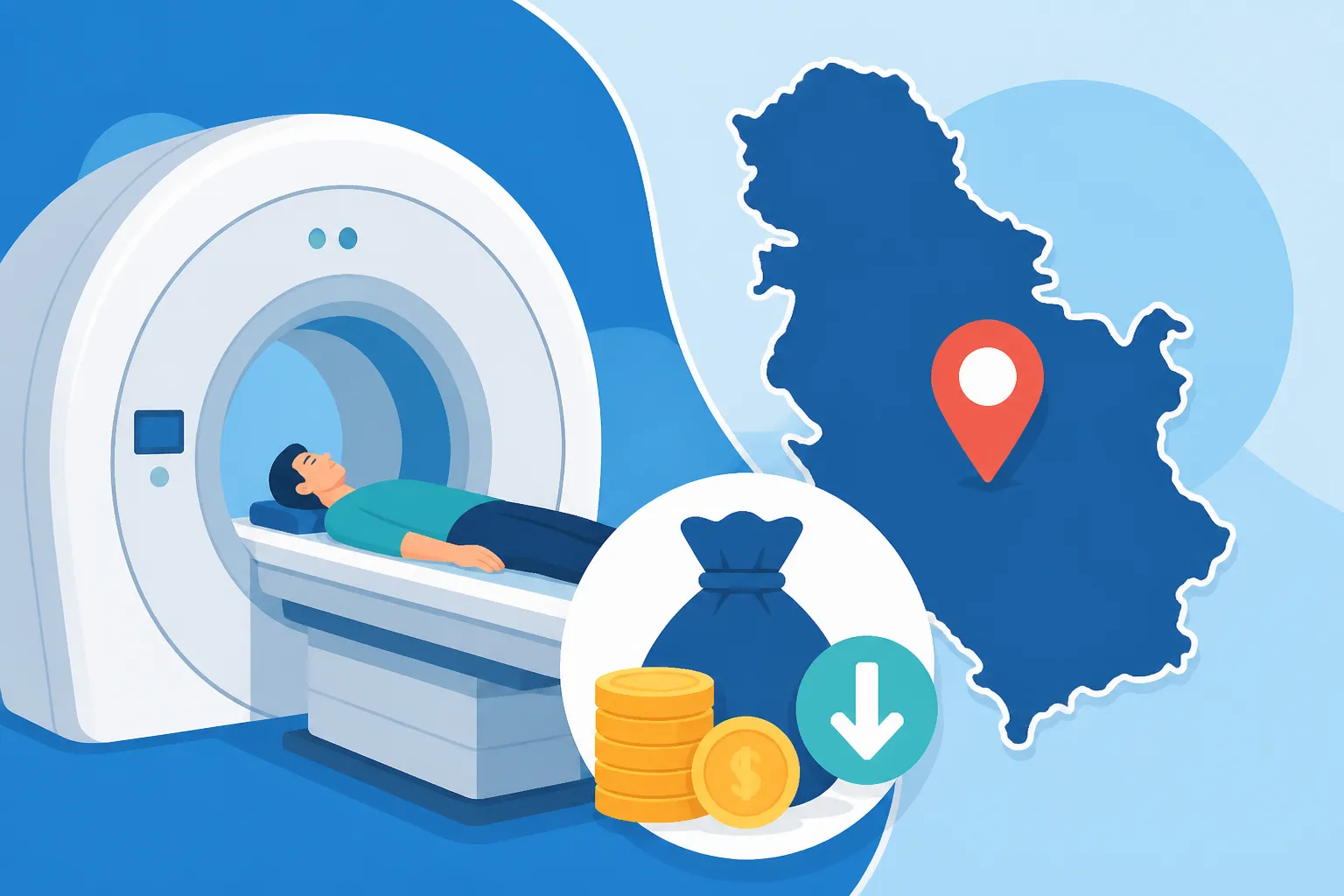
How Much Does an MRI Scan Cost in Serbia in 2026?
One of the trickiest parts of navigating a new country is understanding the healthcare system, especially when it comes to unexpected and potentially expensive diagnostic procedures like an MRI scan. Many of us expats have found ourselves in Serbia, perhaps feeling a twinge or a persistent ache, and then the inevitable question pops up: "How much is this going to set me back?" This comprehensive guide is here to shed light on the exact costs of an MRI scan in Serbia in 2026, breaking down public and private options, what influences the prices, and how you can manage the expenses.
Understanding MRI Scans and Why They Matter in Serbia
Getting an MRI scan can feel like a big step, especially when you're already trying to make sense of a new medical system. But rest assured, Serbia has modern medical facilities, and understanding the process will make it far less daunting.
What Exactly is an MRI Scan?
An MRI, or Magnetic Resonance Imaging, is a non-invasive medical imaging technique that uses a powerful magnetic field and radio waves to create detailed images of organs, soft tissues, bone, and virtually all other internal body structures. Unlike X-rays or CT scans, MRIs don't use ionizing radiation, which makes them a preferred option for certain conditions, especially for repeated scans or for imaging sensitive areas like the brain or reproductive organs.
For us foreigners, understanding the terminology can be half the battle. When a doctor in Serbia mentions a "magnetna rezonanca" (magnetic resonance) or simply "MRI," they're referring to this scan. It's an essential diagnostic tool that helps doctors pinpoint problems that might not be visible with other imaging methods, from sports injuries to neurological conditions.
When Might You Need an MRI in Serbia?
You might find yourself needing an MRI for a variety of reasons during your time in Serbia. Perhaps you twisted your knee walking through Kalemegdan Park, or you're experiencing persistent headaches that your GP wants to investigate further. Common reasons for an MRI referral include:
- Neurological issues: Persistent headaches, dizziness, seizures, or suspected strokes often warrant a brain MRI. Spinal MRIs are crucial for back pain, disc problems, or nerve compression.
- Musculoskeletal injuries: Knee injuries (meniscus, ligaments), shoulder problems (rotator cuff), or other joint issues are frequently diagnosed with an MRI due to its ability to clearly show soft tissues.
- Organ assessment: Doctors might use an MRI to examine organs like the liver, kidneys, or pelvic organs for tumours, cysts, or other abnormalities.
- Vascular conditions: An MRI can also image blood vessels to detect aneurysms or blockages.
If your chosen GP (Izabrani Lekar) at a Dom Zdravlja in Serbia suspects a serious underlying condition that requires detailed imaging, an MRI will likely be on the referral list.
The Cost Landscape: Public vs. Private MRI Scans in Serbia
Serbia offers a dual healthcare system: public, primarily funded by the Republic Health Insurance Fund (RFZO), and a growing private sector. This applies to MRI scans too, and your choice will significantly impact both the cost and the wait time.
Public Healthcare System (RFZO) and MRI Costs
If you've successfully navigated the bureaucracy to register with the RFZO and a GP in Serbia, you're generally in a good position for public healthcare. For an MRI, this means a significantly lower cost, often just a nominal co-payment. However, there's a catch that many expats quickly discover: wait times.
Public hospitals in Serbia, especially those with MRI machines, can have substantial waiting lists. It’s not uncommon to wait weeks, or even months, for an MRI appointment, particularly for non-urgent conditions. While the cost might be minimal (often under 1000 RSD, sometimes even free depending on your insurance category and the specific procedure), the delay can be a major concern, especially if you're in pain or your doctor suspects something time-sensitive. The wait times can be frustrating, and this is a common complaint among both locals and expats when trying to access specialist care through the RFZO in Serbia.
Private Clinics and MRI Pricing
The private healthcare sector in Serbia offers a stark contrast: virtually no wait times, state-of-the-art equipment, and often English-speaking staff. Many expats find this convenience well worth the higher price tag. Private clinics operate on a fee-for-service model, meaning you pay the full cost out-of-pocket, or your private health insurance plan covers a portion of it.
Belgrade, Novi Sad, and other major cities boast numerous private diagnostic centers that offer MRI services. These clinics are typically well-maintained, comfortable, and prioritize patient experience. For someone who values speed and efficiency, especially if you haven't yet registered with the public system or your specific Health Insurance in Serbia: RFZO, Private and International Options Explained doesn't fully cover public care, private clinics are often the go-to.
Factors Influencing MRI Scan Costs in Serbia
The price of an MRI scan isn't a one-size-fits-all figure. Several factors come into play, which can cause significant variations in the final bill.
Specific Body Part and Scan Type
Naturally, not all MRI scans are created equal. A brain MRI, for instance, might be priced differently than a knee MRI, and a full spinal scan will likely cost more than just a lumbar spine scan.
- Single vs. Multiple Regions: If your doctor needs to image multiple areas – say, both your cervical and lumbar spine – this will increase the cost. Each region is often treated as a separate scan for pricing purposes.
- MRI with Contrast: Sometimes, to highlight specific tissues or abnormalities, a contrast agent (usually gadolinium) is injected intravenously before or during the scan. This contrast agent enhances the visibility of certain structures or pathological processes, but it also adds to the cost of the procedure. It's usually an additional fee on top of the base scan price.
- Specialized Scans: Certain highly specialized MRIs, like MR angiography (MRA) to look at blood vessels, or functional MRI (fMRI) for brain activity, might be more expensive due to the complexity and specialized interpretation required.
Location of the Clinic
Just like with real estate, location matters in healthcare pricing. Major cities, particularly Belgrade, tend to have higher prices for medical services compared to smaller towns.
- Belgrade: As the capital and economic hub, Belgrade has the highest concentration of private clinics with cutting-edge MRI technology. You can expect prices here to be at the higher end of the spectrum. Clinics like EUROMEDIK, Medigroup, and Acibadem Bel Medic are prominent examples, offering comprehensive diagnostic services.
- Novi Sad: Serbia's second-largest city also has excellent private options, often with slightly more competitive pricing than Belgrade, but still higher than smaller towns.
- Smaller Cities and Towns: If you're living in a smaller city or rural area, you might find more affordable options, but the availability of advanced MRI machines might be limited, potentially requiring travel to a larger city.
Clinic Reputation and Equipment
The clinic's standing and the age/technology of its MRI machine can also influence pricing.
- Reputation and Expertise: Highly renowned clinics or those with specialized radiologists who have extensive experience in interpreting complex MRI images might charge a premium for their services.
- Technology: Newer MRI machines (e.g., 3 Tesla vs. 1.5 Tesla) offer higher resolution images and faster scan times, but they also come with higher operational costs, which are reflected in the patient fees. A clinic that has invested in the latest technology will likely charge more than one with older equipment.
Urgency and Appointment Availability
While public healthcare might prioritize urgent cases, the private sector often offers immediate appointments, which can sometimes come at a slight premium, although this is less common than in other countries. The main advantage of private is simply the ability to book and get a scan done within a day or two, rather than waiting.
Real-World Cost Breakdown for MRI Scans in Serbia (2026)
Alright, let's get down to the numbers. Please remember that these are estimated prices for 2026 and can vary based on the clinic, specific equipment, and whether a contrast agent is used. Always ask for a detailed quote directly from the clinic.
Estimated MRI Scan Costs in Serbia (2026)
| MRI Scan Type | Public Healthcare (RFZO, with referral) | Private Clinic (Belgrade/Novi Sad) – Base | Private Clinic (Belgrade/Novi Sad) – With Contrast |
|---|---|---|---|
| Brain MRI (Cerebrum) | 500 – 1,500 RSD (co-payment) | 15,000 – 25,000 RSD | 20,000 – 35,000 RSD |
| Cervical Spine (Neck) MRI | 500 – 1,500 RSD (co-payment) | 14,000 – 22,000 RSD | 18,000 – 30,000 RSD |
| Thoracic Spine (Mid-Back) MRI | 500 – 1,500 RSD (co-payment) | 14,000 – 22,000 RSD | 18,000 – 30,000 RSD |
| Lumbar Spine (Lower Back) MRI | 500 – 1,500 RSD (co-payment) | 14,000 – 22,000 RSD | 18,000 – 30,000 RSD |
| Knee/Shoulder/Joint MRI | 500 – 1,500 RSD (co-payment) | 14,000 – 23,000 RSD | 18,000 – 32,000 RSD |
| Abdominal MRI (e.g., Liver) | 500 – 1,500 RSD (co-payment) | 18,000 – 30,000 RSD | 25,000 – 45,000 RSD |
| Pelvic MRI | 500 – 1,500 RSD (co-payment) | 18,000 – 30,000 RSD | 25,000 – 45,000 RSD |
Note: 1 EUR is approximately 117 RSD as of early 2026. Prices are estimates and subject to change.
As you can see, the difference between the public system's minimal co-payment and a private clinic's full fee is substantial. For instance, a brain MRI at a private clinic could easily set you back anywhere from €130 to €300 or even more if contrast is needed. This is where having a clear understanding of your Understanding Out-of-Pocket Healthcare Costs and Co-Payments in Serbia becomes crucial.
Navigating Payment and Insurance for MRI Scans
Managing the cost of an MRI scan often comes down to your insurance situation. Let's break down the options.
What the RFZO Covers
If you are an expat legally employed in Serbia and paying into the social security system, you are likely covered by the RFZO. With a referral from your public GP or a specialist within the public system, your MRI scan will primarily be covered. You'll typically pay a small co-payment, as indicated in the table above. The biggest challenge, as mentioned, is the waiting list. This means that even with RFZO coverage, you might still consider a private option if your condition requires immediate attention. It's a trade-off many of us have to make – time versus money. Remember to understand How Serbia's Health System Works: The RFZO and Private Care Explained (2027) to make informed decisions.
Private Health Insurance Options
For many expats, especially those not yet fully integrated into the public system or those who simply prefer the speed and comfort of private care, private health insurance is the answer. There are several domestic and international private health insurance providers that operate in Serbia.
These plans can vary widely in their coverage, so it's essential to read the fine print. Some might cover 100% of diagnostic procedures like MRIs, while others might have a deductible or only cover a certain percentage. If you're new to Serbia or frequently travel, an international health insurance provider like SafetyWing might offer flexible, comprehensive coverage that includes emergency diagnostic procedures. It's particularly useful for those initial months before you get your RFZO sorted or if you're a digital nomad. However, always check if your chosen plan covers non-emergency diagnostic imaging in Serbia or if it's primarily for emergencies and travel-related incidents. Understanding How to Buy Private Health Insurance as a Newcomer in Serbia is a key step.
Out-of-Pocket Payments
If you don't have RFZO coverage or private insurance that covers your MRI, you'll be paying the full cost out-of-pocket. Most private clinics accept various payment methods, including cash (Serbian Dinars, RSD), debit cards, and credit cards. Some might even offer installment plans for more expensive procedures, though this is less common for a single MRI scan.
Before you commit, always ask for a clear, itemized quote. This way, you'll know exactly what you're paying for, including any potential additional costs like contrast agents or radiologist reports. If you're feeling unwell, sometimes the best solution is the quickest, even if it means paying out of pocket. For short trips or immediate needs, having something like SafetyWing travel insurance might help bridge gaps, covering unforeseen medical events, but for planned diagnostics, domestic private insurance is usually more direct.
How to Schedule an MRI and Prepare for Your Appointment
Once you know the rough costs and your payment plan, the next step is actually getting the scan done. This process can differ slightly depending on whether you're using the public or private system.
Getting a Referral
The first step, almost always, is a doctor's referral.
- Public System: You'll need to visit your GP at the Dom Zdravlja. If they deem an MRI necessary, they will refer you to a specialist (e.g., an orthopedist, neurologist, or physiatrist) within the public system. This specialist will then issue the official referral for the MRI, often for a specific public hospital or diagnostic center. Be prepared for potential waiting lists for both the specialist appointment and the MRI itself. This is often the most time-consuming part of the process.
- Private System: In the private system, you can often get a referral from a private specialist. Many private clinics have their own specialists on staff. If you already have a referral from a doctor (even a foreign one), most private diagnostic centers will accept it, but it's always best to call ahead and confirm their policy. Some private clinics may even allow you to book an MRI without a referral for certain routine scans, but having one is always recommended for proper diagnosis and follow-up care.
Booking Your Scan
Once you have your referral, it's time to book.
- Public: You'll take your referral to the designated public hospital or diagnostic center. They will then give you an appointment date, which, as discussed, could be weeks or months away.
- Private: This is where the private sector truly shines. You can call or visit the private diagnostic center of your choice. Many have online booking systems. You'll typically be able to get an appointment within a few days, sometimes even the same day if there's an opening. When booking, don't hesitate to ask if they have English-speaking staff or if the radiologist can provide a report in English, as this can be incredibly helpful for expats. Clinics like MRI Centar or Euromedik are known for their modern approach and professional staff. Don't forget to inquire about the specific cost for your scan and if contrast is included or an additional fee.
Before, During, and After the Scan
Preparing for an MRI is fairly straightforward but crucial for a good scan.
- Before the Scan: You'll generally be asked to remove all metal objects, including jewelry, watches, hearing aids, and clothing with metal zippers or buttons. Inform the staff if you have any metal implants (pacemaker, surgical clips, joint replacements), as some are MRI-incompatible. If you're having an MRI with contrast, you'll be given instructions on whether you need to fast beforehand.
- During the Scan: You'll lie on a movable table that slides into the MRI machine, which is a large, tube-shaped scanner. It can be quite noisy with knocking and buzzing sounds, so earplugs or headphones are usually provided. It's essential to lie very still during the scan. The technologist will be in an adjacent room and can communicate with you through an intercom.
- After the Scan: Once the scan is complete, you can usually leave immediately. If you received a contrast agent, you might be advised to drink extra fluids to help flush it out of your system. The results, typically a report from the radiologist, will be available within a few days, sometimes even within 24 hours at private clinics. You'll then take these results back to your referring doctor for interpretation and to discuss the next steps in your treatment plan. Remember, even with excellent international coverage from providers like SafetyWing, you'll still need to follow local procedures for getting and interpreting your scan results.
Disclaimer
The information provided in this article is for general informational purposes only and does not constitute medical or financial advice. Healthcare costs and regulations in Serbia can change. Always consult with a qualified medical professional for any health concerns and verify current pricing and insurance coverage directly with healthcare providers and insurance companies.