How Do I Get a Serbian Driver’s Licence?
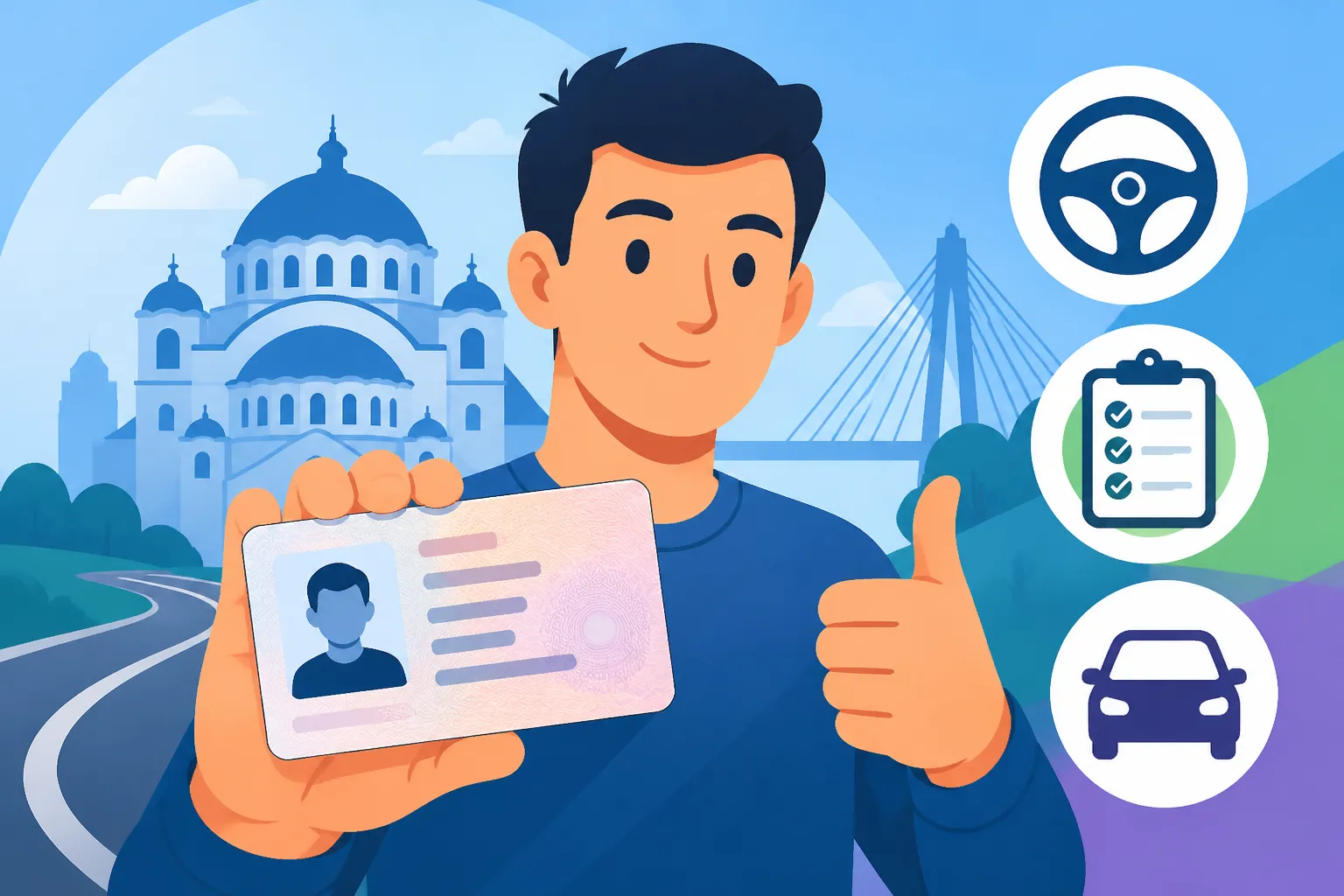
So, you've landed in Serbia, you're getting settled, maybe you've even started to explore a bit, and suddenly it hits you: "What about my driver's licence?" It's a common expat headache, I know. Driving here can be a bit different, and understanding the rules for foreigners is crucial if you want to stay on the right side of the law and avoid unnecessary stress. This guide will walk you through everything you need to know about getting your Serbian driver's licence, from initial requirements to the actual exchange process.
Driving on Your Foreign Licence: The Initial Rules and What You Need to Know
When you first arrive in Serbia, you might assume your foreign driver's licence is good to go indefinitely. Unfortunately, that's not quite how it works, and getting this wrong can lead to fines and headaches. The rules are pretty clear, but they change based on your residency status. It's one of those things that can catch even the most organised expat off guard if they don't do their homework.
The 90-Day Tourist Rule
If you're just visiting Serbia as a tourist, you can generally use your foreign driver's licence for up to 90 days from your date of entry. This applies whether your country has a bilateral agreement with Serbia or not. However, there's a crucial caveat: you must also possess an International Driving Permit (IDP) or an officially certified translation of your licence into Serbian. Don't skip this step! I've heard too many stories of tourists getting pulled over for minor infractions and facing issues because they only had their home country's licence. The police here are usually fair, but they will enforce the rules. Always carry your original licence, the IDP or translation, and your passport with you while driving. This temporary allowance is exactly that—temporary. It’s perfect for short trips and exploring, but not a long-term solution. For more details on navigating the roads, check out our guide on Driving in Serbia: Licences, Registration and Rules for Expats (2027).
The Six-Month Resident Rule
Once you become a temporary resident in Serbia, things change. If you've obtained your temporary residence permit (boravišna dozvola), you are legally permitted to use your foreign driver's licence for a maximum of six months from the date your residency was granted. This is a critical deadline that many expats miss, often thinking their foreign licence is valid as long as their residence permit is. It's not. After this six-month period, your foreign licence becomes invalid for driving in Serbia. Continuing to drive on an expired foreign licence after this grace period can lead to significant fines, impoundment of your vehicle, and even legal complications. This six-month window is meant to give you ample time to either exchange your licence for a Serbian one or to complete the full Serbian driving examination if an exchange isn't possible. It's a tight timeframe when you consider all the other things you're probably sorting out as a new resident, from setting up utilities to getting your bearings in a new city. Make sure to factor this into your initial The Complete Guide to Moving to Serbia: Your First 90 Days (2027).
The Path to a Serbian Driver's Licence: Exchange or Examination?
So, the six-month clock is ticking, and you know you need a Serbian driver's licence. Now comes the big question: can you simply exchange your current licence, or do you have to go through the full, often arduous, process of taking a new driving test? This depends heavily on your country of origin and any bilateral agreements Serbia has in place. It’s a make-or-break detail that will define your experience.
When Can You Simply Exchange Your Licence?
The simplest and by far the preferred route is to exchange your existing driver's licence for a Serbian one. This is only possible if Serbia has a bilateral agreement with your home country concerning the mutual recognition and exchange of driver's licences. These agreements are designed to simplify things for citizens moving between the two nations, acknowledging that driving standards are comparable.
For instance, citizens from countries like most EU member states, Switzerland, Norway, Russia, and some others, often benefit from these agreements. If your country is on this list, you're in luck! The process, while still involving some Serbian bureaucracy, is significantly less stressful than taking a full driving test. You won't have to relearn theory, practice parallel parking on unfamiliar streets, or worry about a practical exam in a foreign language.
The Exchange Process Overview:
-
Check for an Agreement: First and foremost, verify if your country has an agreement with Serbia. The Ministry of Interior (MUP) website (MUP RS) is the official source for this information, though it can sometimes be a bit tricky to navigate, even for locals. A visit to your local MUP office that handles driver's licences (Uprava za upravne poslove) can confirm this for you.
-
Gather Required Documents:
- Your original valid foreign driver's licence.
- A certified translation of your foreign driver's licence into Serbian by a sworn court translator.
- Your passport.
- Your valid Serbian temporary residence permit.
- Proof of address in Serbia (e.g., bela karta registration or rental contract).
- A completed application form (available at the MUP).
- Proof of payment for administrative fees (these fluctuate, so check current amounts).
- A medical certificate issued by an authorised Serbian medical institution.
- Your old foreign licence, which you will surrender to the MUP. Yes, you read that right – you give up your old licence. This is a common point of frustration for many expats, as it means you won't have your original licence for visits back home or other travel. Plan accordingly.
-
The Medical Examination: This isn't just a quick check-up. You'll need to visit a designated health institution in Serbia (usually a dom zdravlja or a private clinic authorised for these exams). It involves vision tests, hearing tests, psychological evaluations, and general health checks. It's a standard procedure, but can take a few hours and usually costs between 3,000-6,000 RSD.
-
Submission at MUP: Take all your meticulously gathered documents to the MUP office. Be prepared for potential waiting times and ensure you have all original documents and multiple copies. The officers will review everything, and if all is in order, they will process your application. You'll receive a temporary document, and your new Serbian driver's licence will typically be ready for pickup within a few weeks.
What If Your Country Doesn't Have an Agreement?
This is where things get more challenging. If your country does not have a bilateral agreement with Serbia, you cannot simply exchange your licence. You will need to go through the entire process of obtaining a new Serbian driver's licence, just like a new driver learning to drive for the first time. This means:
- Enrolling in a Driving School (Auto Škola): You'll need to attend theoretical lessons, which are conducted in Serbian. While some driving schools in larger cities like Belgrade or Novi Sad might offer English-speaking instructors for practical lessons, the theory component is almost exclusively in Serbian. This poses a significant language barrier for many.
- Passing a Theory Exam: This exam tests your knowledge of Serbian traffic laws, road signs, and safe driving practices. Again, it's typically in Serbian, making it incredibly difficult without a strong grasp of the language.
- Completing Practical Driving Lessons: You'll have a set number of mandatory practical lessons with an instructor.
- Passing a Practical Driving Exam: This is the final hurdle, assessed by a MUP examiner. You'll need to demonstrate proficiency in various driving manoeuvres and adherence to traffic rules.
The full examination process is time-consuming, expensive (driving school fees, exam fees, medical certificate, etc.), and requires a deep commitment. It's not uncommon for this process to take several months, even up to a year, depending on your availability, language skills, and the driving school's schedule. This is often the biggest hurdle for expats from countries like the USA, Canada, Australia, and the UK, as there are currently no agreements in place for direct exchange.
Navigating the Bureaucracy and Practicalities
Dealing with Serbian bureaucracy can sometimes feel like navigating a maze blindfolded. From gathering documents to undergoing medical checks, each step requires patience, attention to detail, and a good sense of humour. Don't be surprised if you're asked for a document you weren't expecting, or if the process isn't perfectly linear. It's just part of the charm of expat life here!
Gathering Your Documents: The Serbian Bureaucracy Gauntlet
The document list I mentioned for the exchange process is fairly standard, but let's delve a bit deeper into what each entails and why it can be a "gauntlet."
- Original Valid Foreign Driver's Licence: This is your primary document. Ensure it's not expired or close to expiring, as this can complicate things.
- Certified Translation of Your Foreign Driver's Licence: This is non-negotiable. You can't just use a friend who speaks Serbian to translate it. You need a sworn court translator (sudski tumač). Prices for these translations can vary, but expect to pay around 1,500-3,000 RSD. Make sure the translation is officially stamped and signed.
- Passport: Always bring your passport and a copy. Your identity and nationality are essential.
- Valid Serbian Temporary Residence Permit: This proves your legal status in the country. Without it, you cannot apply for a Serbian licence. If you're still working on getting your How to Get Temporary Residence (Boravak) in Serbia (2027), make sure you expedite that process first.
- Proof of Address in Serbia: This is often the bela karta (white card) which is your tourist registration, or proof of permanent address (your prijava boravka). A lease agreement might also be accepted, but having the official address registration from the police is usually best.
- Application Form: These are usually simple forms you fill out at the MUP. Don't worry about getting one in advance unless specifically instructed.
- Proof of Payment for Administrative Fees: You’ll typically get payment slips (uplatnice) at the MUP, which you then pay at a post office or bank. Keep the receipts meticulously. Fees can change, but generally range from a few hundred to a couple of thousand RSD.
- Medical Certificate: We'll cover this in more detail, but it's a specific document obtained from an authorised Serbian medical institution.
- Your Old Foreign Licence: This is the big one for many. You will surrender your original foreign licence to the MUP. It will be sent back to your country's issuing authority or retained by the Serbian MUP. This is usually done to prevent individuals from holding two valid licences. If you travel frequently to your home country, this might be a point of minor frustration, so be aware.
Always make multiple photocopies of all your documents, both original and translated. When you're dealing with public administration in Serbia, having spare copies can save you a trip or two.
The Medical Examination: A Unique Serbian Experience
Unlike a quick physical back home, the Serbian medical examination for a driver's licence is a comprehensive affair. You can't just go to your regular GP for this. You need to visit a medical facility specifically authorised to issue these certificates. These are often dedicated clinics or specific departments within larger health centres.
The examination typically involves:
- Eye exam: Standard vision check.
- Hearing test: Simple test of your hearing.
- Neurologist consultation: To assess neurological function.
- Psychological assessment: A series of questions and sometimes simple tests to evaluate cognitive abilities and mental fitness for driving. Don't worry, it's not usually an in-depth therapy session!
- General practitioner (GP) review: A doctor will review your medical history and the findings from the other specialists.
- Blood pressure check, urine test, etc.: Basic health checks.
The entire process usually takes between 2-4 hours, depending on how busy the clinic is. It's usually a one-stop shop, moving from one specialist to the next within the same facility. The cost, as mentioned, is generally in the range of 3,000-6,000 RSD. You'll leave with a signed and stamped certificate which is valid for a limited time (usually 6 months), so make sure you apply for your licence shortly after getting it.
Driving Schools and the Theory Exam
For those who unfortunately fall into the category of needing to take the full driving test, enrolling in a driving school is your first step. This isn't just about learning to drive; it's about learning to drive the Serbian way.
- Choosing a Driving School: Look for a reputable auto škola. In larger cities, you might find some that are accustomed to foreign students, possibly offering some materials or instructors who can communicate in English for the practical lessons. However, the official theory test is in Serbian, so even with an English-speaking instructor, you'll need to master the terminology and rules in Serbian.
- Theory Lessons: These cover everything from traffic laws, road signs, first aid, and vehicle mechanics. They are mandatory and typically span several weeks. This is where the language barrier becomes most pronounced. You'll need to dedicate significant time to self-study, perhaps with the help of a tutor or by translating materials, to pass the exam.
- Practical Lessons: Once you pass the theory exam, you move on to practical lessons. The number of hours is prescribed by law. Your instructor will teach you how to drive according to Serbian standards, preparing you for the practical exam. This includes specific manoeuvres, urban driving, and highway driving.
- The Theory Exam: This is usually a computer-based test at a MUP-approved centre. It's multiple-choice and requires a high passing score.
- The Practical Exam: This is the final and often most nerve-wracking part. You'll drive with your instructor and a MUP examiner in the car. They'll observe your driving skills, adherence to rules, and overall safety. Passing this means you're almost there!
This entire process, from start to finish, can be lengthy and quite an investment, both in terms of time and money. Fees for driving schools can vary significantly, often starting from around 60,000 RSD and going upwards, not including exam fees, medical certificates, and translation costs. It's a journey, not a sprint. During this whole process, especially when you're running around getting documents or waiting for appointments, having reliable mobile data is a lifesaver. I always recommend services like Airalo so you can keep your maps, translation apps, and communication channels open without hassle.
Life with a Serbian Licence: What's Next?
Congratulations, you've got your shiny new Serbian driver's licence! This little card is your ticket to seamless driving in Serbia and simplifies so many aspects of life here. But like any official document, it comes with responsibilities and future considerations.
Renewing Your Serbian Licence
Serbian driver's licences are not issued for life. They come with a validity period, typically 10 years for most drivers under 65 years old. For those over 65, or with certain medical conditions, the validity period might be shorter (e.g., 5 years). Keep a close eye on the expiry date!
The renewal process generally involves:
- New Medical Examination: Yes, another one! You'll need to undergo another medical check-up similar to the one you did for your initial licence, ensuring you are still medically fit to drive.
- Application Form: Fill out a new application form for renewal.
- Proof of Identity and Residence: Your passport and valid residence permit will be required again.
- Payment of Administrative Fees: Current fees for issuing a new licence.
- Surrender of Old Licence: You'll hand over your expiring Serbian licence.
It's a more straightforward process than the initial application or exchange since you're already in the system, but it still requires planning. Don't wait until the last minute, as driving with an expired licence is a serious offence.
Common Pitfalls and Tips for Expats
Even with a Serbian licence in hand, there are a few things to keep in mind to ensure a smooth driving experience.
- Understanding Serbian Traffic Rules: While many rules are universal, there are nuances. Pay attention to parking regulations (especially in cities like Belgrade with various parking zones), speed limits, and pedestrian crossings. Many streets in older parts of cities are narrow, and drivers often park on sidewalks out of necessity, but always ensure you're not obstructing pedestrian flow.
- Dealing with Police: If you get pulled over, remain calm and polite. Present your documents (licence, vehicle registration, insurance) promptly. Most police officers are professional, but a positive attitude goes a long way.
- Vehicle Registration and Insurance: Getting your driver's licence is one step, but if you plan to own a car, you'll also need to navigate How to Register and License a Car in Serbia and understand Understanding the Vehicle Inspection and Registration in Serbia. This involves its own set of administrative steps and costs.
- Keeping Track of Validity: Set reminders for your licence expiry date. It's easy to forget when you have so much else going on.
- International Travel with Your Serbian Licence: Your Serbian licence is valid in other countries that recognise it. For countries that don't, you might need to obtain an International Driving Permit (IDP) from the Auto-Moto Association of Serbia (AMSS) to use alongside your Serbian licence.
The process of getting a Serbian driver's licence can be one of the more involved administrative tasks you'll face as an expat. However, with the right information, patience, and a bit of perseverance, it's entirely manageable. For those of you just arriving or planning a big move, remember that managing all these details, like your driver's licence, is just one piece of the puzzle. Services like Sirelo can be incredibly helpful when coordinating the bigger picture of your relocation, ensuring everything from your household goods to your driving privileges are sorted. Having your Serbian licence will undoubtedly make your life here more convenient, allowing you to truly explore all the beautiful corners of this country without restriction.
Here's a quick comparison of the two main pathways to a Serbian driver's licence:
| Feature | Licence Exchange Process | Full Driving Examination Process |
|---|---|---|
| Eligibility | Citizens from countries with a bilateral agreement with Serbia | Citizens from countries without a bilateral agreement |
| Primary Requirement | Valid foreign driver's licence + agreement | No agreement, requiring full retraining and testing |
| Duration | Weeks to a few months (mainly waiting for MUP processing) | Several months to a year (driving school, multiple exams) |
| Language Barrier | Minimal (translation of licence, MUP communication) | Significant (Serbian theory lessons & exams) |
| Key Steps | Document gathering, certified translation, medical exam, MUP application, surrender old licence | Driving school enrollment, theory lessons, theory exam, practical lessons, practical exam, medical exam, MUP application |
| Documents Required | Foreign licence, certified translation, passport, residence permit, proof of address, medical certificate, MUP forms, fees | Passport, residence permit, proof of address, medical certificate, driving school certificates, MUP forms, fees |
| Cost Estimate (RSD) | 5,000 – 10,000 (translations, medical, MUP fees) | 60,000 – 150,000+ (driving school, exams, medical, MUP fees) |
| Licence Surrender | Yes, foreign licence is surrendered | Not applicable, as no foreign licence is exchanged |
Disclaimer
The information provided in this guide is intended for general informational purposes only and does not constitute legal or professional advice. Driving laws, administrative procedures, and fees in Serbia are subject to change. While we strive to keep the information up-to-date and accurate, we recommend consulting official government sources, such as the Serbian Ministry of Interior (MUP) or a qualified legal professional, for the most current and specific advice regarding your individual circumstances. We are not liable for any actions taken based on the information provided herein.