Are International Schools Expensive in Serbia?
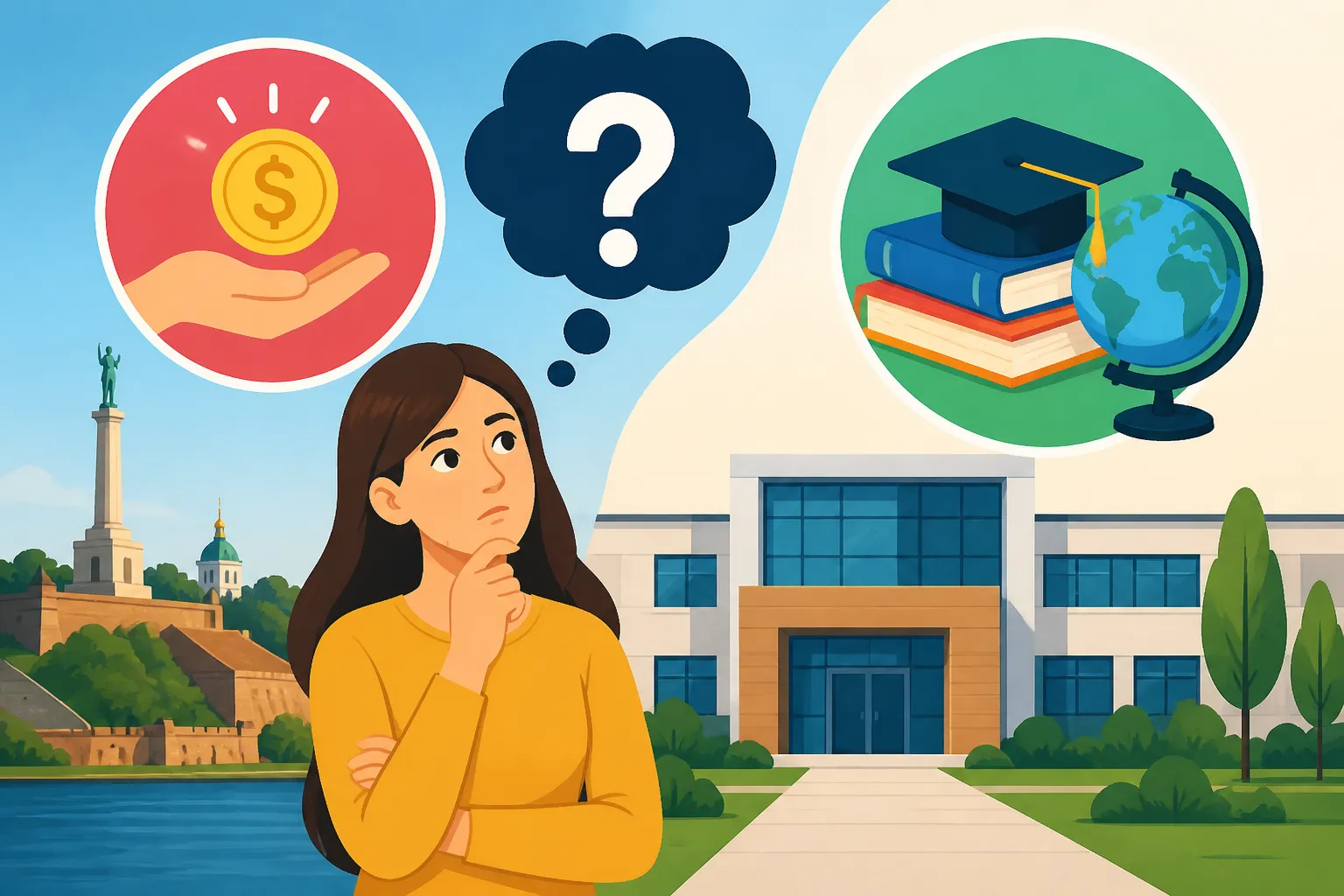
Moving your family to Serbia, you're bound to have a million questions swirling in your head, and near the top of that list for parents is almost always, "What about the kids' education?" You start looking into international schools, and then BAM! The price tags hit you like a runaway Belgrade tram. It’s a common moment of expat shock, feeling like you’ve just been handed a bill for a small car every year. This guide will walk you through the realistic costs of international schools in Serbia, what drives those prices, and how to navigate the educational landscape for your children without breaking the bank.
The Initial Question: Are International Schools in Serbia Truly Expensive?
Let's just be upfront about it: yes, international schools in Serbia are generally quite expensive, especially when compared to local Serbian public or even private schools. This isn't unique to Serbia; it's a global reality for these institutions. As an expat who’s been through the wringer here, I can tell you that the initial sticker shock is real. You might find yourself doing mental math conversions and wondering if you've misread a zero or two.
The Short Answer and Immediate Context
To give you the straightforward truth, annual tuition fees for international schools in Serbia can range anywhere from approximately €8,000 for early years to well over €25,000 for secondary education. This immediately sets them apart from the local educational offerings, where public schools are free (though you'll pay for books and some activities) and even private Serbian schools typically cost a fraction of their international counterparts. For families on a strict budget, this can be a daunting figure and often a significant re-evaluation point in their relocation plans. It's crucial to understand this context from the outset, rather than being surprised down the line when you start getting quotes.
Why the Cost Differential is So Stark
The reasons behind the steep fees are multifaceted and largely tied to the unique value proposition these schools offer to the international community. Firstly, they operate outside the national curriculum, often adhering to globally recognised frameworks like the International Baccalaureate (IB), British National Curriculum, or an American curriculum. These programmes require highly qualified, often internationally recruited teachers, who naturally command higher salaries than local educators. Secondly, international schools typically boast smaller class sizes, superior facilities – think modern science labs, extensive sports complexes, dedicated art and music studios – and a vast array of extra-curricular activities that go far beyond what a local school might offer. They are designed to provide a seamless educational transition for globally mobile families, ensuring that a child moving from, say, London to Belgrade, can continue their education in a familiar system and language, and easily transfer to another international school elsewhere in the world. This premium service, tailored to the specific needs of an international transient population, comes at a premium price.
A Deep Dive into the Numbers: Deconstructing International School Fees
When you first glance at an international school's fee schedule, you might only see the headline tuition figure. But trust me, that's rarely the full story. Just like diving into the intricacies of The Complete Guide to Cost of Living in Serbia for Expats, understanding school costs requires a closer look at all the various components that contribute to the final bill.
Core Tuition Fees by Educational Stage
Tuition is, of course, the biggest chunk. This generally covers the basic academic programme, teaching staff salaries, and essential learning materials. However, the fee structure almost always varies significantly by the child's age or grade level.
- Early Years/Nursery (ages 2-5): These tend to be the "cheapest" bracket, often ranging from €8,000 to €12,000 per year. For example, some schools in Belgrade might have a specific half-day or full-day programme with different pricing tiers.
- Primary School (ages 5-11): As children progress, the costs typically increase. You can expect to see fees in the range of €12,000 to €18,000 annually. This stage often includes more specialised teaching and resources.
- Secondary School (ages 11-18): This is where the fees truly escalate, often due to more complex curricula (like IGCSEs, A-Levels, or the IB Diploma Programme), specialised subject teachers, and university counselling services. Expect to pay anywhere from €18,000 to €25,000+, with the final years leading up to university entrance exams usually being the most expensive.
For instance, the International School of Belgrade (ISB) and the British International School (BIS), two prominent institutions in the capital, have fee structures that reflect these ranges, with slight variations based on the exact programme and facilities. It's vital to check the latest fee schedule directly from the schools' websites, as these can change annually.
The Myriad of Additional Charges
Oh, the "additional charges." This is where many expat families, myself included, have been caught off guard. These aren't hidden fees in the malicious sense, but rather a long list of costs that aren't included in the headline tuition.
- Admission/Application Fee: A non-refundable fee paid just to apply, often a few hundred euros.
- Enrolment/Registration Fee: A larger, one-time fee paid upon successful admission to secure your child’s spot. This can be anywhere from €1,000 to €3,000.
- Capital Levy/Development Fee: Some schools charge an annual or one-time fee dedicated to facility maintenance and upgrades. This can easily be another €1,000 to €2,000 per year.
- Deposit: A refundable deposit, usually equivalent to one term's tuition, held by the school until your child leaves.
- Uniforms: Most international schools require uniforms, and purchasing a full set (including sports kit) can be several hundred euros.
- Textbooks and Materials: While basic materials are often included, specialised textbooks, digital subscriptions, or art supplies might be extra.
- Technology Fees: Sometimes there's a separate fee for access to school-provided laptops, software licenses, or IT support.
- English as an Additional Language (EAL) Support: If your child needs extra language support, this will almost certainly be an additional charge, and it can be substantial.
- Special Educational Needs (SEN) Support: Similar to EAL, any specialised learning support for children with SEN will incur extra costs.
- Extra-curricular Activities: While some basic clubs might be free, many popular activities like private music lessons, competitive sports teams, or specialised workshops often come with an extra fee.
- School Trips and Excursions: From local day trips to international residential trips, these are almost always an additional cost.
- Exam Fees: For older students undertaking external exams (IGCSE, A-Levels, IB Diploma), the examination board fees are typically passed directly to parents.
- Transportation: School bus services are a common offering but are an extra cost, often several hundred euros per month, depending on your location.
- Lunches: School lunch programmes are usually optional and charged separately.
As you can see, these extras can easily add several thousands of euros to your annual bill. It's not uncommon for these additional charges to increase the total cost by 20-30% above the base tuition fee.
Here's a simplified table comparing approximate annual tuition ranges for a child across different age groups at a typical international school in Belgrade (actual fees vary significantly by school and year):
| Educational Stage | Age Range | Approximate Annual Tuition Range (EUR) |
|---|---|---|
| Early Years/Nursery | 2-5 | €8,000 – €12,000 |
| Primary School | 5-11 | €12,000 – €18,000 |
| Middle School | 11-14 | €16,000 – €22,000 |
| High School/IB Diploma | 14-18 | €20,000 – €28,000+ |
Note: These figures are indicative and vary greatly by individual school, specific programmes, and annual adjustments. Always consult the official fee schedules directly from the schools.
Examples from Belgrade's Top International Schools
Belgrade is home to several well-regarded international schools, each with its own flavour and fee structure. The two most established are often seen as the International School of Belgrade (ISB) and the British International School (BIS). There's also Prima School, which offers an international programme.
- International School of Belgrade (ISB): As an IB World School, ISB offers the full International Baccalaureate programme from Primary Years Programme (PYP) to Diploma Programme (DP). Their fees generally reflect their strong academic reputation and comprehensive facilities. For example, a student in the Diploma Programme might face annual tuition upwards of €25,000. On top of this, you’ll have the initial application and enrolment fees, and potential capital levies.
- British International School (BIS): BIS follows the English National Curriculum, leading to IGCSEs and A-Levels. Their fees are comparable to ISB, often in the €20,000-€24,000 range for secondary students, plus the usual raft of supplementary costs. They pride themselves on a traditional British educational ethos.
- Prima School: While also offering an international curriculum, Prima School can sometimes be a slightly more budget-friendly option, though still significantly more expensive than local schools. Their fees might start a bit lower in the primary years, but still quickly climb into the five-figure range annually, especially for secondary.
When you're doing your initial research, it's a good idea to create a spreadsheet and list out all potential costs, not just the base tuition, for each school you're considering. It can be quite an eye-opener!
The Value Equation: What Are You Paying For?
After seeing those numbers, it's natural to question the value. "Am I getting my money's worth?" is a question every expat parent asks themselves. While the costs are high, there's a distinct set of benefits and services that international schools provide, which for many families, are absolutely indispensable.
Academic Excellence and Global Curricula
The primary draw for most expat families is the academic standard and the continuity of a global curriculum. These schools are designed to prepare students for universities worldwide, not just local ones. For instance, the International Baccalaureate (IB) programme, offered by schools like ISB, is renowned globally for its rigorous academic demands and holistic approach to education. Students learn critical thinking, research skills, and develop a global perspective, all taught in English. This is incredibly important for families who anticipate moving to other countries, as it ensures their child's education remains consistent and transferable. Similarly, schools following the British or American curricula offer pathways to universities in those respective countries and beyond. This focus on international accreditation and universally recognised qualifications means peace of mind for parents about their child's future academic trajectory, a luxury often not available if you navigate How to Get Your Foreign Qualification Recognised in Serbia later.
Supporting the Expat Child's Transition
Beyond academics, international schools are masters at supporting children through the often-turbulent process of relocating. Moving to a new country, learning a new language, and adapting to a different culture can be incredibly tough on kids. International schools provide an environment where English (or another primary international language) is spoken, where many children are also expats who understand the challenges of moving, and where the teachers are experienced in dealing with transitional students. This immediate sense of belonging and familiarity can drastically ease a child's adjustment to life in Serbia. From my own experience, having a stable school environment in a language they understand, coupled with classmates from diverse backgrounds, can be the anchor a child needs. It's not just about the curriculum; it's about the emotional and social support network that helps them thrive in a foreign land. This also ties into discussions about Understanding the School System Public Private International in Serbia and why many expat parents lean towards international options.
Beyond the Classroom: Facilities and Community
International schools invest heavily in providing state-of-the-art facilities that often surpass those of local institutions. We're talking about dedicated science labs, computer suites, expansive sports fields, swimming pools, auditoriums, and well-stocked libraries. These resources allow for a broader range of educational experiences, from advanced scientific experiments to competitive sports and theatrical productions.
Equally important is the strong sense of community that these schools foster. They often become a hub for expat families, offering opportunities for parents to connect, share experiences, and build friendships. Parent-teacher associations are usually very active, organising social events, fundraisers, and support networks. This community aspect can be invaluable for new arrivals trying to find their footing in Serbia. When considering The Best Places to Live in Serbia for Expats, the proximity and community around a good international school often play a significant role in where families choose to settle.
Navigating Your Options: Budgeting and Alternatives
While international schools offer undeniable benefits, the price point simply isn't feasible for every expat family. It's important to know that you have other excellent choices, and there are ways to manage the financial strain if an international education is a priority.
When Local Schools Might Be a Better Fit
For families planning a longer stay in Serbia, or those with tighter budgets, local Serbian schools – both public and private – present a compelling alternative. Public schools are largely free, requiring only minor contributions for books or extracurriculars. Private Serbian schools, while incurring fees, are still considerably more affordable than international ones, often costing between €2,000 and €6,000 annually.
The primary consideration, of course, is the language barrier. Instruction in public schools is entirely in Serbian. This means your child would need to learn Serbian, which can be a fantastic immersion experience but also a significant challenge, especially for older children. Many expat parents choose public Serbian schools for their younger children, who tend to pick up languages more quickly, or for children who already have some exposure to the language. You can find resources on How to Enrol Your Child in a School in Serbia which cover the local options in detail.
Another factor is the curriculum. Serbian schools follow the national curriculum, which is robust and respected locally, but might not align with educational systems elsewhere if you anticipate further international moves. However, for a truly immersive cultural experience and significant savings, local schools are a viable and often enriching option. Some families even opt for a hybrid approach: local school for cultural integration and Serbian language acquisition, supplemented by private tutors for core subjects in English.
Financial Planning and Cost-Saving Tips
If you're set on an international school, diligent financial planning is paramount. Don't underestimate the total cost by just looking at the tuition. Factor in all the additional fees we discussed. Here are a few tips:
- Employer Sponsorship: Many international assignments include an education allowance. If you're moving to Serbia for work, negotiate this with your employer. It can make a huge difference.
- Early Bird Discounts: Some schools offer discounts for early registration or full-year payment upfront. It’s worth asking.
- Sibling Discounts: If you have multiple children, inquire about sibling discounts, which are fairly common.
- Payment Plans: Most schools offer various payment plans (e.g., termly, monthly). While they might not reduce the overall cost, they can help manage cash flow.
- Look for Scholarships/Bursaries: While rare for expat children, a few international schools might offer limited scholarships based on merit or financial need. It never hurts to ask, especially for older, high-achieving students.
- Budget for Extras: Create a separate budget for uniforms, school trips, extracurriculars, and transportation. Don’t let these surprise you. For instance, if your kids are doing a lot of after-school activities, their transport needs might change, so ensuring you have a reliable local data plan with something like Airalo when you first arrive can help coordinate schedules effectively.
- Consider Location: While Belgrade has the most international schools, if you're exploring other cities like Novi Sad, the cost of living might be lower, and you might find slightly different fee structures, though international schools are less prevalent outside the capital. Even your rental costs can impact your overall education budget; see How Much Does It Cost to Rent an Apartment in Belgrade in 2026? to get a clearer picture.
- Moving Logistics: When planning your move, consider how you'll manage your belongings. Services like Sirelo can help you compare moving companies, potentially saving money on relocation, which can then be allocated to educational expenses.
Making the Right Educational Choice for Your Family
Ultimately, the decision of where to send your children to school is a deeply personal one, weighing financial considerations against educational philosophy, your child’s needs, and your long-term plans.
- For Short-Term Stays (1-3 years): An international school often makes the most sense. It minimises disruption, maintains academic continuity, and ensures an easier transition when you eventually move again.
- For Long-Term Stays (3+ years): Both international and local schools become more viable. If you plan to settle long-term, integrating your child into a local school can lead to deeper cultural immersion and fluent Serbian, which is an invaluable skill. However, if international university pathways are critical, the consistent curriculum of an international school might still be preferred.
- Child's Personality and Needs: Consider your child. Is your child adaptable and a quick language learner? A local school could be a fantastic adventure. Is your child more sensitive to change or needing specific academic support? An international school with its tailored support systems might be a safer bet. Keep in mind that for very young children, How Much Does Childcare Cost in Serbia? might also be a relevant cost to factor into your early years budget.
There’s no one-size-fits-all answer here, just as there isn’t a single path for expats in Serbia. Take your time, do your research, and talk to other expat parents. Understanding all your options under Schools and Education in Serbia: A Complete Guide for Expat Families will empower you to make the best decision for your family's unique journey.
Disclaimer
The information provided in this article is intended for general informational purposes only and does not constitute financial, legal, or educational advice. School fees and policies in Serbia can change frequently. Readers are strongly advised to verify all information, especially fee structures and enrolment requirements, directly with the respective international schools and relevant Serbian authorities. While we strive for accuracy, we cannot guarantee that all information is completely up-to-date or exhaustive.