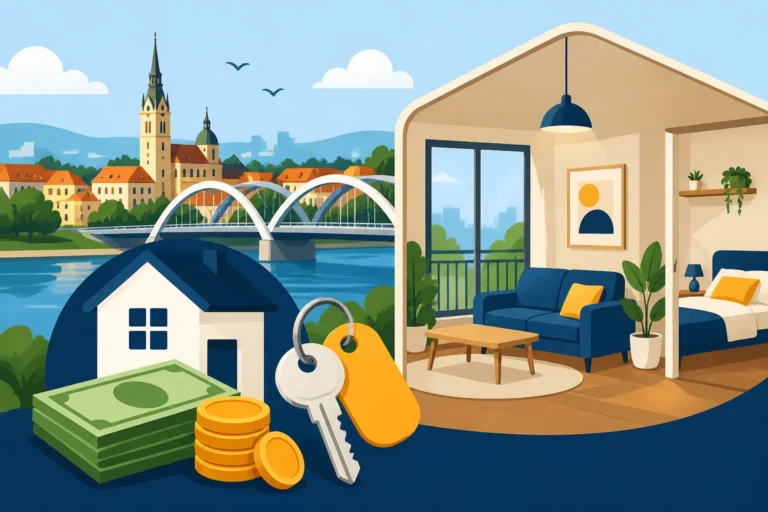
Can I Rent an Apartment in Serbia Before I Arrive?
Oh, the age-old expat dilemma: trying to find a place to call home in a new country before you've even landed. It’s a challenge many of us have faced, filled with anxiety and the constant worry of landing in a less-than-ideal situation. Securing an apartment in Serbia, especially from afar, comes with its own set of quirks and hurdles. This guide is here to cut through the uncertainty, offering you a realistic look at the possibilities, pitfalls, and practical steps for trying to rent an apartment in Serbia before your boots hit the ground.
The Reality of Renting Sight Unseen in Serbia
Let's be honest, renting an apartment in Serbia without physically being here to see it, touch it, and get a feel for the neighbourhood is usually not the ideal scenario. It's not impossible, but it definitely adds a layer of complexity and risk that you need to be aware of and actively mitigate.
Why It's Tricky and Sometimes Risky
First off, Serbia’s rental market, particularly for long-term leases, operates a bit differently from what many foreigners are used to. It's often a very personal process. Landlords here typically prefer to meet prospective tenants in person. They want to gauge you, see if you seem responsible, and get a feel for who will be living in their property. This isn't usually a formality; it's a genuine part of the decision-making process. Trying to navigate this cultural expectation from thousands of miles away can be incredibly frustrating. You might find properties you love online, only for your remote application to be overlooked simply because you're not there to make a personal connection.
Another significant hurdle is the nature of online listings. While major cities like Belgrade and Novi Sad have more developed online platforms, many listings on local sites like Halo Oglasi or Nekretnine.rs feature limited photos, no video tours, and descriptions often only in Serbian. What's more, the concept of "furnished" can vary wildly. What one landlord considers fully furnished, another might consider sparse. You could end up with a sofa, a bed, and a single kitchen cabinet, or a meticulously appointed home. Without being there, it's a roll of the dice.
Then there’s the undeniable risk of misrepresentation or, in the worst-case scenario, outright scams. Imagine arriving in Serbia, exhausted from your journey, only to find the apartment you "rented" doesn't exist, is already occupied, or looks nothing like the blurry photos you were sent. While reputable agents and landlords exist, the potential for being taken advantage of is higher when you're not physically present to verify everything. This is a common expat fear, and it's valid.
When It Might Be Necessary and How to Mitigate Risks
Despite the difficulties, sometimes renting remotely is a necessity. Perhaps you have a job starting immediately and need an address for your residence permit, or your family is arriving shortly after you, and you want to minimise the disruption. For some, particularly those moving with significant employer support, their company might have established relationships with relocation agencies or real estate professionals who can facilitate remote viewings and handle the paperwork.
If you absolutely must try to secure a place before you arrive, there are crucial strategies you can employ to mitigate the risks. Your primary goal here is verification and documentation. Firstly, always work with highly reputable real estate agents who specialise in expat rentals. These agencies often have English-speaking staff and understand the nuances of dealing with foreign clients. They can be your eyes and ears on the ground. Secondly, insist on extensive, live video calls – not just pre-recorded walkthroughs. Ask the agent or your trusted proxy to show you every room, every appliance, the water pressure in the shower, the view from the window, and even step outside to show you the immediate neighbourhood. Don't be shy about asking for specific details.
If you have friends, colleagues, or an existing network in Serbia, leverage them! A trusted person on the ground can act as your proxy, visiting properties, asking questions, and providing an unbiased assessment. They can check things you can't, like noise levels, natural light, and the general vibe of the building and street. Finally, ensure any contract you're asked to sign is fully translated and reviewed by an independent party, if possible. Pay close attention to clauses regarding utilities, deposits, notice periods, and inventory. Remember, you can gain a lot of insight by reading about How Do I Sign a Rental Contract in Serbia? before committing.
| Factor | Remote Renting (Pros) | Remote Renting (Cons) | In-Person Renting (Pros) | In-Person Renting (Cons) |
|---|---|---|---|---|
| Convenience | Potentially less stress upon arrival | Limited choice, high risk of misrepresentation | Full control, seeing what you get | Requires immediate arrival, potentially short-term stay first |
| Trust | Relies heavily on agent/proxy integrity and documentation | Higher risk of scams or unmet expectations | Direct interaction with landlord/agent, immediate verification | Can still encounter difficult landlords |
| Verification | Based on photos, videos, third-party reports | Cannot assess feel, smell, noise, or true condition | Full sensory experience, allows for detailed inspection | Time-consuming, requires travel and physical presence |
| Cost | Potentially saves on initial short-term accommodation | Risk of losing deposit or overpaying for a poor property | Ability to negotiate better terms, no wasted money on bad choices | Cost of initial short-term stay, potential agent fees |
| Paperwork | Requires digital signatures, power of attorney, translations | Complexities with international payments, contract understanding | Straightforward, in-person signing, easier clarifications | Language barrier can still be an issue |
Practical Pathways to Secure Housing Remotely
Alright, so you've weighed the risks and decided to press on with a remote search. Good for you! Let's talk about the practical steps and resources that can make this process a little less daunting.
Leveraging Online Platforms and Real Estate Agents
Your first port of call will undoubtedly be online. While local Serbian sites like Halo Oglasi and Nekretnine.rs are rich with listings, they are often in Serbian and might not cater to an international audience with comprehensive details or English-speaking contacts. For a broader reach, you might also find some listings on international portals or general classifieds, but these tend to be fewer and farther between for long-term rentals. Don't forget the power of expat communities online; Facebook groups like "Expats in Belgrade" or "Foreigners in Novi Sad" often have members sharing leads, recommending agents, or even listing their own properties as they move on.
However, for genuine remote apartment hunting, a good real estate agent is indispensable. Think of them as your personal concierge in the Serbian property jungle. A reputable agent can access a wider range of properties, often including those not publicly listed. More importantly, they can bridge the language barrier, communicate directly with landlords, and represent your interests. They understand that you need more than just photos – you need details, assurances, and reliable communication. While you will likely pay an agent's fee (typically half to one month's rent, paid by the tenant upon signing), this investment significantly reduces your risk and workload. For more detailed advice on finding the right professional, check out How Do I Find a Reliable Real Estate Agent in Serbia?.
The Role of Video Tours and Trusted Proxies
As mentioned, live video tours are your best friend here. Don't settle for a pre-recorded video. Request a live walkthrough via WhatsApp, Zoom, or another video call service. During the call, ask your agent or proxy to focus on specific details:
- Heating System: Serbia can get cold! Ask them to show the radiators (if central heating) or the electric stove/storage heaters and their condition.
- Water Heater: Many apartments have electric boilers (bojleri). Ask to see its size and location – a small one means quick showers!
- Kitchen Appliances: Are they modern? Do they look functional? Are there enough cupboards?
- Windows and Insulation: Can they feel drafts? How soundproof do they seem against street noise? This is key for comfort.
- Neighbourhood Vibe: Ask them to step onto the balcony or go outside to show you the street, nearest shops, and how lively or quiet it is.
When it comes to the actual contract signing, this is where things get really interesting remotely. Ideally, your agent or a trusted friend could sign on your behalf with a power of attorney (punomoćje). This document grants them the legal authority to sign documents for you. It must be notarised in your home country (with an Apostille, if your country is a signatory to the Hague Convention) and then officially translated into Serbian by a sworn court translator once it arrives in Serbia. Alternatively, some landlords and agencies might be flexible with digital signatures for initial agreements, but a wet signature is almost always required for the final, legally binding rental contract. Understanding How Do I Sign a Rental Contract in Serbia? is crucial for this stage.
Understanding Deposits and Contracts from Afar
Securing a rental in Serbia almost always involves paying a security deposit, typically equivalent to one month's rent. Sometimes, landlords might request two months, especially if you're an expat without a local guarantor. This deposit is held to cover any potential damages or unpaid utility bills. One of the biggest concerns for expats is often How Do I Get My Rental Deposit Back in Serbia?, which highlights the importance of a clear, comprehensive contract from the outset.
Your rental contract (ugovor o zakupu) is your shield. For remote rentals, it's non-negotiable that you receive a copy, preferably bilingual (Serbian and English), that you can thoroughly review. This document should explicitly state:
- The monthly rent amount and due date.
- The amount of the security deposit and the conditions for its return.
- Who is responsible for paying which utilities (electricity, water, central heating, internet, building maintenance – often referred to as 'infostan').
- The length of the lease and notice period required to terminate the contract.
- A detailed inventory of all furniture and appliances provided, noting their condition. Take photos of everything with your agent/proxy before signing!
When it comes to transferring funds for the deposit and first month's rent, use secure, traceable methods like international bank transfers. Avoid sending cash or using untraceable money transfer services, especially when dealing with someone you haven't met. Companies like Wise (formerly TransferWise) can be excellent for making international payments with better exchange rates and transparency than traditional banks. If you're wondering about the financial aspects, learning about How Much Deposit Do I Need to Rent in Serbia? can give you some peace of mind.
What to Do Upon Arrival (If You Couldn't Secure a Long-Term Rental)
Let's face it, sometimes despite your best efforts, securing a long-term rental before arrival just doesn't work out. And that's perfectly okay! Many expats come to Serbia and find their perfect home after they've had a chance to explore. So, if you find yourself in this boat, don't panic. There are solid strategies for your first few weeks.
Short-Term Accommodation Solutions
The first thing you'll need is a temporary place to stay that gives you flexibility while you properly search. Booking.com and Airbnb are your best friends here. You can easily find apartments or rooms for a week, two weeks, or even a month. These options often come fully furnished and equipped with essentials, saving you immediate setup hassles. While they are generally more expensive than a long-term rental, they offer invaluable flexibility and allow you to get oriented without the pressure of a permanent commitment.
For something a bit more comfortable than a standard Airbnb, consider serviced apartments. These often combine the amenities of a hotel (like cleaning services and sometimes even a reception) with the space and privacy of an apartment. They are a fantastic middle-ground if you anticipate needing a temporary home for several weeks while you get your bearings and conduct your on-the-ground search. Booking these a month or two in advance, especially during peak seasons like summer or early autumn, is a good idea to ensure availability and potentially better rates. Remember, your first 90 days are a whirlwind, and having a stable base for The Complete Guide to Moving to Serbia: Your First 90 Days (2026) is invaluable.
The On-the-Ground Hunt for Your Dream Home
Once you’re here, the real fun begins! The local rental market moves quickly, so be prepared to act fast when you find something you like. Have all your necessary documents ready: your passport, your temporary residence permit (if you have it), and proof of funds. You can find more details on What Documents Do I Need to Rent an Apartment in Serbia?.
Walking around potential neighbourhoods is an excellent strategy. You'll often see "Izdajem" (For Rent) signs posted on buildings, which might lead you to hidden gems not advertised online. Don't be afraid to ask locals, especially those who speak some English, if they know of anything available. Word-of-mouth is a powerful tool in Serbia!
When you visit apartments, try to schedule multiple viewings back-to-back in the same area. This allows for direct comparison and helps you quickly refine your preferences. Don't feel pressured to take the first thing you see, but also be aware that good apartments, especially those that are well-located and reasonably priced, tend to be snatched up very quickly. This is your chance to really compare, for example, How Much Does It Cost to Rent an Apartment in Belgrade in 2026? versus other cities like Novi Sad. Take your time to explore areas; How Do I Find an Apartment to Rent in Novi Sad? might require a different approach than Belgrade.
Essential Considerations Beyond the Lease
Signing the rental contract is a huge step, but it's far from the only thing you need to think about when moving into your new Serbian home. There are practicalities that every expat faces, and preparing for them makes the transition much smoother.
Utility Setup and Connectivity
One of the first things you'll need to figure out is how utilities work. In Serbia, it's common for the landlord to handle the payment of "infostan" (a combined bill for central heating, building maintenance, and sometimes water), but the tenant is usually responsible for electricity, internet, and sometimes water if it's not part of infostan. Make sure your contract clearly defines who pays for what. Setting up electricity (via EPS) and connecting to the internet can take some time, involving paperwork and scheduling technicians. It's often easier if the landlord helps you with this or if you choose an apartment where these services are already active and you just need to transfer the account. You can learn a lot by looking at The Expat Guide to Setting Up Utilities Electricity, Water, Heating in Serbia.
Internet connectivity is vital in today's world, and getting a reliable connection set up in your new apartment should be a priority. Major providers like Telekom Srbija, Yettel, and SBB offer various packages. While they often have promotional deals, the setup itself can sometimes involve a waiting period. In the interim, having a reliable mobile data plan is a lifesaver. Speaking of mobile, getting a local SIM card immediately upon arrival is crucial for communication, navigation, and staying connected. For immediate data access the moment you land, consider an eSIM service like Airalo. It allows you to download a local data plan before you even leave home, so you're connected from the minute your plane touches down, which is incredibly useful before you get a local physical SIM or sort out your home internet. For a deep dive into connectivity options, refer to How to Set Up Internet and Mobile Service in Serbia.
Getting Your Belongings Here
Once you have your apartment sorted, you'll need to decide what to do with your belongings. Did you bring just a suitcase, or are you planning a full-scale move with furniture and personal effects? Understanding Furnished vs Unfurnished Rentals in Serbia can help you decide how much you need to bring. Shipping items to Serbia involves costs and navigating customs regulations, which can be complex.
For larger moves, comparing international moving companies is a smart move. Platforms like Sirelo can be incredibly helpful here. Sirelo allows you to compare quotes from various moving companies, helping you find the best option for shipping your possessions to Serbia efficiently and (relatively) stress-free. They consolidate information, making it easier to choose a reputable mover who understands international logistics and Serbian customs requirements. Whether it's a few boxes or an entire household, planning this aspect well in advance will save you headaches.
Navigating the rental market in Serbia as a newcomer, especially when trying to do so remotely, can feel like a labyrinth. But with patience, thorough research, the right support, and a good understanding of local practices, you can certainly find a wonderful place to call home. Just remember to breathe, be persistent, and don't be afraid to ask for help!
Disclaimer
The information provided in this guide is intended for general informational purposes only and does not constitute legal, financial, or professional advice. While we strive to ensure the accuracy and timeliness of the content, laws, regulations, and market conditions in Serbia can change rapidly. We strongly recommend consulting with local legal professionals, real estate agents, and financial advisors for advice tailored to your specific situation before making any decisions related to renting property in Serbia. The author and publisher are not responsible for any actions taken based on the information provided herein.