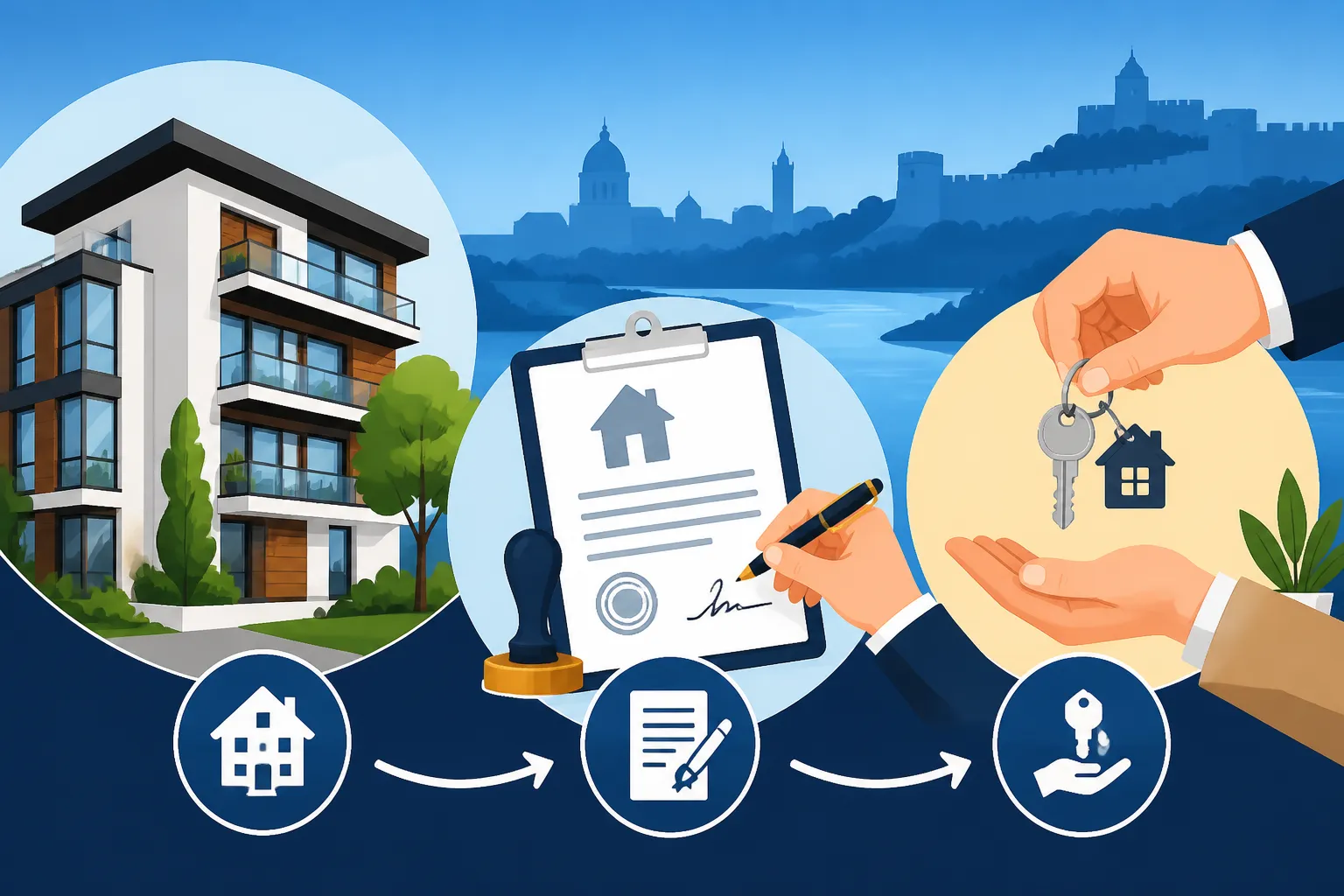
How to Complete the Property Purchase and Notary Process in Serbia
Buying property in a foreign country can feel like navigating a maze blindfolded, especially in Serbia with its unique blend of traditional bureaucracy and modernising processes. The notary and property purchase journey, while ultimately rewarding, is often shrouded in mystery and can bring a fair share of headaches for expats. This comprehensive guide is here to unravel that mystery, providing a step-by-step walkthrough of the Serbian property buying process, from initial searches to getting those keys in your hand, so you can approach it with confidence and clarity.
Navigating the Serbian Property Landscape: Initial Steps for Foreigners
Before you even dream of signing papers, there's a crucial groundwork to lay when you're looking to buy property in Serbia. This isn't just about falling in love with a charming apartment in Dorćol or a tranquil house in Fruška Gora; it’s about strategic planning and protecting your investment from the get-go.
Finding Your Property and Legal Representation
The first hurdle, of course, is finding the right property. Many expats start their search online, browsing popular Serbian real estate portals like Halo Oglasi, Nekretnine.rs, or Sasomange. You'll quickly notice a mix of direct listings from owners and those through agencies. While direct deals might seem appealing to save on agency fees, working with a reputable real estate agent can save you immense time and headaches, especially if you're not fluent in Serbian. They can filter properties, arrange viewings, and even act as an initial intermediary. However, don't rely solely on them for legal advice.
Once you’ve shortlisted properties, or even before, securing an independent, English-speaking lawyer is paramount. This isn't a recommendation; it's a necessity. Your lawyer will be your shield and sword, guiding you through the legal complexities, reviewing contracts, and ensuring your interests are protected. They are your independent advocate, crucial for understanding the intricacies of property ownership and the market in Serbia. Finding a good, independent legal professional should be high on your priority list, even before you've picked out the perfect sofa for your future living room. Remember, a real estate agent primarily serves the transaction, not necessarily your legal safety.
The Critical Role of Due Diligence Checks
This is arguably the most vital stage, and where your lawyer truly earns their keep. Due diligence in Serbia goes beyond a quick check; it's a deep dive into the legal history and status of the property you intend to purchase. Your lawyer will meticulously examine the property’s documentation at the Cadastre (Republic Geodetic Authority – Republički geodetski zavod or RGZ), which is Serbia’s official land registry. They will verify that the seller is indeed the rightful owner, that there are no outstanding mortgages, liens, or other encumbrances (such as servitudes, expropriation orders, or unresolved disputes) attached to the property.
Imagine falling in love with a beautiful old building, only to find out later it has an illegal extension, or that someone else has a claim to part of the land. These kinds of scenarios, while not common with reputable sellers, can be devastating if not caught early. Your lawyer will also check for any outstanding utility debts linked to the property, which, although technically tied to the previous owner, can sometimes become an issue if not clarified and settled before purchase. This thorough investigation helps you avoid future legal battles and ensures you're buying a clean, unencumbered asset. It's an investment in peace of mind that pays dividends down the road.
The Notary's Pivotal Role: More Than Just a Stamp
In Serbia, the role of the public notary (javni beležnik) in property transactions is not just ceremonial; it's absolutely fundamental and legally binding. They are not merely witnesses but rather public officials entrusted with ensuring the legality, authenticity, and proper form of contractual agreements. For expats, understanding this distinction is key to navigating the property purchase process smoothly.
Understanding the Public Notary's Mandate
Since 2014, public notaries have been indispensable to property transactions in Serbia. Any contract for the sale of real estate must be certified by a public notary to be legally valid. This means they don't just put a stamp on a document; they are legally responsible for verifying the identities of all parties, ensuring their legal capacity to enter into a contract, and confirming that the property documents are in order. The notary checks the Cadastre records themselves, ensuring the property's legal status aligns with the contract. This significantly reduces the risk of fraud or buying a property with unresolved legal issues, as they act as a neutral party upholding the law.
Furthermore, the notary also plays a vital role in drafting and explaining the contract terms to both parties, often with an official court interpreter present if there's a language barrier. This is critical for expats who might struggle with Serbian legal terminology. They ensure that all clauses comply with Serbian law and that all parties fully comprehend their rights and obligations. This oversight is a significant protection for foreign buyers, providing an additional layer of security beyond your own lawyer's review.
Preparing Necessary Documentation for the Notary
Walking into a notary's office in Serbia without the right paperwork is like trying to bake a cake without flour – it's just not going to happen. The list of documents required can seem daunting, but your lawyer will guide you. For the buyer, you’ll typically need your valid passport, your Serbian residence permit (boravak), and proof of funds or a bank statement, especially if you're taking out a mortgage. If you're married and buying property, your spouse's documents might also be required, depending on how you intend to register ownership.
The seller, on the other hand, needs a comprehensive set of documents for the property itself. This includes the ownership title (izvod iz katastra nepokretnosti), proof that all previous transaction taxes were paid, an energy performance certificate (energetski pasoš) for the building, and sometimes a use permit (upotrebna dozvola) or building permit (građevinska dozvola). If the seller is married, their spouse's consent might be needed. Any foreign documents, especially personal ones like marriage certificates if relevant to ownership, must be apostilled and officially translated into Serbian by a court-certified translator. This administrative detail is where many expats hit their first snags, so plan ahead and let your lawyer handle the nuances.
From Pre-Contract to Final Signature: The Contractual Journey
The journey to owning property in Serbia involves at least two key contracts: the preliminary contract and the main purchase contract. Understanding the purpose and implications of each is vital, as they both represent significant legal commitments.
The Preliminary Purchase Agreement (Predugovor)
Think of the preliminary purchase agreement, or Predugovor, as your serious handshake deal, but legally binding. This document is usually the first major step after due diligence is complete and both parties have agreed on the price and basic terms. It outlines the essential elements of the transaction: the property description, the agreed-upon purchase price, the payment schedule, the amount of the deposit (kapara), and the deadline for signing the main purchase contract. Crucially, it also specifies any conditions precedent, such as the seller needing to clear a mortgage or obtain specific documentation before the final sale.
The deposit, typically 10% of the purchase price, is paid upon signing the predugovor. This deposit serves as a guarantee: if the buyer backs out, they generally lose the deposit. If the seller backs out, they are usually obliged to return double the deposit. This mechanism ensures both parties are committed to moving forward. While not always mandatory, having the predugovor certified by a notary is a common and highly recommended practice. It elevates the document's legal standing and ensures that the terms are clear and agreed upon under official supervision. This initial step can feel exciting, but it’s critical to have your lawyer scrutinise every line.
Executing the Main Purchase Contract (Glavni Ugovor)
The Glavni Ugovor, or main purchase contract, is the definitive document that transfers ownership. This is the big one. It's typically signed at the notary's office, again, with a court interpreter present if necessary. Before signing, your lawyer will have reviewed the final draft thoroughly, ensuring all conditions from the Predugovor have been met and that the contract accurately reflects the agreed terms. This contract contains all the details of the property, the exact purchase price, the payment method (which is often through a bank transfer or via a notary's escrow-like account), and the declaration of the seller transferring ownership rights to the buyer.
Once all parties sign and the notary certifies the Glavni Ugovor, the ownership formally changes hands – at least in the eyes of the law. The notary will then electronically submit the contract to the Cadastre for registration. This is also the point where the full payment, or the final installment if it was staggered, is transferred to the seller. It’s a moment of relief and excitement, but the process isn’t entirely over until your name is officially recorded as the new owner in the Cadastre. This can take some time, so patience is a virtue here. If you are handling large sums of money, remember that understanding how to transfer money into and out of Serbia as an expat is crucial for smooth transactions.
Sealing the Deal: Payment and Ownership Transfer
Getting to this stage means you're almost at the finish line! But how you handle the money and ensure your ownership is legally recorded are two absolutely vital steps that cannot be overlooked.
Secure Fund Transfers and Escrow Options
For expats, transferring significant funds for a property purchase requires careful planning and security. Serbian law is stringent on money laundering regulations, so expect your bank to ask for proof of origin for your funds. This usually means bank statements showing the funds in your foreign account for a period, or documentation related to their source (e.g., sale of a previous property, inheritance). It's best to consult with your Serbian bank well in advance about their specific requirements. For general banking needs, The Expat Guide to Opening a Bank Account in Serbia can provide helpful information.
When it comes to the actual payment, many buyers opt for a bank transfer directly from their Serbian bank account to the seller's account, as specified in the main purchase contract. A very secure method, often facilitated by notaries, involves using a notary's special "escrow" or deposit account. In this scenario, the buyer transfers the purchase price to the notary’s account. The notary then holds these funds until all conditions of the sale are met (e.g., the contract is signed and submitted to the Cadastre), before releasing the money to the seller. This provides an excellent layer of protection for both buyer and seller, ensuring that the funds are released only when the legal requirements for the transfer of ownership are fulfilled.
Registering Your New Property in the Cadastre
This is the official conclusion of your property purchase journey. While the notary submits the Glavni Ugovor to the Cadastre immediately after certification, the actual registration of your ownership can take a few weeks or even months, depending on the workload of the local Cadastre office. This process involves the Cadastre reviewing the submitted documents and updating their records to reflect you as the new legal owner. You will eventually receive an extract from the Cadastre (list nepokretnosti) with your name on it, confirming your ownership. This document is your ultimate proof of title.
It's critical that your lawyer follows up on this registration process. Sometimes, minor issues or requests for additional documentation might arise, and having your lawyer on top of it ensures these are addressed promptly. Without this official registration, your ownership isn't fully recognised, which could cause problems if you ever want to sell, mortgage, or use the property as collateral. Patience is key during this final administrative step, but it’s the definitive moment your Serbian property truly becomes yours.
Post-Purchase Realities: Settling into Your New Serbian Home
Congratulations, you've bought property in Serbia! But the journey doesn't end with a certified contract. There are several essential administrative tasks and practical considerations to handle to truly make your new place a home.
Dealing with Taxes and Administrative Fees
The most immediate financial obligation after the purchase is the property transfer tax, which is currently 2.5% of the market value of the property (not necessarily the purchase price, but the value assessed by the tax authorities, though often they align). Your lawyer will typically help you with filing the necessary tax return with the local tax administration (Poreska Uprava). This tax must be paid within a certain timeframe, usually 15 days, after the contract becomes legally binding. Ignoring this can lead to penalties. Understanding the property transfer tax when buying in Serbia is a crucial piece of the financial puzzle.
Beyond the transfer tax, you will also be liable for annual property tax, which varies based on the property's size, location, and condition. These taxes are typically paid in quarterly installments. Furthermore, if you’re moving your belongings, you might want to look into services like Sirelo to help compare international moving companies. This can be a major headache, so planning this aspect of your relocation, including customs duties if applicable, is wise. While your lawyer primarily handles the purchase, they can often direct you to accountants who specialise in expat taxes in Serbia to ensure you're compliant with all your financial obligations.
Here's a quick overview of key costs:
| Cost Type | Typical Percentage/Amount | Who Pays | Notes |
|---|---|---|---|
| Property Transfer Tax | 2.5% of market value | Buyer | Assessed by tax authorities, not necessarily the exact purchase price. |
| Notary Fees | Scaled (e.g., 0.1-0.2% of value, capped) | Buyer | Varies by value of property, regulated by law. |
| Real Estate Agent Fees | 2-3% + VAT | Buyer (or Seller, or split) | Negotiable, typically stated in agency agreement. |
| Lawyer Fees | Varies | Buyer | Highly recommended; protects your interests. |
| Cadastre Registration Fees | Fixed (approx. 20 EUR) | Buyer | For registering ownership in the land registry. |
| Court Interpreter Fees | Hourly/Fixed | Buyer | If required during notary certification. |
| Annual Property Tax | Varies | Owner | Depends on property size, location, and municipality. Payable quarterly. |
Utility Transfers and Practical Relocation Advice
Once you have the keys and your ownership is confirmed, the next logical step is to transfer all utilities into your name. This includes electricity (EPS), water, heating, and potentially gas, internet, and mobile phone services. This process often involves visits to various utility providers’ offices and presenting your property ownership documents and ID. It can be a bureaucratic marathon, especially if you're battling a language barrier, so consider bringing a Serbian-speaking friend or hiring a local assistant. Our guide on how to set up electricity (EPS) in your Serbia home can be incredibly helpful for navigating these initial steps.
You'll also need to consider your address registration. As a foreign resident, you are legally required to register your address with the police (MUP). This is often done when you apply for or renew your temporary residence permit. For details, refer to our guide on how to register your address (Prijava) with the police in Serbia. In terms of communication during these initial weeks, while you're sorting out local SIM cards, an eSIM service like Airalo can be a convenient way to stay connected, especially if you're making frequent short trips to Serbia to handle these various administrative tasks before your full relocation. It’s a small thing, but reliable internet access can make a huge difference when coordinating everything.
The post-purchase phase is all about settling in. From finding the best places to buy furniture to understanding how to navigate the local markets, every aspect contributes to making Serbia truly feel like home. Take your time, ask for help, and don't be afraid to lean on your expat network for advice and recommendations.
Disclaimer
The information provided in this guide is for general informational purposes only and does not constitute legal, financial, or professional advice. While we strive to keep the information accurate and up-to-date, laws and procedures in Serbia can change. It is essential to consult with qualified Serbian legal professionals, notaries, and financial advisors for advice tailored to your specific situation before making any property purchase decisions. The author and publisher disclaim all liability for any loss or damage incurred by individuals acting on the information contained herein.