How Do I Get Medical Treatment as a Foreigner in Serbia?
Getting sick or needing medical attention in a foreign country can be genuinely terrifying, adding a whole new layer of stress to an already uncomfortable situation. The Serbian healthcare system, with its mix of public and private options, can feel like a labyrinth for foreigners. This guide is here to demystify the process, offering a comprehensive walkthrough on how to navigate medical treatment as a foreigner in Serbia, from a simple cold to a more urgent emergency.
Your First Steps When Medical Help is Needed
When that dreaded feeling of illness creeps in, or an unexpected accident occurs, your first thought might be panic. Believe me, I've been there, staring at a pharmacy sign written entirely in Cyrillic, wondering if I was buying cough syrup or something else entirely. The key is to remember you have options, and knowing them beforehand makes a world of difference.
Assessing the Urgency of Your Situation
Before you even think about which door to walk through, take a moment to assess what kind of medical attention you actually need. Is this a minor ailment that could be handled with over-the-counter medicine, or something that absolutely requires a doctor's consultation?
Non-Emergency Situations: Pharmacies and Self-Care
For common colds, minor pains, or if you just need some basic first aid supplies, the local apoteka (pharmacy) is your first port of call. Serbian pharmacists are often incredibly knowledgeable and can offer advice and suggest appropriate non-prescription medications. Many speak at least some English, especially in larger cities like Belgrade or Novi Sad. Don't be shy about miming or using a translation app – they're used to it. You'll find pharmacies on nearly every corner, and many operate 24/7, making them a convenient first stop for minor issues. If you just need general advice on your everyday health, or perhaps where to pick up a flu shot as an adult, the pharmacy can often guide you.
Urgent but Non-Life-Threatening Concerns: Dom Zdravlja or Private Clinics
If you're dealing with something more serious than a sniffle but it's not a life-or-death emergency, you have two main avenues: the public primary healthcare centers (Dom Zdravlja) or a private clinic. For those who are registered with the national health insurance fund, the RFZO, your assigned doctor at the Dom Zdravlja is your gateway to the public system. You can learn more about how to register with the RFZO and a GP in Serbia (2026) to ensure you're covered. However, getting an immediate appointment at a Dom Zdravlja can sometimes involve a wait, and communication can be a hurdle if you don't speak Serbian. This is where private clinics often shine – they usually offer same-day appointments and a higher chance of finding English-speaking staff.
Understanding Emergency Services
When it's a true emergency, every second counts, and you don't want to be fumbling with phone numbers or wondering what to do. Serbia has a dedicated emergency system, and it's vital to know how to access it.
Dialing 194 or 112 for Ambulances
For life-threatening situations – think severe accidents, heart attacks, strokes, or any condition requiring immediate hospital transport – you should call 194 for an ambulance (Hitna Pomoć). This number will connect you directly to emergency medical services. Alternatively, 112 is the general European emergency number and also works in Serbia, connecting you to police, fire, and ambulance services. When you call, try to speak slowly and clearly. State your location (exact address if possible, or clear landmarks), the nature of the emergency, and if possible, that you are a foreigner and may need an English speaker. While not guaranteed, especially outside major cities, many operators have basic English. For a full breakdown of what to expect, refer to our guide on Emergency Medical Care in Serbia: What Every Expat Needs to Know.
Emergency Room Protocol
If you are taken to a hospital via ambulance or arrive at an emergency room (Urgentni Centar) yourself, the immediate focus will be on stabilization and urgent treatment. Don't worry about payment or insurance cards in that critical moment – your health is paramount. Once stable, administrative procedures will follow. It's helpful to have a friend or family member with you if possible, who can assist with translation and paperwork.
Navigating Public vs. Private Healthcare in Serbia
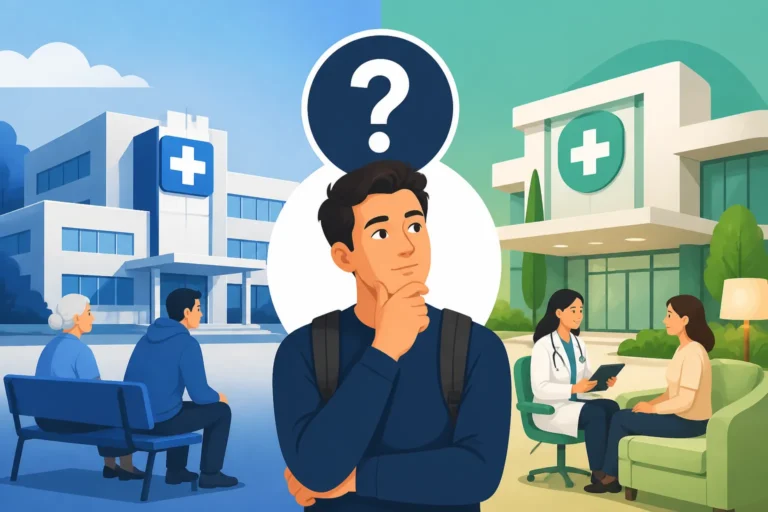
One of the biggest dilemmas for foreigners in Serbia is deciding whether to rely on the public system or opt for private healthcare. Both have their merits and drawbacks, and understanding them is crucial for making informed choices. I’ve personally experienced the frustrations of long waits in the public system and the relief of prompt care in private clinics, so I can tell you it’s a very real choice you’ll face.
Public Healthcare System: The RFZO
Serbia's public healthcare system is managed by the Republic Health Insurance Fund (RFZO – Republički Fond za Zdanično Osiguranje). If you are legally employed in Serbia, or registered as an entrepreneur, you are typically mandated to contribute to the RFZO and are therefore entitled to public healthcare services. You can get more details on How Serbia's Health System Works: The RFZO and Private Care Explained (2026).
Accessing Public Services
Once you are registered with the RFZO and have chosen a GP (Izabrani Lekar) at a local Dom Zdravlja, this doctor becomes your primary point of contact for most medical needs. They are responsible for general consultations, issuing referrals to specialists, and managing your ongoing care. While public healthcare is largely free at the point of service (with some co-payments for certain procedures or medications), getting an appointment, especially with specialists, can involve significant wait times. Navigating the public system often requires patience and, ideally, some basic Serbian language skills or a translator. This can be a steep learning curve for many.
Advantages and Disadvantages of Public Healthcare
The obvious advantage is cost – if you're covered by the RFZO, most services are covered, making it an incredibly affordable option for comprehensive care. Hospitals like Klinički Centar Srbije in Belgrade are well-equipped for complex procedures. However, the system can suffer from underfunding, leading to older facilities, equipment that might not be cutting-edge, and longer waiting lists. The language barrier is also a significant hurdle for many expats. Understanding the difference between public and private hospitals in Serbia is key before making a decision.
Private Healthcare System: Speed and Convenience
For many expats, the private healthcare sector offers a more familiar and often more efficient experience. Belgrade, Novi Sad, and other major cities boast a wide array of modern private clinics and hospitals.
Benefits of Private Clinics
The primary draw of private clinics is speed and convenience. Appointments are generally easier to get, often on the same day or within a day or two. Facilities tend to be newer, and equipment more modern. Crucially for foreigners, a much higher percentage of doctors and administrative staff at private clinics speak English, making communication significantly smoother. Brands like MediGroup and Euromedik are prominent examples of private healthcare providers that expats frequently use. If you need to find an English-speaking doctor in Serbia quickly, private clinics are your best bet.
Cost and Insurance for Private Care
The catch, of course, is the cost. Private healthcare services come with a price tag, which can vary significantly depending on the clinic and the procedure. A routine GP visit might cost anywhere from 3,000 to 6,000 RSD (around €25-€50), while specialist consultations or diagnostic tests will be considerably more. This is where private health insurance becomes incredibly important. Many expats choose to supplement their RFZO coverage (if they have it) or rely solely on private insurance. Providers like SafetyWing offer flexible travel medical insurance plans that can cover emergencies and some routine care while you're abroad, which can be a lifesaver for those not yet fully integrated into the Serbian system or for shorter stays. You can compare the options by reading about Health Insurance in Serbia: RFZO, Private and International Options Explained.
Public vs. Private Healthcare Snapshot
Here's a quick comparison to help you weigh your options:
| Feature | Public Healthcare (RFZO) | Private Healthcare |
|---|---|---|
| Eligibility | RFZO insured (employees, entrepreneurs, residents) | Anyone who can pay |
| Cost | Largely covered, some co-payments | Out-of-pocket, covered by private insurance |
| Wait Times | Can be long for specialists and non-urgent procedures | Generally short, often same-day appointments |
| Language Barrier | Common, many staff may not speak English | Less common, higher chance of English-speaking staff |
| Facilities/Equipment | Variable, some older, some modern | Generally modern, well-maintained |
| Primary Contact | Assigned GP (Izabrani Lekar) at Dom Zdravlja | Direct access to GPs or specialists |
| Emergency Care | Urgentni Centar (ER) at public hospitals | Private hospitals with ERs (often pricier) |
| Referrals | Required for specialists | Often not required, direct access to specialists |
Understanding Costs and Insurance for Foreigners
Money talk can be awkward, but when it comes to healthcare, it’s essential to be prepared. The costs associated with medical treatment in Serbia can vary widely, and your insurance situation will dictate a lot about your experience.
Costs for Uninsured Foreigners
If you're a tourist, a short-term visitor, or a newcomer who hasn't yet secured any form of health insurance in Serbia, you will be considered a self-paying patient. This means you are responsible for the full cost of any medical services received.
Typical Out-of-Pocket Expenses
Even for seemingly minor issues, costs can add up. A consultation with a general practitioner in a private clinic typically ranges from 3,000 to 6,000 RSD. Specialist visits can start from 5,000 RSD and go upwards of 10,000-15,000 RSD or more for complex examinations. Diagnostic tests like blood work, X-rays, or ultrasounds also incur separate fees, often in the range of several thousand RSD each. Hospital stays and surgical procedures can, of course, run into hundreds or thousands of euros. This is why it's critical to have some form of coverage, even if it's just a travel medical policy like those offered by SafetyWing, which can save you a significant amount if an unexpected illness or injury occurs. We have a detailed article on The Cost of Healthcare in Serbia: A Complete Breakdown for Foreigners (2026) that provides more specific figures.
What Happens If I Get Sick Before I Register with the RFZO in Serbia?
This is a common concern for new arrivals. If you fall ill before your RFZO registration is complete (which can take some time after you start employment or register as an entrepreneur), you will be treated as an uninsured patient. This means you will pay out-of-pocket for all services. Keep all your receipts, as some private health insurance plans might offer reimbursement, or if your RFZO coverage becomes active, you might be able to claim some costs back, though this is rare and often complex. It’s always best to have temporary private coverage during this transition period.
Health Insurance Options for Foreigners
Having appropriate health insurance is not just recommended, it's often a legal requirement for residency in Serbia and provides invaluable peace of mind.
Mandatory RFZO Contributions
If you're employed by a Serbian company or registered as a sole proprietor (preduzetnik) under the Serbian system, you are automatically enrolled in the RFZO system through mandatory social security contributions. These contributions cover health, pension, and unemployment insurance. Once registered, you'll receive a health card (zdravstvena knjižica or e-kartica) that allows you to access public healthcare services with minimal co-payments. This is an essential part of understanding mandatory health insurance contributions in Serbia.
Private Health Insurance
For many expats, especially those who work remotely for foreign companies or simply prefer the private system, purchasing private health insurance in Serbia is the preferred route. These policies can cover a range of services, from outpatient consultations and specialist visits to diagnostic tests, hospital stays, and even some dental and optical care, depending on the plan.
- Local Serbian Providers: Companies like Generali Osiguranje, Uniqa Osiguranje, and DDOR Novi Sad offer various private health insurance packages tailored for individuals and families. These often have different tiers of coverage, allowing you to choose what suits your needs and budget.
- International Health Insurance: If you're an expat moving from a country with robust international health insurance options, you might already have a policy that covers you globally or can be extended to Serbia. Just be sure to check the specifics of your plan for coverage within Serbia, including direct billing arrangements with local clinics.
- Travel Medical Insurance: For short-term stays, digital nomads, or during the initial period of settling in, travel medical insurance is a great fallback. As mentioned, providers like SafetyWing offer plans designed for travelers and nomads that cover medical emergencies and unexpected illnesses abroad, bridging the gap until more permanent arrangements can be made. Do I Need Private Health Insurance in Serbia? delves deeper into this question.
Practical Tips and What to Expect
Moving to and living in Serbia is an adventure, but like any new place, it comes with its own set of cultural nuances and practicalities, especially when it comes to healthcare. A little preparation and understanding can go a long way.
Communication and Language Barriers
One of the most significant challenges for many foreigners is the language barrier. While younger generations and professionals in major cities often speak English, especially in private clinics, it's not a given in the public sector or smaller towns.
Tools and Strategies for Effective Communication
- Translation Apps: Have a reliable translation app on your phone. Google Translate, for instance, can be invaluable for quick translations of symptoms or doctor's instructions.
- Phrasebook: Learn a few basic Serbian phrases related to health, like "Bolestan sam" (I am sick), "Boli me glava" (My head hurts), or "Ne govorim srpski" (I don't speak Serbian).
- Bring a Friend: If you have a Serbian-speaking friend or colleague, ask if they can accompany you to appointments, especially in the public system. Their presence can significantly smooth over communication.
- Prepare Your Symptoms: Write down your symptoms, their duration, and any relevant medical history in clear, simple English beforehand. This helps the doctor even if they have limited English.
Prescription Medications and Pharmacies
The pharmacy system in Serbia is quite efficient, but understanding how prescriptions work is important.
Getting and Filling Prescriptions
In Serbia, most prescription medications require a doctor's note, just like in many other countries. Your GP or specialist will write a prescription (recept) which you then take to any pharmacy. For RFZO-insured patients, some medications are fully covered, while others may require a co-payment. For private patients, you pay the full cost of the medication. It's usually straightforward; pharmacies are well-stocked, and pharmacists are helpful. Our guide on Prescription Medications and Pharmacies in Serbia: The Complete Guide can provide more details. Keep in mind that while some countries allow certain antibiotics or stronger pain relievers over the counter, in Serbia, a prescription is almost always needed for these.
Generic vs. Brand-Name Medications
You'll find both brand-name and generic medications widely available. Pharmacists can advise you on equivalent generic options, which are often significantly cheaper. If you have specific medication you rely on from your home country, try to find out its availability and generic name in Serbia before you need it.
Essential Documents and Information to Keep Handy
Being prepared means having your important documents easily accessible, especially in a medical emergency.
Your Medical "Go-Bag"
- Passport/ID: Always carry identification.
- Residence Permit/Visa: If you have one, this proves your legal status.
- Health Insurance Card: Whether it's your RFZO card, private insurance card, or details of your travel medical insurance like SafetyWing, have it ready.
- List of Medications: Carry a list of any prescription medications you regularly take, including dosage and frequency.
- Allergies: A list of any known allergies (medications, food, etc.).
- Emergency Contacts: Names and phone numbers of people to contact in an emergency.
- Medical History (Brief): A summary of significant medical conditions or past surgeries.
- Cash/Payment Card: While private clinics accept cards, having some cash for smaller co-payments or pharmacy purchases is always a good idea.
Follow-Up Care and Referrals
After an initial consultation or emergency, you might need follow-up care, diagnostic tests, or specialist referrals.
Navigating the Referral System
In the public RFZO system, your GP is the gatekeeper. They will refer you to specialists (like a cardiologist, dermatologist, or orthopedic surgeon) or for diagnostic tests (blood tests, X-rays, MRI). This process can involve waiting lists. In the private system, you generally have direct access to specialists without a referral, though your private insurance might require one for certain procedures to be covered. How Specialist and Hospital Referrals Work in Serbia provides a deeper dive into this process.
Ultimately, navigating medical treatment as a foreigner in Serbia requires a blend of understanding the local system, having the right insurance, and a bit of patience. While it might seem daunting at first, with this information and a proactive approach, you'll be well-equipped to handle any health concerns that arise during your time here.
Disclaimer
Please note that the information provided in this guide is for general informational purposes only and does not constitute medical, legal, or professional advice. Healthcare systems and regulations can change, and individual situations vary. Always consult with a qualified medical professional for any health concerns and verify information with official Serbian government sources or relevant healthcare providers for the most accurate and up-to-date details.