Can I Stay in Serbia After Finishing My Studies?
Ah, the student life in Serbia! Those incredible years of discovery, late-night study sessions (or maybe just late-night kafana sessions, we’ve all been there), and building a life in a new country. It’s completely natural to feel a pang of anxiety, or perhaps a flicker of hope, as graduation approaches and you wonder: "Can I actually stay in Serbia after all this is over?" You've put down roots, made friends, learned some Serbian – the thought of packing it all up can be daunting. The short answer is yes, you absolutely can stay, but it's not a simple rollover from your student visa. It requires a proactive step, a change in your residence permit's legal basis, and a bit of administrative navigation. This guide is here to walk you through the realities, the pathways, and the sometimes-frustrating but ultimately achievable process of transitioning from student to long-term resident.
The Reality Check: Your Student Permit is Not Forever
Let's be blunt: your student residence permit (privremeni boravak na osnovu studija) is, by its very nature, temporary and tied directly to your studies. The moment you graduate, or even if you withdraw from your program, the legal basis for that permit evaporates. This isn't Serbia trying to kick you out, it's just how immigration systems work globally – your purpose for being in the country has changed.
This is a crucial point many international students overlook, often leading to last-minute panic or, worse, unintended overstays. There’s no automatic grace period, no magical extension. Once your student status is officially concluded, you generally have a limited window – often just 30 days – before your existing permit becomes invalid. During this time, you're expected to either leave the country or apply for a new residence permit based on a different legal ground. Ignorance of this fact can lead to complications with future immigration applications, so it’s really important to start thinking about your next steps well before your graduation ceremony. It's a bit like a game of musical chairs; once the music stops, you need to find a new seat quickly.
Charting Your Course: Pathways to Remaining in Serbia Post-Graduation
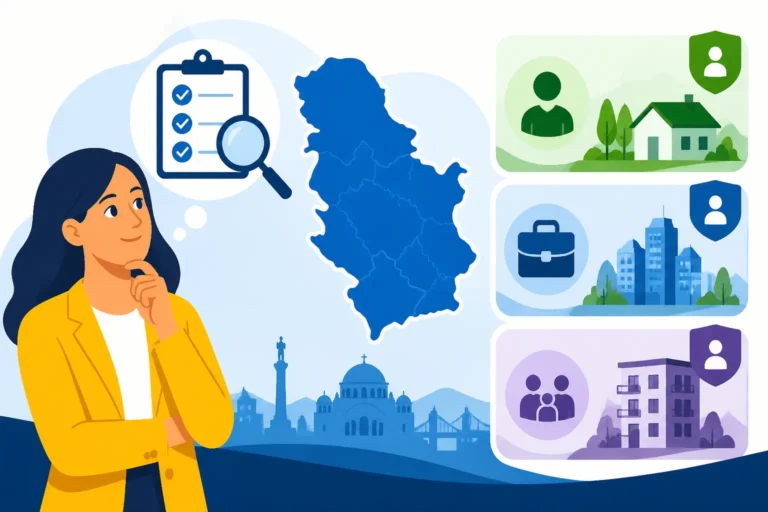
So, your student days are winding down, and the clock is ticking on your permit. Don't despair! Serbia offers several pathways for you to continue calling this vibrant country home. The key is understanding which one best fits your situation and preparing diligently.
The Most Common Route: Employment-Based Residence
For most international graduates, finding a job is the golden ticket to staying in Serbia. This is by far the most straightforward and frequently used pathway. The Serbian government, especially in sectors like IT, is keen to retain skilled young talent, and that includes you!
The process revolves around obtaining what's called a "The Expat Guide to the Single Permit for Work and Residence in Serbia (2027)". This brilliant piece of legislation simplifies things considerably because it combines your work permit and your temporary residence permit into one application. Gone are the days of two separate, often confusing, bureaucratic hurdles. Your employer typically plays a significant role here, as they are the ones sponsoring your work, and thus, your stay. They’ll need to prove that they need your specific skills and that there isn't a readily available Serbian national to fill the role. This isn't usually an issue if you're coming out of a Serbian university with specific skills or language proficiency that's in demand.
When you secure a job offer, your new employer will often guide you through the initial stages. They’ll need to prepare documents like your employment contract, a job description, and a justification for your hiring. You, on your end, will need your passport, your university diploma, proof of address registration, and potentially other personal documents. The good news is that Serbian companies, especially those that frequently hire foreigners, are usually well-versed in this process. Many companies in Belgrade and Novi Sad, particularly in the bustling tech sector, are accustomed to helping international hires navigate the paperwork. You can find more specific guidance on "How to Apply for the Single Permit for Work and Residence in Serbia".
For the Independent Spirit: Entrepreneurship and Self-Employment
Perhaps you’ve got a brilliant business idea brewing, or you’ve been freelancing remotely during your studies and want to formalize it. Serbia is remarkably welcoming to entrepreneurs and offers a fantastic regime known as the "Paušalni režim" (Lump-Sum Taxation) which is perfect for small businesses and freelancers.
To pursue this, you’ll need to register as an entrepreneur (preduzetnik). This involves selecting a business activity, registering with the Agency for Business Registers (APR), and then registering with the Tax Administration (Poreska Uprava). Once your business is officially registered, you can then apply for a temporary residence permit based on your entrepreneurship. This route grants you immense flexibility and often comes with lower tax burdens compared to traditional employment, especially in your initial years. It’s a fantastic option if you’re a digital nomad, a consultant, a designer, or really, anyone who can generate income independently.
This pathway does require a bit more legwork on your part initially, as you're essentially your own employer. You'll need to demonstrate that your business is legitimate and has the potential to sustain you. Proof of funds, a business plan (even a simple one), and details of your registered enterprise will be critical. But imagine the freedom! If this sounds like you, definitely dive into "Self-Employment in Serbia: The Pausal Regime and Going Independent (2027)" and "How to Register as an Entrepreneur (Preduzetnik) in Serbia" for all the nitty-gritty details.
Other Avenues: Marriage, Family, or Property
While less common for recent graduates, it’s worth noting other potential pathways:
- Marriage/Family Reunification: If you've found love and tied the knot with a Serbian citizen or a foreign national who already holds a valid Serbian residence permit, you can apply for residence based on family reunification. This is usually a straightforward process, provided you have all the necessary marriage certificates and proof of your relationship. You can find more details in "How to Sponsor Your Spouse and Children for Residence in Serbia".
- Property Ownership: While not typically a direct route for students, if you have the financial means to purchase property in Serbia, you can apply for a temporary residence permit based on property ownership. This requires significant investment and is generally a more complex path, often involving proving the funds for purchase and maintenance. It's a possibility, but usually not the first choice for someone fresh out of university. Learn more about this in "Can I Get Residence Through Buying Property in Serbia?".
Remember, whichever path you choose, the crucial step is to initiate your application for a new residence permit before your student permit expires. Don't wait until the last minute!
The Bureaucratic Maze: Navigating Your Application Process
Alright, you've identified your pathway. Now comes the part that can feel a bit like wading through treacle: the application process itself. While it might seem daunting, breaking it down into manageable steps makes it much less intimidating.
Gathering Your Arsenal: Key Documents
Regardless of whether you're going for a work permit, entrepreneurship, or family reunification, certain documents are universally required or commonly requested. This list isn't exhaustive, but it covers the essentials:
- Valid Passport: This is non-negotiable. Make sure it has at least six months of validity remaining beyond your intended stay.
- Completed Application Form: Usually available at the Ministry of Interior (MUP) or downloadable from their website.
- Proof of Funds: You need to show you can support yourself. This could be bank statements, a letter from your employer guaranteeing your salary, or proof of your business income. The amount required can vary, but generally, it's enough to cover basic living expenses.
- Proof of Accommodation: This is critical. It could be a rental agreement, a statement from a property owner confirming you're living there, or a notarized statement. You'll also need to have your address registered with the police (known as 'prijava boravka').
- Health Insurance: You must have health insurance coverage for your entire period of requested stay. This is usually a requirement for all temporary residence applications. We'll delve deeper into this shortly.
- Your University Diploma/Proof of Graduation: Absolutely essential if you're transitioning from student status.
- Two Passport-Sized Photos: Standard passport photo requirements apply.
- Proof of Paid Administrative Fees: There are various fees associated with the application, which you’ll typically pay at a bank or post office.
- Criminal Background Check: Depending on your country of origin and the type of permit, you might need to provide a criminal record certificate from your home country.
Crucial Point on Translations and Apostilles: Most documents not originally issued in Serbian will need to be officially translated by a sworn court translator (sudski tumač). For certain official documents, especially those from outside Serbia, you might also need an apostille stamp to authenticate them for international use. This can add time and cost to your preparation, so factor it in! For more on this, check out "Understanding Document and Translation Requirements for Serbia Immigration" and "How Do I Get My Documents Apostilled for Serbia Immigration".
The MUP Experience: Patience and Preparation
Your temporary residence application will be processed by the Ministry of Interior (MUP), specifically the Department for Foreigners in the city where you reside. In Belgrade, this is typically located in Savska Street. Be prepared for potentially long queues, varying levels of English proficiency among staff, and a system that sometimes feels less than intuitive.
My advice? Go early in the morning, bring all your documents (plus copies!), and be patient. A friendly demeanor and a bit of Serbian (even just a few phrases!) can go a long way. Don't be afraid to ask for clarification if something isn't clear. The MUP staff are generally helpful, but they're dealing with a high volume of applicants, and sometimes things can get lost in translation. For a general overview, see "How to Apply for Temporary Residence (Privremeni Boravak) in Serbia".
Timelines and Potential Delays
Processing times for residence permits can vary wildly. While the official processing time is often stated as 30 days, it’s not uncommon for it to take longer – sometimes several weeks or even months, especially if additional documents are requested. This is where patience is truly a virtue.
It's highly advisable to submit your application well in advance of your current student permit's expiry date. If your student permit expires while your new application is pending, you are generally in a legal "holding pattern" and legally allowed to remain in the country until a decision is made. However, you won't be able to travel outside of Serbia and re-enter without issues during this period. Always consult with the MUP or an immigration lawyer for the most up-to-date advice on your specific situation.
Life After Study: Practical Considerations for Your Serbian Stay
So you've submitted your application, navigated the MUP, and you're eagerly awaiting that new shiny residence card. But what about the practicalities of making Serbia your long-term home? There are a few essential things to consider.
Financial Planning: Sustaining Your Stay
Transitioning from student life often means a shift in your financial landscape. If you're moving into full-time employment, fantastic! You'll have a steady income. However, remember to budget not just for rent and food, but also for taxes, social security contributions, and potentially higher healthcare costs if you're opting for private insurance. Serbia generally has a lower cost of living compared to Western Europe or North America, which is a huge bonus.
If you’re going the entrepreneurial route, you'll need to be mindful of your initial start-up costs, securing your first clients, and the rhythm of managing your own income. Always have a financial buffer for at least a few months, as income can be unpredictable when you're just starting out.
Securing Your Health: Insurance is Paramount
As an international student, you likely had some form of health insurance, perhaps tied to your university or a basic travel policy. For your long-term residence, you must have valid health insurance.
There are primarily two options:
- RFZO (Republic Health Insurance Fund): If you are formally employed in Serbia, your employer will register you with the RFZO, and your mandatory health insurance contributions will be deducted from your salary. This grants you access to the public healthcare system, which, while sometimes experiencing longer wait times, offers comprehensive care at a very low cost (often just small co-payments). This is a game-changer compared to many other countries, truly showcasing "Why Serbia Has Affordable Healthcare: The Expat Guide (2027)".
- Private Health Insurance: If you're self-employed, or if you simply prefer the peace of mind that comes with faster appointments and English-speaking doctors in private clinics, you can opt for private health insurance. There are numerous local and international providers. Many expats find private options like those offered by Cigna Global appealing for their comprehensive coverage and international portability, especially during the transition period or if you have specific healthcare needs. It's often recommended to look into "How to Buy Private Health Insurance as a Newcomer in Serbia" to ensure continuous coverage. You can learn more about all your options in "Health Insurance in Serbia: RFZO, Private and International Options Explained".
It's important to understand the nuances between the public and private systems. While public care is excellent for emergencies and basic needs, private clinics offer a level of convenience and sometimes specialized care that many expats prefer.
Here's a quick comparison of the main post-graduation residence pathways:
| Pathway | Primary Requirement | Key Benefit | Potential Challenge | Who It's Best For |
|---|---|---|---|---|
| Employment-Based (Single Permit) | Job offer from a Serbian employer | Streamlined process, employer assistance, stable income | Competitive job market, finding a suitable sponsor | Graduates with in-demand skills, those seeking stability |
| Entrepreneurship (Paušalni Režim) | Registering a business, proof of viability | Flexibility, lower taxes initially, independence | Self-funding, client acquisition, administrative burden | Digital nomads, freelancers, those with a business idea |
| Marriage/Family Reunification | Marriage to Serbian citizen/resident, or family ties | Relatively straightforward documentation | Demonstrating genuine relationship, legal validity | Those with established family connections in Serbia |
| Property Ownership | Purchase of real estate in Serbia | Stable long-term residence option | High upfront cost, ongoing property expenses | Individuals with significant capital, looking for investment |
Settling In: Finding Your Place
Moving on from student accommodation or a shared apartment often means finding your own space. Belgrade and Novi Sad offer a wide range of rental options, from modern apartments in bustling city centers to quieter residential neighborhoods. Utilities, internet, and mobile services are generally easy to set up.
If you're making a significant move, perhaps from a smaller university town to Belgrade for a job, you might even consider using a relocation service. Companies like Sirelo can help with planning your move, comparing quotes for shipping your belongings, and generally making the logistical side of things smoother. After all, your focus should be on your new chapter in Serbia, not on the headaches of moving boxes. To jumpstart your job search, make sure to read "The Expat Guide to Finding a Job in Serbia (2027)".
Staying in Serbia after your studies is absolutely achievable, but it requires a proactive approach and a clear understanding of the immigration requirements. It's an exciting next chapter in your expat journey, and with proper planning, you can continue to enjoy everything this incredible country has to offer.
Disclaimer
The information provided in this guide is intended for general informational purposes only and does not constitute legal or professional advice. Immigration laws and procedures in Serbia are subject to change. While we strive to provide accurate and up-to-date information, we recommend consulting with the official Serbian Ministry of Interior (MUP) or a qualified immigration lawyer for advice tailored to your specific situation.