How Do I Pay for a Doctor Visit in Serbia?
One of the biggest worries for anyone moving to or even just visiting a new country is undoubtedly healthcare – specifically, how to pay for it when you're feeling under the weather or facing an unexpected emergency. The Serbian healthcare system can seem like a bit of a labyrinth at first glance, especially when you're trying to figure out if you need cash, a card, or an insurance policy just to see a doctor. This guide will walk you through the various payment options for doctor visits in Serbia, cutting through the confusion so you know exactly what to expect.
Understanding Serbia's Healthcare Payment Landscape for Foreigners
Navigating healthcare in a new country is rarely straightforward, and Serbia is no exception. For foreigners, understanding the difference between the public and private systems, and how payment works in each, is crucial. It’s not just about finding a doctor; it’s about knowing if you’ll be pulling out your wallet, flashing an RFZO card, or relying on your international insurance.
The Public System RFZO and Mandatory Contributions
Serbia operates a public healthcare system largely managed by the Republic Health Insurance Fund, or RFZO (Republički fond za zdravstveno osiguranje). This is where things can get a bit complex. If you are legally employed in Serbia, or if you are registered as a self-employed entrepreneur (like under the popular Pausal regime), you will be making mandatory health insurance contributions. These contributions are usually deducted directly from your salary or paid as part of your monthly entrepreneur taxes. Once you’re in the system and have your RFZO card, many services at public health institutions, such as your local Dom Zdravlja (health centre) or public hospitals, are covered, often requiring only a small co-payment (participacija).
This means that for routine doctor visits, check-ups, and even specialist referrals within the public system, your RFZO card is your golden ticket. The actual doctor's visit at your chosen GP (izabrani lekar) in a Dom Zdravlja might cost you a nominal fee – we're talking a few hundred dinars, typically less than 5 EUR. This small co-payment applies to many services, from seeing your GP to getting certain diagnostic tests or prescriptions. It’s important to understand that while a large portion is covered by your contributions, "free" is rarely truly free; there are these small contributions. If you want a deeper dive into the overall system, I've put together a comprehensive guide on How Serbia's Health System Works: The RFZO and Private Care Explained (2027).
The Private System: Convenience and Cost
Beyond the public system, Serbia has a robust and increasingly popular private healthcare sector. This is often the first choice for many expats due to several factors: shorter wait times, the availability of English-speaking doctors, more modern facilities, and a service-oriented approach. Think of it as going to a private clinic in your home country – you pay for the convenience and the enhanced experience.
In the private system, you are generally expected to pay for all services directly at the time of your visit. This means whether you’re seeing a general practitioner for a common cold, a dermatologist for a skin issue, or undergoing a physical therapy session, you’ll settle the bill before or immediately after your consultation. The costs can vary significantly between clinics and specialties. While public healthcare might involve a small co-payment, private clinics will charge the full fee for each service. For those who prioritize speed and direct access, the private system is often worth the extra expense. You can learn more about this in my detailed article on Public vs Private Healthcare in Serbia: What Expats Need to Know.
Paying for Public Healthcare RFZO-Covered Visits
For those integrated into the Serbian public health insurance system, the process for paying for doctor visits is relatively straightforward, revolving around your RFZO card and understanding the concept of co-payments. However, if you're not yet covered by RFZO, there are specific protocols you'll need to follow.
The Role of the RFZO Card and Co-payments
If you’re employed in Serbia or registered as an entrepreneur, getting your RFZO card is one of the crucial administrative steps you’ll take after setting up your residence. This card (or the temporary paper certificate before the plastic card arrives) is your proof of insurance. When you visit your chosen doctor at a Dom Zdravlja, or are referred to a specialist or public hospital, you will present this card. The receptionist or medical staff will then verify your coverage.
For most routine services, like a consultation with your general practitioner, a blood test, or a specialist appointment at a public institution, you’ll typically be asked to pay a small co-payment, known as participacija. This fee is usually quite low, often ranging from 50 to 500 Serbian Dinars (RSD), which is roughly equivalent to less than 1 to 4-5 EUR. For example, a standard GP visit might be 150 RSD, while a specialist consultation could be 300 RSD. Certain medications or specific diagnostic procedures might have higher co-payments. These fees are paid directly at the health institution, usually at a designated payment counter or through a payment slip that you take to a local post office or bank. It’s a bit old-school, but it works! It’s important to keep your payment receipts, just in case you need them for your records or for any potential reimbursements, though reimbursement for co-payments is rare. For a deeper understanding of these costs, check out Understanding Out-of-Pocket Healthcare Costs and Co-Payments in Serbia.
Scenarios for Non-RFZO Members in Public Facilities
What if you haven't managed to register with the RFZO yet, or you're a tourist or a short-term visitor without Serbian public health insurance? This is where things change. If you walk into a public Dom Zdravlja or hospital without an active RFZO card, you will generally be treated as a private patient, even within the public system.
In such cases, you will be expected to pay the full cost of the service upfront. The fees will be significantly higher than the co-payments for insured individuals, but often still more affordable than what you might pay in many Western countries or even some private clinics in Serbia. For instance, a basic doctor's consultation might cost anywhere from 1,500 to 3,000 RSD (around 12-25 EUR). You'll usually receive an invoice (račun) that you can then pay at the institution's cash desk, or sometimes, they will issue a payment slip for you to take to a post office or bank. Remember to keep this invoice and receipt, especially if you have international travel or private health insurance, as you'll need it to claim reimbursement.
For tourists or those on short stays, it’s highly recommended to have comprehensive travel insurance. While public hospitals will not turn you away in an emergency, the costs can quickly add up if you don’t have coverage. An article like Can Tourists Access Emergency Care in Serbia? provides more details on this specific situation.
Here’s a quick overview of payment methods and costs:
| Service Type | RFZO Insured (with card) | Non-RFZO Insured (private patient in public facility) | Private Clinic / Hospital | Accepted Payment Methods |
|---|---|---|---|---|
| GP Visit | Small co-payment (150-300 RSD) | Full fee (approx. 1,500-3,000 RSD) | Full fee (approx. 2,000-5,000 RSD) | Cash, Card (sometimes), Payment Slip |
| Specialist Consultation | Small co-payment (200-500 RSD) | Full fee (approx. 3,000-6,000 RSD) | Full fee (approx. 4,000-8,000 RSD) | Cash, Card, Payment Slip |
| Basic Blood Test | Small co-payment (100-250 RSD) | Full fee (approx. 1,000-2,500 RSD) | Full fee (approx. 1,500-4,000 RSD) | Cash, Card, Payment Slip |
| Emergency Visit (non-RFZO) | N/A (covered by RFZO) | Full fee (varies widely based on treatment) | Full fee (varies widely based on treatment) | Cash, Card, Payment Slip (immediate payment often required) |
| Prescription Medications | Partially covered by RFZO (co-payment or full price if not on positive list) | Full price | Full price | Cash, Card |
Note: All prices are approximate and can vary based on the specific institution, location (e.g., Belgrade vs. smaller towns), and complexity of the service.
Navigating Payments in Private Clinics and Hospitals
For many expats, private clinics offer a more predictable and often higher quality experience, especially for routine care or if you're not fully integrated into the public system. The payment process here is generally more akin to what you might expect in Western countries, but with a few local twists.
Direct Payments and Accepted Methods
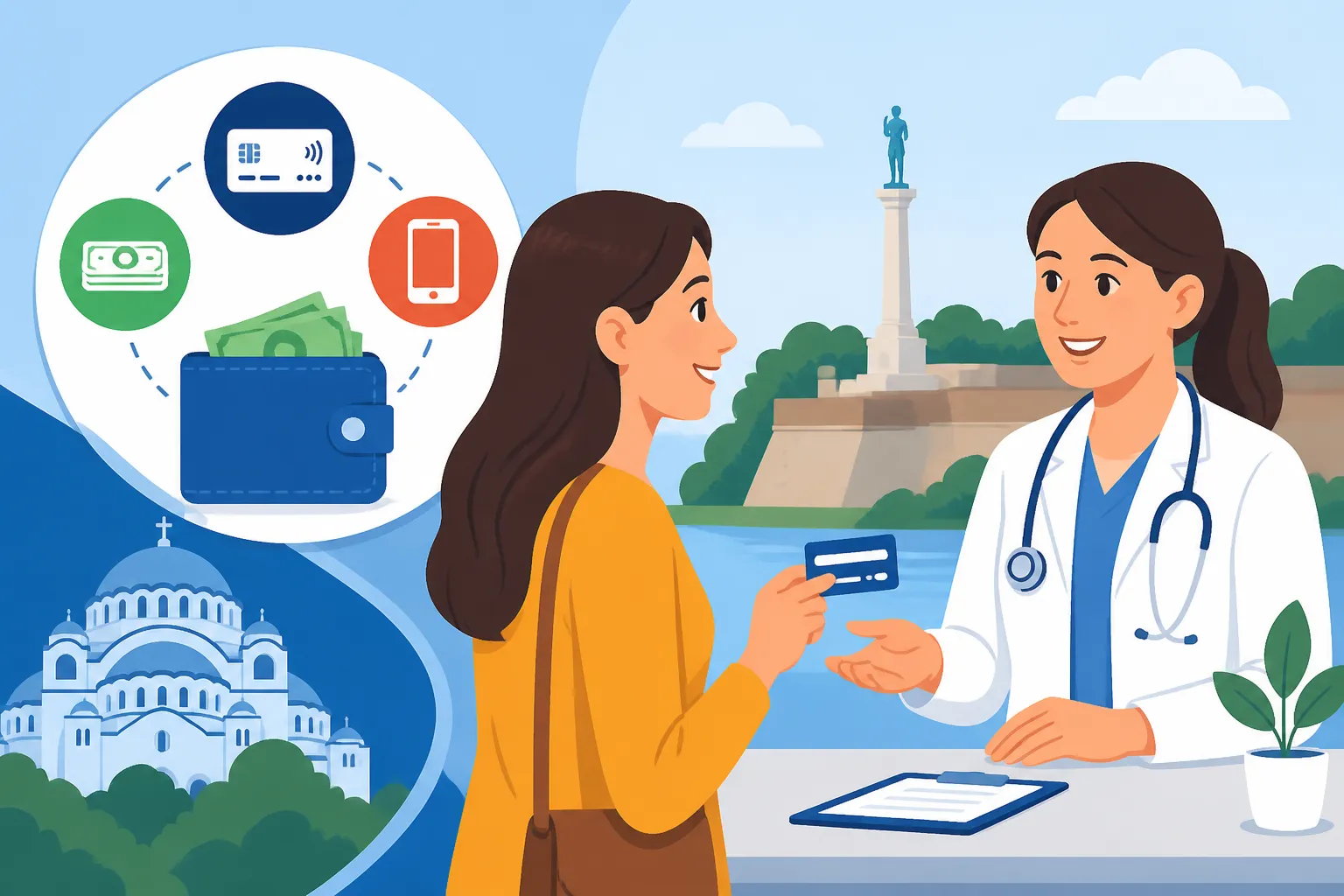
When you visit a private clinic in Serbia, the expectation is almost always that you will pay for the services rendered directly, either before or immediately after your consultation. Most reputable private clinics in larger cities like Belgrade or Novi Sad are well-equipped to handle various payment methods.
- Cash: This is always king in Serbia. Many smaller clinics or individual practitioners might prefer cash, or even offer a slight discount for it. Always a good idea to have some Serbian Dinars (RSD) on hand, even if you plan to use a card.
- Payment Cards: Visa, MasterCard, and sometimes American Express are widely accepted at most larger private clinics and hospitals. You’ll find POS terminals at reception desks. It’s always wise to confirm this when booking your appointment, especially if you're venturing outside the major centres.
- Bank Transfer: For larger procedures or ongoing treatments, some clinics might accept bank transfers, though this is less common for a simple doctor's visit. This is more often seen in corporate agreements or for lengthy rehabilitation plans.
Expect the staff at private clinics to be more accustomed to dealing with foreigners and their needs, including providing itemized invoices and receipts (faktura and račun) in English if requested. These documents are absolutely critical if you plan to claim reimbursement from your private health insurance. Make sure the invoice clearly states the services received, the date, and the total cost. When figuring out How Much Does a Doctor Visit Cost in Serbia?, remember private options will usually be on the higher end of the spectrum compared to public co-payments.
Utilizing Private and International Health Insurance
This is where your preparedness truly pays off. If you've invested in a private health insurance plan, either local Serbian private insurance or an international plan like SafetyWing, this can significantly ease the financial burden of private doctor visits.
Most private clinics in Serbia do not have direct billing agreements with a wide range of international insurance providers. What this means for you is that you’ll typically pay upfront for your consultation or treatment and then submit the invoice and proof of payment to your insurance company for reimbursement. This is a common model for travel and expat insurance policies like SafetyWing, which generally operate on a reimbursement basis for outpatient visits. You'll pay out of pocket, gather your paperwork, and then file a claim online. This can feel a bit cumbersome, but it’s the standard procedure for many global health plans.
Some larger private hospitals or clinics, particularly in Belgrade, might have agreements with specific international insurance companies or be set up for direct billing for more significant procedures or inpatient stays. For example, some clinics that cater heavily to the expat community, like Acibadem Bel Medic, Medigroup, or Euromedik, might have arrangements with a limited number of insurers. It's always, always best to contact your insurance provider before your appointment to confirm their procedures for Serbia and to ask if the clinic you plan to visit has a direct billing option. If not, understand exactly what documents they require for reimbursement (original invoices, medical reports, etc.). If you're pondering which type of private insurance is best, my article on Understanding Private Health Insurance Plans in Serbia might be helpful.
When using insurance from a brand like SafetyWing, remember to clearly explain your situation to the clinic staff. They are usually quite helpful in preparing the necessary documentation, as long as you communicate your needs. Don't be afraid to ask for a "medical report for insurance purposes" along with your itemized invoice.
Emergency Care and Unexpected Costs
Emergencies happen, and when they do, the last thing you want to be stressing about is how to pay. Serbia's emergency services are generally efficient, but understanding the payment implications for foreigners is paramount.
Initial Triage and Payment Expectations
If you find yourself in an emergency situation in Serbia, whether it's a sudden illness or an accident, you will be taken to an emergency department (Urgentni Centar) at a public hospital, or if you call a private ambulance, to a private hospital. The absolute priority in an emergency is life-saving care; you will not be refused treatment based on your ability to pay upfront. The medical staff will focus on stabilizing you and providing necessary immediate care.
However, once you are stable, the question of payment will inevitably arise. If you are an RFZO-insured individual, your emergency care will largely be covered, likely with the standard co-payment for certain services. You’ll present your RFZO card, just like for a regular doctor’s visit.
For those without RFZO coverage – tourists, short-term visitors, or expats not yet integrated into the public system – you will be treated as a private patient. This means you will be responsible for the full cost of all services received. The hospital administration or an accounts department will typically contact you or your family/travel companion once you are stable to discuss payment arrangements. This could involve direct cash payment, card payment, or an agreement for an invoice to be paid within a certain timeframe. The costs for emergency care can vary wildly depending on the severity of your condition, the diagnostic tests performed (X-rays, CT scans, blood work), and any procedures or medications administered. Having international private health insurance, especially travel insurance from providers like SafetyWing, is absolutely essential here. It can literally save you thousands of euros in unexpected medical bills. For urgent situations, it’s also good to know What Is the Emergency Phone Number in Serbia?.
Handling Follow-up Visits and Prescriptions
After an emergency, you'll likely need follow-up visits and possibly prescription medications. How you pay for these will again depend on your insurance status.
If you were treated in a public hospital and have RFZO coverage, your follow-up appointments will fall under the usual RFZO rules, requiring co-payments. Your doctor will likely refer you to a specific clinic or specialist within the public system, and you’ll continue to use your RFZO card. Prescription medications, if covered by RFZO, will require a co-payment at the pharmacy; otherwise, you'll pay the full price. The RFZO has a "positive list" of medications that are partially or fully subsidized, so if your prescribed medicine is not on this list, you'll pay the full amount regardless of your RFZO status.
If you don't have RFZO coverage, all follow-up visits, whether at the public hospital where you received emergency care (billed privately) or at a private clinic, will require full payment upfront. You'll need to secure all invoices and medical reports meticulously to submit to your private health insurance provider for reimbursement. For prescriptions, you’ll pay the full price for all medications at any pharmacy. Pharmacies are ubiquitous in Serbia, but it's crucial to understand how to navigate them. You can find more information in Prescription Medications and Pharmacies in Serbia: The Complete Guide.
When dealing with follow-ups, remember that communication is key. Don't hesitate to ask the hospital or clinic staff for clarity on costs and payment procedures, and always ensure you get detailed receipts and medical records. This meticulous record-keeping is vital for any insurance claims, especially with providers like SafetyWing, which typically require full documentation for processing.
Conclusion and Final Tips
Navigating the healthcare payment landscape in Serbia might seem daunting at first, but with a bit of preparation and understanding, it becomes manageable. Whether you're fully integrated into the RFZO system or relying on private care and international insurance, knowing the mechanisms for payment is crucial for a stress-free experience. Always carry some cash, inquire about card payments, and keep all your medical documents and receipts.
For comprehensive information on all things healthcare, make sure to check out The Complete Guide to Healthcare in Serbia for Expats (2027).
Disclaimer
The information provided in this article is for general informational purposes only and does not constitute medical, legal, or financial advice. Healthcare regulations and costs in Serbia can change, and individual circumstances vary. Always consult with a qualified healthcare professional, legal expert, or insurance provider for advice tailored to your specific situation.