Understanding Mandatory Health Insurance Contributions in Serbia
Moving to a new country like Serbia is an adventure, but let's be honest, the administrative side of things can feel like navigating a maze blindfolded. One of the biggest areas of confusion, especially for us expats, is healthcare, and more specifically, understanding the ins and outs of mandatory health insurance contributions in Serbia. This isn't just a dry topic; it’s fundamental to your well-being and legal status here. This comprehensive guide will break down exactly how these contributions work, who has to pay them, what they cover, and how to make sure you’re properly integrated into the system, saving you headaches and unexpected bills down the line.
The Basics of Serbia's Mandatory Health Insurance System
When you first arrive in Serbia, you might assume health insurance is like back home, but it operates on a slightly different philosophy. The Serbian healthcare system, at its core, is a social solidarity model. This means that everyone who contributes plays a part in funding healthcare for the entire population. It’s a collective effort, and understanding your place within it is crucial.
What is the RFZO and its Role?
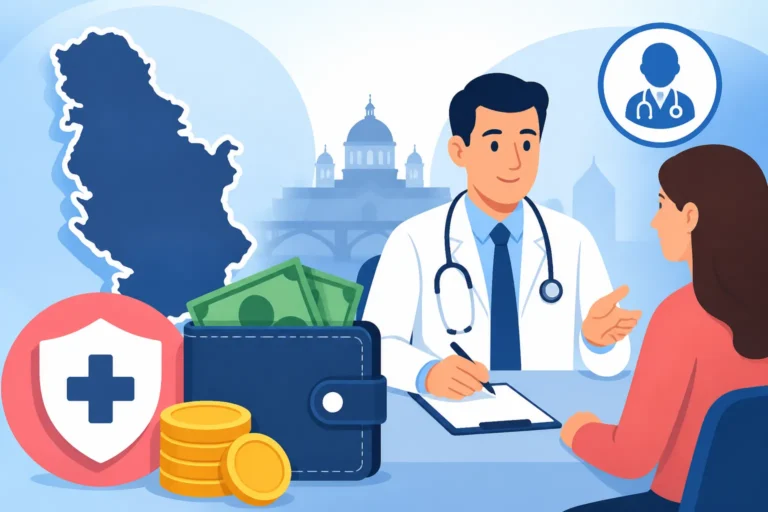
At the heart of Serbia's public healthcare system is the Republic Health Insurance Fund (RFZO), or Republički fond za zdravstveno osiguranje. Think of the RFZO as the central body that manages all mandatory health insurance. They are the ones who collect the contributions, issue your health insurance card (zdravstvena knjižica or zdravstvena kartica), and ultimately oversee the public hospitals, clinics, and pharmacies that fall under the state system.
The RFZO is responsible for ensuring that all legally insured persons have access to primary, secondary, and tertiary healthcare services. While the concept sounds straightforward, actually registering with them and understanding the scope of their coverage can be a bit of a bureaucratic dance. It's not just about paying; it's about being properly registered so your payments translate into usable healthcare access. For a deeper dive, you might want to read How Serbia's Health System Works: The RFZO and Private Care Explained (2027).
Who is Obligated to Contribute?
This is where many expats get tripped up. The general rule is that if you are legally employed or self-employed in Serbia, you are obligated to contribute to the RFZO. This isn't optional; it's a fundamental part of the social security system.
- Employed Individuals: If you're working for a Serbian company, congratulations, your employer handles most of the heavy lifting! They are legally required to deduct your health insurance contributions (alongside pension and unemployment contributions) directly from your gross salary and pay them to the RFZO on your behalf. This is the most common scenario for many expats moving here for work. You might not even see the money, but it's being contributed.
- Self-Employed and Entrepreneurs: If you're a freelancer, a contractor, or running your own small business as a preduzetnik (entrepreneur) under the popular paušalni režim (lump-sum taxation regime), then the responsibility for calculating and paying your contributions falls squarely on your shoulders. This can be more complex and requires a good accountant to ensure compliance. More on this in Self-Employment in Serbia: The Pausal Regime and Going Independent (2027).
- Foreigners with Temporary Residence: Even if you're not formally employed but have temporary residence on certain grounds (like family reunification, property ownership, or study), you might still be required to enroll and pay contributions to the RFZO, especially if you don't have alternative international coverage or if your residence permit explicitly states this. The rules can be nuanced depending on your specific residence category.
- Retirees and Unemployed Residents: Serbian citizens who are retired or unemployed but registered with the National Employment Service (Nacionalna služba za zapošljavanje) also have their health insurance contributions covered by the state, ensuring continuous access to healthcare. However, for expat retirees, this typically doesn't apply unless they've contributed to the Serbian pension system for a significant period.
It’s easy to think, "Oh, I have private insurance," and assume you're off the hook, but for residents with legal work or self-employment status, mandatory contributions are usually non-negotiable.
The Principle of Solidarity in Serbian Healthcare
The Serbian healthcare system is founded on a principle of solidarity, meaning that the healthy contribute to support the sick, and those with higher incomes contribute more to support everyone. This is a common characteristic of many European social health insurance systems. Your contributions, therefore, don't just secure your own access to healthcare; they are part of a larger pool that funds the entire public health infrastructure, from local domovi zdravlja (health centers) to specialized hospitals.
This social compact is why mandatory contributions are so crucial. It’s the mechanism by which the system sustains itself. While it might feel like another deduction from your paycheck, it's the financial backbone that allows for generally affordable (though sometimes bureaucracy-laden) public healthcare services across the country. Understanding this foundational principle helps frame why these contributions are mandatory rather than optional.
How Contributions are Calculated and Collected
Navigating the financial aspect of health insurance contributions can be daunting, especially since the amounts and collection methods vary depending on your employment status. It’s not a one-size-fits-all situation, and understanding your specific category is key to ensuring compliance and avoiding unpleasant surprises.
For Employed Individuals: Your Paycheck Deductions
If you are employed by a Serbian company, this section will likely be the most relevant to you. Your employer is responsible for calculating and remitting your health insurance contributions to the RFZO. These contributions are part of the larger social security payments that are deducted from your gross salary.
Currently, the mandatory health insurance contribution rate in Serbia is typically around 10.3% of your gross salary. This is one component of the total social contributions, which also include pension insurance and unemployment insurance. So, when you look at your payslip, you'll see a chunk of your gross salary going towards these various contributions before you get your net pay. For example, if your gross salary is 100,000 RSD, approximately 10,300 RSD will be allocated to health insurance. Your employer remits this amount directly to the RFZO on your behalf. This makes the process relatively hands-off for you, the employee, though it’s always wise to periodically check your payslips to ensure these deductions are being correctly made.
The employer also pays their share of contributions, which are calculated on top of your gross salary, making the total cost of employment quite a bit higher for the company. This system ensures that funds are consistently fed into the public health system, providing a safety net for all insured individuals. It’s a smooth process once you’re set up, but getting that initial job and ensuring all your paperwork is in order with your employer is the critical first step. You'll definitely want to understand the larger tax landscape, which is thoroughly covered in The Complete Guide to Taxes in Serbia for Expats (2027).
For Self-Employed and Entrepreneurs: The Pausal Regime and Real Income
This is where things can get a bit more intricate for many expats, especially those leveraging Serbia’s attractive pausalni režim (lump-sum taxation regime) for freelancers or entrepreneurs. If you’re self-employed, you are personally responsible for calculating and paying your own social contributions, including health insurance.
Paušalni Režim (Lump-Sum Taxation): Under the pausal regime, your contributions (health, pension, unemployment) are calculated based on a fixed monthly amount determined by your activity, municipality, and certain other factors, rather than your actual reported income. This amount is set by the tax authority (Poreska Uprava) and is adjusted periodically. The health insurance portion is embedded within this lump sum. For instance, if your pausal payment is, say, 35,000 RSD per month, a specific percentage of that will be allocated to health insurance. This system aims to simplify taxation for small businesses and freelancers, making monthly budgeting predictable.
Real Income Method: If you’re not eligible for the pausal regime, or you choose to register as a company (e.g., a DOO), your contributions will be calculated based on your actual income or a minimum base set by law. This usually involves a more complex accounting process and requires an experienced local accountant to ensure everything is done correctly.
Regardless of the method, as a self-employed individual, you will make these payments directly to the Poreska Uprava (Tax Administration) on a monthly basis. Missing payments can lead to penalties and, critically, a loss of your health insurance coverage. It’s a good idea to keep a close eye on your payment deadlines and ensure you have a reliable system in place, or a dependable accountant to manage this for you.
Special Cases: Foreigners, Students, and Unemployed Residents
Beyond the standard employment and self-employment categories, there are several special situations that affect mandatory health insurance contributions:
- Foreigners without Formal Employment: If you hold a temporary residence permit but are not employed by a Serbian entity or registered as an entrepreneur (e.g., you are a digital nomad working for a foreign company, or on family reunification grounds), you are typically still expected to have health insurance coverage. Depending on the specifics of your residence permit, you might be required to enroll as a "voluntarily insured" person with the RFZO or provide proof of international health insurance valid in Serbia. For instance, many digital nomads will secure international health insurance from providers like SafetyWing to ensure they meet this requirement without directly contributing to the RFZO. This is a common solution for short-term stays or those not formally integrated into the Serbian labor market. It's vital to clarify your specific obligations with the immigration authorities when applying for your residence permit.
- Students: International students typically need to provide proof of health insurance when applying for their student residence permit. This can often be an international student health insurance policy or, in some cases, enrollment as a voluntarily insured person with the RFZO if a bilateral agreement exists with their home country or if they are self-funding. The University of Belgrade or your specific educational institution can usually provide guidance on accepted forms of coverage.
- Family Members/Dependents: If you are the primary insured person through employment or self-employment, you can usually add your direct family members (spouse, children) to your RFZO coverage as dependents. This means their healthcare access is covered under your contributions, though there are specific registration procedures involved to ensure they receive their own health cards. Understanding How to Add Dependents to Your Health Coverage in Serbia is a key step for expat families.
It's clear that the Serbian system tries to ensure everyone residing and working legally has some form of health coverage. However, the path to obtaining it and the method of contributing can vary significantly, underscoring the need for personalized advice or thorough research specific to your situation.
| Expat Category | Who Pays Contributions? | How are Contributions Calculated? | Typical Coverage Type (RFZO) | Notes |
|---|---|---|---|---|
| Employed | Employer (deducted from gross salary) | % of Gross Salary (approx. 10.3%) | Mandatory RFZO | Employer handles administration. |
| Self-Employed (Paušal) | Individual | Part of Fixed Monthly Lump Sum (Paušal) | Mandatory RFZO | Requires an accountant for setup and ongoing advice. Payments made to Poreska Uprava. |
| Self-Employed (Real Inc.) | Individual | % of Declared Income or Minimum Base | Mandatory RFZO | More complex accounting required. Payments made to Poreska Uprava. |
| Foreigners w/ Residence (No Formal Job) | Individual / International Insurer | Varies (Voluntary RFZO premium or International Policy) | Voluntary RFZO / Private | Depends on residence grounds. Proof of any valid insurance often required for permit. SafetyWing is a common choice here. |
| Students | Individual / Home Country | International Policy or Voluntary RFZO (if applicable) | Private / Voluntary RFZO | Proof of insurance required for student visa/residence. |
| Dependents | Primary Insured Person | Covered under Primary Insured's Contributions | Mandatory RFZO | Requires separate registration with RFZO to get individual health cards. |
What Your Mandatory Contributions Cover
So, you're diligently paying your mandatory health insurance contributions, but what exactly does that entitle you to? This is the core question for any expat navigating a new healthcare system. In Serbia, your RFZO contributions grant you access to the public healthcare network, which is quite extensive, though it comes with certain nuances and limitations.
Accessing Public Healthcare Services: Dom Zdravlja and Hospitals
Once you are properly registered with the RFZO and have your health insurance card, you gain access to the public healthcare system. This typically starts with registering with a General Practitioner (GP), known as an izabrani lekar (chosen doctor), at a local dom zdravlja (health center). This GP will be your first point of contact for most non-emergency medical needs.
Your RFZO coverage will cover:
- Primary Healthcare: This includes regular check-ups, consultations with your GP, referrals to specialists, basic diagnostic tests (blood tests, urine tests), and common treatments at your dom zdravlja. You'll find these health centers in every neighborhood in Belgrade and throughout other cities like Novi Sad and Niš. For guidance on getting set up, see How to Choose a GP (Izabrani Lekar) at a Dom Zdravlja in Serbia.
- Specialist Consultations and Hospital Care: If your GP determines you need to see a specialist (e.g., a cardiologist, dermatologist, or ophthalmologist) or require hospital treatment, they will issue a referral. The RFZO covers the costs of these specialist visits and hospital stays within the public system, including surgeries and more complex procedures. While the care is covered, be prepared for potential waiting times for certain specialist appointments or non-urgent procedures, which is a common complaint in public systems worldwide.
- Emergency Medical Care: In a medical emergency, you can access public emergency services, including ambulances (by calling 194 or 112) and emergency rooms at public hospitals. Your RFZO card ensures you receive necessary treatment. This is a critical safety net, knowing that acute conditions will be addressed without immediate financial burden.
It’s important to manage expectations: while the care itself is generally covered, the experience might differ from what you're used to. Facilities in public hospitals can sometimes be older, and administrative processes can be slow. However, the medical professionals are typically well-trained and dedicated.
Prescription Medications and Medical Devices
Your mandatory health insurance contributions also extend to covering a significant portion of the cost of prescription medications and certain medical devices.
- Prescription Medications: When your GP or a specialist prescribes medication, you'll take the prescription to a public pharmacy. For many medications, the RFZO covers a portion, and you will pay a participacija or co-payment. The amount of the co-payment varies depending on the medication and its category. Some vital medications, especially for chronic conditions, might be fully covered. You'll often find a list of covered medications and their co-payment tiers at pharmacies or on the RFZO website. It's a vast improvement from paying full price, but don't expect everything to be free.
- Medical Devices: For certain prescribed medical devices, such as mobility aids, prosthetics, or specific types of eyeglasses, the RFZO may also cover a part or the full cost, again with specific rules and co-payment requirements. This process usually involves a referral from a specialist and approval from a medical committee.
Navigating the pharmacy system, especially with a new language, can be challenging. Always ensure your prescription is clear, and don’t hesitate to ask the pharmacist for clarification on co-payments. Learn more about Prescription Medications and Pharmacies in Serbia: The Complete Guide.
Limitations and Out-of-Pocket Costs (Co-payments)
While RFZO coverage is comprehensive, it's not entirely "free" at the point of service. You will almost certainly encounter out-of-pocket costs, primarily in the form of participacija (co-payments).
These co-payments apply to:
- Doctor's Visits: A small fee for each visit to your GP or a specialist in the public system.
- Diagnostic Procedures: Fees for certain tests, imaging (like X-rays or ultrasounds), or lab work.
- Hospital Stays: A daily co-payment for hospital accommodation, though serious and prolonged illnesses might have a capped total co-payment.
- Medications: As mentioned, a portion of the cost for most prescribed drugs.
- Dental Care: Basic dental care (check-ups, fillings, extractions) is often covered or partially covered, but more complex procedures like crowns, bridges, or orthodontics are typically not, or only to a very limited extent.
It's crucial to understand that these co-payments are a standard part of the Serbian system. They exist to deter overuse of services and contribute to the system's sustainability. They are generally quite low compared to what you might pay without insurance, but they add up. For a detailed breakdown of these costs, refer to Understanding Out-of-Pocket Healthcare Costs and Co-Payments in Serbia. Being aware of these limitations is vital for managing your healthcare budget and deciding if supplemental private insurance is a good idea for you.
Navigating the Bureaucracy of Payments and Registration
Even once you understand what you're paying and what it covers, the actual process of ensuring you're correctly registered and that your contributions are being paid can feel like a bureaucratic labyrinth. Serbia, like many countries, has its fair share of paperwork and official processes.
Getting Your Tax ID (PIB) and Registering with Poreska Uprava
Before you can even begin thinking about formal employment or self-employment contributions, you'll need a unique identifier: your Tax Identification Number (PIB – Poreski Identifikacioni Broj). This is absolutely essential for almost all financial and legal dealings in Serbia, including social security contributions.
- For Employees: Your employer will typically assist you with getting your PIB as part of your onboarding process. They'll need it to register you for taxes and social contributions.
- For Self-Employed: If you're registering as an entrepreneur, getting your PIB is one of the very first steps. You'll apply for it at your local Poreska Uprava (Tax Administration) office, providing your passport, residence permit, and other relevant documents. This is a critical step because without a PIB, you cannot legally operate or pay taxes and contributions. Once you have it, you'll use this number for all your dealings with the tax authorities. Don't skip this step! Find more details in How to Get a Tax ID (PIB) as a Foreigner in Serbia.
Once you have your PIB, and whether you're employed or self-employed, you are formally registered within the Serbian tax and social security system, which automatically links you to the RFZO.
Ensuring Your Employer Handles Contributions Correctly
If you're an employee, the good news is that your employer takes on the primary responsibility for your health insurance contributions. However, it’s not entirely "out of sight, out of mind." Here’s what you should do:
- Check Your Payslips: Always review your monthly payslips (platni listić). Look for deductions for zdravstveno osiguranje (health insurance), penzijsko osiguranje (pension insurance), and osiguranje za slučaj nezaposlenosti (unemployment insurance). These indicate that your employer is making the necessary deductions.
- Request Proof of Payment: If you're ever in doubt, or if you need to prove your contributions for another administrative process, you can ask your employer for proof that they've remitted the payments to the Poreska Uprava. This might be a confirmation from their accounting department.
- Obtain Your Health Card: The ultimate proof that you're in the system is your RFZO health insurance card (zdravstvena kartica). Once your employer has registered you and started contributions, you should be able to apply for this card. The process usually involves collecting some documents (like your residence permit, PIB, and proof of employment from your employer) and taking them to your local RFZO branch. Having this physical card is what truly unlocks access to public healthcare. For the full registration process, refer to How to Register with the Republic Health Insurance Fund (RFZO) in Serbia.
A proactive approach here can save you a lot of hassle down the road. If there’s an issue with your registration or contributions, it’s far easier to fix it early than when you actually need medical care.
What Happens If You Don't Contribute (and what to do before RFZO)
This is a critical point that many new arrivals overlook. If you are obligated to contribute to the RFZO but don't, you are technically without public health insurance coverage. This means:
- No Access to Public Healthcare: You will be treated as an uninsured patient. While emergency services will stabilize you in life-threatening situations, all other public healthcare services (GP visits, specialist referrals, non-emergency hospital stays, subsidized medications) will be denied or billed at full, often much higher, commercial rates.
- Penalties: The Poreska Uprava can impose penalties for unpaid social contributions, which can include fines and interest. This applies particularly to self-employed individuals who are directly responsible for their payments.
- Residence Permit Issues: Continuous and proper social contributions are often a prerequisite for renewing your temporary residence permit, especially if your permit is based on employment or self-employment. Non-compliance can jeopardize your legal status in Serbia.
What to do if you're not yet in the RFZO system but need coverage:
Many expats arrive in Serbia and may not immediately be employed or fully registered as self-employed. During this initial transition period, it is absolutely vital to have some form of health coverage. This is where international private health insurance comes in. Companies like SafetyWing offer travel and medical insurance plans that can cover you for unforeseen medical emergencies and even routine care while you are waiting to get fully integrated into the Serbian system, or if your residence status doesn't mandate RFZO contributions. This ensures that if you get sick or have an accident, you won't face exorbitant out-of-pocket costs. Never underestimate the potential costs of medical emergencies abroad without proper coverage. For a detailed discussion, check out What Happens If I Get Sick Before I Register with the RFZO in Serbia?.
Understanding Gaps and Considering Private Options
While Serbia's mandatory health insurance system is a lifeline for many, it's not without its gaps, especially from an expat perspective. Understanding these limitations is key to making informed decisions about your overall healthcare strategy while living here.
Why Mandatory Coverage Might Not Be Enough for Expats
As we've discussed, the RFZO provides a solid foundation for healthcare access in Serbia. However, for many expats, the public system might not entirely align with their expectations or needs, leading to potential frustrations and a desire for more.
- Waiting Times: While critical and emergency care is generally prompt, waiting times for specialist appointments or non-urgent procedures in public hospitals can sometimes be significant. This can be particularly frustrating if you're used to quick access to specialists.
- Language Barrier: While many doctors in bigger cities might speak some English, especially younger ones, the overall system and administrative staff predominantly communicate in Serbian. Navigating appointments, understanding diagnoses, and filling out forms can be challenging without a Serbian-speaking friend or translator.
- Comfort and Amenities: Public hospitals and clinics, especially outside of Belgrade's newer facilities, can sometimes feel dated. Facilities might lack the modern comforts or privacy that some expats are accustomed to.
- Limited Choice of Doctor: In the public system, you're assigned a GP, and while you can change, your options might feel limited compared to a private system where you can freely choose any specialist.
- Specific Treatments/Medications: While a wide range of medications are covered, some newer, very expensive, or highly specialized treatments or drugs might not be fully covered by the RFZO, or they might involve a very high co-payment.
These factors often lead expats to consider supplementary options, even when they are faithfully contributing to the mandatory system. For a full picture, it's worth comparing Public vs Private Healthcare in Serbia: What Expats Need to Know.
The Role of Supplemental Private Health Insurance
This is where private health insurance in Serbia comes into its own for expats. It doesn't replace your mandatory RFZO contributions (if you're obligated to pay them), but it supplements them by offering alternatives and enhanced services.
- Faster Access: Private clinics and hospitals typically offer much shorter waiting times for appointments, diagnostics, and even some elective surgeries. You can often get an appointment with a specialist within a day or two.
- English-Speaking Staff: Many private clinics, especially in Belgrade and Novi Sad, cater specifically to expat communities and employ English-speaking doctors, nurses, and administrative staff, eliminating the language barrier.
- Higher Comfort and Modern Facilities: Private healthcare providers generally boast newer equipment, more comfortable waiting areas, and private rooms for hospital stays.
- Greater Choice: With private insurance, you have the flexibility to choose your doctor and specialist from a wider network of private providers.
- Broader Coverage for Specific Needs: Some private plans may cover dental work, eye care, or mental health services more comprehensively than the public system, or provide access to a wider range of medications and treatments.
Many expats find that combining mandatory RFZO coverage (if applicable) with a robust private health insurance plan gives them the best of both worlds: the essential safety net of public healthcare for serious situations, and the convenience, speed, and comfort of private care for everything else. Companies like Generali and Uniqa are prominent local providers, while international options can also be considered depending on your long-term plans. You can explore How Much Does Private Health Insurance Cost in Serbia in 2026? to get an idea of the investment.
Bridging the Gap: Short-Term Solutions for New Arrivals
For those first few weeks or months after arriving in Serbia, before your mandatory RFZO contributions are fully set up and you've received your health card, it's absolutely paramount to have interim health coverage. This transitional period is precisely when you are most vulnerable to unexpected medical bills.
- Travel Insurance with Medical Coverage: If you’re just arriving or planning a short stay before fully committing to residency, comprehensive travel insurance that includes medical emergencies, repatriation, and perhaps even some outpatient care, is non-negotiable.
- International Health Insurance: For expats in the process of getting their residence permits, or digital nomads who aren't formally employed in Serbia, an international health insurance provider can bridge this gap. Companies like SafetyWing are specifically designed for nomads and expats, offering flexible monthly plans that cover you worldwide, including in Serbia. This type of insurance can often be purchased quickly online and provides immediate peace of mind, covering everything from urgent care to hospitalizations until you are fully integrated into the local system or decide on a long-term private plan. It is a logical solution when local mandatory coverage isn't yet available or applicable.
- Emergency Fund: Always have an emergency fund accessible. Even with insurance, you might need to pay upfront for some services and then claim reimbursement, or cover co-payments. Cash is king in such situations.
The key message here is: never be without health coverage in Serbia. The initial administrative hurdles can take time, and life happens. Being prepared with a temporary or supplementary plan ensures your health and your finances are protected during your transition. It's not about avoiding contributions (if you're obligated), but about smartly navigating the system's timelines and limitations.
Disclaimer
The information provided in this guide is for general informational purposes only and does not constitute legal, financial, or medical advice. While we strive to provide accurate and up-to-date information, laws and regulations in Serbia, particularly concerning healthcare and contributions, can change. Expats should always consult with a qualified local legal advisor, accountant, or the relevant Serbian authorities (such as the RFZO or Poreska Uprava) to obtain advice tailored to their specific situation. We are not responsible for any actions taken based on the information in this guide.