How Do I Use Public Transport in Belgrade?
Ah, Belgrade's public transport! It’s one of those things that can feel like a riddle wrapped in an enigma when you first arrive, especially if you're used to super-organised, perfectly scheduled systems elsewhere. Trying to figure out the right bus, tram, or trolleybus, and then how to actually pay for it, can be a real headache, leaving many expats feeling lost and frustrated. But don't you worry, because this guide is here to untangle the spaghetti of routes and payment methods, giving you the lowdown on how to navigate Belgrade like a local.
Deciphering Belgrade's Public Transport Network
Belgrade’s public transport system, operated primarily by GSP Beograd, is a sprawling network that, despite its quirks, gets millions of people where they need to go every day. It’s certainly not flashy, but it’s an essential part of daily life here, and once you get the hang of it, you’ll find it surprisingly efficient for such a bustling city. You'll quickly realise that mastering this system is key to truly experiencing the city beyond just your immediate neighborhood.
The Backbone: Buses, Trams, and Trolleybuses
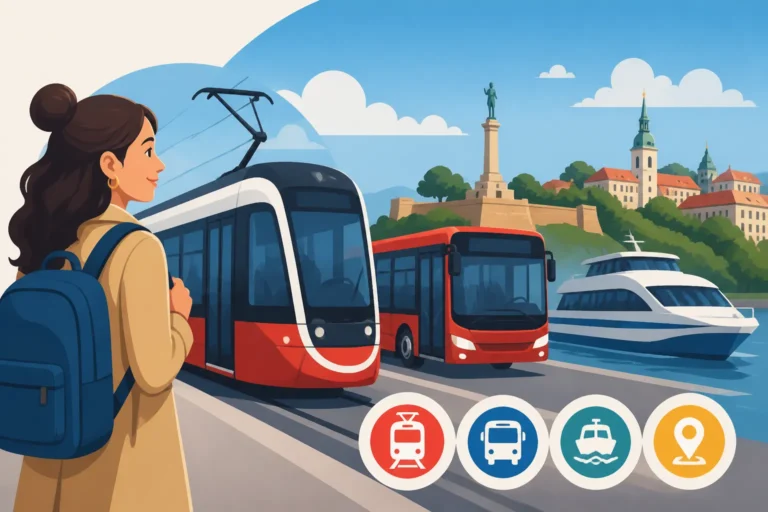
The backbone of Belgrade's public transport consists of three main types of vehicles, each serving slightly different purposes and areas. You'll become very familiar with them, and probably develop a love-hate relationship with each.
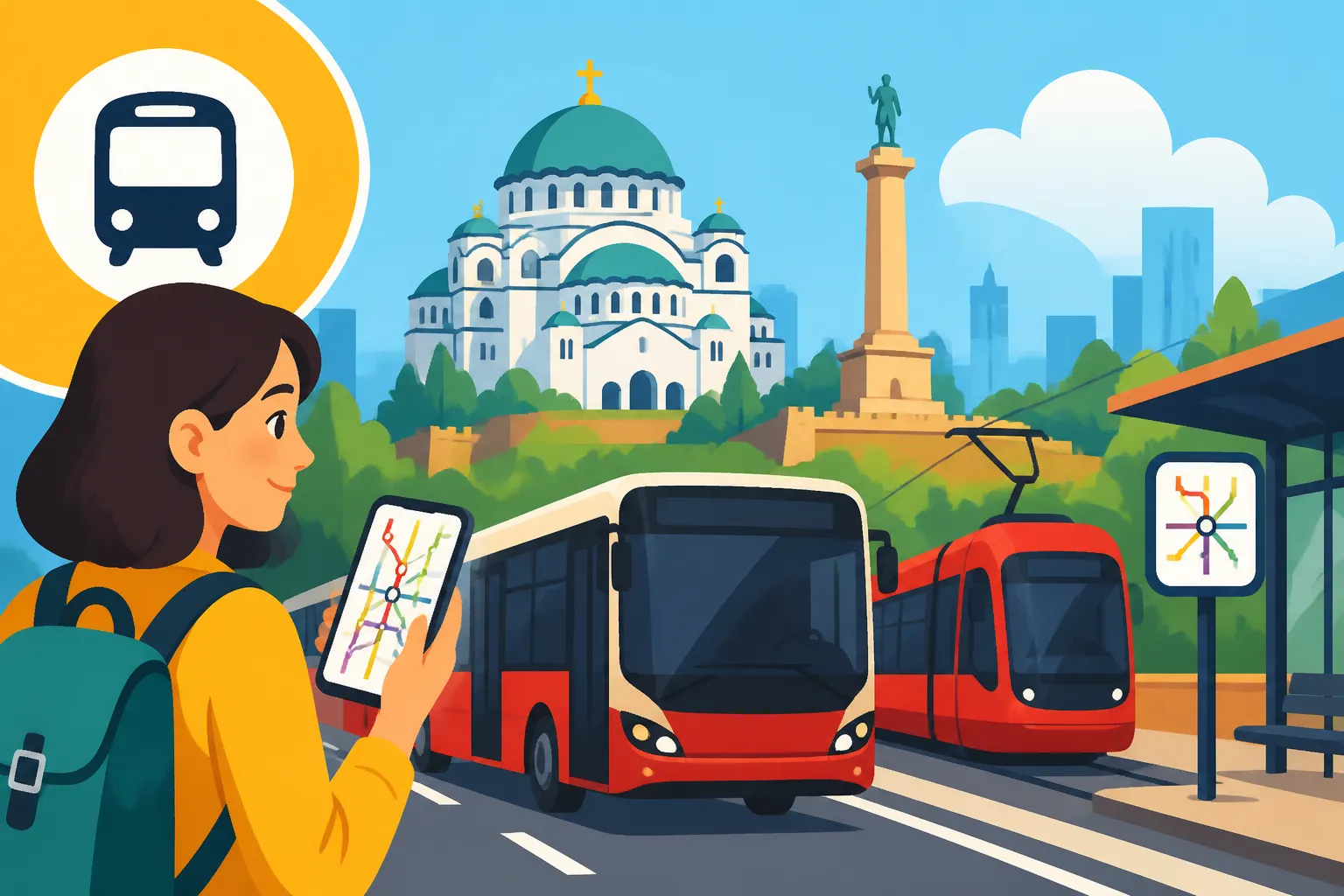
First, there are the buses. These are by far the most numerous and cover the widest geographical area, reaching almost every corner of the city, from the bustling city center to the quieter suburbs. You'll find a mix of older, often rattling, vehicles and newer, air-conditioned ones, especially on more popular routes. Bus stops are marked with distinctive signs, often displaying the route numbers that serve that particular stop and, sometimes, a basic schedule or map. Be prepared for them to be quite crowded during peak hours, especially on routes like the 95 or 23, which traverse major arteries. Knowing the key bus lines will unlock so much of the city for you, allowing you to venture out to places you might not otherwise see.
Then we have the trams. These iconic vehicles run on tracks, mainly through the central and New Belgrade areas, offering a somewhat smoother ride than the buses. Trams are particularly useful for getting around the city's older parts, like Dorćol, Vračar, and the stretch along the Sava and Danube rivers. They offer a unique perspective of the city as they rumble along historic streets. Popular tram lines include the 2, which circles the city center, and the 7, which connects New Belgrade with the city's east. They’re a slower, more scenic way to travel, but often less susceptible to traffic jams than buses on certain routes.
Finally, there are the trolleybuses. These are essentially electric buses that draw power from overhead lines, meaning their routes are more fixed and limited to specific corridors. They primarily serve the central and eastern parts of Belgrade, linking areas like Studentski Trg with Konjarnik or Braće Jerković. Trolleybuses are quieter and emit no local pollution, offering a slightly more pleasant ride than their diesel counterparts. While less extensive than the bus or tram networks, they fill important gaps and can be a reliable option on their designated routes. Understanding the distinction between these three will greatly assist you in planning your journeys. If you're pondering What is the best way to get around Belgrade without a car?, these three modes of transport are your primary answer.
Understanding the Zones and Routes
Belgrade’s public transport system uses a zone-based fare structure, although for most daily commuting within the core city, you'll primarily be concerned with zones 1 and 2. The city is divided into six zones, stretching out from the central urban areas to the farthest reaches of the metropolitan region. The vast majority of expats living and working in Belgrade will find themselves using routes exclusively within zones 1 and 2, which cover areas like Stari Grad, Vračar, Savski Venac, Novi Beograd, and Zemun. When you’re looking up your journey, it’s always a good idea to quickly check which zones you’ll be crossing to ensure you have the correct ticket or balance on your card.
Route planning can seem daunting at first because, let's be honest, the official maps aren't always the most user-friendly. Bus stops often have simplified maps, but these usually only show the routes passing through that specific stop. For comprehensive route planning, relying on modern technology is your best bet, which we'll delve into later. Trust me, trying to navigate purely by paper map is a recipe for a good story, but probably not an efficient commute. If you’re trying to figure out where to live, say, How do I find an apartment near the city centre in Belgrade?, knowing the transport links will be crucial for your daily life.
The system has literally hundreds of lines, each with its own number and sometimes a letter suffix (like 23A or 46L) indicating a slight variation in the route. Don't try to memorise them all; it's simply not practical. Instead, focus on the lines that serve your most frequent destinations – your home, work, the supermarket, and perhaps a favourite café. The key is to understand the general direction of travel and the major hubs, such as Zeleni Venac, Studentski Trg, or Slavija Square, where many lines converge and you can often transfer. It's truly an experience to stand at a busy hub like Zeleni Venac during rush hour, watching the organised chaos unfold.
For detailed information, the official public transport website provides some route information, but it can be a bit clunky for a newcomer. Most locals, and certainly seasoned expats, lean heavily on third-party apps for real-time tracking and route suggestions. This is where your smartphone will become your best friend, allowing you to punch in your destination and instantly see the best bus, tram, or trolleybus options, estimated travel times, and even where your vehicle currently is on its route. More on those helpful apps in a bit!
Navigating the Payment System: BeogradPlus and Beyond
This is often where expats hit their first real snag. The payment system for Belgrade’s public transport has seen a few iterations over the years, leading to a bit of confusion, even among locals. Forget cash payments on board (mostly, there are exceptions but don't count on it), and embrace the digital era, Belgrade style. Currently, the system is branded as "BeogradPlus," and understanding it is non-negotiable for seamless travel.
Acquiring and Topping Up Your BeogradPlus Card
The cornerstone of Belgrade's public transport payment is the BeogradPlus card. Think of it like an Oyster card in London or a MetroCard in New York. You absolutely need one of these if you plan to use public transport regularly. There are a few types, but for most expats, the personalised or non-personalised plastic card will be your go-to.
To get a non-personalised card, which is the easiest option for a newcomer, you can often buy one at kiosks (tobacco shops, marked with a Trafika sign) or designated BeogradPlus sales points. These cards typically cost around 250 RSD for the card itself, and then you load money or passes onto them. For longer stays, or if you want to apply for a monthly pass that might be cheaper, you might consider a personalised card, which requires ID and a photograph. These are obtained at main BeogradPlus customer service centers, such as the one at Belgrade Main Bus Station (BAS). My advice for most newcomers is to start with a non-personalised card to get going, and then explore the personalised option if you plan to be here for a long time and use public transport heavily.
Topping up your BeogradPlus card is thankfully straightforward. You can do this at almost any kiosk or at the aforementioned sales points. Just hand over your card and tell the attendant how much money you want to add, or which type of pass (e.g., a 90-minute ticket, a daily ticket, or a weekly/monthly pass if you have a personalised card) you wish to purchase. They’ll swipe your card, take your cash (usually cash-only at kiosks for this), and boom, you're ready to ride. Some larger retail chains or supermarkets might also offer top-up services. If you're a digital nomad just starting out, remember you'll need local currency for this, so ensure you’ve got some dinars on hand. This is also where having a reliable mobile data plan comes in handy; if you're still settling in, an eSIM from a provider like Airalo can ensure you have data for maps and checking balances without needing a local SIM immediately. Just make sure your phone is unlocked and compatible.
Alternatively, Belgrade also offers mobile payment options, which are increasingly popular. You can download the official BeogradPlus app, link your payment method, and purchase digital tickets directly on your phone. This can be super convenient, as you don't have to worry about finding a kiosk. Simply activate the ticket in the app when you board, and present the QR code to the validator. Many locals are shifting towards this method, especially for single rides or daily passes, as it streamlines the process considerably.
Validation and Fines: What You Need to Know
This is the absolutely critical part, so pay close attention! Once you board a bus, tram, or trolleybus, you must validate your BeogradPlus card or your digital ticket. There are small, yellow validation machines near each door. If you’re using a physical card, tap it against the reader until you hear a beep and see a green light. If you’re using the mobile app, scan the QR code displayed on the validator. This step is non-negotiable and skipping it can lead to a hefty fine.
Many expats, used to systems where you only tap out, mistakenly think tapping in is enough, or they simply forget. Don't be that expat! Ticket inspectors, known as "kontrolori," regularly patrol all lines. They are not always in uniform, although they usually wear a distinctive vest or ID badge when performing checks. If you are caught without a validated ticket or an active pass, you will be issued a fine. The fines are not cheap, often starting around 6,000 RSD or more, and they are usually payable on the spot or within a short period at the post office or bank. Trust me, trying to argue your way out of it will likely be futile, as they have heard every excuse in the book.
The key takeaway here is simple: always validate. Even if the validator seems broken (which sometimes happens, let's be realistic), try another one. If all are truly broken, then you might have a case, but it's rare. Keep an eye on your card balance or pass expiry date. You don't want to get caught off guard. It's a small hassle to tap, but it saves you a big headache and a chunk of your dinars. Remembering this crucial step contributes significantly to the overall Understanding out-of-pocket healthcare costs and co-payments in Serbia of living here, as every unexpected fine adds up.
For monthly passes, once activated on a personalised card, you don't need to tap for each ride per se, but it's good practice to still tap your card to show the validator that you have an active pass, especially when inspectors are around. The system knows your pass is active, but showing the tap on the machine confirms your presence on that specific vehicle, which can be important for their internal tracking.
Essential Tips for Expats Using Belgrade's Public Transport
Beyond the mechanics of cards and routes, there are practical tips that can make your public transport experience in Belgrade not just tolerable, but genuinely effective. This is where you really start to feel like you're getting the hang of things, moving from an observer to an active participant in the city's rhythm.
Apps, Schedules, and Real-Time Information
Forget about relying solely on static schedules posted at stops – in Belgrade, they are often more of a suggestion than a firm promise. This is a city that pulses with life, and traffic can be unpredictable. This is where technology steps in to save your sanity. Your smartphone will quickly become an indispensable tool for navigating public transport.
The official BeogradPlus app is a good starting point for purchasing digital tickets and checking basic routes, but for real-time tracking and more intuitive journey planning, most expats and locals rely on other popular apps. Google Maps is surprisingly accurate for public transport in Belgrade, offering real-time bus and tram locations, estimated arrival times, and step-by-step navigation. It’s often updated quite quickly, which is essential for buses that might be delayed. Another highly recommended app is Moovit. Moovit specializes in public transport, offering detailed routes, schedules, live arrivals, and even service alerts. It's often praised for its user-friendly interface and comprehensive data. Using these apps effectively requires a stable internet connection, so make sure your How do I set up a mobile phone plan in Serbia? is sorted, or that you have a reliable data package from a provider like Airalo, especially when you're out and about exploring.
Beyond apps, understanding the general flow of traffic can help. During morning and evening rush hours (roughly 7:00-9:00 AM and 3:00-5:00 PM), expect delays, crowded vehicles, and longer journey times. If you have flexibility, try to schedule your travel outside these periods. On weekends, service is generally less frequent, and some routes may operate on a modified schedule. Always double-check your chosen app before heading out, especially if you're on a tight schedule or planning to travel to less central areas. This preparedness will reduce stress significantly.
Safety, Etiquette, and Common Courtesy
Like any major city's public transport, there are unspoken rules and common-sense safety practices you should be aware of. While Belgrade is generally a safe city, being vigilant is always smart.
Pickpocketing can occur on crowded buses and trams, especially in popular tourist areas or at major transport hubs. Keep your valuables secure and out of sight, and be aware of your surroundings. Avoid keeping your wallet in your back pocket or phone in an easily accessible outer pocket of a backpack. Wearing your backpack on your front when it's very crowded is a common practice among locals to deter pickpockets. This is not to scare you, but to make you aware, as these are the same precautions you'd take in any large European city.
In terms of etiquette, it's customary to offer your seat to elderly people, pregnant women, or those with small children. This is a deeply ingrained part of Serbian culture, and you'll often see young people immediately stand up to offer their seat. Boarding and alighting can sometimes feel a bit like a rugby scrum during rush hour. Allow passengers to exit before trying to board. If you're standing near the doors, move aside to let people off, and step back in once they've cleared. Don't block the doorways, as it slows everyone down. When carrying larger items, like luggage (if you're just arriving or departing, perhaps with help from Sirelo for your move), try to keep them out of the way of other passengers. The space can be quite limited, especially on older buses.
Personal space is also a bit different here. Don't be surprised if you find yourself in very close quarters with strangers, particularly on crowded routes. It's simply a fact of life during peak times. A little patience and understanding go a long way. Overall, most interactions are polite, and if you're ever truly lost or confused, don't hesitate to ask a fellow passenger for help. Many Serbians speak English, especially younger generations, and are generally willing to assist a polite foreigner in need.
Getting Around Beyond the City Centre
Belgrade's public transport network isn't just for the core city; it extends quite far, allowing you to explore the wider metropolitan area. While the central zones (1 and 2) are most frequently used, venturing into zones 3, 4, 5, or 6 might be necessary if you're visiting friends in more distant suburbs, exploring specific cultural sites, or even considering living in a quieter, more affordable area outside the immediate hustle and bustle. The fare structure accounts for this, with longer zone passes available. This is also why knowing How reliable is public transport in Serbia? is important for planning your life here.
For example, if you decide to explore the historical beauty of Zemun or the tranquility of Košutnjak, you'll still be well within the standard zones covered by a typical city pass. However, if you want to visit places like Avala Mountain or further afield, you'll need to check the specific route and ensure your BeogradPlus card has enough credit for the extended journey or that you purchase the appropriate zone ticket. The apps mentioned earlier are invaluable for these longer trips, ensuring you don't accidentally end up in a different municipality without a valid ticket.
Additionally, while this guide focuses on local public transport, it's worth noting that Belgrade also has a solid intercity bus network operating from the Belgrade Main Bus Station (BAS). This allows you to easily travel to other cities in Serbia, like Novi Sad or Niš, or even to neighboring countries. But for within the city, stick to your GSP buses, trams, and trolleybuses. These networks, combined with a good understanding of the local ticketing, really open up your possibilities when considering options like The best places to live in Serbia for expats: A complete guide (2027), as accessibility is often a key factor.
| Type of Transport | Key Areas Served | Payment Method | Pros | Cons |
|---|---|---|---|---|
| Buses | Widest coverage, city-wide and suburbs | BeogradPlus card/app | Most flexible, reaches everywhere | Can be very crowded, prone to traffic delays |
| Trams | Central Belgrade, New Belgrade, along rivers | BeogradPlus card/app | Smoother ride, scenic, less traffic-prone on some routes | Limited to tracks, slower |
| Trolleybuses | Central and Eastern Belgrade | BeogradPlus card/app | Quieter, eco-friendly | Fixed routes, more limited network |
Disclaimer
The information provided in this guide is intended for general informational purposes only and is subject to change. While we strive to keep the content up-to-date, public transport rules, fares, and systems in Serbia can be updated by local authorities. Always cross-reference information with official sources such as the BeogradPlus website or the Ministry of Internal Affairs (MUP) for the most current regulations. This guide offers personal experiences and general advice and should not be considered legal or official guidance.