Can I Drive in Serbia on a Foreign Licence?
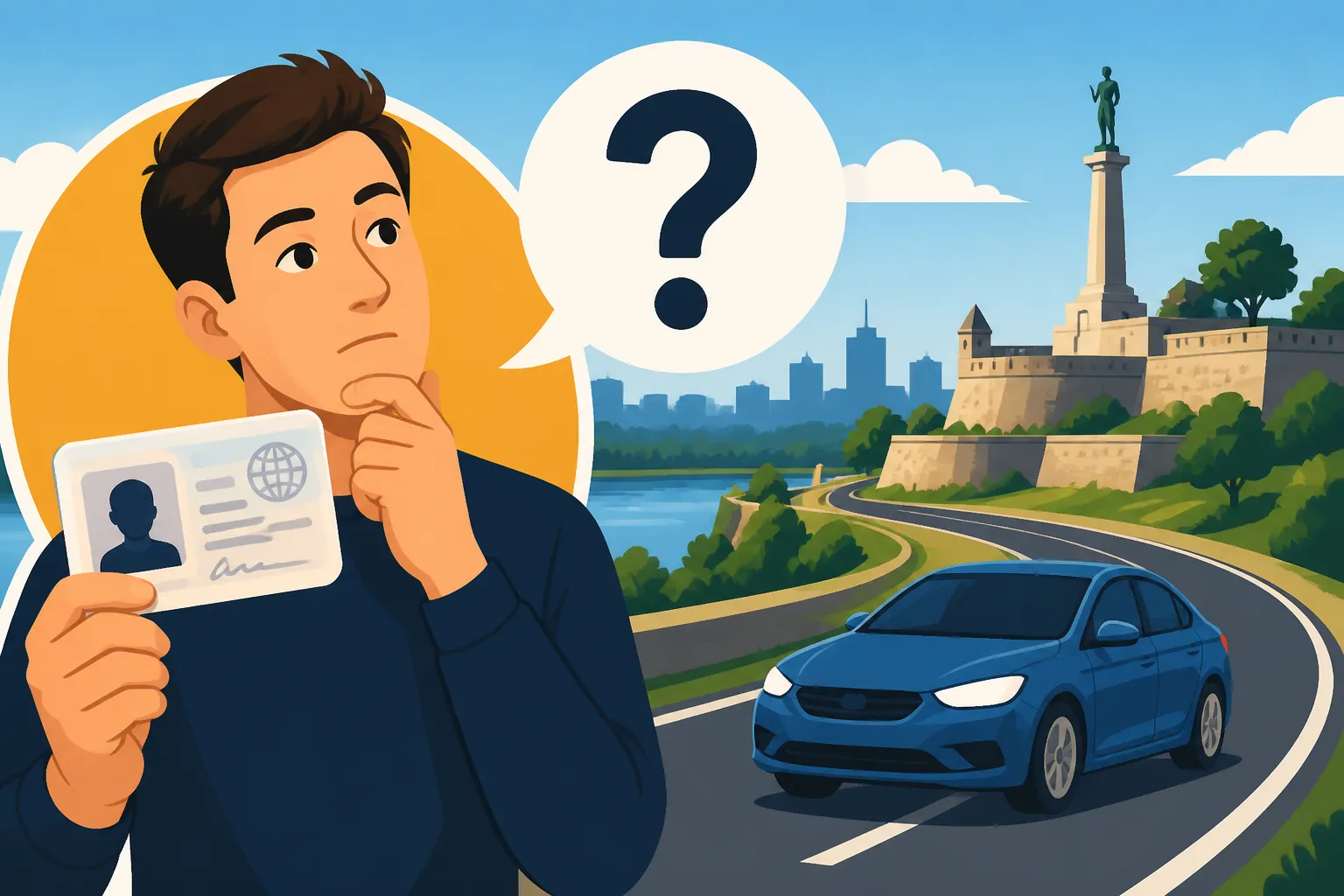
The moment you arrive in Serbia, the question of whether you can simply hop in a car and drive with your existing license is probably swirling in your head. Trust me, it’s a concern that keeps many expats up at night, especially when faced with the often-opaque administrative rules. This guide will cut through the confusion, detailing exactly when and how you can use your foreign driver's license in Serbia, and what steps you'll need to take for a smooth transition.
Navigating Serbian Roads with Your Foreign License: The Initial Period
So, you've just landed in Serbia, maybe you've got your temporary residence sorted, or perhaps you're just here for an extended visit. You're eager to explore, to drive to Fruška Gora, or simply navigate Belgrade's bustling streets on your own terms. The good news is, for a certain period, your foreign driver's license is perfectly valid. However, this isn't a free pass forever, and there are crucial distinctions to understand based on your nationality and residency status.
Tourist Privileges and Limitations
If you're visiting Serbia purely as a tourist, generally, you can drive with your valid foreign driver's license for the duration of your visa-free stay, which for most nationalities, is up to 90 days within any 180-day period. This applies to citizens of the EU, UK, USA, Canada, Australia, and many other countries. It’s important that your license is current, legible, and ideally, in Latin script. If your license is in a language other than Serbian or English, or uses non-Latin script (like Cyrillic, Arabic, or Asian characters), you’ll definitely need an International Driving Permit (IDP) to accompany it. Think of the IDP as a multilingual translation of your existing license, officially recognized across borders.
However, even as a tourist, remember that Serbia has specific laws. If you are stopped by traffic police, they will want to see your physical license, your passport (or national ID if applicable), and potentially your vehicle registration and insurance documents. Make sure you have these readily accessible. Don't assume that because your home country has lenient rules, Serbia will too. The police here are generally fair but strict when it comes to adherence to the law. Always carry your original documents, not just photocopies on your phone.
The Role of an International Driving Permit (IDP)
Now, let's talk about the International Driving Permit. Many expats from countries like the United States, Canada, Australia, or various Asian and African nations are often surprised to learn that an IDP isn't just a suggestion; it's often a legal requirement here in Serbia. Even if your national license is in English, Serbian law stipulates that if your license isn't from one of the countries that have specific bilateral agreements with Serbia for direct exchange (more on that later), an IDP is necessary when driving on a foreign license. This can be a point of contention and confusion for many.
An IDP translates your driver’s license into multiple languages, making it easier for local authorities to understand your driving qualifications. It’s not a standalone document; it must always be presented alongside your valid national driver's license. You can typically obtain an IDP from your home country's national motoring association (e.g., AAA in the USA, RAC/AA in the UK, CAA in Canada) before you travel to Serbia. It's usually valid for one year. Trying to get one once you're already in Serbia can be a logistical nightmare, so plan ahead! This seemingly small detail can save you a lot of hassle and potential fines if you get pulled over, especially outside of major cities where officers might be less accustomed to diverse foreign licenses.
When You Must Get an IDP
So, when is an IDP absolutely non-negotiable?
Firstly, as mentioned, if your national driver's license is not in one of the officially recognized languages or scripts (Serbian, English, or potentially other Latin scripts that are easily decipherable by local police).
Secondly, if your license is from a country that hasn't signed a specific convention or bilateral agreement with Serbia regarding driver's license recognition. This can be a bit of a gray area, as official lists aren't always crystal clear or readily available in English. To be safe, if you're from outside the EU/EEA, a well-known Commonwealth country, or the USA/Canada, it's always best practice to get an IDP.
Finally, and perhaps most importantly, if you are planning to rent a car in Serbia, most reputable car rental agencies will explicitly require an IDP in addition to your national license, regardless of your country of origin. This is their way of mitigating risk and ensuring compliance with local laws. Don't leave it to chance; a quick call to your rental company can confirm their specific requirements. Remember, safety first! And carrying an IDP makes that initial phase of driving much smoother, offering peace of mind while you're still finding your feet.
The Transition: From Foreign License Holder to Serbian Driver
Ah, the 90-day mark. It's like a ticking clock for expats. While it might seem like a distant future when you first arrive, those three months fly by, especially when you're busy setting up your new life, finding an apartment, and navigating the complexities of Serbian bureaucracy. Many foreigners mistakenly believe their foreign license will remain valid indefinitely as long as they renew their residence permit. This is a common and potentially costly misconception.
The 90-Day Clock: What it Means for Residents
For anyone holding a temporary residence permit (privremeni boravak) in Serbia, the rules change significantly. Once you acquire residence in Serbia, your foreign driver's license is generally recognized for a period of 90 days from the date your residence permit was issued. Yes, that's 90 calendar days, not 90 days of active driving. This is a critical distinction that often catches people off guard. It means that even if you haven't driven a car since arriving, the clock starts ticking from the moment your temporary residence status is granted.
This rule exists to encourage new residents to integrate into the Serbian legal and administrative system, including traffic laws. It's not meant to be punitive, but it certainly feels that way when you realize you have a limited window to comply. During this 90-day period, you are expected to initiate the process of exchanging your foreign driver's license for a Serbian one. If you're planning to stay long-term, this isn't just a suggestion; it's a mandatory step, and ignoring it can lead to serious legal consequences. Make sure you also understand How to Register Your Address (Prijava) with the Police in Serbia as this is often tied into official residency requirements.
Why Exchanging is Mandatory for Long-Term Stay
Why is this exchange so rigid? Well, for several reasons. Firstly, it standardizes the driving qualifications of all long-term residents under Serbian law, ensuring everyone on the road meets local criteria. Secondly, it simplifies law enforcement. A Serbian police officer can instantly recognize and verify a Serbian license, whereas verifying the legitimacy and scope of dozens of different foreign licenses is impractical. Finally, it ties into the overall system of documentation for residents. Your Serbian driver's license becomes another official form of identification linked to your residency status, much like your residence card.
This mandatory exchange can feel like another bureaucratic hurdle piled onto an already daunting list of tasks for newcomers. You've probably just finished wrestling with your How to Get Temporary Residence (Boravak) in Serbia (2027) application, and now this. It’s completely normal to feel a bit overwhelmed. But approaching it with a clear understanding of the 'why' can make the 'how' a little less frustrating. It's part of becoming a fully integrated resident, and like many things in Serbia, patience and persistence are your best friends.
Consequences of Not Exchanging Your License
Ignoring the 90-day rule after obtaining residence is not an option. The consequences of driving in Serbia with an expired foreign license (i.e., beyond the 90-day grace period for residents) can be severe.
Firstly, you could face substantial fines if stopped by the police. These fines can range from thousands to tens of thousands of RSD, depending on the discretion of the officer and the specific circumstances.
Secondly, and far more seriously, if you are involved in an accident while driving without a valid Serbian license, your car insurance might be invalidated. This means you could be personally liable for damages, injuries, and legal costs, which can quickly spiral into astronomical figures. Imagine the nightmare of being involved in a collision and then discovering your insurance won't cover you because you weren't legally permitted to drive.
Thirdly, driving without a valid license is a serious traffic offense in Serbia and can lead to your vehicle being impounded. This would incur additional costs for towing and storage, not to mention the immense inconvenience. Finally, repeated offenses or involvement in serious incidents could potentially jeopardize your residence permit in Serbia, as it demonstrates a disregard for local laws. It’s simply not worth the risk. Take the time to understand Understanding Car Insurance and Registration in Serbia to ensure you're fully covered once you have your Serbian license.
The Exchange Process: Getting Your Serbian Driver's License
Okay, so you've accepted the inevitable: you need to get a Serbian driver's license. This process, while often painted as a bureaucratic monster, is manageable with the right information and a dose of patience. The good news is that for many nationalities, you won't have to start from scratch and take full driving lessons again. However, some will need to take tests.
Eligibility and Required Documents
The first step is to determine if your country's license is eligible for direct exchange without needing to take a practical driving test. Serbia has bilateral agreements with a number of countries, primarily those with similar driving standards and conventions. This list includes many European Union member states, Switzerland, Norway, Iceland, Lichtenstein, as well as countries like Bosnia and Herzegovina, Montenegro, North Macedonia, and even a few others like Russia, Belarus, and Turkey. If your license is from one of these countries, the process is significantly simpler.
Regardless of your country of origin, you will need a substantial stack of documents. This usually includes:
- Your valid foreign driver's license (original and a photocopy).
- Your passport (original and a photocopy of the main page and your Serbian residence stamp/permit).
- Your residence permit card (original and photocopy).
- A certified translation of your foreign driver's license into Serbian by a sworn court interpreter (sudski tumač). This is non-negotiable and must be recent.
- A medical certificate issued by a Serbian medical institution, confirming you are fit to drive. This involves a physical examination, eye test, and often a psychological evaluation. You'll need to visit a specific polyclinic or medical center that performs these checks for driver's licenses. Expect to spend a few hours on this.
- Proof of paid administrative fees and taxes. These are government fees for the application and the issuance of the new license.
- A filled-out application form, obtainable at the MUP (Ministry of Interior) office.
- A statement from your local MUP confirming your current address. This is usually linked to your 'prijava boravka' (address registration).
It's crucial to check the most current requirements directly with the MUP or their official website, as document lists can occasionally change. Being prepared with all necessary papers will save you multiple trips!
The Practical and Theoretical Exams
Now, for the big question: do you have to take a driving test? If your license is not from one of the countries with which Serbia has a direct exchange agreement, then yes, you will likely need to pass both a theoretical knowledge test (written exam) and a practical driving test. This applies to citizens from countries like the USA, Canada, Australia, and many others.
The theoretical test covers Serbian traffic laws, road signs, and regulations. It’s usually conducted in Serbian, but sometimes an English option or a translator can be arranged, depending on the MUP office. You'll need to study the Serbian Highway Code (Zakon o bezbednosti saobraćaja na putevima). Many expats find this test challenging due to the language barrier and specific nuances of Serbian traffic rules. There are often driving schools (auto škole) that offer preparation courses in English, which can be invaluable.
The practical driving test is similar to what you might have experienced in your home country. It involves driving with an examiner in a test vehicle, demonstrating your ability to handle various traffic situations, park, and follow instructions. Again, if you haven't driven in Serbia much, or are used to different driving conventions (e.g., right-hand drive countries), it's highly recommended to take a few refresher lessons with a local driving instructor. They can teach you the local "style" of driving and help you understand what examiners look for. For more detailed steps on getting the actual license, check out How to Get a Serbian Driver's Licence.
Costs and Timelines Involved
The cost of exchanging your driver's license can vary, especially if you need to take tests or pay for driving lessons. Here’s a general breakdown:
- Medical Certificate: Expect to pay around 3,000 – 6,000 RSD.
- Certified Translation: Around 1,000 – 3,000 RSD per document, depending on the translator.
- Administrative Fees/Taxes: These are usually a few thousand RSD, subject to change.
- Driving School/Refresher Lessons: If you need to take tests, theoretical preparation courses can range from 10,000 – 20,000 RSD, and practical driving lessons are typically 2,000 – 3,000 RSD per hour, with multiple hours usually required.
- Total: For a simple exchange, you might be looking at around 5,000 – 15,000 RSD. If you need to take full tests, the cost could easily climb to 50,000 RSD or more, including lessons.
The timeline is another factor that demands patience. A straightforward exchange could take anywhere from a few weeks to a couple of months, depending on the efficiency of the MUP office and how quickly you can gather all documents and complete the medical exam. If you need to take tests, the process will be significantly longer, potentially stretching to three to six months, factoring in study time, driving lessons, and waiting for test dates. Start early, especially since your foreign license's validity for residents has that strict 90-day limit.
Navigating the MUP (Ministry of Interior) Bureaucracy
The MUP office (Uprava za upravne poslove) is where you'll spend a fair bit of your time. This is the government department responsible for issuing driver's licenses, passports, and residence permits. Like many government offices worldwide, it can be a source of frustration. Expect queues, sometimes confusing instructions, and potentially multiple visits. Weekday mornings are often the busiest, but also when most staff are available. Some larger MUP offices, like the one in Ljermontova Street in Belgrade, have dedicated sections for foreigners, which can sometimes streamline the process.
Tips for navigating the MUP:
- Be Patient: This is perhaps the most important tip. Things move at their own pace.
- Be Polite: A friendly attitude goes a long way.
- Bring ALL Documents: Even if you think you don't need it, bring every document you have. Originals and photocopies are always a good idea.
- Ask for Clarification: If you don't understand something, politely ask for clarification. Don't assume.
- Bring a Serbian Speaker: If your Serbian isn't strong, bring a friend or a hired translator. This can drastically reduce miscommunication.
- Check Opening Hours: Verify their operating hours and any specific departmental timings beforehand.
Remember, every expat goes through similar administrative hurdles in Serbia. It’s part of the experience. While waiting, you might want to use services like Airalo to ensure you have local connectivity to stay updated or pass the time. Just keep your eye on the prize: your new Serbian driver's license!
Life After Exchange: Driving with a Serbian License
Congratulations! You've navigated the bureaucratic maze, passed any necessary tests, and finally hold that sleek, new Serbian driver's license in your hand. This is a significant milestone in your expat journey, granting you full legal driving privileges in Serbia. Now, let’s talk about what comes next and how to adapt to driving life here.
Understanding Serbian Road Rules and Culture
While you’ve studied for the theoretical exam, understanding the unwritten rules and local driving culture is just as important. Serbian drivers are often perceived as more assertive and less patient than those in many Western countries. Expect:
- Aggressive Driving: Drivers may honk frequently, tailgate, and cut in front of others, especially in cities like Belgrade. Defensive driving is key.
- Parking: Finding parking, especially in city centers, can be a nightmare. Be prepared for creative parking solutions, often involving sidewalks or double-parking. Always check for paid parking zones (zones indicated by color, e.g., red, yellow, green) and pay via SMS or parking apps.
- Pedestrians: Pedestrians can be bold. Always be alert for people crossing roads where there isn't a designated crosswalk, or stepping out suddenly.
- Public Transport: Trams and buses have priority in many situations, especially on their designated lanes. Always yield to them.
- Roundabouts: Pay close attention to who has the right of way. Generally, vehicles already in the roundabout have priority, but this isn't always strictly adhered to.
- Road Conditions: While main roads are generally good, side roads and rural areas can have potholes or be poorly maintained. Be vigilant.
- Winter Driving: If you're driving in winter, snow tires (zimski pneumatici) are mandatory from November 1 to April 15, regardless of snow cover. This is enforced strictly.
Adjusting to these nuances takes time and practice. Don't get discouraged if it feels chaotic at first. Drive defensively, anticipate others' actions, and maintain a calm demeanor, and you'll get the hang of it.
Car Registration and Insurance
Once you have your Serbian driver’s license, if you own a vehicle, you’ll also need to ensure it's properly registered and insured. This is a separate, but equally important, administrative process. All vehicles in Serbia must be registered annually, and this includes compulsory third-party liability insurance. Without valid registration (registracija) and insurance, you cannot legally drive your car.
The process for car registration involves a technical inspection, payment of various fees (road tax, eco tax, public transport fees, etc.), and then receiving your registration sticker (registraciona nalepnica) and updated registration card. You'll typically visit a technical inspection center (tehnički pregled) first, and then an authorized MUP service point or post office to finalize the registration and pay the fees.
Regarding insurance, there are many providers in Serbia. You'll need to choose one for your mandatory third-party liability (obavezno osiguranje). You also have the option to purchase comprehensive insurance (kasko osiguranje) for additional coverage against theft, damage to your own vehicle, etc., though this is not mandatory. Understanding these details is crucial, so definitely refer to our guide on How to Register and License a Car in Serbia for a full walkthrough.
Driving Safely and What to Expect on Serbian Roads
Driving safely in Serbia is about more than just knowing the rules; it's about being aware of your surroundings and adapting to the local driving environment.
- Speed Limits: Pay close attention to speed limits, which are generally 50 km/h in urban areas, 80 km/h on open roads outside of settlements, and 130 km/h on highways. Speed cameras are common, especially on major routes and within cities.
- Alcohol Limits: Serbia has a very strict zero-tolerance policy for new drivers (less than 2 years of experience) and professional drivers, and a low limit (0.2‰) for other drivers. Don't drink and drive.
- Seatbelts: Mandatory for all passengers, front and back.
- Mobile Phones: Using a mobile phone while driving (even hands-free devices that require holding the phone) is strictly forbidden and heavily fined.
- Headlights: Headlights are mandatory during the day, year-round.
- Traffic Jams: Belgrade, especially, is known for its heavy traffic during rush hours. Factor in extra time for your commutes.
- Toll Roads: Many highways in Serbia are toll roads. You can pay with cash (RSD or Euro) or credit/debit cards. The best option for frequent travelers is an ETC (Electronic Toll Collection) device, which you can load with credit.
- Roadside Assistance: It's a good idea to know the number for roadside assistance (e.g., AMSS, the Serbian Automobile and Motorcycle Association) in case of breakdowns.
Remember that driving in Serbia, like any new country, comes with its own set of challenges and quirks. But with your Serbian driver's license in hand, and a proactive approach to understanding local customs, you'll soon be navigating the streets and scenic routes of this beautiful country like a seasoned local. For more insights on the wider cost of living, including transportation, you might find our The Complete Guide to Cost of Living in Serbia for Expats (2026) helpful. If you’re considering moving everything you own, including potentially a car, don’t forget that services like Sirelo can assist with international moving logistics to ease the transition into your new life here.
Disclaimer
The information provided in this guide is intended for general informational purposes only and does not constitute legal, financial, or professional advice. While we strive to keep the content accurate and up-to-date, laws and regulations in Serbia can change frequently. Always consult with relevant Serbian authorities, legal professionals, or official government websites (such as the Ministry of Interior – MUP) for the most current and specific information pertaining to your individual situation. Reliance on any information in this guide is solely at your own risk.