How Do I Register for VAT as an Online Seller in Serbia?
So, you’ve decided to take the plunge into online selling here in Serbia, which is fantastic! It’s a thriving space, especially with so many people embracing the digital economy. But then you hear whispers of "PDV" and "VAT registration," and suddenly that entrepreneurial spirit starts to feel a little… well, taxing. Believe me, I’ve been there. The Serbian tax system can feel like a labyrinth at the best of times, and adding the complexities of online sales and cross-border transactions can make even the most seasoned expat want to pull their hair out. This guide is here to untangle the bureaucratic knots and walk you through exactly how to register for VAT as an online seller in Serbia, without sounding like a government manual.
Understanding the Basics of VAT (PDV) for Online Sellers in Serbia
First things first, let’s demystify "PDV." It’s simply the Serbian abbreviation for Porez na Dodatu Vrednost, which translates directly to Value Added Tax, or VAT as most of us know it. In essence, it’s a consumption tax applied to goods and services at each stage of the supply chain, ultimately borne by the end consumer. For an online seller, this means understanding when and how you need to charge this tax on your sales and pass it on to the Serbian tax authorities. It's a fundamental part of the business landscape here, and frankly, ignoring it can lead to some hefty fines and headaches down the line.
The Serbian VAT system generally operates with a standard rate of 20% and a reduced rate of 10% for certain goods and services, such as basic foodstuffs, certain medical supplies, and hotel accommodation. For the vast majority of online sellers dealing in general merchandise or digital products, the 20% rate will be your primary concern. Understanding these rates is just the beginning, but it sets the stage for everything that follows regarding your obligations.
Who Needs to Register: The Turnover Threshold
Now, this is where it gets crucial for online sellers, particularly those just starting out or running a smaller operation. Not every business in Serbia is immediately required to register for VAT. The Serbian Tax Administration (Poreska Uprava) has a specific threshold that determines when VAT registration becomes mandatory. As an expat running an online business, you’ll need to keep a very close eye on your annual turnover.
The current mandatory VAT registration threshold in Serbia is when your total taxable turnover from goods and services in the preceding 12 months exceeds 8,000,000 Serbian Dinars (RSD). This is a rolling 12-month period, not just a calendar year, so you need to constantly monitor your sales. Many expats, especially those used to quarterly or annual checks in their home countries, often get tripped up by this rolling period. It means that on any given day, you could hit that threshold based on the last 365 days of sales, and then the clock starts ticking for your registration. It's a common point of confusion, and frankly, it takes a bit of diligence to track properly. If you hit this amount, you are legally obligated to register for VAT within 15 days of the month following the month in which you exceeded the threshold. So, if you hit 8,000,000 RSD in May, you have until June 15th to submit your application.
Even if you don't hit the mandatory threshold, you also have the option to voluntarily register for VAT. Why would anyone do that, you ask? Well, there are strategic reasons. If you primarily sell to other businesses (B2B) that are themselves VAT-registered, or if your business incurs significant VAT-charged expenses (like purchasing stock from VAT-registered suppliers), voluntary registration allows you to reclaim input VAT. This can significantly reduce your overall costs. Imagine buying thousands of euros worth of inventory, paying 20% VAT on it, and not being able to reclaim that back – that’s a substantial chunk of your profit gone. This is where professional advice, perhaps from a service like Taxes for Expats, can really clarify if voluntary registration makes financial sense for your specific business model.
Common Misconceptions and Expat Frustrations
Navigating the Serbian tax system as a foreigner, especially for online business, often comes with a unique set of challenges and misunderstandings. One of the biggest misconceptions is that if you're selling digital products or services primarily to international customers, you don't need to worry about Serbian VAT. This is generally true for sales outside Serbia, but if you have any Serbian customers, or if your operations are physically based here, the rules apply. The moment you start selling to individuals or businesses within Serbia, even if it's just a small percentage of your overall sales, you need to understand your obligations here.
Another common frustration revolves around the paperwork. Serbia is still a country where bureaucracy loves its paper, even with the push towards digitalization. Many expats expect a fully online, streamlined process for everything, and while the ePorezi portal is improving, preparing the initial documentation can still feel like a treasure hunt. You'll likely need to interact with various government offices, often in Serbian, which can be daunting if your language skills aren't yet fluent. This is a common pain point and one that often leads to delays if not approached with patience and, ideally, local assistance. Moreover, the rules for specific types of digital services or cross-border sales can be incredibly nuanced, leading to situations where even local accountants sometimes need to double-check interpretations from the Tax Administration.
The Step-by-Step Process for VAT Registration (PDV Prijava)
Alright, you've crunched the numbers, understood the thresholds, and determined that it's time to register for VAT in Serbia. Deep breath! While it might seem intimidating, breaking it down into manageable steps makes it much clearer. The key is meticulous preparation and knowing what to expect.
Initial Requirements and Documentation (Getting a PIB)
Before you can even think about registering for VAT, your business needs to be officially established and registered with the Business Registers Agency (APR – Agencija za privredne registre) and, crucially, obtain a Tax Identification Number (PIB – Poreski Identifikacioni Broj). If you're operating as a sole trader (preduzetnik) or have already registered a company (DOO), you should already have your PIB. If you're a new entrepreneur, your PIB is usually issued automatically when you register your business. However, if there’s any doubt, or you’re unsure about your current status, you can always check your PIB on the Poreska Uprava website using your company’s registration number (matični broj). This PIB is your unique identifier for all tax-related matters in Serbia and is absolutely essential for VAT registration.
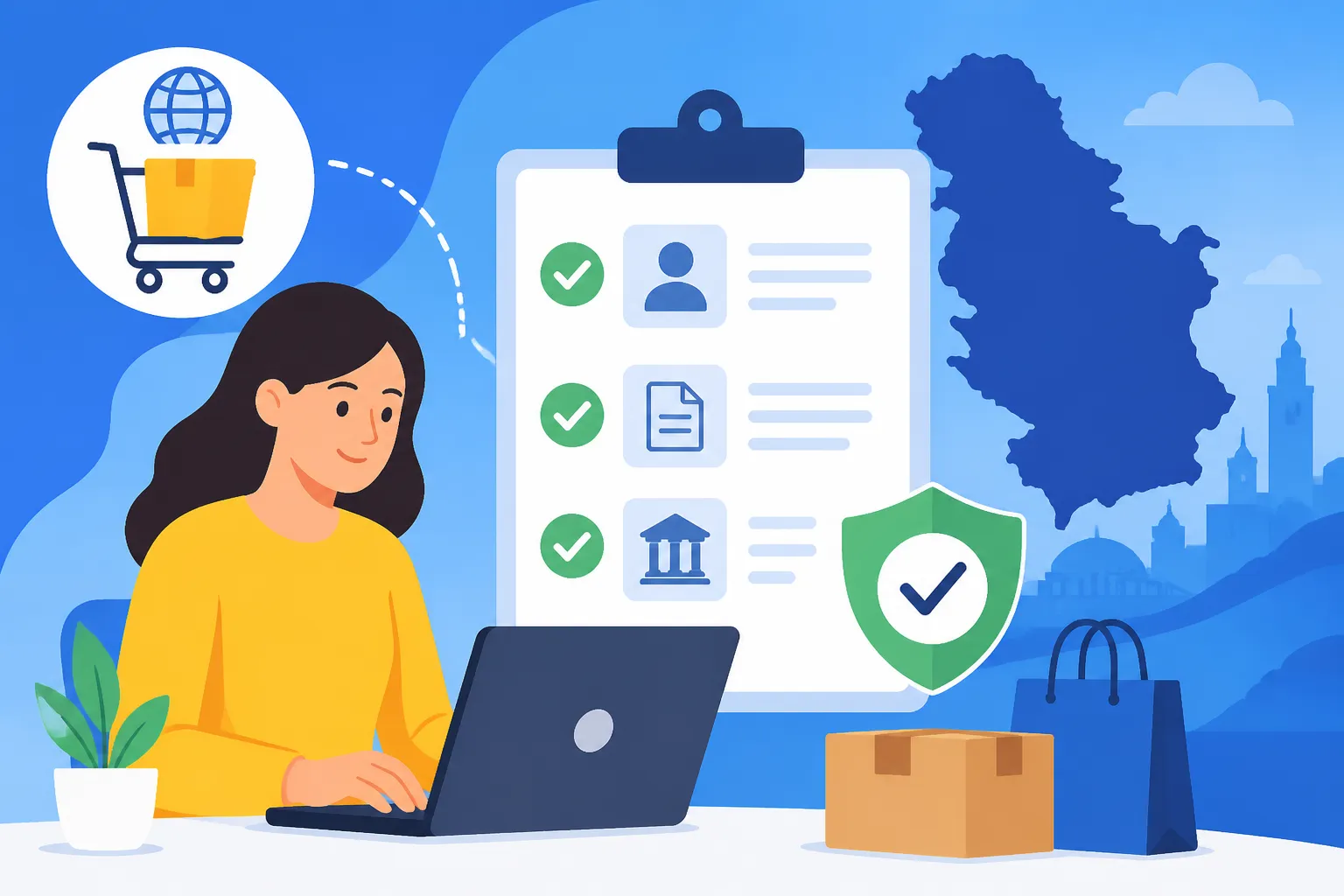
Once your business is PIB-ready, you’ll need a stack of documents. The exact list can vary slightly depending on your business type (sole trader vs. company), but typically includes:
- Application for VAT Registration (Obrazac PPT PDV): This is the main form you'll fill out, declaring your intention to become a VAT payer.
- Decision on business registration from APR: Proof that your business is legally established.
- Proof of your PIB: Usually, this is part of your business registration documents.
- Your passport and residence permit (boravišna dozvola): As a foreigner, these are essential for identification.
- Proof of bank account in Serbia: Your business bank account details.
- Evidence of turnover: If you're registering due to exceeding the threshold, you'll need to provide documentation (e.g., invoices, sales reports) showing your sales figures over the past 12 months. This is critical for the tax authorities to verify your claim.
- Power of Attorney (Punomoćje): If you're using an accountant or legal representative to submit the application on your behalf, this document, notarized, is a must.
Make sure all documents are current and, if they are not in Serbian, that you have certified translations. Serbia is very strict on official translations, so don't try to get away with a Google Translate version – it just won't fly. This is one of those administrative hurdles that can be a real time-sink if you're not prepared, so allocate sufficient time for it. If you're not yet registered, I highly recommend reading up on How to Register as an Entrepreneur (Preduzetnik) in Serbia or How to Register a Company (DOO) as a Foreigner in Serbia to ensure your foundational business setup is solid.
Filling Out the PDV Application (PPT PDV Form)
The "Obrazac PPT PDV" form is where you formally apply to become a VAT payer. It's not overly complicated, but precision is key. You'll need to provide your business details, your PIB, the date you exceeded the threshold (if applicable), and your chosen date for entering the VAT system. If you’re voluntarily registering, you’ll specify your desired start date, which can be the first day of the following month, provided you submit your application by the 15th of the current month.
The form asks for basic information like your business name, address, contact details, and most importantly, the reason for your VAT registration (mandatory due to turnover, or voluntary). You’ll also declare the type of activities your online business conducts, aligning with your registered business activities (delatnost) with the APR. This is why having your business activities correctly classified from the start is important; it prevents inconsistencies that could cause delays.
While the form itself is relatively straightforward, the language barrier can make it seem more challenging. Don't hesitate to seek help from an accountant or a Serbian-speaking friend to ensure every field is filled correctly. A small error can lead to the application being rejected and you having to start the process all over again, which is frustrating and time-consuming.
Where to Submit and What to Expect
Once you have all your documents in order and your form meticulously filled out, you’ll need to submit it to the relevant branch of the Tax Administration (Poreska Uprava). This is usually the branch responsible for the municipality where your business is registered. For instance, if your registered address is in Belgrade, you’d go to the Belgrade Poreska Uprava office.
There are two primary ways to submit:
- In person: This is often the preferred method for initial applications, especially for expats, as it allows you to get immediate feedback if something is missing or incorrect. Take all original documents and copies. The person at the counter might quickly review them.
- Via the ePorezi portal: Once you have a qualified digital certificate (kvalifikovani elektronski sertifikat), which is like a digital signature, you can submit many forms online. However, getting the digital certificate itself is a process, often requiring an in-person visit to a certification body (like Pošta Srbije). For the very first VAT registration, many prefer the in-person approach to avoid potential issues with digital submission when they are still new to the system.
After submission, the Tax Administration will review your application. The processing time can vary, but generally, you can expect a decision within a few weeks, though sometimes it can take longer, especially during peak periods. If everything is in order, you will receive a decision (rešenje) from the Poreska Uprava confirming your VAT registration and the effective date from which you become a VAT payer. This document is extremely important, so keep it safe!
Once you receive this decision, you are officially a VAT payer in Serbia. This means you must start charging VAT on your sales (to Serbian customers), issue proper VAT invoices, and prepare for your ongoing VAT obligations. Missing this critical step or delaying registration can lead to penalties, so prompt action after hitting the threshold is vital.
Navigating VAT Obligations Once Registered
Congratulations, you're a registered VAT payer in Serbia! While it might feel like you've conquered a mountain, this is really just the beginning of your ongoing responsibilities. Being VAT-registered means a whole new set of rules for invoicing, record-keeping, and regular reporting to the Poreska Uprava. It’s a bit like joining a club with very specific rules, but it’s manageable with a good system in place.
Issuing Invoices and Calculating PDV
As a VAT-registered online seller, every invoice you issue for taxable goods or services to customers within Serbia must now include PDV. This is non-negotiable. Your invoices need to clearly state:
- Your business name, address, and PIB.
- Your customer’s name/business name, address, and PIB (if they are a legal entity).
- The date of issue and a unique invoice number.
- A clear description of the goods or services provided.
- The net amount (iznos bez PDV-a).
- The applicable PDV rate (e.g., 20%).
- The PDV amount separately (iznos PDV-a).
- The gross amount (ukupan iznos sa PDV-om).
Serbia has also been implementing a mandatory e-invoicing system (eFaktura) for transactions between businesses and state entities, and increasingly for B2B transactions as well. While the full scope of e-invoicing for all online sellers, especially those selling directly to consumers (B2C), is still evolving, it's crucial to stay updated. Using a reliable accounting software that is compliant with Serbian invoicing standards will make your life infinitely easier. Many local software solutions are available, and they often integrate with the eFaktura system or generate compliant invoices. Don't underestimate the importance of clear, correct invoices; they are the backbone of your VAT records.
Calculating PDV is straightforward: if an item costs 1000 RSD net, and the VAT rate is 20%, you add 200 RSD in VAT, making the gross price 1200 RSD. Always make sure you understand whether the price you quote to a customer is VAT-exclusive or VAT-inclusive. For consumers, prices are always expected to be VAT-inclusive.
Filing VAT Returns (PDV prijava) and Payment Deadlines
This is where the rubber meets the road. As a VAT payer, you are obligated to file a monthly (or quarterly, in some cases for smaller businesses, but monthly is more common) VAT return, known as "PDV prijava" (Obrazac PP PDV). This return summarizes all your sales (output VAT) and purchases (input VAT) for the reporting period.
The standard reporting period for most businesses is monthly. The deadline for submitting your monthly VAT return and paying any owed VAT is the 10th day of the following month. So, for all transactions in May, you'd need to file and pay by June 10th. If the 10th falls on a weekend or public holiday, the deadline shifts to the next working day. Missing these deadlines can result in penalties, so mark your calendar religiously or, better yet, set up automatic reminders.
The VAT return itself is submitted electronically via the ePorezi portal. You (or your accountant) will log in using your digital certificate, fill out the form, and submit it. The system will then generate a payment slip, which you can take to your bank or pay via online banking using the provided reference numbers. The ePorezi Online Tax Portal in Serbia is an invaluable tool for this, but it can have a steep learning curve for newcomers. Many expats opt for an accountant to handle this for them, especially in the beginning, to ensure accuracy and timely submission.
Understanding Input and Output VAT
At the heart of VAT accounting is the concept of input and output VAT, and understanding their difference is crucial for any online seller.
- Output VAT (Izlazni PDV): This is the VAT that you charge your customers on your sales. When you sell an item for 1200 RSD (including 200 RSD VAT), that 200 RSD is your output VAT. You collect this on behalf of the state.
- Input VAT (Ulazni PDV): This is the VAT that you pay on your business purchases and expenses. When you buy inventory from a supplier for 600 RSD (including 100 RSD VAT), that 100 RSD is your input VAT. You can generally reclaim this if the purchase is for your VAT-taxable business activities.
At the end of each reporting period, you calculate your total output VAT and your total reclaimable input VAT. If your output VAT is greater than your input VAT, you pay the difference to the Tax Administration. If your input VAT is greater than your output VAT (meaning you spent more on VAT-charged purchases than you collected from sales), you are typically entitled to a refund or to carry forward the credit to the next period.
This netting-off process is why voluntary VAT registration can be beneficial if you have significant VAT-able expenses. Without being VAT-registered, you couldn't reclaim that input VAT, making your expenses effectively 20% higher. This is a core concept that your accountant will manage for you, but understanding it yourself gives you better oversight of your business finances and cash flow. For a broader understanding of how these contributions fit into your overall financial picture, consider researching Understanding Mandatory Social and Health Contributions in Serbia.
Special Considerations for Online Sellers and Cross-Border Sales
The beauty of online selling is its global reach, but this also adds layers of complexity when it comes to VAT. Your obligations change dramatically depending on where your customers are located. This is particularly relevant for expats who might be selling back to their home countries or to a global audience.
Selling to Customers Within Serbia vs. Internationally
This distinction is perhaps the most important for an online seller in Serbia.
- Sales within Serbia: If you are VAT-registered, you must charge Serbian VAT (PDV) at the applicable rate (usually 20%) on all goods and services sold to customers located within Serbia. This applies whether the customer is an individual (B2C) or another business (B2B). Your invoice must reflect this.
- Sales to international customers (outside Serbia): Generally, goods and services exported from Serbia are zero-rated for VAT. This means you do not charge Serbian VAT on these sales. This applies to both physical goods shipped abroad and digital services provided to customers outside Serbia. This is a huge advantage for online businesses targeting a global market, as it makes your products more competitive internationally without the added 20% tax burden. However, you still need to report these zero-rated sales in your VAT returns, clearly distinguishing them from your domestic sales. It’s not that VAT doesn’t apply; it applies at a 0% rate.
The challenge comes with digital services to non-VAT-registered individuals in other countries, particularly within the EU. While Serbia generally zero-rates these, the customer's country might have its own VAT rules for imported digital services. For example, if you sell e-books to an individual in Germany, while you don't charge Serbian VAT, Germany might expect their local VAT to be collected. This often means the responsibility falls on the seller (you) to register for VAT in the customer's country or use schemes like the EU's One Stop Shop (OSS) for digital services. While Serbia is not in the EU, if you're selling to EU customers, you might still need to consider these rules, though typically this would mean registering for VAT in an EU country. This is a highly complex area, and it's where specialized tax advice becomes absolutely invaluable.
Digital Services and the Place of Supply Rules
The "place of supply" rules are critical for determining where VAT should be charged for services, especially digital ones. For services, VAT is generally charged where the customer is located.
- B2B Digital Services: If you provide digital services (e.g., software development, online consulting, web design) to another business (B2B) in Serbia, you charge Serbian VAT (20%). If you provide the same services to a business outside Serbia, it's generally zero-rated for Serbian VAT, as the place of supply is considered to be where the recipient business is located.
- B2C Digital Services: If you provide digital services to an individual (B2C) within Serbia, you charge Serbian VAT (20%). If you provide digital services to an individual outside Serbia, Serbian VAT is generally zero-rated. However, as mentioned above, you need to be aware of the VAT rules in the customer's country. For those looking to work globally from Serbia, understanding Working Remotely from Serbia: The Definitive Expat Guide (2027) can give you more context on the general regulatory environment.
The key takeaway here is: always verify the place of supply rules for your specific service and customer location. Misinterpreting these rules can lead to incorrect VAT charges or non-compliance.
Using Accounting Software or Professional Help
For online sellers, especially those dealing with numerous transactions, different VAT rates, and potentially cross-border sales, trying to manage VAT manually can quickly become overwhelming. This is where technology and professional expertise become your best friends.
- Accounting Software: Investing in a good accounting software package designed for the Serbian market is highly recommended. These systems can help you:
- Generate compliant invoices with correct VAT calculations.
- Track your sales and purchases, separating input and output VAT.
- Generate reports that make filling out your VAT returns much easier.
- Keep accurate records, which is crucial for potential tax audits.
- Many even integrate with payment gateways or e-commerce platforms, though often specific Serbian integrations might require custom solutions or manual data entry.
- Professional Accounting Services: For many expats, hiring a local accountant is not just a convenience, but a necessity. A good accountant specializing in Serbian tax law can:
- Ensure your VAT registration is handled correctly and promptly.
- Accurately prepare and submit your monthly VAT returns.
- Advise you on complex place of supply rules for digital services and cross-border sales.
- Help you navigate potential issues with the Tax Administration.
- Keep you updated on changes in tax law.
- Assist with other tax obligations, such as How to File Your Annual Tax Return in Serbia or How to Pay Tax as a Pausal Entrepreneur in Serbia.
While there's a cost associated with professional help, the peace of mind and the avoidance of costly mistakes often make it a worthwhile investment. Services like Taxes for Expats can provide global tax advice, which might be useful if you have tax obligations in multiple countries, but for day-to-day Serbian VAT, a local accountant is essential. Additionally, when dealing with international clients and receiving payments in foreign currencies, using a service like Wise (formerly TransferWise) can streamline your finances by offering better exchange rates and lower fees for receiving payments, which helps in accurate record-keeping of your actual income.
Key VAT Deadlines and Thresholds for Online Sellers (Serbia)
| Event / Obligation | Threshold / Deadline | Notes |
|---|---|---|
| Mandatory VAT Registration | Turnover exceeds 8,000,000 RSD in any 12-month period | Must register within 15 days of the month following the month in which the threshold was exceeded. |
| Voluntary VAT Registration | No minimum turnover (apply anytime) | Choose your desired start date (e.g., 1st day of next month) if applying by the 15th of the current month. Beneficial if significant input VAT. |
| Monthly VAT Return Filing | By the 10th of the following month | For example, May's return and payment are due by June 10th. Submitted via ePorezi portal. |
| VAT Payment | By the 10th of the following month (same as filing) | Payment must be made to the Poreska Uprava bank account using specific reference numbers. |
| Issuing VAT Invoices | For all taxable sales to customers in Serbia | Must include all mandatory elements (net, VAT amount, gross, buyer/seller info, PIB). |
| Record Keeping | Minimum 10 years | Keep all invoices (sales and purchase), customs declarations, and other relevant documents for audit purposes. |
Final Thoughts on Your VAT Journey in Serbia
Registering for VAT as an online seller in Serbia, or anywhere for that matter, is a significant step in legitimizing and scaling your business. It means you’re playing by the rules, contributing to the local economy, and avoiding potential legal troubles down the line. Yes, the bureaucracy can be frustrating, the forms can be confusing, and the language barrier can sometimes feel insurmountable. I've been there, struggling with official letters and trying to decipher the nuances of local regulations.
But don't let that deter you from building your online empire here. Serbia offers a fantastic environment for entrepreneurs, and with a bit of patience, persistence, and perhaps a good local accountant, you can navigate these waters successfully. Remember to stay updated, keep meticulous records, and don't be afraid to ask for help. Many expats find great success once they've integrated into the system, and you can too. It’s all part of the expat adventure, right?
Disclaimer
Please note that this guide provides general information based on current Serbian tax laws and regulations as of 2026. Tax laws are subject to change, and specific situations can vary greatly. This content should not be considered legal, financial, or tax advice. It is highly recommended to consult with a qualified Serbian tax accountant or legal professional for advice tailored to your specific circumstances and business needs before making any decisions related to VAT registration or tax obligations in Serbia.