Working Remotely from Serbia: The Definitive Expat Guide (2027)
So, you're dreaming of working remotely from Serbia, aren't you? Many expats arrive with visions of Belgrade's vibrant café culture, Novi Sad's relaxed charm, or the serene Serbian countryside, laptop in tow, ready to tackle their work from a new, exciting location. But let me tell you, while the dream is absolutely achievable, navigating the administrative maze of visas, residence, and taxes here can feel like trying to solve a Rubik's Cube blindfolded. This guide is here to untangle those knots, offering you a realistic, comprehensive roadmap for making your remote work life in Serbia a resounding success.
The Allure of Remote Work in Serbia: Why Expats Choose This Path
There's a reason why so many digital nomads and remote professionals are looking towards Serbia. It's not just the picturesque landscapes or the buzzing city life; it's a unique blend of factors that makes it an increasingly attractive base for those who can work from anywhere. From personal experience, the shift in lifestyle can be profound, offering freedoms and opportunities many developed countries simply can't match.
Cost of Living vs. Quality of Life
One of the biggest draws, hands down, is the incredible balance between the cost of living and the quality of life you can achieve here. In major cities like Belgrade or Novi Sad, you can find a comfortable, modern apartment for significantly less than in Western European capitals. Your monthly grocery bill, dining out, and even entertainment expenses are generally much lower, meaning your income stretches considerably further. This isn't about roughing it; it's about enjoying excellent food, cultural events, and a vibrant social scene without constantly checking your bank balance.
For instance, a decent two-bedroom apartment in a good area of Belgrade might cost you €500-€800, whereas in a comparable European city, you'd easily pay double or triple that. Eating out frequently, enjoying local kafanas, and exploring the nightlife are often surprisingly affordable. This financial breathing room allows many remote workers to save more, invest in new experiences, or simply reduce their working hours, leading to a much improved work-life balance that was previously unattainable.
However, it's important to understand that "cheap" doesn't mean "substandard." Serbia boasts a surprisingly high quality of fresh, local produce, excellent coffee culture, and a burgeoning scene of independent businesses. You'll quickly discover the joy of shopping at local markets (pijaca) for seasonal fruits and vegetables, enjoying freshly baked bread, and savoring delicious, hearty Serbian cuisine. This ability to live well and comfortably on a moderate income is a primary motivator for many expats who choose to make Serbia their remote work hub.
Geographic Location and Travel Opportunities
Serbia’s position right in the heart of the Balkans makes it an absolute gem for travel enthusiasts. You're strategically placed to explore not just the diverse beauty of Serbia itself—from the historical fortresses and national parks to the spa towns and ski resorts—but also to easily hop across borders to neighboring countries. Think weekend trips to Budapest, quick flights to Rome or Vienna, or exploring the stunning Adriatic coastlines of Montenegro or Croatia. The possibilities are truly endless, and they're often surprisingly affordable.
With Nikola Tesla Airport (BEG) in Belgrade serving numerous direct flights to European destinations, and budget airlines increasingly expanding their routes, impromptu travel becomes a genuine option. You can wake up in Belgrade, finish your work by early afternoon, and be exploring a new city like Sarajevo or Skopje by evening. This geographical advantage means that you're not just moving to Serbia; you're gaining a springboard to an entire region, enriching your remote work experience with a constant stream of new adventures.
The ease and affordability of regional travel also extend to domestic exploration. Serbia's train and bus networks, while sometimes a little slow, are comprehensive, connecting you to every corner of the country. Imagine finishing your Friday workday and being able to spend your weekend hiking in Fruška Gora National Park, wine tasting in Sremski Karlovci, or exploring the ancient Roman ruins of Gamzigrad. This constant opportunity for discovery, without the astronomical costs often associated with international travel from other parts of the world, truly enhances the remote working lifestyle here.
Vibrant Expat Community and Culture
One of the often-unsung benefits of settling in Serbia as a remote worker is the incredibly warm and welcoming local culture, coupled with a rapidly growing and diverse expat community. Serbs are known for their hospitality, often going out of their way to help foreigners, and their love for good food, strong coffee, and lively conversation is infectious. You'll find it relatively easy to strike up conversations, especially with younger generations who often speak excellent English.
The expat community, particularly in Belgrade and Novi Sad, is a thriving network of individuals from all corners of the globe. There are numerous Facebook groups, meetups, and co-working spaces where you can connect with like-minded people, share experiences, and even collaborate on projects. This community provides an essential support system, helping newcomers navigate the initial hurdles and offering a sense of belonging far from home. Whether you're looking for advice on where to get the best burek or need help understanding a bureaucratic process, there's usually an expat eager to assist.
Beyond the expat bubble, diving into Serbian culture is a rich and rewarding experience. From the vibrant street art and historical architecture to the passionate music scene and delicious gastronomy, there's always something new to discover. You'll quickly find yourself embracing the leisurely pace of coffee culture, enjoying long meals with friends, and appreciating the deep sense of history and tradition that permeates everyday life. This blend of a supportive expat network and an engaging local culture makes Serbia not just a place to work, but a place to truly live and thrive.
Navigating Serbian Visa and Residence for Remote Workers
This is where things can get a little… nuanced. Unlike some countries that have specific "digital nomad visas," Serbia operates under a more traditional system where your residence permit is tied to a specific purpose, such as employment, self-employment, property ownership, or family reunification. Understanding these categories is crucial for remote workers, as your specific situation will dictate your application process. You can't just arrive and assume you'll figure it out; a clear plan is essential.
Understanding the Single Permit for Work and Residence
Serbia has recently introduced a "Single Permit for Work and Residence", which is a fantastic step towards streamlining the process for many foreigners. This permit aims to combine the previously separate residence permit (privremeni boravak) and work permit into one application, making the administrative burden significantly lighter. For remote workers, this usually means applying for residence based on employment with a Serbian entity, or more commonly, establishing yourself as an entrepreneur (preduzetnik).
If you’re employed by a Serbian company, even if you’re working remotely for them, your employer will typically handle most of the Single Permit application process on your behalf. This is generally the smoothest route. However, if you're working for a foreign company, or are self-employed, the situation becomes a bit different. You'll likely need to either establish a Serbian legal entity (like a DOO, which is similar to an LLC) or, more practically for many freelancers and remote workers, register as a preduzetnik (entrepreneur). This preduzetnik status then becomes the basis for your residence permit, allowing you to legally live and work from Serbia. For a deeper dive, read our guide on The Expat Guide to the Single Permit for Work and Residence in Serbia (2027).
The key takeaway here is that you need a legitimate "reason" for residence, and for remote workers not employed by a Serbian entity, that reason usually revolves around proving your economic activity within Serbia. This might sound intimidating, but it's a well-trodden path for many expats here. The authorities want to see that you are contributing to the Serbian economy, either through local employment or by establishing your own business and paying taxes. The application itself involves collecting various documents, often requiring certified translations, and submitting them to the Ministry of Interior (MUP).
The Digital Nomad Visa Landscape (or lack thereof)
While many countries have jumped on the digital nomad visa bandwagon, Serbia, at the time of writing, does not have a dedicated, official "Digital Nomad Visa" in the way some other nations do. This means you can't simply apply for a visa explicitly designed for remote workers without an employer or a registered business here. This can sometimes be a point of confusion for newcomers who hear about Serbia's expat-friendly reputation and assume a specific visa exists.
Instead, remote workers typically utilize existing residence permit categories. The most common and viable options for those working for foreign companies or as independent contractors are either the Single Permit based on registering as a preduzetnik (entrepreneur) or, less commonly, forming a Serbian company (DOO) and employing yourself. Some individuals also obtain temporary residence based on property ownership, though this path doesn't inherently grant work rights and would still require separate work authorization if you are working for a Serbian company, or you would need to be self-employed via preduzetnik to have your work legitimized. To truly live and work long-term, you need a basis for legal residence that encompasses your work activity.
It’s vital not to overstay your initial tourist visa (usually 90 days within a 180-day period for many nationalities) without having a proper residence permit application in progress. While Serbia is generally welcoming, immigration rules are rules, and you don't want to jeopardize future applications. Planning ahead, researching your specific nationality's visa requirements, and consulting with local immigration lawyers or agencies well before your arrival can save you a lot of stress. Don't assume you can figure it out on the fly once you're on the ground, as deadlines for applications can be strict. For general residence information, check out How to Get Temporary Residence (Boravak) in Serbia (2027).
Residence Based on Company Formation (Pausal or DOO)
For many remote workers and freelancers, the most practical route to obtaining a long-term residence permit (and legalizing their work) is by formally establishing an economic presence in Serbia. This usually means either registering as an entrepreneur (Pausal Preduzetnik) or opening a Limited Liability Company (DOO). Each has its pros and cons, and your choice will depend on your specific business structure, income level, and future plans.
Registering as a Pausal Preduzetnik (lump-sum taxed entrepreneur) is often the preferred choice for individual freelancers and remote contractors due to its simplified tax structure and lower administrative burden. You get a fixed, monthly tax payment that covers income tax and social contributions, making financial planning much easier. This status provides a clear legal basis for your work and subsequently, your residence permit. Once registered, you effectively become self-employed in Serbia, even if your clients are all abroad. This path can be incredibly attractive to many digital nomads seeking clarity and ease. You can find more specific details on How to Register as an Entrepreneur (Preduzetnik) in Serbia.
Alternatively, you could establish a DOO (D.O.O. is the Serbian equivalent of an LLC). This option is generally suited for those with higher income, plans to hire employees in Serbia, or who require a more formal business structure. While a DOO offers more flexibility in terms of deductible expenses and can project a more "serious" business image, it also comes with higher administrative costs, more complex accounting requirements, and a different tax regime. Both options ultimately provide the necessary legal framework to apply for a residence permit based on your economic activity, solidifying your right to live and work remotely from Serbia. The important thing is to choose the path that best fits your individual circumstances and future aspirations.
Legal and Tax Frameworks for Remote Workers in Serbia
Alright, let's talk about the less glamorous but absolutely essential part: taxes and legal compliance. Ignoring this aspect can lead to significant headaches down the road. Serbia has a relatively straightforward tax system, but understanding how it applies to you as a remote worker, especially concerning tax residency, is paramount. Many expats initially assume they can just fly under the radar, but with increasing global financial transparency, that's a risky game to play.
Tax Residency: The 183-Day Rule and Beyond
The concept of tax residency is critical for remote workers in Serbia. Generally, Serbia operates on the "183-day rule," meaning if you spend more than 183 days in the country within any 12-month period, you are likely to be considered a tax resident. This is a crucial threshold. Once you become a Serbian tax resident, you are typically liable to pay Serbian taxes on your worldwide income, not just income generated within Serbia. This is a common point of confusion and a significant change for many expats.
However, the 183-day rule is not the only factor. Serbia also considers your "centre of vital interests" – where your family resides, where your main economic activity is conducted, and where your primary social and personal ties are. So, even if you meticulously plan your travel to stay under 183 days, if all other indicators point to Serbia as your home base, the tax authorities might still consider you a resident. It's a complex area, and it's always wise to consult with a local tax advisor who specializes in expat taxation. They can help you understand your specific situation and ensure compliance. Our guide on Tax Residency in Serbia: A Definitive Guide for Expats (2027) delves deeper into this.
Furthermore, if your home country also considers you a tax resident, you might face dual residency issues. This is where Double Taxation Agreements (DTAs) come into play. Serbia has DTAs with many countries, which aim to prevent you from being taxed twice on the same income. Understanding how these agreements work and claiming benefits under them usually involves obtaining a tax residency certificate from the Serbian Tax Administration (Poreska Uprava). Navigating these international agreements can be complex, and again, professional advice is often invaluable to ensure you're compliant in both Serbia and your home country. For comprehensive guidance on this, consulting resources like Taxes for Expats can be incredibly helpful.
Income Tax and Social Contributions for Remote Workers
Once you’ve established tax residency and a legal basis for your work (like being a preduzetnik), you'll need to understand your tax obligations. Serbia has a relatively flat tax system, which is appealing to many. The personal income tax rate is generally 10% on most types of income. However, for remote workers, especially those registered as entrepreneurs, you also need to factor in mandatory social contributions. These contributions cover health insurance, pension, and unemployment insurance, and they are not insignificant.
For a Pausal Preduzetnik, these contributions, along with the income tax, are usually combined into a fixed monthly lump-sum payment. The exact amount is determined by several factors, including your declared profession, location (Belgrade often has slightly higher rates), and a coefficient set by the tax authorities. The beauty of the pausal system is its predictability: you know exactly how much you need to pay each month, regardless of your actual income fluctuations, as long as you stay within the allowed income limits for the pausal regime. This simplifies budgeting and reduces the need for complex bookkeeping. You can learn more about Understanding Income Tax and the Flat 10% Rate in Serbia (2026).
It's crucial to distinguish between gross income and net income when discussing these figures. While the income tax rate is 10%, your overall burden, including social contributions, will be higher. For example, a pausal entrepreneur might pay anywhere from €200 to €500+ per month in total contributions, depending on their activity and locality. It’s always best to get an estimate for your specific professional activity. Keeping accurate records, even for the simplified pausal system, is important. You'll need to register with the How Do I Get a Tax ID (PIB) in Serbia? and the How Do I Register with the Tax Administration (Poreska Uprava) in Serbia? to begin your tax journey here.
Understanding the Pausal Regime for Freelancers
The Pausal Regime is a game-changer for many freelancers and remote workers in Serbia. It allows you to operate as a self-employed individual with a significantly simplified tax and accounting structure. Instead of calculating your income and expenses each month, you pay a fixed, pre-determined monthly amount that covers your income tax and social contributions (pension, health, unemployment). This amount is determined annually by the tax authorities based on factors like your profession, location, and educational background, aiming to estimate your typical income.
This predictability is a huge advantage. You don't need to hire a full-time accountant to track every single receipt, and you avoid the complexities of calculating profit and loss. For someone working for a foreign client base, this means less time spent on paperwork and more time doing what you love. However, there are limitations: your annual income must stay below a certain threshold (which changes periodically, so always check the latest figures from the Ministry of Finance), and not all professions are eligible for the pausal regime. Most common IT, creative, and consulting professions are generally included. For more in-depth information, refer to Understanding the Pausal (Lump-Sum) Tax Regime in Serbia (2027).
To get started, you'll need to register as an entrepreneur (preduzetnik) with the Serbian Business Registers Agency (APR) and then apply for the pausal regime with the Tax Administration. This process can be handled directly by you, but many expats opt to use a local accountant or a specialized agency to ensure everything is set up correctly from the start. They can help you choose the right code for your activity and estimate your monthly payment. Once registered, you'll receive a monthly bill from the tax administration, which you can pay via online banking or at a post office. It's a remarkably efficient system once you're set up, allowing you to focus on your remote work without constant tax worries.
Setting Up Your Remote Workspace: Connectivity and Infrastructure
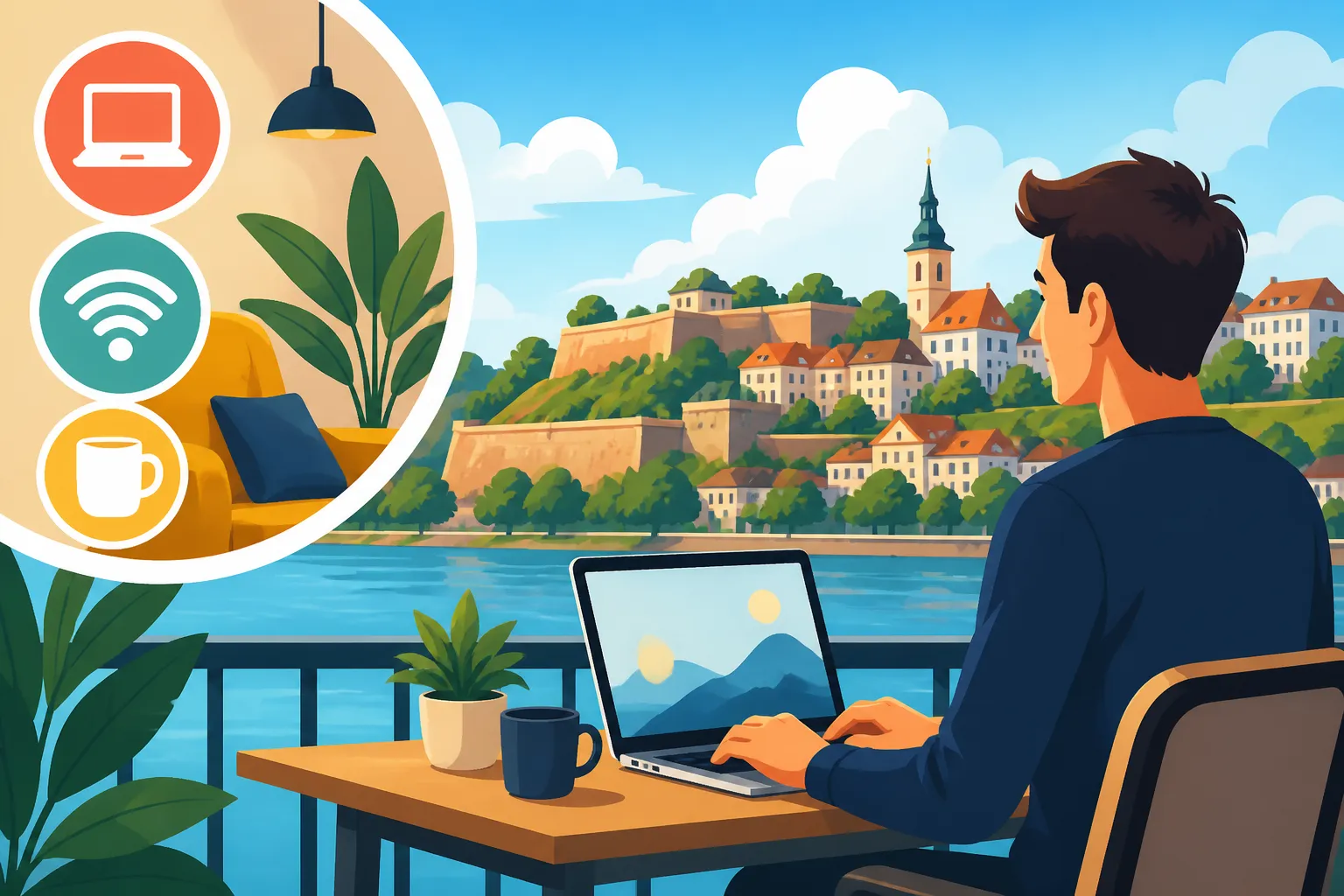
A stable and fast internet connection isn't a luxury; it's the lifeline of any remote worker. Thankfully, Serbia, particularly in its urban centers, boasts surprisingly robust and affordable connectivity. Beyond internet, having a comfortable and productive workspace is key to maintaining your routine and preventing burnout.
Internet Providers and Speeds in Serbia
When it comes to internet, you’re generally in good hands in Serbia. Major cities like Belgrade and Novi Sad offer excellent fiber optic internet services, with speeds comparable to, and often exceeding, what you'd find in many Western European countries. Providers like SBB, MTS, and Yettel are the dominant players, offering various packages that bundle internet, TV, and sometimes mobile services. For remote workers, prioritizing high upload speeds is often just as important as download speeds, especially if you're frequently sending large files or participating in video conferences.
Choosing a provider can depend on your specific location; some buildings might only have fiber access from one company. It's always a good idea to ask your landlord or neighbors about their experiences. Generally, SBB is known for its strong fiber network, while MTS, as the national telecommunications provider, also offers extensive coverage. You can expect to pay anywhere from €20-€40 per month for a reliable high-speed fiber connection, which is fantastic value. Many expats opt for bundles that include mobile data, ensuring they have a backup if their home internet ever experiences a hiccup, which can happen, albeit rarely.
Setting up internet usually involves a contract, often for 12 or 24 months, so if you're planning a shorter stay, make sure to clarify cancellation policies or look for month-to-month options, which might be slightly more expensive. The installation process is generally straightforward, though it might require some patience and potentially a Serbian-speaking friend if your landlord can't assist. Once set up, you'll find that for daily remote work, streaming, and video calls, the internet infrastructure in urban Serbia is more than capable. For more on setting up utilities, explore How to Set Up Internet and Mobile Service in Serbia.
Co-working Spaces and Remote-Friendly Cafes
While working from your apartment offers convenience, sometimes you need a change of scenery, dedicated quiet zones, or the buzz of a professional environment. Serbia, especially Belgrade and Novi Sad, has a growing number of excellent co-working spaces catering specifically to remote workers, freelancers, and startups. These spaces offer stable internet, ergonomic chairs, meeting rooms, and often a community vibe that can combat the isolation of remote work.
In Belgrade, places like ICT Hub, Mokrin House (though this is more of a live-in retreat outside the city), and various smaller independent spaces offer flexible membership options, from daily passes to dedicated desks. They're fantastic for networking, attending workshops, or just enjoying a professional atmosphere distinct from your home. Many also host events, which are great for meeting other expats and locals in the tech and creative industries. The prices are generally very reasonable compared to Western counterparts, making them an accessible option for most budgets.
Beyond co-working spaces, Serbia's prolific café culture means you're never far from a remote-friendly spot. Many cafes, particularly in city centers, offer free Wi-Fi and don't mind patrons lingering with their laptops for a few hours. Just remember to be mindful of peak hours and consider ordering multiple drinks or snacks to support the business. Cafes like those along Strahinjića Bana street in Belgrade, or around Dunavska street in Novi Sad, are often filled with people working away. It’s a wonderful way to soak in the local atmosphere while still being productive, though for intense focus work, a dedicated co-working space is usually better.
Essential Utilities for a Seamless Setup
Beyond internet, ensuring your other utilities are smoothly running is crucial for a comfortable and uninterrupted remote work experience. Electricity, water, and heating are the big three. If you're renting, sometimes these are included in the rent, or at least the process of transferring them to your name (or paying the bills) is handled by your landlord. However, it's wise to understand the system.
Electricity is managed by Elektroprivreda Srbije (EPS), and you'll receive a monthly bill. Heating can vary significantly; some apartments have central city heating, others have electric heaters, gas, or even wood-burning stoves. Central heating bills often have a fixed component year-round and a variable component during the heating season (typically October to April). Water and garbage collection are usually combined into another monthly bill. The costs for these utilities are generally quite affordable, especially compared to Western Europe, but they do add up.
The good news is that paying bills in Serbia is quite easy. You can pay them at any post office (Pošta Srbije), at banks, or increasingly, through online banking applications from Serbian banks. Some utility companies also have online payment portals. Make sure to clarify with your landlord how bills are handled when you move in. If you're responsible for them, keep track of due dates to avoid any late payment penalties. A smooth utility setup means one less thing to worry about, allowing you to focus on your remote work and enjoy your new life in Serbia.
Banking and Financial Management for Expats Working Remotely
Managing your finances efficiently is paramount when you're working remotely in a foreign country. Getting a local bank account in Serbia is almost a necessity for practical reasons, especially if you're registering as an entrepreneur or plan to pay bills locally. Navigating international transfers and understanding the local currency are also key skills you'll develop.
Opening a Serbian Bank Account
Opening a bank account in Serbia as a foreigner used to be a bit of a bureaucratic hurdle, but it has become significantly easier in recent years. While some banks might still have stricter requirements, many are now accustomed to dealing with expats. You'll typically need your passport, your Serbian residence permit (boravišna dozvola), and potentially proof of address (a rental contract, for instance). Some banks might also ask for proof of income or a letter from your employer, even if it's a foreign one.
Major banks like Raiffeisen Bank, Intesa Sanpaolo, UniCredit Bank, and OTP Bank are popular choices among expats due to their international presence, English-speaking staff, and more expat-friendly services. It's often worth visiting a few branches to compare their offerings, fees, and the helpfulness of their staff. While you might encounter some paperwork, the process usually takes a few days once all documents are submitted. Having a local account is invaluable for receiving payments if you're registered as a preduzetnik, paying local bills, and making everyday purchases. For a detailed walkthrough, check out The Expat Guide to Opening a Bank Account in Serbia.
Once your account is open, you'll typically receive a debit card, and most banks offer robust online banking and mobile apps. These are essential for managing your finances, paying bills, and tracking your spending. While you can usually open a foreign currency account (e.g., in Euros or USD) alongside your Dinar (RSD) account, for daily transactions within Serbia, having RSD readily available is key. Don't be surprised if some smaller shops or kiosks only accept cash; it's a good idea to always have some Dinars on hand.
International Money Transfers and Foreign Currency Management
As a remote worker, you'll likely be dealing with income in foreign currencies and needing to transfer money both into and out of Serbia. This is where understanding the best methods and minimizing fees becomes important. Traditional bank transfers can be reliable but might incur higher fees and less favorable exchange rates compared to specialized money transfer services.
Services like Wise (formerly TransferWise) and Revolut are incredibly popular among expats in Serbia for good reason. They offer much more competitive exchange rates and lower fees for international transfers than most traditional banks. You can receive payments from clients abroad into your Wise or Revolut account and then convert and transfer them to your Serbian bank account as needed. This flexibility helps you manage your foreign currency income and only convert to Dinars when you need to, protecting you from immediate exchange rate fluctuations.
It’s also important to be aware of any reporting requirements for large incoming transfers, especially if you are self-employed. While you generally won't be taxed again on money already taxed through your Pausal Preduzetnik contributions, transparency with your bank regarding the source of funds is always a good idea. Understanding your banking options for expats in Serbia is covered in Banking in Serbia: A Complete Guide for Foreigners (2027). Always keep an eye on exchange rates, especially if you're dealing with significant sums, as even small differences can add up. Many expats find it useful to keep a portion of their savings in their home country or in stable foreign currency accounts as a financial buffer.
Navigating Invoicing and Payments
For remote workers operating as Pausal Preduzetnik, managing invoices and payments requires a specific approach. When invoicing foreign clients, you typically issue an invoice in a foreign currency (e.g., EUR or USD). Since you're operating as a Serbian legal entity (an entrepreneur), your invoices should reflect your Serbian business details, including your PIB (Tax Identification Number) and registration number.
When your clients pay you, the funds will arrive in your Serbian bank account. If it's a foreign currency, the bank will automatically convert it to Dinars if you only have a Dinar account, or hold it in the foreign currency if you have a multi-currency account. Here's a critical point: as a Pausal Preduzetnik, you are not permitted to earn income from legal entities within Serbia. Your clients must be foreign entities or individuals located outside of Serbia to qualify for the pausal regime's benefits. This restriction helps simplify the tax system but is crucial to remember.
Furthermore, Serbia has specific regulations regarding cash withdrawals and transactions for entrepreneurs. While you can withdraw money from your business account, it's generally advised to keep good records and ensure your withdrawals align with your reported income and personal expenses. Using your Serbian debit card for local purchases is straightforward, and contactless payments are widely accepted. For any questions related to specific invoicing requirements or payment regulations, consulting with a local accountant is always the safest bet to ensure you remain compliant with Serbian financial laws.
Integrating into Serbian Life as a Remote Expat
Moving to any new country is about more than just finding a job and sorting out taxes; it's about building a life. Integrating into Serbian society, learning the language, accessing healthcare, and establishing a social network are all crucial steps to truly feeling at home and thriving as a remote expat.
Language Learning and Cultural Immersion
While many Serbs, especially younger generations and those in customer service in larger cities, speak excellent English, making an effort to learn Serbian will profoundly enhance your experience. Even basic phrases like "dobar dan" (good day), "hvala" (thank you), and "molim" (please/you're welcome) will be met with genuine appreciation and open doors to deeper connections. It shows respect for the local culture and can significantly ease daily interactions, from ordering food to navigating public transport.
There are numerous resources available for learning Serbian. Local language schools in Belgrade and Novi Sad offer group classes and private tutoring, often at very reasonable prices. Online platforms like iTalki also provide access to Serbian tutors, allowing you to learn at your own pace and schedule, fitting perfectly into a remote work lifestyle. Many expats initially find the Cyrillic alphabet daunting, but it's relatively easy to learn, and once you grasp it, reading street signs and menus becomes much simpler.
Beyond formal language learning, cultural immersion is key. Engage with locals, try traditional foods, visit historical sites, and attend local festivals. Spend time in local kafanas (traditional taverns) or pijacas (markets). Embrace the slower pace of life, the emphasis on family and friendships, and the strong coffee culture. The more you immerse yourself, the more you'll understand and appreciate the nuances of Serbian life, making your remote work experience here much richer and more fulfilling.
Healthcare Access for Remote Workers
Healthcare is another vital consideration for remote workers. If you are registered as a Pausal Preduzetnik and paying social contributions, a portion of those contributions goes towards mandatory health insurance through the Republic Health Insurance Fund (RFZO). This means you will have access to the public healthcare system in Serbia, including general practitioners (Dom Zdravlja), specialists (via referral), and public hospitals. This is a significant benefit of formalizing your remote work status. For a comprehensive guide, refer to The Complete Guide to Healthcare in Serbia for Expats (2027).
However, the public system, while generally competent, can sometimes involve longer wait times for specialist appointments, and English-speaking staff might be less common outside of major hospitals. For this reason, many expats, even with RFZO coverage, choose to supplement it with private health insurance or opt to pay out-of-pocket for private clinics. Private healthcare in Serbia is of high quality, often with modern facilities, shorter wait times, and a higher likelihood of English-speaking doctors. Many private clinics, particularly in Belgrade, cater specifically to expats.
The cost of private healthcare services is generally much lower than in Western countries, making it an attractive option for those seeking faster appointments or a more personalized experience. For example, a private GP visit might cost €20-€40. If you’re not eligible for RFZO (e.g., if you're initially on a tourist visa or your residence permit doesn't include health contributions), private health insurance or travel insurance with medical coverage is absolutely essential. Always ensure you have some form of medical coverage while in Serbia, as unexpected health issues can arise anywhere. If you need an English-speaking doctor, check out How to Find an English-Speaking Doctor in Serbia.
Building a Social Life and Networking
As a remote worker, it's easy to fall into the trap of isolation. Actively building a social life and professional network is crucial for your well-being and integration. The expat community in Serbia, especially in Belgrade and Novi Sad, is very active and welcoming. Search for expat groups on social media platforms like Facebook; there are numerous groups for "Expats in Belgrade," "Digital Nomads Serbia," etc., where people organize meetups, ask questions, and share advice.
Beyond expat groups, engaging in local activities is a fantastic way to meet people. Join a sports club, a language exchange group, a hiking club, or volunteer for a local charity. Serbian culture places a high value on social connections, and you'll find locals generally open to befriending foreigners. Co-working spaces, as mentioned before, are also excellent for professional networking and meeting like-minded individuals. Attending local events, concerts, festivals, and cultural happenings is another organic way to connect.
Don't be afraid to strike up conversations in cafes, parks, or even while running errands. Serbs are often curious and friendly. Building a strong social network will not only enrich your personal life but can also open doors professionally, leading to collaborations, local insights, and unexpected opportunities. Remember that some of the best advice on navigating daily life, from finding a good mechanic to understanding local customs, often comes from those who have already gone through it.
Challenges and Common Pitfalls for Remote Workers in Serbia
While Serbia offers an incredible experience for remote workers, it's not without its challenges. Being prepared for these potential pitfalls can save you a lot of stress and ensure a smoother transition. Every expat will face some hurdles; it’s part of the adventure.
Bureaucracy and Administrative Hurdles
Ah, bureaucracy. It's often the biggest pain point for expats in Serbia, and remote workers are no exception. While things are improving, processes can still be slow, require numerous documents (often needing certified translations), and sometimes involve multiple visits to different government offices. Patience is not just a virtue here; it's a survival skill. Things might not always make logical sense from a Western perspective, and rules can sometimes seem fluid depending on who you're speaking to.
Registering your address (prijava boravka) with the police, applying for your residence permit, and even sorting out your tax registration can feel like an endless loop of form-filling and waiting. It’s not uncommon to be told you need one document, only to find you need another, then another, when you arrive. Having a local Serbian speaker to assist you, or hiring an agency specializing in expat services, can be invaluable. Don't underestimate the time and emotional energy these processes can consume. Remember our guide on How to Register Your Address (Prijava) with the Police in Serbia.
The key to navigating Serbian bureaucracy is preparation and persistence. Make copies of everything. Always bring original documents, copies, and certified translations (sudski prevodilac) where required. Confirm requirements multiple times, if possible. Try to maintain a polite and patient demeanor, even when frustrated; it often goes a long way. While these hurdles can be annoying, they are manageable, and once overcome, they usually don't need to be revisited for a while.
Cultural Nuances and Communication Styles
Serbia has a rich and distinct culture, and while generally warm and welcoming, there are cultural nuances and communication styles that might differ from what you're used to. Understanding these can prevent misunderstandings and foster better relationships. For instance, directness in communication can sometimes be perceived differently, and non-verbal cues play a significant role. Small talk might be less common in certain professional settings than in, say, North America.
Building trust is often foundational in professional and personal relationships here, and it might take time. Serbs value sincerity and genuine connection. Punctuality, while appreciated, might be a bit more relaxed in social settings than in some cultures. Family and close friends are central, and you might find social gatherings are often intergenerational and involve copious amounts of food and drink. Don't be surprised if your host keeps offering you more food; it's a sign of hospitality!
A common frustration for some expats is the concept of "maybe" or "we'll see" when you're looking for a definitive answer. While it might seem vague, it's often a way to avoid a direct "no" or to allow for flexibility. Patience and reading between the lines can be helpful. Embrace the differences, learn from them, and try not to impose your cultural norms too rigidly. The beauty of living abroad is adapting and growing, and Serbia offers plenty of opportunities for that.
Staying Compliant with Evolving Regulations
As a remote worker, especially one operating under specific entrepreneurial regimes like the Pausal, it's crucial to stay informed about evolving regulations. Laws regarding taxation, social contributions, and even residence permit requirements can change. While major changes are usually announced, details can sometimes be missed if you're not actively following official sources or consulting with local experts.
For instance, the income thresholds for the Pausal regime, the calculation coefficients for contributions, or even the requirements for renewing your residence permit can be updated. What was true last year might have subtle differences this year. Relying on outdated information or advice from informal expat groups can lead to unintentional non-compliance.
This is where having a reliable local accountant or legal advisor becomes invaluable. They can keep you updated on any relevant changes, help you file your annual tax return (even if simplified), and ensure your business registration remains current. Regularly checking official government websites (MUP, Poreska Uprava, APR) and joining reputable professional networks can also help. Proactive compliance is far less stressful than dealing with problems after they arise, so make it a habit to periodically review your obligations and seek expert advice.
Disclaimer
The information provided in this guide is for general informational purposes only and does not constitute legal, financial, or immigration advice. While we strive to provide accurate and up-to-date information, laws and regulations in Serbia can change frequently. It is essential to consult with qualified legal, tax, and immigration professionals for advice tailored to your specific situation before making any decisions related to your remote work, residence, or finances in Serbia. We do not assume any liability for actions taken based on the information contained herein.