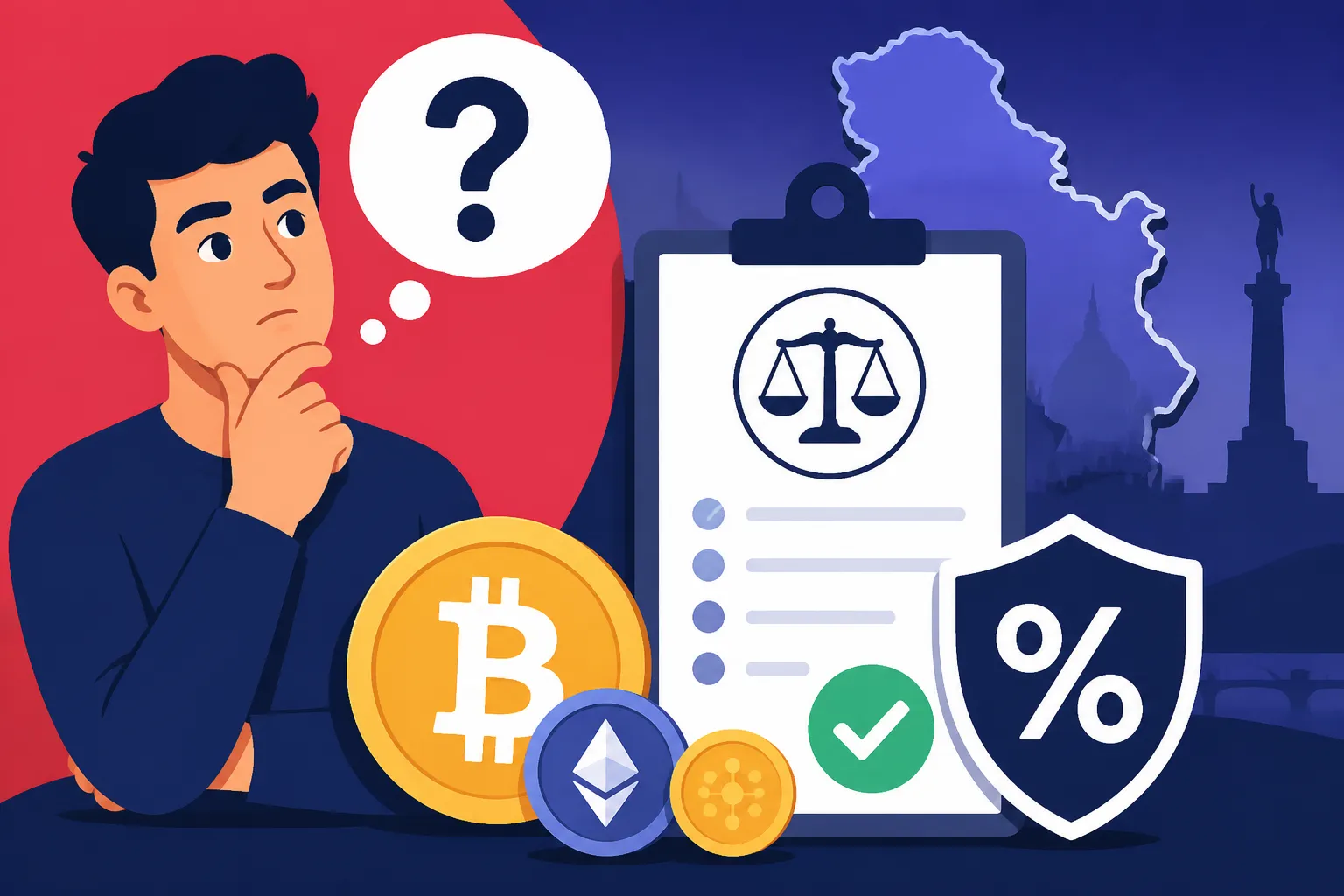
Is Cryptocurrency Taxed in Serbia?
The world of cryptocurrency is exciting and full of potential, but for us expats living in Serbia, it often comes with a nagging question: how exactly do I deal with crypto and taxes here? It’s a common frustration, especially with regulations constantly evolving and often feeling like they’re written in a language more complex than Serbian itself. This guide will walk you through the current landscape of cryptocurrency taxation in Serbia, clearing up the confusion so you can navigate your digital assets with confidence.
Navigating the Serbian Crypto Tax Landscape: A Breath of Fresh Air (Mostly)
When I first heard about Serbia’s approach to crypto, I braced myself for the usual bureaucratic labyrinth. However, compared to some other countries, Serbia has actually been quite proactive, establishing a legal framework that, while not without its quirks, offers a decent level of clarity. The key is understanding that "crypto" isn't a monolithic entity in the eyes of the Serbian taxman; different activities get treated in different ways.
The Legal Framework: What Serbia Says About Crypto
Serbia’s journey into regulating digital assets officially began with the "Law on Digital Assets," which came into effect in June 2021. This was a significant step, moving crypto from a grey area into a defined legal space. The law specifically recognizes digital assets as a type of property, a crucial distinction that informs how they are taxed. This means they are not treated as traditional currency but as assets that can be bought, sold, and exchanged, much like stocks or real estate, though with their own unique tax implications.
This legislation was a welcome development for many of us who were dabbling in crypto, as it provided much-needed legal certainty. Before this, you were essentially operating in a legal vacuum, which made planning anything, especially financially, incredibly stressful. Now, at least there’s a rulebook, even if it requires a bit of decoding. It's a testament to Serbia's progressive stance on technology and innovation, aiming to create a favourable environment for blockchain and digital asset development, which benefits expats and locals alike.
Key Tax Categories for Digital Assets
When it comes to taxation, Serbia primarily categorizes crypto-related income into two main buckets: capital gains and other income. Understanding which category your crypto activity falls into is paramount, as the tax rates and reporting requirements differ significantly. This is where many of us can get tripped up, thinking all crypto profits are the same. They are absolutely not, and mistaking one for the other can lead to unnecessary headaches down the line with the Poreska Uprava (Tax Administration).
Generally speaking, if you’re buying and selling cryptocurrencies with the aim of profiting from price fluctuations, you’re looking at capital gains tax. However, if your crypto earnings come from activities like mining, staking, or even receiving airdrops, these are often classified under "other income." Each category has its own specific percentage rate and reporting method, so knowing the difference from the outset will save you a world of trouble and ensure you stay compliant with Serbian tax laws.
Capital Gains Tax on Crypto in Serbia: The Details You Need
For most expats engaging with cryptocurrency, the capital gains tax is likely to be the most relevant. This applies to the classic "buy low, sell high" scenario, or even exchanging one digital asset for another. It’s important to wrap your head around this, as the principles are similar to those for other assets, but with digital assets, the tracking and documentation require extra diligence.
What Constitutes a Capital Gain in Crypto?
In Serbia, a capital gain from digital assets occurs when you "dispose" of a digital asset for a price higher than its acquisition cost. What exactly counts as a "disposition"? It's more than just selling your Bitcoin for Serbian Dinars or Euros. It also includes exchanging one cryptocurrency for another – for example, trading Ethereum for Cardano. Each of these events is a taxable trigger. The Serbian tax authorities view these exchanges as realizing a profit or loss, regardless of whether fiat currency was involved directly in the transaction.
Let's consider a hypothetical: you bought 1 ETH for 2,000 EUR in January and exchanged it for 5,000 ADA in June when 1 ETH was worth 3,000 EUR. You’ve technically made a 1,000 EUR gain on that ETH, and that's a taxable event. The same applies if you use crypto to purchase goods or services. The general principle is that any event where you effectively "cash out" of a particular digital asset position at a profit is considered a disposition. Understanding these nuances is crucial for accurate tax reporting and ensures you don't inadvertently miss a taxable event.
The 15% Flat Rate: Simple, Yet Important
One of the more straightforward aspects of crypto taxation in Serbia is the capital gains tax rate: a flat 15%. This applies to the net capital gain, which is essentially your selling price minus your acquisition cost. This simplicity can be a relief compared to tiered tax systems elsewhere. However, it’s not just about subtracting two numbers; you need to consider all associated costs. Your acquisition cost isn't just the price you paid for the crypto; it can also include any transaction fees or commissions paid when you initially acquired the asset.
For example, if you bought 0.1 BTC for 4,000 EUR and paid 20 EUR in fees, your acquisition cost is 4,020 EUR. If you later sell that 0.1 BTC for 5,000 EUR, your capital gain is 5,000 EUR – 4,020 EUR = 980 EUR. On this 980 EUR, you'd pay 15%, which comes to 147 EUR. This transparent, flat rate simplifies calculations, but the devil, as always, is in the details of meticulous record-keeping. It's also worth noting that if you incur a capital loss, you can generally offset it against capital gains realized in the same tax year, or even carry it forward for five years to offset future capital gains, which is a sensible provision for volatile assets like crypto.
Reporting and Payment: Don't Get Caught Off Guard
Reporting your crypto capital gains to the Poreska Uprava is not an annual affair like your regular income tax return. Instead, it operates on a transactional basis. You are generally required to report the capital gain within 30 days of the disposition (the sale or exchange) and pay the tax within 15 days of the tax decision being issued by the tax administration. This can catch many expats off guard, as we're often used to filing everything once a year. This isn’t the case for capital gains here.
The form you'll need is called the PPP PD form (Пријава за утврђивање пореза на капитални добитак). This form is used for various capital gains, not just crypto, so make sure you fill out the relevant sections correctly. You'll submit this form electronically via the ePorezi portal. I've found that navigating the ePorezi portal can be a bit of a challenge, especially if your Serbian isn't fluent, so don't hesitate to seek help from a local accountant or a service like Taxes for Expats. They are invaluable for ensuring accuracy and meeting these specific deadlines. Remember, late reporting or payment can lead to penalties, so it's always better to be proactive and informed. For more general guidance on Filing Your Tax Return with the Poreska Uprava in Serbia: The Complete Walkthrough (2027) is an excellent resource.
Other Income Tax: When Your Crypto Earnings Aren't Just Gains
While capital gains tax covers the buy-and-sell scenarios, the world of crypto is far broader. Many expats engage in activities that generate income differently, such as mining, staking, or even receiving crypto as payment. These activities fall under a separate tax regime, generally categorized as "other income."
Mining, Staking, and Airdrops: The "Other Income" Basket
This is where things diverge from simple trading. If you’re actively mining cryptocurrencies, receiving rewards for staking your assets, or suddenly find free tokens in your wallet from an airdrop, these are typically considered "other income" in Serbia. The beauty of this category is that it's subject to a slightly lower flat rate of 10%. However, the challenge lies in correctly valuing these earnings at the moment they are received.
- Mining: The value of the mined cryptocurrency should be determined at the time it's earned and added to your wallet. This can be tricky given crypto's volatility, so consistent record-keeping of prices on reputable exchanges at the moment of receipt is vital.
- Staking: Similarly, rewards from staking protocols are taxed as "other income" at the moment they are disbursed to you, based on their market value at that time.
- Airdrops: If you receive an airdrop, the value of those tokens at the time of receipt is also considered other income. The acquisition cost for these is essentially zero, so any future sale would then be subject to capital gains tax on the full selling price, assuming the initial "other income" tax has been paid.
These types of income are declared on your annual personal income tax return, not the transactional capital gains form. It's crucial to consult Understanding Income Tax and the Flat 10% Rate in Serbia (2026) for details on this.
Payroll and Business Income from Crypto: For the Pros
For those who are deeply entrenched in the crypto space, earning a salary in cryptocurrency or operating a business that deals in digital assets, the tax situation becomes a bit more complex. If you’re formally employed by a company that pays you in crypto, or if you provide services and receive crypto as payment for your business, these earnings are typically treated as regular employment income or business income.
This means they would be subject to standard personal income tax rates (which can involve various brackets and deductions, not just the flat 10%) and, importantly, mandatory social and health contributions. This is a significant distinction, as these contributions form the backbone of Serbia's social security system and are a non-negotiable part of working here. Companies that pay salaries in crypto are expected to convert the crypto value to RSD at the time of payment to calculate and remit these taxes and contributions. For self-employed individuals, particularly those under the paušal regime, receiving crypto for services would need to be carefully accounted for within their annual income calculations. You can learn more about these contributions in Understanding Mandatory Health Insurance Contributions in Serbia. This realm is highly specialized, so professional advice is not just recommended, but essential.
Practical Tips and Avoiding Pitfalls for Expats
Dealing with taxes in a foreign country is challenging enough, let alone adding the complexities of cryptocurrency. For us expats, it’s all about preparation, precise record-keeping, and knowing when to ask for help. Don't underestimate the Poreska Uprava; while they might seem slow at times, they are increasingly sophisticated in tracking digital assets.
Record Keeping: Your Best Friend in the Crypto World
I cannot stress this enough: meticulous record-keeping is absolutely non-negotiable. This isn’t just good practice; it’s your shield against potential issues with the tax authorities. Every single crypto transaction, no matter how small, needs to be documented. This includes:
- Date and time of transaction: Essential for establishing market value.
- Type of transaction: Buy, sell, exchange, stake, mine, airdrop, etc.
- Amount of cryptocurrency involved.
- Fiat value at the time of the transaction: This is crucial for calculating acquisition costs and disposal prices.
- Exchange or platform used.
- Transaction fees incurred.
- Wallet addresses involved (if applicable).
Think of it as building a comprehensive audit trail for yourself. Many crypto portfolio tracking apps can help automate some of this, but it’s still your responsibility to ensure accuracy. Screenshots of transactions, CSV exports from exchanges, and clear spreadsheets can save you immense grief. Remember, the burden of proof is always on you to demonstrate how you arrived at your tax figures. This level of detail is critical, especially given Serbia's specific 30-day reporting window for capital gains.
Professional Advice: When in Doubt, Ask
Navigating the intricacies of Serbian tax law, especially as an expat dealing with a relatively new and volatile asset class like cryptocurrency, is not something you should attempt alone unless you have a strong background in tax law. The language barrier, the specific reporting forms, and the nuances of the "Law on Digital Assets" can be overwhelming. This is precisely why engaging with a professional tax advisor who specializes in Serbian tax law and has experience with digital assets is invaluable.
Companies like Taxes for Expats offer services tailored to foreigners, bridging the gap between your understanding and Serbian regulations. They can help you accurately calculate your gains and income, fill out the correct forms (like the PPP PD for capital gains or assisting with your annual return), and ensure you meet all deadlines. Investing in professional advice upfront can save you from costly errors, penalties, and significant stress down the line. It's not an expense; it's an investment in your peace of mind and financial compliance. For a broader understanding of your tax obligations, checking out The Complete Guide to Taxes in Serbia for Expats (2027) is highly recommended.
International Transfers and Exchange Considerations
As expats, we often deal with multiple currencies and international transfers. When it comes to crypto, the process of converting your digital assets into fiat currency and moving those funds can raise flags with financial institutions and tax authorities if not handled transparently. If you're converting a substantial amount of crypto into traditional currency and then transferring it to your Serbian bank account, or even sending it abroad, ensure you can clearly document the source of those funds and that taxes have been paid.
Using reputable platforms for converting crypto to fiat and then reliable services for international money transfers, such as Wise, can help streamline this process and provide an auditable trail. They facilitate transfers at competitive rates and generally adhere to strict anti-money laundering (AML) regulations, which adds a layer of legitimacy to your transactions. Always remember that banks in Serbia, like elsewhere, are obligated to report suspicious or large transactions, so having your tax affairs in order before initiating such transfers is crucial. For more information on moving money, you might find How to Transfer Money Into and Out of Serbia as an Expat useful.
Here's a quick overview of the key tax categories for cryptocurrency in Serbia:
| Crypto Activity | Tax Category | Tax Rate | Reporting Method | Key Considerations |
|---|---|---|---|---|
| Selling Crypto for Fiat (RSD, EUR, USD) | Capital Gains Tax | 15% | PPP PD Form (within 30 days of disposition) | Calculated on net gain (selling price – acquisition cost). Losses can offset gains. |
| Exchanging Crypto for Other Crypto (e.g., BTC to ETH) | Capital Gains Tax | 15% | PPP PD Form (within 30 days of disposition) | Value of assets at the time of exchange determines gain/loss. |
| Using Crypto to Purchase Goods/Services | Capital Gains Tax | 15% | PPP PD Form (within 30 days of disposition) | Valued at the moment of expenditure. |
| Mining Rewards | Other Income Tax | 10% | Annual Personal Income Tax Return | Valued at the time of receipt. |
| Staking Rewards | Other Income Tax | 10% | Annual Personal Income Tax Return | Valued at the time of receipt. |
| Airdrops | Other Income Tax | 10% | Annual Personal Income Tax Return | Valued at the time of receipt. Zero acquisition cost. |
| Salary/Business Income Received in Crypto | Personal/Business Income | Varies | Standard Payroll/Business Tax Returns + Contributions | Valued in RSD at time of payment. Subject to standard income tax and social contributions. |
Disclaimer
The information provided in this article is intended for general informational purposes only and does not constitute financial, legal, or tax advice. While we strive to provide accurate and up-to-date information, tax laws and regulations in Serbia, particularly concerning digital assets, can change rapidly. It is essential to consult with a qualified Serbian tax advisor or legal professional for advice tailored to your specific circumstances before making any financial decisions related to cryptocurrency or taxation in Serbia. We cannot be held responsible for any actions taken based on the information presented herein.