Can I Use My Foreign Bank Card in Serbia?
When you first land in Serbia, one of the immediate thoughts that crosses your mind, right after "Where's the nearest kefir?" is usually "Will my foreign bank card actually work here, or am I going to be stuck rummaging for cash like it's 1999?" It's a valid concern, especially when you're trying to settle into a new country. This guide aims to clear up all your questions about using your foreign bank cards in Serbia, from acceptance rates to those sneaky fees, so you can navigate your finances with confidence.
The Short Answer: Yes, But With Nuances
The good news is, for the most part, yes, your foreign bank card will work in Serbia. Major international card networks like Visa and Mastercard are widely accepted, especially in larger cities and more modern establishments. However, don't throw all your dinars in the air just yet; there are definitely nuances, quirks, and local customs you need to be aware of to avoid unnecessary headaches and charges. Serbia is modernizing rapidly, but it still has a strong cash culture in many areas, and you'll quickly learn that having some local currency on hand is always a smart move.
Widespread Acceptance vs. Cash-Preferred Spots
In Belgrade, Novi Sad, and other significant urban centers, you’ll find that most supermarkets, larger retail stores, restaurants, cafes, and hotels readily accept Visa and Mastercard. Many petrol stations also have POS terminals, making it convenient if you're driving around the country. You'll see the familiar logos displayed at cash registers, indicating their acceptance. It’s a far cry from a decade or two ago when cash was almost exclusively king.
However, venture slightly off the beaten path, or into certain types of establishments, and the landscape changes dramatically. Small, independent shops, bakeries (pekara), local markets (pijaca), street vendors, and traditional kafanas in smaller towns or even certain neighborhoods of big cities often operate on a cash-only basis. Even some taxi drivers might prefer cash or only have a broken POS terminal. It’s not uncommon to see a handwritten sign that says "Samo Keš" (Cash Only). This isn't out of malice, but often due to the cost of transaction fees for small businesses or simply long-standing tradition. Always carry a small stash of Serbian dinars (RSD) for these situations; it saves a lot of awkward fumbling and apologies.
When it comes to other card networks, like American Express (Amex) or Discover, acceptance is significantly lower. While you might get lucky in a high-end hotel or a major international chain store, don't count on it. If Amex is your primary card, it’s highly advisable to bring a Visa or Mastercard as a backup, or better yet, make sure you've explored options for The Expat Guide to Opening a Bank Account in Serbia for your daily needs.
The All-Important ATM Network
Should you find yourself in need of cash, Serbia has an extensive network of ATMs. You'll spot them everywhere: outside bank branches, in shopping malls, at major supermarkets, and even on street corners. Leading international and local banks like Raiffeisen Bank, Intesa Sanpaolo, NLB Komercijalna Banka, OTP Bank, and Eurobank Direktna all have ATMs that are generally reliable and easy to use. Most offer an English language option, which is a huge relief when you’re trying to navigate a foreign transaction.
While ATMs are convenient, they come with their own set of considerations, mainly revolving around fees. You'll typically encounter two types of fees when withdrawing cash:
- Your home bank's foreign transaction fee: This is charged by the bank that issued your card, usually a percentage (e.g., 1-3%) of the withdrawal amount, plus sometimes a flat fee.
- The Serbian bank's ATM withdrawal fee: This is a flat fee charged by the local bank whose ATM you are using. These fees can vary, but generally range from 200 to 500 RSD per transaction.
It’s always a good idea to use ATMs located directly at bank branches during business hours. This way, if your card gets swallowed or you encounter any issues, you have immediate access to assistance. Independent, non-bank ATMs found in smaller kiosks or convenience stores might sometimes charge higher fees or offer less favorable exchange rates, so it’s best to stick to reputable bank-branded machines where possible.
Understanding the Fees and Exchange Rates
This is where many expats get caught out, and it's essential to grasp how these charges work to save yourself a pretty penny over time. Navigating foreign transaction fees and exchange rates can feel like a minefield, but with a bit of knowledge, you'll be able to make smart financial decisions.
Foreign Transaction Fees from Your Home Bank
As mentioned, most banks, especially those in your home country, will charge you a "foreign transaction fee" for any purchase or ATM withdrawal made in a currency other than your home currency. This is usually a percentage of the transaction value, typically between 1% and 3%, and sometimes there's an additional flat fee for ATM withdrawals. These charges can quietly add up, especially if you're using your card frequently for smaller purchases.
Before you travel, it's wise to contact your bank or check their fee schedule to understand what charges you might incur. Some newer digital banks or specialized travel cards offer zero foreign transaction fees, which can be a game-changer for expats. For a comprehensive look at managing your money internationally, you might find our guide on How to Transfer Money Into and Out of Serbia as an Expat very useful.
ATM Withdrawal Fees from Serbian Banks
Beyond your home bank's fees, the Serbian bank operating the ATM will also charge a fee for non-customers. This is a flat fee, often displayed clearly on the ATM screen before you confirm the transaction. As a rough guide, expect to pay anywhere from 200 RSD to 500 RSD (around €1.70 to €4.20) per withdrawal. If you plan to make multiple small withdrawals, these fees can accumulate quickly. It’s generally more cost-effective to withdraw a larger amount less frequently, assuming you have a secure place to keep your cash.
The Dynamic Currency Conversion (DCC) Trap: This is perhaps the most critical piece of advice for any expat using a foreign card in Serbia (or anywhere abroad!). When you use an ATM or a POS terminal, you might be asked if you want to be charged in your home currency (e.g., EUR, USD, GBP) or in the local currency (RSD). Always, always choose to be charged in the local currency (RSD).
Here’s why: If you choose your home currency, the local bank or merchant applies their own exchange rate, which is almost always less favorable than the rate your card network (Visa or Mastercard) would use. This process is called Dynamic Currency Conversion (DCC), and it's a huge money-maker for local banks. By opting for RSD, you let your card network handle the conversion, giving you a much better interbank exchange rate, even with your home bank's foreign transaction fee. It might seem counter-intuitive to choose an unfamiliar currency, but trust me, it will save you money. Many expats, myself included, have learned this the hard way!
Exchange Rate Realities
The actual exchange rate you receive will depend on your card issuer and the card network (Visa, Mastercard). These networks generally use very competitive interbank rates. However, if you fall for the DCC trap, you're subjected to the local institution's rate, which has a significant markup. It’s worth noting that these rates fluctuate daily, so what you get one day might be slightly different the next.
For those looking for the most favorable exchange rates and to minimize fees, considering a multi-currency account from a service like Wise (formerly TransferWise) can be incredibly beneficial. With Wise, you can hold balances in multiple currencies, including RSD, and convert money at the mid-market rate with minimal fees. This can effectively bypass many of the issues associated with traditional foreign bank cards. If you're managing your finances cross-border, particularly if you're self-employed or receiving income from outside Serbia, understanding these exchange rate dynamics is crucial for optimizing your overall financial health, a topic often explored by services like Taxes for Expats.
Here’s a quick overview of typical fees and what to watch out for:
| Fee Type | Description | Typical Cost | How to Minimize / Avoid |
|---|---|---|---|
| Home Bank Foreign Transaction Fee | Charged by your card-issuing bank for transactions in foreign currency. | 1-3% of transaction + flat ATM fee | Use a travel-friendly card with no foreign transaction fees. |
| Serbian Bank ATM Withdrawal Fee | Flat fee charged by the local ATM operator for non-customers. | 200-500 RSD | Withdraw larger amounts less frequently; use Wise card. |
| Dynamic Currency Conversion (DCC) | Option to pay in home currency; local bank sets unfavorable exchange rate. | Hidden markup (3-10%) | ALWAYS choose to be charged in local currency (RSD). |
| Poor Exchange Rate (POS) | Applies if merchant uses DCC at point of sale. | Hidden markup | Again, always choose RSD at POS terminals. |
Practical Tips for Using Your Foreign Card in Serbia
Moving to a new country like Serbia involves a learning curve, and managing your money is no exception. Here are some seasoned expat tips to help you use your foreign bank cards wisely and stress-free.
Always Carry Some Cash
This cannot be stressed enough. While card acceptance is growing, Serbia still values cash for many transactions. Whether it's topping up your BusPlus card for public transport, grabbing a burek from the local bakery, paying for a coffee at a smaller café, or buying fresh produce at the market, cash is often the only way or the preferred method. For a smoother daily life, aim to always have a few thousand dinars in your wallet. This ensures you’re never caught out, especially in smaller towns or when dealing with independent vendors who might not have POS terminals. Exploring The Complete Guide to Cost of Living in Serbia for Expats will give you an idea of how much daily cash you might need.
Notify Your Bank Before You Travel
Before you even step foot on Serbian soil, make sure to inform your home bank of your travel plans. Banks, in their efforts to prevent fraud, might automatically block transactions from an unfamiliar country if they haven't been notified. A quick call or a few clicks in your online banking portal can save you the embarrassment and inconvenience of a declined card right when you need it most. It’s a simple step that many forget, leading to unnecessary frustration.
Consider a Travel-Friendly Card or Multi-Currency Account
If you’re planning to stay in Serbia long-term, or even for an extended visit, investing in a financial product designed for international use is a smart move. Many challenger banks or fintech companies offer debit or credit cards with zero foreign transaction fees. These cards can significantly reduce the costs associated with using your money abroad.
Even better, consider opening a multi-currency account. Services like Wise allow you to hold money in multiple currencies, including Serbian dinars, and come with a debit card that automatically converts your funds at the real mid-market exchange rate with transparent, low fees. This means you can top up your Wise account in your home currency, convert it to RSD when the exchange rate is favorable, and then spend or withdraw cash in Serbia as if you were a local, avoiding most foreign transaction fees and the DCC trap altogether. It's a fantastic option for expats, freelancers, and anyone who deals with international payments regularly. This can be a great companion to your local banking needs, especially if you're exploring How to Choose the Best Bank for Expats in Serbia.
Digital Payments and Contactless Options
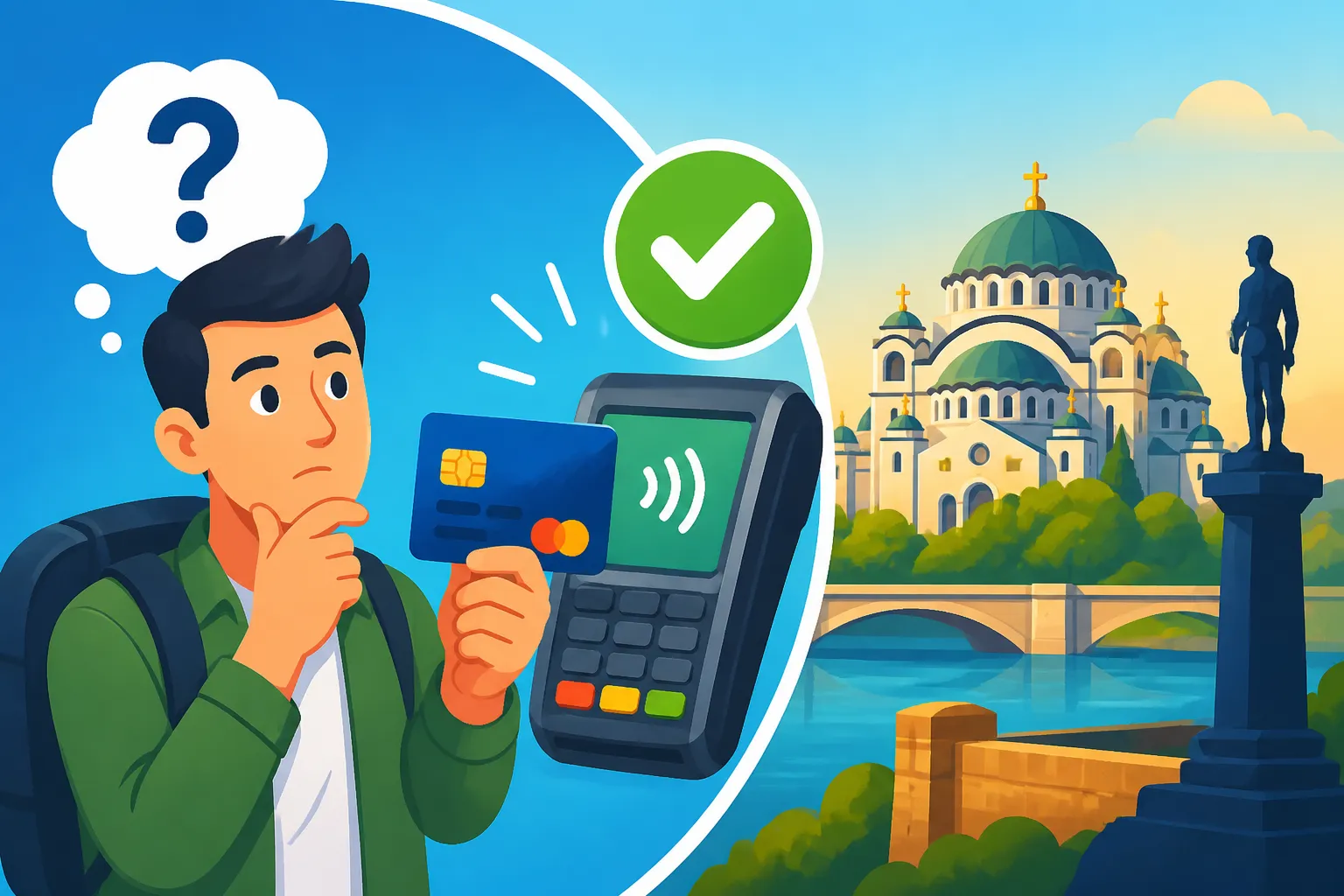
Serbia is catching up with global trends in digital payments. Contactless payment is becoming increasingly common. Many POS terminals in larger stores and restaurants support tap-to-pay using your card or even your smartphone (Google Pay, Apple Pay). If your foreign card is linked to one of these digital wallets and your home bank supports international contactless payments, you’ll find these methods convenient and secure. Just look for the contactless symbol at the checkout. While not every small shop will have it, major retailers certainly do, providing a quick and easy way to pay without fumbling for cash or even your physical card.
Common Scenarios and Troubleshooting
Even with the best preparation, things can sometimes go awry. Knowing how to react in common scenarios can save you a lot of stress.
What to Do If Your Card Is Declined
It happens to the best of us. You tap or swipe your card, and the dreaded "Transaction Declined" message appears. Don't panic! Here are the usual culprits and what to do:
- Bank Security: Your home bank might have flagged the transaction as suspicious, especially if you forgot to notify them of your travel. Call your bank's fraud department immediately.
- Insufficient Funds: A simple but common reason. Double-check your account balance.
- POS Terminal Issues: Sometimes, the merchant's machine just isn't working properly. It might be out of paper, have a bad connection, or simply be malfunctioning. Ask them to try again, or if they have another terminal.
- Card Network Issues: Rarely, there might be a temporary outage with Visa or Mastercard.
- Card Type Not Accepted: The merchant might not accept your specific card type (e.g., Amex).
Your solution: Always have a backup plan. This means carrying a second card from a different network (e.g., a Visa if your primary is Mastercard) and, most importantly, having enough cash on hand. If one card doesn't work, try another, or offer to pay with cash. This is where the "always carry some cash" rule truly shines! For deeper insight into managing your funds in different currencies, learning about Understanding the Dinar (RSD) and Foreign Currency Accounts in Serbia can be very helpful.
Card Security and Fraud Prevention
Staying vigilant is key, just as it would be anywhere else in the world.
- ATM Skimmers: While rare, be aware of your surroundings when using ATMs. Jiggle the card slot to check for any loose devices (skimmers) that can steal your card information. Cover the keypad when entering your PIN.
- Secure Online Purchases: When making online purchases using your foreign card, ensure the website is secure (look for 'https' in the URL and a padlock symbol).
- Lost or Stolen Cards: If your card is lost or stolen, report it to your bank immediately. Most banks have 24/7 international helplines. It’s a good idea to have these numbers saved in your phone or written down separately, along with your card numbers (but not your PIN, of course!).
Managing Funds Across Borders
For expats living in Serbia, managing money isn't just about using your card; it's about seamlessly moving funds between countries and currencies. This is where solutions beyond traditional bank cards become incredibly valuable.
For example, if you receive income in a foreign currency, you'll need an efficient way to transfer it to your Serbian bank account. Services like Wise specialize in international money transfers, offering significantly better rates and lower fees than traditional banks. You can send money from your home country directly to your Serbian account, or to your Wise multi-currency account, and then easily convert it to RSD. This integration of international transfer services with your daily spending habits (via a multi-currency card) creates a powerful financial ecosystem for expats. As you explore your financial obligations, you'll want to understand aspects like How Do I File My Taxes Online in Serbia? and Understanding Income Tax and the Flat 10% Rate in Serbia, which often intertwine with how you manage cross-border funds, a common area of assistance from platforms like Taxes for Expats.
Opening a local bank account once you have your residence permit is often the next logical step to truly integrate your finances. Our guide, How to Open a Bank Account at a Serbian Bank as a Foreigner, walks you through that process. Having a local account simplifies bill payments, local transfers, and often provides better access to local banking services.
Disclaimer
The information provided in this guide is for general informational purposes only and does not constitute financial, legal, or professional advice. While we strive to keep the information up-to-date and accurate, financial regulations, bank fees, and exchange rates in Serbia can change. Always consult with a qualified financial advisor or relevant banking institution for advice tailored to your specific situation.