How to Choose a Mobile and Internet Provider in Serbia
One of the first things you realize when you land in Serbia, often even before you’ve cleared customs, is how vital it is to get connected. Whether it’s to tell your family you’ve arrived safely, navigate to your new apartment, or simply order a taxi, having a working phone and internet connection isn't a luxury; it’s an absolute necessity. But for us expats, figuring out the best mobile and internet provider in a new country, with unfamiliar companies and often a language barrier, can feel like navigating a bureaucratic maze while blindfolded.
Trust me, I’ve been there. The initial panic of not being able to understand the different packages, the fear of signing up for a contract you don’t fully grasp, or the frustration of slow internet when you’re trying to work remotely – it’s all part of the expat initiation. This guide is here to cut through the confusion, offering a realistic, in-depth look at how to choose, set up, and manage your mobile and internet services in Serbia, so you can stay connected without the headache.
Getting Connected Upon Arrival: Immediate Options
Stepping off the plane into a new country, especially one where you might not speak the language fluently, can be daunting. One of your first priorities, beyond finding your accommodation, will undoubtedly be connecting to the internet and making sure your phone works. Relying solely on airport Wi-Fi or intermittent coffee shop connections simply won't cut it for long. You need reliable access to maps, translation apps, and communication with family or your new landlord.
The Immediate Need for a Local SIM Card
Before you even think about long-term contracts, consider how you’ll get online in those crucial first few days. Public Wi-Fi is great, and Belgrade, Novi Sad, and other larger cities have quite a bit of it, but it’s rarely secure or consistently fast enough for anything beyond casual browsing. Imagine trying to use Google Maps to find your apartment only for the Wi-Fi to drop in a critical moment, or needing to call your host and realizing your international roaming costs are through the roof.
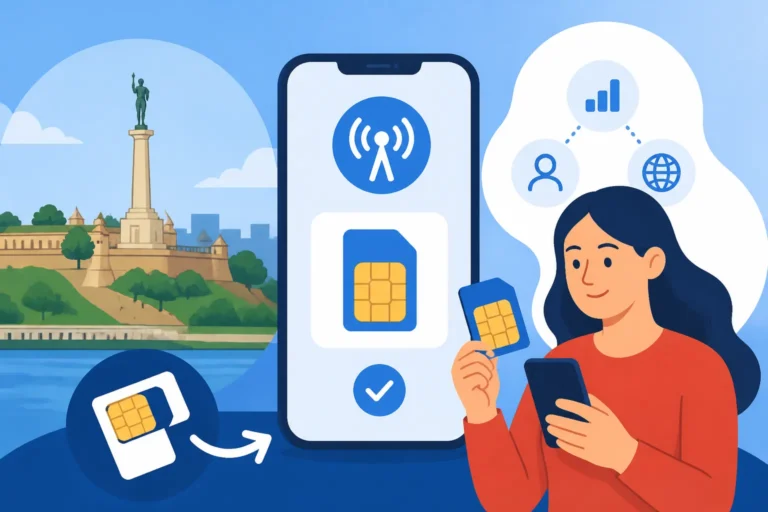
Getting a local SIM card is usually the quickest and most cost-effective solution for immediate connectivity. You can typically find kiosks selling SIM cards at Nikola Tesla Airport (BEG) in Belgrade, or at any major shopping mall or dedicated provider store in the city. The process is relatively simple for a prepaid SIM: just hand over your passport for registration, pick a plan, and pay. Within minutes, you’ll have a local number and data, ready to tackle your first Serbian adventures. This initial step saves you a lot of stress and allows you to communicate effectively from the get-go. For more comprehensive tips on settling in, check out our guide on The Complete Guide to Moving to Serbia: Your First 90 Days (2027).
Prepaid Options and eSIMs: Getting Online Fast
For those who want to hit the ground running, prepaid SIM cards (called pripejd in Serbian) are your best friend. They offer flexibility, no long-term commitment, and are easy to top up. You can choose from various starter packages that include a certain amount of data, calls, and SMS, usually valid for 7 to 30 days. Providers like Yettel, A1, and Telekom Srbija all offer competitive prepaid options. Just walk into one of their stores, show your passport, and you’re good to go.
However, a game-changer for many travelers and new expats has been the rise of eSIM technology. If your phone supports it, an eSIM allows you to activate a local data plan digitally, often before you even land. Services like Airalo offer convenient and affordable eSIM plans for Serbia. You simply download the app, choose a plan, and activate it, giving you immediate data connectivity as soon as you arrive. This eliminates the need to search for a physical SIM card, deal with kiosks, or worry about language barriers when you’re still trying to find your footing. It’s an excellent bridge solution while you get your long-term internet and mobile strategy sorted out, ensuring you have data for essential tasks like getting around or contacting your property agent.
Major Mobile and Internet Providers in Serbia
When it comes to staying connected in Serbia, you’ll primarily be choosing between three main players: Telekom Srbija, Yettel, and A1 Srbija. Each has its own strengths, network coverage, and customer service approach, and what works best for one expat might not be ideal for another. Understanding these differences is key to making an informed decision that suits your needs and budget.
Telekom Srbija: The Incumbent Giant
Telekom Srbija (often referred to simply as MTS) is the largest and oldest telecommunications company in Serbia, with a deep-rooted infrastructure that spans the entire country. Think of them as the national carrier, much like BT in the UK or AT&T in the US. Their primary strength lies in their extensive network coverage, particularly in more rural areas where other providers might struggle. If you plan to live outside major cities or travel frequently to less populated regions, Telekom Srbija might offer the most reliable signal.
They provide a full spectrum of services: mobile, fixed-line internet (ADSL/VDSL and fibre optic), landline phones, and television packages (IPTV). This makes them a popular choice for bundling services, which can sometimes lead to cost savings if you need multiple services from one provider. Their customer service, while generally professional, can sometimes feel a bit more bureaucratic and slower-paced than their competitors, a common trait of larger, state-owned enterprises. While they are making strides in modernising, dealing with them might require a bit more patience and, sometimes, the help of a Serbian-speaking friend for complex issues. Their retail stores are ubiquitous, making it easy to find a branch in almost any town or city.
Yettel: The Modern Contender
Yettel (formerly Telenor Srbija) has positioned itself as a modern and dynamic telecommunications provider, often appealing to younger demographics and those seeking more innovative digital services. They rebranded from Telenor, a Norwegian company, but have maintained a strong reputation for network quality and customer satisfaction, especially in urban centres. If you’re living in Belgrade, Novi Sad, Niš, or other larger towns, Yettel typically offers excellent 4G and growing 5G coverage, providing fast and reliable mobile internet.
Their postpaid mobile plans are often very competitive, featuring generous data allowances, unlimited calls, and various add-ons. They are known for user-friendly apps and online portals, making it easier for expats to manage their accounts and track usage. For home internet, Yettel also offers fibre optic services in many urban areas, providing high-speed connections suitable for remote work, streaming, and online gaming. Many expats find Yettel’s customer service to be a bit more attuned to international needs, with a higher likelihood of finding English-speaking staff, especially in their flagship stores. They aim for a more streamlined and efficient experience, which can be a huge plus when you're still getting accustomed to life in Serbia.
A1 Srbija: The Competitive Player
A1 Srbija (formerly Vip Mobile) is the third major player in the Serbian market and is known for its aggressive pricing strategies and strong focus on offering competitive value. Part of the larger A1 Telekom Austria Group, they’ve invested heavily in their network and infrastructure, providing excellent coverage primarily in urban and semi-urban areas. If you’re looking for a good balance of price and performance, A1 often has attractive promotions and bundles that can be quite appealing.
Like Yettel, A1 excels in providing fast 4G and 5G mobile internet in cities and towns. Their postpaid plans are designed to be flexible, often allowing customers to tailor their data, call, and SMS allowances to their specific needs. For home internet, A1 also offers fibre optic connections, competing directly with Telekom Srbija and Yettel on speed and price. Expats often find A1’s stores to be modern and their sales staff helpful, with a reasonable chance of encountering English speakers. They frequently run special deals for new customers, so it's always worth checking their current promotions, particularly if you are also setting up other utilities like electricity, as sometimes providers offer combined deals. You can find more about setting up household services in our guide on The Expat Guide to Setting Up Utilities Electricity Water Heating in Serbia.
Choosing Your Home Internet Connection Type
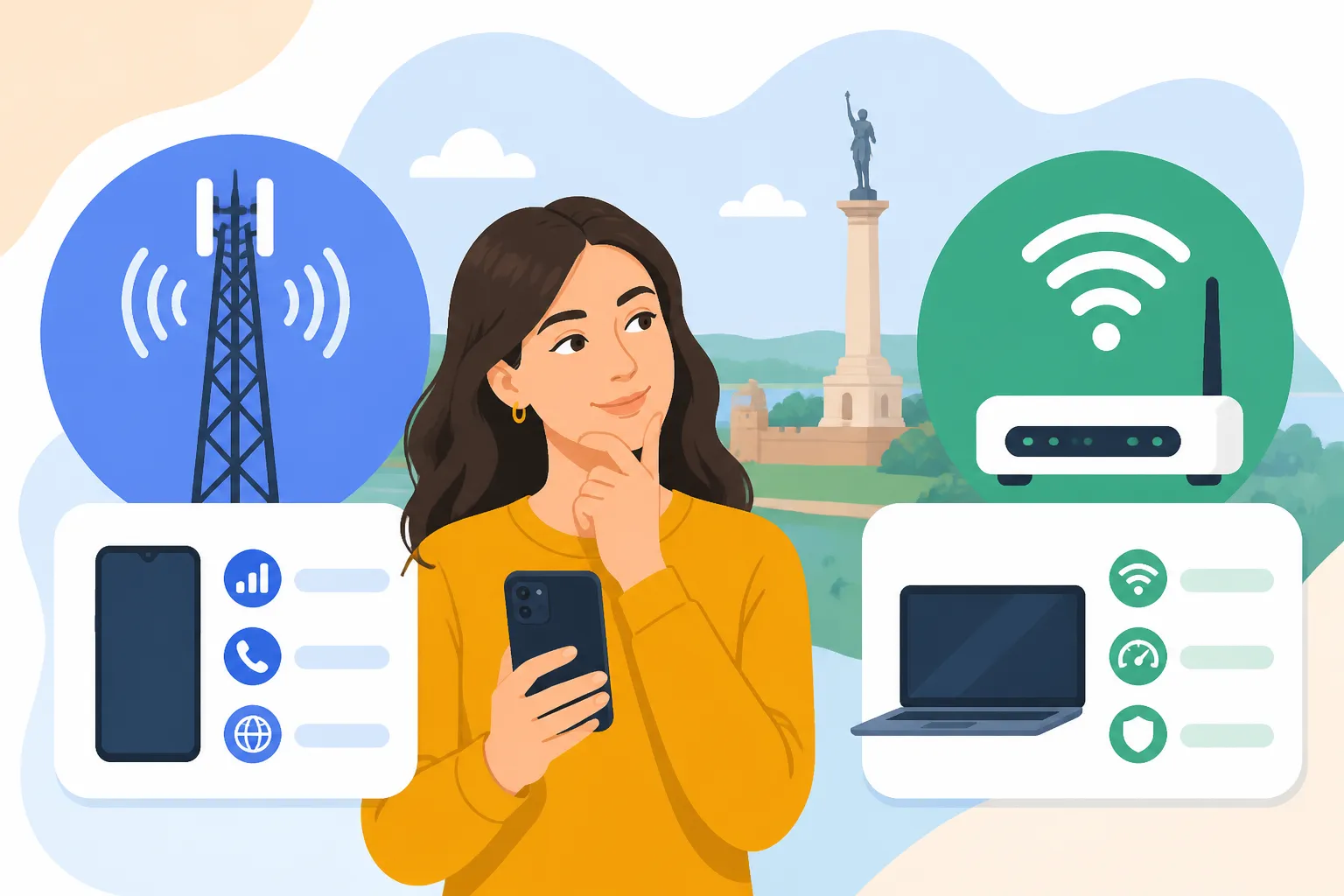
Beyond mobile connectivity, a stable and fast home internet connection is absolutely essential for most expats, especially those working remotely or relying on streaming services for entertainment. Serbia offers various types of internet connections, each with its own advantages, disadvantages, and availability. Understanding these will help you pick the right service for your new Serbian abode.
Fibre Optic (Optika): Speed and Reliability
Fibre optic internet, or optika as it’s known here, is the gold standard for high-speed, reliable connectivity. It transmits data using light signals through thin glass fibres, offering significantly faster download and upload speeds compared to traditional copper-based connections. For expats who work online, game, stream 4K content, or have multiple devices connected simultaneously, fibre optic is often the preferred choice.
The good news is that fibre optic networks are rapidly expanding in Serbia, particularly in major cities like Belgrade, Novi Sad, and Niš. Newer apartment buildings, especially in modern districts like Belgrade Waterfront, New Belgrade, or parts of Vračar, are almost always equipped with fibre infrastructure. However, if you’re renting an older apartment or living in a more established neighborhood, fibre might not be available yet, or it might be offered by only one provider. When you’re apartment hunting, it’s always a good idea to ask your real estate agent or landlord about the internet options available at the address. If fibre is an option, expect excellent stability and speeds typically ranging from 100 Mbps up to 1 Gbps, or even higher, depending on your chosen plan.
ADSL/VDSL: The Traditional Workhorse
Before fibre became widespread, ADSL (Asymmetric Digital Subscriber Line) and its faster cousin, VDSL (Very-high-bit-rate Digital Subscriber Line), were the dominant forms of fixed-line internet in Serbia. These technologies use existing copper telephone lines to deliver internet access. While they can't compete with the raw speed of fibre, they are still widely available, especially in areas where fibre optic infrastructure hasn't yet been laid.
ADSL/VDSL speeds are more modest, typically ranging from 10 Mbps to 50 Mbps, though VDSL can sometimes reach up to 100 Mbps closer to the exchange. The actual speed you get can be influenced by the quality of the copper lines and your distance from the provider's central office. For basic browsing, email, social media, and standard-definition streaming, these connections are usually sufficient. However, if you’re heavily reliant on large downloads, frequent video calls, or have several users on the network, you might find ADSL/VDSL to be a bit sluggish, especially during peak hours. Telekom Srbija has the most extensive ADSL/VDSL network due to its historical control over the fixed-line telephone infrastructure. If fibre isn't an option at your address, an ADSL/VDSL package might be your next best bet, offering a reliable, albeit slower, connection.
Mobile Internet and Hotspots: Flexibility and Portability
For those who prioritize flexibility or have specific temporary needs, mobile internet and hotspots offer a viable alternative to fixed-line connections. This involves using a SIM card with a data plan in a dedicated mobile Wi-Fi device (MiFi router), a USB modem, or simply tethering from your smartphone. It’s an excellent solution for short-term rentals, digital nomads who are constantly on the move, or as a backup internet source.
The main advantage here is portability – you can take your internet with you wherever you go within network coverage. All three major mobile providers (Telekom Srbija, Yettel, A1) offer mobile internet packages, some with dedicated devices. Speeds can be quite good, especially in urban areas with strong 4G or 5G signals. However, the primary drawback is typically data caps. Unlike most fixed-line fibre plans which often offer unlimited data, mobile internet plans usually come with monthly data limits, after which speeds are throttled or additional charges apply. This can make them less suitable for heavy streaming or large downloads. Also, during peak times or in congested areas, speeds might fluctuate more compared to a stable fibre connection. Still, for expats who need immediate access, or who spend a lot of time travelling within Serbia, a mobile hotspot can be incredibly practical. You can even use an international moving company like Sirelo for shipping your belongings and then grab a mobile hotspot once you arrive to quickly get online while you unpack and settle in.
Understanding Contracts, Speeds, and Pricing
Once you've settled on a provider and an internet type, the next hurdle is deciphering the various contracts, advertised speeds, and pricing structures. This is where many expats can feel a bit lost, especially with the potential for language barriers and unfamiliar terminology. Taking the time to understand the nuances can save you money and frustration in the long run.
Navigating Mobile Plans: Prepaid, Postpaid, and Bundles
When it comes to mobile phone services, you essentially have two main choices: prepaid or postpaid.
-
Prepaid (Pripejd): This is the simplest option. You buy a SIM card, load credit onto it, and use it until the credit runs out or the validity period expires. It's ideal for short-term stays, tourists, or those who prefer not to commit to a contract. You can top up your balance at kiosks, supermarkets, post offices, or online. The downside is that per-unit costs for calls, SMS, and data might be slightly higher than postpaid plans, and you won't get a new phone as part of the deal. However, for immediate needs, it's perfect, as we discussed earlier.
-
Postpaid (Postpejd): This involves signing a contract, usually for 12 or 24 months, where you pay a fixed monthly fee for a set amount of data, calls, and SMS. Postpaid plans generally offer better value, with more generous allowances. They often come with the option to get a new smartphone at a subsidized price, spread over the contract duration. To sign up for a postpaid plan, you'll need your passport and a valid Serbian temporary residence permit (privremeni boravak) or permanent residence. The provider will typically run a credit check, and new expats might be asked for an advance payment or a larger deposit.
-
Bundles: All major providers in Serbia offer bundles that combine mobile services with home internet, TV, and sometimes even fixed-line phone. These packages, often called paketi or kombinacija, can be significantly cheaper than subscribing to each service separately. For example, Telekom Srbija's "Box" packages or A1's "Smart" bundles are popular choices. If you need all these services, it’s definitely worth exploring these bundled deals. Just be sure to read the fine print, as these often come with longer contract periods and specific terms for each service component. This is a common strategy for utility providers, similar to how you might manage all your household bills. For more on this, you can look at our guide on How to Pay Your Utility Bills in Serbia.
Decoding Internet Packages: Speeds, Data Caps, and Hidden Costs
For home internet, providers will advertise various packages based on speed. Fibre optic plans can range from a comfortable 100 Mbps to a blistering 1 Gbps or more. ADSL/VDSL speeds will be much lower. It’s important to understand that advertised speeds are usually "up to" values, meaning actual speeds can fluctuate due to network congestion or your home setup. For fixed-line internet, data caps are generally not an issue; most residential fibre and ADSL plans offer unlimited data.
However, be wary of potential hidden costs. These might include:
- Activation Fees: A one-time fee for setting up your service.
- Equipment Rental: Fees for the modem, router, or TV box. Sometimes these are included in the monthly price, sometimes they’re an extra charge, or you might have the option to buy the equipment outright.
- Installation Fees: While often waived for new customers, it's worth checking.
- Early Termination Fees: If you cancel your contract before the agreed-upon period (e.g., 24 months), you’ll likely incur a penalty, which can be substantial. This is a critical point for expats, as plans can change.
- Promotional Pricing: Many providers offer introductory discounts for the first 6 or 12 months. Make sure you understand the regular price after the promotion ends.
Always ask for a clear breakdown of all costs, ideally in writing. Don't be shy about asking questions, and if possible, bring a Serbian-speaking friend to help translate and clarify.
The Real Cost for Expats: What to Budget
To give you a realistic idea, here’s a general overview of what you might budget for mobile and internet services in Serbia in 2026, though prices are subject to change and promotions:
Mobile Phone (Postpaid):
- Basic plan (e.g., 5-10GB data, unlimited calls/SMS): 1,500 – 2,500 RSD per month (approx. €13-21)
- Mid-range plan (e.g., 20-50GB data, unlimited everything): 2,500 – 4,000 RSD per month (approx. €21-34)
- High-end plan (e.g., unlimited data, premium features): 4,000+ RSD per month (approx. €34+)
Home Internet (Fibre Optic):
- Entry-level (e.g., 100-200 Mbps): 2,000 – 3,000 RSD per month (approx. €17-25)
- Mid-range (e.g., 300-500 Mbps): 3,000 – 4,500 RSD per month (approx. €25-38)
- High-speed (e.g., 1 Gbps): 4,500+ RSD per month (approx. €38+)
Bundled Packages (Internet + TV + Mobile):
- Often start from around 4,000 – 6,000 RSD per month (approx. €34-51) for basic packages, going up depending on speeds and TV channel selection.
These figures are for services only, not including any phone devices you might finance. These costs are a significant part of your overall How Much Does It Cost to Live in Belgrade per Month? calculation, so factor them in carefully.
| Provider | Typical Mobile Plan (Postpaid, Mid-Range) | Typical Home Fibre Internet (300-500 Mbps) | Expat Considerations |
|---|---|---|---|
| Telekom Srbija | ~3,000 RSD (30GB data, unlimited calls/SMS) | ~3,500 RSD | Most extensive coverage, good for rural areas, bundles popular. Customer service can be slower, potentially less English-friendly. Good for stability if you don't mind bureaucracy. |
| Yettel | ~3,000 RSD (40GB data, unlimited calls/SMS) | ~3,200 RSD | Modern, strong urban 4G/5G, good digital services. Often more expat-friendly customer service in main stores. Competitive pricing, reliable. |
| A1 Srbija | ~2,800 RSD (35GB data, unlimited calls/SMS) | ~3,000 RSD | Aggressive pricing, good value, strong urban coverage. Frequent promotions for new customers. Customer service often helpful, but check for English speakers. |
Note: Prices are approximate and subject to change based on current promotions and specific package details as of 2026. Always check the provider's official website or visit a store for the most up-to-date information.
Navigating Customer Service and Technical Support
One of the biggest anxieties for expats dealing with utility providers in any new country is customer service. Language barriers, unfamiliar processes, and cultural differences can turn a simple query into a frustrating ordeal. Serbia is no different, but with a bit of preparation and understanding, you can navigate these waters more smoothly.
Language Barriers and Expat-Friendly Support
While many younger Serbians, especially in Belgrade and Novi Sad, speak excellent English, it's not a guarantee when you're calling a customer support line or visiting a smaller branch of a provider. This can be particularly challenging when you're trying to describe a technical issue with your internet or understand the specifics of your contract.
- In-Store Visits: For complex issues, or if you prefer face-to-face interaction, visiting a major store in a city like Belgrade (e.g., in shopping malls like Galerija, Ušće, or Delta City, or on Knez Mihailova street) is usually your best bet. These flagship stores are more likely to have staff who are fluent in English and are accustomed to assisting international clients. It allows for clearer communication, and you can often get documents explained more thoroughly.
- Phone Support: Dialing the general customer service number can be a hit or miss. Some providers have an option for English language support, but it might require navigating several IVR menus in Serbian first. If you anticipate needing frequent phone support, consider asking a Serbian friend to help you or be prepared with Google Translate on standby.
- Online Chat/Social Media: Increasingly, providers offer online chat support through their websites or social media channels. This can sometimes be a good alternative, as written communication allows for more time to translate and formulate your questions. However, the availability of English-speaking agents on these platforms can vary.
Always have your account number, passport, and residence permit readily available, as you’ll need these for identification. Be patient, be polite, and remember that a smile and a "Hvala" (thank you) go a long way.
Reporting Issues and Troubleshooting
So, your internet suddenly drops, or your mobile data isn’t working. What’s the process for getting it fixed?
- Basic Troubleshooting: Before panicking, perform some basic checks. For internet, try restarting your router and modem. For mobile, restart your phone or check if you have inadvertently turned off mobile data. Sometimes, a simple reboot is all it takes.
- Contacting Support: If the issue persists, you'll need to contact your provider.
- Internet Issues: For home internet, the helpline is the usual first point of contact. Be prepared to describe the problem in as much detail as possible: Are all lights on your modem/router green? Are other devices connected? When did the problem start? They might guide you through further troubleshooting steps remotely. If it’s a hardware fault or an external line issue, they will schedule a technician visit.
- Mobile Issues: For mobile problems, a phone call to customer service or an in-person visit to a store is generally most effective. They can check your account status, network coverage in your area, and diagnose any potential SIM card issues.
- Technician Visits: For home internet problems that can't be resolved remotely, a technician will be dispatched. They will usually schedule an appointment within a few days, though wait times can vary depending on the urgency and location. Ensure someone is home to grant access. The technician will diagnose the issue, whether it's faulty equipment, cabling problems, or external network issues, and perform the necessary repairs.
While Serbia's telecommunications infrastructure is generally robust, technical glitches can happen anywhere. Knowing the steps to take and managing your expectations regarding response times will help reduce stress.
Setting Up Your Home Internet and Staying Connected
Once you've chosen your provider and plan, the final step is getting everything installed and learning how to manage your accounts. This part of the process, especially for home internet, involves scheduling appointments and understanding local payment systems.
The Installation Process: What to Expect
Setting up your home internet in Serbia typically involves a technician visit, especially for fixed-line connections like fibre optic or ADSL/VDSL.
- Scheduling the Appointment: After signing your contract, the provider will schedule an installation appointment. This might be a few days to a week out, depending on current demand. Make sure you confirm the date and time, and if you’re not comfortable with Serbian, ask for a confirmation message in English or have a friend help.
- The Technician's Visit: On the appointed day, a technician from your chosen provider (or a contracted company) will come to your apartment. They will run any necessary cables (for fibre, this might mean a small drilling if no existing fibre point is available), install and configure the modem/router, and connect your TV box if you’ve opted for a bundle. They will usually test the connection on their equipment and might even help you connect one of your devices.
- Estimated Time: The installation itself usually takes anywhere from 30 minutes to a couple of hours, depending on the complexity of the setup. It’s best to be present for the entire duration or have someone you trust there, just in case there are questions or decisions to be made. Once they're done, they'll ensure everything is working and hand over any remotes or user manuals.
Remember, if you're living in a building where a specific provider already has fibre optic installed, the process might be quicker as the main infrastructure is already in place.
Managing Your Account and Paying Bills
Paying bills in a new country can sometimes be a puzzle, but Serbian utility providers offer several convenient methods.
- Online Portals and Apps: All major providers have online portals and mobile apps where you can view your bills, track usage, change plans (sometimes), and make payments. These are often the easiest and most convenient methods for expats, especially if the interface is available in English.
- Direct Debit (Trajni nalog): You can set up an automatic direct debit with your Serbian bank, ensuring your bills are paid on time each month without you having to remember. This is highly recommended to avoid any service interruptions or late fees. To learn more about managing your finances as an expat, read our guide on How to Choose the Best Bank for Expats in Serbia.
- Post Offices (Pošta) and Payment Points (Menjačnice): You can physically pay your bills at any post office or at numerous payment points (often found in small shops or menjačnice – currency exchange offices) across the country. Just bring your paper bill with the barcode, and they will process the payment.
- Provider Stores: You can also pay your bills directly at any of your provider’s retail stores.
It’s crucial to pay your bills on time. Late payments can lead to service suspension and reconnection fees. Setting up direct debit or regularly checking your online portal will ensure you stay connected without any unexpected interruptions.
Staying Connected While Traveling or Remotely
For many expats, life in Serbia isn't confined to one place. Whether you're travelling within the Balkans, visiting family back home, or perhaps working remotely from a different location for a period, maintaining connectivity is vital.
- Roaming in the Balkans and EU: Serbia is not part of the EU, so EU roaming rules do not apply by default. However, many Serbian providers offer competitive roaming packages for the Western Balkans (Bosnia & Herzegovina, Montenegro, North Macedonia, Albania, Kosovo). For travel to the EU or further afield, traditional roaming can still be quite expensive. Always check your provider's specific roaming rates and packages before you travel.
- International Travel & eSIMs: For international trips, relying on your Serbian SIM for roaming might be costly. This is where options like Airalo shine again. You can purchase local eSIMs for your destination country, giving you affordable data without swapping physical SIMs or racking up huge roaming bills. This flexibility is a lifesaver for frequent travellers.
- Remote Work Considerations: If you're working remotely from Serbia, having a robust and reliable home internet connection is non-negotiable. Consider investing in a fibre optic plan with high upload and download speeds. Some remote workers even opt for a backup mobile internet plan as a contingency, just in case their primary fixed-line connection experiences issues. Keeping a stable internet connection is key for those who are Working Remotely from Serbia: The Definitive Expat Guide (2027).
By understanding these options and planning ahead, you can ensure you remain connected, whether you're at your Belgrade apartment, exploring the Serbian countryside, or travelling across Europe.
Disclaimer
The information provided in this guide is intended for general informational purposes only and does not constitute professional advice. While we strive to ensure the information is accurate and up-to-date, telecommunications policies, pricing, and regulations in Serbia can change frequently. Expats should always consult with the specific mobile and internet providers, and if necessary, legal or financial professionals, for the most current and personalized advice regarding their individual circumstances. We are not responsible for any decisions made based on this information.