What Public Holidays Do Employees Get in Serbia?
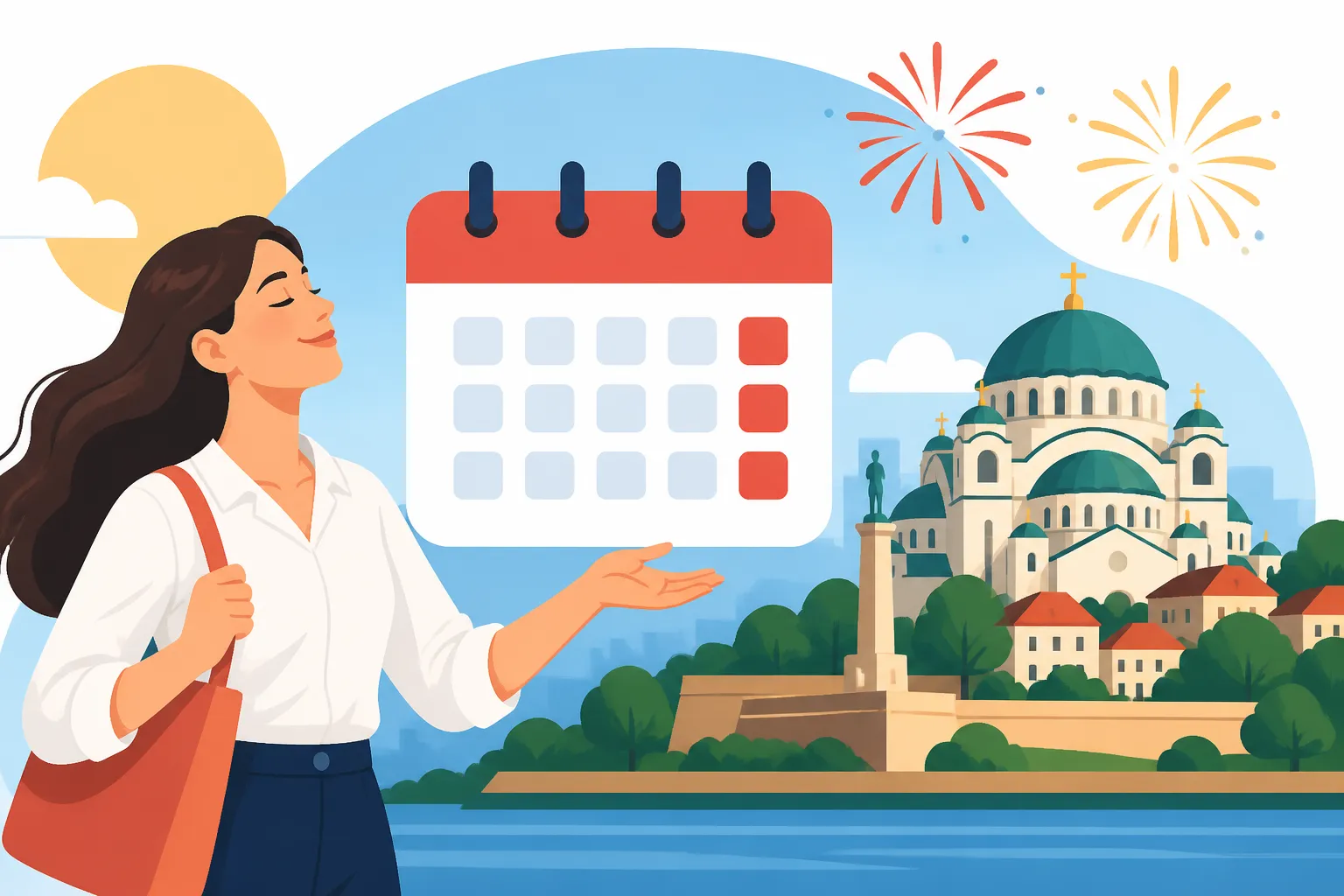
One of the trickiest parts of settling into a new country is understanding the local rhythm, and nothing throws off that rhythm quite like public holidays. You're trying to schedule an appointment, get some paperwork done, or just grab groceries, only to find everything shut down because you missed a major holiday notification. This guide will walk you through the Serbian public holiday calendar, explaining what days employees get off, what your rights are, and how to navigate these often-unannounced (to foreigners!) breaks in the work week.
Understanding Public Holidays in Serbia: A Foreigner's Perspective
When you first move to Serbia, it’s easy to assume public holidays are just like back home. A few days off for major celebrations, maybe a long weekend here and there. But Serbia, with its rich history, deep-rooted Orthodox Christian traditions, and a sprinkle of communist-era commemorations, has a unique approach to public holidays. It’s not just about the dates; it’s about understanding the cultural significance and how these days truly impact your work life and daily routines.
For expats, the initial confusion often comes from a few places. First, the blend of state and religious holidays, some of which are fixed on the calendar, others that float. Second, the concept of "connecting days" or "bridging days" (often called spajanje), where if a public holiday falls on a Tuesday or Thursday, the government or your employer might declare the Monday or Friday as a non-working day too, creating a lovely long weekend. While great for relaxation, it can throw a wrench into any plans requiring government services or bank visits. You might also find yourself wondering about days like Saint Sava’s Day, which is a major school holiday but often a regular working day for most other sectors. It’s a mosaic, truly, and figuring out which tile is which takes time.
The Importance of State and Religious Holidays
Serbia officially recognizes a number of public holidays, clearly outlined in the Law on State and Other Holidays in the Republic of Serbia. These holidays fall into two main categories: state holidays and religious holidays. Both are incredibly significant, though they manifest differently in everyday life.
State holidays are universally observed across the country. These are days of national importance, commemorating pivotal moments in Serbian history, independence, or labour rights. For instance, Statehood Day (Dan državnosti Srbije) in February is a big deal, marking the day the first Serbian constitution was adopted and the first Serbian uprising began. These days are non-working for most employees, meaning banks, government offices, schools, and many businesses will be closed. Public transportation usually operates on a reduced schedule, similar to a Sunday.
Religious holidays, primarily Orthodox Christian ones, hold immense cultural and spiritual weight. The biggest, of course, is Orthodox Easter (Vaskrs) and Christmas (Božić). While Christmas is a fixed date, Easter is a movable feast, calculated according to the Julian calendar used by the Serbian Orthodox Church, often falling a week or two after Western Easter. These days are also non-working. What's particularly interesting, and often a pleasant surprise for expats, is that the law also provides for individuals to take additional days off for their own religious holidays, regardless of their faith. If you’re Catholic, you get a day off for Catholic Christmas. If you're Muslim, you get a day for Eid al-Fitr. This shows a lovely respect for religious diversity that isn't always common elsewhere.
Navigating the Holiday Calendar as an Expat
Navigating this calendar successfully as an expat means staying informed and planning ahead. You can't just assume. I’ve seen countless newcomers frustrated when trying to run an errand, only to find the Pošta (post office) or the opština (municipality office) shuttered for a holiday they didn't even know existed.
My first piece of advice is always to get a local Serbian calendar or bookmark an official government website that lists all the non-working days for the current year. Many online Serbian news portals or even Google Calendar will integrate these dates. You'll quickly learn that January and May are often packed with days off, and sometimes February throws a multi-day break your way too.
For those of you involved in the administrative side of things, like dealing with taxes or applying for permits, knowing these dates is critical. Imagine trying to chase down a document for your How the Single Permit for Work and Residence Works in Serbia application, only to find the MUP closed for three days because of a holiday. It happens! Even for simpler things, like making sure you know How Much Income Tax Will I Pay in Serbia in 2026, you need to ensure you don't miss any deadlines due to an unexpected public holiday.
It's also worth noting that some companies, especially international ones or those in the tech sector, might have slightly different policies or offer flexibility. However, for most locally employed individuals, the law dictates these days off. Always clarify with your HR department or employer about their specific policy regarding public holidays and any potential "bridging days" to avoid misunderstandings.
Official Public Holidays in Serbia You Need to Know
Serbia’s public holiday schedule can feel like a bit of a dance, with some dates fixed and others shifting each year. As an employee, knowing these dates is key to planning your year, whether it’s for travel, personal appointments, or simply enjoying some well-deserved rest. Let’s break down the main holidays you’ll encounter.
Fixed-Date Public Holidays
These are the reliable ones, always falling on the same calendar date, making them easier to anticipate and mark on your calendar.
- New Year's Day (Nova Godina): January 1st and 2nd. This is a massive celebration in Serbia, often involving fireworks, big family meals, and late-night parties. Most businesses close for these two days, giving everyone a solid start to the new year. It’s a non-working holiday, so you're officially off!
- Orthodox Christmas (Božić): January 7th. While many countries celebrate Christmas on December 25th, Serbia adheres to the Julian calendar for Orthodox Christmas. This is a deeply spiritual and family-oriented holiday, preceded by Christmas Eve (Badnje veče) on January 6th. The 7th is a non-working holiday.
- Statehood Day (Dan državnosti Srbije): February 15th and 16th. This is one of the most significant state holidays, commemorating the first Serbian uprising against the Ottoman Empire in 1804 and the adoption of the first Serbian constitution in 1835. It's a two-day public holiday, often creating a long weekend if it falls mid-week. Expect government offices, banks, and many shops to be closed.
- Labour Day (Praznik rada): May 1st and 2nd. This international holiday celebrating workers' rights is enthusiastically observed in Serbia. It’s a common tradition to spend these days out in nature, barbecuing with family and friends. Like Statehood Day, it’s a two-day non-working holiday, frequently resulting in a four-day weekend if it lands on a Thursday or Tuesday (with Friday or Monday being declared non-working).
- Armistice Day in World War I (Dan primirja u Prvom svetskom ratu): November 11th. This day commemorates the signing of the armistice that ended World War I. It’s a relatively newer non-working holiday for employees, recognized for its profound historical importance to Serbia.
It's important to differentiate these from other commemorative days which, while significant, are not typically non-working days for all employees. For example, Saint Sava's Day (Sveti Sava) on January 27th is a spiritual holiday and a school holiday, but generally a normal working day for most other sectors. If you work in education, however, you'd likely get this day off. Always check with your specific workplace.
Variable-Date Religious Holidays
These holidays are determined by a lunar calendar or specific religious calculations, meaning their dates shift each year. The main one you absolutely need to be aware of is Easter.
- Orthodox Easter (Vaskrs): This is the biggest religious holiday in Serbia, even more so than Christmas. The dates vary widely from year to year, typically falling one to five weeks after Western Easter. The holiday period includes:
- Good Friday (Veliki petak): Non-working day.
- Easter Sunday (Vaskrs): Non-working day (always a Sunday, of course).
- Easter Monday (Uskršnji ponedeljak): Non-working day.
This creates a four-day weekend for most employees, starting from Good Friday. It's a time for family, traditional foods, and church services. Given its variable nature, always check the exact dates for Orthodox Easter well in advance, especially if you plan to travel or have critical appointments.
Beyond these universally observed religious holidays, Serbia has a progressive provision for individuals of different faiths. According to the law, employees who belong to a religious confession other than Orthodox Christianity are entitled to take paid time off on their major religious holidays. This is a huge benefit for expats from diverse backgrounds.
Here’s how it generally works:
- Catholic Christmas: December 25th (one non-working day).
- Atonement Day (Yom Kippur): One non-working day for those of Jewish faith.
- Eid al-Fitr (Ramazanski Bajram): The first day of Eid (one non-working day) for those of Islamic faith.
- Eid al-Adha (Kurbanski Bajram): The first day of Eid (one non-working day) for those of Islamic faith.
This means if you're, say, Catholic, you get December 25th off, in addition to the Orthodox Christmas on January 7th. To utilize this, you generally need to inform your employer in advance, stating your religious affiliation and your intention to observe the specific holiday. It's a fantastic aspect of Understanding Serbian Labour Law and Worker Rights (2027) that truly makes foreigners feel welcome and respected in their beliefs.
Here’s a quick overview table of the main public holidays:
| Holiday Name | Date | Type | Employee Status | Notes |
|---|---|---|---|---|
| New Year's Day | January 1st & 2nd | State | Non-working | Often combined with bridging days for a longer break. |
| Orthodox Christmas | January 7th | Religious | Non-working | Deeply family-oriented. |
| Statehood Day | February 15th & 16th | State | Non-working | Commemorates founding of modern Serbian state. |
| Orthodox Good Friday | Variable (Easter) | Religious | Non-working | |
| Orthodox Easter Sunday | Variable (Easter) | Religious | Non-working | Always a Sunday. |
| Orthodox Easter Monday | Variable (Easter) | Religious | Non-working | |
| Labour Day | May 1st & 2nd | State | Non-working | Popular for outdoor activities and barbecues. |
| Armistice Day in WWI | November 11th | State | Non-working | Commemorates end of WWI. |
| Optional Religious Holidays | Variable | Religious | Non-working | For individuals observing other faiths (e.g., Catholic Christmas, Eid). |
Remember, this table covers the main holidays for employees. Always refer to official government sources for the most current year's calendar, especially for the variable Easter dates and any potential additional "bridging days" declared by the government for public sector employees, which private companies often follow as well.
Your Rights as an Employee During Serbian Public Holidays
Understanding your rights as an employee during public holidays in Serbia is crucial, not just for your peace of mind but also to ensure you’re treated fairly according to Serbian labour law. These provisions are quite robust and generally favour the employee, ensuring you get proper rest or fair compensation if you do work.
When you're working in Serbia, whether you've come through The Complete Guide to Working in Serbia as a Foreigner (2027) process or via another route, these legal protections apply to you. It's part of the comprehensive framework that dictates Understanding Annual Leave and Public Holiday Entitlements in Serbia.
Paid Time Off and Holiday Pay
For most employees, public holidays are automatically paid non-working days. This means you get your regular salary for those days, even though you’re not physically at work. It’s essentially a bonus day off without impacting your standard annual leave. This is fantastic for boosting your Cost of Living in Serbia for Expats calculations, as you're getting paid for days you're not working.
Your employer is legally obligated to grant these days off. They cannot force you to use your regular annual leave for a public holiday, nor can they deduct pay for these days if they are official non-working holidays. This is a fundamental aspect of worker protection in Serbia.
Working on a Public Holiday: What to Expect
Sometimes, due to the nature of your job or industry (e.g., healthcare, hospitality, retail, security, or specific manufacturing sectors), you might be required to work on a public holiday. If this is the case, Serbian labour law is quite clear about your compensation.
According to the law, if you work on a public holiday, you are entitled to increased wages. This typically means your employer must pay you at least 110% of your regular hourly rate for hours worked on a public holiday, in addition to your regular daily wage that you would have received had you not worked.
Let's break that down:
- Your regular pay for the holiday: You would have received this anyway, as it's a paid non-working day.
- An additional 110% of your base wage for hours worked: This is the premium for working on a holiday.
So, effectively, for each hour you work on a public holiday, you're looking at your regular hourly rate plus an extra 110% on top of that. This isn't just double pay; it's more like 210% of your regular hourly rate. This strong incentive means employers think twice before scheduling staff on holidays, and when they do, employees are well-compensated for sacrificing their holiday rest.
Make sure to always check your payslip carefully if you work on a public holiday to ensure this additional compensation is correctly applied. If you have any doubts or believe you're not being paid correctly, it's always best to consult with your HR department or, if necessary, seek advice on labour law.
The Unique 'Non-Working' Religious Holiday Choice
We touched on this briefly, but it's worth emphasizing the unique provision for employees who celebrate religious holidays other than Orthodox Christmas and Easter. This is a testament to Serbia's multicultural fabric and progressive approach to religious freedom in the workplace.
The law states that employees belonging to a recognized religious community in Serbia have the right to not work on certain days during their major religious holidays. For example:
- Catholic and Protestant Christians: The first day of Christmas (December 25th).
- Muslims: The first day of Eid al-Fitr and Eid al-Adha.
- Jews: The first day of Yom Kippur.
This is not an optional extra day of annual leave; it's a legally protected right to observe your faith. You don't get paid extra if you choose to work on these days, because they are your chosen holidays, not universally declared non-working days. However, you also don't lose pay if you take them off.
To utilize this right, you usually need to inform your employer in writing about your religious affiliation and which specific holiday you wish to observe as a non-working day. This should be done within a reasonable timeframe, often at the beginning of the calendar year or well in advance of the holiday itself. It allows your employer to plan staffing accordingly. This is a fantastic benefit for expats who might otherwise feel disconnected from their home traditions during local holidays. For example, if you're learning Serbian with resources like iTalki and connecting with locals, this flexibility can help you immerse yourself in your own cultural celebrations without disrupting your work schedule.
Practical Tips for Expats Navigating Serbian Holidays
Successfully navigating Serbian public holidays isn't just about knowing the dates; it's about understanding the practical implications for your daily life and making the most of the opportunities they present. As a veteran expat, I've learned a few things the hard way, so let me share some insights.
Planning Ahead for Travel and Services
The biggest hurdle for many newcomers is the sheer unpredictability of closures. You can’t assume anything will be open.
- Government Offices and Banks: Consider these definitively closed. Whether it’s the tax administration (Poreska Uprava) if you're dealing with Taxes for Expats or the local police station for residence permit renewals, assume they’re shut. Plan all administrative tasks well in advance, giving yourself a few buffer days around any known public holiday. If you need to make a payment or sort out banking, do it before the holiday period begins.
- Post Offices (Pošta): These will almost certainly be closed or operate on significantly reduced hours. If you're expecting a package or need to send something, account for the delays.
- Shops and Supermarkets: Large supermarkets like Maxi, Idea, or Lidl usually have reduced hours on public holidays, especially on the main day (e.g., January 1st, Easter Sunday). Smaller local shops (prodavnice) and kiosks (trafike) might be open for shorter periods, but it's not guaranteed. Always stock up on essentials like groceries and household items before the holiday. Don't be that person scrambling for milk on Easter Sunday!
- Pharmacies (Apoteke): Generally, at least one pharmacy in each major area of a city will be designated as a 24-hour, duty pharmacy (dežurna apoteka) during holidays. You might need to Google "dežurna apoteka [your city/neighbourhood]" to find it. This is crucial for any unexpected medical needs.
- Public Transport: Buses, trams, and trolleys in cities like Belgrade and Novi Sad will operate on a Sunday schedule during public holidays. This means fewer buses, less frequent service, and potentially longer waits. Plan your journeys with extra time, or consider taxis/ride-sharing if you’re in a hurry.
- Restaurants and Cafes: Many will be open, especially in tourist areas, but it's wise to check in advance or make reservations if you have a specific place in mind, as some smaller, family-run establishments might close.
Think of it like a mini-Christmas back home – everything slows down, and many services become limited. This is especially true if there are several days off in a row due to "bridging" public holidays. Always check local news or official announcements for specific details, as sometimes the government will declare additional non-working days.
Embracing Local Traditions and Culture
Beyond the practicalities, Serbian public holidays are a fantastic opportunity to immerse yourself in the local culture.
- New Year's: While Christmas is a quieter, family affair, New Year's Eve in Serbia is a massive party! Belgrade, in particular, hosts huge outdoor concerts and fireworks displays. Many restaurants and clubs offer special (and often expensive) New Year's Eve packages. If you're single or just looking for a good time, this is a great opportunity to celebrate like a local.
- Orthodox Christmas and Easter: These are deeply traditional holidays. If you have Serbian friends, you might be invited to a family meal. Embrace the opportunity to try traditional foods like česnica (Christmas bread with a coin baked inside) or vaskršnja jaja (decorated Easter eggs). It's a beautiful way to see the heart of Serbian family life. Attending a midnight service on Christmas Eve or Easter Eve at a Serbian Orthodox church, even just to observe, can be a moving experience.
- Labour Day (1. Maj): This is probably the most universally beloved non-religious holiday. Everyone heads to nature! Parks, forests, riverside spots – you'll see families and friends gathered around barbecues (roštilj). If you're keen to experience local life, pack a picnic, head to Ada Ciganlija in Belgrade or Štrand in Novi Sad, and join in the festive atmosphere. It's an excellent time for informal socializing and seeing Serbians at their most relaxed.
These holidays are not just days off; they are windows into the soul of Serbia. Take the time to observe, participate, and appreciate the customs. It’s a huge part of what makes living here so rich and rewarding, and a great way to deepen your understanding of the country, whether you’re just getting started with The Complete Guide to Moving to Serbia: Your First 90 Days (2027) or have been here for years. So, plan well, stock up, and then kick back and enjoy the unique Serbian holiday spirit!
Disclaimer
The information provided in this guide is for general informational purposes only and does not constitute legal, financial, or professional advice. While we strive to keep the information up-to-date and accurate, laws and regulations regarding public holidays and employment rights in Serbia can change. Always consult with official government sources, your employer, or a legal professional for the most current and specific advice pertaining to your individual situation.