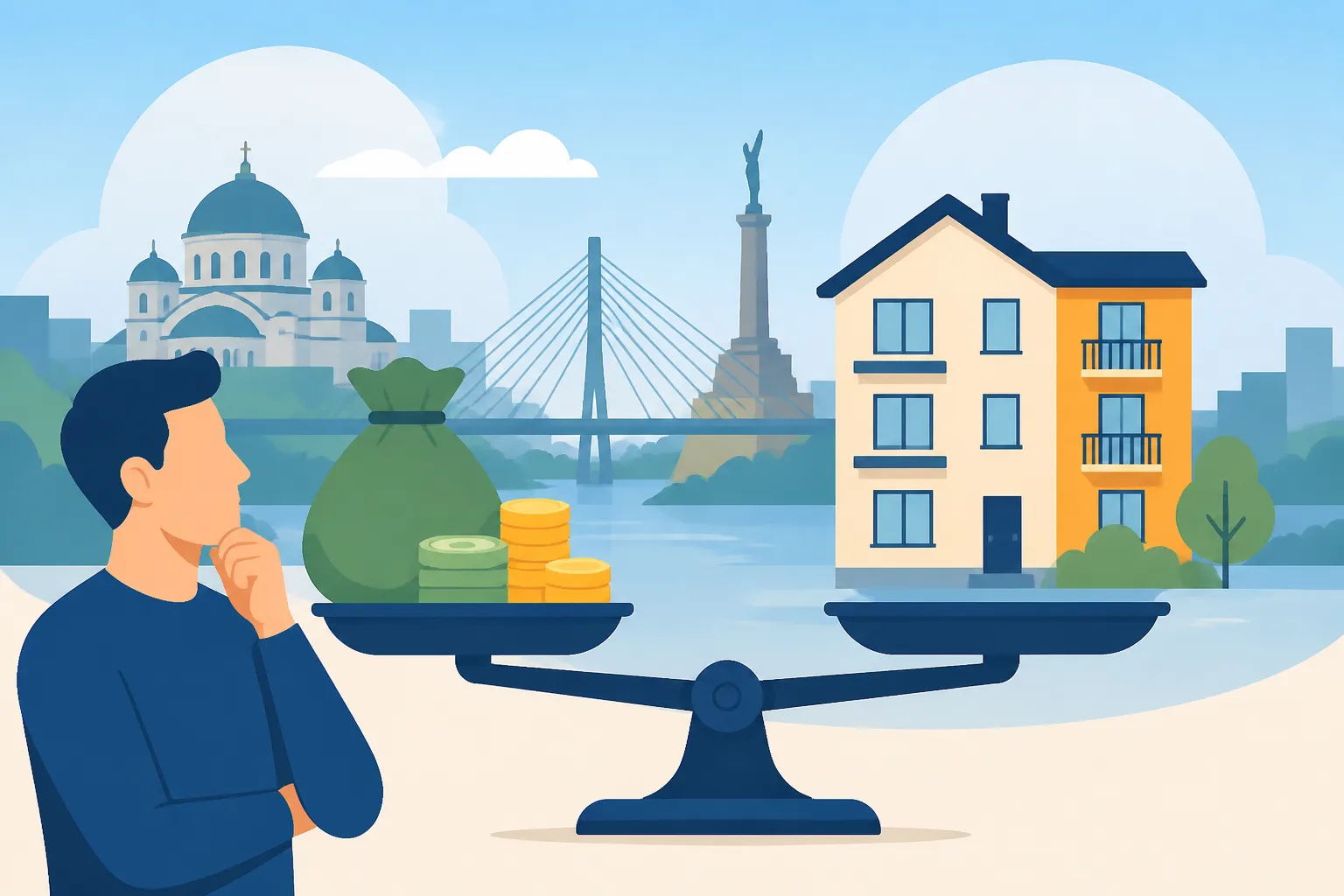
How Much Is the Average Rent Compared to Salary in Belgrade?
One of the biggest anxieties when you first land in Belgrade, Serbia, after the initial wonder wears off, is the cold, hard reality of budgeting. You’re trying to figure out if that charming apartment you saw online in Vračar or Stari Grad is even remotely affordable given the job offer you’re considering, or if you’ll be stuck living on the outskirts. This guide will walk you through the nitty-gritty of average rent compared to typical salaries in Belgrade, offering a realistic picture of what your living expenses might look like and how to navigate the Serbian housing market as an expat.
Unpacking Average Rental Costs in Belgrade
Let's be real, Belgrade isn't the cheapest city in Serbia for rent, but it's still remarkably affordable compared to most Western European capitals. However, "affordable" is a subjective term, and what you get for your money varies wildly depending on which opština (municipality) you choose and the age and condition of the apartment. Many newcomers arrive with an idealized image of central Belgrade living, only to find the reality of costs a bit more challenging than expected.
Rent in Central Belgrade Neighbourhoods
If you're dreaming of sipping coffee on a balcony overlooking Kalemegdan or being within walking distance of Knez Mihailova, you're looking at Belgrade's most sought-after and priciest areas. These include municipalities like Stari Grad, Vračar, and parts of Savski Venac (especially around Belgrade Waterfront). The convenience, the vibrant atmosphere, the sheer history – it all comes at a premium.
A decent, fully furnished one-bedroom apartment (often referred to as a "garsonjera" or "jednosoban stan") in these central locations can easily set you back anywhere from €450 to €800, and sometimes even more if it’s a newly renovated space or has modern amenities. For a two-bedroom apartment, which is often ideal for couples or small families, expect to pay between €700 and €1,200, or even higher for a truly spacious or luxury unit. Landlords here know their property is desirable, and they price accordingly. You'll often find apartments with older furnishings but a fantastic location, or smaller, newer places that are surprisingly expensive per square metre. Keep in mind that these prices usually don't include utilities, which can add another €100-€250 to your monthly outlay, depending on the season and consumption. Understanding how utilities are structured is key, so don't forget to check out The Expat Guide to Setting Up Utilities Electricity, Water, Heating in Serbia for a detailed breakdown.
Rent in Outer and Well-Connected Neighbourhoods
Stepping slightly outside the absolute city centre can offer significant savings without sacrificing too much convenience. Areas like Novi Beograd, parts of Zvezdara (e.g., Lion, Vukov Spomenik), Palilula (e.g., Karaburma, Višnjička Banja), and Zemun offer a different vibe but often excellent transport links and more space for your money. These neighbourhoods are incredibly popular with both local families and expats looking for a good balance.
In Novi Beograd, for example, you might find modern one-bedroom apartments for €350 to €600, particularly in the newer blocks or those a bit further from the main business districts. Two-bedroom apartments typically range from €500 to €800. Zvezdara and Palilula offer a mix of older, charming buildings and some newer constructions, with prices generally falling within similar brackets. Zemun, with its unique historical feel and riverside charm, has seen its prices rise, but you can still find good value compared to central Belgrade. The public transport system in Belgrade is extensive, so even if you're not in the absolute centre, you're usually well-connected. For a deeper dive into choosing your perfect spot, take a look at The Best Places to Live in Serbia for Expats: A Complete Guide (2027).
The condition of apartments in these areas can vary greatly. You might stumble upon a beautifully renovated place at a steal, or you might find something that needs a bit of love (and negotiation!). It's always worth a thorough viewing and asking detailed questions about heating systems, insulation, and included appliances.
Navigating Average Salary Expectations in Belgrade
Now that we've talked about what you might pay, let's talk about what you might earn. This is where it gets a little tricky, because "average salary" in Belgrade is a broad term. It heavily depends on your industry, experience, and whether you're working for a local Serbian company, an international firm, or remotely for an employer abroad. As an expat, you're often in a different earning bracket than the local average, especially if you're in a high-demand field.
General Average Salaries in Belgrade
The official average net salary in Belgrade in recent times hovers around 130,000 to 140,000 Serbian Dinars (RSD) per month, which translates to approximately €1,100 to €1,200. This figure is constantly fluctuating and is an average across all sectors and experience levels. For many Serbians, particularly those in service industries, public administration, or entry-level positions, salaries can be significantly lower, often in the €500-€800 range. This is an important context to remember when you're looking at rental prices; what seems "affordable" to an expat with a foreign-level salary might be a stretch for many local residents. If you're looking for more details on general earnings, explore How Much Is the Average Salary in Serbia in 2026?.
However, for expats, the picture is often different. Many relocate to Belgrade for roles in international companies, the booming IT sector, or as remote workers for foreign firms. These positions typically command higher salaries, making the cost of living, particularly rent, much more manageable.
Salaries in High-Demand Expat Sectors
If you're coming to Belgrade for work, chances are you're eyeing sectors that are hungry for international talent or offer remote flexibility. The IT and tech sector, for instance, is a massive draw. Software developers, data scientists, UX/UI designers, and IT project managers can expect net salaries ranging from €1,500 to €3,000+ per month, depending on experience and specialization. Senior roles or highly niche skills can even push these figures higher. These salaries are considerably more comfortable for supporting a central Belgrade lifestyle.
Another common path for expats is teaching English. While not as lucrative as IT, an experienced English teacher in an international school or private academy can expect to earn between €700 and €1,000 net, sometimes with accommodation or other benefits included. Freelancers and digital nomads, if registered correctly (perhaps as a paušalac), can often earn foreign-level incomes while enjoying Serbia's lower cost of living, which gives them immense flexibility when it comes to housing. For those embarking on the freelance journey, understanding your tax obligations is crucial; services like Taxes for Expats can be incredibly helpful in navigating Serbia's tax landscape, ensuring you're compliant and making the most of your income.
Here's a quick comparison of average net salaries in Belgrade for common expat roles:
| Role/Sector | Average Monthly Net Salary (Approx. EUR) |
|---|---|
| General Average (Local) | €1,100 – €1,200 |
| Entry-Level/Service | €500 – €800 |
| IT/Tech Professional | €1,500 – €3,000+ |
| Experienced English Teacher | €700 – €1,000 |
| Senior Management/Specialist | €2,500 – €5,000+ |
Remember, these are net salaries, meaning after taxes and social contributions. For a detailed guide on how Serbian income tax works, check out Understanding Income Tax and the Flat 10% Rate in Serbia (2026).
Comparing Rent to Salary: What You Can Actually Afford
Alright, let's put it all together. This is where the rubber meets the road. It's easy to look at a €500 apartment and think "that's cheap!" until you factor in your actual take-home pay and all your other expenses. Budgeting isn't just about rent; it's about the holistic picture of your cost of living in Belgrade.
The 30% Rule: A General Guideline
A common budgeting rule of thumb is to allocate no more than 30% of your net monthly income to rent. While this is a good starting point, it's often more flexible for expats in Serbia, especially those with higher incomes. If you earn €2,000 net per month, spending €600 on rent leaves you with a substantial €1,400 for everything else – food, transport, entertainment, savings. This puts most central Belgrade one-bedroom apartments within comfortable reach.
However, if you're on a local average salary of €1,100, then strictly adhering to the 30% rule means your rent budget is around €330. This would realistically push you into smaller, older apartments further from the city center, or possibly a shared flat scenario. This is a common reality for many Serbians who often live with family longer or have different expectations for apartment size and location.
For an expat English teacher earning €800, a €300-€400 rent still leaves €400-€500 for other expenses, which is tight but doable if you're careful and choose an apartment outside the most central areas. Many opt for sharing accommodation to make their budget stretch further.
Real-World Scenarios and Budgeting Tips
Let's imagine a few scenarios to make this more tangible:
- The IT Professional (Net Salary: €2,500): You can comfortably afford a fantastic one-bedroom in Stari Grad for €700, leaving €1,800 for other expenses. You might even consider a two-bedroom for €1,000 if you want more space, still leaving €1,500. This income allows for a very comfortable lifestyle, including dining out, travel, and enjoying Belgrade's vibrant nightlife. You'd find that opening a local bank account and managing your finances here is relatively straightforward, which helps with budgeting; learning about Banking in Serbia: A Complete Guide for Foreigners (2027) will set you up well.
- The Mid-Career Expat (Net Salary: €1,500): A good quality one-bedroom in Novi Beograd or Zvezdara for €450-€550 would be very manageable, leaving €950-€1,050. Even a smaller, older one-bedroom in a central but less prime spot for €500 could work, but you'd need to be more mindful of other spending. This budget allows for a good quality of life, but perhaps fewer luxury splurges.
- The Entry-Level Expat/English Teacher (Net Salary: €800): This budget requires careful planning. A one-bedroom for €350-€400 in an area like Karaburma or outside the immediate central ring is feasible, leaving €400-€450. Sharing an apartment with a roommate, which often brings rent down to €200-€300 per person, is a highly recommended option to free up more funds for daily life.
It's crucial to consider the full picture of your The Complete Guide to Cost of Living in Serbia for Expats (2026), not just rent. Factor in groceries, transport (public transport is affordable, a monthly pass is around €25-€30), social activities, and any personal splurges. While rent might seem like the biggest chunk, it's the cumulative effect of all expenses that truly determines your comfort level.
When you're searching for your ideal place, remember that the rental market can be competitive, especially for good quality, reasonably priced apartments. Be prepared to act quickly when you find something you like. Getting your rental agreement in order is also vital, and it’s wise to understand How to Sign a Rental Contract and Pay a Deposit in Serbia before committing.
Maximising Your Budget and Finding the Right Fit
Moving to a new country always presents financial challenges, and Serbia is no different. You want to get the best value for your money, especially when it comes to something as fundamental as your home. Luckily, there are strategies to help you stretch your budget further in Belgrade.
Seeking Out Value Beyond the Hype
Don't get fixated solely on the most popular central neighbourhoods. While Vračar and Stari Grad have undeniable charm, they come with a hefty price tag. Explore areas like Mirijevo, Konjarnik, Medaković, or even some parts of Voždovac that offer a more residential feel, often better value per square metre, and good public transport connections to the city centre. These areas might not have the same café culture on every corner, but they often have better access to parks, local markets, and a quieter pace of life. They're where many local families thrive, and you'll find a more authentic Serbian experience.
Another strategy is to be flexible with furnishings. Unfurnished apartments are often cheaper, but then you have the upfront cost of buying furniture. Conversely, some "fully furnished" places might come with dated or sparse items. Prioritize what's important to you – a good bed, a functional kitchen – and be willing to supplement or upgrade less critical items yourself. Sometimes, you can even negotiate with a landlord to remove certain furniture if you have your own.
Leveraging Local Knowledge and Language Skills
One of the biggest advantages you can give yourself in Serbia is a bit of local knowledge, and ideally, some basic Serbian language skills. While many landlords and real estate agents in Belgrade speak English, especially in the expat-heavy areas, knowing some Serbian can open doors to a wider range of apartments advertised primarily to locals, potentially at better prices. Plus, it just makes daily life so much easier! Services like iTalki can be a fantastic resource for connecting with Serbian language tutors online, helping you pick up those essential phrases and integrate more smoothly into local life.
Using local online portals like Halo Oglasi or Nekretnine.rs, rather than solely relying on expat-focused Facebook groups, can also reveal more options. If you have a trusted Serbian friend or colleague, asking them to help you navigate these sites or even call about listings can make a huge difference. They'll also be better equipped to spot red flags or negotiate on your behalf.
Mind Your Other Monthly Costs
Rent is just one piece of the puzzle. To truly understand your financial situation, you need to budget for utilities, groceries, transport, and social life. Electricity, heating, and water can vary significantly depending on the age and insulation of your building, and your consumption habits. In winter, central heating can be a major expense, especially in older buildings.
Serbia offers a fantastic social life that can be very affordable if you embrace local habits. Eating at a pekara (bakery) for breakfast or enjoying a local lunch ćevapi is far cheaper than frequenting upscale expat restaurants. Groceries from local markets or larger supermarkets like Maxi or Lidl can keep food costs down. Public transport is very economical, and walking is a great way to explore the city for free. Being mindful of these everyday expenditures will give you more breathing room in your budget, regardless of your salary bracket.
Ultimately, Belgrade offers a range of options for every budget, especially when comparing average rent to typical expat salaries. With a little research, flexibility, and savvy budgeting, you can find a comfortable and affordable home in this vibrant city.
Disclaimer
The information provided in this guide is intended for general informational purposes only and does not constitute financial, legal, or professional advice. Rental prices, salary averages, and regulations in Serbia can change frequently. While we strive to provide accurate and up-to-date information, it's essential to conduct your own research, consult with local experts (such as real estate agents, lawyers, or tax advisors), and verify all details relevant to your specific situation before making any decisions.