What Are the Requirements for Serbian Citizenship?
Dreaming of planting permanent roots in Serbia and calling this beautiful country your forever home? Becoming a Serbian citizen is a significant step, a deep commitment, and frankly, a journey that can feel like navigating a labyrinth designed by Kafka. Many of us expats find ourselves at this crossroads after years here, loving the culture, the people, and the lifestyle, but wondering what it really takes to get that little red passport. This guide will meticulously break down the requirements, the bureaucratic hoops, and the emotional considerations for anyone aspiring to Serbian citizenship.
Understanding the Paths to Serbian Citizenship
The good news is, there isn't just one single path to becoming a Serbian citizen. The law provides several avenues, each with its own specific set of requirements. For most expats, the journey will likely culminate in what's known as "naturalisation," but for others, especially those with family ties, there might be a more direct route. It's crucial to understand which path applies to you, as this will dictate the entire process, the documents you need, and the waiting times you'll face.
Citizenship by Naturalisation: The Most Common Route
This is probably the path most of you reading this will consider. Citizenship by naturalisation is essentially the standard procedure for foreigners who have lived in Serbia for a considerable period and wish to fully integrate. It's a testament to your long-term commitment and your embrace of Serbian life.
The general requirements for naturalisation are designed to ensure that you are a stable, law-abiding individual who has genuinely made Serbia your home. First and foremost, you must have reached the age of 18. This might seem obvious, but it's the foundational legal requirement. Then comes the crucial part: you need to have been granted permanent residence in Serbia and have continuously resided in the country for at least three years since receiving that permanent status. This isn't just about showing up once a year; it means genuinely living here, paying your bills, and being present in the community. Think of it as a probationary period where you prove your dedication to the country.
Beyond residency, you need a clean criminal record. This means no convictions in Serbia or in your home country for offenses that are punishable under Serbian law. The authorities will require police clearance certificates from both Serbia and your country of origin, which need to be translated and apostilled. Another critical component is proving your financial stability. The Serbian state wants to ensure you won't be a burden. This usually involves demonstrating a steady income, either through employment, self-employment, or other legal means. While there's no fixed income threshold, it needs to be enough to support yourself and any dependents. This is where good record-keeping and a clear financial history become your best friends.
Finally, and perhaps the most challenging for some, is the requirement to have a basic knowledge of the Serbian language. You'll likely undergo a language proficiency test, usually an oral interview that assesses your ability to communicate in everyday situations. This isn't about being a poet; it's about showing you can navigate daily life, interact with locals, and understand basic instructions. The idea is that you're an active participant in Serbian society, not just an observer. Oh, and the cherry on top for most nationalities: the requirement to renounce your existing citizenship. We'll dive deeper into that thorny issue later, but for many, this is the biggest hurdle.
Citizenship by Origin and Descent: For the Serbian Diaspora
For those of you with Serbian roots, perhaps a parent, grandparent, or even great-grandparent who was a Serbian citizen, the path to citizenship by origin or descent can be significantly smoother. This route acknowledges the historical ties and the diaspora's connection to the homeland. It's often seen as a way to invite Serbs living abroad back into the fold, whether they were born outside the country or lost their citizenship at some point.
The key here is proving your direct lineage to a Serbian citizen. This typically involves providing birth certificates, marriage certificates, and other civil registry documents that clearly establish the chain of descent. For instance, if your father was a Serbian citizen, you would need your birth certificate showing his name, his birth certificate, and potentially his marriage certificate. This can sometimes involve digging deep into family archives, which can be an emotional and rewarding process in itself.
One of the significant advantages of this route is that the residency requirement is often either waived or significantly reduced. You don't necessarily need to have lived in Serbia for years to apply. Furthermore, the language requirement might be less stringent, or even waived entirely, especially if you apply from abroad and demonstrate strong ties to Serbian culture. This pathway is a nod to heritage, acknowledging that blood ties can sometimes supersede geographical residency. The renunciation of previous citizenship might also be handled differently or even waived in specific circumstances, particularly if you're reclaiming a citizenship you or your ancestors lost. It’s definitely worth investigating if you have any Serbian ancestry.
Citizenship by Marriage: Joining Your Serbian Partner
Ah, love. It brings people together, and sometimes, it brings them Serbian citizenship. If you've tied the knot with a Serbian citizen, you might be eligible for citizenship through marriage. This is a common path, and while it might seem more straightforward than naturalisation, it still has its own set of hoops to jump through.
To apply for Serbian citizenship based on marriage, you need to meet a few specific conditions. Firstly, you must have been legally married to a Serbian citizen for at least three years. This isn't just about having a certificate; the marriage must be genuine and ongoing. Secondly, and very importantly, you need to have been granted temporary residence in Serbia and have continuously resided in the country for at least one year before submitting your citizenship application. This means living together, establishing a common household, and showing genuine integration into Serbian society as a couple. They're looking for real commitment, not just a marriage of convenience.
You'll need to provide your marriage certificate, your spouse's Serbian ID, proof of your joint residence (like utility bills in both names, or rental agreements), and your temporary residence permit. Just like with naturalisation, a clean criminal record is essential. The language requirement also applies here, though proving your dedication to building a life with a Serbian partner might naturally lead to a faster acquisition of the language. However, don't assume your spouse's language skills will cover for yours; you'll still be expected to demonstrate your own basic comprehension and communication.
The process for family and dependent residence in Serbia: bringing your loved ones is a step often taken before this citizenship application, so ensure you have that squared away first. The authorities will want to see that your relationship is stable and that you've been building a life together in Serbia. This route acknowledges the importance of family and provides a path for spouses to fully integrate into their new home.
Navigating the Naturalisation Process: Step-by-Step
So, you've identified your path, and for many, that means naturalisation. This isn't a race; it's a marathon that requires meticulous preparation, mountains of paperwork, and a healthy dose of patience. The process is administered by the Ministry of Internal Affairs (MUP), and understanding their expectations is half the battle. If you're wondering how to apply for Serbian citizenship by naturalisation, this section is your roadmap.
The Crucial Residency Requirement and Documentation
Let's be clear: the residency requirement is the bedrock of your naturalisation application. As mentioned, you must have held permanent residence in Serbia for at least three continuous years before you can even apply for citizenship. This means you first need to navigate the temporary residence permits for a certain period (usually five years on various grounds like work, study, or family reunification), then successfully apply for permanent residence, and then wait another three years. It’s a long game, folks. During this entire period, you need to ensure your address registration (prijava boravka) is always up-to-date with the police. Missing these steps or having gaps in your legal residency can set you back significantly.
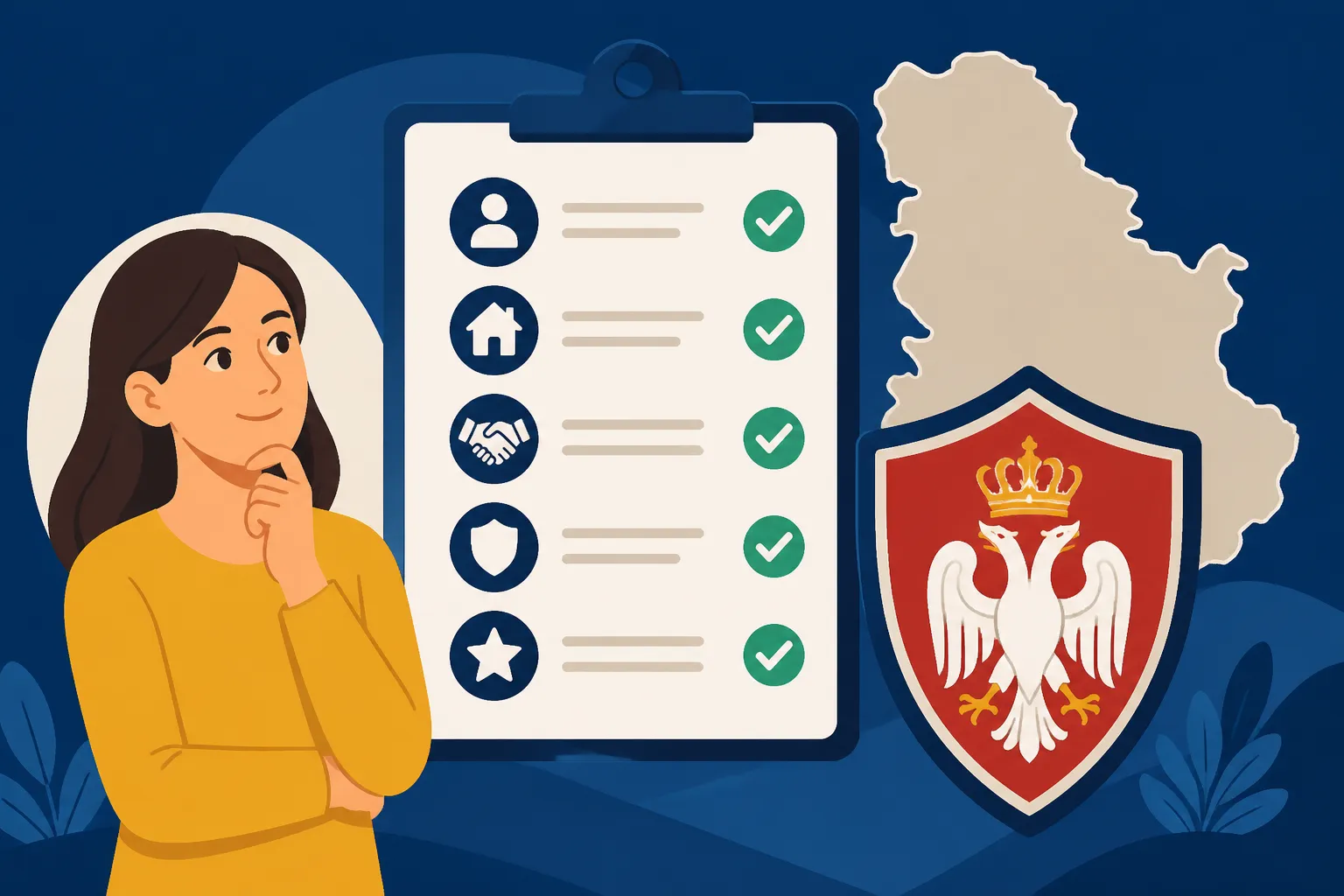
When it comes to documentation, prepare for an avalanche. This is where the notorious Serbian bureaucracy truly shines. You will need:
- Birth Certificate: The original, translated into Serbian by a sworn court interpreter, and apostilled (if from a country that's part of the Hague Apostille Convention).
- Marriage Certificate (if applicable): Again, original, translated, and apostilled.
- Proof of Serbian Citizenship for Spouse/Parents (if applicable): If you're applying via marriage or descent.
- Police Clearance Certificates: From your country of origin and from Serbia. These confirm you have no criminal record. Must be translated and apostilled.
- Proof of Financial Stability: This can be a certificate of employment, pay slips, bank statements, or proof of entrepreneurship. The goal is to show a consistent and legal source of income.
- Proof of Accommodation: This usually means a copy of your rental contract or property ownership title (list nepokretnosti).
- Copies of Passport and Residence Permits: Your current passport, and all previous temporary and permanent residence cards.
- Proof of Renunciation of Foreign Citizenship: (More on this later, but often a crucial document).
- Serbian Language Proficiency Certificate: Or an assessment from the MUP during the interview process.
- Completed Application Form: Issued by the MUP.
- Administrative Fees: Proof of payment.
Every single foreign document will need to be translated into Serbian by a sworn court interpreter. Not just any translator – it has to be a court-appointed one. Then, depending on your country of origin, many documents will also need an apostille. If your country is not part of the Hague Apostille Convention, you might need a superlegalisation, which is an even more complex process involving your country's Ministry of Foreign Affairs and the Serbian Embassy/Consulate. Understanding document and translation requirements for Serbia immigration and how to get your documents apostilled for Serbia immigration is paramount before you start. Consider using a reputable moving service like Sirelo if you need to coordinate getting documents from your home country. They often have resources or partners who understand international document logistics.
Proving Integration: Language and Social Ties
Beyond the paperwork, the Serbian authorities want to see that you're genuinely integrated into society. This isn't just about ticking boxes; it's about demonstrating that you understand and appreciate the local way of life.
The Serbian language test is a major component of this. While it might sound daunting, it's generally a practical assessment, not an academic exam. You'll be expected to understand and respond to questions about yourself, your family, your life in Serbia, and basic civic matters. I've heard stories of applicants being asked about local customs or even to name the current Serbian president. The idea is to gauge your ability to function independently in Serbian. Many expats enroll in language courses specifically designed for citizenship preparation. In Belgrade, places like the Kolarac Endowment or individual tutors offer excellent programs. Don't underestimate this step; it's often where people stumble if they've relied solely on English.
But integration goes beyond language. It's also about your social ties and contribution to the community. While not explicitly measured in points, showing that you are actively involved, perhaps through volunteering, participating in local events, or simply having a network of Serbian friends, can implicitly strengthen your application. It’s about being part of the fabric of Serbian life. Have you been paying your taxes diligently, demonstrating your commitment to the country's economy? If you’re a freelancer, ensuring your income is declared correctly and on time is vital, as outlined in guides like how to register your freelance income for tax in Serbia. These small details collectively paint a picture of a well-integrated individual.
The Renunciation Dilemma: A Big Decision
This is often the hardest pill to swallow for many aspiring citizens. For the majority of applicants seeking Serbian citizenship by naturalisation, you will be required to formally renounce your previous citizenship. Serbia generally adheres to a single-citizenship policy for naturalised citizens, meaning they expect you to fully commit. This isn't a light decision; it's a profound one with significant emotional and practical implications.
Renouncing your citizenship means giving up the rights and protections that come with your original nationality. It might affect your ability to travel freely to your birth country, own property there, or even retain certain inheritances. The process itself can be complex and varies greatly depending on your country of origin. Some countries make renunciation relatively straightforward, while others have lengthy procedures and fees. You will usually need to provide official proof from your former country's authorities that your renunciation process has either been completed or is in its final stages before Serbia will grant you citizenship.
However, there are exceptions. Serbia does allow for dual citizenship in specific cases, primarily for those acquiring citizenship by origin or descent, or if there is a bilateral agreement between Serbia and your country of origin that permits it. For example, if you are a citizen of a country with which Serbia has a dual citizenship treaty, or if it is deemed to be in the national interest of Serbia, you might be exempt. Also, if your home country does not allow renunciation or makes it exceedingly difficult, the Serbian authorities might consider an exception, though this is rare and decided on a case-by-case basis. This is one of the areas where seeking legal advice from a Serbian immigration lawyer is not just recommended, but absolutely essential. They can confirm whether does Serbia allow dual citizenship in your specific circumstances and guide you through the intricacies.
Costs, Timelines, and Common Pitfalls
As with any major administrative process in Serbia, applying for citizenship involves costs, varying timelines, and a few traps for the unwary. Being prepared for these aspects can save you a lot of headaches, frustration, and potentially, money.
The Financial Outlay: Fees and Hidden Costs
Let's talk money, because this process isn't free. The official administrative fees for the citizenship application itself are relatively modest, but they are just the tip of the iceberg. You'll need to factor in a range of other expenses:
- Document Translation: As every foreign document must be translated by a sworn court interpreter, these costs can quickly add up, especially if you have multiple documents (birth certificates, marriage certificates, academic diplomas, police clearances). Each page can cost between 800 to 2,000 RSD, depending on complexity.
- Notarization and Apostille/Superlegalisation: Beyond translation, many documents need to be notarized and then apostilled at a district court, or superlegalised if your country isn't part of the Hague Convention. Each stamp carries a fee.
- Language Course/Test Fees: If you need to attend a Serbian language course to prepare for the test, those come with costs. The test itself might have a small administrative fee.
- Police Clearance Fees: Obtaining these from your home country and Serbia often involves small administrative fees.
- Legal Assistance Fees: Honestly, for something as significant as citizenship, I highly recommend engaging a good immigration lawyer. Their fees can range from a few hundred to a couple of thousand euros, but their expertise in navigating the MUP, ensuring all documents are correct, and advocating on your behalf can be invaluable. This can save you from costly mistakes and delays down the line.
- Renunciation Fees: The cost of renouncing your original citizenship will depend entirely on your home country's regulations. Some countries charge substantial fees for this.
- New Passport/ID Fees: Once you're a citizen, there will be fees for your new Serbian passport and national ID card.
When calculating the cost and timeline of the Serbia residence process, remember that citizenship is the final, most expensive step after years of residency, so budget accordingly.
Expecting the Timeline: Patience is Key
If you've spent any time dealing with Serbian bureaucracy, you'll know that things rarely move at lightning speed. The citizenship application process is no exception. It's not a two-month affair; it's a journey.
Here’s a realistic breakdown of the typical timeline for naturalisation:
- Temporary Residence: This usually takes 5 years (e.g., 1+1+1+1+1 year renewals) before you're eligible for permanent residence.
- Permanent Residence: The application for permanent residence itself can take anywhere from a few weeks to several months to process.
- Post-Permanent Residence Wait: Once you have permanent residence, you need to wait another three continuous years before you can even apply for citizenship by naturalisation.
- Citizenship Application Processing: After you submit your complete application, the MUP can take anywhere from six months to two years, or even longer, to process it. There's no hard-and-fast rule, and it often depends on the complexity of your case and the current workload.
So, from the moment you first arrive in Serbia on a temporary residence permit to holding that Serbian passport, you're looking at a commitment of roughly 9 to 10 years or more. This is why I stress patience. Expect delays, follow up politely, and keep meticulous records of everything. Understanding the role of the MUP (Ministry of Interior) in Serbia is crucial, as they are the main authority you'll be dealing with.
Avoiding Common Mistakes and Delays
Having seen countless expats navigate this, I can tell you that the most common pitfalls are entirely avoidable with careful preparation:
- Incomplete Documentation: This is the absolute biggest culprit for delays. Submitting an application with even one missing document, or one that isn't properly translated or apostilled, will result in it being returned to you. The MUP is notoriously strict. Double-check, triple-check, and then get a lawyer to check again.
- Gaps in Residency: Any break in your continuous legal residency in Serbia, no matter how small, can reset your clock or complicate your application significantly. Ensure your temporary and permanent residence permits are always renewed well in advance of their expiry dates. This includes ensuring your how your residence status affects RFZO enrolment in Serbia is also correctly maintained.
- Poor Language Skills: While a casual conversation in Serbian is fine for daily life, the citizenship test requires a slightly more formal understanding. Don't go into the interview unprepared.
- Lack of Proof of Funds: If your financial situation seems ambiguous or unstable, your application might be questioned. Keep clear records.
- Not Understanding the Renunciation Process: If you need to renounce your old citizenship, start investigating the process for your home country well in advance. Some countries have long waiting lists or specific windows for renunciation applications.
- Not Seeking Professional Advice: This is not the time for DIY if you're unsure. A good lawyer specializing in immigration will be worth every penny, guiding you through the complexities and ensuring you don't waste time or money on easily avoidable mistakes. They can help you understand how to apply for permanent residence in Serbia correctly and build a strong foundation for your citizenship application.
Life as a Serbian Citizen: Rights and Responsibilities
So, after years of patience, mountains of paperwork, and perhaps a few grey hairs, you've finally received that coveted Serbian passport. Congratulations! But what does it actually mean to be a Serbian citizen? It's more than just a travel document; it comes with a whole new set of rights, freedoms, and, yes, responsibilities.
Benefits and Freedoms: What Changes?
Becoming a Serbian citizen opens up a world of possibilities that simply aren't available to temporary or even permanent residents. This is the ultimate level of integration and commitment, and the country reciprocates by granting you full access to all civic and national benefits.
Firstly, you gain full political rights. This means you can vote in all elections, from local to national, and even stand for public office if you so choose. You're no longer just a resident; you're a fully enfranchised member of Serbian society, with a direct say in its future.
Secondly, and perhaps most tangibly for many, is the unrestricted travel and movement with a Serbian passport. You can travel to all visa-free countries that Serbia has agreements with, and crucially, you can enter and exit Serbia whenever you please, for as long as you want, without any concern for residence permit renewals or the 90/180-day rule. The freedom to come and go as you please, without border agent scrutiny, is a huge relief.
Thirdly, your employment and business opportunities become entirely unrestricted. As a citizen, you no longer need work permits or the single permit for work and residence in Serbia. You have the same rights as any native-born Serbian when applying for jobs, starting businesses, or pursuing any professional endeavour. This can significantly simplify bureaucratic hurdles that often plague foreign workers.
Fourthly, property ownership becomes fully straightforward. While foreigners can buy property in Serbia under certain conditions, as a citizen, you face no restrictions, making processes like buying land or multiple properties much simpler.
Finally, you gain full access to social security and state benefits. This includes full coverage under the Republic Health Insurance Fund (RFZO) without the complexities sometimes associated with foreigner enrolment, access to state pensions, and other social welfare programs. It solidifies your place within the Serbian welfare system. It's often reassuring to know you have lifelong access to how Serbia's health system works: the RFZO and private care explained (2027) as a full citizen.
Duties and Obligations: The Other Side of the Coin
With great power comes great responsibility, and Serbian citizenship is no different. While the benefits are extensive, there are also duties and obligations that come with being a national.
One historical point of discussion, especially for men, is military service. Historically, Serbia had mandatory military service. While it is currently voluntary, it's always something to be aware of. As a citizen, you would be subject to any future changes in legislation regarding military service, should it ever be reinstated as mandatory. Currently, young men can volunteer for military training, which is a choice, not an obligation.
Then there are civic duties. These include respecting Serbian laws, upholding the constitution, and participating in civil society. This also extends to paying your taxes faithfully. As a citizen, you are fully integrated into the Serbian tax system, and it's your responsibility to understand and comply with all tax regulations, whether you're employed, self-employed, or have other sources of income. Guides like the complete guide to taxes in Serbia for expats (2027) will become even more relevant as you transition to full citizenship.
In essence, becoming a Serbian citizen means fully embracing not just the privileges but also the responsibilities that come with being a member of this nation. It's about being an active, contributing, and law-abiding individual within the Serbian state, something many of us who chose to make Serbia our home are already striving to be.
Serbian Citizenship Paths at a Glance
To give you a clearer picture of the primary routes to Serbian citizenship, here’s a quick comparison of the key aspects. Remember, these are general guidelines, and specific situations may vary.
| Feature | Citizenship by Naturalisation (General) | Citizenship by Origin/Descent | Citizenship by Marriage |
|---|---|---|---|
| Primary Basis | Long-term residence and integration | Direct lineage to a Serbian citizen | Marriage to a Serbian citizen |
| Age Requirement | 18+ years | No specific age, often applies to minors with parent's consent | 18+ years |
| Residency Prior to Application | 3 years of Permanent Residence (after ~5 years of Temporary) | Often waived or significantly reduced, varies by case | 1 year of Continuous Residence (on Temporary Permit) while married for 3 years |
| Language Requirement | Basic knowledge of Serbian (tested) | Often less stringent or waived | Basic knowledge of Serbian (tested) |
| Criminal Record | Clean record required (from Serbia & home country) | Clean record required (from Serbia & home country) | Clean record required (from Serbia & home country) |
| Financial Stability | Proof of steady income required | Generally not a primary requirement for this path | Proof of financial stability usually required |
| Renunciation of Previous Citizenship | Generally required, with rare exceptions | Exceptions more common, especially if reclaiming citizenship | Generally required, with rare exceptions |
| Complexity | High (long process, many documents) | Medium (proving lineage can be complex) | Medium (proof of genuine marriage and cohabitation) |
| Typical Timeline (from start) | 9-10+ years (after initial arrival on TRP) | Can be much shorter, depending on documentation | 4-5+ years (after initial marriage and TRP) |
Disclaimer
Please remember that I am an expat blogger, not a legal professional. While I strive to provide accurate and up-to-date information based on my personal experience and extensive research, immigration laws and procedures in Serbia can change without notice. This guide is intended for informational purposes only and does not constitute legal advice. You should always consult with a qualified Serbian immigration lawyer or the Ministry of Internal Affairs (MUP) for advice specific to your individual circumstances before making any decisions related to your residency or citizenship.