What Are the Hidden Costs of Buying Property in Serbia?
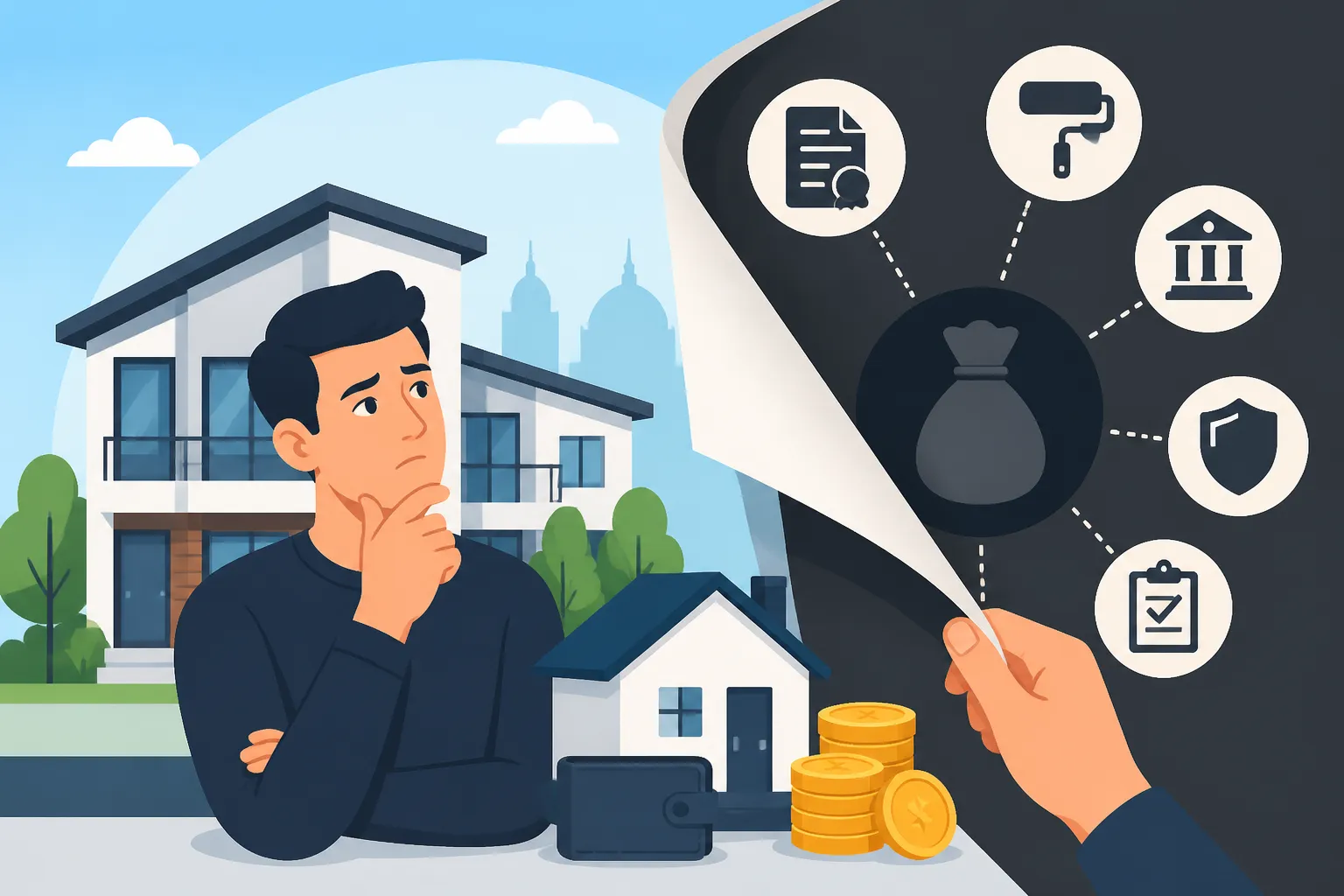
Moving to a new country and dreaming of owning a piece of it, especially a charming property in Serbia, is incredibly exciting. You see the pictures, you imagine the life, and you start to calculate the price tag. But here's the kicker, my friends: that initial advertised price for a lovely apartment in Belgrade or a quaint house in Novi Sad is almost never the final figure you'll pay. The real estate market in Serbia, while generally more affordable than Western Europe, has its own unique set of hidden costs and fees that can catch even the most diligent expat off guard, adding thousands of euros to your total expenditure. This guide is here to pull back the curtain on those often-overlooked expenses, preparing you for the full financial picture so you can budget wisely and avoid any unwelcome surprises.
Navigating the Initial Paperwork and Professional Fees
When you first dive into the property market here, you'll quickly realise that the process isn't just about finding a place and signing on the dotted line. There's a whole entourage of professionals and official processes that come with their own price tags. These aren't necessarily "hidden" in the sense that they're secret, but they are often not factored into the mental budget of someone only looking at the property's sale price.
Notary Public Fees: The Unavoidable Gatekeeper
In Serbia, the notary public plays an absolutely crucial role in property transactions. They're not just witnessing signatures; they are legally obligated to draft and verify the sales contract, ensure all necessary documents are in order, and officially certify the transfer of ownership. This step is non-negotiable and you can't bypass it.
The fees for notary services are regulated by law, which means they are fairly standardised, but they are based on the purchase price of the property. For instance, for properties valued up to approximately 6,000,000 RSD (around €50,000), you might pay a few hundred euros. However, as the property value increases, so does the notary fee, although it's usually capped at a certain amount for very high-value properties. It's a progressive scale, so don't be surprised if this cost, while clear in the law, feels hefty when you're already counting every euro. It’s always a good idea to factor in around 0.5% to 1% of the property value just for the notary, though this percentage decreases for more expensive properties due to the cap. Remember, it's not just the main contract; sometimes there are preliminary contracts or additional declarations that also incur smaller notary charges. You can find more details on how to complete the property purchase and notary process in Serbia if you want to dive deeper into this topic.
Legal Due Diligence and Lawyer's Fees
While a notary public ensures the legality of the transaction itself, a lawyer performs due diligence on the property and the seller. This is where a sharp legal eye can save you from a world of future headaches. Imagine discovering after purchase that there are unresolved ownership disputes, illegal extensions on the property, or outstanding debts tied to the previous owner. A good lawyer will meticulously check the cadastral records (the land registry), previous sales contracts, and any encumbrances on the property.
Lawyer's fees typically aren't regulated like notary fees, so they can vary quite a bit. You might encounter lawyers who charge a flat fee for the entire process, or those who charge a percentage of the property value, usually ranging from 0.5% to 1.5%. For high-value properties, a fixed fee often becomes more economical. While it might seem like an extra cost at first glance, skimping on legal representation is a false economy. A friend of mine once decided against a lawyer to save a few hundred euros, only to discover later that the property had a shared access road with a neighbour that wasn't clearly defined, leading to years of disputes. This is one of those "hidden" costs that can prevent much larger, truly hidden problems down the line. It's an investment in peace of mind.
Real Estate Agent Commissions: Are They Worth It?
Ah, real estate agents. They can be your best friend or a source of frustration. In Serbia, it's very common to use a real estate agent, especially if you're not fluent in Serbian or familiar with the local market nuances. They help you find properties, arrange viewings, and often act as a go-between for negotiations. However, their services come at a cost – a commission.
Typically, real estate agent commissions in Serbia range from 2% to 3% of the purchase price, and sometimes even up to 4%. This commission is usually paid by the buyer, though in some cases, the seller might also pay a portion or even the full amount, so always clarify this upfront. Some agents might even try to charge both sides, so ensure your agreement specifies who pays what. While not strictly "hidden," this is a significant sum that many first-time buyers only properly account for once they've found their dream property. For a €100,000 apartment, that's an extra €2,000-€4,000 right there. Are they worth it? For many expats, the answer is a resounding yes. They navigate the language barrier, local customs, and administrative complexities, which can be invaluable. However, always ensure you have a clear agreement on their fees and services before proceeding. If you're pondering the overall cost, checking out how much it costs to buy an apartment in Belgrade might give you a broader perspective.
Post-Purchase Financial Obligations and Ongoing Costs
So, you’ve signed the papers, paid the professionals, and now you’re holding the keys. You might think the financial hurdles are behind you, but not so fast! There are crucial post-purchase costs and ongoing obligations that are very much a part of the "hidden" total expense of property ownership in Serbia.
Property Transfer Tax: The Big One
This is arguably the largest "hidden" cost that many expats overlook when they first look at property prices. The property transfer tax (porez na prenos apsolutnih prava) is a mandatory tax levied by the Republic of Serbia on the transfer of ownership of real estate. The standard rate is 2.5% of the market value of the property.
Now, here's the catch: it's not always 2.5% of what you paid. The tax authorities (Poreska Uprava) have their own assessment of the property's market value, which might differ from your purchase price. If their assessed value is higher, you'll pay 2.5% on their valuation, not yours. This can lead to an unexpected bill. For instance, if you negotiated a great deal for an apartment at €90,000, but the tax authority values it at €100,000, your tax will be €2,500, not €2,250. This can be a substantial difference, especially if their valuation is significantly higher than your agreed price. It's vital to factor this into your budget right from the start. Learning about the complete guide to property and transaction taxes in Serbia can shed more light on this.
Capital Gains Tax: If You Sell Within Ten Years
This isn't a cost for buying, but it's a potential future cost often ignored at the point of purchase that can significantly impact your long-term financial planning if you intend to sell the property down the line. In Serbia, if you sell a property that you've owned for less than 10 years, you are liable to pay capital gains tax on the profit you make from the sale. The rate for capital gains tax is 15%.
Let's say you bought an apartment for €100,000, made some minor improvements, and sell it five years later for €120,000. Your capital gain is €20,000. You would then pay 15% of that, which is €3,000, in capital gains tax. There are exemptions, however. If you use the proceeds from the sale of your primary residence to purchase another primary residence within a certain timeframe, you might be exempt. Also, if you’ve owned the property for more than 10 years, you are completely exempt from capital gains tax. This rule incentivises long-term ownership, but it's crucial to be aware of if your plans involve a quicker turnover of property.
Registration Fees and Cadastre Costs
After the notary certifies your contract and the property transfer tax is paid, the final step in officially establishing your ownership is to register the property in the Cadastre (the public land and property register). This isn't just a formality; it's the legal proof that you are the rightful owner. Without proper registration, you might face issues proving ownership or selling the property in the future.
The fees for registration with the Cadastre are relatively modest compared to other costs, usually a few hundred euros, depending on the complexity of the registration (e.g., registering a new building vs. transferring an existing one). However, these smaller fees can add up when combined with other administrative charges. Sometimes there are additional fees for obtaining extracts from the Cadastre, which might be needed by your lawyer or for other purposes. While not a huge sum, it's another line item in the budget that needs to be accounted for.
Ongoing Property Taxes and Utility Setup
Once the property is officially yours, the costs don't stop. You'll have annual property taxes (porez na imovinu) to pay. These are municipal taxes and vary by municipality, property size, location, and age, but are generally quite reasonable in Serbia compared to many other countries. For example, a standard 60-70 sqm apartment in a good area of Belgrade might incur property taxes of a few hundred euros per year. However, it's an ongoing, recurring cost that needs to be budgeted for, and it's calculated based on a percentage of the property's assessed value. You can find out more by reading How much is property tax in Serbia?.
Beyond property taxes, there are the inevitable utility setup and ongoing costs. When you move into a new place, you'll need to transfer existing utility accounts (electricity, water, heating, internet, cable TV) into your name or set up new ones. While the monthly utility bills are generally low in Serbia, there can be administrative fees for transferring accounts or connection fees for new services. For instance, setting up internet and mobile service in Serbia with providers like Telekom Srbija or SBB might involve installation fees. Similarly, getting your electricity (EPS) and water (Vodovod i Kanalizacija) accounts in order can sometimes come with small administrative charges or require deposits, especially for new connections or if the previous owner had outstanding bills. The expat guide to setting up utilities (electricity, water, heating) in Serbia provides a great overview of these steps.
| Cost Category | Typical Range/Rate | Who Pays? | Notes |
|---|---|---|---|
| Notary Public Fees | 0.5% – 1% of property value (sliding scale, capped) | Buyer | Legally regulated, mandatory for contract verification and ownership transfer. |
| Lawyer's Fees | 0.5% – 1.5% of property value or fixed fee | Buyer | Highly recommended for due diligence, contract review, and protecting your interests. Varies by lawyer. |
| Real Estate Agent Commission | 2% – 3% (sometimes up to 4%) of purchase price | Usually Buyer | Clarify upfront. Provides invaluable assistance with searching, viewing, and negotiation. |
| Property Transfer Tax | 2.5% of tax authority's assessed market value | Buyer | Significant cost. Tax authority's valuation might differ from purchase price. |
| Capital Gains Tax | 15% of profit | Seller (if applicable) | Applies if property is sold within 10 years of purchase. Exemptions apply for primary residence replacement. |
| Cadastre (Land Registry) Fees | A few hundred euros (flat rates) | Buyer | Mandatory for official registration of ownership. |
| Annual Property Tax | Varies by municipality, property type, and value | Owner | Recurring annual cost, generally reasonable in Serbia. |
| Utility Setup/Connection Fees | Variable, usually small administrative fees | Owner/Tenant | For transferring existing accounts or setting up new ones (electricity, water, internet, etc.). |
| Building Maintenance Fees | €20 – €100+ per month (for apartments) | Owner | Covers common areas, cleaning, repairs, and sometimes building management. Often not included in rent for tenants. |
| Renovation/Repair Costs | Highly variable | Owner | Especially for older properties. Factor in potential unexpected repairs shortly after purchase. |
| Relocation/Moving Costs | Highly variable | Buyer | Shipping belongings, temporary accommodation. Can be substantial for international moves. Consider services like Sirelo for quotes. |
| Internet/Mobile Activation Fees | Small, one-off fees | Owner/Tenant | For new contracts. Consider an eSIM from providers like Airalo for immediate connectivity. |
Renovation, Maintenance, and Relocation Surprises
Sometimes, the "hidden" costs aren't bureaucratic fees but rather the practical realities of owning a property, especially in an older city like Belgrade or Novi Sad. These are the expenses that often sneak up on you after you've already committed to the purchase.
Renovation and Repair Costs: The "Character" of Older Properties
You fall in love with a charming, older apartment with high ceilings and beautiful architectural details. What you might not immediately consider is the wear and tear of decades, or even a century, of use. While the purchase price might be lower for such properties, the costs of bringing them up to your desired standard, or even just making them fully functional and safe, can be substantial.
We’re talking about potentially needing to replace old electrical wiring (a major undertaking!), outdated plumbing, inefficient windows, or even addressing structural dampness. These aren't just cosmetic changes; they are fundamental repairs that can quickly add thousands of euros to your expenditure. Even if a property looks decent, a professional inspection can reveal underlying issues that need urgent attention. A friend of mine bought a beautiful apartment in Vračar, only to discover a month later that the ancient boiler was on its last legs, leading to an unexpected several thousand euro bill for a replacement and installation. Always factor in a contingency fund for unforeseen repairs, especially if you're buying an older apartment. Understanding property ownership and the market in Serbia often means being prepared for these sorts of realities.
Building Maintenance Fees and Common Charges
If you're buying an apartment, you're not just buying your four walls; you're becoming a co-owner of the entire building. This means you'll be contributing to its upkeep. These are known as "building maintenance fees" (naknada za održavanje zgrade) or common charges. They cover the costs of cleaning common areas (hallways, stairs), minor repairs to the building's exterior or shared facilities, electricity for common lighting, and sometimes even a building manager or security.
These fees vary significantly depending on the age and size of the building, the services provided, and how proactive the building association (skupština stanara) is. For a newer building with a lift and a well-maintained entrance, you might pay €50-€100 per month, sometimes more. For an older, simpler building, it could be less, perhaps €20-€30. While not exactly "hidden" as they'll be part of your monthly outgoings, many expats don't factor them into their initial purchasing budget, focusing solely on the mortgage or rent. It’s crucial to ask about these fees during the viewing stage to get a realistic picture of your ongoing costs. You also want to check the building's financial health – are there outstanding major repairs being planned that will require a large one-off payment from owners? This can be a significant "hidden" cost if not anticipated.
Relocation and Initial Setup Costs
Lastly, and often underestimated, are the actual costs of moving your life to Serbia and setting up your new home. This isn't strictly a "property buying" cost, but it's directly tied to your decision to purchase and live in Serbia. If you’re coming from abroad, the cost of shipping your belongings can be substantial. Services like Sirelo can help you get quotes for international removals, but these costs can easily run into thousands of euros depending on the volume and distance.
Then there are the immediate costs of making your new place feel like home. Even if you bring furniture, you’ll likely need to buy local appliances, adapt to different plug sockets, and perhaps purchase items that didn't make the cut for the move. Furthermore, don't forget the initial period of adjustment, which might include temporary accommodation while you sort out the final touches or wait for your belongings to arrive. Connectivity is also key; getting a local SIM card or an eSIM from providers like Airalo upon arrival can keep you connected, but these are small, yet necessary, initial expenditures. These "hidden" costs aren't part of the property price, but they are absolutely part of the experience and the total financial outlay of becoming a property owner in Serbia.
Disclaimer
The information provided in this guide is intended for general informational purposes only and does not constitute legal, financial, or real estate advice. While we strive to provide accurate and up-to-date information, property laws, regulations, and market conditions in Serbia can change. We strongly recommend consulting with qualified legal professionals, real estate agents, and financial advisors in Serbia for advice tailored to your specific situation before making any property-related decisions.