How Do I Use My Foreign Driver’s Licence in Serbia?
Ah, the open road in Serbia! It sounds liberating, doesn't it? But for us expats, the reality of simply hopping into a car and cruising around with our familiar driver's licence can be anything from a blissful, short-lived dream to a bureaucratic nightmare. Many foreigners find themselves scratching their heads, wondering exactly how long their home country’s licence is valid, what documents they need to carry, and when on earth they’ll be forced to get a Serbian one. This guide is here to untangle all that confusion, offering clear, step-by-step advice on navigating Serbia’s driving regulations for newcomers.
The Initial Grace Period: Driving on Your Foreign Licence in Serbia
When you first arrive in Serbia, whether for a holiday, a reconnaissance trip, or just to dip your toes into expat life, you’re usually granted a bit of grace. It feels good, a small comfort in a sea of newness. But this grace period comes with strict rules and limitations, especially once you decide to plant more permanent roots.
Understanding the 90-Day Rule for Tourists and Visitors
For many non-residents – think tourists, business visitors, or those still figuring out their long-term stay – your foreign driver's licence is generally valid for up to 90 days from your date of entry into Serbia. This is a common rule across many countries, and Serbia is no different. It's designed for short-term stays, not for establishing a life here.
It’s absolutely crucial to remember that this 90-day period is based on calendar days, not just the days you spend actively driving. If you pop over the border to Hungary for a weekend and come back, that 90-day clock generally doesn't reset for your driving privileges under this initial grace period if you're effectively still residing in Serbia. For genuine tourists, each new entry usually grants a fresh 90 days, but once you start applying for residence, this rule starts to blur into something far more rigid. This period is a sweet spot for exploring without the immediate pressure of paperwork, allowing you to get a feel for the local roads, maybe even using navigation apps with a reliable eSIM from providers like Airalo so you don't get lost on those initial adventures. Just make sure you track your days meticulously, because overstaying this informal driving window as a resident, even inadvertently, can lead to some rather hefty fines if you’re stopped by the police.
The Indispensable International Driving Permit IDP
While many countries accept your home driver’s licence for short stays, sometimes it’s the fine print, or the language barrier, that trips you up. This is where the International Driving Permit (IDP) becomes your best friend. An IDP is essentially a multi-language translation of your driver’s licence, recognised in over 150 countries worldwide, including Serbia. It’s not a standalone document; it must always be presented alongside your original foreign driver’s licence.
Even if your original licence is in English, having an IDP can save you a lot of hassle. Serbian traffic police might not be fluent in every language, and a universally recognised document like the IDP helps them quickly verify your driving credentials. Imagine being pulled over on a country road, far from any city, and trying to explain your foreign licence to an officer who only speaks Serbian. An IDP can smooth over these situations immensely, making interactions quicker and less stressful. You absolutely must obtain your IDP in your home country before you arrive in Serbia. You cannot get one here based on your foreign licence. Most national motoring associations (like AAA in the US or the Post Office in the UK) issue them for a small fee and they are usually valid for one to three years. Trust me, it's one of those small, proactive steps that can prevent big headaches later on.
When and How to Convert to a Serbian Driver's Licence
This is where things get serious, and a bit more complicated. Once you make the commitment to live in Serbia and obtain your temporary residence permit (Boravak), the rules for your foreign driver's licence change significantly. The relaxed tourist rules evaporate, and you're now expected to integrate into the Serbian system. This transition can often be a source of frustration, as it involves navigating local bureaucracy, which, as many of us expats know, can be a labyrinth. If you’re in the process of moving all your belongings to Serbia, perhaps using a relocation service like Sirelo, remember that getting your driving situation sorted is just as important as setting up your new home.
The Obligation to Convert for Residents
Here’s the golden rule for residents: once you obtain temporary residence (privremeni boravak) in Serbia, you generally have a period of 90 days from the date your residence permit was issued or approved to convert your foreign driver’s licence to a Serbian one. This is not tied to your entries and exits anymore; it’s a hard deadline linked to your official residency status. For example, if your temporary residence permit was issued on January 15th, you have until April 15th to initiate and complete the conversion process.
Failing to convert your licence within this timeframe can lead to serious consequences. If you’re stopped by the police and found to be driving on an unconverted foreign licence past your 90-day residency window, you could face substantial fines, impoundment of your vehicle, and even a temporary ban from driving in Serbia. It’s not a risk worth taking. This obligation underscores the importance of understanding How to Get Temporary Residence (Boravak) in Serbia and planning your licence conversion simultaneously with your other administrative tasks when you first arrive. Don't procrastinate on this one!
The Conversion Process: What to Expect
The actual process of converting your foreign licence can vary based on your nationality and whether your home country has a bilateral agreement with Serbia for direct licence exchange. Regardless, be prepared for a multi-step journey involving multiple institutions.
- Gathering Documents: You'll need your original foreign driver's licence, your International Driving Permit (if you have one, which you should!), your Serbian temporary residence permit, your passport, and proof of address in Serbia (such as your white card or a rental contract). Sometimes, a medical certificate (lekarsko uverenje) from an approved Serbian medical facility is also required. This involves a general health check and an eye exam, ensuring you are medically fit to drive.
- Official Translation: Your foreign driver's licence will almost certainly need to be officially translated into Serbian by a certified court interpreter (sudski tumač). These are professionals authorised by the Serbian Ministry of Justice, and you can usually find lists of them online or through local expat groups. Make sure to get several copies if you anticipate needing them for other purposes.
- Application at the MUP: With all your documents in hand, you’ll head to the traffic department (Uprava saobraćajne policije) of the Ministry of Interior (MUP) in your city of residence. In bigger cities like Belgrade or Novi Sad, these departments are often busy, so be prepared for potential queues. You’ll submit your application, pay the administrative fees, and they will review your documents.
- The "Exchange" vs. "Test" Dilemma: This is the crucial part.
- Direct Exchange: If your country has a bilateral agreement with Serbia, the process is usually a direct exchange. You hand over your foreign licence (or it gets stamped/marked), and they issue you a Serbian one. No tests required!
- Tests Required: If there’s no agreement, you might be required to complete a full Serbian driving test, including both theoretical and practical components. This is, understandably, a much more arduous process, akin to learning to drive from scratch in Serbia.
Validating the frustration here: the MUP process can be slow and confusing. Patience is absolutely key, and sometimes bringing a Serbian-speaking friend can make a world of difference. It’s all part of the grand adventure of navigating Serbian bureaucracy, which can feel very different from systems in other parts of the world.
Countries with Bilateral Agreements for Direct Exchange
Good news for many! Serbia has a number of bilateral agreements with other countries that allow for the direct exchange of driver's licences without the need for additional theoretical or practical tests. This significantly simplifies the process.
Generally, these agreements include:
- European Union (EU) member states: Most EU countries have agreements.
- Neighboring Countries: Bosnia and Herzegovina, Montenegro, North Macedonia, Croatia, Slovenia.
- Other Specific Countries: Switzerland, Turkey, Russia, Belarus, Ukraine, and certain other countries also have agreements.
It's essential to double-check the most current list of countries with bilateral agreements, as these can change. You can usually find this information on the MUP website (though it might be in Serbian) or by asking at the MUP traffic department directly. If your country is on this list, your conversion process will primarily involve document submission, translation, a medical check, and payment of fees. Your foreign licence may be retained by the MUP or returned to you marked as "exchanged" or "invalid for use in Serbia." This is a relief for many, allowing them to focus on other aspects of settling in, like understanding How to Register and License a Car in Serbia or even How to Buy a Car as a Foreigner in Serbia.
Navigating Serbian Roads: Practical Tips for Foreign Drivers
Even with a shiny new Serbian driver's licence, getting behind the wheel in a new country can be daunting. Serbian roads and driving culture have their own unique flavour, and being prepared can make your driving experience much smoother and safer.
Understanding Local Driving Culture and Rules
Driving in Serbia can be an "experience," to put it mildly. While traffic laws exist, their interpretation and enforcement can sometimes feel a bit… flexible.
- Aggressive Driving: You'll notice a more assertive, and at times aggressive, driving style, especially in cities like Belgrade. Drivers often cut in, use horns liberally, and parking can be a creative art form. Stay calm, be patient, and drive defensively.
- Speed Limits: Speed limits are generally 50 km/h in urban areas, 80 km/h on open roads outside towns, and 130 km/h on motorways (autoban). These are often enforced with speed cameras and police patrols, especially on major routes.
- Alcohol Limit: Serbia has a very strict alcohol limit for drivers: 0.2‰ (per mille) blood alcohol content. This is essentially close to zero, meaning even one small drink can put you over the limit. It's safest to avoid alcohol entirely if you plan to drive.
- Headlights: Headlights are mandatory at all times, day or night, year-round. This is a common requirement in many European countries, so make sure yours are on.
- Winter Tires: Between November 1st and April 1st, winter tires are mandatory if there's snow, ice, or sleet on the road. Many drivers simply keep them on for the entire period. This is strictly enforced and crucial for safety on Serbian roads, which can get very icy.
- Seatbelts: Mandatory for all occupants. No exceptions.
- Mobile Phones: Using a handheld mobile phone while driving is strictly prohibited. Use a hands-free system or pull over.
- Pedestrian Crossings: Pedestrians generally have the right of way, but don't assume drivers will always stop. Exercise caution.
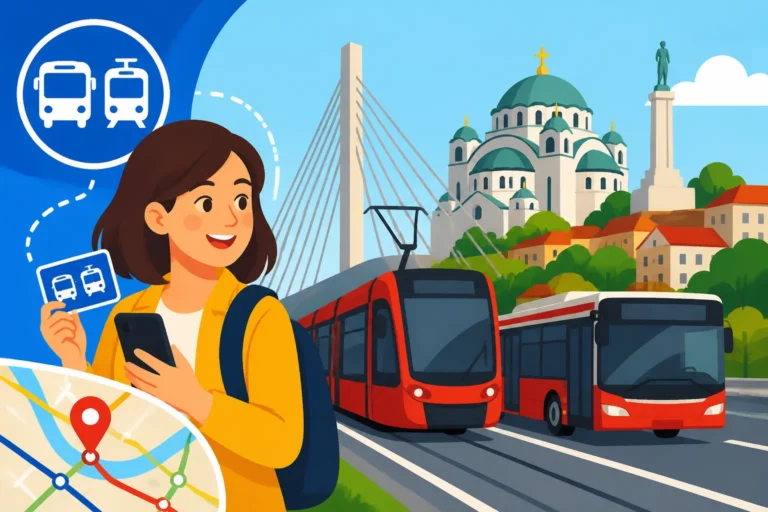
Getting acquainted with these nuances is part of the expat journey. Sometimes, for those challenging city commutes, exploring The Expat Guide to Public Transport in Serbia might even seem like a more appealing alternative!
Essential Documents to Carry & Staying Connected
When you're driving in Serbia, always have the following documents with you:
- Your Serbian Driver's Licence: Once you've converted it, this is your primary proof of driving eligibility.
- Vehicle Registration (Saobraćajna Dozvola): If you own the car.
- Proof of Insurance (Polisa Osiguranja): Mandatory liability insurance.
- Your Residence Card (Boravak Kartica): Your primary identification as a resident.
It's a good habit to keep these documents in your car, but not necessarily in plain sight when parked. For navigation, Google Maps, Waze, and Here WeGo are popular choices and work well in Serbia. Having a reliable internet connection is vital for real-time traffic updates and directions, especially when exploring new areas or dealing with unexpected detours. This is where a local SIM card comes in handy, ensuring you have data coverage wherever you go. Consider checking out How to Set Up Internet and Mobile Service in Serbia early on to ensure seamless connectivity.
Dealing with Roadside Checks and Accidents
Being stopped by the police or involved in an accident in a foreign country can be intimidating. Knowing what to do can alleviate some of the stress.
- Roadside Checks: Police checks are relatively common. If you are stopped, remain calm and polite. The officer will typically ask for your driver's licence, vehicle registration, and insurance. Present them without argument. If there's a language barrier, they may try to find someone who speaks English or use gestures. Don't offer bribes; it’s illegal and can lead to serious trouble. Just cooperate, and usually, things will proceed smoothly.
- Accidents:
- Minor Accident (Small Damage, No Injuries): If it's a minor fender bender with no injuries and minimal damage, you can usually exchange insurance details with the other driver and fill out a European Accident Statement form (Evropski Izveštaj o Saobraćajnoj Nezgodu), which should be in your car's glove compartment.
- Serious Accident (Injuries or Significant Damage): Immediately call the police (dial 192 for police or 112 for general emergencies). Do not move the vehicles unless absolutely necessary for safety. Wait for the police to arrive and create an official report (policijski zapisnik). This report is crucial for any insurance claims. If there are injuries, also call for an ambulance (194). Always document the scene with photos, gather witness contact information, and ensure you have third-party liability insurance coverage, which is mandatory here.
These tips are part of a broader understanding of Driving in Serbia: Licences, Registration and Rules for Expats, which covers a wider array of driving-related topics you'll encounter as a resident.
The Long Haul: What if Direct Exchange Isn't an Option?
For those whose home country does not have a bilateral agreement with Serbia for direct driver's licence exchange, the path to legal driving becomes significantly longer and more involved. This is undoubtedly the most challenging scenario, requiring considerable time, effort, and financial investment. It's often the reality for expats from countries like the USA, Canada, Australia, and many others outside of Europe.
The Full Serbian Driving Test Experience
If a direct exchange isn't possible, you're essentially starting from scratch in the Serbian driving system. This means enrolling in a driving school and going through the entire process as if you were a new driver, typically requiring:
- Theoretical Lessons and Exam: You'll need to attend theoretical driving lessons, which cover Serbian traffic laws, road signs, and safe driving practices. These lessons are almost exclusively conducted in Serbian. If your Serbian isn't up to par, this can be a major hurdle, often necessitating private Serbian language tutoring or finding a driving school that offers some form of English support, which is rare outside of Belgrade. The theoretical exam is a computer-based test that assesses your knowledge of these rules.
- Practical Driving Lessons and Exam: After passing the theoretical exam, you'll undertake a prescribed number of practical driving lessons with a certified instructor. These lessons will focus on familiarising you with Serbian road conditions, maneuvers, and local driving habits. Again, the language barrier can be a significant challenge here. The practical exam involves driving with an examiner who will assess your skills and adherence to traffic laws in real-world conditions.
This process is a significant undertaking. It’s not just about passing a test; it’s about adapting to an entirely new system in a foreign language. It’s also one of the many considerations when you're looking at the overall The Complete Guide to Cost of Living in Serbia for Expats, as the costs of driving lessons and exams can add up.
Finding a Driving School and Learning the Ropes
Finding the right driving school is crucial, especially if you’re facing the full test requirement.
- Research and Recommendations: Ask around in expat groups, local forums, or among Serbian friends for recommendations for reputable driving schools (auto škole). Look for schools with good pass rates and, ideally, instructors who have some experience with foreign students, even if they don't speak fluent English.
- Language Barrier: Be prepared for the language challenge. Most driving school materials and instruction will be in Serbian. You might need to study the Serbian highway code intensely with the aid of a translation app or a tutor. In major cities like Belgrade or Novi Sad, you might occasionally find an instructor with a basic command of English, but don't count on it as a widespread option.
- Time and Cost Commitment: This full process can take several months, depending on how quickly you can complete the lessons and secure exam slots. The costs include enrollment fees for the driving school, lesson fees, exam fees, and the medical examination certificate. It can easily run into several hundred, or even over a thousand, euros.
| Feature | Foreign Licence (Tourist/Short-term) | Serbian Licence (Resident) |
|---|---|---|
| Validity Period | Up to 90 days from entry | Mandatory conversion within 90 days of residence approval |
| IDP Requirement | Highly recommended/often required | Not relevant once Serbian licence obtained |
| Primary Document | Original Foreign Licence + IDP | Serbian Driver's Licence |
| Medical Exam | Not required | Often required for conversion |
| Translation | Not usually required for tourist use | Required for conversion application |
| Tests Required | No | Varies by country agreement (Exchange vs. Full Test) |
| Legal Status | Visitor/Non-resident | Resident |
| Consequences of Non-Compliance | Driving illegally (fines, vehicle impoundment) | Driving illegally (hefty fines, licence suspension) |
| Effort to Obtain | Minimal (get IDP in home country) | Varies from bureaucratic to extensive (full driving school) |
Ultimately, navigating the Serbian driving licence system as an expat requires diligence, patience, and a willingness to engage with local procedures. Whether it's a straightforward exchange or a full immersion into Serbian driving school, getting this crucial document sorted is a key step to truly feeling at home and mobile in Serbia.
Disclaimer
The information provided in this guide is intended for general informational purposes only and does not constitute legal advice. While we strive to keep the information up-to-date and accurate, regulations regarding driving licences, residence permits, and legal requirements in Serbia can change. It is always recommended to consult with the official Serbian Ministry of Interior (MUP) or a qualified legal professional for the most current and specific advice tailored to your individual circumstances.