How to Use Local Payment Systems and Cards in Serbia
Navigating the financial landscape of a new country can feel like trying to solve a Rubik's Cube blindfolded, and Serbia is no exception. While many aspects of life here are beautifully traditional, its payment systems are undergoing a quiet revolution, leaving expats wondering whether to clutch their cash or confidently tap their card. This guide is here to demystify how to use local payment systems and cards in Serbia, ensuring you're always prepared for whatever transaction comes your way.
The Serbian Dinar and Everyday Transactions: Cash vs. Card Reality
When you first arrive in Serbia, one of the most immediate things you'll notice is the currency: the Serbian Dinar, or RSD. It’s a bit different from what you might be used to, and understanding its role in daily transactions is crucial. You’ll quickly learn that while card payments are gaining ground, cash still holds a significant, almost sentimental, place in the heart of Serbian commerce.
Understanding the Serbian Dinar RSD and Its Importance
The Serbian Dinar (RSD) is the official currency, and you'll find it in various denominations of banknotes, typically 10, 20, 50, 100, 200, 500, 1000, 2000, and 5000 dinars. Coins, or kovanice, come in 1, 2, 5, 10, and 20 dinars. It's truly a good idea to always carry a mix of smaller bills (100s, 200s, 500s) and some coins, especially when you're just starting out or venturing beyond the main city centres. You’ll discover that many smaller vendors, kiosks, or even some taxi drivers simply won't have change for a 5000 RSD note, and trying to pay for a coffee with one can sometimes be met with a sigh or a shake of the head.
There’s a common misconception among newcomers that Serbia is an entirely cash-based society, and while that was certainly truer a decade ago, it's evolving. However, for certain aspects of daily life, cash remains king. Think about popping into a local pekara (bakery) for some fresh burek and jogurt, buying fruits and vegetables at the pijaca (open-air market), or paying for a ride in one of the independent taxis. In these scenarios, cash is not just preferred; it's often the only accepted method. Even smaller, family-run cafes or quaint souvenir shops in historical districts might operate on a cash-only basis. It's part of the local charm, but it can certainly catch you off guard if you're not prepared.
When and Where Cards Shine and Don't
On the flip side, credit and debit cards are becoming increasingly ubiquitous, especially in the larger cities like Belgrade, Novi Sad, and Niš. You'll find that all major supermarkets, such as Maxi, Idea, or LIDL, readily accept cards, as do most modern restaurants, cafes, and international chain stores. Fashion boutiques, electronics retailers, and larger service providers (like those for mobile phones or internet) will almost universally have card terminals. Contactless payments, where you simply tap your card or phone, are also rapidly growing in popularity and are widely available in these establishments, which is a welcome convenience for many expats who are used to this seamless method back home.
However, don't assume that just because a place looks modern, it automatically takes cards. I've had countless experiences walking into what appeared to be a fairly contemporary barber shop or a trendy little corner store, only to find their card machine was "out of order" or they simply didn't have one. This is where those smaller Dinar bills come in handy. It's always a good habit to ask "Kartica?" (Card?) before you commit to a purchase, especially if you're low on cash. While Visa and Mastercard are almost universally accepted where cards are taken, American Express can be a bit more hit-and-miss, so it’s always best to rely on the former two. The general rule of thumb: for anything under, say, 500-1000 RSD, or if you're in a more traditional or less urban setting, anticipate needing cash.
Navigating Serbian Bank Cards: Debit, Credit, and Contactless
Once you've settled in and gone through the slightly bewildering, yet ultimately rewarding, process of getting your residency, your next financial step will likely be securing a local bank account. This isn't just a formality; it's a game-changer for day-to-day payments and truly integrating into the Serbian financial system.
Getting a Serbian Debit Card as an Expat
Opening a local bank account in Serbia is a crucial step for any long-term expat. It smooths out so many administrative wrinkles, from receiving your salary to paying bills and, of course, making daily purchases. Thankfully, several reputable banks here are quite experienced with assisting foreigners. Banks like Banca Intesa, Raiffeisen Bank, OTP Bank, and UniCredit Bank are often recommended, as they typically have English-speaking staff and clearer procedures for expats. The process usually involves having your temporary residence permit (Boravak), your passport, and sometimes proof of address or income. For a full breakdown, you might want to check out our detailed guide on How to Open a Bank Account at a Serbian Bank as a Foreigner.
Once your account is open, you’ll be issued a local debit card, usually a Visa Electron or Mastercard Debit. This card will quickly become your best friend. The immediate benefit is avoiding foreign transaction fees, which can really add up if you're constantly using a card from your home country. With a local debit card, you can withdraw cash from any ATM in Serbia without incurring additional charges from the local ATM operator (though your own bank might have a fee for using another bank's ATM, depending on your account package). You can also make seamless purchases online on Serbian websites, set up direct debits for utilities, and easily manage your funds through online banking apps. This card effectively makes you financially fluent in Serbia.
The Realities of Credit Cards for Foreigners in Serbia
While debit cards are relatively straightforward for expats to obtain, getting a traditional credit card in Serbia can be a different story. Unlike in some Western countries where credit cards are a primary payment method, in Serbia, they are less prevalent for everyday transactions and tend to be viewed more cautiously by banks. For foreigners, especially those who haven't established a lengthy financial history in the country, securing an unsecured credit card can be challenging. Banks will typically require significant proof of stable, long-term income, a solid residency record, and often a certain period of employment in Serbia to even consider an application. Without a Serbian credit history, which most expats simply won't have when they first arrive, banks are understandably hesitant.
However, this doesn't mean credit cards are entirely out of reach. Some expats find success with secured credit cards, where you deposit a certain amount of money as collateral, and that becomes your credit limit. This can be a good way to start building a local credit history, if that's something you aim to do. Alternatively, if you have a strong relationship with your local Serbian bank through your primary debit account, they might offer you a smaller credit line after a year or two of consistent activity. For most expats, though, relying on their Serbian debit card for purchases and a separate international travel credit card (with good FX rates) for larger or online international transactions is the most practical approach.
The Rise of Contactless Payments and Mobile Wallets
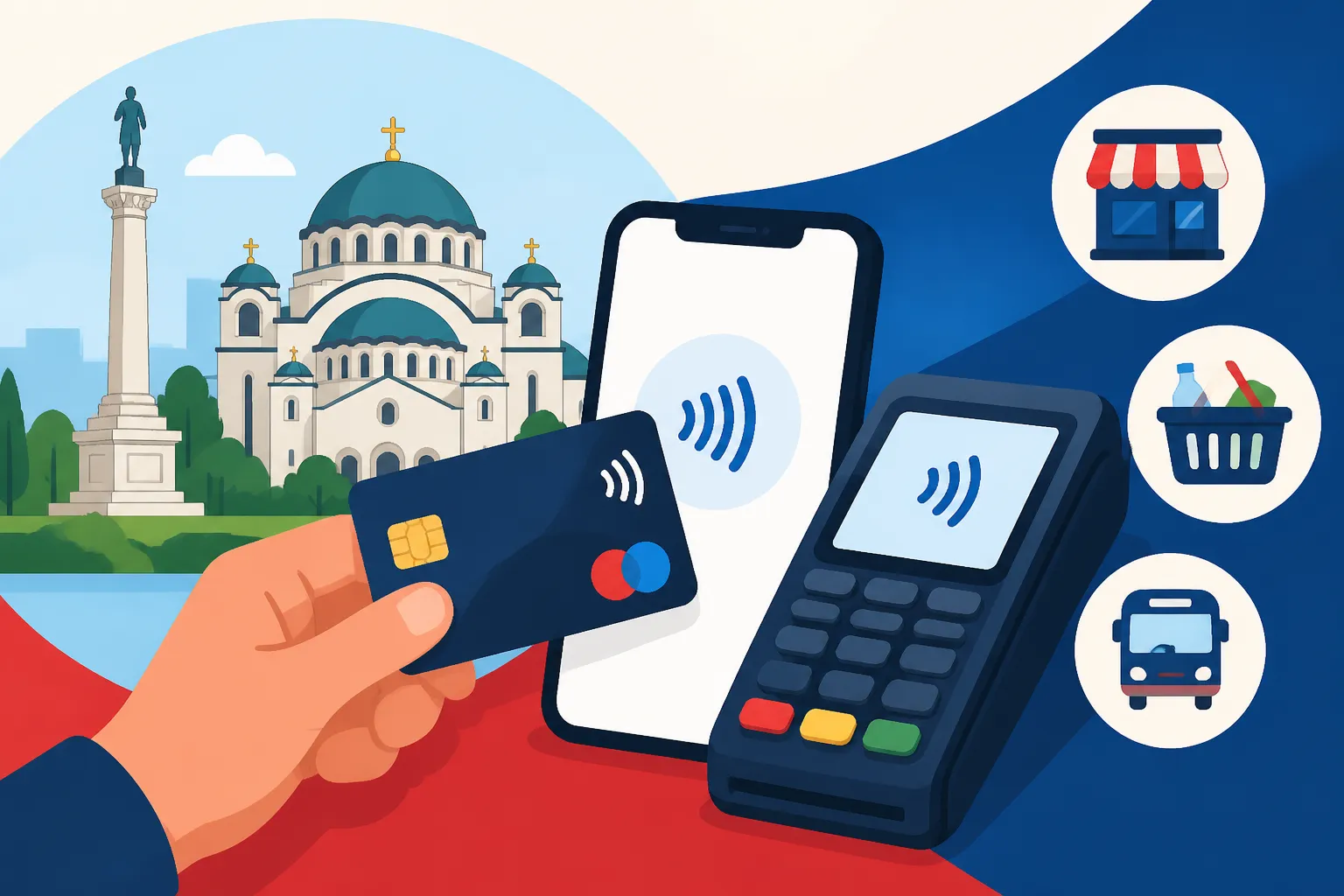
Serbia is embracing modern payment technology, and contactless payment methods are increasingly common and convenient. You’ll find that most point-of-sale (POS) terminals in supermarkets, larger stores, popular cafes, and restaurants are equipped with NFC technology, allowing you to simply tap your card for payment. Look for the familiar contactless symbol – four curved lines – on the card reader. This swift and secure method is particularly appreciated when you're in a hurry or dealing with smaller transactions.
Beyond physical cards, mobile payment solutions are also making their mark. Both Google Pay and Apple Pay are widely supported by major Serbian banks, meaning if you have a Serbian debit card from one of these banks (like Banca Intesa or Raiffeisen Bank), you can easily add it to your smartphone or smartwatch wallet. This allows you to pay with your device, often without even needing to enter a PIN for smaller amounts, adding another layer of convenience and security. While not every single kiosk or tiny corner shop will have a contactless reader, their prevalence in the places you'll frequent most in urban areas makes daily life considerably smoother. It's a great sign of Serbia's ongoing modernization in financial services.
ATMs and Cash Access: Your Lifeline in Serbia
Even with the rise of card payments, having easy access to cash is non-negotiable in Serbia. ATMs are plentiful, especially in urban areas, but understanding how they work, the fees involved, and how to avoid common pitfalls like Dynamic Currency Conversion (DCC) is essential for any expat.
Finding ATMs and Understanding Fees
You won't have to look far to find an ATM in any Serbian city or larger town. Banks have them dotted around, often inside bank branches, outside on main streets, within shopping malls like Ušće Shopping Center or Delta City in Belgrade, and even at petrol stations. Major bank ATMs belong to institutions like Banca Intesa, Raiffeisen Bank, UniCredit Bank, OTP Bank, and Poštanska Štedionica. These are generally reliable and often offer menus in English.
When it comes to fees, this is where it can get a bit tricky if you’re still relying on your foreign bank card. If you use a foreign card at a Serbian ATM, you'll likely face a few charges:
- Your home bank's foreign transaction fee: This is typically a percentage of the withdrawal amount, plus sometimes a flat fee.
- The Serbian ATM operator's fee: Many Serbian banks now charge a direct fee for withdrawals made with foreign cards. This fee can range from a few hundred RSD up to 500 RSD or more, depending on the bank. They usually display a warning about this fee before you confirm the transaction.
This is precisely why getting a local Serbian debit card is so beneficial. Once you have one, you can withdraw cash from your own bank's ATMs fee-free. If you use another Serbian bank's ATM, you might still incur a small interbank fee (around 100-200 RSD), but it’s significantly less than using a foreign card. Always prioritize using your local card to access cash, as those foreign ATM fees can quickly eat into your budget.
Dynamic Currency Conversion DCC: A Trap to Avoid
This is a really important one, and it's a trap many unsuspecting expats fall into, costing them extra money. Dynamic Currency Conversion (DCC) happens when you're offered the choice to pay or withdraw cash in your home currency (e.g., Euros, US Dollars) instead of the local currency (Serbian Dinars) at an ATM or even a POS terminal in a shop. It sounds convenient, right? "See the cost in your familiar currency!" But it's almost always a bad deal.
Here's why: when you choose to pay in your home currency, the local bank or merchant's payment processor applies their own, often highly unfavorable, exchange rate. This rate is usually much worse than the rate your own bank or card network (Visa/Mastercard) would use. You end up paying more for the transaction than if you had simply chosen to be charged in RSD. For instance, if you're withdrawing 10,000 RSD and the ATM asks if you want to be charged in EUR, and you agree, that 10,000 RSD will be converted to EUR at a rate set by the Serbian bank, then sent to your home bank in EUR. Had you chosen RSD, your home bank would convert the 10,000 RSD to EUR (or your home currency) at the much better interbank rate.
My personal advice, and something I preach to every newcomer, is always choose to be charged in the local currency (RSD) when using an ATM or making a card payment in Serbia. If an ATM or terminal offers you DCC, politely decline it or select the option to proceed in Serbian Dinars. It might feel counter-intuitive initially, but it will save you a decent chunk of cash over time.
Online Payments and Digital Financial Tools
In an increasingly digital world, being able to manage your finances online is no longer a luxury, but a necessity. Serbia's financial institutions have certainly upped their game in this regard, offering robust online banking and various digital payment solutions that make life much easier for expats.
Making Online Purchases and Bill Payments
Once you've got your local Serbian bank account and debit card, the world of online payments opens up significantly. Most major Serbian e-commerce sites, whether for electronics, fashion, or even groceries, accept local debit and credit cards without a hitch. Popular platforms for anything from fashion to home goods, such as Gigatron, Tehnomanija, Fashion & Friends, or even local food delivery apps like Wolt and Glovo, integrate seamlessly with Serbian bank cards. You'll simply enter your card details as you would on any other e-commerce site.
Beyond shopping, managing your monthly utility bills electronically is incredibly convenient. Most Serbian banks offer comprehensive online banking platforms or mobile apps that allow you to pay your electricity (EPS), water, heating, internet, and mobile phone bills with just a few clicks. Many utility providers in Serbia have also developed their own apps or web portals where you can log in, view your bills, and make payments directly using your Serbian debit card. This saves you the hassle of waiting in queues at post offices or payment kiosks. You can learn more about this in our guide on How to Pay Your Utility Bills in Serbia or delve deeper into general online banking in our article How to Set Up Online Banking with a Serbian Bank. Setting these up early will save you a lot of precious time and frustration.
International Money Transfers and Exchanging Currency
For expats, sending money to or from Serbia, or exchanging currency, is a regular part of life. While traditional bank transfers are always an option, they often come with less favourable exchange rates and higher fees. This is where modern fintech solutions really shine. Services like Wise (formerly TransferWise) have become incredibly popular among expats in Serbia, and for good reason. They offer highly competitive mid-market exchange rates and transparent, often significantly lower, fees compared to traditional banks for international money transfers.
Using Wise, for example, you can send money from your home country to your Serbian bank account (or vice-versa) with ease, often within hours or a day, and know you're getting a fair deal on the conversion. It’s a contextual brand that genuinely solves a pain point for foreigners here. For those times when you need to convert physical cash, Serbia has numerous menjačnice (currency exchange offices). These are abundant in cities and often offer slightly better rates than banks. Just make sure to compare rates between a few different places if you're exchanging a larger sum, as they can vary. Some of the larger, more reputable ones are in central locations in Belgrade, like around Knez Mihailova street, and often display their rates prominently. They usually accept major currencies like EUR, USD, GBP, and CHF. For more detailed information on moving your funds, you might find our article How to Transfer Money Into and Out of Serbia as an Expat very helpful.
Practical Tips for Expats: Avoiding Hassles and Saving Money
Living in Serbia means adapting to its rhythm, and that includes financial practices. A little foresight and preparation can save you from unnecessary stress and unexpected costs. Here are some seasoned expat tips for navigating the payment landscape.
Always Carry Some Cash
I cannot stress this enough: despite the advances in card payments, always carry some Serbian Dinars on you. This isn't just for emergencies; it's for everyday convenience. From the local bakery that only takes cash to the market vendor with the freshest produce, or that impromptu taxi ride when you just can't find an ATM, cash is your reliable fallback. Aim to have at least 1,000 to 2,000 RSD in smaller denominations (100, 200, 500 RSD notes) in your wallet. This amount will cover most small purchases and unexpected cash-only situations without requiring a large change from the vendor.
There's nothing quite like the mild panic of realizing you only have a 2,000 RSD note for a 200 RSD purchase, and the vendor genuinely doesn't have change. Carrying smaller bills also makes you appear more prepared and integrated into the local way of life, saving both you and the vendor a potential headache. It's a small habit, but it goes a long way in avoiding awkward situations and ensuring smooth transactions.
Inform Your Bank Before Traveling or Moving
Before you even step foot in Serbia, especially if you plan to use your foreign bank cards for the initial period, make sure to inform your home bank about your travel plans. Seriously, do it! Many banks have sophisticated fraud detection systems that will automatically block your card if they detect transactions from a foreign country that isn't typically part of your spending pattern. I've heard countless tales, and experienced a few myself, of cards being declined at critical moments – like trying to pay for accommodation or a meal – simply because the bank flagged the transaction as suspicious.
A quick call or an update via your bank's online portal detailing your destination (Serbia) and the duration of your stay can prevent this unnecessary stress. This allows your bank to anticipate foreign transactions and avoid freezing your account. While this becomes less relevant once you've secured a local Serbian bank card, it's a vital step for your initial days or if you ever rely on international cards for specific transactions.
Keep an Eye on Exchange Rates and Fees
Living as an expat means you’re constantly aware of currency exchange. Whether you're sending money home, receiving funds from abroad, or simply using a foreign card for a purchase, the exchange rate can significantly impact your finances. It’s not just about the posted interbank rate; it’s also about the fees banks or payment processors tack on. Always be vigilant about how much you're truly paying.
I personally use tools like Wise to monitor the mid-market exchange rate between the Dinar and my home currency. This gives me a baseline to compare against. When using a foreign card, be mindful of the foreign transaction fees your home bank charges. These can range from 0% for some travel cards to 3-5% for others, adding a hidden cost to every purchase. And as we discussed, always choose to be charged in RSD to avoid the unfavorable rates of Dynamic Currency Conversion. Being informed and proactive about exchange rates and fees ensures you get the most out of your money while navigating the Serbian economy.
Security Best Practices for Your Cards
Financial security is paramount no matter where you are, and Serbia is no different. While card fraud isn't rampant, it's always wise to practice good security habits. Always be discreet when entering your PIN at ATMs and POS terminals. Cover the keypad with your hand, just as you would anywhere else. Be wary of suspicious-looking ATMs; if a card slot or keypad seems loose or modified, it's best to find another machine.
Keep a record of your bank's emergency contact numbers (both local Serbian bank and your home bank) for reporting lost or stolen cards. Most banks have a 24/7 hotline for this purpose. If you use mobile payment apps, ensure your phone is adequately secured with a strong PIN, fingerprint, or facial recognition. Regularly check your bank statements for any unfamiliar transactions, and report them immediately. It's about being cautious, not paranoid, and these simple steps can save you a world of trouble.
Understanding Tax Implications of Payment Methods
While this guide focuses on the practicalities of using payment systems, it's important to briefly touch on how your financial activities in Serbia connect to your tax obligations. For expats, everything from your local bank account to international money transfers can have implications, and understanding the basics helps you stay compliant.
How Local Payments Connect to Your Financial Footprint
Every transaction you make, every local bank account you open, and every payment method you utilize contributes to your financial footprint within Serbia. When you have a local debit card and bank account, these become the primary channels for your financial life here. This includes receiving income (whether from a Serbian employer or as a self-employed individual), paying local expenses, and saving money. All of this data is visible to the Serbian Tax Administration (Poreska Uprava).
For expats, the main connection to taxes comes through proving your income and financial activity, especially if you are considered a tax resident in Serbia. Your local bank statements can serve as crucial documentation for your income, spending habits, and general financial stability, which might be required for various administrative processes or even for demonstrating your financial means when renewing your residence permit. While we won't go into the intricacies of tax law here, it's a good reminder that your local financial movements are part of a larger picture. For comprehensive advice on this complex topic, professional services like Taxes for Expats are invaluable, as they specialize in guiding foreigners through the nuances of international tax laws and local Serbian requirements. For a deeper dive, you can explore articles like The Complete Guide to Taxes in Serbia for Expats (2027) or Understanding Income Tax and the Flat 10% Rate in Serbia (2026).
Overview of Payment Methods in Serbia
Here's a quick comparison of common payment methods in Serbia and when they're most useful:
| Payment Method | Pros | Cons | Best For |
|---|---|---|---|
| Serbian Debit Card | No foreign transaction fees; wide acceptance in cities; easy ATM access; online payments | May incur interbank ATM fees; not accepted everywhere cash is | Daily spending, supermarkets, online shopping, bill payments in cities |
| Foreign Debit/Credit Card | Familiarity; good for emergencies | Foreign transaction fees; ATM operator fees; DCC risk | Initial days, emergencies, international online purchases |
| Cash (Serbian Dinar) | Universally accepted; essential for small vendors/markets; privacy | Security risk (theft); less convenient for large purchases; change issues | Markets, small shops, kiosks, independent taxis, rural areas, tipping |
| Contactless/Mobile Pay | Fast, secure, convenient; widely accepted in modern establishments | Not universally available; requires compatible device/card | Quick urban purchases, cafes, modern restaurants, larger retail chains |
| International Transfer Services (e.g., Wise) | Favorable exchange rates; low fees; fast transfers | Not for direct point-of-sale payments | Sending/receiving large sums internationally, currency conversion for funds |
Disclaimer
The information provided in this article is intended for general guidance and informational purposes only, and does not constitute financial, legal, or professional advice. While we strive to keep the information up-to-date and accurate, Serbia's regulations and banking practices can change. Always consult with a qualified financial advisor, tax professional, or banking institution for advice tailored to your specific situation. Reliance on any information in this article is solely at your own risk.