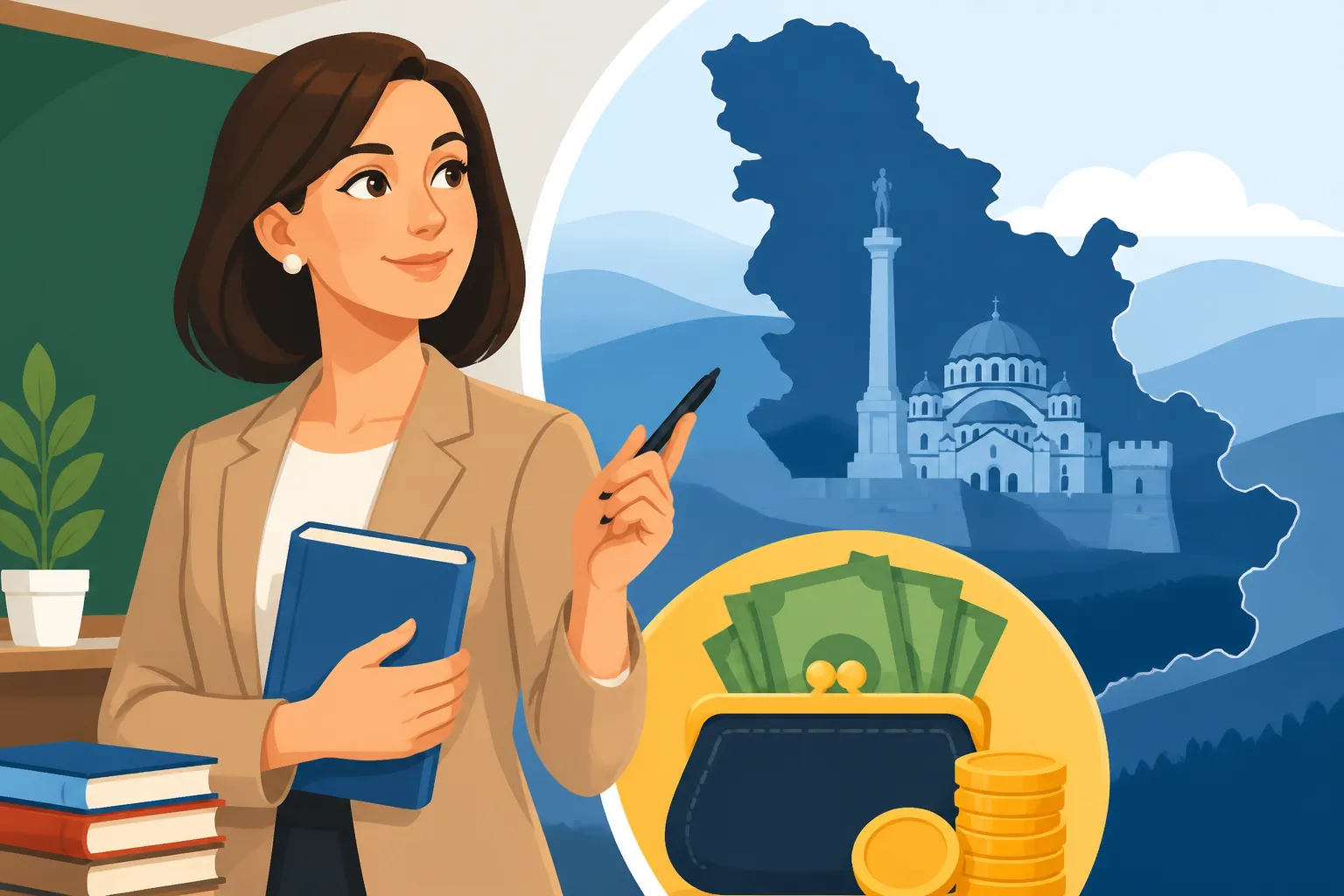
How Much Do English Teachers Earn in Serbia?
So, you’ve been dreaming of living in a vibrant, culturally rich country like Serbia, perhaps picturing yourself teaching English, making a difference, and still having enough in your pocket to explore the stunning landscapes and buzzing city life. It's a wonderful dream, and for many, it becomes a fantastic reality. But let's be honest, before you pack your bags and book that one-way ticket, you're probably wondering: "Can I actually make a decent living teaching English in Serbia?" This guide will meticulously break down the realistic earning potential for English teachers here, from the types of schools to the cost of living, so you can plan your adventure with clear eyes and a full wallet.
The Landscape of English Teaching in Serbia
When you arrive in Serbia, you’ll quickly find that the English teaching scene is quite diverse, much more so than some might initially expect. It’s not just one-size-fits-all. There's a genuine desire among Serbians, from young children to ambitious adults, to master English, driven by global opportunities and cultural exchange. This creates a steady demand for qualified native and near-native English speakers. However, the types of institutions and their respective pay scales can vary significantly, which is crucial for any expat to understand.
Demand and Market Overview
The demand for English teachers in Serbia remains consistently strong, particularly in larger cities like Belgrade and Novi Sad. Parents often see English proficiency as a key stepping stone for their children's future education and career prospects, leading many to enroll them in private language schools from an early age. Adults, too, are keen to improve their English for professional development, travel, or simply personal enrichment. This creates opportunities across various age groups and proficiency levels. While public schools do offer English as part of their curriculum, they rarely hire foreign teachers directly, focusing more on local educators. The real market for expats lies within private institutions and the burgeoning online teaching sector.
Types of English Teaching Opportunities
As an expat, your options for teaching English in Serbia primarily fall into a few key categories, each with its own benefits and drawbacks. Understanding these will help you tailor your job search and salary expectations.
- Private Language Schools: These are arguably the most common employers for foreign English teachers. They cater to students of all ages, from preschoolers to business professionals. The work can be demanding, often involving evenings and weekends, but it offers a structured environment and usually a steady income. Many schools have specific methodologies, and you might be teaching anything from Cambridge exam preparation to general conversation classes.
- International Schools: If you have a teaching license from your home country and a few years of experience, international schools are the most lucrative option. Schools like the International School of Belgrade (ISB) or the British International School (BIS) offer competitive salaries, often paid in Euros, and attractive benefits packages including housing allowances, health insurance, and annual flights. The competition for these roles is fierce, however, requiring specific qualifications and often a commitment to a full curriculum.
- Online Teaching Platforms: The rise of remote work has made online English teaching incredibly popular. Platforms such as VIPKid (though its market has shifted) or more flexible options like iTalki allow you to set your own hours and rates, teaching students from all over the world, including many here in Serbia. This offers immense flexibility and can be a fantastic way to supplement income or even be your primary source of earnings, especially if you're not tied to a specific city or school schedule.
- Private Tutoring: Many expats find that offering private lessons directly to students is a great way to boost their income. This can be done independently or by networking through existing school contacts. Private tutoring often pays the highest hourly rates, as you cut out the middleman, but requires self-marketing and managing your own schedule and materials.
What to Expect: Salary Ranges by Type of School
Now, for the nitty-gritty: how much can you actually make? It’s important to manage expectations. While Serbia offers a high quality of life for a lower cost than many Western countries, English teaching salaries aren't typically on par with what you might earn in, say, South Korea or the Middle East. However, with smart budgeting and perhaps some supplemental income, you can certainly live comfortably and enjoy your time here.
Private Language Schools
Salaries at private language schools are often paid per hour or per lesson, and they can vary depending on your experience, qualifications (a TEFL or CELTA certificate is usually a must), and the school's reputation. Typically, you can expect to earn anywhere from 600 RSD to 1,200 RSD per academic hour (45 minutes).
Let's break that down:
- A newly qualified teacher with a basic TEFL might start closer to 600-800 RSD per hour.
- An experienced teacher with a CELTA or higher qualification could command 900-1200 RSD per hour, especially in Belgrade.
If you teach a full schedule, let's say 20-25 academic hours per week (which is often spread out over afternoons and evenings, plus some Saturdays), your gross monthly income could be in the range of 50,000 RSD to 120,000 RSD. Keep in mind that a full-time contract might include some paid preparation time, but often, the pay is strictly for contact hours. Many schools will pay a flat monthly salary, which is usually equivalent to around 60,000-90,000 RSD for a typical full-time load. It's not a fortune, but it's enough for a single person to cover rent, utilities, and enjoy some of the local delights, especially if they are savvy about their spending.
International Schools
This is where the bigger bucks are, but with higher requirements. International schools in Serbia, like the International School of Belgrade or the British International School, require internationally recognized teaching qualifications (like a PGCE or a teaching license from your home country), often a Bachelor's or Master's degree in education, and several years of relevant experience.
Salaries for qualified teachers in international schools can range from €1,500 to €3,000+ net per month. These positions often come with a comprehensive benefits package, which significantly enhances the overall compensation. This might include:
- Housing allowance or provided accommodation
- Annual flight allowance to your home country
- Private health insurance, which can be a huge relief given the complexities of How Serbia's Health System Works: The RFZO and Private Care Explained (2027)
- Relocation allowance
- Tuition for children if you have a family
If you meet these stringent requirements, an international school position offers an excellent standard of living and a very comfortable expat experience in Serbia. These jobs are more competitive and usually require applications well in advance of the academic year.
Online Teaching Platforms and Private Tutoring
The beauty of online teaching and private tutoring is the flexibility and often the higher hourly rate compared to language schools.
- Online Platforms: Rates vary wildly depending on the platform, your experience, and the student's location. For platforms where you set your own rates, like iTalki, you could charge anywhere from $10 to $30 (or even more) per hour for conversation or structured lessons. If you manage to build a good student base and maintain competitive pricing, you could easily pull in €500 to €1,500+ per month, all from the comfort of your home. The biggest challenge is finding and retaining students, and sometimes converting those foreign currency earnings into Serbian Dinars efficiently.
- Private Tutoring: This is often the most lucrative on an hourly basis. You can typically charge between 1,500 RSD and 3,000 RSD per 60-minute lesson, sometimes even more if you specialize in exam preparation (e.g., IELTS, TOEFL, Cambridge exams) or business English. If you can secure 10-15 hours of private lessons per week, that's an additional 60,000 RSD to 180,000 RSD per month, making a huge difference to your overall income. The key is networking, getting referrals, and having a strong reputation. It's often best to start private tutoring once you've settled in and made some local connections.
Average Monthly Earnings at a Glance
To give you a clearer picture, here's a rough comparison of net monthly earnings:
| Teaching Type | Typical Monthly Net Income (RSD / €) | Qualifications Required | Benefits Offered (Typical) |
|---|---|---|---|
| Private Language School | 50,000 – 100,000 RSD | TEFL/CELTA, Bachelor's degree (preferred) | Limited (sometimes basic local health registration) |
| International School | €1,500 – €3,000+ | Teaching license, Bachelor's/Master's in Education, Exp. | Housing, flights, private health insurance, tuition |
| Online Platform (self-set) | €500 – €1,500+ (highly variable) | TEFL/CELTA, good internet connection | None (you are self-employed) |
| Private Tutoring (per hour) | 1,500 – 3,000 RSD (per 60 min lesson) | TEFL/CELTA, experience, strong reputation | None (self-employed) |
Note: These figures are estimates and can vary based on city, school, experience, and negotiation.
Beyond the Paycheck: Cost of Living vs. Earnings
Understanding your potential earnings is only half the battle; the other, equally important half, is knowing how far that money will stretch in Serbia. One of the biggest drawcards for expats here is the incredibly affordable cost of living compared to Western Europe or North America. This is where those seemingly modest teaching salaries start to look a lot more appealing. If you’re interested in a broader picture, our guide on The Complete Guide to Cost of Living in Serbia for Expats (2026) can give you even more detail.
Accommodation Costs
Rent will likely be your largest expense. In Belgrade, a decent one-bedroom apartment in a good neighborhood can range from €300 to €600 per month, depending on location, size, and amenities. Outside of the city center, or in cities like Novi Sad or Niš, these prices drop significantly. For example, a similar apartment in Novi Sad might be €250-€450. Utilities (electricity, water, heating, internet, mobile) typically add another €80-€150 per month, though heating can jump in the colder months. When you're first looking for a place, understanding How to Sign a Rental Contract and Pay a Deposit in Serbia will be invaluable.
Let's do a quick calculation:
- Average rent in Belgrade: €400 (approx. 47,000 RSD)
- Utilities: €100 (approx. 11,700 RSD)
- Total accommodation: €500 (approx. 58,700 RSD)
If you're making 80,000 RSD per month from a language school, after covering accommodation, you'd have about 21,300 RSD (€180) left for everything else. This illustrates why supplemental income is often a good idea for language school teachers. However, if you're pulling in €1,800 from an international school, that €500 becomes a much smaller bite out of your budget, leaving you with €1,300 for living expenses and savings.
Daily Expenses: Food, Transport, and Leisure
This is where Serbia truly shines for expats on a budget.
- Groceries: Eating out is surprisingly affordable, but cooking at home is even cheaper. A weekly grocery bill for one person can be as low as €30-€50 if you shop at local markets and stick to seasonal produce.
- Eating Out: A meal at a casual restaurant can cost €5-€10. A coffee is usually around €1.50-€2. A beer at a bar costs €2-€3.
- Public Transport: A monthly transport pass in Belgrade is around €25-€30, offering unlimited travel on buses, trams, and trolleys. Taxis are also very reasonably priced compared to other European capitals.
- Leisure: Cinema tickets, gym memberships, and cultural events are all significantly cheaper than in Western countries. A gym membership might be €20-€40 per month.
- Mobile Phone & Internet: These are usually combined in utility costs, but a good mobile plan with plenty of data can be found for €10-€15. You'll want to choose How to Choose a Mobile and Internet Provider in Serbia wisely to get the best value.
Overall, a single expat could comfortably live on €800-€1,200 per month in Belgrade, including rent, utilities, food, transport, and some leisure. In smaller cities, this figure could drop to €600-€900. This means if you're earning at the higher end of the language school spectrum (80,000-100,000 RSD, or €680-€850) and supplementing with private lessons or online work, you can absolutely live well and even save a bit. If you're at an international school, saving a substantial amount is very achievable.
Maximizing Your Income and Managing Your Finances
Making the most of your earnings in Serbia isn't just about finding the highest-paying job; it's also about smart financial planning, understanding the local system, and diversifying your income streams.
Supplemental Income Streams
Many English teachers in Serbia don't rely solely on one school for their income. They smartly combine different teaching opportunities to create a robust financial picture.
- Private Lessons (Offline and Online): This is by far the most common and effective way to boost your earnings. Once you've established yourself and gained some experience, you'll find that word-of-mouth referrals for private tutoring are gold. Students are often willing to pay a premium for personalized attention, especially from a native speaker. Utilizing platforms like iTalki can also allow you to teach outside of Serbian hours, reaching a global audience and setting your own competitive rates. The flexibility is a massive bonus, letting you fit lessons around your main job or leisure time.
- Specialized Courses: If you have expertise in specific areas, consider offering specialized courses. This could be business English for corporate clients, IELTS/TOEFL preparation, or English for specific purposes (e.g., medical English, legal English). These niche areas often command higher rates than general English classes.
- Content Creation or Translation: If you have strong writing skills, consider freelance content creation or translation work. Many Serbian businesses and individuals need English content or translations, and your native fluency can be a valuable asset. This can be done remotely and flexibly, supplementing your teaching income.
Understanding Serbian Taxes and Contributions
Navigating the tax system in a new country can feel like a labyrinth, and Serbia is no exception. It's crucial to understand your obligations to avoid any unpleasant surprises.
- Employee vs. Self-Employed: If you are employed by a language school or international school, your employer will typically handle your income tax and social contributions (pension, health insurance) directly. The personal income tax rate in Serbia is a flat 10%. However, social contributions are also deducted from your gross salary. Your employer should provide a breakdown of these deductions on your payslip.
- Self-Employed (Freelancing/Private Tutoring): If you're earning significant income from private tutoring or online platforms, you may need to register as a "Preduzetnik" (entrepreneur) or consider the Pausal tax regime. The Pausal regime is particularly popular for freelancers as it involves a fixed monthly tax payment, simplifying bookkeeping significantly. The amount depends on your activity, location, and other factors. Our comprehensive guide on The Expat Guide to Freelancing in Serbia as an Expat or How Do I Register as an Entrepreneur (Preduzetnik) in Serbia? can walk you through the specifics.
- Foreign Income and Tax Residency: If you're teaching online for a foreign company, or have other income from abroad, you need to understand Serbia's tax residency rules. Generally, if you spend more than 183 days in Serbia within a 12-month period, you are considered a tax resident and subject to Serbian tax on your worldwide income. This is a complex area, and honestly, getting professional advice is highly recommended. Companies like Taxes for Expats specialize in helping expats navigate these cross-border tax issues, ensuring you're compliant both in Serbia and your home country. Don't underestimate this; it can save you a lot of headaches down the line.
Banking and Financial Management
Opening a bank account in Serbia as a foreigner can sometimes be a bit of a bureaucratic dance, but it's essential for receiving your local salary and managing your day-to-day expenses. You'll definitely want to check out The Expat Guide to Opening a Bank Account in Serbia for a step-by-step guide.
- Local Banks: Popular banks for expats include Banca Intesa, Raiffeisen Bank, and OTP Bank. They offer accounts in RSD and often in EUR or USD, which can be useful if you're receiving payments in foreign currency.
- Transferring Money: If you're bringing money from home or receiving payments from abroad, look into services like Wise (formerly TransferWise) or Revolut for better exchange rates and lower fees than traditional bank transfers. This is especially true if you are often exchanging EUR/USD to RSD.
- Budgeting: With a lower cost of living, it’s easy to get complacent. However, creating a realistic monthly budget is still crucial to ensure you're not overspending and can save towards your goals, whether that’s travel, further education, or just a rainy-day fund. Track your income and expenses rigorously.
Career Development and Long-Term Prospects
For many, teaching English in Serbia isn't just a temporary gig; it's a stepping stone or even a long-term career choice. Understanding how you can grow professionally here is key.
Professional Growth Opportunities
Serbia offers various avenues for English teachers to enhance their skills and advance their careers, which can, in turn, lead to higher earning potential.
- Further Qualifications: Investing in higher-level qualifications like a DELTA (Diploma in English Language Teaching to Adults) or a Master's in TESOL/Applied Linguistics can significantly boost your market value. Schools are often willing to pay more for teachers with advanced credentials, and it opens doors to more senior roles like Director of Studies or teacher training. Many expats find that getting these qualifications while working abroad is a great way to gain experience and further their education simultaneously.
- Specialization: Becoming proficient in a niche area of English teaching, such as exam preparation (IELTS, TOEFL, Cambridge), business English, or teaching young learners, can make you more marketable. Schools and private clients are often willing to pay a premium for teachers who can deliver specialized instruction with proven results. This depth of knowledge also makes you a more confident and effective teacher.
- Management Roles: With experience and further training, you could transition into management positions within private language schools, such as Academic Coordinator, Head of Department, or Director of Studies. These roles involve more administrative and curriculum development responsibilities but come with a higher salary and greater job security. They often require a longer-term commitment to a school.
Building a Network and Community
Beyond the financial aspects, building a strong professional and social network is invaluable for any expat teacher in Serbia.
- Expat Communities: Belgrade and Novi Sad, in particular, have vibrant expat communities. Joining expat Facebook groups, attending meetups, or participating in expat-focused events can help you connect with other teachers, share experiences, and learn about job opportunities. These networks are often excellent sources for private student referrals, apartment leads, and general advice on navigating life in Serbia. You might find invaluable insights on everything from How to Find an English-Speaking Doctor in Serbia to the best places to grab a burek.
- Local Colleagues and Friends: Don't just stick to the expat bubble! Befriending Serbian colleagues and locals will not only enrich your cultural experience but also open doors to a deeper understanding of the local job market and cultural nuances. Serbians are generally very welcoming, and many are eager to practice their English, offering a natural way to build connections and potentially find private students.
- Professional Development Events: Look out for local TEFL/TESOL conferences, workshops, or webinars. These events are great for networking with other professionals, staying updated on teaching methodologies, and showcasing your commitment to professional growth. They can also be a good way to discover schools that are actively hiring or looking for specific expertise.
Teaching English in Serbia offers a unique blend of cultural immersion, professional experience, and a comfortable lifestyle, especially when approached strategically. While salaries might not always be sky-high, the lower cost of living and opportunities for supplemental income mean that with a bit of planning and hustle, you can definitely make it work and enjoy everything this incredible country has to offer.
Disclaimer
Please remember that all salary figures, cost of living estimates, and regulations mentioned in this guide are based on current market conditions and available information at the time of writing (2026). These figures can change due to economic fluctuations, policy updates, and individual circumstances. While every effort has been made to provide accurate and up-to-date information, it is always recommended to verify specific details with relevant authorities, employers, and financial advisors before making any decisions. This guide is for informational purposes only and does not constitute financial or legal advice.