Can I Run an Online Business from Serbia?
Ah, the dream of running your online business from a new, vibrant country like Serbia! Many of us expats arrive with grand plans of leveraging the lower cost of living and fantastic atmosphere, only to be met with a labyrinth of administrative hurdles. It can feel like you’re trying to navigate a bustling Belgrade street during rush hour blindfolded. This guide is here to untangle the bureaucratic knots and show you exactly how you can legally and successfully operate your online business while enjoying life in Serbia.
The Good News: Yes, You Can!
Let’s cut right to the chase because I know that's what you're wondering first. Yes, absolutely, you can run an online business from Serbia. Many expats, myself included, have done it or are doing it right now. The Serbian government has made significant strides in recent years to make the country more attractive for digital nomads, freelancers, and online entrepreneurs, recognizing the value we bring to the economy. This doesn't mean it's a walk in the park, mind you – there are hoops, but they are navigable hoops. The key is understanding the system and setting yourself up correctly from the start.
Legal Avenues for Online Entrepreneurs
When you're looking to run an online business, whether you're selling digital products, offering consulting services, or coding away for international clients, you need a legal structure. You can’t just work from your laptop and hope for the best; that's a surefire way to get into trouble with the tax authorities. Serbia offers several pathways for foreigners to formalize their business activities, with the most common ones being a sole proprietorship (preduzetnik), often under the "Pausal Regime," or establishing a limited liability company (DOO). Each has its own set of rules, benefits, and administrative burden.
The choice you make here will significantly impact your tax obligations, how you interact with clients, and even how easily you can scale your business in the future. It’s crucial to understand that even if all your clients are outside Serbia, and all your income is in foreign currency, Serbia considers you a local economic entity once you establish a residency and declare your intent to work here. This means you'll be subject to Serbian laws regarding business registration, taxation, and social contributions, just like any local entrepreneur. Don't be intimidated by this; it’s simply a framework you need to fit into.
Understanding Tax Residency for Remote Workers
This is often where expats get tripped up. Many assume that because their clients are overseas, their income isn't subject to Serbian tax. Wrong. Once you establish tax residency in Serbia, your worldwide income becomes potentially taxable here. The general rule for becoming a tax resident is spending more than 183 days in Serbia within a 12-month period. This doesn't necessarily have to be within a calendar year; it’s a rolling period. So, if you arrived in September 2023 and stayed until March 2024, you'd likely cross that threshold.
However, the 183-day rule isn't the only factor. Other elements like your "centre of vital interests" (where your family lives, where your primary economic interests are, where your main home is) also play a significant role. If you move your life to Belgrade, rent an apartment, and intend to stay long-term, you're building a strong case for Serbian tax residency, regardless of whether you’ve hit the 183-day mark yet. It's really important to understand this concept because it dictates where you should be declaring and paying your taxes. Many expats find it helpful to consult with a local tax advisor who specializes in expat affairs, as navigating these rules can be intricate. For deeper insights into this, you might want to read our comprehensive guide on Tax Residency in Serbia: A Definitive Guide for Expats (2027).
Choosing Your Legal Status: Pausal Entrepreneur vs. DOO
This is perhaps the biggest decision you'll make when setting up your online business in Serbia. The right choice depends on your income level, the nature of your business, and your tolerance for administrative overhead. Both options allow you to operate legally, but they have vastly different implications for your daily operations and financial reporting.
The Popular Pausal Regime: Simplicity for Freelancers
For many online entrepreneurs and freelancers, especially those just starting out or with moderate income, the Pausal Regime (Paušalno oporezivanje) is the go-to option. This regime is designed for sole proprietors (preduzetnik) and offers a simplified, fixed-sum taxation system. Instead of calculating your actual profit and expenses, the tax authorities estimate your income based on your activity, location, and a few other factors, and you pay a fixed monthly amount for taxes and social contributions. This monthly amount doesn't change even if your income fluctuates significantly.
The beauty of the Pausal Regime is its simplicity. You don't need to keep detailed accounting records, file complex tax returns, or worry about invoicing clients with VAT (PDV). It saves you a ton of time and money on accounting services. For example, if you're an online English teacher, offering services via platforms like iTalki, or a graphic designer working for international clients, the pausal regime is often ideal. However, there are limitations: your annual turnover must not exceed a certain threshold (around 6 million RSD, but this can change, so always check the latest figures), and not all types of businesses qualify. Services like IT consulting, marketing, or design are generally well-suited. You can find more detailed information on Understanding the Pausal (Lump-Sum) Tax Regime in Serbia (2027).
When a DOO Limited Company Makes More Sense
While the Pausal Regime is fantastic for many, it's not a one-size-fits-all solution. If your income is higher, you plan to hire employees, or you need to project a more formal business image (perhaps for larger corporate clients), then establishing a DOO (Društvo sa ograničenom odgovornošću), which is a Limited Liability Company, might be more appropriate. A DOO is a separate legal entity from you personally, offering liability protection.
However, with greater flexibility and liability protection comes increased administrative complexity. A DOO requires proper bookkeeping, filing monthly and annual tax returns, and adhering to corporate regulations. You'll need an accountant from day one, which adds to your fixed costs. The tax rates on profit for a DOO are generally 15% (corporate income tax), and then if you take out dividends, there’s an additional 15% dividend tax. This can sometimes be less tax-efficient for smaller incomes compared to the Pausal Regime, but for growing businesses or those with substantial revenue, it offers a more robust and scalable structure. Many expats choose this route if they intend to build a proper team in Serbia or if their business activities fall outside the scope of the pausal system.
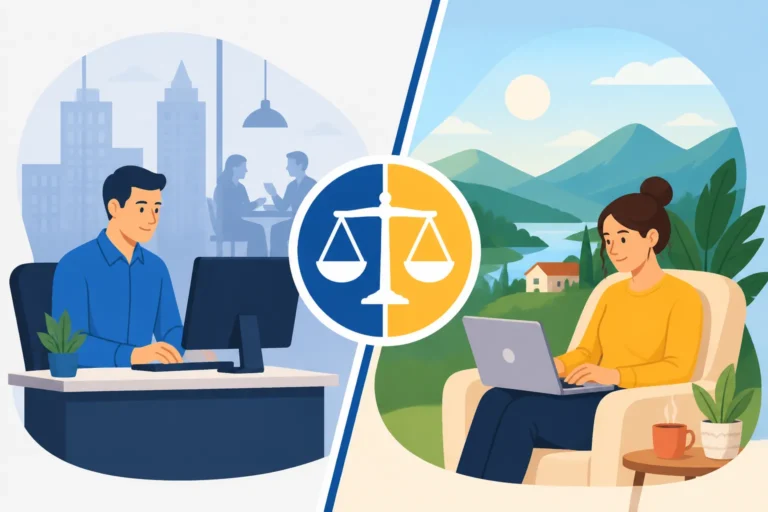
Here’s a quick comparison of the two main options for your online business:
| Feature | Pausal Entrepreneur (Preduzetnik) | DOO (Limited Liability Company) |
|---|---|---|
| Legal Status | Individual entrepreneur (sole proprietor) | Separate legal entity |
| Liability | Unlimited personal liability | Limited to company assets |
| Bookkeeping | Simplified (no need for formal books) | Mandatory full bookkeeping |
| Tax Calculation | Fixed monthly sum (estimated income) | Based on actual profit/loss (corporate income tax) |
| VAT (PDV) Registration | Usually not required (unless voluntary or high turnover) | Mandatory if turnover exceeds ~8 million RSD/year |
| Annual Turnover Cap | ~6 million RSD (subject to change) | No cap |
| Complexity | Low | High |
| Accountant Needed? | Often helpful for setup/advice, but not daily required | Absolutely essential |
| Hiring Employees | Possible, but adds complexity to pausal calculations | Standard process, clear framework |
| Credibility | Good for freelancers | Higher, more formal business image |
Remember, choosing the right path involves careful consideration of your specific circumstances. It's always a good idea to consult with a local legal or accounting professional to ensure you make the best decision for your online venture. For more on setting up, check out How to Register as an Entrepreneur (Preduzetnik) in Serbia.
Navigating the Serbian Tax & Contribution Landscape
Once you've decided on your legal structure, the next big hurdle is understanding and complying with Serbia's tax and social contribution system. This is an area where missteps can lead to fines and unnecessary stress, so it's vital to get it right. Trust me, the Poreska Uprava (Tax Administration) has a long memory and little patience for misunderstandings, no matter how innocent they may seem.
Income Tax and Social Security Contributions
As an online business owner in Serbia, you’ll be contributing to the national coffers in a couple of ways. Firstly, there’s income tax. If you're a Pausal Entrepreneur, this is factored into your fixed monthly payment, making it refreshingly straightforward. For DOO owners, it’s the corporate income tax on profits and then personal income tax on dividends or salaries. The flat 10% personal income tax rate in Serbia is quite attractive, making it a favorable environment for many. However, the real bulk of your monthly outgoings will often come from social security contributions.
These contributions cover health insurance, pension, and unemployment. They are mandatory for all legally employed or self-employed individuals. For Pausal entrepreneurs, these are also included in your monthly lump sum payment. The exact amount depends on your municipality and declared activity, but it’s a significant percentage of what's considered the average salary. These contributions ensure you have access to Serbia's public healthcare system and contribute towards your future pension, which is a vital safety net. Understanding How Serbia's Tax System Works: The Flat 10% Tax Explained (2027) will provide a broader context. While the process of calculating these might seem daunting at first, especially coming from a different tax system, once you're set up, it becomes a routine monthly payment.
Managing Your Finances: Banking and Accounting
Once your business is registered, you’ll need to open a business bank account. This is a crucial step that legally separates your personal and business finances and simplifies tracking your income and expenses. Serbian banks have become much more expat-friendly over the years, though the process can still involve a fair bit of paperwork and patience. You'll need your passport, residence permit, and often proof of your registered business. Banks like Raiffeisen Bank, OTP Bank, or Banca Intesa are common choices among foreigners and generally offer decent online banking services. Having a dedicated business account makes it much easier to track your income and manage your compulsory monthly payments to the Poreska Uprava.
Regarding accounting, even if you’re on the Pausal Regime and don't need a full-time accountant, it's highly advisable to engage one, at least for the initial setup and to answer any questions that pop up. A good accountant can help you understand the nuances of the Serbian tax system, ensure you're registered correctly, and verify your monthly pausal payment is accurate. They can also assist with annual reporting, even if simplified. For a DOO, an accountant is non-negotiable – they will handle all your bookkeeping, payroll (if you pay yourself a salary), and tax filings. They are your shield against the bureaucratic dragons. Speaking of which, for comprehensive advice on all things financial, many expats consult specialized services like Taxes for Expats to get advice on international tax implications. For details on opening your business account, take a look at How to Open a Bank Account at a Serbian Bank as a Foreigner.
Practicalities and Day-to-Day Operation
Beyond the legal and financial setup, running an online business in Serbia has its own set of daily realities and advantages that make it a compelling choice for many. The cost of living is attractive, the internet is fast, and there's a growing community of like-minded individuals.
Essential Tools and Support for Online Businesses
Serbia boasts excellent internet infrastructure, especially in cities like Belgrade and Novi Sad. Fibre optic connections are widely available and affordable, meaning you rarely have to worry about connectivity issues disrupting your online work. Co-working spaces are plentiful and vibrant, offering not just a professional environment but also a chance to connect with other entrepreneurs and freelancers. Places like Nova Iskra in Belgrade or Startit Centar in Novi Sad are hubs of innovation and collaboration, providing a sense of community that can be invaluable when working remotely.
When it comes to software and online tools, you'll find everything functions just as it would anywhere else. Payment gateways like PayPal, Stripe, and Payoneer are widely used, though receiving international payments into Serbian bank accounts can sometimes involve a few extra steps or fees, so it's worth exploring the most cost-effective options for your specific business model. Many online entrepreneurs also use virtual assistant services for administrative tasks, project management software for client work, and platforms for online learning or service delivery. If your online business involves teaching languages, for example, then platforms like iTalki are perfectly usable from Serbia, connecting you to students worldwide.
Integrating into the Expat Business Community
One of the unexpected joys of running an online business from Serbia is the fantastic expat and digital nomad community. You’ll find a diverse group of people from all walks of life, many of whom are also running their businesses remotely. This creates a supportive network where you can share experiences, get advice, and even find potential collaborators or clients. There are numerous Facebook groups, meetups, and co-working events specifically for expats and freelancers in Belgrade and Novi Sad.
Connecting with others who have navigated the same challenges – from understanding the Poreska Uprava to finding the best local coffee shop with reliable Wi-Fi – can make the journey so much smoother. It's not just about business networking; it's about building a social life and finding your tribe in a new country. Don't underestimate the power of these connections for both your professional and personal well-being. It helps immensely to know you're not alone in figuring out how to Do I Need to Register as an Entrepreneur to Freelance in Serbia?. Ultimately, running an online business from Serbia is not just feasible, it can be a truly enriching experience that blends professional freedom with a wonderful quality of life.
Disclaimer
The information provided in this guide is for general informational purposes only and does not constitute legal, tax, or financial advice. While we strive to keep the information up-to-date and accurate, laws and regulations in Serbia are subject to change. Always consult with qualified legal, tax, or financial professionals for advice tailored to your specific situation. We cannot be held responsible for any actions taken based on the information contained herein.