How Do I Apply for an Exchange Programme at a Serbian University?
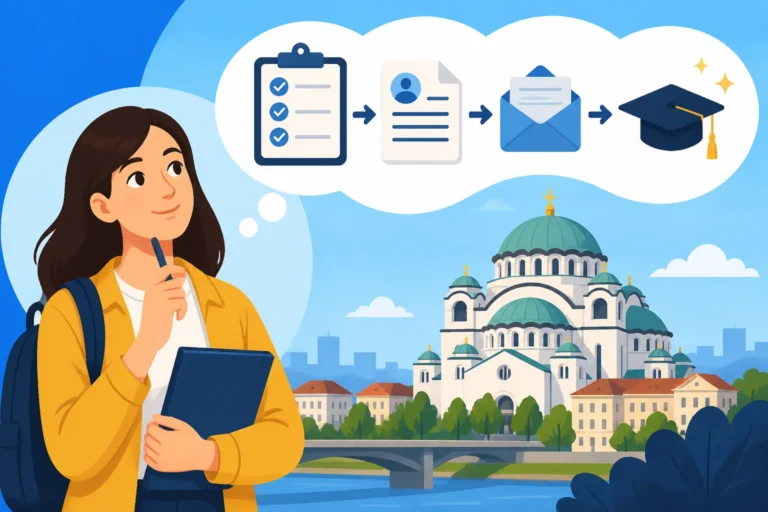
So, you're dreaming of an exchange adventure in Serbia? Fantastic choice! Many expats here will tell you that coming here, even for a short stint, is an experience unlike any other. However, navigating the application process for an exchange programme at a Serbian university can feel like trying to solve a Rubik's Cube blindfolded, especially with language barriers and different administrative styles. This guide is here to demystify the journey, helping you understand exactly what's involved from those initial curious clicks to your first day on campus.
Understanding Exchange Programmes in Serbia
Serbia might not always be the first country that springs to mind for international exchanges, but trust me, it offers a rich academic and cultural experience that's incredibly rewarding. Many students find themselves drawn to its vibrant cities, historical depth, and surprisingly affordable cost of living compared to Western Europe. Before you dive into the nitty-gritty of applications, it's essential to grasp the landscape of exchange opportunities available.
What Kinds of Exchange Programmes Are Available?
When we talk about university exchanges, several pathways usually open up for international students in Serbia. The most common and widely recognized is Erasmus+. This is a flagship European Union programme that facilitates student and staff mobility, and while Serbia isn't an EU member, it participates actively as a partner country. If your home university has an existing Erasmus+ agreement with a Serbian institution, this is often the most straightforward route. These agreements typically cover tuition fees, and you might even be eligible for a grant to help with living expenses. This is a huge help, as living costs are a common concern for students.
Beyond Erasmus+, many Serbian universities have established bilateral agreements directly with institutions worldwide. These agreements are usually forged between specific departments or faculties and allow for student exchange based on mutual understanding. This means your home university might have a direct link with, say, the Faculty of Philology at the University of Belgrade, even if it's not part of a larger Erasmus+ network. You'll need to check with your international relations office at your home university to see if such partnerships exist. Sometimes, students also come through freemover programmes, which are less common for exchanges but allow you to study for a semester or two, paying tuition directly to the Serbian university. However, freemover options usually require more initiative from the student in terms of arrangements and funding.
Eligibility Requirements for International Students
Each exchange programme and university will have its own set of eligibility criteria, but generally, there are a few common threads you'll need to satisfy. Firstly, academic standing is paramount. You'll typically need to be enrolled in a degree programme at your home university and maintain a good academic record (often a certain GPA or average grade). Most programmes require you to have completed at least one year of your degree, sometimes two, before you can embark on an exchange. This ensures you have a solid academic foundation.
Secondly, language proficiency is a big one. While many courses for exchange students, especially in fields like IT, English language studies, or specific Master's programmes, might be offered in English, it's not a given. You'll need to confirm the language of instruction for the courses you intend to take. If they are in English, you'll likely need to provide proof of English proficiency, such as a TOEFL or IELTS score. If you're keen to immerse yourself and study in Serbian, then you'd need to demonstrate proficiency in the Serbian language, which usually involves taking a university-administered test or providing a certificate. Even if your courses are in English, I highly recommend learning some basic Serbian phrases. It makes a world of difference in daily life and shows a genuine effort to connect with the local culture. Resources like iTalki can be incredibly helpful for getting a head start on the language before you even arrive.
Finally, don't forget the visa and residence permit requirements. For most non-EU/EEA students, a Type D Long-Stay Visa for Serbia is a crucial first step, followed by applying for a student residence permit once you're in the country. We'll dive into this a bit more, but understanding that your nationality will dictate your initial entry requirements is vital. You can find detailed information on this topic in articles like Understanding the Type D Long-Stay Visa for Serbia and How to Get a Student Residence Permit and Study in Serbia: The Full Guide (2027).
The Application Process: A Step-by-Step Walkthrough
Alright, you've decided Serbia is the place for you, and you've got a handle on the basic requirements. Now comes the actual application – this is where the planning really kicks in! Don't be overwhelmed; breaking it down into manageable steps makes it much less daunting.
Initial Research and University Selection
The very first step is to figure out where in Serbia you want to study and what you want to study. This primarily means researching universities that have exchange agreements with your home institution. Start by contacting your home university's international office or study abroad department. They are your primary resource and will have a list of partner universities in Serbia and details about specific programmes.
Once you have a list of potential Serbian universities, delve into their websites. Look for faculties or departments that offer courses relevant to your field of study. Pay close attention to the language of instruction and the course catalog for exchange students. Sometimes, a university might be a partner, but the specific courses you need for credit transfer might not be available in English, or at all. For instance, the University of Belgrade, the University of Novi Sad, and the University of Niš are popular choices, each with a wide range of faculties. Try to match your academic needs as closely as possible. It's also worth considering the city itself – do you prefer the bustling capital of Belgrade, the more relaxed vibe of Novi Sad, or the historical charm of Niš? Each offers a different experience.
Preparing Your Application Documents
This is often the most time-consuming part, so start early! The required documents can vary slightly, but here’s a common list you’ll encounter:
- Official Academic Transcripts: These need to be from your home university, detailing all courses taken and grades achieved. They often need to be translated into English (if not already) and sometimes apostilled, depending on the programme and university.
- Proof of Enrolment: A letter from your home university confirming you are a currently enrolled student.
- Learning Agreement: This is a critical document, especially for Erasmus+ students. It's an agreement between you, your home university, and the host Serbian university, outlining the courses you will take in Serbia and how they will be recognized for credit at your home institution. Get this absolutely right, as it directly impacts your degree progression.
- Motivation Letter/Statement of Purpose: A personal statement explaining why you want to study in Serbia, what you hope to gain from the exchange, and how it aligns with your academic and personal goals. Be genuine and enthusiastic!
- Curriculum Vitae (CV): A brief overview of your academic and professional history. Keep it concise and relevant.
- Passport Copy: A clear copy of your valid passport, ensuring it has sufficient validity beyond your intended stay.
- Language Proficiency Certificate: As mentioned, if your courses are in English, you'll need TOEFL, IELTS, or an equivalent. If in Serbian, a relevant certificate.
- Letter of Recommendation (Optional but good): Some programmes might ask for one, or it can strengthen your application even if not strictly required.
- Financial Proof: Evidence that you have sufficient funds to support yourself during your stay in Serbia. This could be bank statements or a scholarship letter. This is very important for your visa application as well.
- Passport-sized Photos: Usually a few, in a specific format (often 3.5×4.5 cm with a white background).
Here’s a simplified table to help you keep track of common documents:
| Document Type | Purpose | Notes |
|---|---|---|
| Official Transcripts | Proof of academic record | English translation often required, sometimes apostille. |
| Proof of Enrolment | Confirms current student status at home university | Official letter from your home university. |
| Learning Agreement | Outlines courses & credit recognition | Crucial for academic planning & credit transfer. |
| Motivation Letter | Explains your interest and goals | Personalize it for Serbia and the specific university. |
| CV (Curriculum Vitae) | Summary of academic/professional experience | Keep it professional and relevant. |
| Passport Copy | Identification and nationality | Must be valid for at least 6 months beyond your planned departure. |
| Language Certificate | Proof of English/Serbian proficiency | TOEFL/IELTS for English; specific test/certificate for Serbian. |
| Financial Proof | Evidence of funds for living expenses | Bank statements, scholarship letters. Essential for visa. |
| Passport-sized Photos | For application forms and visa | Specific size and background requirements (e.g., 3.5×4.5 cm, white background). |
Remember, always check the exact requirements of both your home university and the Serbian host university, as they can differ. Articles like What Documents Do I Need to Enrol at a Serbian University? provide an excellent general overview.
Submitting Your Application and Awaiting Acceptance
Once all your documents are gathered and polished, it's time to submit! Most universities now use online application portals. Follow the instructions carefully, ensuring all fields are completed accurately and documents are uploaded in the correct format. Double-check everything before hitting 'submit.' It’s astonishing how many little errors can creep in.
Pay very close attention to deadlines. These are often strict and non-negotiable, especially for exchange programmes which involve multiple institutions. Missing a deadline can mean missing out on the entire opportunity. After submission, it's usually a waiting game. The processing time can vary from a few weeks to a couple of months, depending on the university and the volume of applications.
During this period, keep an eye on your email (and spam folder!). The international office of the Serbian university or your home university will be your main point of contact. They might reach out for additional information or clarification. Once you receive your acceptance letter – čestitam! (congratulations!) – you can then move on to the next exciting phase: preparing for your life in Serbia.
Post-Acceptance: What to Do Next
Getting that acceptance letter is a huge relief and a cause for celebration! But the work isn't quite over. Now, you need to transition from applicant to soon-to-be expat, which involves tackling logistics like visas, accommodation, and getting your ducks in a row for a smooth arrival.
Navigating Visa and Residence Permit Requirements
This is arguably the most crucial step after acceptance, especially for non-EU/EEA citizens. You'll generally need a Type D Long-Stay Visa for study purposes to enter Serbia. This visa allows you to stay in Serbia for more than 90 days, specifically for education. You apply for this visa at the Serbian embassy or consulate in your home country before you travel.
The documents for the Type D visa will typically include your acceptance letter from the Serbian university, proof of financial means, proof of accommodation in Serbia (even if temporary), and travel health insurance. Once you arrive in Serbia with your Type D visa, you then have to apply for a temporary residence permit for study (privremeni boravak). This process is handled by the local police department (MUP) and usually requires a bit of patience and a good stack of documents, including your white card registration (prijava boravka), which you'll get upon arrival from your landlord or hotel.
It's vital to apply for your residence permit as soon as possible after arriving, well within the validity period of your Type D visa. The whole process can seem like a bureaucratic maze, and local knowledge helps immensely. I strongly recommend reading How to Apply for a Student Residence Permit in Serbia for a detailed breakdown, as it's a common pain point for newcomers. Don't underestimate the time it takes!
Accommodation, Health Insurance, and Financial Planning
With your visa process underway, securing accommodation is next. Many Serbian universities offer dormitories, which are often the most affordable option and a great way to meet other students. However, they might be basic and fill up fast. Alternatively, you can look for private rented accommodation. Websites like City Expert or Nekretnine.rs are popular, but working with a local real estate agent can save you a lot of hassle. Start your search early, especially if you're aiming for popular areas in Belgrade or Novi Sad. Expect to pay a security deposit, usually one month's rent, in addition to the first month's rent.
Health insurance is another non-negotiable. For your Type D visa, you'll need travel health insurance that covers your initial entry. Once you're applying for your temporary residence permit, you'll need to demonstrate ongoing health coverage for your stay. While Serbia has a public healthcare system (RFZO), it primarily serves permanent residents who contribute to it. As an exchange student, you'll likely rely on private health insurance or a comprehensive travel insurance policy that includes medical care. It's crucial to understand your options, which are detailed in our guide The Complete Guide to Healthcare in Serbia for Expats (2027). Always carry your insurance details with you.
Financial planning for your exchange is key to enjoying your time without constant worry. While Serbia is generally more affordable than many Western countries, you still need to budget for rent, food, transport, textbooks, and, of course, some fun and travel! Knowing How Much Does It Cost to Study at the University of Belgrade? can give you a baseline, even if you're not going there specifically. If you plan to open a local bank account, which is highly recommended for managing daily expenses and receiving any grants, check out How to Open a Bank Account at a Serbian Bank as a Foreigner. While as an exchange student you typically won't be dealing with local income taxes, if you ever consider staying longer or finding part-time work after your exchange, resources like Taxes for Expats could become highly relevant for understanding the Serbian tax system. It's always good to be generally aware of financial systems in your host country.
Pre-Departure Preparations and Arrival in Serbia
The weeks leading up to your departure will be a whirlwind. Here's a quick checklist to keep you on track:
- Pack Smart: Serbia experiences four distinct seasons. If you're coming for a winter semester, bring warm clothes! Summers can be hot.
- Inform Your Bank: Let your home bank know you'll be using your cards internationally to avoid them being flagged for fraud.
- Download Offline Maps: Google Maps works, but having offline maps of Belgrade, Novi Sad, or your host city can be a lifesaver when you first arrive and don't have local data.
- Learn Basic Serbian Phrases: Beyond what you might have started with iTalki, master greetings, polite phrases, and asking for directions. It truly goes a long way.
- Arrange Airport Transfer: Especially if you're arriving late at night or have a lot of luggage, pre-booking a taxi or arranging pickup with your university or landlord can ease your initial arrival stress.
- Copy Important Documents: Keep digital and physical copies of your passport, visa, acceptance letter, and insurance details separate from the originals.
- Notify Family/Friends: Share your travel itinerary and contact details in Serbia.
Upon arrival, your immediate tasks will be to:
- Register your address (prijava boravka): Your landlord or dormitory administration should help you with this within 24 hours of arrival. This "white card" is crucial for your residence permit application.
- Get a local SIM card: This is cheap and essential for communication. Providers like Yettel, A1, and Telekom Srbija offer good options. Check out How to Set Up Internet and Mobile Service in Serbia.
- Visit your university's international office: They will guide you through enrolment and introduce you to student services.
Life as an Exchange Student in Serbia
So, you've made it, you're settled in, and the initial bureaucracy is behind you. Now, it's time to truly embrace your exchange experience in Serbia! This is where the real learning, both academic and personal, begins.
Academic Life and Integration at Serbian Universities
The academic environment at Serbian universities might feel a little different from what you're used to. Class sizes can vary greatly, and teaching styles might lean more towards traditional lectures, though modern universities are increasingly adopting interactive methods. Don't be shy about asking questions or approaching professors during their office hours. Most faculty members are genuinely happy to help international students navigate their studies.
You'll find that many universities have a dedicated international relations office or a student buddy system to help exchange students integrate. These resources are invaluable for getting answers to academic questions, understanding the local grading system, finding study groups, or even just getting recommendations for local spots. Student organizations are also a fantastic way to get involved. Look for groups like ESN (Erasmus Student Network), which specifically caters to exchange students, organizing events, trips, and social gatherings.
University libraries are generally well-equipped, and you’ll find plenty of quiet spots for studying. However, sometimes resources might not be as digitally integrated as you're used to, so be prepared for a mix of online materials and physical books. Embracing a slightly different academic pace and approach is part of the adventure!
Exploring Serbian Culture and Beyond
Being an exchange student isn't just about what happens in the classroom; it's about what happens outside of it too. Serbia is a country rich in history, culture, and incredible hospitality. Take advantage of it!
- Social Life: Serbian student life is vibrant. Cafes are central to socialising, from morning coffees to evening drinks. Belgrade, Novi Sad, and other university towns have a fantastic nightlife, live music, and cultural events. Don't be afraid to strike up conversations – Serbians are generally very friendly and curious about foreigners.
- Travel: Serbia is perfectly positioned for exploring the Balkans and beyond. Take weekend trips to explore the fortresses of Petrovaradin in Novi Sad, the monasteries of Fruška Gora, or the stunning nature of Tara National Park. You can also easily travel to neighboring countries like Bosnia and Herzegovina, Montenegro, or Hungary. Public transport in Serbia is generally affordable and efficient for getting around, though sometimes schedules can be a bit… "flexible."
- Language Learning: Even if your courses are in English, making an effort to learn Serbian will significantly enrich your experience. Locals deeply appreciate it. Apart from apps like Duolingo or websites like iTalki, many universities offer basic Serbian language courses for international students. It's a challenging language, but even a few phrases can open doors and lead to memorable interactions.
- Food: Prepare for a culinary journey! Serbian cuisine is hearty and delicious, with influences from the Balkans, Turkey, and Central Europe. Ćevapi, sarma, kajmak, and pljeskavica will become staples. Don't miss trying local pastries and sweets.
Embrace the unexpected, be open to new experiences, and remember that any challenges you face are part of the learning process. An exchange programme in Serbia isn't just about earning credits; it's about growing, adapting, and creating memories that will last a lifetime.
Disclaimer
The information provided in this guide is intended for general informational purposes only and does not constitute legal, financial, or immigration advice. While we strive to keep the information up-to-date and accurate, regulations and procedures in Serbia can change frequently. We strongly recommend consulting official government sources, university international offices, and professional advisors for the most current and specific guidance pertaining to your individual situation.