How Do I Add My Newborn to My Residence in Serbia?
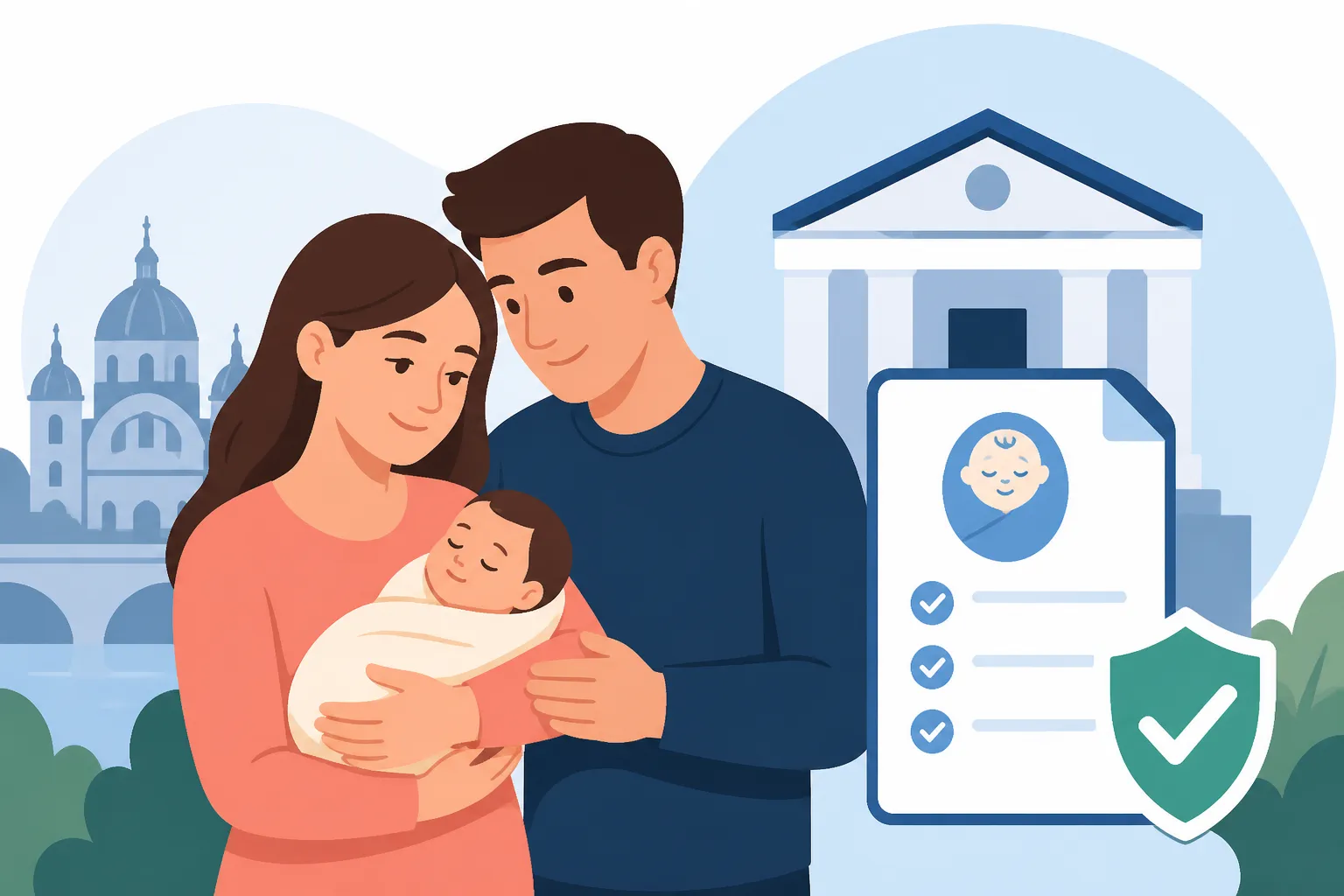
So, you’ve just welcomed a tiny new human into the world here in Serbia! Čestitamo! Congratulations! This is a truly wonderful, life-changing moment. But if you’re an expat, that joy can quickly get mixed with a bit of a headache as you realise there’s a whole new layer of bureaucracy to navigate for your little one. It’s not just about tiny clothes and sleepless nights; it's also about getting that all-important Serbian residence permit for your newborn. Don't worry, I've been there, and I know exactly how daunting it can feel. This guide is here to walk you through every step, from registering the birth to securing their place in the Serbian system.
The Initial Steps After Your Newborn Arrives in Serbia
Bringing a baby home is a whirlwind, no matter where you are in the world. But for us expats, the immediate aftermath of birth comes with an extra layer of administrative tasks. Before you can even think about residence permits, there are a couple of fundamental things you absolutely must get sorted. Think of these as the foundational bricks in your newborn’s Serbian life journey.
Birth Registration and Serbian Birth Certificate
This is the very first, non-negotiable step. As soon as your baby makes their grand entrance, you need to register their birth with the Serbian authorities. This process is crucial because it gives your child their official identity document here in Serbia: the birth certificate (Izvod iz Matične Knjige Rođenih).
Usually, the hospital where your baby was born will provide a birth notification document (potvrda o rođenju or otpusna lista). You’ll take this document, along with your passports, your Serbian temporary residence permits, and your marriage certificate (if applicable), to the Registrar's Office (Matičar) at your local opština (municipality) building. In bigger cities like Belgrade or Novi Sad, there might be multiple opštine, so make sure you go to the one covering your registered address. You typically have about 30 days from the birth to register. It’s a tight window when you're sleep-deprived and navigating a new routine, so try to get it done sooner rather than later.
A critical point for expats: if your marriage certificate or any other supporting documents (like your own birth certificates if requested) are not in Serbian, they will need to be officially translated by a certified court translator (sudski tumač) and often apostilled in your home country. This step alone can be a real pain point, as obtaining an apostille from abroad takes time. Make sure you've sorted this out well in advance of the birth if possible, or be prepared to use express services. The registrar will use these documents to record your baby's birth, assign them a unique Personal Identification Number (JMBG), and issue the Serbian birth certificate. This JMBG is like their social security number here, and it will be vital for everything from healthcare to future schooling.
Obtaining Your Newborn's Passport from Your Home Country
Once you have that beautiful Serbian birth certificate, your next critical task is to get your newborn a passport from your country of citizenship. This might seem counter-intuitive when you’re trying to get them settled in Serbia, but hear me out: the Serbian residence permit will be a sticker or stamp inside your baby’s foreign passport. Without their own national passport, Serbia cannot issue them a residence permit.
This step can be a significant hurdle, depending on your nationality. Some embassies and consulates in Belgrade are incredibly efficient, offering appointments quickly and processing passports within a few weeks. Others, however, might have long waiting lists for appointments or require documents that need to be sent to your home country for processing, which can take months.
My advice? As soon as you have the Serbian birth certificate, contact your embassy or consulate in Belgrade immediately. Explain that you need to apply for a newborn’s passport for residence purposes. Ask about:
- Required documents (usually the baby’s Serbian birth certificate, parents' passports and residence permits, and a specific size/style of baby photo).
- Appointment availability and booking process.
- Estimated processing times.
- Any expedited options, if available.
Be prepared for the inevitable baby passport photo challenge! Getting a newborn to cooperate for a photo with a neutral expression, eyes open, and on a plain white background is a rite of passage for new expat parents. Just breathe, and bring snacks for yourself. This passport is your baby’s ticket to legal residence in Serbia, so prioritise getting it.
Navigating the Serbian Residence Permit Application for Your Infant
With the Serbian birth certificate and your newborn’s national passport in hand, you're now ready to tackle the main event: applying for their Serbian temporary residence permit. This process, while similar to your own initial application for residence, has specific nuances for a minor.
Understanding the Grounds for Residence Family Reunification
For a newborn, their temporary residence permit in Serbia will almost certainly be granted on the grounds of family reunification (spajanje porodice). This means their right to reside in Serbia is directly tied to yours, as their parents, who already hold valid temporary residence permits. The Serbian Law on Foreigners, specifically Article 46, outlines the conditions for family reunification. Essentially, if you as the parent are legally residing in Serbia, your minor child has the right to join or remain with you.
This is a key distinction from, say, a work permit application, where the primary applicant's job offer is the driving force. Here, your existing stable legal status in Serbia is the foundation for your child's permit. The authorities want to ensure that the child will be adequately supported and cared for by their resident parents. This makes the application process somewhat more straightforward than an initial independent application, as much of the proof of stability comes from your existing documents. For more on how to manage family residence, take a look at our guide on Family and Dependent Residence in Serbia: Bringing Your Loved Ones (2027).
Required Documents for the Newborn's Residence Permit
Gathering the right documents is often the trickiest part of any bureaucratic process in Serbia, and adding a newborn to your residence is no exception. Organisation is your best friend here. Make sure you have originals and at least two copies of everything.
Here’s a breakdown of the typical documents you’ll need:
- Newborn’s Passport: The original, valid passport from your home country, along with a photocopy of the biographical data page. This is where their Serbian residence sticker will be placed.
- Newborn’s Serbian Birth Certificate: The original Izvod iz Matične Knjige Rođenih you obtained earlier, plus a photocopy.
- Parents’ Passports: Originals and photocopies of the biographical data pages for both parents.
- Parents’ Serbian Temporary Residence Cards: Originals and photocopies of your valid temporary residence cards (boravišna dozvola).
- Proof of Accommodation: This will typically be the same as your own. If you have a lease agreement, bring the original and a copy. If you registered your address via a beli karton (white card) with the police or through your landlord, make sure your baby's name is added to it once you have their permit, and bring a copy of your current beli karton.
- Proof of Sufficient Funds: While your baby won't have their own bank account, you’ll need to demonstrate that you, as their parents, have sufficient financial means to support them. This is often satisfied by presenting your bank statements, employment contracts, or other documents you used to prove funds for your own residence permit. The amount required for a dependent is usually a percentage of the minimum wage.
- Proof of Health Insurance for the Newborn: This is absolutely vital. Your newborn needs to be covered.
- If you are employed and registered with the Republic Health Insurance Fund (RFZO), you can apply to add your child as a dependent to your public health insurance. This involves a separate visit to the RFZO office once the baby has their JMBG and residence permit.
- Alternatively, and often preferred by many expats for greater flexibility and English-speaking services, is private health insurance. Companies like Cigna Global offer excellent international health insurance plans that can cover your newborn from day one, often providing access to private clinics and a wider range of services. Make sure your policy clearly states it covers maternity and newborn care if applicable, or that it is a comprehensive plan for infants. For a deeper dive, check out Health Insurance in Serbia: RFZO, Private and International Options Explained.
- Application Form: The official temporary residence application form (Zahtev za izdavanje odobrenja za privremeni boravak), typically found on the Ministry of Interior (MUP) website. Fill it out clearly, in Serbian (or get help from a Serbian speaker).
- Administrative Fee Receipts: There are administrative fees associated with the application. These typically include a fee for the application itself and a fee for the residence card. These fees are usually paid at a post office (Pošta) or bank using pre-filled payment slips (uplatnica) that you can get from the MUP office or download from their website. Keep the proof of payment meticulously!
- Newborn's Photos: Two standard passport-sized photos (usually 3.5 x 4.5 cm) with a white background, without hats or pacifiers. This is where those challenging baby photos come in!
Make sure all documents are in pristine condition. Any smudges or unclear copies can cause delays. For more general advice on what to prepare, you might find our article on Understanding Document and Translation Requirements for Serbia Immigration helpful.
The Application Process at the MUP Ministry of Interior
Once you have all your documents neatly organised, it’s time for the actual submission. This happens at the foreigners' department (Odeljenje za strance) of the Ministry of Interior (MUP) in the city where your residence is registered – typically in Belgrade, Novi Sad, or Niš.
Here's a step-by-step guide to what you can expect:
- Triple-Check Your Documents: Before you even leave the house, go through every single item on the list. Is it original? Do you have copies? Is it translated and apostilled if necessary? One missing document can mean being sent away and having to start the queue all over again.
- Fill Out the Form: Complete the application form accurately. If your Serbian isn't strong, get a trusted friend or a professional to help you. Mistakes on the form are a common reason for delays.
- Pay the Fees: Head to a local post office or bank with the payment slips. The tellers are usually very helpful if you show them what you need to pay for. Make sure to get stamped receipts for both payments.
- Submit at the MUP:
- Go to the MUP foreigners' department during their working hours. Be prepared for a wait, especially in Belgrade. Getting there early is always a good strategy.
- When your number is called, present all your documents to the MUP officer. They will review everything meticulously.
- For an infant, an interview is highly unlikely. The officer will primarily verify the documents and cross-reference them with your existing residence records.
- They will keep the copies and some originals (like the application form and fee receipts) and return your passports and residence cards.
- You might be given a slip of paper with a reference number or told to check back after a certain period.
Realistic Timelines and Potential Delays:
The official processing time can vary widely. While theoretically it should be around 15-30 days, it can sometimes take longer, especially if there are any issues with your documents or if the office is particularly busy. Be prepared for the possibility of having to call or visit the MUP to check on the status.
Language Barrier:
The MUP officers primarily speak Serbian. If your Serbian is limited, consider bringing a Serbian-speaking friend or hiring a translator to accompany you. This can significantly reduce stress and miscommunication. Remember, you’re dealing with the Ministry of Interior, so it's best to be as clear and accurate as possible.
Here's a quick comparison of the residence application process for adults versus newborns:
| Feature/Requirement | Adult Temporary Residence Application | Newborn Temporary Residence Application |
|---|---|---|
| Grounds for Residence | Employment, study, property ownership, self-employment, etc. | Family Reunification (tied to parents' residence) |
| Primary Applicant | The individual seeking residence | The parent(s) are the sponsors |
| Passport | Applicant's national passport | Newborn's national passport |
| Serbian Birth Certificate | Not required | Mandatory |
| Marriage Certificate | Required for spouse-based reunification | Required if parents are married |
| Proof of Funds | Applicant's own bank statements, income | Parents' bank statements, income (to support baby) |
| Health Insurance | Mandatory (RFZO or private) | Mandatory (RFZO via parent or private, e.g., Cigna Global) |
| Photos | Standard passport size, white background | Standard passport size, white background |
| Application Form | Standard temporary residence form | Same form, but filled out with infant's details |
| Interview | Possible | Highly unlikely |
| Primary MUP Reference | Own work contract, property deed etc. | Parents' valid residence permits |
Post-Approval and Ongoing Responsibilities
Phew! You've submitted the application. After what might feel like an eternity of waiting, you’ll eventually get the call or notification that your newborn's temporary residence permit has been approved. This is another moment to celebrate! But don't put your feet up just yet; there are still a couple of vital steps to ensure your little one is fully integrated into life in Serbia.
Receiving the Residence Card and Prijava Boravka Address Registration
Once your application is approved, you'll be instructed to return to the MUP to pick up your newborn's residence card. This card will typically be a small, credit-card-sized plastic card, similar to yours, but bearing your baby's photo and details. It will show their personal identification number (JMBG), the validity period of their temporary residence, and the grounds for their stay (family reunification). This card, along with their national passport, is their proof of legal residence in Serbia.
Crucially, as with any resident in Serbia, your newborn's address needs to be officially registered. This is known as prijava boravka or the beli karton (white card) registration. You must do this within 24 hours of receiving the residence card. Yes, even for a baby!
You'll take the newborn's residence card, their passport, and your own residence cards to:
- The local police station's foreigners' department: This is the most common place for individuals to do it.
- Your local opština: Some municipalities handle this, or you can register through a licensed tourist agency if you're staying in serviced accommodation.
- Your landlord: If you rent, your landlord is legally obliged to register your address. Make sure they add your newborn’s details to your existing registration.
Failing to register the address can lead to fines, so make this a priority. It's one of those Serbian rules that seems trivial until it's not. Keep the beli karton printout safe, as it’s often requested alongside your residence card for various administrative tasks. Our guide on How to Register Your Address (Prijava) with the Police in Serbia offers more specific instructions.
Integrating Your Newborn into the Serbian Healthcare System
Ensuring your baby has access to healthcare is paramount. In Serbia, you generally have two paths, mirroring the options for adults: public healthcare via RFZO or private healthcare.
- RFZO Public Health Insurance: If you, as the parent, are already covered by the RFZO (Republic Health Insurance Fund) through your employment in Serbia, you can usually add your newborn as a dependent. This involves another trip, this time to your local RFZO office. You'll need your baby's birth certificate, their residence card, and your own RFZO health card and residence permit. They will issue your baby their own RFZO health card (zdravstvena knjižica). Once registered, you can choose a pediatrician (izabrani lekar) at a local dom zdravlja (health centre) for your child. This covers their vaccinations, routine check-ups, and necessary specialist referrals. For detailed steps on this, refer to How to Register with the RFZO and a GP in Serbia (2027).
- Private Health Insurance: Many expat families opt for private health insurance for their children, either instead of or in addition to RFZO. This provides greater flexibility, often shorter wait times, and access to English-speaking doctors and private clinics like Medigroup, Euromedik, or Acibadem Bel Medic. If you chose a provider like Cigna Global earlier, ensure your baby's details are fully registered with them. Having private insurance can give you peace of mind, especially during those first few vulnerable years. When selecting a private plan, ensure it covers paediatric care, vaccinations, and emergency services. This option can significantly streamline access to specialist care without needing referrals from a public GP.
Choosing a pediatrician (Izabrani Lekar) is a significant decision. If you go the RFZO route, you'll choose from the available doctors at your dom zdravlja. If you opt for private care, you'll have more freedom to research and select a private pediatrician that suits your family's needs and language preferences.
Planning for Renewals and Future Travel
That temporary residence permit is, well, temporary. It will have an expiry date, usually aligning with yours. So, mark your calendars! You'll need to initiate the renewal process for your baby well in advance of its expiration, typically two to three months before. The required documents for renewal will be similar to the initial application, primarily proving ongoing residence and financial stability. Keep all original documents and receipts meticulously organised in a dedicated folder.
Traveling with an infant who holds a Serbian temporary residence permit requires you to carry both their national passport and their Serbian residence card. The residence card is not valid for travel outside of Serbia without the passport, and vice-versa. Always double-check entry requirements for your destination country, as some countries might have specific visa rules for infants, even if their parents are visa-exempt.
The journey of adding your newborn to your residence in Serbia is a testament to the dedication of expat parents. It's a series of hoops, but each one you jump through brings you closer to firmly planting your family’s roots in this beautiful country. It might feel overwhelming at times, but remember, countless expats have navigated these waters before you, and you will too.
Disclaimer
The information provided in this guide is for general informational purposes only and does not constitute legal or professional advice. While we strive to keep the information accurate and up-to-date, laws and procedures in Serbia can change frequently. It is highly recommended to consult directly with the relevant Serbian authorities (e.g., Ministry of Interior, RFZO, your embassy/consulate) or a legal professional specialising in immigration for the most current and specific advice regarding your individual situation. We are not responsible for any actions taken based on the information presented herein.