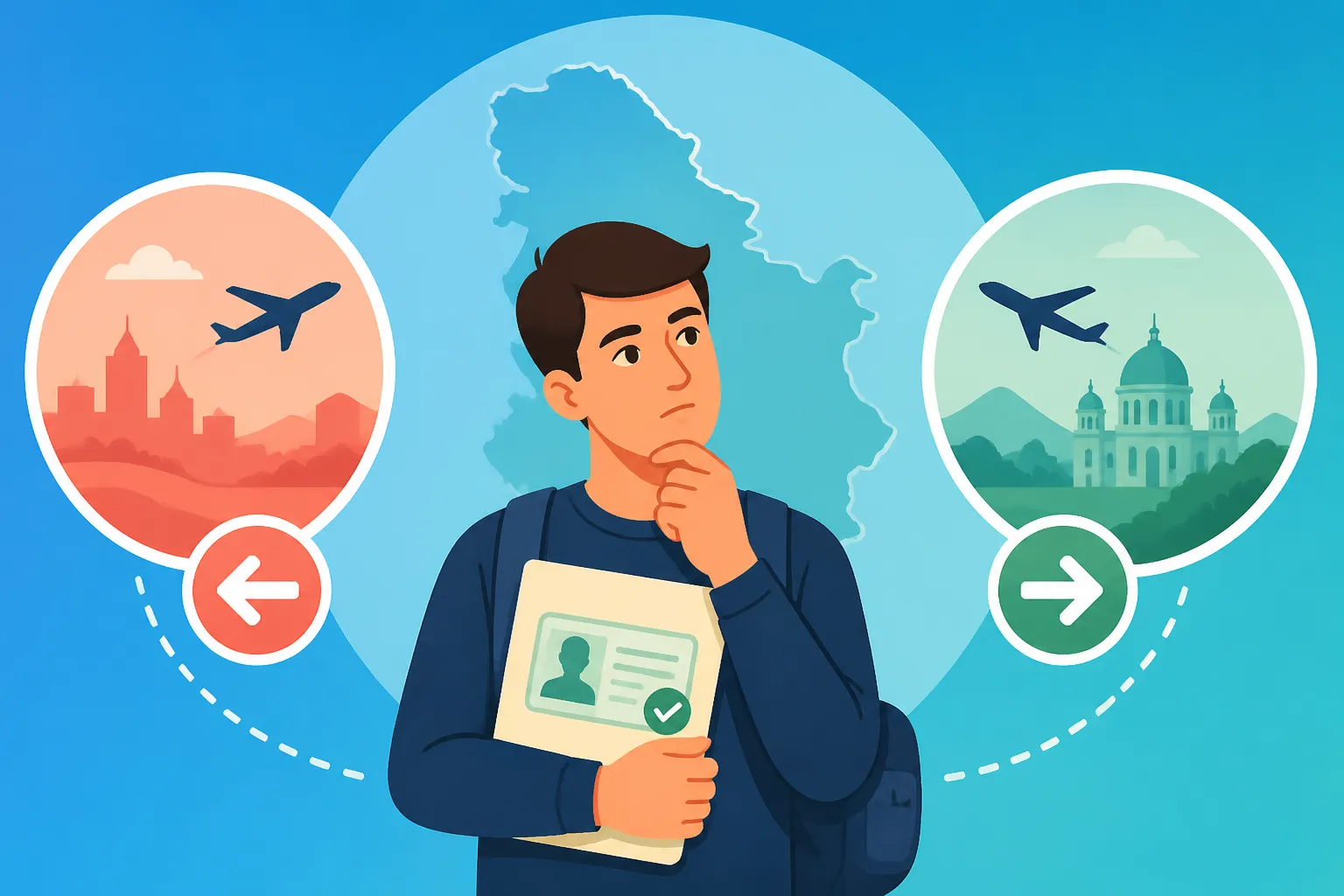
Can I Travel In and Out of Serbia While My Residence Is Processing?
Oh, the age-old expat dilemma: you've finally gathered all your documents, navigated the labyrinthine Serbian bureaucracy to submit your residence permit application, and then a sudden, unexpected need to travel pops up. It’s a common scenario, and the uncertainty can feel like a heavy weight, leaving you wondering if a quick trip out of the country will jeopardize everything. This guide is here to shed some light on the tricky business of traveling in and out of Serbia while your residence permit application is still processing, offering practical advice to help you avoid unnecessary stress or, worse, being stuck on the wrong side of the border.
Understanding the Residence Permit Application Process in Serbia
First, let's peel back the layers of how the residence permit (or privremeni boravak) application process generally unfolds here in Serbia. It's rarely a quick in-and-out affair, and understanding the steps involved can help manage your expectations and, crucially, your travel plans.
Initial Application and Status
When you submit your application for temporary residence in Serbia, whether it's for work, study, family reunification, or property ownership, you're essentially handing over a mountain of paperwork to the Ministry of Internal Affairs (MUP). This initial submission usually involves presenting your documents at a local police station or the MUP headquarters in larger cities like Belgrade or Novi Sad. You'll typically get a confirmation slip or a stamped copy of your application form, which proves you've applied. However, this piece of paper is not a residence permit itself, and it doesn't automatically grant you re-entry rights into Serbia if you leave the country. It simply acknowledges that your file is in the system.
This can be a point of confusion for many newcomers, especially those from countries where a pending application might come with some form of temporary travel document. Here in Serbia, the process is a bit more rigid. The MUP needs time to review everything, verify your details, and ensure you meet all the criteria for your chosen category of residence. This period is often where the most anxiety about travel arises, as you're in a sort of administrative limbo. For a deeper dive into the initial steps, you might find our guide on How to Apply for Temporary Residence Privremeni Boravak in Serbia incredibly helpful.
The Waiting Game
Ah, the waiting game. It's a universal expat experience, but in Serbia, it can be particularly opaque. Processing times for temporary residence permits can vary wildly, from a few weeks to several months, depending on the MUP's current workload, the completeness of your documentation, and sometimes, the specific office you're dealing with. There's no real-time tracking system for your application that you can easily access online, so you're often left waiting for a phone call or an update from your employer, lawyer, or yourself if you applied independently.
During this period, many expats find themselves feeling a bit stuck. You might have friends or family planning visits, or perhaps a long-standing commitment back home. The lack of a clear timeline, combined with the administrative "black box" feeling, means that any travel plans must be approached with extreme caution. It's not uncommon for people to put off essential trips, or even urgent ones, simply because they don't want to risk their application. This is where understanding the system, even its less convenient quirks, becomes paramount.
Travel Restrictions and Risks During Processing
This is where the rubber meets the road, folks. The simple answer to "Can I travel?" is often "It depends, and it's risky." But let's break down exactly what those risks are and why you need to tread carefully.
The "Grey Area" of Leaving Serbia
Let's imagine you've applied for your temporary residence permit and you've got your confirmation slip. Now, you need to pop over to Hungary for a weekend, or fly home for a family emergency. Here's the catch: your confirmation slip does not grant you re-entry rights. When you leave Serbia, you're exiting based on your current visa status, or under a visa-free regime if your nationality allows it.
The real problem arises when you try to re-enter. If your nationality typically requires a visa to enter Serbia, and you don't have a valid, multi-entry visa or a fully issued residence permit, you could be denied entry. The border police, quite rightly, will look at your passport and your entry stamp. If your visa-free period has expired, or if you were initially granted a single-entry visa to come and apply for residence, you will have a problem. Even with the MUP confirmation slip in hand, there's no guarantee the border police will recognize it as a valid document for re-entry. They are primarily concerned with immediate entry requirements, not internal processing. This is a common pitfall and can lead to you being stuck outside the country, unable to return to your life or job.
Visa-Free Entry vs. Residence Application
Many expats initially enter Serbia under a visa-free regime, which allows citizens of certain countries to stay for up to 90 days within a 180-day period. This is often the case for EU, US, UK, and Canadian citizens, among others. The assumption is often that once you apply for residence, this 90-day count "pauses" or becomes irrelevant. This is a dangerous assumption. While your residence application is pending within Serbia, your legal status allows you to remain, even if your 90-day visa-free period technically expires. However, this status only applies inside the country.
If you leave Serbia during your processing period, the 90/180-day rule resets (or continues, depending on interpretation by border officials and how long you stay outside), but importantly, when you try to re-enter, you're again subject to the standard entry rules. If you've been in Serbia for, say, 70 days, and you leave for a week, then try to come back, you only have 20 days left on your visa-free allowance. What if your residence permit isn't approved and issued within those 20 days? You're in a bind. This is why it's so critical to understand How Your Residence Status Affects RFZO Enrolment in Serbia and indeed, your freedom to travel.
Potential Impact on Your Application
Beyond the immediate border control issues, there's also the question of how leaving the country might impact your actual residence application. While it's generally understood that urgent travel shouldn't automatically cancel your application, an extended absence might raise questions or even delay the process further. The MUP wants to see that you are genuinely residing in Serbia and fulfilling the conditions of your stay. If you're out of the country for a significant portion of your processing time, it could, in theory, complicate things, especially if they need to contact you for additional documents or an interview.
It’s not just about getting back in; it's about not giving the MUP any reason to scrutinize your application more than necessary. While there aren't explicit rules stating that leaving the country invalidates a pending application, the less complexity you introduce, the smoother your process is likely to be.
Practical Advice and Best Practices for Expats
Navigating this can be tough, but with a bit of foresight and careful planning, you can minimize the risks. As someone who’s seen countless expats face this headache, I can tell you that prevention is far better than scrambling at the border.
When to Plan Your Travel
The golden rule, if at all possible, is to plan any significant international travel before you apply for your residence permit, or after you have the physical permit card in your hands. This means if you know you have a wedding in your home country in two months, try to submit your residence application after you return from that trip, or ensure you apply far enough in advance that you expect your permit to be issued before you leave.
If your application is already submitted, consider delaying any non-essential travel until you receive your residence card. I know, it's a huge ask when you're itching to explore or see loved ones, but it truly saves a world of potential heartache. Remember, the MUP is usually not very accommodating with "urgent processing" requests for personal travel. They work at their own pace.
What to Do If Urgent Travel is Unavoidable
Sometimes, life throws a curveball, and urgent travel becomes absolutely necessary. If you find yourself in this unenviable position, here’s what you should consider:
- Contact the MUP (with Caution): Before anything else, if you have a direct contact person, try to inquire about the status of your application and your options. Be aware, however, that contacting them might not yield a definitive answer or a quick solution. Often, the advice will be to wait.
- Check Visa Requirements for Re-entry: Crucially, ascertain whether your nationality requires a visa to enter Serbia, and if so, what kind. If you need a visa, you might have to apply for one while abroad, which can be time-consuming and expensive. This is especially true if your original entry was a single-entry visa. For a deeper understanding of visas, check out The Complete Guide to Serbia Visas and Immigration for Expats (2027).
- Gather All Documentation: If you do decide to travel, take every single document related to your residence permit application with you. This includes:
- Your original passport.
- The stamped copy of your application form (if you have one).
- Any other receipts or proofs of submission.
- Your address registration slip (beli karton).
- Proof of financial means.
- Your work contract or university acceptance letter, if applicable.
While these documents won't guarantee re-entry, they provide proof of your intent and ongoing process, which might sway a sympathetic border officer in an unusual circumstance. It's a long shot, but better safe than sorry.
- Consult with an Immigration Lawyer: If your travel is truly urgent and you're unsure of the risks, investing in a consultation with a local immigration lawyer can be invaluable. They can offer the most up-to-date and personalized advice based on your specific situation and nationality.
Communication with the MUP
Trying to get information out of the MUP can sometimes feel like shouting into a void. While it's important to try, don't expect instant answers or special considerations for your travel needs. Their primary goal is to process applications correctly and efficiently, not to facilitate expat travel plans.
If you have an employer or a lawyer assisting with your application, they might have more direct lines of communication or experience navigating inquiries. It's often better to have them make the calls or visits. When communicating, be polite, be precise, and have all your reference numbers ready. Avoid demanding or being overly emotional, as this rarely helps. A simple, "Could you please confirm the status of my application, as I have a family matter requiring potential travel" is far more effective than a panicked plea. Remember, patience is a virtue when dealing with Serbian administration.
What to Expect After Approval: The Residence Card
Once the arduous waiting period is over and your residence permit is finally approved, a new chapter opens, especially concerning travel. This is the moment you've been waiting for!
Receiving Your Boravak Card
After approval, you'll be notified (usually by phone, or your employer/lawyer will be informed) that your boravak card is ready for collection. This is the physical, plastic card that serves as your official temporary residence permit. It will have your photo, personal details, the type of residence, and its validity period. This card is your golden ticket for hassle-free travel in and out of Serbia within its validity.
Make sure to collect it as soon as possible. Before this card is physically in your hand, you are still operating under the "processing" rules we've discussed. Once you have it, always carry it with your passport when traveling internationally. This card is official proof of your right to reside in Serbia and, critically, to re-enter the country. It’s also crucial for other administrative tasks, like registering with the Republic Health Insurance Fund RFZO in Serbia and accessing local services.
Re-entry Procedures with a Valid Permit
With your boravak card, re-entering Serbia becomes straightforward. When you arrive at the border control, you will present your passport and your residence card. The border officer will typically check both, verify your identity, and stamp your passport. Your residence card effectively overrides the standard visa-free or tourist visa limitations, allowing you to enter and exit freely as long as the card is valid.
This peace of mind is one of the biggest benefits of having your permit issued. You can plan those weekend trips to neighboring countries, fly home for holidays, or travel for work without the constant worry of being denied re-entry. Just remember to always keep your card safe, as losing it could trigger another round of administrative headaches. For peace of mind regarding belongings during international moves, services like Sirelo can be incredibly useful for comparing movers and ensuring your valued possessions arrive safely.
Here’s a quick summary table to help you grasp the key differences and risks:
| Scenario | Travel Status | Key Risks | Best Practice |
|---|---|---|---|
| Application Pending | Unstable / Risky | Denied re-entry at the Serbian border; expiration of visa-free period; delays in application processing if you're absent for too long. | Avoid all non-essential international travel. If absolutely unavoidable, consult immigration lawyer, carry all application documents, and be prepared for potential issues. Understand your specific visa-free allowance or current visa validity. Consider travel insurance like Cigna Global for emergency medical needs during uncertain periods, though it won't solve border issues. |
| Physical Residence Card (Boravak) Held | Stable / Permitted | Loss of card; card expiry. | Travel freely within the card's validity period. Always carry your physical boravak card with your passport. Ensure your card is renewed before it expires if you plan to continue residing in Serbia. For information on renewing, see How to Renew Your Temporary Residence in Serbia. |
| Entered on Tourist Visa / Visa-Free | Subject to standard visa rules and time limits | Overstaying your allowed period if residence permit is delayed and you don't apply for an extension. | Apply for residence well within your allowed stay. Do not leave the country if your visa-free period is running out and your permit is not yet issued, as you might not be able to re-enter. |
The takeaway here is clear: while your residence permit is processing, Serbia's borders can be a one-way street unless you are absolutely certain of your re-entry rights independent of your pending application. It's a hard truth, but it's crucial for your peace of mind and successful integration here. This understanding also extends to something as fundamental as Understanding Mandatory Health Insurance Contributions in Serbia, as your legal status directly impacts your access to the healthcare system. So, plan meticulously, ask questions, and once that boravak card is in your hand, then you can truly explore with confidence! And if you're ever in doubt about what documents you need, our guide on What Documents Do I Need for Serbia Residence is a lifesaver.
Disclaimer
The information provided in this article is for general guidance only and does not constitute legal advice. Immigration laws and procedures in Serbia are subject to change. It is always recommended to consult with the official Ministry of Internal Affairs (MUP) or a qualified immigration lawyer for advice specific to your individual circumstances.