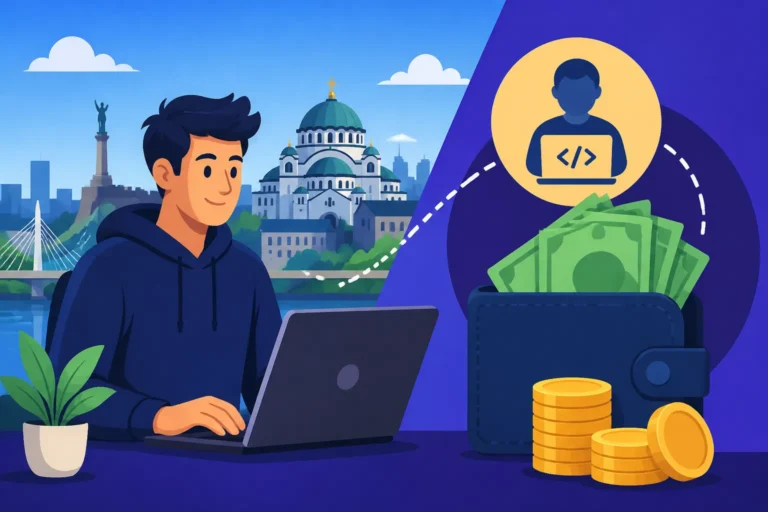
The Complete Guide to Freelancing in Serbia as an Expat
So, you’ve been bitten by the freelance bug, and now you’re eyeing Serbia as your next base. It’s an exciting prospect, isn't it? The dream of working for yourself, setting your own hours, and doing it all from a place that offers incredible value for money and a vibrant culture. But let's be real, the thought of navigating another country's bureaucratic maze – especially when it comes to taxes and legal structures for your business – can feel like staring down a dragon. This guide is here to cut through the noise, validate those anxieties, and arm you with the knowledge to thrive as a freelancer in Serbia.
Why Serbia is Becoming a Freelancer Hub (And Why You're Smart to Consider It)
When I first thought about moving here, the idea of freelancing in Serbia felt a bit like uncharted territory. Most people just thought of Belgrade as a cool stopover, not a long-term base for independent professionals. Oh, how things have changed! Serbia has quietly, but confidently, emerged as a fantastic place for expats looking to go independent. It’s not just about the cheaper espresso, though that certainly helps. There's a genuine ecosystem forming, a real buzz that makes you feel like you're part of something new and exciting.
Cost of Living & Lifestyle Perks
Let’s not beat around the bush: the cost of living here is a huge draw. After years of feeling the squeeze in Western Europe, the financial breathing room Serbia offers is liberating. Imagine enjoying a high quality of life without constantly checking your bank balance. Your hard-earned freelance income, whether it’s in dollars, euros, or pounds, stretches significantly further here, allowing you to invest in experiences, save for the future, or just enjoy a more relaxed pace of life.
Think about it: renting a spacious, modern apartment in a desirable Belgrade neighbourhood like Vračar or Stari Grad might cost you less than a shoebox studio in London or Paris. Groceries are affordable, public transport is cheap, and dining out can be an everyday pleasure rather than a splurge. This isn't just about saving money; it’s about freeing up mental space. When you’re not constantly stressed about making ends meet, you can focus more on your work, your hobbies, and building a life you genuinely love. The social scene is fantastic, too, with plenty of cafes, restaurants, and cultural events to keep you entertained. It really allows you to balance work and life in a way that feels sustainable and enjoyable.
Growing Digital Nomad Scene & Community
A few years ago, you’d be hard-pressed to find a dedicated digital nomad community here. Now, Belgrade and even Novi Sad are buzzing with international freelancers and remote workers. There’s a palpable sense of camaraderie, a shared understanding of the unique challenges and triumphs of this lifestyle. You’re not just an expat; you’re part of a growing movement.
This vibrant community means more than just having people to grab a coffee with. It translates into networking opportunities, shared wisdom about navigating the local systems, and a sense of belonging that's crucial when you're far from home. Co-working spaces have sprung up, offering not just desks and fast internet but also organised events, workshops, and social gatherings. These spaces become impromptu hubs for knowledge exchange, whether it’s about the best way to get a car registered or how to find an English-speaking doctor in Serbia. The connections you make can be invaluable, offering support and collaboration opportunities that genuinely enhance your freelance journey. This isn’t a lonely expat experience; it’s one filled with connection and shared purpose.
Tax Incentives (with a dose of reality)
Now, here’s where Serbia really shines for freelancers, at least on paper. The tax system, particularly the "paušal" regime, is incredibly appealing for self-employed individuals. It's often highlighted as a major perk for digital nomads and freelancers, and for good reason. The idea of a fixed, predictable tax burden, often much lower than what you’d pay in many other countries, sounds like a dream. It simplifies budgeting and reduces the stress of complex accounting.
However, let’s inject a bit of realism here. While the pausal system is fantastic, it’s not a free pass. You’ll still have social and health contributions to consider, and the calculations can sometimes feel a bit opaque without the right guidance. Plus, the rules and regulations can change, as they do in any country, so staying informed is paramount. This isn't a "set it and forget it" situation. You still need to understand the nuances, track your income, and ensure you're compliant. But with the right approach and perhaps a good local accountant, these incentives can genuinely make a significant difference to your bottom line, leaving you with more of your hard-earned money. For an in-depth look at this, our guide on The Complete Guide to Taxes in Serbia for Expats (2027) can offer more clarity.
Understanding the Legal Landscape: Who Can Freelance Here?
The legalities can be a huge headache for any expat, and Serbia is no exception. It’s easy to get overwhelmed by the jargon and the processes, especially when it feels like everything is in Serbian and the official websites aren’t exactly user-friendly. But understanding the legal framework is absolutely non-negotiable if you want to freelance legally and sustainably here. It’s about more than just avoiding fines; it’s about securing your long-term right to live and work in the country, and frankly, maintaining your peace of mind.
Visa and Residence Requirements for Freelancers
First things first: you can't just rock up on a tourist visa and start invoicing clients from your laptop. That's a surefire way to run into trouble. Unless you're from a visa-exempt country and only planning a very short stint within the 90/180-day rule, you'll need a proper visa or residence permit to legally freelance in Serbia. This is crucial for establishing tax residency and accessing local services.
For most non-EU/EEA expats, this means applying for a Type D Long-Stay Visa from your home country (or a country where you have legal residency) which then allows you to apply for temporary residence once you arrive in Serbia. The grounds for temporary residence often include employment, self-employment (which is what we’re talking about), or other categories like property ownership or study. Make sure you align your application with your actual intentions. Trying to fit into a category that doesn’t quite match your situation will only cause delays and frustration down the line. It's about being upfront and preparing the necessary documentation, which often includes proving sufficient funds, having health insurance, and having an address in Serbia. Our guide on How to Get Temporary Residence (Boravak) in Serbia (2027) provides a detailed walkthrough.
The "Single Permit" for Work and Residence
This is a game-changer for many expats and freelancers in Serbia. Historically, you had to apply for a residence permit and a work permit separately – a process that often felt like two independent marathons. The "Single Permit" (Jedinstvena dozvola) streamlines this, combining both authorizations into one unified application process. It’s designed to make life easier, and for the most part, it does.
If you’re planning to register as an entrepreneur (preduzetnik), including under the pausal regime, the Single Permit is what you’ll be aiming for. It acknowledges your self-employed status and grants you both the right to reside in Serbia and the right to conduct your freelance activities. The application still requires a fair bit of paperwork – think proof of your business registration, your financial solvency, your accommodation, and often a detailed business plan for self-employment. Getting this permit means you’re officially recognized, allowing you to open a proper business bank account, file taxes correctly, and generally operate without constantly looking over your shoulder. Dive into The Expat Guide to the Single Permit for Work and Residence in Serbia (2027) for the full scoop.
Different Legal Structures for Freelancers
When it comes to actually registering your freelance business, Serbia offers a few options. The most common for expats are becoming an "Entrepreneur" (Preduzetnik), often under the Pausal (Lump-Sum) taxation regime, or forming a Limited Liability Company (DOO). Understanding the differences is critical for choosing the right path for your specific situation, balancing simplicity with flexibility and liability.
The "Pausal" regime, which we’ll delve into deeper, is highly popular due to its simplified taxation and lower administrative burden. It's ideal for individual freelancers who don't have high business expenses and want predictable costs. However, it has income thresholds and limitations on certain activities. If your income is higher, you have significant business expenses, or you plan to hire employees or raise capital, registering as a classic entrepreneur (preduzetnik on actual expenses) or a DOO might be more appropriate. A DOO offers limited liability, meaning your personal assets are separate from your business, but it comes with more complex accounting and higher administrative costs. For most independent freelancers starting out, the pausal regime is often the most sensible and straightforward choice. For more on the basic entrepreneur registration, see How to Register as an Entrepreneur (Preduzetnik) in Serbia.
The Pausal Regime: Your Go-To for Simplified Freelancing
Ah, the pausal regime. This is often the golden ticket for expat freelancers in Serbia. It’s the topic that sparks the most excitement and, sometimes, the most confusion. When you've dealt with complex tax systems in other countries, the idea of a fixed, predictable payment can feel like a revelation. But it’s not without its quirks, and understanding the ins and outs is crucial to truly benefitting from it.
What Exactly is the Pausal System?
The Pausalni Porez na Prihode od Samostalne Delatnosti, or Lump-Sum Tax on Income from Self-Employment, is a simplified taxation method specifically designed for small businesses and individual entrepreneurs whose income isn't easily determined or who operate with minimal expenses. Instead of meticulously tracking every single income and expense, and calculating profit, the state estimates your income based on your activity, location, and other factors, and then assigns a fixed monthly tax payment.
This means you pay a flat amount each month, regardless of your actual monthly earnings (as long as you stay within the specified turnover limits, which we'll get to). It's a huge relief for many freelancers who dread bookkeeping and complex tax declarations. The idea is that it reduces the administrative burden, freeing you up to focus on your actual work. It’s an incredibly attractive option for graphic designers, web developers, consultants, translators – essentially anyone providing services primarily with their own intellectual capital and minimal material costs. The beauty of it is in its simplicity, offering a clear financial picture month-to-month. For a deep dive, check out Understanding the Pausal (Lump-Sum) Tax Regime in Serbia (2027).
Who is Eligible for Pausal (and who isn't)
While the pausal regime sounds like a dream, it's not universally available to all freelancers. There are specific criteria you need to meet, and equally important, certain activities or income levels that disqualify you. The main conditions generally revolve around the type of activity you conduct and your annual turnover.
Typically, the pausal regime is for entrepreneurs who:
- Perform activities that do not require extensive material investments or large numbers of employees (e.g., IT services, consulting, translation, design).
- Do not have an annual turnover exceeding a certain threshold (which can change, so always check the latest figures – it's generally around 6 million RSD, or approximately 50,000 EUR).
- Are not VAT-registered, which is usually tied to the same turnover threshold.
- Don't keep "business books" (i.e., simplified accounting).
Crucially, certain activities are explicitly excluded, such as catering, trade (retail), and some manufacturing. If your freelance work falls into these categories, you’ll likely need to register as a classic entrepreneur with full bookkeeping. Also, if a significant portion of your income comes from a single client in Serbia (e.g., more than 50-70% from one local entity), you might be flagged as "false self-employment," which could lead to reclassification and higher tax burdens. This is less of an issue for expats working with international clients, but it’s something to be aware of if you plan to work for local Serbian companies primarily. It’s always best to consult with a local accountant to confirm your eligibility.
How to Register as a Pausal Entrepreneur (Step-by-Step)
Registering as a pausal entrepreneur isn't as scary as it sounds, but it does require precision and patience. The process involves multiple steps, usually starting with the Serbian Business Registers Agency (APR) and then moving on to the Tax Administration (Poreska Uprava). Having a local contact or an accountant to guide you through this is invaluable.
Here’s a simplified breakdown:
- Preparation of Documents: You'll need your passport, your Serbian temporary residence permit (or Single Permit), and a unique personal identification number (JMBG) which you usually get with your residence.
- Application at APR: You submit an application to register your entrepreneurship with the APR. This includes choosing your business activity (predominant one, usually a specific code like 6201 for computer programming, or 7022 for business and other management consulting), and stating your intention to be taxed under the pausal regime.
- Tax Administration: Once registered with APR, the information is automatically forwarded to the Tax Administration. However, it's often wise to follow up directly with the Poreska Uprava (Tax Administration) to ensure your pausal request is processed and you receive your decision on the lump-sum amount. This is where the fixed monthly payment amount is determined.
- Bank Account: With your registration complete, you’ll then open a business bank account in Serbia, which is separate from your personal account.
- Single Permit Integration: If you haven’t already, this registration is the basis for your Single Permit application or renewal, proving your legitimate self-employment.
Remember, the initial assessment of your monthly pausal tax can take a few weeks or even months. You'll eventually receive a decision detailing your monthly obligations, which retroactively apply from your registration date. This means you might get a bill for several months all at once, so it’s wise to set aside funds. It’s also crucial to remember that you can register for the pausal regime directly from your Single Permit application by indicating self-employment as the basis for your residence and work. Our guide on How to Register for the Pausal Tax Regime as a Freelancer in Serbia can walk you through it.
Navigating Taxes and Contributions as a Freelancer
This is where many expats start to feel a bit of a chill. Taxes are complex enough in your home country, let alone a new one with different rules and a different language. The Serbian system, while simplified for pausal entrepreneurs, still has its nuances, especially when it comes to social and health contributions. It's not just about the "flat 10%," as many will tell you; there's more under the hood that you need to be aware of.
Income Tax: The Flat 10% Reality (and more)
When people talk about Serbian taxes, the "flat 10% personal income tax" often gets mentioned. This is true for employees, but for pausal entrepreneurs, it's a bit different. Your "paušal" monthly payment already includes an estimation of your income tax, alongside your social and health contributions. It’s not a direct 10% of your gross income, but rather a fixed amount determined by the tax authority based on several factors, including your profession (using your activity code, known as a 'šifra delatnosti'), municipality, and estimated average income for that activity.
The beauty of the pausal system is that once your monthly amount is set, you pay that regardless of how much you actually earn (within the turnover limits). This means if you have a bumper month, your tax payment doesn't suddenly jump. Conversely, if you have a slow month, you still pay the same amount. This predictability is a huge advantage for freelancers, making financial planning much easier. However, it’s not an "avoid all taxes" card. The fixed amount can sometimes feel a bit high if your actual income is consistently low, but it generally balances out over time, especially for those with fluctuating earnings. Just be prepared that your first few monthly payments might be backdated once the tax decision arrives.
Social and Health Contributions (The "Hidden" Costs)
This is often the part that catches new freelancers off guard. While the income tax component of the pausal system is fixed and relatively low, you also have mandatory social security and health insurance contributions. These are not trivial and form a significant part of your overall monthly payment as a pausal entrepreneur. They are also included in your fixed monthly pausal amount, but it’s important to understand what they cover.
Your social contributions go towards your pension fund, ensuring that you’re contributing to your future, even as a freelancer. The health contributions ensure you have access to the public healthcare system through the Republic Health Insurance Fund (RFZO). This is a massive benefit, as it gives you peace of mind knowing you can access doctors and hospitals without worrying about astronomical bills. You can learn more about this in our guide on How Serbia's Health System Works: The RFZO and Private Care Explained (2027). The actual amounts for these contributions are calculated based on a percentage of a reference base salary, which is adjusted periodically. They vary depending on your profession and the tax category you fall into. It’s not uncommon for these contributions to represent a larger portion of your fixed monthly payment than the income tax itself. This is where professional advice, perhaps from a service like Taxes for Expats, can be incredibly helpful to accurately estimate your total monthly tax burden before you commit.
Reporting Income and Filing Taxes
As a pausal entrepreneur, the actual process of "filing taxes" is dramatically simplified, which is another major appeal. You generally don't file a traditional annual income tax return in the same way an employee or a business with full bookkeeping would. Your monthly lump-sum payment is effectively your tax obligation.
However, "simplified" doesn't mean "non-existent." You are still required to keep basic records of your income, primarily to ensure you don’t exceed the annual turnover threshold that would push you out of the pausal regime and into VAT registration or full bookkeeping. You issue invoices to your clients, and it’s good practice to keep these organised. While you don't typically file an annual tax declaration for your pausal income, there might be other reporting requirements, especially if you have foreign-sourced income not directly related to your Serbian freelance entity or if you hold significant assets abroad. It's always a good idea to consult with a local accountant to clarify any specific reporting obligations, especially as rules can sometimes be ambiguous for expat freelancers with international income streams. Your obligation is primarily to ensure your fixed monthly payments are made on time, usually through your business bank account. Our article on How to Pay Tax as a Pausal Entrepreneur in Serbia gives practical steps.
Banking and Finances for Serbian Freelancers
Managing your money in a new country can be daunting. There’s the language barrier, the different banking practices, and the eternal question of how to efficiently get your earnings from international clients into your Serbian account. For freelancers, this is even more critical, as your business depends on smooth financial operations. Getting your banking setup right from the start will save you countless headaches down the line.
Opening a Business Bank Account
This is a non-negotiable step for any registered entrepreneur in Serbia, including those under the pausal regime. You absolutely need a separate bank account for your business activities; mixing personal and business finances is a huge no-no and can cause significant problems with the tax authorities. Most major Serbian banks, such as Raiffeisen Bank, UniCredit Bank, or OTP Bank, are experienced in dealing with foreign clients and offer business accounts tailored for entrepreneurs.
The process for opening a business account typically requires your passport, your Serbian temporary residence card, your APR registration document (Akt o registraciji), and your Tax Identification Number (PIB). Some banks might ask for additional documents, like a brief business plan or proof of address. The good news is that many banks have English-speaking staff, especially in Belgrade, and their online banking platforms are generally quite user-friendly. Be prepared for a bit of paperwork and potentially a few visits, but it’s a necessary step. Make sure to inquire about monthly maintenance fees, transaction costs, and foreign currency exchange rates, as these can vary significantly between banks. To streamline this, you can refer to How to Open a Bank Account at a Serbian Bank as a Foreigner.
Managing Foreign Currency and Payments
As a freelancer, especially one working with international clients, you'll inevitably be dealing with foreign currency. Most of your payments will likely come in EUR, USD, or GBP. Serbian banks are generally well-equipped to handle this. You can usually open multi-currency accounts within your business banking package, allowing you to receive funds in their original currency.
When you need to convert these funds to Serbian Dinars (RSD) for local expenses or withdrawals, the bank will apply its exchange rate. It's always a good idea to compare rates between different banks, as even small differences can add up over time. Many freelancers also use international transfer services like Wise (formerly TransferWise) or Revolut for more favourable exchange rates and lower fees when moving money between their foreign personal accounts and Serbian business accounts, or vice versa. However, remember that income earned and declared for your Serbian entity should ideally pass through your Serbian business bank account for clear record-keeping. Always be mindful of the reporting requirements for foreign currency transactions, though for most pausal entrepreneurs, this is handled fairly smoothly by the banks themselves. Our article on How to Transfer Money Into and Out of Serbia as an Expat has more information.
Understanding Local Payment Systems
While most of your business transactions will likely be international bank transfers, it’s still helpful to understand local payment systems, especially if you ever have Serbian clients or need to pay local suppliers. The primary local currency is the Serbian Dinar (RSD), and cash is still widely used, particularly outside of major cities. However, card payments are very common, and contactless payment is standard.
Many Serbian businesses use payment terminals, and you’ll find ATMs readily available. For your personal finances, having a local debit card linked to your Serbian bank account is incredibly convenient. For paying your monthly pausal tax, you'll receive payment slips from the tax authority, which you can pay directly at the bank, post office, or through online banking. Most Serbian banks offer robust online banking platforms where you can manage your accounts, make transfers, and pay bills. Some even offer mobile apps for banking on the go. While a significant portion of your freelance income will be international, familiarising yourself with these local systems will make your day-to-day life and business operations much smoother.
| Aspect | Pausal Entrepreneur (Lump-Sum) | Classic Entrepreneur (Actual Expenses) | Limited Liability Company (DOO) |
|---|---|---|---|
| Taxation Basis | Fixed monthly amount based on activity, location, and estimated income. No need to track every expense. | Income tax on actual profit (Income – Expenses). Requires detailed bookkeeping. | Corporate profit tax (15%) on company profit. More complex accounting. |
| Bookkeeping | Simplified (no formal bookkeeping required, just income records). | Full bookkeeping required. | Full bookkeeping required. |
| Administrative Burden | Low. | Medium. | High. |
| Liability | Unlimited (personal assets can be at risk). | Unlimited (personal assets can be at risk). | Limited (personal assets are separate from company liabilities). |
| VAT Registration | Not permitted if annual turnover below threshold (approx. 50,000 EUR). Automatically excluded from pausal if VAT registered. | Mandatory if annual turnover exceeds threshold. Can voluntarily register below threshold. | Mandatory if annual turnover exceeds threshold. Can voluntarily register below threshold. |
| Maximum Income | Annual turnover limit (approx. 50,000 EUR). Exceeding this moves you to classic entrepreneur or DOO. | No specific limit (but high income might make DOO more tax-efficient). | No specific limit. |
| Employees | Can hire, but complicates pausal calculation and may push you out of regime depending on number/salary. | Can hire employees. | Can hire employees. |
| Best For | Individual service-based freelancers with stable, moderate income and few business expenses (e.g., IT, consulting, design). | Entrepreneurs with significant, deductible expenses or higher income, but still individual-focused. | Larger businesses, high-revenue freelancers, those needing limited liability, planning to hire, or seeking investment. |
| Foreigners | Very popular due to simplicity and predictability for expat freelancers. | Less common for initial expat freelancers, usually for those with more complex business models. | Common for established businesses, startups, or those planning significant growth. |
Practicalities of Daily Freelancer Life in Serbia
Moving and setting up your business is one thing, but what about the actual day-to-day grind? Freelancing isn't just about taxes and permits; it's about finding clients, staying productive, and making sure you can actually do your work effectively. Serbia offers a fantastic backdrop for this, but like anywhere, there are things to know to make your daily life as smooth as possible.
Finding Work and Clients (Local vs. International)
For most expat freelancers in Serbia, your client base will primarily be international. This is often by design, as you’re leveraging your skills for markets where rates are typically higher than what local Serbian clients might pay. Platforms like Upwork, Fiverr, or direct outreach to companies in Western Europe or North America are common avenues. Building a strong online presence and a professional network is key.
However, don't completely discount the local market. Serbia's IT and tech scene is booming, and there's a growing demand for skilled professionals. While direct contracts might be in RSD, they can be a good way to diversify your client portfolio and integrate into the local business community. Networking events, local business groups, and even simply word-of-mouth can lead to unexpected opportunities. Just be mindful of the "false self-employment" rule if you're working predominantly for a single local client, as mentioned earlier. Maintaining a diverse client base, both internationally and potentially locally, is a smart strategy to ensure stability and growth.
Workspace Options: Co-working, Cafes, Home Office
One of the beauties of freelancing is the flexibility to choose your workspace. Serbia, particularly Belgrade and Novi Sad, offers excellent options, catering to different preferences and budgets.
- Home Office: For many, the comfort and cost-effectiveness of a home office are unbeatable. With readily available high-speed internet (which we'll cover next), setting up a productive space in your apartment is straightforward. Just remember the importance of maintaining work-life boundaries when your office is also your home.
- Cafes: Serbian cafes are legendary for their coffee culture and laid-back atmosphere. Many offer decent Wi-Fi and are perfectly happy for you to set up with your laptop for a few hours. Places like Kafeterija or Pržionica in Belgrade are popular spots. Just be mindful of etiquette – don't hog a table during peak hours, and keep ordering to support the business.
- Co-working Spaces: These are a freelancer's haven. Belgrade has a burgeoning co-working scene with places like Nova Iskra, ICT Hub, and Impact Hub offering flexible memberships, dedicated desks, meeting rooms, and crucial networking opportunities. They provide a professional environment, reliable internet, and a community of like-minded individuals. They can be a fantastic way to combat loneliness, learn from others, and even find new clients through referrals. While there's a cost involved, the benefits in terms of productivity, professionalism, and community often outweigh it.
Staying Connected: Internet, Phone, and Utilities
Reliable internet is your lifeline as a freelancer. The good news? Serbia has excellent internet infrastructure, especially in urban areas. Fibre optic is widely available, offering blazing-fast speeds at very reasonable prices. Providers like SBB, Telekom Srbija, and Yettel offer various packages for both internet and mobile services.
Setting up internet in your apartment is usually straightforward, though it might require a few days for installation. For mobile, prepaid SIM cards are easy to get, but for longer stays and better value, a post-paid plan is advisable. These usually require your passport and temporary residence card. You can usually get a good deal bundling internet, TV (if you want it), and mobile services. Utilities like electricity, water, and heating are generally efficient and affordable, especially compared to Western European norms. Understanding how to set these up and pay for them is crucial for daily living, and our guide on How to Set Up Internet and Mobile Service in Serbia can help walk you through that.
Challenges and Solutions for Freelancing Expats
Let’s be honest: expat life, even freelancing in a vibrant place like Serbia, isn’t always sunshine and roses. There are frustrating moments, bureaucratic hurdles, and times when you just want to throw your hands up. Acknowledging these challenges is the first step to overcoming them, and trust me, many of us have been there.
Bureaucracy and Language Barriers
This is probably the biggest headache for most expats, and it’s amplified when you’re dealing with business registration and taxes. The Serbian administrative system, while it has made strides towards digitisation, can still be opaque, slow, and feel incredibly inefficient at times. Forms might only be available in Serbian, and even with Google Translate, the nuances can be lost. Dealing with the Tax Administration (Poreska Uprava) or the Business Registers Agency (APR) can test the patience of even the most zen individual.
Solutions:
- Hire an Accountant/Agency: This is, hands down, the best investment you can make. A good local accountant who understands expat needs and speaks English can navigate the bureaucracy for you, ensuring everything is done correctly and on time. They can handle your registration, monthly tax payments, and advise on any changes in regulations. It’s worth every dinar.
- Learn Basic Serbian: While many people in Belgrade speak English, especially younger generations and those in the service industry, a little Serbian goes a long way. Even basic phrases for greetings, numbers, and common administrative terms can significantly improve your interactions. Consider online platforms like iTalki to find a tutor, or local language schools in Belgrade. It shows respect and can often open doors, or at least soften a stern official.
- Patience and Persistence: These are your superpowers. Things will take longer than you expect. You might need to visit the same office multiple times. Take a deep breath, bring a book, and remember that everyone eventually gets through it.
Networking and Building Your Support System
Freelancing can be a solitary endeavour, and moving to a new country can compound that feeling of isolation. While the digital nomad community is growing, actively building your personal and professional support network is essential for both your business and your mental well-being.
Solutions:
- Co-working Spaces: As mentioned, these are fantastic for meeting like-minded professionals. Many organise social events, workshops, and pitch nights, providing natural opportunities to connect.
- Expat Groups and Meetups: Facebook groups like "Expats in Belgrade" or "Digital Nomads Serbia" are great starting points. Look for organised meetups and events, both professional and social. These communities often share invaluable practical advice, from where to find obscure groceries to recommendations for local services.
- Professional Organisations: Depending on your field, seek out local professional associations. Even if you're not fully fluent in Serbian, many have an international outlook and welcome foreign members, providing avenues for collaboration and learning.
- Socialise Beyond Expats: While expat friends are wonderful, make an effort to connect with locals. They can offer insights into Serbian culture, open doors to local experiences, and help you feel more integrated into the country. Attend local events, join a sports club, or take a class.
Long-Term Planning: Pensions and Citizenship Considerations
When you’re just starting out, thinking about pensions or citizenship might seem light-years away. But as a freelancer contributing to the Serbian social security system, it’s worth understanding the long-term implications. Your contributions under the pausal regime do count towards your pension.
Solutions:
- Understand Pension Accumulation: Keep track of your contributions and understand how they translate into future pension benefits. If you’re planning to move on after a few years, investigate whether Serbia has social security agreements with your home country that allow for transferability of contributions.
- Private Pension Schemes: Many expats choose to supplement their state pension contributions with private pension plans, either in Serbia or in their home country. This offers more flexibility and control over your retirement savings.
- Citizenship Pathway: For those who truly fall in love with Serbia and plan to stay long-term, living and freelancing here legally for several years can put you on a path towards permanent residence and eventually, Serbian citizenship. This requires meeting residency requirements, demonstrating integration, and passing a Serbian language test. Our article on Serbian Citizenship: How to Naturalise After Permanent Residence (2027) offers a detailed overview. Thinking ahead about these possibilities can help you make informed decisions about your residency status and financial planning.
Disclaimer
Please remember that I am an expat blogger sharing my experiences and insights, not a legal or financial professional. While I strive for accuracy and provide information based on extensive research and personal experience, rules and regulations in Serbia, especially concerning immigration, taxes, and business, can change. Always consult with official government sources, a qualified Serbian lawyer, and a professional accountant for the most current and personalised advice regarding your specific situation. This guide is for informational purposes only.