How Do I Prove My Employment for Residence in Serbia?
One of the biggest headaches when you're trying to settle into a new country like Serbia is navigating the bureaucratic maze, especially when it comes to proving you're here to work legitimately. It can feel like you're constantly jumping through hoops, trying to gather the right papers to show the authorities that yes, you do have a job and you are contributing. This guide is here to untangle that process for you, explaining exactly what documents you need and how to present them to successfully prove your employment for a residence permit in Serbia.
Understanding the Crucial Role of Employment for Serbian Residence
Let's be real, for most of us expats, our job is the bedrock of our life in Serbia. It's not just about earning a living; it’s often the very reason we can apply for and maintain our legal status here. The Serbian authorities understand this, which is why a solid employment offer or established business is one of the most straightforward and common grounds for obtaining temporary residence, known as privremeni boravak.
Why Employment is a Primary Ground for Temporary Residence (Boravak)
Think of your employment as your golden ticket. The Serbian government, through the Ministry of Internal Affairs (MUP), wants to see that you're not just here as a tourist, but that you have a purpose, that you're contributing to the economy. This is why a valid work contract or proof of entrepreneurial activity is given such weight. It demonstrates stability and a clear intent to reside here for an extended period, beyond what a simple tourist visa would allow. Without this, your path to How Do I Get a Residence Permit for Work in Serbia becomes significantly more complicated.
The process often involves a "Single Permit" for work and residence, which streamlines things considerably compared to older systems where you'd apply for a work permit and residence permit separately. This unified approach acknowledges that for most foreigners, the ability to live and work are inextricably linked. So, when you're preparing your application, every document related to your job isn't just a formality; it's a foundational piece of your case for staying in this beautiful country. It's the proof that you're here to build a life, not just pass through.
The Interplay of Your Work Contract and Residence Application
Your work contract isn't just a piece of paper defining your salary and responsibilities; it’s a living document that underpins your entire residence application. The MUP will scrutinize this document to ensure it's legitimate, aligns with Serbian labor laws, and clearly states your role, duration of employment, and employer details. They want to see a clear commitment from a Serbian entity.
For instance, if your contract is for a short, temporary engagement, it might raise questions about your long-term intent, potentially affecting the duration of your residence permit. Conversely, an open-ended contract or one for a substantial period (e.g., one year or more) signals stability, which the authorities appreciate. This contract will also be cross-referenced with your employer’s registration details and tax information to ensure everything is above board. Don't forget that if you're planning a big move, a professional relocation service like Sirelo can help manage the logistics, so you can focus on getting these crucial documents in order. The seamless integration of your job offer into the residence application is vital for a smooth process.
Essential Documents to Prove Your Employment Status
Now, let's get down to the nitty-gritty: what specific documents do you actually need to present? This is where many expats get tripped up, because the requirements can vary slightly depending on whether you're employed by a Serbian company or if you're striking out on your own as an entrepreneur.
For Employees: What Your Employer Needs to Provide
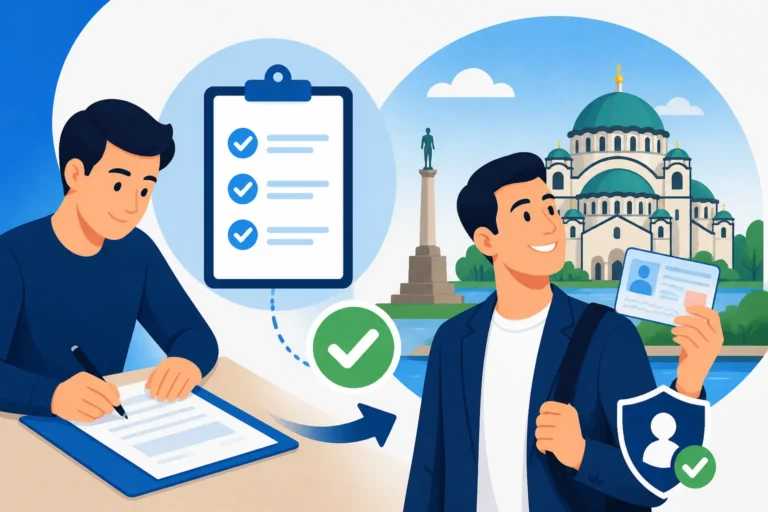
If you're going to be an employee of a Serbian company, your employer plays a huge role in getting your documents ready. Here’s a breakdown of what you'll typically need from them, and why each piece is important:
- Work Contract (Ugovor o Radu): This is paramount. It must be in Serbian, signed by both you and your employer, and clearly state your position, responsibilities, salary, working hours, and the duration of your employment. It’s the official agreement that binds you to a Serbian entity.
- Company Registration Document (Izvod iz APR-a): Your employer needs to provide a copy of their registration with the Serbian Business Registers Agency (Agencija za privredne registre – APR). This proves that the company is a legally operating entity in Serbia and can legitimately employ you.
- Employer's Tax Identification Number (PIB): This is their unique tax number, proving their compliance with the Serbian tax system.
- Proof of Salary and Social Contributions: Sometimes, especially during renewal or if they need further assurance, you might need payslips or proof that your employer is paying social security and health insurance contributions on your behalf. This shows you're a legitimate, contributing worker. When it comes to health, remember that while you'll be covered by the state system (RFZO) through your employer, many expats opt for additional private insurance like Cigna Global for broader coverage or peace of mind. For a deeper dive, check out Understanding Mandatory Health Insurance Contributions in Serbia.
- Job Description and Qualification Proof: While not always explicitly requested for the initial application, having a detailed job description and proof of your qualifications (e.g., diplomas, certificates, translated and notarized) that align with your role can strengthen your application, especially for specialized positions. The authorities want to see that the job you're doing matches your skills and isn't just a made-up position.
All these documents must be current and valid. An outdated company registration or an unsigned contract will only lead to delays and frustration.
For Entrepreneurs/Freelancers: Proving Your Own Venture
If you're setting up your own shop or working as a freelancer under the paušal regime, the burden of proof shifts entirely to you. You're essentially your own employer, so you need to demonstrate that your business is legitimate and financially viable. This is a common route for digital nomads and self-starters, but it comes with its own set of administrative steps. For a complete guide, consider reading How to Register as an Entrepreneur (Preduzetnik) in Serbia.
Here’s what you’ll typically need:
- Registration with the Business Registers Agency (APR): Your proof of registration as a sole proprietor (preduzetnik) is critical. This document confirms that your business is legally established and active in Serbia.
- Tax Registration Certificate (PIB): As a registered entrepreneur, you'll have your own tax identification number. This is your personal business identity for tax purposes.
- Proof of Financial Means: This is vital. You need to show that you have enough funds to support yourself and your business activities in Serbia. This usually comes in the form of a bank statement from a Serbian bank (or sometimes your foreign bank, though Serbian is preferred), showing sufficient funds. The exact amount isn't strictly defined but generally needs to be enough to cover your living expenses for the duration of your requested residence, typically around €3,000-€5,000 as a rough estimate for a year.
- Business Plan (optional but recommended): While not always mandatory, a simple business plan outlining your activities, projected income, and how your business will contribute to the Serbian economy can be a strong supporting document.
- Invoices/Contracts with Clients: If you're freelancing, having existing contracts or recent invoices to clients (especially Serbian ones, but foreign ones also count) demonstrates that your business is active and generating income.
- Proof of Paid Social and Health Contributions: As a paušalac, you're responsible for paying your own social and health contributions monthly. Proof of these payments, usually via bank statements or payment confirmations, will be required, especially during renewals. This is crucial for maintaining your status and accessing public healthcare.
The Importance of Official Translations and Notarization
This point cannot be stressed enough: any document that is not originally in Serbian must be officially translated and notarized. This isn't a suggestion; it's a non-negotiable requirement. Serbia has a specific process for this:
- Certified Court Translator (Sudski Tumač): You cannot just use any translator. The translation must be done by a certified court translator in Serbia. These translators are recognized by the state and their translations carry legal weight. They will usually staple the original document to their translation, stamp it, and sign it, creating one legally binding document.
- Notarization: In some cases, especially for original documents like diplomas or marriage certificates issued abroad, the original document itself might need to be apostilled in your home country first, and then translated and notarized here. However, for documents generated by a Serbian entity (like your work contract), notarization is generally only required if you’re submitting a copy rather than the original, or if the MUP specifically requests it for the original document. Always clarify this with the MUP or your legal advisor.
Failing to get proper translations and notarizations is one of the most common reasons for delays or outright rejections of residence permit applications. It's an extra step, an extra cost, but it's absolutely essential. For further details on this, you might find Understanding Document and Translation Requirements for Serbia Immigration helpful.
Navigating the Application Process with Your Employment Proof
Once you've gathered all your painstakingly prepared documents, the next hurdle is the application itself. It's more than just handing over a stack of papers; it's about presenting a clear, coherent case for your residence.
Submitting Your Application: Where and How
Your application for temporary residence is typically submitted to the Aliens Department (Uprava za strance) of the MUP, which is usually located within the main police station in your city. In Belgrade, for example, this is at Savska 35.
The submission process can be a bit old-school, often involving in-person appointments and waiting times. However, Serbia is increasingly digitizing its services. Some parts of the application process, particularly for the Single Permit, might now involve online portals. Always check the most current information on the MUP's official website or consult with a local immigration lawyer, as procedures can evolve.
When you submit:
- Bring Originals and Copies: Always bring the original documents along with their translated and notarized copies. The MUP officials will usually want to see the originals for verification.
- Be Prepared for Questions: The officers might ask you questions about your employment, your employer, your qualifications, and your reasons for moving to Serbia. Be calm, polite, and have consistent answers ready.
- Payment of Fees: There will be administrative fees (takse) for the application itself and for the residence card. These are usually paid at a post office or bank using a payment slip provided by the MUP or found on their website. Make sure you have the correct amounts and the correct recipient details on the payment slips.
The waiting game can be tedious. Processing times for How Do I Apply for Temporary Residence (Privremeni Boravak) in Serbia can vary widely, from a few weeks to several months, depending on the MUP workload and the complexity of your case. Patience is definitely a virtue here!
Common Pitfalls and How to Avoid Them
Even with all the right documents, there are still ways to stumble. Here are a few common pitfalls expats encounter and how to sidestep them:
- Incomplete Documentation: This is the number one reason for delays. Missing one small document, even a seemingly insignificant one, can send you back to square one. Double-check the official list and any advice from legal professionals.
- Incorrect Translations/Notarizations: As mentioned, this is a huge one. Don't cut corners here. Use a certified court translator.
- Outdated Information: Make sure all your documents are current. An expired passport, an old company registration document, or an outdated bank statement can invalidate your application.
- Misunderstanding the Single Permit: The new Single Permit system means your work and residence permits are processed together. Ensure your employer understands this and provides all necessary documentation for both aspects. The Expat Guide to the Single Permit for Work and Residence in Serbia (2027) offers excellent guidance on this.
- Lack of Financial Proof: For entrepreneurs especially, insufficient funds in your Serbian bank account can be a deal-breaker. Ensure you meet the minimum financial threshold.
- Ignoring the Prijava (Address Registration): This isn't employment proof, but it's absolutely critical. When you arrive in Serbia, you must register your address with the police within 24 hours (or your landlord should do it). You'll need this bela karta or a copy of your landlord's registration confirmation for your residence application.
The best way to avoid these pitfalls is to start early, be meticulous, and if you can afford it, hire a local lawyer specializing in immigration. They can review your documents and guide you through each step, potentially saving you a lot of time and stress.
Beyond Initial Proof: Maintaining Your Employment-Based Residence
Getting that first residence permit is a huge relief, but it's not a one-and-done deal. To maintain your legal status in Serbia, you need to understand the renewal process and what happens if your employment situation changes.
What Happens During Renewal?
Renewing your temporary residence permit based on employment requires much of the same documentation as your initial application, but with an emphasis on proving continued employment and compliance. The MUP wants to see that your reasons for residency are still valid.
Expect to provide:
- A new or updated work contract: If your initial contract was for a fixed term, you'll need a new one or an annex extending your employment.
- Proof of continued employment: Recent payslips, a letter from your employer confirming your ongoing employment, and proof of paid social and health contributions (e.g., statements from the Tax Administration showing regular payments on your behalf).
- Updated company registration: Your employer's current APR extract.
- Current bank statements: To show you're still financially stable.
- Proof of health insurance: This will usually be through the RFZO, thanks to your employer's contributions. Make sure to understand How Serbia's Health System Works: The RFZO and Private Care Explained (2027) as it will be essential during your renewal.
- Updated address registration (Prijava): If you've moved, ensure your address registration is current.
The renewal process should ideally start at least 30 days before your current permit expires, but not more than 90 days. Don't wait until the last minute, as processing times can be unpredictable. You don't want to find yourself in a situation where your permit has expired while you're waiting for renewal.
Changing Employers or Employment Status
Life happens, and sometimes you might need to change jobs or even switch from being an employee to an entrepreneur, or vice versa. This can definitely impact your residence permit.
- Changing Employers: If you change employers while holding an employment-based residence permit, you generally need to inform the MUP of this change. You'll likely need to submit a new application for a residence permit, this time based on your new employer's work contract and documents. It's essentially a fresh application process, as your permit is tied to the specific employment that initially granted it. It's often recommended to secure your new work contract before resigning from your current job to ensure a smooth transition and avoid any gaps in your legal status.
- Changing from Employee to Entrepreneur: This is a more significant change. If you decide to leave your employed position to become a sole proprietor, you'll need to follow the steps for entrepreneurs outlined earlier. This means registering your business with the APR, getting your tax ID, and applying for a new residence permit based on your entrepreneurial activity. You're effectively changing the ground for your residence, which requires a new application.
- Changing from Entrepreneur to Employee: Similarly, if you close your business and become an employee, you'll need to apply for a new residence permit based on your new employer's details.
In any of these scenarios, clear communication with the MUP (or your legal representative) is key. The goal is always to avoid any period where you are residing in Serbia without a valid permit.
Here’s a helpful table summarizing the key documents for employees and entrepreneurs:
| Document Type | For Employees | For Entrepreneurs (Paušalac) |
|---|---|---|
| Core Proof of Employment | Valid Work Contract (Ugovor o Radu) | APR Business Registration (Izvod iz APR-a) |
| Employer/Self-ID | Company APR Extract, Employer's PIB | Personal PIB (as a registered entrepreneur) |
| Financial Viability | Proof of Salary / Payslips | Serbian Bank Statement (sufficient funds), Invoices |
| Tax & Contributions | Proof of Employer's contributions (e.g., M4 form) | Proof of personal paid contributions (PIO, health, etc.) |
| Supporting Documents | Qualifications, Job Description (optional) | Simple Business Plan (optional) |
| General Requirements | Passport, Application Form, Photos, Fees, Prijava | Passport, Application Form, Photos, Fees, Prijava |
| Translations | Official translation of foreign documents | Official translation of foreign documents |
Remember, navigating Understanding Serbian Residence Permits: Work, Study and Investment (2027) and its associated processes can be tricky. Don't hesitate to seek professional advice to ensure everything is handled correctly.
Disclaimer
Please remember that I am an expat blogger sharing personal experiences and general advice, not a legal professional. Immigration laws and procedures in Serbia can change, and my content should not be taken as legal advice. Always consult with the official Serbian authorities (MUP) or a qualified immigration lawyer for the most accurate and up-to-date information regarding your specific situation.