What Happens If I Overstay My Visa in Serbia?
Falling foul of immigration rules in any country can be incredibly stressful, and Serbia is no exception. Perhaps you lost track of time, had an unexpected emergency, or simply miscalculated your visa-free days. Whatever the reason, finding yourself in an overstay situation in Serbia can trigger a wave of panic and uncertainty. This guide is here to realistically walk you through the potential consequences of overstaying your visa or residence permit in Serbia, and crucially, what steps you might need to take to address it.
Understanding Serbia's Visa and Stay Regulations
Before we delve into the consequences, it’s absolutely vital to understand what "overstaying" actually means in the Serbian context. It’s not always as simple as a single expiry date on a stamp; there are nuances that many foreigners, even seasoned expats, often misunderstand.
The 90/180-Day Rule and Visa-Free Entry
For many nationalities, Serbia offers visa-free entry, which is fantastic for tourism and short visits. However, this freedom comes with a strict condition: you can generally stay for up to 90 days within any 180-day period. This is where most people get caught out. It's not 90 consecutive days, but rather a rolling calculation over the past six months. Every day you spend in Serbia counts towards that 90-day limit.
Let's say you enter Serbia on January 1st and stay for 30 days. You then leave on January 31st. You come back on March 1st and stay for another 30 days, leaving on March 31st. So far, you've used 60 days. If you return again on May 1st, you only have 30 days left before you hit the 90-day limit within that rolling 180-day period. If you then stay longer than that 30 days, you are officially overstaying. The border police, or "granična policija," keep meticulous electronic records, so there’s no fooling the system. You can learn more about this in our guide to Understanding Visa-Free Entry and the 90-Day Rule for Serbia.
Different Types of Serbian Visas and Residence Permits
Beyond visa-free entry, there are other statuses you might hold in Serbia, each with its own expiry rules:
- Short-Stay Visas (Type C): These are usually for tourism, business trips, or short visits, often allowing a stay of up to 90 days within a 180-day period, similar to visa-free entry but required for certain nationalities. Overstaying this is a direct violation of your visa conditions.
- Long-Stay Visas (Type D): If you're planning on seeking temporary residence (known as privremeni boravak) for work, study, family reunification, or property ownership, you might have applied for a Type D visa from your home country. This visa allows you to enter Serbia and then apply for your actual temporary residence permit. The Type D visa itself has an expiry date, usually 90 or 180 days, and it's crucial to submit your temporary residence application before this visa expires. Failing to do so can put you in an irregular status, even if you intend to get a permit. Our post on How Do I Get a Long-Stay Visa (Type D) for Serbia? has more details.
- Temporary Residence Permits (Privremeni Boravak): This is the holy grail for many expats looking to live in Serbia for longer than 90 days. It’s usually valid for one year and must be renewed annually. Overstaying your temporary residence permit means you’ve stayed beyond the validity date printed on your physical permit card. This is distinct from overstaying a visa, as you’ve already been granted legal residency, but failing to renew it on time is a serious breach. You’ll want to be familiar with How to Apply for Temporary Residence (Privremeni Boravak) in Serbia to avoid this. The Serbian Ministry of Interior (MUP) handles all these applications, and they are quite particular about deadlines.
The Immediate Consequences of Overstaying
Let's not sugarcoat it: overstaying your welcome in Serbia is a serious matter, and the authorities don't take it lightly. The moment you step outside your legal stay period, you enter a grey area with potentially significant repercussions.
Fines and Penalties
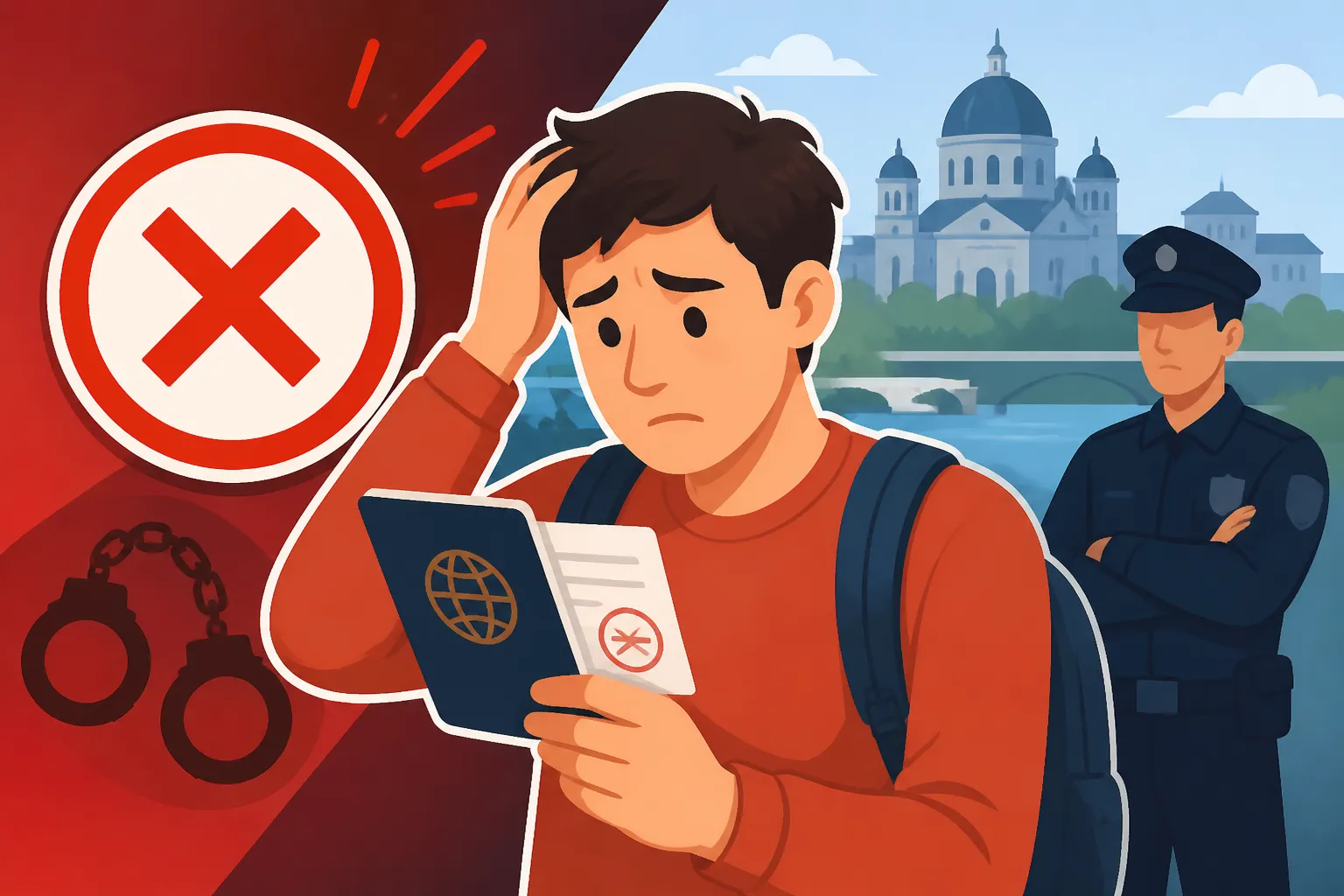
The most immediate and almost certain consequence of an overstay is a financial penalty. When you eventually attempt to leave Serbia, or if you're intercepted by the police within the country, you will likely be issued a fine. The exact amount can vary depending on the length of your overstay, the discretion of the MUP officer, and whether you have any previous immigration violations.
Based on current regulations, fines for immigration offenses, including overstaying, typically range from 5,000 RSD to 50,000 RSD, but they can sometimes go higher in more severe cases. Imagine trying to catch a flight from Nikola Tesla Airport (BEG) in Belgrade, only to be pulled aside by border police at passport control. They will check your entry and exit stamps (or electronic records) and calculate your overstay. You will then be directed to pay the fine on the spot or given instructions on how to pay it. This could involve going to a bank or post office, which can be an enormous hassle, especially if you're trying to catch a flight. It's not uncommon for departures to be delayed or missed entirely due to these administrative hurdles.
A common scenario: an expat, perhaps distracted by work or life, forgets to renew their temporary residence permit for a few weeks. When they finally go to the MUP, they are informed they've been illegally present for that period. They might be issued a fine and then advised on how to rectify their status, which could involve leaving the country and re-entering, or submitting an expedited (and often more complicated) renewal application. The key is that the MUP has full discretion here, and while they can sometimes be understanding, they are primarily there to enforce the law.
Entry Bans and Future Travel Restrictions
Beyond monetary fines, a more severe consequence is the possibility of an entry ban. The Serbian authorities have the right to prohibit you from re-entering Serbia for a specified period, typically ranging from six months to five years, or even longer in egregious cases. This decision is usually made at the border crossing upon your departure, or by the MUP if you are apprehended within Serbia.
An entry ban can throw a massive wrench into your future plans, especially if you intended to return to Serbia for work, study, or family. Imagine you've made a life here, found a job through channels like those supported by The Complete Guide to Working in Serbia as a Foreigner (2027), and suddenly you're told you can't come back for two years. This is not just a theoretical risk; it happens. This is why planning your move and Understanding Serbian Residence Permits: Work, Study and Investment (2027) is paramount.
While Serbia is not part of the Schengen Area, an overstay in Serbia could potentially raise red flags with other countries if you apply for visas to them, as immigration authorities sometimes share information or look for patterns of non-compliance. It creates a negative mark on your international travel history.
Difficulty with Future Visa and Residence Applications
An overstay on your record is a significant black mark that can make future applications for Serbian visas or residence permits incredibly difficult, if not impossible, for a certain period. When you apply for a new visa or to How to Renew Your Temporary Residence in Serbia, the MUP will review your entire immigration history in Serbia. An overstay signals that you have previously violated their laws, which can lead to your application being denied outright.
Even if you pay the fine and leave the country, the record remains. Future applications for a How to Get a Residence Permit for Work in Serbia or even Family and Dependent Residence in Serbia: Bringing Your Loved Ones will be scrutinised with an added layer of suspicion. You'll likely need to provide extensive explanations, potentially a letter of apology, and demonstrate that such a violation will not happen again. This can prolong processing times and significantly increase the complexity of your application process.
For those dreaming of eventual The Complete Guide to Permanent Residence in Serbia (2027) or even Serbian Citizenship: How to Naturalise After Permanent Residence (2027), an overstay can push those goals years out of reach, or make them impossible. The Serbian authorities value compliance with their laws, and a breach in this regard undermines trust.
Navigating an Overstay Situation: What to Do (and Not Do)
If you find yourself in an overstay situation, panic is a natural reaction, but it’s crucial to remain calm and strategic. The worst thing you can do is ignore the problem or try to sneak out of the country.
Seek Legal Advice Immediately
This is not a situation for DIY solutions. Your very first step should be to consult with a reputable Serbian immigration lawyer. An experienced lawyer can:
- Assess your specific situation: They can review your entry stamps, the length of your overstay, and the reason behind it to give you tailored advice.
- Explain the precise legal implications: They'll know the current laws, potential fines, and the likelihood of an entry ban based on your circumstances.
- Represent you: A lawyer can communicate with the MUP on your behalf, help prepare any necessary documentation, and guide you through the process, whether it's paying a fine or trying to regularise your status.
- Help you prepare for departure: If leaving is the only option, they can advise you on how to approach the border crossing to minimise issues.
Trying to navigate the Serbian immigration system on your own, especially when you've already made a misstep, is fraught with risk. The nuances of the law and the interactions with officials require local expertise. Don't rely on advice from online forums or friends who "know a guy." Invest in professional legal help.
Prepare for Departure (and Potential Consequences)
In many overstay cases, particularly for shorter overstays or if you don't have an immediate path to legalising your status, the most straightforward (though not necessarily easy) solution is to leave the country. This means preparing yourself for the inevitable interaction with border police and the consequences.
Here's what you should expect and prepare for:
- Financial Readiness: Ensure you have enough cash (Serbian Dinars, RSD) or a debit card with sufficient funds to pay any potential fines at the border. Payment for fines is usually required on the spot.
- Documents: Have your passport, any expired visas or residence permits, and your flight/bus/train ticket ready. If you have a legitimate reason for the overstay (e.g., a medical emergency, backed by hospital records), have those documents translated into Serbian and ready to present. While they might not waive the fine, it could influence the duration of any potential entry ban. You'll find more on Understanding Document and Translation Requirements for Serbia Immigration useful for preparing.
- Emotional Preparedness: Understand that the interaction with border police might be stern and lengthy. Remain polite, honest, and cooperative. Avoid arguing or becoming agitated.
- Consider your belongings: If you're leaving for good, ensure you've organised your belongings. Companies like Sirelo can help with international moves, but it's essential to plan this before you're in an overstay bind, as expedited moves can be costly and complicated.
The following table provides a general idea of how consequences might differ based on the severity of the overstay, but remember, these are guidelines, and each case is handled individually by the authorities.
| Overstay Duration | Likely Consequences |
|---|---|
| 1-30 Days | Minor fine (5,000-20,000 RSD), potential short entry ban (6 months to 1 year). |
| 31-90 Days | Moderate fine (20,000-50,000 RSD), higher chance of entry ban (1-2 years). |
| 91-180 Days | Significant fine (50,000+ RSD), likely entry ban (2-3 years), more scrutiny. |
| More than 180 Days | Substantial fine, probable long entry ban (3-5+ years), potential for further legal action. |
The Importance of Documentation and Communication
Whether you're dealing with the MUP inside Serbia or border police at departure, clear and honest communication, backed by documentation, is key. If your overstay was due to circumstances beyond your control, such as a sudden medical emergency, a death in the family, or a delay in an official application process, gather all supporting documents. For instance, if you were hospitalised, get a letter from the hospital. If you had an urgent family matter, provide official communication.
While these might not exempt you from fines, they can certainly help explain your situation and potentially mitigate the severity of an entry ban. Always bring original documents and, ideally, official Serbian translations. Attempting to hide your overstay, providing false information, or trying to bribe officials will only escalate your problems and can lead to criminal charges. Transparency, though uncomfortable, is the best policy.
Preventative Measures: How to Avoid Overstaying in Serbia
The best way to deal with an overstay is to ensure it never happens in the first place. A little foresight and careful planning can save you a world of stress, fines, and potential bans.
Track Your Days Meticulously
For visa-free travellers, the 90/180-day rule is a silent trap. It's not enough to simply remember your last entry date. You need to keep a running tally of every day you've spent in Serbia within the past 180 days.
- Use a Calendar or Spreadsheet: Mark every entry and exit date. Calculate your cumulative days regularly.
- Smartphone Apps: There are several travel apps designed to help track Schengen and other multi-country visa-free allowances. While Serbia isn't Schengen, the calculation method is similar.
- Set Reminders: Give yourself ample warning a month or two before your 90 days are up, so you have time to either leave or initiate a residence application.
This proactive approach is especially important for digital nomads or frequent visitors who pop in and out of Serbia multiple times a year. Getting caught out is easy when you’re not actively tracking.
Apply for Extensions or Residence Permits Early
If you know you want to stay in Serbia longer than your initial visa or visa-free period allows, start the application process for a temporary residence permit well in advance. "Well in advance" means at least a month before your current legal stay expires, and ideally two to three months.
The MUP’s processing times can be unpredictable. While sometimes an application might be processed quickly, other times it can take several weeks or even months. If your current legal stay expires while your residence application is still pending, you are generally considered to be legally present in the country during that waiting period, provided you submitted the application correctly and on time. However, if you submit it late, even by a day, you risk falling into overstay status. This is why our guide on The Expat Guide to the Single Permit for Work and Residence in Serbia (2027) stresses early application.
For example, if you entered on a Type D visa, you must submit your temporary residence application before that Type D visa expires. If your existing temporary residence permit is due for renewal, start the How to Renew Your Temporary Residence in Serbia process several weeks before the expiry date on your permit card. Don't wait until the last minute – that’s a recipe for disaster.
Understand Your Visa/Permit Conditions
Every visa and residence permit comes with specific conditions and validity periods. Read them carefully.
- Purpose of Stay: A tourist visa doesn’t allow you to work. A student permit doesn’t automatically allow you to start a business. Using your visa for a purpose other than what it was granted for can lead to issues, even if you technically haven't overstayed the duration.
- Expiry Dates: Make sure you know the exact expiry date of your visa and your residence permit. They are not always the same.
- Dependents: If you have family with you, ensure their status is also legal and current. An overstay for one family member can complicate things for the whole family when applying for How to Add Dependents to Your Health Coverage in Serbia or How to Add a Dependent to My Health Coverage in Serbia.
By truly understanding the terms of your stay and planning ahead, you can avoid the headache and anxiety of an overstay. It’s all about being proactive and responsible for your immigration status in Serbia. While companies like Cigna Global offer excellent health insurance coverage for unexpected medical situations abroad, it's personal responsibility and legal counsel that will protect you from immigration pitfalls.
Disclaimer
The information provided in this article is for general guidance only and does not constitute legal advice. Immigration laws and regulations in Serbia can change frequently. It is imperative to consult with a qualified Serbian immigration lawyer or the Ministry of Interior (MUP) for advice specific to your individual situation. The author and publisher are not responsible for any actions taken based on the information in this article.