What Is the Process to Maintain My Permanent Residence in Serbia?
Ah, so you've done it! You've navigated the labyrinthine pathways of Serbian bureaucracy, gathered countless documents, spent hours at the MUP, and finally, finally, secured your permanent residence (stalni boravak). Congratulations! That's no small feat, and you should absolutely take a moment to pat yourself on the back. But here’s the thing that often catches even the savviest expats off guard: "permanent" doesn't quite mean "forever" in the set-it-and-forget-it sense when it comes to immigration. You can’t just disappear for years and expect your status to magically remain intact. The good news is, maintaining your permanent residence in Serbia is far less taxing than obtaining it in the first place, once you understand the simple, yet crucial, rules. This guide is here to walk you through exactly what you need to do to keep your hard-earned permanent status secure, avoiding any unwelcome surprises down the line.
The Foundations of Serbian Permanent Residence (Stalni Boravak)
Securing permanent residence in Serbia is a significant milestone, granting you a much deeper level of integration and stability compared to temporary residence. It’s the closest you can get to being a full citizen without actually naturalising, offering a range of rights and responsibilities that shape your life here. But, like any privilege, it comes with certain expectations from the Serbian state.
What "Permanent" Really Means in Serbia
When you hear "permanent residence," your mind likely jumps to a status that's, well, permanent – something you never have to worry about again. While it's true that you won't be renewing your permanent residence status every year or so, like you would with temporary permits, the card itself has an expiry date, and more importantly, your status can still be revoked under specific circumstances. Think of it as an indefinite right to reside, work, and live in Serbia, but one that requires you to continue demonstrating a genuine link to the country. It’s not quite as hands-off as a permanent green card in some other countries might be.
The biggest difference from temporary residence is the removal of the underlying "reason" for your stay. With temporary residence, you're always tied to a purpose – work, study, family reunification, property ownership. If that purpose ceases, your temporary permit is at risk. With permanent residence, you've moved beyond that; Serbia has acknowledged your long-term commitment. However, this doesn’t mean you can completely sever ties and expect everything to be fine. It’s about being present, compliant, and genuinely part of the community. If you're wondering how this differs from previous stages, you might find it helpful to look into how to renew your temporary residence in Serbia.
Your Rights and Responsibilities as a Permanent Resident
With permanent residence, your life in Serbia opens up considerably. You now have the right to work, study, and conduct business without needing separate work permits or student visas. You can freely purchase property (which for some nationalities is a prerequisite for even applying for permanent residence), and perhaps most importantly, you can initiate family reunification processes for your loved ones with greater ease. This is a huge relief for many expats who have spent years on temporary permits.
However, these rights come with responsibilities. As a permanent resident, you are expected to abide by Serbian law, just like any citizen. This includes crucial obligations like paying taxes, if you're deemed a tax resident, and ensuring your address registration (prijava boravišta) is always accurate and up-to-date. Your contribution to society, whether through work, entrepreneurship, or simply being a law-abiding resident, solidifies your position here. Understanding these rights and responsibilities from the get-go helps you avoid any pitfalls and fully embrace your life in this beautiful country. You can learn more about this by reading The Complete Guide to Serbia Visas and Immigration for Expats (2026).
Essential Requirements for Upholding Your Permanent Residence
The key to maintaining your permanent residence really boils down to two things: showing you genuinely live here and keeping your official documents current. Failings in these areas are the most common reasons for complications.
The Crucial Absence Rule: How Long Can You Be Away?
This is, without a doubt, the most important aspect of maintaining your permanent residence in Serbia, and frankly, it causes the most anxiety and confusion among expats. The Serbian law on foreigners is quite clear: your permanent residence can be revoked if you are absent from Serbia for certain periods.
There are two main rules to be aware of:
- Absence exceeding one year (12 consecutive months): If you leave Serbia and stay out of the country for more than one continuous year, your permanent residence status is at risk of being revoked. This is the most common pitfall. Imagine you've decided to visit family abroad for a long stretch, or perhaps you've taken on a short-term project in another country. If that "short-term" turns into more than 365 days without re-entering Serbia, even for a day, you could lose your status. The authorities interpret this as you no longer having a genuine intent to reside permanently in Serbia.
- Absence exceeding three years (36 consecutive months): This rule is more specific. Even if you manage to break up your absences to avoid the one-year rule, if you are continuously absent for more than three years due to special circumstances (like working for a Serbian company abroad, or studying), and you haven't notified the MUP, it can also lead to revocation.
Now, there are exceptions, thankfully! You can apply for an extension to these absence periods. For example, if you are sent abroad for work by a Serbian employer, or if you need to go for specialised medical treatment, or if you are studying in another country. In these cases, you must apply to the Ministry of Interior (MUP) before your planned prolonged absence. You'll need to provide documentation proving the reason for your extended stay abroad (e.g., employment contract, school enrolment, medical reports). This application effectively pauses the clock, acknowledging that your absence is temporary and for a legitimate reason, with the clear intention of returning to Serbia.
Real-world scenario: Let's say you're a permanent resident, and your aging parents in your home country need extended care. You plan to be away for 14 months. Without notifying the MUP and getting approval, you risk losing your PR. However, if you apply to the MUP, explaining the situation and providing relevant documents (like medical notes for your parents), they might grant an extension, allowing you to return without issues.
Another scenario: you might be working remotely for an international company and decide to spend a year traveling Europe while working. If you don't re-enter Serbia within that year, your PR is in jeopardy. This is why many expats with PR make sure to return to Serbia for at least a few days every 11 months to "reset the clock." It might seem like an inconvenience, but it's a small price to pay for security. Be meticulous about tracking your entry and exit dates. Every stamp in your passport matters.
Keeping Your Address Registration (Prijava Boravišta) Up-to-Date
Just like when you first arrived, maintaining your address registration, known as Prijava Boravišta, remains crucial for permanent residents. This isn't just a formality; it's how the state knows where you live and communicates with you. If you move from one apartment to another, or even to a different city within Serbia, you must register your new address with the local police department (MUP) within eight days of moving.
The process is generally straightforward: you'll need your permanent residence card, your passport, and often a copy of your new rental agreement or property title deed. Sometimes, the property owner will need to accompany you to the MUP, or at least provide a signed statement confirming your residence. Failing to update your address isn't just an administrative oversight; it can lead to fines and, in serious or repeated cases, can be seen as a lack of adherence to legal obligations, potentially impacting your status. Imagine an official letter arriving at your old address, and you never receive it because you didn't update your Prijava. This could lead to missed deadlines or unknown requirements. For a detailed guide on this, refer to How to Register Your Address (Prijava) with the Police in Serbia.
Renewing Your Permanent Residence Card (Lična Karta za Strance)
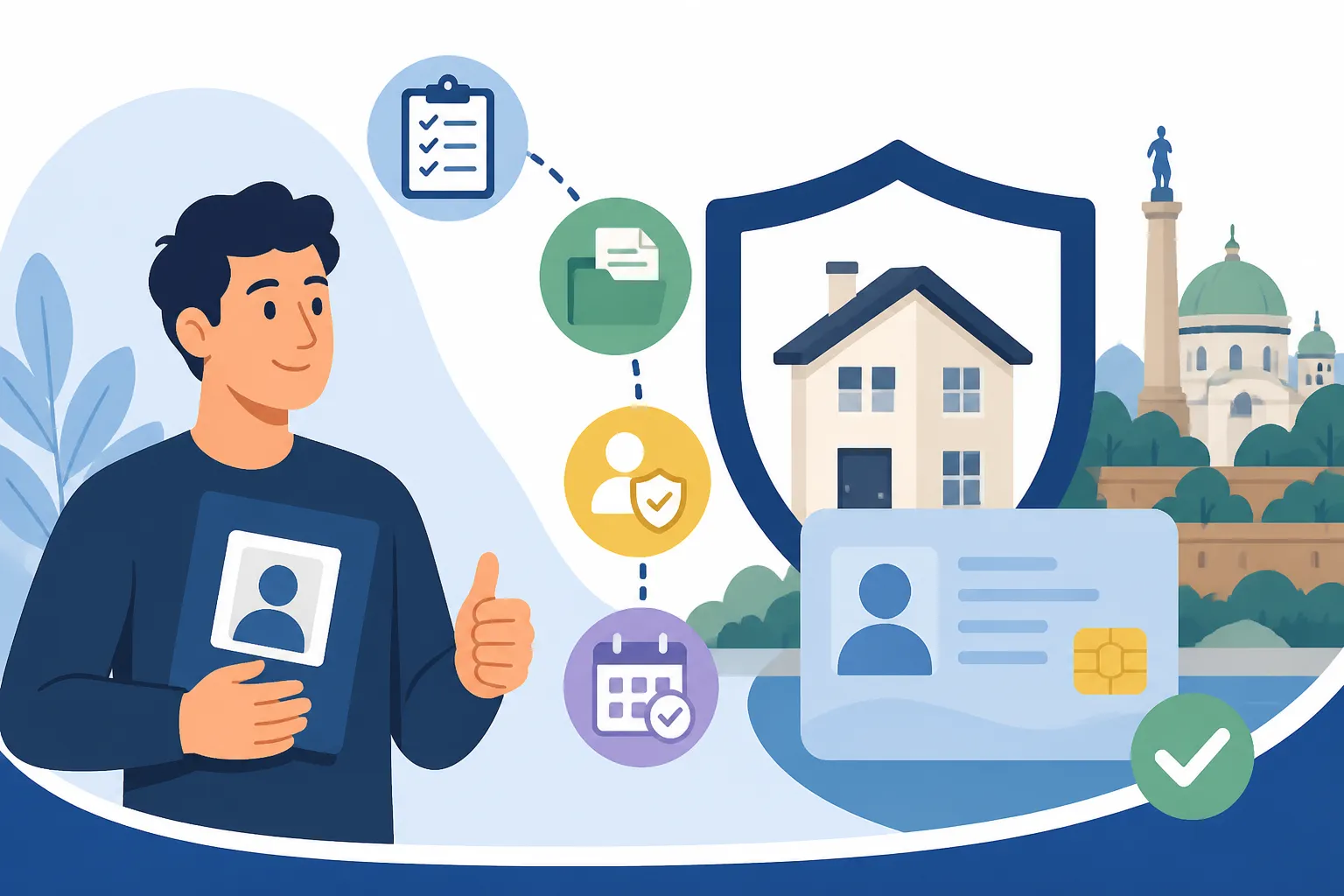
While your permanent residence status is indeed indefinite once granted, the physical document proving it – the Lična Karta za Strance (Foreigner's ID Card) – does have an expiry date. Typically, these cards are issued with a validity of five years. This means that every five years, you'll need to apply for a renewal of the card itself, not the status.
The renewal process is generally simpler than the initial application for permanent residence. You'll typically need:
- Your expiring permanent residence card.
- Your valid passport.
- Proof of current address registration (Prijava Boravišta).
- Proof of payment of administrative fees.
- New biometric photos (which can usually be taken at the MUP or a nearby photo studio).
You should initiate the renewal process at the MUP responsible for your place of residence well in advance of the expiry date – ideally, at least 30 to 60 days beforehand. This gives you ample time to gather documents and account for any potential processing delays. You definitely don’t want to find yourself with an expired card, as it can complicate everything from banking to travel. It's a bit like renewing your driver's license; the right to drive isn't taken away, but the physical card needs to be current.
Navigating Life as a Permanent Resident: Practical Advice
Beyond the formal requirements, truly integrating and managing your life in Serbia as a permanent resident involves understanding several practical aspects. These not only make your daily life smoother but also demonstrate your genuine commitment to living here.
Financial and Tax Obligations
Once you become a permanent resident, the question of tax residency becomes even more significant. If you meet Serbia's criteria for tax residency (primarily the 183-day rule, but also having your "centre of vital interests" here), you are obligated to declare and pay taxes on your worldwide income. This is a critical responsibility, and failing to comply can lead to serious legal and financial repercussions. Even if you work remotely for a foreign company, your income generated while physically present in Serbia will likely be subject to Serbian tax.
It's a good idea to consult with a local accountant or tax advisor to fully understand your obligations, especially if you have income from multiple sources or countries. Serbia has a flat 10% personal income tax rate, which is often very appealing, but there are also mandatory social and health contributions that apply to income. Understanding these nuances is key to responsible financial planning. You can explore this further in The Complete Guide to Taxes in Serbia for Expats (2026). Remember, proving your financial solvency and tax compliance is often a silent but powerful way to demonstrate your settled status in the country.
Integrating into Serbian Society
While not a formal requirement for maintaining your permanent residence, actively integrating into Serbian society strengthens your ties to the country, making your life here richer and more stable. This includes making an effort to learn the Serbian language. Even a basic grasp of common phrases can vastly improve your daily interactions, from grocery shopping to dealing with administrative tasks. Locals genuinely appreciate the effort, and it opens doors to deeper cultural understanding.
Beyond language, participating in local life – joining clubs, volunteering, attending cultural events, or simply engaging with your neighbours – helps solidify your presence. This kind of integration demonstrates that you are not just a transient visitor but a genuine member of the community. It can also be immensely helpful if, for any unforeseen reason, you ever need to explain your long-term connection to Serbia to the authorities. They want to see that you are truly living here, not just holding a status as a backup.
Health Insurance and Social Contributions
As a permanent resident, you are generally expected to be part of Serbia's social security system, which includes healthcare. If you are employed in Serbia, your employer will automatically register you with the Republic Health Insurance Fund (RFZO) and deduct contributions from your salary. If you are self-employed, you are responsible for paying these contributions yourself. These contributions entitle you to access public healthcare services.
Maintaining these contributions is important not only for your health but also as another indicator of your active life in Serbia. It shows you're contributing to the system. While public healthcare is accessible, many expats also opt for private health insurance for additional coverage, shorter wait times, and access to private clinics with English-speaking staff. Companies like Cigna Global offer comprehensive international health insurance plans that can supplement your RFZO coverage, giving you peace of mind. To understand the mandatory contributions, you can read Understanding Mandatory Social and Health Contributions in Serbia.
What Happens If You Don't Maintain It? (And How to Avoid It)
Ignoring the rules for maintaining your permanent residence can have serious consequences, potentially undoing all the hard work you put into getting it. Forewarned is forearmed, so let's look at the risks and how to proactively manage them.
The Risk of Losing Your Permanent Residence
The most significant risk, as we've discussed, is the revocation of your permanent residence status. This typically occurs under a few main scenarios:
- Extended Absence: As mentioned, staying outside Serbia for more than one continuous year without prior approval from the MUP is the most common reason for revocation. This also applies if you cumulatively spend an excessive amount of time outside the country over a three-year period without legitimate explanation.
- Serious Criminal Offenses: Committing serious crimes in Serbia, or even abroad if it's considered a significant threat to public order or national security, can lead to your permanent residence being revoked. This is standard practice in almost all countries.
- Providing False Information: If it is discovered that you obtained your permanent residence through fraud, misrepresentation, or by submitting false documents during your initial application, your status will be revoked.
- Lack of Genuine Connection: While harder to prove, if authorities determine that you no longer have a genuine intention to reside in Serbia (e.g., you've moved all your assets and family abroad, only returning briefly to "reset the clock"), they could initiate revocation proceedings.
If your permanent residence is revoked, you would typically receive an official decision from the MUP. You usually have the right to appeal this decision within a certain timeframe, often 15 days. This appeal would go to a higher administrative body. In such a situation, seeking immediate legal counsel from an immigration lawyer in Serbia is absolutely paramount. They can help you understand the grounds for revocation, prepare your appeal, and represent your interests. Losing your permanent residence means you revert to the status of a non-resident, potentially requiring a new visa or temporary residence application if you wish to return.
Proactive Steps and Seeking Assistance
The best way to maintain your permanent residence is to be proactive and meticulous.
- Document Everything: Keep a clear record of your entry and exit dates to and from Serbia. Store copies of all official correspondence, applications, and decisions from the MUP. This paper trail can be invaluable if you ever need to prove your residency or intent to reside.
- Plan Your Absences: If you anticipate needing to leave Serbia for more than a year, contact the MUP well in advance to inquire about applying for an extension. Don't just assume it will be fine. Get official approval.
- Stay Informed: Laws and regulations can change. Regularly check the official MUP website or consult with reliable sources (like expat forums, legal advisors, or government offices) to stay up-to-date on any new requirements or changes to immigration policy.
- Seek Professional Help: For complex situations, such as dealing with a potential revocation notice or planning a very long-term absence, always consult with a qualified Serbian immigration lawyer. They can provide tailored advice based on your specific circumstances and help navigate the legal system. When you're dealing with big moves, a company like Sirelo can help with the logistics of getting your belongings here, but for legal matters, local experts are key.
- Maintain Your Prijava: Make it a habit to update your address immediately after moving. Don't postpone it.
By following these guidelines, you can ensure that your journey as a permanent resident in Serbia continues smoothly and securely. It’s all about being responsible, staying informed, and demonstrating your ongoing connection to your chosen home.
Key Permanent Residence Maintenance Requirements
| Requirement | Details | Consequences of Non-Compliance |
|---|---|---|
| Absence from Serbia | – Not exceeding 1 year (12 consecutive months): Your PR may be revoked if you are continuously absent for more than one year without MUP approval. – Not exceeding 3 years (36 consecutive months): Your PR may be revoked if you are continuously absent for more than three years, even with prior approval for specific reasons (e.g., study, work abroad by Serbian entity), if you don't return within the approved period. |
Revocation of Permanent Residence status. Requires a new application for a visa/residence to return. |
| Address Registration (Prijava) | Must register your current address with the local MUP within 8 days of moving to a new residence within Serbia. | Fines, potential complications with official correspondence, seen as non-compliance with legal obligations. |
| PR Card Renewal | The physical Lična Karta za Strance (Foreigner's ID Card) typically expires every 5 years. Apply for renewal 30-60 days before expiry at the MUP responsible for your residence. | Inability to prove status, difficulties with banking, travel, and other administrative tasks. |
| Legal Compliance | Adhere to all Serbian laws and regulations. | Fines, imprisonment, and potential revocation of PR for serious criminal offenses. |
| Tax Obligations | If deemed a tax resident (e.g., 183-day rule, center of vital interests), you must declare and pay taxes on worldwide income. | Fines, penalties, legal action from the tax administration. |
| Social Contributions | If employed or self-employed in Serbia, maintain mandatory health and social security contributions to the RFZO. | Loss of public healthcare access, potential fines, impacts on future pension rights. |
Disclaimer
The information provided in this guide is intended for general informational purposes only and does not constitute legal, financial, or immigration advice. While we strive to keep the information accurate and up-to-date, laws and regulations in Serbia can change. It is always recommended to consult with qualified legal professionals, immigration consultants, or the official Serbian Ministry of Interior (MUP) for advice tailored to your specific situation. We cannot be held responsible for any actions taken based on the information presented herein.