How to Exchange or Use a Foreign Driver’s Licence in Serbia
Navigating a new country's bureaucracy can feel like a labyrinth, and one of the trickiest paths for many expats in Serbia is figuring out what to do with their driver's licence. The fear of being pulled over and not understanding the rules, or worse, facing fines for non-compliance, is a real and often unstated anxiety. This comprehensive guide aims to demystify the process, walking you through everything from using your existing foreign licence to exchanging it for a Serbian one, or even getting a brand new one from scratch.
The Initial Shock: Driving in Serbia as a Foreigner
When you first land in Serbia, brimming with excitement for your new adventure, the last thing you want is a headache over something as seemingly straightforward as driving. But believe me, what might seem simple in your home country often comes with a unique set of rules and, let's be honest, unwritten local expectations here. It’s not just about knowing the speed limits; it’s about understanding the entire ecosystem of driving as an expat.
Understanding Your Current Licence Status Upon Arrival
Initially, many expats assume their foreign driver's licence will be universally accepted, especially if it's an international driving permit (IDP) alongside their national licence. While an IDP is certainly a good idea to have and is often required, it doesn't grant you indefinite driving privileges in Serbia. Think of your initial driving status here as a temporary grace period, a welcome mat before the real administrative dance begins. If your licence is from an EU country, the US, Canada, Australia, or many other nations with reciprocal agreements, you’ll generally be fine for a limited time. However, this isn't a free pass for the long haul, and understanding the specific agreements (or lack thereof) between Serbia and your home country is critical. This is where many of us, myself included, have hit a snag, realizing our assumptions didn't quite match reality. It’s crucial to know that your current licence might be perfectly valid for a visit, but a prolonged stay means different rules.
The 6-Month Rule and What It Really Means for Expats
Here's the kicker that catches many foreign residents off guard: Serbia has a "6-month rule." This means that once you establish temporary residency – often coinciding with the date your temporary residence permit (boravak) is issued – your foreign driver's licence is generally considered valid for only six months from that date. After these six months, legally, you are required to either exchange your licence for a Serbian one, provided there’s a reciprocal agreement between Serbia and your country, or obtain a Serbian driver's licence from scratch. This isn't some obscure law; it's actively enforced, and police officers are becoming increasingly aware of expat residency statuses. Getting caught driving with an invalid foreign licence after this period can lead to significant fines, confiscation of your vehicle, and even legal complications. It’s a very real hurdle, and one that requires proactive planning, not reactive scrambling. If you're wondering how your residence status affects things more broadly, you might want to read our guide on How to Get Temporary Residence (Boravak) in Serbia (2027).
Common Misconceptions About Driving Privileges
Beyond the 6-month rule, there are several common misconceptions that can lead to trouble. One is believing that an International Driving Permit (IDP) somehow extends the validity of your foreign licence indefinitely. An IDP is merely a translation of your national licence, valid only when presented with your original licence. It does not circumvent the 6-month rule for residents. Another misconception is that if you don't own a car, the rules somehow don't apply. Whether you're borrowing a friend's car, renting a vehicle, or just occasionally driving, the legal requirements for your driver's licence remain the same. Some expats also mistakenly believe that if their home country's licence doesn't expire for many years, Serbia will honour that. Unfortunately, Serbia's internal laws take precedence for residents. It’s vital to shed these assumptions and face the reality of the Serbian system head-on to ensure smooth sailing on the roads.
Navigating the Driver's Licence Exchange Process
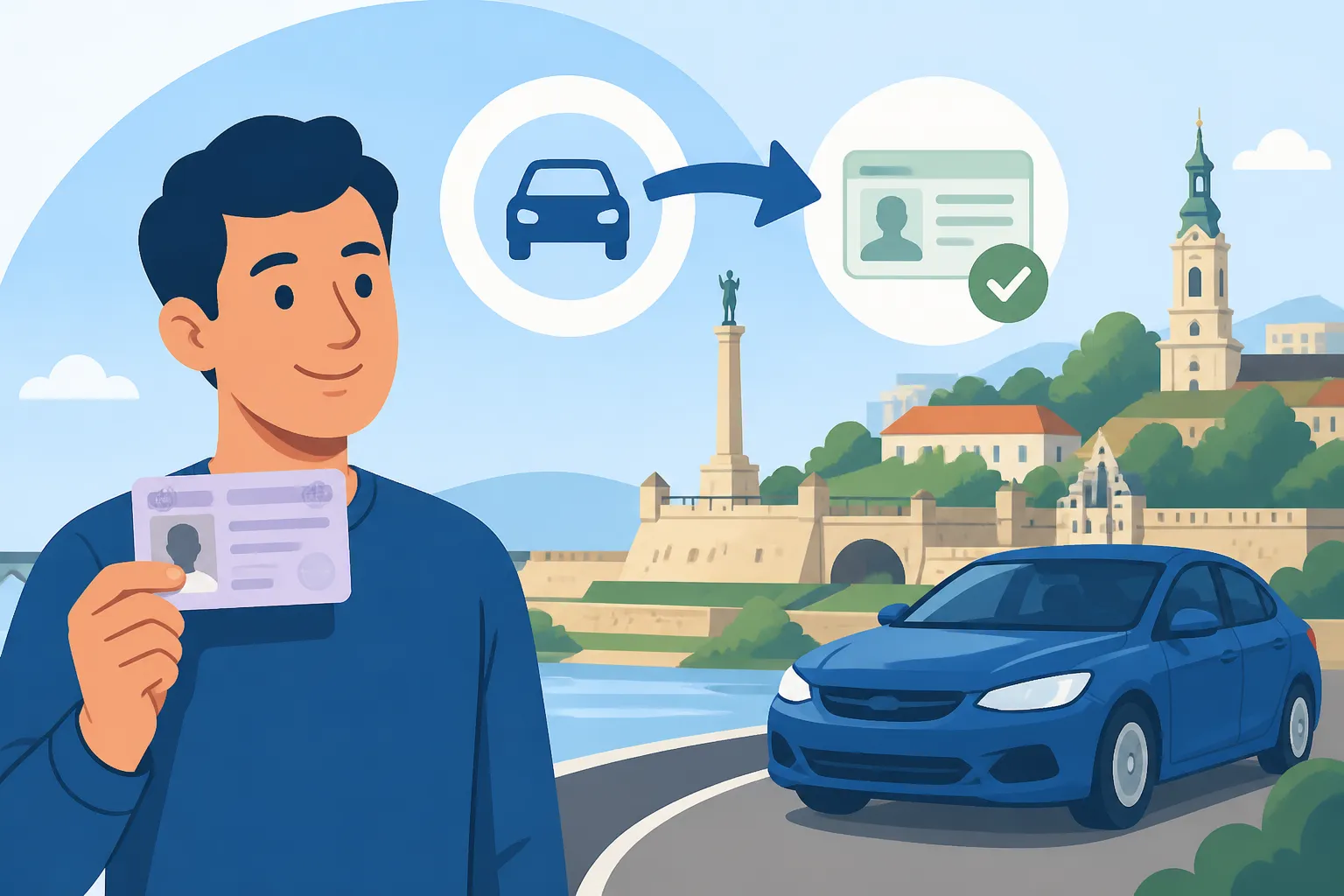
For many, exchanging their existing foreign driver's licence for a Serbian one is the preferred route. It saves you from the gruelling process of relearning to drive and retaking exams. However, this option is only available if Serbia has a bilateral agreement on mutual recognition and exchange of driver's licences with your home country. Thankfully, Serbia has such agreements with a decent number of nations, but it’s absolutely critical to confirm your country is on that list before you start.
Eligibility and Required Documents for Exchange
The eligibility for exchanging your licence is primarily tied to your nationality and having a valid temporary or permanent residence permit in Serbia. If you meet those initial criteria, the next step is gathering the right documents. This isn't a simple "show up with your licence" scenario; expect to compile a small dossier. You'll need your valid foreign driver's licence, a certified translation of it (often requiring a court-appointed translator), your passport, your Serbian residence permit, and proof of address. You'll also need a medical certificate from a Serbian medical institution, which means undergoing a specific medical exam to prove you're fit to drive. This exam usually covers vision, hearing, and general physical and mental health. Don't forget, you'll also need to pay an administrative fee, which can change, so always check the latest amount. It’s a bit of a treasure hunt, but each piece is essential.
The Step-by-Step Application Process at the MUP
The exchange process takes place at the local Ministry of Interior (MUP) office, specifically the Traffic Police Department (Uprava saobraćajne policije). Here’s a general walkthrough, though local offices might have slight variations:
- Obtain a Medical Certificate: Your first stop will be a designated medical facility to get your "Lekarsko uverenje" (medical certificate for drivers). This usually involves a series of quick checks by various doctors.
- Gather Documents: Ensure you have all the required documents: your original foreign licence, its certified translation, passport, residence permit, and the medical certificate. Don't forget copies of everything!
- Visit the MUP: Head to the MUP, ideally early in the morning to beat the queues. Be prepared for a wait; patience is truly a virtue here.
- Submit Application: You'll fill out an application form, submit your documents, and they will usually take a photo of you on the spot for your new licence. Your original foreign licence will typically be retained by the MUP until your Serbian one is issued.
- Pay Fees: You'll be directed to pay the administrative fees at a nearby bank or post office. Keep the receipts!
- Wait for Issuance: The processing time can vary, but generally, it's a few weeks. You'll be informed when your new Serbian driver's licence is ready for collection.
It’s a bureaucratic marathon, but crossing the finish line with a valid Serbian licence is a huge relief.
Dealing with Translations and Notarisation
A crucial part of this process, and indeed many administrative tasks in Serbia, is the need for certified translations and sometimes notarisation. Your foreign driver's licence, even if it's in English or another widely understood language, will almost certainly need to be translated into Serbian by a court-appointed (sudski tumač) translator. This isn't something you can do yourself or have a friend do. These translators are officially registered with the state and their translations carry a legal seal. You can usually find a list of court translators online or ask for recommendations at your MUP office or from other expats. The cost can vary, but it’s a necessary expense. Sometimes, depending on your document, further notarisation might be required, where a public notary verifies signatures or document authenticity. Always clarify precisely what level of verification is needed for each document to avoid wasted time and money. For a broader overview of navigating Serbia's administrative hurdles, our guide on The Complete Visa and Immigration Guide for Relocating to Serbia (2027) might be helpful.
When Exchange Isn't an Option: Getting a Serbian Licence from Scratch
So, what happens if your country doesn't have a reciprocal agreement with Serbia for licence exchange? This is where things get a bit more involved. You’ll need to obtain a Serbian driver's licence from scratch, which means enrolling in a driving school, taking theoretical lessons, practical driving lessons, and then passing both a theoretical and a practical exam. It’s a significant commitment of time, effort, and money, but it’s the only legal path to driving in Serbia for those without an exchange option.
Understanding the Serbian Driving School System
The Serbian driving school system is quite rigorous, designed to produce competent drivers who understand the local road conditions and traffic laws. Driving schools are called "auto škola" and you'll find them in every city and town. The curriculum typically involves two main components: theoretical instruction and practical driving lessons.
The theoretical part covers Serbian traffic laws, road signs, first aid basics, and vehicle mechanics. These classes are usually held in Serbian, so if your Serbian language skills aren't up to par, this can be a major challenge. Some schools might offer materials in English, but the instruction itself will likely be local. The practical lessons involve a set number of hours behind the wheel with a certified instructor. You'll learn to drive on Serbian roads, navigate roundabouts, perform parking manoeuvres, and handle various traffic situations under the watchful eye of your instructor. You can't just walk in and take the test; you must go through a certified school.
The Theoretical and Practical Exam Challenges
Once you've completed the required hours of theoretical and practical training, you'll face the exams. The theoretical exam is typically computer-based and tests your knowledge of Serbian traffic laws. It's notoriously challenging, even for native speakers, as it requires precise understanding of regulations. Make sure to study the official rulebook ("Zakon o bezbednosti saobraćaja na putevima") thoroughly. There are often apps and online resources that simulate the exam questions, which are incredibly helpful.
The practical driving exam is conducted on the road with an examiner and your driving instructor present. It assesses your ability to safely and competently operate a vehicle according to Serbian standards. This can be intimidating, as examiners are often quite strict. They look for adherence to all traffic rules, safe driving habits, and proper vehicle control. Failing either exam means you have to retake it, incurring additional fees and potentially more lessons. For insights into the full process, you might find our guide on How Do I Get a Serbian Driver's Licence? particularly useful.
Costs and Timelines for New Licence Acquisition
Getting a new Serbian driver's licence from scratch is a financial and time investment. The total cost can range significantly, but generally, you're looking at anywhere from €600 to €1000 or even more, depending on the driving school, how many extra lessons you need, and how many times you have to retake exams. This usually includes:
- Driving School Fees: Covering theoretical and practical lessons.
- Medical Exam: Same as for the exchange, required before you start the training.
- Exam Fees: Separate fees for both the theoretical and practical tests.
- Administrative Fees: For the issuance of the licence itself.
The timeline is also substantial. Completing the theoretical and practical training, plus passing both exams, can easily take anywhere from 3 to 6 months, or even longer if you have a busy schedule or need to retake exams. This process demands commitment and consistent effort, especially if you're battling a language barrier on top of learning new driving rules.
Here's a quick comparison of the three options:
| Feature | Using Foreign Licence (6-month rule) | Exchanging Foreign Licence | Getting New Serbian Licence |
|---|---|---|---|
| Validity | 6 months from residence permit date | 10 years (or per medical) | 10 years (or per medical) |
| Eligibility | All foreigners (with IDP recommended) | Countries with bilateral agreements | Anyone with Serbian residency |
| Process | Drive as usual (temporarily) | MUP application, medical exam, document submission | Driving school, theoretical & practical exams |
| Documents | Foreign Licence, IDP, Passport | Foreign Licence (original & translated), Passport, Residence Permit, Medical Cert. | Passport, Residence Permit, Medical Cert. |
| Language | N/A | Serbian for translation & MUP | Serbian for lessons & exams |
| Cost | Minimal (IDP fee) | ~€100-€200 (translation, medical, fees) | ~€600-€1000+ (school, exams, medical, fees) |
| Timeframe | Immediate (for 6 months) | Weeks to 1-2 months | 3-6+ months |
| Complexity | Low (initially) | Moderate | High |
Practicalities and Pitfalls for Foreign Drivers
Once you have your licence sorted, whether foreign, exchanged, or newly acquired, the journey isn't over. Driving in Serbia involves understanding local vehicle regulations, the driving culture, and crucial safety aspects. It’s not just about obeying the law; it’s about adapting to the flow of traffic and anticipating certain behaviours that might differ from what you’re used to.
Car Registration, Insurance, and Roadside Assistance
If you’re planning to own a car in Serbia, the driver’s licence is just one piece of the puzzle. You’ll need to register your vehicle, which involves a technical inspection and then submitting documentation to the MUP. This annual process includes paying various taxes and fees. Don't forget compulsory vehicle insurance (obavezno osiguranje), which is a legal requirement. You can choose from several local insurance providers. While not mandatory, investing in comprehensive insurance (kasko osiguranje) is often a wise decision, especially if your car is new or valuable.
For peace of mind, consider subscribing to a roadside assistance service. The national auto club, AMSS (Auto Moto Savez Srbije), offers various membership packages that provide towing, minor repairs, and other assistance in case of breakdowns. Having their number handy can be a lifesaver on longer journeys outside major cities. Our guides on How to Register and License a Car in Serbia and Understanding Car Insurance and Registration in Serbia go into much greater detail on these topics.
Driving Culture, Rules of the Road, and Local Habits
Serbian driving culture can be… lively. While the official rules of the road are similar to many European countries, the practical application can sometimes feel a bit more, shall we say, flexible. Expect drivers to be assertive, often honking to signal presence rather than anger, and don't be surprised by sudden lane changes or creative parking. Pedestrians, especially in cities, might not always adhere strictly to pedestrian crossings, so always be vigilant.
Key rules to remember:
- Lights On: You must drive with your headlights on, even during the day, year-round.
- Winter Tyres: From November 1st to April 1st, winter tyres are mandatory if there's snow, ice, or black ice on the road.
- Alcohol Limit: The legal blood alcohol limit is very low (0.2 mg/ml), so it’s best to avoid drinking any alcohol if you’re driving.
- Seatbelts: Mandatory for all occupants.
- Children: Specific rules apply to car seats for children, depending on their age and height.
Adapting to the local driving style means being both defensive and assertive. Don't be timid, but always prioritize safety. Understanding that things might operate differently is the first step in driving comfortably here.
Penalties for Non-Compliance and Driving Illegally
Driving without a valid licence or with an expired foreign licence beyond the 6-month grace period can lead to serious consequences. Penalties can range from hefty fines, which are issued by traffic police and often need to be paid at a bank or post office, to more severe measures like vehicle impoundment. In some cases, repeated violations could even impact your residence status.
For serious traffic infractions, such as reckless driving, driving under the influence, or causing an accident, the penalties are even more severe, including potential licence suspension, criminal charges, and jail time. It’s not a situation you want to find yourself in. Always carry your driver’s licence, vehicle registration, and insurance papers, and be prepared to present them to traffic police upon request. Ignorance of the law is not considered a valid defence.
Staying Connected and Prepared on Serbian Roads
Driving in a foreign country can be daunting, but technology and good preparation can significantly ease the stress. From reliable navigation to staying connected in emergencies, a little foresight goes a long way.
Essential Apps and Navigation Tools
For navigating Serbian roads, Google Maps is widely used and generally reliable for directions, traffic updates, and finding points of interest. Waze is another popular choice, particularly in urban areas like Belgrade and Novi Sad, known for its crowd-sourced traffic information and alerts for police presence or road hazards. Both can be set to English.
Beyond navigation, having a reliable app for parking payments is almost essential in Serbian cities. Park.ly or similar local apps allow you to pay for street parking via SMS, which is incredibly convenient and helps avoid fines. For gas station locations and prices, local apps or simply Google Maps can help. These tools can turn a potentially confusing drive into a much more manageable experience.
Communication While Driving: SIM Cards and Data
Having a local SIM card with a good data plan is crucial for expats in Serbia, not just for staying in touch but especially for driving. Relying on international roaming can be expensive and unreliable. Major Serbian mobile providers like Telekom Srbija, Yettel (formerly Telenor), and A1 (formerly Vip mobile) offer various prepaid and post-paid plans. You can easily pick up a prepaid SIM card at kiosks, post offices, or their official stores upon arrival.
For those who travel frequently or need flexible data options, an eSIM provider like Airalo can be a game-changer. You can purchase a data plan for Serbia digitally, activate it on your compatible phone, and have internet access almost immediately, without needing a physical SIM card or visiting a store. This is especially useful for short-term stays or as a backup while you get your local Serbian SIM sorted. Having consistent internet access ensures your navigation apps work smoothly and you can access emergency contacts or information if needed.
Emergency Preparedness and Support
No one wants to think about emergencies, but being prepared can make all the difference. Always have a fully charged phone and, if possible, a car charger or power bank. Keep a list of emergency numbers saved in your phone:
- 192: Police
- 193: Fire Department
- 194: Ambulance (Hitna Pomoć)
- 112: General Emergency (EU standard, increasingly recognised but 192/193/194 are direct)
- 1987: AMSS Roadside Assistance
Beyond phone numbers, it’s advisable to keep a basic emergency kit in your car, including a first-aid kit, a reflective vest (mandatory by law), a warning triangle (also mandatory), and a spare tyre with the necessary tools. If you’re planning a move to Serbia and are coordinating your belongings, companies like Sirelo can assist with finding reputable international movers, ensuring your personal effects and perhaps even your vehicle arrive safely, allowing you to focus on the immediate administrative tasks upon arrival. Knowing these details and having the right tools can provide immense comfort when hitting the open road in Serbia.
Disclaimer
Please note that while I strive to provide accurate and up-to-date information based on my experience and available data, regulations and procedures in Serbia can change. It is always recommended to verify the latest requirements with official Serbian government sources, such as the Ministry of Interior (MUP), or consult with a legal professional specializing in foreign resident affairs. This guide is for informational purposes only and does not constitute legal advice.