How to Apply to a Serbian University as an International Student
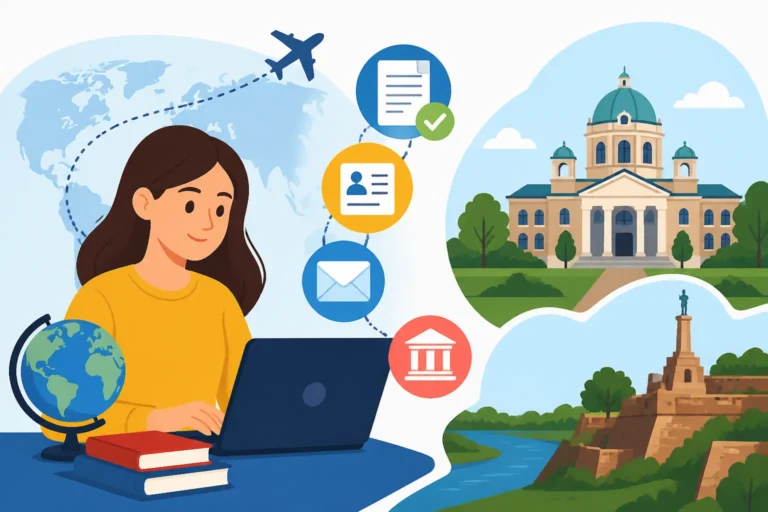
Embarking on the journey to study in a new country like Serbia can feel like trying to solve a Rubik's Cube blindfolded. From deciphering application requirements that seem to change with the wind to navigating an education system that’s probably very different from what you’re used to, it’s a lot to take in. This guide is here to untangle that knot for you, offering a clear, step-by-step roadmap to applying to a Serbian university as an international student, drawing on the kind of practical insights only an expat who’s been through the wringer can provide.
Why Choose Serbia for Your University Studies?
Before diving into the nitty-gritty of applications, let’s talk about why Serbia might just be the hidden gem you’ve been looking for. Many international students, myself included, initially overlook this vibrant country, only to discover its myriad benefits once they arrive. It’s not just about a degree; it’s about an experience that shapes you.
Affordability and Quality Education
One of the most compelling reasons to consider Serbia is the balance between quality education and incredibly reasonable costs. Compared to Western Europe or North America, tuition fees here are significantly lower, often a fraction of what you’d pay elsewhere, without compromising on academic standards. The University of Belgrade, for instance, is a highly respected institution with a long history, consistently ranking among the top universities in the region. Other notable institutions include the University of Novi Sad and the University of Niš, each offering a diverse range of programs. This affordability extends beyond tuition; the general Cost of Living in Serbia for Expats is considerably lower than in many other European capitals, meaning your student budget can stretch a lot further.
It’s not just about being cheap, though. Serbian universities, especially in fields like medicine, engineering, and IT, have strong reputations. Many professors have international experience, and while the primary language of instruction is Serbian, an increasing number of programs are offered entirely in English, particularly at the Master’s and PhD levels, making them accessible to a broader international audience. This push for internationalisation means you’re getting an education that’s globally relevant, but without the crippling debt that often comes with it.
Rich Cultural Experience and Strategic Location
Studying in Serbia offers a unique opportunity for cultural immersion. It’s a country at the crossroads of East and West, with a fascinating history, diverse traditions, and a famously warm and welcoming populace. As an international student, you won't just be attending lectures; you'll be exploring ancient fortresses, vibrant cities like Belgrade and Novi Sad, stunning national parks, and a lively arts and music scene. The experience of living here goes far beyond the classroom. You'll learn to navigate a new culture, pick up some Serbian phrases (which you can practice on platforms like iTalki, connecting with native speakers), and gain a perspective that simply isn't possible from a textbook.
Furthermore, Serbia's strategic location in the heart of the Balkans means you're perfectly positioned to explore Southeast Europe. Weekend trips to neighbouring countries like Bosnia and Herzegovina, Montenegro, or Hungary are easily manageable and incredibly affordable. This isn't just a place to get a degree; it's a launchpad for adventure and a chance to build an international network of friends and experiences that will enrich your life long after graduation. The ease of travel and the diverse landscapes, from the Pannonian plain in the north to the mountains in the south, mean there’s always something new to discover, keeping student life exciting and far from monotonous.
Navigating the Serbian Higher Education System
Understanding the structure of Serbian universities is crucial before you even think about applying. It’s not always a straightforward process, but knowing the lay of the land will save you a lot of headaches later on.
Public vs. Private Universities and Degree Structures
Serbia primarily operates with two types of higher education institutions: public and private. Public universities, like the aforementioned University of Belgrade, are generally larger, older, and often more prestigious, with a broader range of faculties and research opportunities. They are also typically more affordable for both domestic and international students. Private universities, while fewer in number, tend to offer more niche programs, often with a stronger focus on practical skills and smaller class sizes. Both types of institutions are accredited by the National Council for Higher Education and adhere to the Bologna Process, which means their degrees are recognised across Europe and beyond.
The degree structure aligns with the European standard:
- Bachelor's (Osnovne Studije): Typically 3-4 years, leading to a Bachelor's degree.
- Master's (Master Studije): Usually 1-2 years, following a Bachelor's, leading to a Master's degree.
- Doctorate (Doktorske Studije): Generally 3 years, following a Master's, leading to a PhD.
Some professional fields, like medicine, law, or architecture, might have integrated Bachelor's and Master's programs that last 5-6 years. It’s vital to research the specific program you’re interested in to understand its duration and requirements. Many expats find the structured approach to be quite reassuring, as it mirrors what they might be familiar with from their home countries.
Language of Instruction and Preparatory Courses
While an increasing number of programs are offered in English, especially at postgraduate levels, the majority of undergraduate courses are taught in Serbian. Don’t let this deter you, though! If you're keen to study in Serbian, many universities offer preparatory Serbian language courses specifically designed for international students. These courses not only equip you with the necessary language skills but also provide a fantastic introduction to Serbian culture and university life. Imagine being able to converse fluently with locals and truly integrate into your new environment – it's an invaluable skill.
For those pursuing English-taught programs, you’ll naturally need to demonstrate English language proficiency through tests like IELTS or TOEFL. However, even if your program is in English, I highly recommend learning at least basic Serbian phrases. It will make your daily life so much easier, from grocery shopping to navigating public transport, and it shows a genuine effort to connect with your host country. There are plenty of resources available, including online tutors on platforms like iTalki, which can make language learning fun and flexible, fitting around your study schedule. Being able to communicate effectively, even brokenly at first, can turn frustrating bureaucratic encounters into amusing anecdotes.
Your Pre-Application Checklist: Documents and Requirements
This is where the real fun begins – or so they say! The truth is, gathering all the necessary documents for a university application in a foreign country can be a bureaucratic marathon. But with a clear list and a bit of patience, you'll get there.
Academic Documents and Nostrifikacija
The cornerstone of your application will be your previous academic qualifications. This typically includes your high school diploma and transcripts for Bachelor's programs, or your Bachelor's degree and transcripts for Master's programs. However, here's the kicker: these documents will need to undergo a process called nostrifikacija (recognition of foreign educational documents). This isn't just a simple translation; it's an official assessment by the Agency for Qualification for National Qualifications of Serbia (formerly ENIC/NARIC Centre) or, in some cases, directly by the university, to determine if your foreign qualifications are equivalent to Serbian ones.
This process can be time-consuming and requires a detailed set of documents, usually including:
- Original diploma and transcripts
- Certified translations of all documents into Serbian (by a court-certified translator in Serbia)
- Course descriptions/syllabi from your previous institution
- Proof of payment for the nostrifikacija fee
My advice? Start this process early. Like, yesterday early. The waiting times can be unpredictable, and your university application won't be complete without this recognition. You can find more detailed information on How to Get Your Foreign Qualification Recognised in Serbia. Missing deadlines because of this step is a common expat frustration, so plan ahead!
Language Proficiency and Other Essential Papers
Beyond academic recognition, you’ll need to prove your language proficiency.
- For English-taught programs: You’ll typically need an internationally recognized English language certificate such as IELTS (Academic module, usually a minimum score of 6.0-6.5), TOEFL (iBT, usually a minimum score of 79-90), or Cambridge English (FCE, CAE, CPE). Some universities might accept a letter from your previous institution stating that English was the language of instruction if you come from an English-speaking country or studied an English-taught program.
- For Serbian-taught programs: If you don't have a certificate from a recognized Serbian language school, the university might require you to take an internal Serbian language proficiency test, or strongly recommend a preparatory course.
Other crucial documents include:
- Valid Passport: Your passport must be valid for at least six months beyond your intended stay.
- Birth Certificate: Usually the original and a certified translation into Serbian.
- Medical Certificate: A general health certificate confirming you're fit to study, often required to be issued by a Serbian medical institution or recognized by one upon arrival.
- Proof of Financial Means: Documents showing you can support yourself financially during your studies (e.g., bank statements, scholarship letters). This is a critical component for your How to Apply for a Student Residence Permit in Serbia application later.
- Photographs: Passport-sized photos conforming to Serbian standards.
Remember, every single foreign document will need to be officially translated into Serbian by a court-certified translator in Serbia. For documents issued outside of Serbia, they might also require an Apostille stamp or diplomatic legalisation, depending on your country of origin and whether it’s a signatory to the Hague Apostille Convention. Always double-check with the specific university and the Serbian embassy in your home country for precise requirements.
| Document Type | Required for | Notes |
|---|---|---|
| High School Diploma/Bachelor's Degree & Transcripts | Bachelor's/Master's Application | Must undergo nostrifikacija (recognition) in Serbia. Start early! |
| Certified Serbian Translations | All Foreign Documents | Mandated by a court-certified translator in Serbia. |
| Apostille/Legalisation | Foreign Documents | Required for many non-Hague Convention countries. Check with the Serbian embassy. |
| English Language Certificate | English-taught programs | IELTS/TOEFL/Cambridge typically accepted. |
| Serbian Language Certificate | Serbian-taught programs | If applicable, or readiness for university's internal test/preparatory course. |
| Valid Passport | Application & Visa/Permit | At least 6 months validity beyond your intended stay. |
| Birth Certificate | Application & Visa/Permit | Original + certified Serbian translation. |
| Medical Certificate | Visa/Permit | Proof of good health. |
| Proof of Financial Means | Visa/Permit | Bank statements, scholarship letters, etc., showing sufficient funds (e.g., at least €250-€300 per month of stay). |
| Passport-sized Photos | Application & Visa/Permit | Recent, specific dimensions (usually 3.5 x 4.5 cm). |
The Application Process: Your Step-by-Step Guide
Once you have your ducks in a row with the documentation, it’s time to tackle the actual application. This often involves a few stages, from choosing your program to potentially sitting for entrance exams.
Choosing Your Program and University
This might seem obvious, but it's worth a dedicated section because it's more nuanced than simply picking a name off a list. Serbian universities offer a wide array of programs, but not all are available in English. Your first step is to thoroughly research the specific faculties and study programs that align with your academic and career goals. Check the university websites carefully for international student sections, which often list available programs, language of instruction, and specific application requirements. Don't be shy about reaching out to the international student office or faculty directly with questions – their responses can often be slow, but persistence pays off.
Consider not just the subject matter, but also the location. Do you thrive in a bustling capital like Belgrade, with its endless opportunities and vibrant nightlife? Or would you prefer the more relaxed, cultural atmosphere of Novi Sad? Perhaps Niš, with its rich historical context and more affordable living, appeals more. Each city and university has its own unique flavour, and choosing the right fit for your personality and academic needs is just as important as the program itself. This decision will significantly impact your overall experience and integration into Serbian life.
Submitting Your Application and Entrance Exams
Once you've zeroed in on your ideal program, the actual submission process begins. Most Serbian universities require you to apply directly to the faculty you wish to join, rather than through a central admissions office. This often involves:
- Online Application: Many faculties now have an online application portal where you can fill out forms and upload digital copies of your documents.
- Physical Document Submission: Even with an online application, you will almost certainly need to submit hard copies of your documents, often in person or via registered mail. This is where those certified Serbian translations and Apostilles come into play.
- Application Fee: There's usually a non-refundable application fee, which varies by university and faculty.
Entrance Exams (Prijemni Ispit): This is a significant difference for many international students. Unlike some systems where admission is based solely on academic transcripts, many Serbian university programs, particularly in competitive fields like medicine, dentistry, pharmacy, and certain engineering or humanities programs, require you to sit for an entrance exam. These exams are typically held in Serbian, even for programs that will later be taught in English, so be prepared!
- What to expect: The exams usually test knowledge in subjects relevant to your chosen field (e.g., biology and chemistry for medicine, mathematics and physics for engineering).
- Preparation: Universities often publish syllabi or recommended reading lists for their entrance exams. Some even offer preparatory courses. I can't stress this enough: if an entrance exam is required, dedicate significant time to preparing for it, possibly even getting a tutor if the language barrier is high.
Dates for applications and entrance exams are usually set annually and are quite strict. Typically, applications open in June/July, with exams in late June/early July for the first round, and a second round in September if places are still available. It's crucial to check the specific faculty’s website for the exact calendar for the academic year you're applying for. Missing these dates can mean waiting an entire year, so keep a close eye on the calendar!
Financial Considerations and Scholarship Opportunities
Let's talk money, because let's be honest, it's a huge factor for most international students. While Serbia is generally affordable, you still need a solid financial plan.
Tuition Fees Breakdown and Living Costs
Tuition fees for international students in Serbia are remarkably competitive. For Bachelor's programs taught in Serbian, you might expect to pay anywhere from €1,500 to €4,000 per academic year, depending on the university and faculty. English-taught programs, especially in fields like medicine, tend to be more expensive, ranging from €5,000 to €10,000 or even higher per year. Master's and PhD programs can have similar ranges. For example, How Much Does It Cost to Study at the University of Belgrade? is a common question, and generally, fees are very reasonable compared to institutions elsewhere in Europe.
Beyond tuition, you need to factor in living costs. As mentioned, Serbia offers a low cost of living, which is a major draw.
- Accommodation: Rent for a decent apartment in Belgrade can range from €300-€600 for a studio or one-bedroom, while in Novi Sad or Niš, you might find something for €200-€400. Student dormitories are an even cheaper option, but spots can be competitive for international students.
- Utilities: Budget around €50-€100 per month for electricity, water, heating, and internet.
- Food: Groceries can be very affordable if you cook at home, probably €150-€250 per month. Eating out is also relatively inexpensive.
- Transportation: Public transport in major cities is efficient and cheap. A monthly pass in Belgrade is around €20.
- Miscellaneous: Personal expenses, textbooks, leisure activities, etc., could add another €100-€200.
In total, a comfortable student budget in Belgrade, excluding tuition, could be around €500-€800 per month, while in other cities, it could be closer to €400-€600. It's crucial to prepare your proof of financial means carefully, as immigration authorities will expect you to demonstrate you have adequate funds to cover these costs for your entire period of study. This is where platforms like Taxes for Expats can also come in handy if you're trying to figure out how your finances might intersect with your home country's tax obligations while studying abroad.
Scholarship Opportunities and Student Work Rules
Finding scholarships can significantly alleviate the financial burden. While comprehensive scholarship databases for Serbia might not be as extensive as for larger Western countries, opportunities do exist.
- Serbian Government Scholarships: The Serbian Ministry of Education, Science and Technological Development sometimes offers scholarships for international students, often based on bilateral agreements with other countries. These are typically highly competitive.
- University-Specific Scholarships: Some universities or faculties might have their own scholarship programs for high-achieving international students, or those in specific fields. It's always worth checking their individual websites.
- External Scholarships: Look for scholarships from your home country's government, foundations, or private organisations that support students studying abroad.
Student Work Rules: As an international student on a temporary residence permit for study, you are generally allowed to work part-time in Serbia. While official guidelines might be a bit vague or require clarification, the general rule of thumb is that students can work up to 20 hours per week during the academic year and full-time during official breaks. This can be a great way to supplement your income and gain local work experience. However, remember that your primary purpose in Serbia is to study, and your work cannot interfere with your academic obligations. Any work you do will also have tax implications, so Understanding Income Tax and the Flat 10% Rate in Serbia will be beneficial, and it's wise to consult with an expert on Taxes for Expats regarding your income.
Life as an International Student in Serbia
Getting admitted is just the first step. The real adventure begins when you arrive. Life as an international student in Serbia comes with its own set of challenges and rewards, from legal formalities to cultural adaptation.
Student Visa and Residence Permit
This is perhaps the most critical administrative hurdle after your admission. Most international students will need to apply for a Type D (long-stay) visa for study purposes from the Serbian embassy or consulate in their home country before arriving in Serbia. This visa allows you to enter Serbia and then apply for your temporary residence permit (privremeni boravak) for study once you are here. If you are from a visa-exempt country, you can enter without a visa and apply directly for temporary residence within 90 days of arrival. However, always check specific visa requirements for your nationality, as these can change. You can find more comprehensive details in our guide on How to Get a Long-Stay Visa (Type D) for Serbia.
Once in Serbia, you must apply for your temporary residence permit at the local police station (MUP – Ministry of Interior) responsible for foreigners. This application requires many of the same documents as your university application, plus proof of sufficient funds, health insurance, and confirmed accommodation (a rental contract or dormitory confirmation). The student visa and residence permit process can be notoriously slow and require multiple visits to various government offices. Be patient, bring all your documents (originals and copies!), and prepare for some waiting. Having a Serbian-speaking friend or a reliable translator with you for these appointments is invaluable. This permit will generally be issued for one year and needs to be renewed annually for the duration of your studies.
Daily Life, Integration, and Student Support
Adjusting to daily life in a new country is a process. You'll quickly discover the rhythm of Serbian life: bustling cafes, late dinners, and the warmth of kafana culture. Navigating public transport, figuring out grocery stores, and setting up utilities will become second nature. Learning Serbian, even basic phrases, will dramatically enhance your experience. I recommend trying to pick up phrases like "Dobar dan" (Good day), "Hvala" (Thank you), "Molim" (Please/You're welcome), and "Koliko košta?" (How much does it cost?). These small efforts go a long way.
Universities in Serbia are increasingly aware of the needs of their international students. Many have dedicated international student offices that can help with everything from residence permit applications to academic advising and cultural integration. Don't hesitate to reach out to them. They are your first point of contact for support. Look for student organisations or clubs that cater to international students or your specific interests – joining these is a fantastic way to meet new people, practice your language skills, and feel more at home.
Beyond the university, Belgrade, Novi Sad, and Niš all have active expat communities. Connecting with other foreigners can provide a sense of camaraderie and shared experience, especially when you're feeling overwhelmed by bureaucracy or cultural differences. Remember, you're not alone in this journey. The challenges are real, but so are the incredible experiences and friendships waiting for you.
Disclaimer
The information provided in this guide is intended for general informational purposes only and does not constitute legal or professional advice. While we strive to keep the information accurate and up-to-date, regulations regarding visas, residence permits, university applications, and other administrative procedures in Serbia can change frequently. It is essential to consult official government websites, the specific university's admissions office, and relevant Serbian embassies or consulates for the most current and precise requirements applicable to your individual situation. We strongly recommend seeking independent legal or educational advice for any specific concerns.