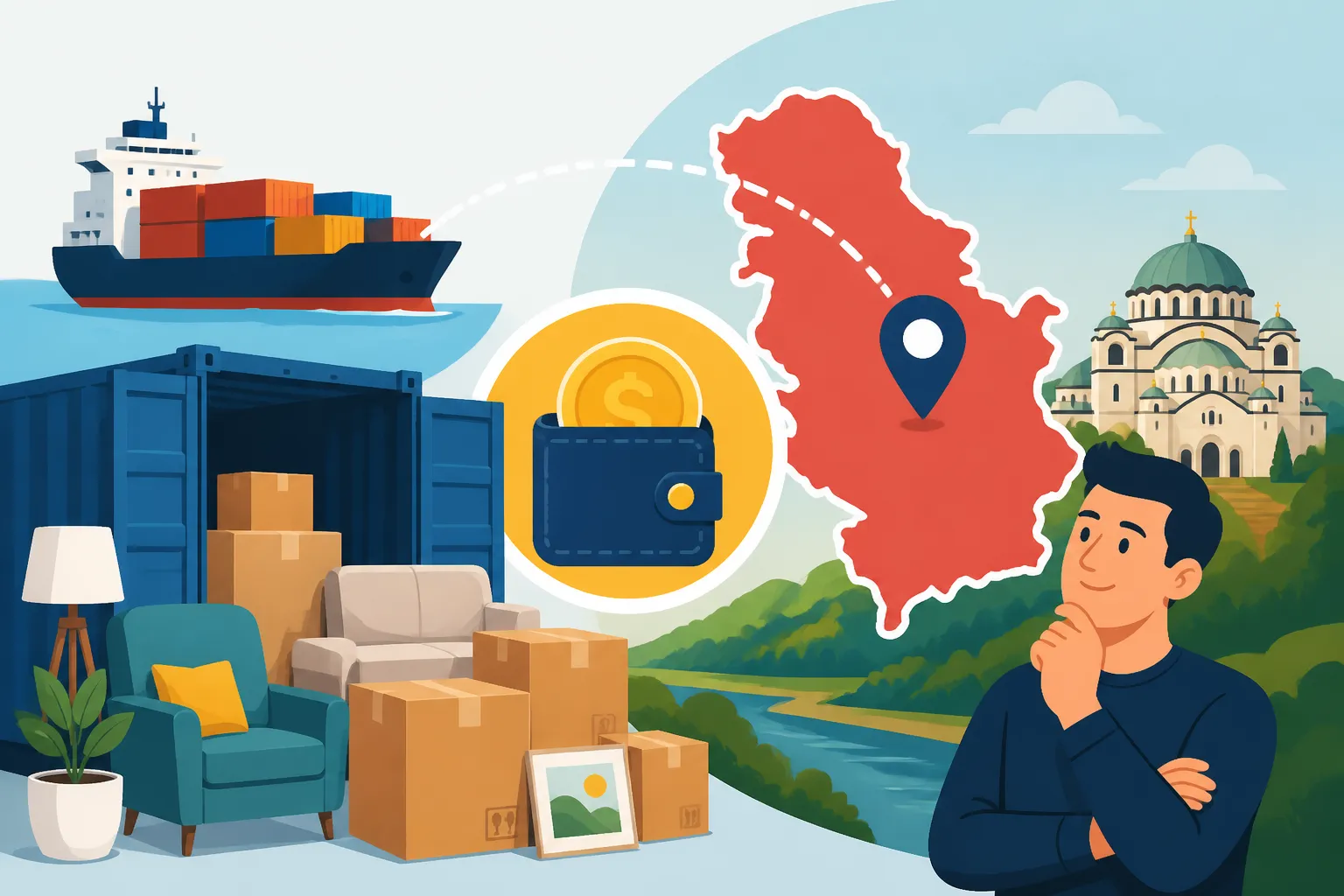
How Much Does It Cost to Ship Belongings to Serbia?
Moving your entire life across borders is already a monumental task, and the stress of figuring out how to get your cherished belongings from your old home to your new one in Serbia can feel like climbing Mount Everest in flip-flops. You’re not just packing boxes; you’re trying to navigate an entirely new logistical landscape, often with unfamiliar terminology and hidden costs lurking around every corner. This comprehensive guide is designed to demystify the process, breaking down exactly what costs you can expect when shipping your personal effects to Serbia, and how to make the journey as smooth and budget-friendly as possible.
Understanding the Factors Influencing Shipping Costs to Serbia
The price tag on moving your belongings to Serbia isn't a fixed number you can just pluck out of thin air. It's a complex beast, influenced by a multitude of variables. Think of it less like buying a loaf of bread and more like designing a custom house – every choice you make has an impact on the final bill.
Volume and Weight of Your Belongings
At the very core of any shipping quote are the sheer quantity and mass of what you're sending. Shipping companies, whether by land, air, or sea, operate on the principle of how much space your items take up and how heavy they are. They'll typically measure volume in cubic meters (CBM) for larger shipments and factor in weight for air freight, where every kilogram truly counts.
If you’re only bringing a few boxes and suitcases, you’ll be looking at a much different cost structure than someone moving a three-bedroom house full of furniture, appliances, and an entire book collection. Before you even start looking for quotes, take a realistic inventory. Do you really need that ancient armchair your great-aunt gave you, or would it be more cost-effective to sell it and buy something new once you’re settled in Belgrade or Novi Sad? Every item you declutter is a potential saving. For instance, imagine you have a large antique cabinet. Not only does it take up significant space (volume), but it also requires special handling and possibly custom crating due to its fragility and value, all of which add to both the weight and the overall cost.
Shipping Method: Air vs. Sea vs. Road Freight
This is perhaps the biggest determinant of your shipping cost and timeline. Serbia, being a landlocked country in the heart of the Balkans, has specific logistical considerations. Your options primarily boil down to air, sea (via a port like Rijeka in Croatia or Bar in Montenegro, followed by road/rail), or direct road freight.
- Air Freight: This is by far the fastest option, but also the most expensive. It’s usually reserved for urgent shipments, small valuable items, or essential boxes you need immediately upon arrival. Think critical documents, a few changes of clothes, or sentimental items you can't bear to be without. While your items might fly into Nikola Tesla Airport (BEG) in Belgrade in a matter of days, the cost per kilogram will make you wince if you're sending anything substantial. A small, priority air cargo shipment could cost several hundred euros, even for just a few dozen kilograms.
- Sea Freight (Ocean Cargo): This is the most economical choice for larger volumes of goods, particularly if you’re moving an entire household. The trade-off, however, is time. Sea shipments can take anywhere from 4 to 8 weeks, sometimes more, depending on your origin and the port used. Since Serbia has no direct coastline, your goods will arrive at a port (often Rijeka in Croatia, Koper in Slovenia, or Bar in Montenegro) and then be transported by road or rail into Serbia. This "last mile" adds both time and cost. You'll typically use either a Full Container Load (FCL) if you have enough items to fill an entire container (20ft or 40ft), or Less than Container Load (LCL), also known as groupage, where your items share space in a container with other shipments. LCL is often a fantastic option for expats who have too many items for air freight but not enough for a full container, as it significantly reduces costs.
- Road Freight: For those moving from within Europe, road freight is often a practical and cost-effective middle ground between air and sea. It’s faster than sea freight and cheaper than air, with transit times ranging from a few days to a couple of weeks, depending on the distance. Many international moving companies specialize in road transport routes directly into Serbia from major European hubs. If you're coming from Germany, for example, a truck might drive your goods directly to your new apartment in Novi Sad, offering a convenient door-to-door service. This method also often allows for more flexible scheduling and less handling of your goods compared to sea freight transshipments.
Here’s a quick overview to help you weigh your options:
| Shipping Method | Typical Transit Time | Approximate Cost (per CBM, indicative) | Best For | Pros | Cons |
|---|---|---|---|---|---|
| Air Freight | 3-7 days | €300 – €700+ | Urgent, small, high-value items | Fastest, high security | Most expensive, limited volume |
| Sea Freight (LCL) | 4-8 weeks | €50 – €150+ | Large volumes, non-urgent | Most economical for large moves, lower carbon footprint | Slowest, more handling, port charges, customs at port + inland |
| Sea Freight (FCL) | 4-8 weeks | €2,000 – €8,000+ (flat container rate) | Entire households, vehicles | Dedicated container, faster clearance for large volume | High cost if not fully utilized, still slow |
| Road Freight | 5-14 days | €70 – €250+ | European moves, medium-large volumes | Good balance of speed & cost, door-to-door often | Limited to continental Europe, subject to road conditions |
Distance and Origin/Destination
It probably goes without saying, but the further your starting point is from Serbia, the more expensive the shipping will be. Moving from a neighbouring country like Hungary will naturally incur lower costs than shipping from Australia or the United States. Furthermore, the specific destination within Serbia can also play a role. Shipping to a major city like Belgrade or Novi Sad, which have established logistics hubs and easy access, will generally be more straightforward and potentially cheaper than arranging delivery to a remote village in southern Serbia, which might require additional "last-mile" charges. Make sure your quotes specify delivery to your exact address.
Breaking Down the Specific Costs of Shipping to Serbia
Once you’ve got a handle on the broad factors, let’s dig into the nitty-gritty of the various charges that will make up your total bill. It's often not just a single "shipping fee," but a collection of services and taxes.
Packing and Crating Expenses
This is an area where you can have significant control over costs.
- DIY Packing: If you opt to pack everything yourself, your expenses will be limited to purchasing packing materials: sturdy boxes, bubble wrap, packing paper, tape, and markers. You can find these at local stores or online retailers. This is generally the cheapest option, but it requires a lot of your time and effort, and you bear the responsibility for proper packing to prevent damage. Remember to label everything meticulously – not just for your sanity, but also for customs inspections.
- Professional Packing: Many international movers offer professional packing services. While this adds to the overall cost, it comes with several benefits. Their teams are experienced in packing items securely for long-distance international transit, often using specialized techniques and materials. Crucially, using professional packers often means your items are better covered by insurance policies, as most insurers prefer or even require professional packing for certain items. For delicate items like artwork, pianos, or antiques, custom crating might be necessary, and this is definitely a job for specialists. The cost for professional packing can add anywhere from 10-25% to your base shipping fee, depending on the volume.
Transportation Costs (Freight Charges)
This is the core cost for moving your goods from point A to point B. It encompasses the actual cost of space on a ship, plane, or truck.
- Base Freight Rate: This is calculated based on the volume (CBM) or weight (kg) of your shipment and the chosen shipping method. For LCL sea freight, you'll be charged for the specific cubic meters your goods occupy. For FCL, it's a flat rate for the entire container.
- Fuel Surcharges: These are variable costs that fluctuate with global fuel prices and are added to the base freight. They can be a significant component of the total.
- Terminal Handling Charges (THC): These are fees charged by port or airport operators for handling your cargo at both the origin and destination terminals. They cover loading, unloading, stacking, and moving containers.
- Carrier Fees: Various administrative and operational fees charged by the shipping carrier itself.
Customs Duties, Taxes, and Import Fees
Navigating Serbian customs can be a bit of a labyrinth, especially for personal effects. This is where getting informed truly pays off.
- Customs Duties and VAT (PDV): As a general rule, if you are moving to Serbia and obtaining temporary or permanent residence, you may be eligible for a duty and VAT exemption for your personal household effects. This is a huge potential saving! To qualify, you typically need to prove that you are moving your residence to Serbia and that the items have been in your possession and used for at least six months prior to import. The application for this exemption is crucial and must be done correctly. You will need your passport, your Serbian residence permit (or proof of application for one), a detailed inventory list of your belongings, and proof of their prior ownership/use. Without this exemption, you would be liable to pay customs duty (which varies by item, but can be around 10-20%) and 20% VAT (PDV) on the declared value of your goods, which can quickly add up to thousands of euros. Items purchased recently or those intended for sale are usually not exempt.
- Customs Clearance Fees: Even with an exemption, you'll still need to pay fees for the customs broker or agent who handles the paperwork on your behalf. This is a highly recommended service, as navigating Serbian customs regulations can be complex, and errors can lead to delays and additional costs. A good customs agent will ensure all your documents are in order and shepherd your shipment through the process. These fees can range from €100-€500 or more, depending on the complexity of your shipment.
- Inspection Fees: Occasionally, customs may decide to physically inspect your shipment, which can incur additional fees for unpacking, inspection, and repacking.
It's highly advisable to consult with a reputable international moving company or a Serbian customs broker well in advance to understand the specific requirements for obtaining the duty and VAT exemption based on your individual residence status. This is one of the most common pitfalls for newcomers, leading to unexpected costs. Knowing how to get your documents apostilled for Serbia immigration might also be crucial for some of the paperwork you'll need.
Insurance and Storage
Don't skip these steps; they offer crucial peace of mind.
- Transit Insurance: While most shipping companies take great care, accidents can happen. Fire, theft, or damage during transit are rare but devastating. Cargo insurance covers your goods from the moment they leave your home until they arrive in Serbia. You typically have options:
- Total Loss: Covers the entire shipment if it's lost, but not individual items. This is the cheapest option.
- All-Risk Coverage: This is the most comprehensive, covering specific damage to individual items. It's more expensive but highly recommended for valuable or irreplaceable goods. The cost is usually a percentage of your declared value, often between 1.5% and 3%.
- Storage: You might need temporary storage at either end of your move. Perhaps your new apartment in Serbia isn't ready, or you need to clear out your old place before your international flight. Storage fees are usually charged weekly or monthly and depend on the volume of your goods. Storage facilities in major Serbian cities like Belgrade are readily available, but factor these costs into your overall budget if you anticipate any delays in moving into your new home.
Ancillary Services and Hidden Fees
This is where "hidden" costs can sneak up on you if you're not careful. Always ask for a detailed, itemized quote.
- Door-to-Door vs. Port-to-Port/Airport-to-Airport: Door-to-door service means the company handles everything from your current home to your new address in Serbia, including all transport links. Port-to-port or airport-to-airport means you're responsible for getting your goods to and from the terminals, which can be a logistical nightmare and often requires hiring local transport, increasing your actual costs. Always push for door-to-door service if possible.
- Shuttle Service: If your residence in Serbia is on a narrow street or in an area inaccessible to large moving trucks, a smaller shuttle vehicle might be needed for the final delivery, incurring extra costs.
- Heavy Lifting/Stairs: If you live on a high floor without a lift, or have exceptionally heavy items, be prepared for potential additional charges for specialized equipment or extra movers.
- Unpacking and Debris Removal: Some premium services include unpacking your boxes and removing the empty ones, which can be a huge help after a long journey.
How to Estimate and Save on Shipping Costs to Serbia
Now that you know what you're up against, let's talk strategy. Moving to Serbia is an adventure, and you don't want to start it off with a giant hole in your wallet due to unexpected shipping fees.
Getting Accurate Quotes
This is the golden rule. Never settle for just one quote.
- Contact Multiple Reputable Companies: Reach out to at least three to five international moving companies that have experience shipping to Serbia. Platforms like Sirelo can be incredibly useful for this, as they connect you with various movers and allow you to compare quotes side-by-side. Make sure these companies offer services to Serbia specifically and understand the local customs procedures.
- Provide a Detailed Inventory: This is non-negotiable. The more accurate your inventory, the more accurate your quote will be. Don't just say "boxes"; specify "5 large boxes of books, 3 medium boxes of kitchenware, 1 dining table, 4 chairs." Many companies offer virtual surveys or even in-home visits to assess your belongings more accurately.
- Ask for All-Inclusive, Itemized Quotes: Request a quote that clearly breaks down every single cost mentioned above – freight, packing, insurance, customs clearance, terminal fees, delivery, etc. This helps avoid nasty surprises. Confirm whether the customs duty/VAT exemption is factored into their advice or if they are simply quoting gross amounts.
- Understand What's NOT Included: Just as important as what's included, is understanding what isn't. Some quotes might exclude customs duties, insurance, or even assembly/disassembly services. Clarify everything.
Decluttering and Prioritizing
This is your biggest opportunity to save money.
- The "Rule of Less": The less you send, the less it costs. Period. Go through every single item in your home with a critical eye. Do you truly need it in Serbia? Is it worth the cost of shipping, or would it be cheaper to buy it new there? For example, if you're planning to rent an apartment in Serbia, many come fully furnished, making it redundant to ship large furniture. Consider the cost of living in Serbia for expats and how it compares to the cost of shipping certain items.
- Sell, Donate, or Dispose: Have a garage sale, list items on online marketplaces, donate to charity, or simply throw away anything that's broken or truly unwanted. The money you make can offset shipping costs.
- Essentials vs. Non-Essentials: Prioritize what you must have (sentimental items, specific work tools, unique clothing) and what you can replace easily or live without for a while.
DIY vs. Professional Services
While tempting to do it all yourself to save money, it’s about finding the right balance.
- DIY for Non-Fragile Items: If you're confident in your packing skills, pack your clothes, books, linens, and other non-breakable items yourself. Use sturdy boxes and plenty of packing material.
- Professional Help for Breakables and Large Items: For delicate glassware, valuable electronics, artwork, or oversized furniture, professional packing can be a lifesaver. Their expertise minimizes damage risk, and their packing often meets insurance requirements.
- Hybrid Approach: Consider a hybrid: you pack the bulk of your non-fragile items, and the movers handle the specialized packing for valuable or difficult items, as well as the loading and transport. This is often the most cost-effective and least stressful method for many expats.
Leveraging Groupage or LCL Shipping
For those not filling an entire container, LCL is your friend.
- Shared Container Space: With LCL (Less than Container Load), your goods are consolidated with other people's shipments into a single container. You only pay for the volume your items occupy, which is significantly cheaper than paying for an entire container you won't fill (FCL).
- Consolidation Hubs: Reputable moving companies often have consolidation hubs in major cities, where they gather LCL shipments before sending them to a destination like Serbia. This might add a little time to the transit, but the cost savings are substantial for smaller household moves. Ask your chosen mover about their LCL options and schedules for Serbia.
Practical Steps and What to Expect Upon Arrival
So you’ve got your quotes, chosen your mover, and started packing. What happens next, and what should you anticipate once your belongings reach Serbian soil?
Preparing Your Shipment
Organization is key here.
- Detailed Inventory List: Prepare a comprehensive list of everything you are shipping, item by item. This is critical for customs, insurance, and your own peace of mind. It should include descriptions, quantities, and estimated values.
- Proper Labeling: Clearly label every box with your name, the destination address, and a sequential number. It’s also helpful to add a brief description of contents (e.g., "Kitchen – Pots & Pans, Box 1 of 10").
- Documentation: Gather all necessary documents for customs: your passport, residence permit (or application proof), the detailed inventory list, and any proof of ownership/purchase for high-value items if required for exemption. You might also need a specific declaration of personal effects from the Serbian Ministry of Foreign Affairs or the local MUP (Ministry of Interior), so always check the latest requirements or ask your moving company. Understanding document and translation requirements for Serbia immigration extends to your shipment too.
- Communication with Your Mover: Stay in close contact with your shipping company. They will provide you with tracking information and updates on your shipment's progress.
Navigating Serbian Customs Clearance
This is often the most anxiety-inducing part of the process.
- Customs Agent is Your Best Friend: As mentioned, engaging a local Serbian customs broker or having your international mover provide one is invaluable. They understand the intricacies of Serbian customs law and can navigate the bureaucracy on your behalf.
- Required Documents: Upon arrival of your goods at the customs terminal (often in Belgrade or a major border crossing), you will typically need:
- Original Bill of Lading (for sea freight) or Air Waybill (for air freight).
- Your passport and a valid Serbian residence permit (temporary or permanent boravak). This is critical for the duty exemption. If you are still in the process of getting your boravak, you might need to coordinate closely or even wait until it's issued before initiating customs clearance.
- Your detailed, signed inventory list, sometimes requiring a translation into Serbian by a certified translator.
- A statement confirming the items are for personal use and have been owned for at least six months.
- Proof of address in Serbia (e.g., rental contract).
- Potential Inspections: Customs officials may choose to inspect your shipment. This is standard procedure and you, or your appointed agent, should be present. Be prepared for some delays if an inspection occurs.
- Patience and Persistence: Serbian bureaucracy, while improving, can still test your patience. Delays are not uncommon. Stay calm, communicate clearly with your agent, and have all your documents readily accessible.
Receiving Your Belongings
The light at the end of the tunnel!
- Delivery Scheduling: Once cleared from customs, your shipping company's local partner will contact you to schedule the final delivery to your new home. Ensure easy access for their vehicle.
- Unpacking and Damage Check: As soon as your items arrive, thoroughly inspect all boxes and furniture for any signs of damage before the delivery crew leaves. If you notice any damage, document it immediately with photos and notes on the delivery receipt. This is vital for any potential insurance claims.
- Setting Up Your New Home: You'll finally be reunited with your creature comforts. While waiting for your home internet to be set up through services like SBB or MTS, consider using a temporary eSIM from a provider like Airalo to stay connected and coordinate with movers, landlords, or utility companies as you get your new life organized. This can be a lifesaver when you're first arriving and need reliable mobile data to navigate, communicate, and sort out things like setting up electricity (EPS) in your Serbia home.
- Disposing of Packing Materials: Be prepared for a lot of cardboard and packing material. You'll need to arrange for its disposal, either through your building's recycling program or by taking it to a local recycling point.
Shipping your belongings to Serbia can seem daunting, but with careful planning, accurate information, and a little patience, it's a manageable part of your expat journey. By understanding the costs, preparing thoroughly, and leveraging professional help where needed, you can ensure a smoother transition to your new life in this wonderful country.
Disclaimer
The information provided in this article is for general informational purposes only and does not constitute legal, financial, or immigration advice. Customs regulations, tax laws, and shipping costs in Serbia are subject to change. It is essential to consult with qualified professionals, such as international moving companies, customs brokers, and legal advisors, for advice tailored to your specific situation before making any decisions related to shipping your belongings to Serbia.