How Do I Find Out If My Degree Is Recognised in Serbia?
Moving to Serbia, you quickly learn that while many things are wonderfully relaxed, bureaucracy isn't one of them. One of the most perplexing hurdles for many expats is figuring out what to do with their hard-earned academic or professional qualifications. It’s not just about showing your diploma; it's about navigating a system that needs to officially say, "Yes, this foreign piece of paper means something equivalent here." This guide will walk you through the often-confusing process of checking and achieving degree recognition in Serbia, sparing you some of the headaches I've certainly experienced.
Understanding Why Degree Recognition Matters in Serbia
You might think your degree speaks for itself, especially if it’s from a well-known international university. But in Serbia, like many countries, there’s a formal process to validate foreign qualifications. Ignoring it can mean hitting a brick wall when trying to work, study further, or even just prove your professional standing.
The Legal and Professional Ramifications
Simply put, if your degree isn't recognized, you might not be legally allowed to practice your profession, or your employer might not be able to count your foreign education towards certain positions or salary scales. Imagine landing your dream job in Belgrade, only to find out that the HR department can't officially acknowledge your qualifications because they haven't gone through the nostrifikacija process. It's a real and frustrating scenario many expats face. For regulated professions – think doctors, lawyers, architects, even some engineers – formal recognition isn't just a recommendation; it's a legal requirement. Without it, your CV might look impressive, but it won't open the necessary doors for official employment or licensing. This process is crucial if you're serious about working in Serbia, especially in a field that requires specific credentials. It directly impacts your ability to secure a proper work permit as well, as your qualifications need to align with the job you’re applying for. You can learn more about this in our guide on The Complete Guide to Working in Serbia as a Foreigner (2027).
Different Paths to Recognition: Academic vs. Professional
It's important to understand that there isn't just one type of degree recognition. The path you take largely depends on what you plan to do with your degree in Serbia. Are you looking to continue your studies, pursue a PhD, or enroll in a specialist program at a local university? If so, you'll need academic recognition. This involves evaluating your foreign degree's equivalence to a Serbian academic degree, ensuring you meet the prerequisites for further education. The focus here is on the content and level of your studies.
On the other hand, if you're planning to enter the workforce and practice a profession, you'll need professional recognition. This is about verifying that your foreign qualification allows you to perform a specific job function in Serbia, especially for those regulated professions I mentioned earlier. For instance, a foreign-trained doctor would need professional recognition to practice medicine, which might involve additional exams or internships to meet Serbian standards. These two paths, while related, have distinct processes and are handled by different bodies. Misunderstanding which one you need can lead to wasted time, effort, and money.
The Official Process: Nostrifikacija and Validation
The formal process for degree recognition in Serbia is primarily known as nostrifikacija. It’s the official validation of a foreign diploma, ensuring it’s equivalent to a Serbian one. While the word itself might sound daunting, it’s a structured procedure, albeit one that requires patience and meticulous attention to detail.
Where to Start: ENIC/NARIC Centre and Ministry of Education
The central authority for academic recognition in Serbia is the ENIC/NARIC Centre (European Network of Information Centres/National Academic Recognition Information Centres) within the Serbian Ministry of Education, Science and Technological Development. They are your first port of call for academic recognition, particularly if you're looking to continue your studies or if your employer requires a formal academic validation. Their role is to assess foreign higher education qualifications. However, if your degree falls under a regulated profession – and this is a big "if" – the recognition might be handled directly by the relevant professional chamber or ministry. For instance, medical degrees would typically involve the Ministry of Health and the Serbian Medical Chamber, while legal degrees might fall under the Ministry of Justice. Always double-check which body is responsible for your specific profession. Don't assume the ENIC/NARIC Centre covers everything, because it absolutely does not. This initial research phase is crucial to avoid sending your documents to the wrong place and delaying the whole process. Our guide, How to Get Your Foreign Qualification Recognised in Serbia, goes into more detail about these initial steps.
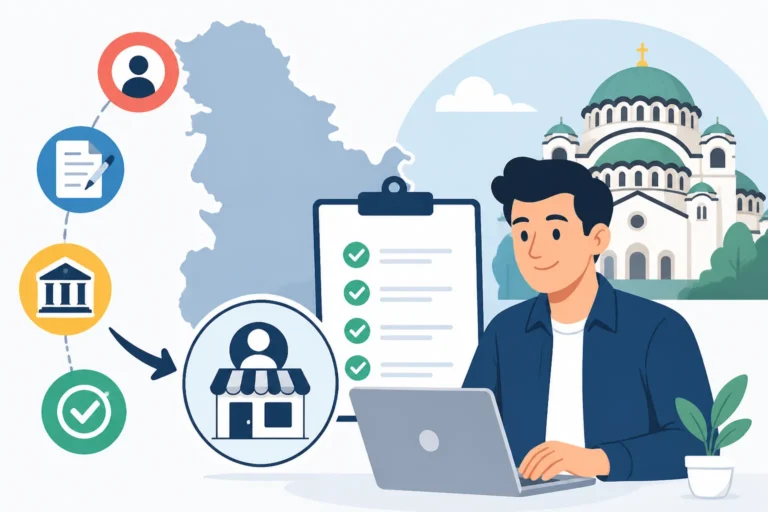
Step-by-Step Guide to Document Submission
Once you know which body to approach, the real fun begins: gathering your documents. This is where attention to detail really matters.
- Application Form: Typically, you'll start by filling out an application form provided by the relevant institution (e.g., ENIC/NARIC, specific ministry, or university).
- Original Diploma and Transcripts: You'll need your original degree certificate and academic transcripts detailing all courses, grades, and the duration of your studies. These are crucial.
- Official Translations: This is non-negotiable. All foreign documents must be officially translated into Serbian by a certified court translator in Serbia. Don't try to get them translated abroad by someone not certified in Serbia; it likely won't be accepted.
- Proof of Payment: There are administrative fees involved. Make sure you have proof of payment for the application and any associated costs.
- Curriculum and Syllabi: For academic recognition, you might need detailed course descriptions or syllabi from your university abroad. This helps the Serbian institution understand the content and scope of your studies.
- Personal Identification: A copy of your passport or ID card, and possibly your Serbian residence permit (How Do I Apply for Temporary Residence in Serbia?) will be required.
- Proof of Address: A prijava (address registration) or rental agreement might also be requested.
Each document needs to be presented correctly. Often, notarized copies of originals are required, and sometimes even an Apostille stamp (if your country is a signatory to the Hague Apostille Convention) or full legalization from the Serbian embassy/consulate in your home country. This alone can be a significant undertaking, so start early!
Here's a simplified table of common documents:
| Document Type | Purpose | Key Requirement |
|---|---|---|
| Application Form | Formal request for recognition | Accurately completed, signed |
| Original Diploma | Proof of qualification | Certified copy, official Serbian translation, potentially Apostille |
| Academic Transcripts | Details of studies, courses, grades | Certified copy, official Serbian translation, potentially Apostille |
| Curriculum/Syllabi | Content of studies (for academic recognition) | Official English or Serbian version, or translated copy |
| Passport/ID | Identity verification | Copy of valid document |
| Proof of Address | Residency verification | Prijava or rental contract |
| Proof of Fee Payment | Administrative processing fees | Bank receipt or equivalent |
Common Challenges and How to Overcome Them
Oh, the challenges! I’ve seen and heard it all. One of the biggest is the sheer volume and specificity of documents. You might think you have everything, only to be told you're missing a "program of studies" from five years ago. My advice: over-prepare. If they ask for a document, assume they'll want it translated and notarized.
Another hurdle is the waiting time. Bureaucracy in Serbia, while generally improving, still isn't known for its lightning speed. Applications can take months, sometimes even longer, especially if there are complexities in your degree's curriculum. Patience is not just a virtue here; it's a necessity.
Then there's the language barrier. While many officials in Belgrade might speak some English, the process itself is conducted in Serbian. Having a trusted Serbian friend, partner, or a professional translator accompany you or review your documents can save you immense frustration. This is where platforms like iTalki can be incredibly helpful; practicing some basic Serbian phrases for administrative interactions or even hiring a tutor to help you understand the nuances of the process can make a world of difference.
Finally, the "equivalency" issue. Sometimes, a direct equivalent to your foreign degree simply doesn't exist in the Serbian system, or the curriculum might be deemed insufficient in certain areas. In such cases, you might be asked to take supplementary exams, complete additional courses, or undertake practical work experience. Don't be disheartened; view it as an opportunity to integrate deeper into the local system. Our detailed guide, How to Get a Foreign University Degree Recognised (Nostrifikacija) in Serbia, offers further insights into managing these challenges.
Alternative Avenues and Practical Considerations
While formal nostrifikacija is often the gold standard, it's not always the only path, or even the most necessary one, depending on your goals. Sometimes, practical considerations and alternative strategies can get you where you need to be.
When Formal Recognition Isn't Strictly Necessary
Believe it or not, there are situations where going through the full, often lengthy, nostrifikacija process isn't absolutely essential. If you’re planning to work for an international company or an organization with offices in Serbia but whose primary operations aren’t strictly tied to Serbian licensing, your foreign degree might be perfectly acceptable. Many IT and tech companies, for instance, are often more interested in your skills, portfolio, and demonstrable experience than a formal Serbian validation of your computer science degree. If your role is primarily remote for a foreign company, or if you're a freelancer operating globally, you might find that your direct clients and employer don't require the Serbian stamp of approval. This is particularly true for expats who are self-employed or work as digital nomads. For these individuals, the focus might shift more towards Understanding Health Coverage for the Self-Employed in Serbia and How to Register as an Entrepreneur (Preduzetnik) in Serbia rather than degree validation. Even for teaching English, while some language schools prefer a recognized degree, many are more concerned with your TEFL certification and native English speaking ability.
Building Your Case Without Full Nostrifikacija
If formal recognition isn't a strict requirement, how do you convince a potential employer or client of your qualifications? This is where you need to build a robust professional narrative.
- Strong Portfolio/CV: Highlight your practical experience, specific projects, and measurable achievements. This often speaks louder than any diploma.
- References and Recommendations: Get strong letters of recommendation from previous employers or academic mentors.
- Certifications and Courses: Supplement your degree with industry-recognized certifications or specialized courses that are globally recognized.
- Language Proficiency: Demonstrating strong English proficiency (if working for an international company) or even basic Serbian (which shows commitment) can be a significant advantage. Tools like iTalki can help you not just learn the language, but also connect with tutors who can offer insights into local professional communication.
- Networking: Connect with other expats and professionals in your field. They can often provide invaluable advice on how their qualifications were perceived and what strategies they used.
For jobs where your skills are paramount, like in Serbia's booming IT sector, your GitHub profile or a strong portfolio of completed projects might be far more influential than a stamped diploma.
Language Skills: Your Secret Weapon
Let's be real, even if your degree is from Harvard, navigating daily life and the job market in Serbia is significantly easier with some Serbian under your belt. And when it comes to official processes, having some grasp of the language can frankly expedite things, or at least help you understand why they're being delayed. While Serbia is increasingly English-friendly, especially in Belgrade and Novi Sad, most official documentation and communication from government bodies will be in Serbian. Being able to understand the forms, the questions, and the explanations given by officials will drastically reduce miscommunication and frustration. Moreover, showing initiative by learning Serbian can be a huge plus to potential employers, signaling your commitment to living and working in the country. This isn't just about recognition; it's about integration. Using platforms like iTalki to learn Serbian, even just conversational basics, can transform your experience, whether it's understanding tax forms (which ties into The Complete Guide to Taxes in Serbia for Expats (2027)) or conversing confidently with HR representatives.
Navigating the Bureaucracy and What to Expect
Dealing with any country's administrative processes as a foreigner can feel like navigating a labyrinth designed by Kafka. Serbia is no exception. Understanding the timelines, potential costs, and the general approach can help manage expectations and reduce stress.
Timelines, Costs, and Patience
As mentioned earlier, patience is your best friend here. The timeline for degree recognition can vary wildly. For straightforward cases with complete documentation, it might be a few weeks or months. For more complex degrees, or if there's a backlog at the Ministry or relevant professional body, it could stretch to six months or even a year. I’ve personally seen cases that have dragged on for ages, often due to minor discrepancies or requests for additional, obscure documents.
Costs are another factor. You'll have fees for the application itself, which can range from a few thousand RSD to tens of thousands, depending on the complexity and institution. Then there are the mandatory costs of certified translations, which can add up significantly, especially if you have extensive transcripts or syllabi. Don't forget potential fees for notarization, Apostille stamps, and courier services if you're sending documents internationally. Always factor these into your budget. It’s also wise to inquire about all potential fees upfront, as sometimes there are hidden costs for supplementary evaluations or administrative tasks.
Seeking Professional Assistance
While you can certainly attempt the recognition process on your own, many expats find it incredibly beneficial to enlist professional help. This could come in several forms:
- Immigration Lawyers/Consultants: These professionals specialize in navigating Serbian bureaucracy for foreigners. They can guide you through the document requirements, help with translations, liaise with the relevant institutions, and even represent you in the process. Their expertise can save you considerable time and potential mistakes. They are also knowledgeable about the latest changes in laws and regulations, which can be invaluable.
- Specialized Agencies: Some agencies focus specifically on diploma recognition services. They might have established contacts and a streamlined process for specific types of degrees.
- University International Offices: If your goal is academic recognition to study further, the international office of the Serbian university you wish to attend can be a great resource. They often have experience with foreign applicants and can guide you through their specific internal recognition procedures. Our article, How to Apply to a Serbian University as an International Student, provides more details on this.
While these services come with a cost, many expats view it as a worthwhile investment to ensure the process is handled correctly and efficiently, minimizing the stress and uncertainty that often accompany these administrative tasks in a new country. They can also help clarify nuances related to Understanding Serbian Labour Law and Worker Rights (2027), ensuring your recognized degree aligns with employment regulations.
Disclaimer
Please remember that I am an expat blogger and not a legal or immigration professional. While I strive to provide accurate and up-to-date information based on my experiences and research, regulations in Serbia can change. Always consult with official Serbian government sources, a qualified lawyer, or an immigration specialist for the most current and personalized advice regarding your specific situation.