Can I Sponsor My Foreign Spouse for Serbia Residence?
Bringing your loved one to a new country is often one of the most stressful parts of expat life, and Serbia is no exception. Navigating the immigration system to sponsor your foreign spouse for residence can feel like an endless maze of paperwork, appointments, and conflicting information. This guide will walk you through the entire process of obtaining a family reunification residence permit, offering practical advice and setting realistic expectations for you and your partner.
Understanding the Legal Basis for Spouse Sponsorship in Serbia
When you've made the leap to live in Serbia, whether for work, study, or just for the love of the country, it's natural to want your family by your side. For many, that means bringing a spouse. The good news is that Serbian law provides a clear pathway for family reunification, allowing you to sponsor your foreign spouse for temporary residence, known locally as privremeni boravak. This isn't just a courtesy; it’s a recognised legal ground for residency, which brings with it certain rights and responsibilities.
The primary legal basis for a spouse to obtain temporary residence is through family reunification, specifically based on a marriage to a Serbian citizen or to a foreigner who already holds a valid temporary residence permit in Serbia. This means if you, the sponsor, are either a Serbian national or an expat who has successfully secured your own boravak (e.g., for work, self-employment, property ownership, or study), you can then initiate the process for your spouse. It's a crucial distinction: your own legal status in Serbia is the foundation upon which your spouse’s application will be built.
The Ministry of Interior (MUP), specifically the Foreigners Department, is the main body overseeing these applications. Their role is to ensure that all criteria are met and that the marriage is genuine. They’re looking for evidence of a stable relationship and the ability of the family unit to support itself in Serbia. This isn't just a rubber-stamp exercise; they take the validity of the marriage and your financial stability seriously. The process, while generally straightforward on paper, often involves meticulous document gathering and patience. Understanding that the MUP is the gatekeeper will help you mentally prepare for the administrative hoops.
For those planning a full relocation, considering the implications of bringing your entire household, including your spouse, can be a major undertaking. Companies like Sirelo can often assist with the logistics of moving your belongings, but the immigration part is something you’ll need to navigate personally, or with the help of a local lawyer, which many expats find invaluable for this type of detailed administrative task.
Eligibility Criteria for the Sponsor and Sponsored Spouse
Navigating the eligibility requirements is where many expats start to feel overwhelmed, but breaking it down makes it more manageable. Both you (the sponsor) and your spouse must meet specific conditions for a successful application for family reunification residence in Serbia. These criteria are designed to ensure stability and genuineness in the relationship and the family's ability to live in Serbia.
Requirements for the Sponsoring Partner
As the sponsor, your primary role is to prove your own legal status in Serbia and your capacity to support your spouse. First and foremost, you must hold either Serbian citizenship or a valid temporary residence permit ( privremeni boravak) in Serbia. If you're an expat, this means your own permit must be current and granted for a substantial reason, such as employment, self-employment, property ownership, or even for study purposes. The MUP will verify your status rigorously. If your own residence is precarious or nearing expiration, it's best to sort that out before starting your spouse's application. You can learn more about how to get temporary residence (Boravak) in Serbia (2026) in our detailed guide.
Secondly, you need to demonstrate sufficient financial means to support both yourself and your spouse. While there isn't a single, universally published minimum income figure that is updated constantly, the general expectation is that you can cover living expenses without recourse to public funds. Typically, this involves showing a regular income, often through bank statements, salary slips from your Serbian employer, or evidence of self-employment income if you're a registered entrepreneur. Many expats find that demonstrating income equivalent to at least the average Serbian salary, or slightly above, provides a strong case. This is crucial; the MUP wants to see that your spouse won't become a burden on the state. It’s not just about getting them here; it's about proving they can thrive with you.
Proof of accommodation is another key requirement. You must show that you have a place for both of you to live in Serbia. This can be a rental contract in both your names, a property deed if you own property, or even a statement from the property owner if you're staying with friends or family (though a formal rental agreement or ownership is always preferred). The address stated will be where your spouse is registered, so ensure it's legitimate and correctly documented.
Finally, the validity and genuineness of your marriage are paramount. This sounds obvious, but the Serbian authorities want to prevent marriages of convenience. They'll require your marriage certificate, and if it was issued outside Serbia, it will need to be apostilled or legalised and officially translated. We’ll delve deeper into Understanding Document and Translation Requirements for Serbia Immigration in another article, but suffice it to say, don't skimp on these steps.
Requirements for the Sponsored Spouse
For your spouse, the main requirements revolve around their identity, the legitimacy of your marriage, and ensuring they meet general immigration standards. They must, of course, have a valid passport with sufficient validity, typically at least six months beyond the requested residence period.
A clean criminal record is also expected. While not always explicitly requested in the initial application, the MUP reserves the right to ask for a police certificate from their home country or any country they've lived in for an extended period. It’s always a good idea to have this prepared or know how to obtain it quickly.
Proof of health insurance is absolutely mandatory. Your spouse must have valid health insurance covering their stay in Serbia. This can be a Serbian private health insurance plan, an international plan like Cigna Global (which many expats opt for due to its comprehensive coverage and portability), or if eligible, they might join your existing RFZO public health insurance if you are employed in Serbia. Getting this sorted sooner rather than later is key. Our guide on Health Insurance in Serbia: RFZO, Private and International Options Explained provides more specific details.
Lastly, and this is a big one, they generally cannot have any history of overstaying visas or previous immigration violations in Serbia or other countries that might flag them as a risk. Serbian immigration authorities, like those worldwide, are wary of individuals with past infractions.
The Application Process: Step-by-Step
Getting your spouse's temporary residence permit in Serbia feels like a marathon, not a sprint. It’s a multi-step process that demands meticulous attention to detail and a healthy dose of patience. Here's a breakdown of what you can expect and the critical steps involved.
Gathering Essential Documents
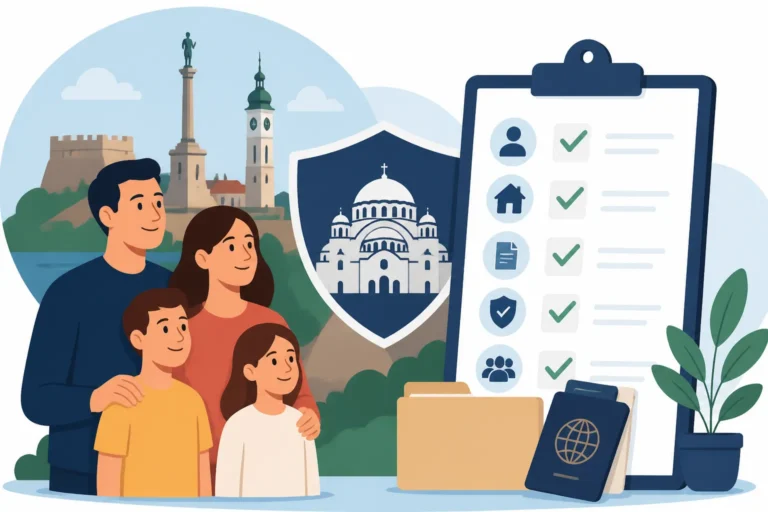
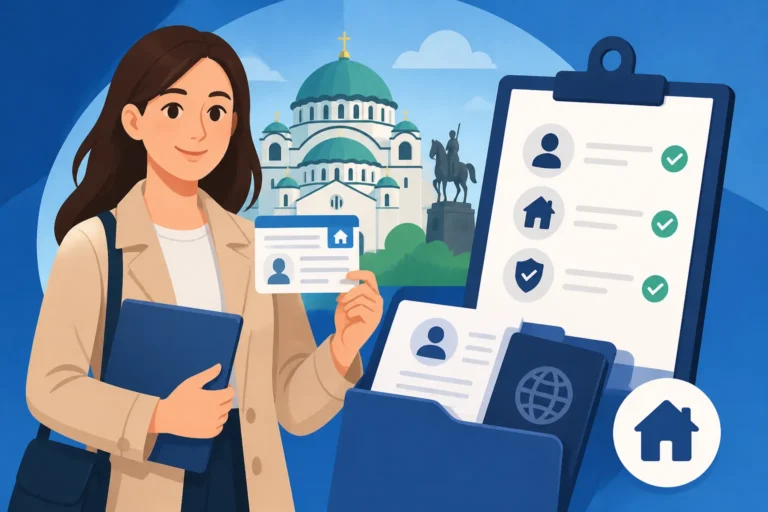
This is arguably the most time-consuming part. The MUP will not proceed without a complete file, and missing even a single stamp or translation can set you back weeks. Here's a general checklist of what you'll need, but always check the latest requirements on the MUP website or with a local legal expert, as they can sometimes change.
Documents typically required for the sponsor:
- Valid Passport: Original and copies of all relevant pages.
- Proof of Serbian Citizenship or Valid Temporary Residence Permit: Your lična karta (ID card) or boravišna dozvola (residence card) and the decision granting it.
- Proof of Financial Means: Bank statements (showing consistent income for the last 3-6 months), employment contract, salary slips, or proof of registered business and income for entrepreneurs.
- Proof of Accommodation: Rental contract (over 6 months, registered with the tax authority) or property deed. This must be a legitimate address.
- Marriage Certificate: Original (Serbian or apostilled/legalised and translated if foreign).
Documents typically required for the sponsored spouse:
- Valid Passport: Original and copies of all relevant pages. Ensure it has at least 6 months validity beyond the intended period of stay.
- Visa D (Long-Stay Visa): If required for their nationality. Most Western nationals can enter visa-free and apply from within Serbia, but always check specific country requirements with the Serbian Embassy in their home country.
- Marriage Certificate: Original (Serbian or apostilled/legalised and translated if foreign).
- Proof of Health Insurance: Serbian private health insurance, international health insurance (e.g., Cigna Global), or proof of RFZO registration if eligible through you.
- Proof of Sufficient Funds: Bank statements in their name (if they have their own funds), or confirmation of your sponsorship.
- Proof of Accommodation: As provided by the sponsor.
- White Card (Beli Karton): This is your address registration, issued by the police upon arrival.
- Completed Application Form: Usually found on the MUP website or at the Foreigners Department.
- Two Passport-Sized Photos.
- Paid Administrative Fees: These are non-refundable and vary, so confirm the exact amounts at the time of application.
Crucial tips for document gathering:
- Translations: Any document not in Serbian must be translated by a court-certified translator in Serbia. Don't use online services for this; the MUP will reject them.
- Apostille/Legalisation: Foreign documents, especially marriage certificates, often need an apostille stamp from the issuing country, or full legalisation if that country is not part of the Hague Apostille Convention. This is a common bottleneck.
- Copies: Always bring originals AND copies of everything. The officials will often just take the copies after verifying against the originals.
Submitting the Application
Once your document folder is thicker than a phone book (that’s an old expat joke, but sometimes it feels true!), you're ready to submit. The application is typically submitted in person at the Foreigners Department of the MUP, located in the city where you reside (e.g., in Belgrade, it's at Savska 35). It's always best to go together if possible.
When you arrive, expect queues. Serbians are generally very patient with bureaucracy, and you should be too. Take a number, grab a seat, and prepare to wait. When your number is called, you'll present your documents to an immigration officer. They will review everything, ask questions, and potentially request additional information on the spot or later. This is where your preparedness truly pays off.
One common question often revolves around the genuineness of the marriage. Be ready to answer questions about how you met, your wedding, and your plans together in Serbia. Having a consistent story and evidence of your shared life (photos, shared bills, etc., though not always requested, can be reassuring) can be helpful.
After submission, you'll receive a confirmation. The processing time for temporary residence permits can vary significantly, from a few weeks to several months. This is another area where expat patience is tested. During this waiting period, your spouse generally has the right to remain in Serbia, even if their initial visa-free period expires, as long as the application is pending. However, they may not be able to leave and re-enter Serbia without a valid visa or residence permit. This is an important detail to consider when planning travel. You can get more details on Understanding the Cost and Timeline of the Serbia Residence Process.
The Interview (If Required)
While not always mandatory for family reunification, the MUP reserves the right to call both you and your spouse for an interview. This is typically done if they have doubts about the authenticity of the marriage or if any information in your application seems unclear.
During the interview, officers might ask about your relationship history, daily life, future plans, and even seemingly trivial details to gauge the depth of your connection. Be honest and consistent in your answers. They are simply trying to ensure the marriage is legitimate and not a way to circumvent immigration rules. Don't be alarmed if called; approach it as a chance to clarify any misunderstandings.
Life After Approval: What to Expect
Congratulations! You’ve received the coveted Rešenje o privremenom boravku (Decision on Temporary Residence) and your spouse has their boravišna dozvola (residence card). This is a huge milestone, but it's not the end of the journey; it's just the beginning of your shared life in Serbia. There are still a few crucial steps and ongoing responsibilities.
Registering Your Address and ID Card
The first thing your spouse must do after receiving their residence permit decision is to register their address with the local police, known as prijava boravka. This must be done within a few days of receiving the decision. This is a very important step and ties into the Serbian administrative system. Even if you've already registered a beli karton upon arrival, once the residence permit is approved, a more permanent address registration is required for the duration of the permit. You can find out more about How to Register Your Address (Prijava) with the Police in Serbia.
Following this, your spouse will need to obtain their actual residence card (the plastic ID card) from the MUP. This card serves as their official proof of temporary residence in Serbia and will contain their personal data and validity period. It’s their equivalent of a Serbian ID card for administrative purposes, and they should carry it at all times.
Rights and Responsibilities of a Temporary Resident Spouse
With a temporary residence permit based on family reunification, your spouse gains several important rights:
- Legal Stay: They can legally reside in Serbia for the duration of their permit, typically one year, renewable annually.
- Healthcare Access: If you, as the sponsor, are employed and registered with the RFZO (Republic Health Insurance Fund), your spouse can often be added as a dependent to your public health insurance, providing them access to the Serbian public healthcare system. This is a huge benefit and saves money on private insurance premiums. Our comprehensive guide, The Complete Guide to Healthcare in Serbia for Expats (2026), covers this in detail.
- Work Rights: This is a common question. A spouse who receives a residence permit through family reunification does not automatically gain the right to work in Serbia. To work, they will need to apply for a separate work permit or convert their residence permit to a work-based one if they find employment. However, obtaining a work permit is often simpler for those who already hold a family reunification residence permit, as they are already legally residing in the country. This is a critical distinction that many new expats misunderstand.
- Education: Children of temporary residents can enrol in Serbian schools, both public and private. For adults, enrolling in language courses or other educational programs is generally straightforward.
Of course, with rights come responsibilities. Your spouse must abide by Serbian laws, respect cultural norms, and maintain valid health insurance. They must also ensure their residence permit is renewed in a timely manner before its expiration.
Renewing the Residence Permit
Temporary residence permits are usually granted for one year and need to be renewed. The renewal process is similar to the initial application, though often less arduous as your spouse is already in the system. You’ll need to demonstrate continued eligibility, including valid accommodation, sufficient financial means, and ongoing health insurance. It’s vital to start the renewal process well in advance of the expiration date, typically 30-60 days before. Missing the deadline can lead to complications, including potential overstay issues.
Maintaining your prijava (address registration) and ensuring all documents are up-to-date is key. If your financial situation or address changes during the year, it's advisable to inform the MUP to avoid issues during renewal. For families considering a long-term future in Serbia, understanding that these renewals are a regular part of life is important. Eventually, after a certain period of continuous temporary residence, your spouse might become eligible to apply for The Complete Guide to Permanent Residence in Serbia (2026).
Practical Advice and Common Pitfalls
Moving to a new country and bringing your spouse is a deeply personal journey, full of unique challenges. Having been through a fair share of bureaucratic adventures in Serbia myself, I can offer some insights into making this process as smooth as possible. It's not always easy, but it is certainly doable.
Be Prepared for Bureaucracy and Delays
Let’s be honest: Serbian bureaucracy can test the patience of a saint. Expect paperwork, multiple visits to government offices, and potentially long waiting times. The MUP staff are generally helpful, but they follow procedures strictly. A common pitfall is assuming that an official will tell you everything you need. They will tell you what’s missing from that particular step, but sometimes not what you'll need for the next step. This means you need to be proactive.
Always double-check the latest requirements on the MUP website, and consider joining expat groups in Serbia (Facebook groups are particularly active for sharing up-to-date experiences). What was true last month might have a slight variation this month. Embrace the process with a good book, a fully charged phone, and a healthy dose of zen. A friendly smile and a few words of Serbian (even just "dobar dan" and "hvala") can go a long way.
The Importance of Official Translations and Apostilles
I cannot stress this enough: official translations are non-negotiable. Any document not originally in Serbian that you submit must be translated by a court-certified translator in Serbia. Period. Trying to save a few dinars by using an uncertified translator or a friend who speaks Serbian will only lead to rejection and wasted time. The same goes for apostilles or legalisation. If your marriage certificate was issued in a country that is part of the Hague Apostille Convention, it needs an apostille stamp from that country's designated authority. If not, it will require a more complex legalisation process through the Serbian embassy in that country. This often catches people off guard and causes significant delays.
Many expats find it highly beneficial to hire a local lawyer specializing in immigration. While it’s an added cost, a good lawyer can save you immense amounts of time, stress, and potential mistakes. They know the ins and outs, have direct contacts, and can often expedite processes or anticipate issues before they arise. Think of it as an investment in your peace of mind.
Financial Planning Beyond the Application
While proving financial means for the application is one thing, the reality of living in Serbia is another. While often more affordable than Western European countries, the cost of living in Serbia still requires careful budgeting. Beyond rent and utilities, factor in daily expenses, transport, and potential emergencies. You can dive deeper into The Complete Guide to Cost of Living in Serbia for Expats (2026) to get a clearer picture.
Also, consider long-term healthcare costs. Even if your spouse gets onto your RFZO plan, there might be co-payments, or you might prefer to use private clinics for certain services. Having a robust international health insurance plan like those offered by Cigna Global can be a lifesaver for peace of mind, especially during the initial settling-in period or if you face unexpected medical needs. Don't forget to budget for the annual residence permit renewal fees too!
Cultural Adaptation and Integration
Beyond the paperwork, the emotional and cultural aspects of moving are just as significant. Your spouse will be navigating a new culture, language, and possibly a new social circle. Be their biggest supporter. Help them connect with other expats, encourage them to learn some Serbian (even basic phrases make a huge difference), and explore the local culture together.
Belgrade, Novi Sad, and other major cities in Serbia have vibrant expat communities that can provide valuable support networks. Connecting with others who have gone through similar experiences can be incredibly reassuring and provide practical tips that aren't written in any official guide. The journey to call Serbia home, especially with your loved one by your side, is a rewarding one, despite the initial administrative hurdles.
| Document Category | Specific Document | Required for Sponsor? | Required for Spouse? | Notes |
|---|---|---|---|---|
| Identity & Status | Valid Passport | Yes | Yes | Minimum 6 months validity beyond requested residence period. Original + copies. |
| Serbian ID / Residence Card (Boravišna Dozvola) | Yes | N/A | Proof of legal status in Serbia. | |
| Visa D (Long-Stay Visa) | N/A | If applicable | Required for certain nationalities; check with Serbian embassy. | |
| Relationship Proof | Marriage Certificate | Yes | Yes | Original. Must be apostilled/legalised and translated by a court-certified Serbian translator if issued abroad. |
| Financial Means | Bank Statements (3-6 months) | Yes | Optional | Demonstrates sufficient funds for living expenses. Sponsor's statements if sponsoring, or spouse's if they have independent income. |
| Employment Contract / Salary Slips | Yes | N/A | Proof of regular income for the sponsor. | |
| Proof of Registered Business (for entrepreneurs) | Yes | N/A | If the sponsor is self-employed. | |
| Accommodation | Rental Contract / Property Deed | Yes | Yes | Registered with tax authorities. Must cover the requested residence period. |
| White Card (Beli Karton) | N/A | Yes | Proof of initial address registration upon entry to Serbia. | |
| Health | Health Insurance Proof | N/A | Yes | Serbian private, international (e.g., Cigna Global), or RFZO registration if eligible. |
| Application Specific | Application Form | Optional | Yes | Completed and signed. Obtain from MUP or online. |
| Passport Photos | N/A | Yes | Two recent, standard passport-sized photos. | |
| Paid Administrative Fees | Optional | Yes | Proof of payment for the application and issuance of the residence card. Amounts vary. | |
| Optional/Contingency | Police Certificate (Clean Criminal Record) | Optional | Optional | May be requested by MUP, especially if applying from outside Serbia or if there are concerns. |
| Birth Certificates (for children) | Optional | N/A | If applying for dependent children as well. Apostilled/legalised and translated. |
Disclaimer
Please remember that immigration laws and procedures in Serbia can change. While I strive to provide the most accurate and up-to-date information based on my experience and available data, this guide is for informational purposes only and does not constitute legal advice. Always consult with the official Serbian Ministry of Interior (MUP) website, a Serbian embassy or consulate, or a qualified immigration lawyer in Serbia for the latest requirements and personalized advice regarding your specific situation.