Can I Get Residence Without a Job Offer in Serbia?
Moving to a new country like Serbia often comes with a dream of a fresh start, perhaps pursuing a passion or enjoying a different pace of life, but without the immediate safety net of a pre-arranged job. This is a common scenario, and it can feel daunting trying to navigate the immigration maze when the most straightforward path – a work contract – isn't in your hand. This guide is here to shed light on exactly how foreigners can establish temporary residence in Serbia without a traditional job offer, outlining the various legitimate avenues and what you'll need to prepare.
Understanding the Standard Residence Framework in Serbia
First off, let's talk about the elephant in the room. Serbia, like most countries, generally wants to ensure that foreign residents can support themselves and contribute to society. The most common and often easiest route to temporary residence (privremeni boravak) is indeed based on employment. An employer sponsors your application, proving that you have a job and therefore, a means to live. This is usually processed through The Expat Guide to the Single Permit for Work and Residence in Serbia (2027), which streamlines both your work permit and residence into one application.
However, the idea that a "job offer" is the only way is a persistent myth that causes a lot of unnecessary stress. It's simply the most common and direct path for many. What the Serbian authorities are truly looking for is a legitimate ground for residence – a justifiable reason for you to live here that shows you won't be a burden on the state. This can be met in several ways that don't involve an employment contract from an existing Serbian company. The Ministry of Interior (MUP) is the main authority you'll be dealing with, and their primary concern is that your stay is lawful and self-supported.
The Nuance of "Without a Job Offer"
When we say "without a job offer," it's crucial to understand what that actually means in the Serbian context. It doesn't mean you can arrive with no plan and expect to get residence. It means you don't have a Serbian company saying, "We hired you, here's your contract." Instead, you'll be creating your own "ground" for residence, often by establishing yourself as an economic entity or proving another valid purpose. This distinction is vital because it shifts the responsibility of proving your self-sufficiency from an employer to you. It means more paperwork for you, but it's absolutely doable and a popular choice for many expats who want more independence or are remote workers.
Legitimate Avenues for Residence Without a Direct Job Offer
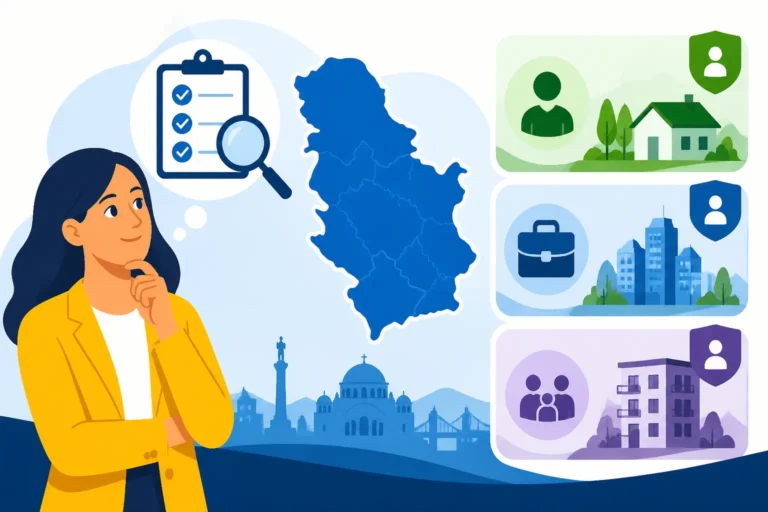
Don't despair if that traditional job offer isn't on your horizon! Serbia offers several established pathways for foreigners to obtain temporary residence, each with its own set of requirements and benefits. These routes are designed to accommodate various expat profiles, from entrepreneurs to students and those with family ties or property investments.
1. Registering as an Entrepreneur (Preduzetnik)
This is hands down one of the most popular and accessible routes for many digital nomads, freelancers, and small business owners looking to move to Serbia without a traditional job. By registering as an entrepreneur, you effectively become your own employer, creating the "job" that justifies your residence. This path is particularly attractive due to Serbia's favorable tax system for small businesses, especially the Pausal regime.
The process involves establishing a legal entity – a sole proprietorship, for instance – which then acts as your ground for residence. You are proving that you are self-employed and generating income (even if it's from foreign clients), thereby contributing to the Serbian economy and supporting yourself. The Serbian government has been actively encouraging entrepreneurship, making this a viable and well-trodden path. Many foreigners utilize the Self-Employment in Serbia: The Pausal Regime and Going Independent (2027) for its simplicity in tax reporting.
2. Property Ownership
For those looking to invest in Serbia, owning real estate can be a direct path to residence. This route is straightforward: if you own an apartment, house, or other property in Serbia, you can apply for temporary residence based on that ownership, provided you intend to live there. This demonstrates a significant investment in the country and a clear intention to make Serbia your home.
It's not just about buying any piece of land; the MUP will want to see that the property is suitable for living and that you genuinely intend to reside there. This route is especially appealing to those seeking long-term stability and a base in the Balkans. It’s a clear signal to the authorities that you have a vested interest in the country. You can delve deeper into the specifics by reading Understanding Residence Based on Property Ownership in Serbia and How to Buy Property in Serbia as a Foreigner: The Full Guide (2027).
3. Study Purposes
If your intention is to further your education, Serbia's universities and language schools offer another excellent avenue for residence. An acceptance letter from an accredited educational institution in Serbia serves as your legitimate ground for temporary residence. This isn't tied to employment, but rather to your academic pursuit.
This route requires proving you have sufficient funds to cover your tuition and living expenses, and often also entails having valid health insurance for the duration of your studies. Many international students find Serbia an attractive study destination due to its affordable tuition fees and vibrant student cities like Belgrade and Novi Sad. If this sounds like your path, check out How to Get a Student Residence Permit and Study in Serbia: The Full Guide (2027).
4. Family Reunification
While not entirely "without a job offer" for the primary applicant, if your spouse or a close family member (parent, child) is already a Serbian citizen or holds a valid residence permit in Serbia, you can apply for residence based on family reunification. In this scenario, your ability to get residence isn't dependent on your own employment, but rather on your family ties to an existing resident.
This path requires demonstrating the legal relationship (marriage certificate, birth certificate) and often proving that the primary resident can financially support the family unit or that the family collectively meets financial requirements. It’s a compassionate route designed to keep families together. More detailed information can be found in Family and Dependent Residence in Serbia: Bringing Your Loved Ones.
Key Steps and Considerations for Each Alternative Path
Embarking on any of these alternative residence paths requires careful planning and a thorough understanding of the administrative process. While the specific documents vary, the underlying principles of proving your legitimate purpose and financial stability remain consistent.
The Entrepreneurship Route: Your Own Boss, Your Own Permit
This route, popular among freelancers and remote workers, involves a few crucial steps. First, you'll need to register your business. The most common and simplest form for individuals is "Preduzetnik" (sole proprietorship). You'll typically register at the Agency for Business Registers (APR), providing personal details and a chosen business activity (e.g., IT consulting, marketing, design). This step can often be done quite quickly, sometimes even within a day or two if you have all your documents ready.
Once registered, you'll obtain a tax identification number (PIB) and then choose your tax regime. The Pausal regime is often favored by foreigners because it involves a fixed, lump-sum tax payment each month, simplifying bookkeeping. However, there are turnover limits and specific activities that qualify. Next, you must open a business bank account at a Serbian bank. Major banks like Raiffeisen Bank, OTP Bank, or UniCredit Bank are common choices and are generally familiar with expat clients. This is where you'll receive payments for your services, demonstrating your income.
After establishing your business, you'll gather all the necessary documents for your temporary residence application: your business registration, proof of tax registration with the How to Register with the Tax Administration (Poreska Uprava) in Serbia, bank statements proving funds, a valid passport, a registered address in Serbia (your rental agreement will work), and health insurance. Remember, regardless of your residence path, obtaining comprehensive health insurance is non-negotiable. Many expats opt for international providers like Cigna Global to ensure broad coverage, especially during the initial settling-in period before potentially qualifying for the public RFZO system. The application is submitted to the MUP, along with forms and fees.
Property Ownership: Investing in Your Serbian Future
If you're considering buying property, the process starts with finding a suitable apartment or house. Once you've found your ideal spot, you'll go through the purchase process, which involves legal checks, a pre-contract, and then the final purchase agreement signed before a public notary. Once the property is legally transferred to your name and registered in the cadastre, you'll have the primary document needed for your residence application: the property title deed (list nepokretnosti).
Alongside your property deed, you'll need to demonstrate sufficient funds to support yourself without working, or at least during the initial residence period. This usually means bank statements from a Serbian bank account with a certain amount of funds. You'll also need a valid passport, a registered address (your new property!), and health insurance. The MUP will verify your ownership and your financial means. It's crucial to understand that simply owning property isn't enough; you must prove your intent to reside in it. For those managing a relocation, services like Sirelo can be incredibly helpful for moving your belongings and understanding the logistics involved in setting up your new home.
Study Purposes: The Academic Path
For students, the journey begins with securing acceptance into a recognized educational institution in Serbia. This could be a university, a specialized college, or even an intensive Serbian language program. Once you have your official acceptance letter, this becomes your primary document.
You'll also need to prove financial solvency – that you have enough money to pay for tuition, accommodation, and daily living expenses for at least the first year of your studies. A local Serbian bank account with funds, or proof of a scholarship, will be necessary. As with all residence applications, health insurance is mandatory. Often, educational institutions will guide you through some parts of the application process. Once all documents are assembled, including your passport and a registered address, your application goes to the MUP.
| Residence Ground | Key Requirement | Proof Needed (Examples) | Typical Initial Validity | Tax Implications |
|---|---|---|---|---|
| Entrepreneurship | Registered business entity & income generation | APR registration, business bank statements, tax registration | 6-12 months, renewable | Pausal regime (fixed sum) or actual profit tax |
| Property Ownership | Ownership of suitable residential property | Property title deed, proof of funds for living expenses | 6-12 months, renewable | Property tax, no income tax if not working |
| Study | Enrollment in accredited educational institution | Acceptance letter, proof of funds for tuition/living | 6-12 months (academic year) | No income tax if solely studying |
| Family Reunification | Legal family tie to a Serbian citizen/resident | Marriage/birth certificate, primary resident's permit, proof of support | Matches primary resident's | Dependent on individual's work status, if any |
Maintaining Your Residence and Future Prospects
Once you've successfully obtained your temporary residence in Serbia through one of these non-job-offer routes, the journey isn't over. You need to understand how to maintain your status and what the future holds for renewal and potentially, permanent residence or citizenship.
Renewing Your Temporary Residence
Temporary residence permits are not indefinite; they typically last for 6 to 12 months and must be renewed annually. The key to successful renewal is demonstrating that the original grounds for your residence still exist and are being actively pursued.
For entrepreneurs, this means showing consistent business activity, regular tax payments, and that your company is still active and generating income. You'll need updated bank statements and tax records. For property owners, you'll need to show you still own the property and continue to reside there, along with proof of financial self-sufficiency. Students must provide updated proof of enrollment and academic progress. For family reunification, the family tie must remain valid, and the primary resident's status and financial stability must be re-verified. Always start the renewal process well in advance of your permit's expiry date – typically 30-60 days beforehand – to avoid any gaps in your legal status. More information is available on How to Renew Your Temporary Residence in Serbia.
Path to Permanent Residence and Citizenship
Serbia offers a path to permanent residence (stalni boravak) after a certain period of continuous temporary residence. Generally, you need to have held temporary residence for at least three continuous years before you can apply for permanent status. This doesn't mean three years on a single permit; it means three years of successful renewals. There are some nuances, and for certain categories (like property ownership or specific investments), the criteria might vary slightly or be more straightforward.
Permanent residence grants you broader rights, including full access to the public healthcare system (RFZO) and generally more freedom in the job market, though many still choose the entrepreneurial path. After gaining permanent residence, a further period of legal residency (usually five years as a permanent resident, totaling eight years of residency) typically makes you eligible to apply for Serbian citizenship through naturalization. This is a significant step and requires a genuine connection to Serbia, often including language proficiency and integration into society.
Important Considerations for All Paths
No matter which path you choose, remember that administrative processes in Serbia can sometimes be slow and require patience. It's often highly beneficial to engage a local lawyer or an experienced immigration consultant, especially for the initial application. They can guide you through the specific documentation requirements, help with translations and notarizations, and ensure your application is complete and correctly submitted, minimizing potential delays or rejections. This is part of Understanding How to Move to Serbia Legally from Abroad (2027).
Always ensure you have all original documents, and be prepared for potential requests for additional information from the MUP. Having a strong, clear, and consistent story for your chosen residence ground, backed by solid documentation, is key to a smooth process. While it might seem daunting to navigate without a ready-made job, Serbia provides several viable and increasingly popular avenues for individuals seeking to make this vibrant country their new home.
Disclaimer
The information provided in this article is for general guidance only and does not constitute legal or immigration advice. Immigration laws and procedures in Serbia can change. It is highly recommended to consult with the official Serbian Ministry of Interior (MUP) or a qualified legal professional specializing in Serbian immigration law for advice tailored to your specific situation before making any decisions.