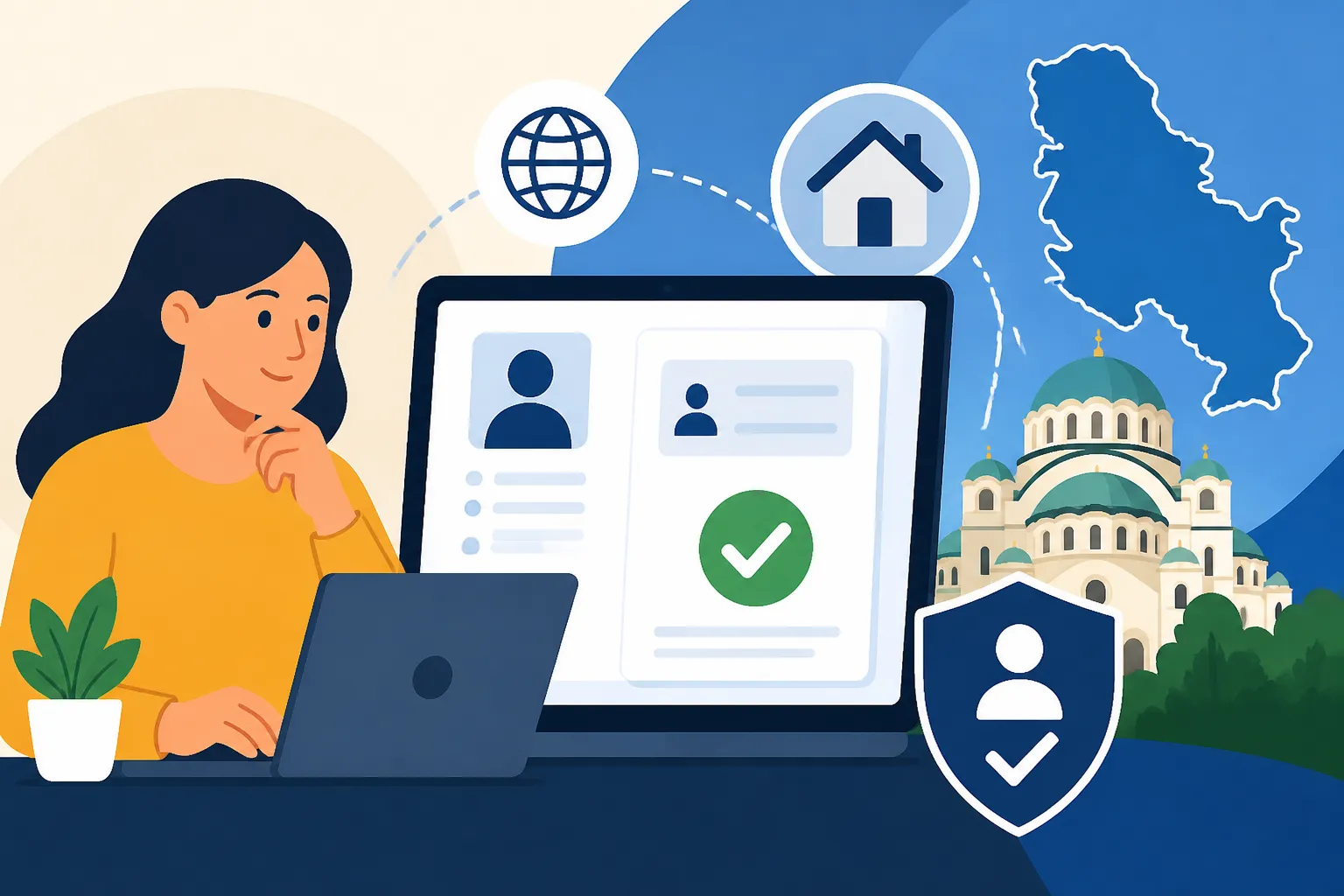
Can I Apply for Serbia Residence Online?
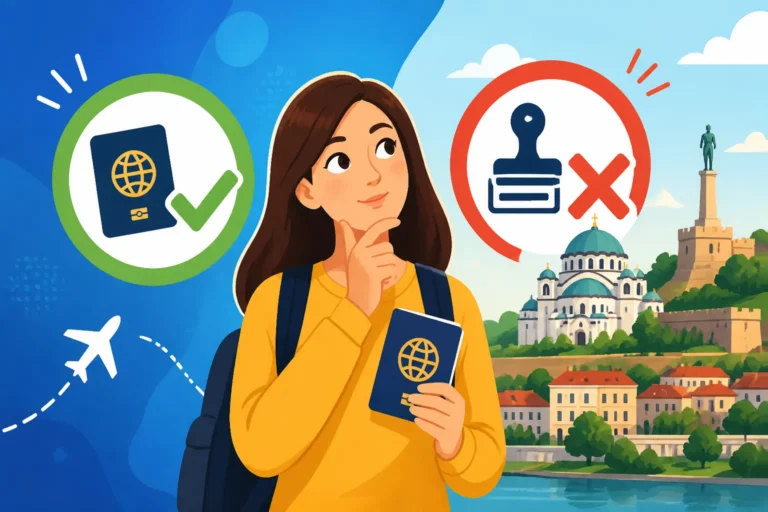
Navigating the bureaucratic waters of a new country is rarely smooth sailing, and many expats in Serbia arrive hoping for the digital ease they might be accustomed to back home. The burning question for many newcomers is: can you apply for Serbian temporary residence online? While Serbia is steadily modernizing its administrative processes, the reality for initial residence applications for foreigners often still involves a healthy dose of paper, patience, and in-person visits. This guide will cut through the confusion, explaining what aspects of the residence application can be managed digitally, what absolutely requires your physical presence, and how to best prepare for the journey ahead.
The Reality of Online Applications for Serbian Residence
It’s completely understandable to hope for a fully digital application process when you’re moving to a new country. After all, many nations are embracing online portals for everything from visa applications to tax filings. However, Serbia, while making strides, still holds onto some traditional methods, particularly when it comes to the initial steps for obtaining temporary residence.
Why "Fully Online" Isn't Quite the Serbian Way Yet
When you start digging into the requirements for Serbian temporary residence, you'll quickly realize that the dream of uploading all your documents from the comfort of your couch isn't entirely a reality – at least not yet. The Serbian administrative system, particularly the Ministry of Interior (MUP), which handles immigration matters, traditionally operates on a paper-based model. This means that while you might be able to download some forms or find information online, the actual submission of your application, along with all supporting documentation, almost universally requires a physical presence.
This can be a source of frustration for many expats, especially those coming from highly digitalized countries. You might expect a streamlined portal, but instead, you're looking at a stack of papers, certified translations, and a trip to the local police station or MUP office. It’s not just about the MUP; various other institutions you'll interact with, from notaries to banks, often require original documents and in-person signatures. It's a system built on physical verification and direct interaction, which, while sometimes slower, is also seen as a way to ensure accuracy and prevent fraud. For a deeper dive into the overall process, consider reading The Complete Guide to Serbia Visas and Immigration for Expats (2026).
What You Can Do Online and What You Can't
So, if you can't submit your full application online, what can you accomplish digitally when preparing for your Serbian residence permit? Quite a bit, actually, in terms of preparation and research.
Firstly, you can thoroughly research all the requirements for your specific type of temporary residence. Whether you're applying for a work permit, a student visa, or residence based on property ownership, the official MUP website (though primarily in Serbian) and various expat forums offer a wealth of information. You can often find sample forms to understand what information will be required, allowing you to prepare your data in advance. Secondly, you can initiate contact with certain services. For example, if you're looking for international movers, you can easily get quotes and plan your logistics online with services like Sirelo. If your residence requires proof of health insurance, many providers, like Cigna Global, allow you to explore plans and even purchase coverage digitally, providing you with the necessary documentation to print and submit.
What you cannot do online, in most cases, is the actual submission of the initial residence application, nor can you digitally present your original passport and other vital documents for verification. The Serbian authorities still require these to be physically handed over and checked by an official. This includes everything from your bank statements proving sufficient funds to your rental contract or property deed. While there's a push towards greater digitalization, especially with the introduction of the Single Permit, the journey for a new foreign resident still largely begins with a trip to the relevant government office.
The Single Permit System and Its Digital Future
Serbia has recently introduced the "Single Permit for Work and Residence," known as Jedinstvena dozvola, which aims to simplify the process for foreigners by combining the work permit and temporary residence permit into one document. This is a significant step towards modernizing the system and making it more efficient. The intention behind this system is to eventually move towards a more digital-first approach.
For employers and registered companies in Serbia, there are indeed more digital avenues available. Companies often interact with the system via online portals to apply for work permits for their foreign employees. This can certainly streamline the employer's side of the process. However, for the foreign individual, especially for the initial application, the reality is that a personal visit to the MUP for biometric data collection, passport verification, and final document submission is still standard practice. While the processing of your application might occur more digitally behind the scenes once submitted, your journey often still starts at the counter. Understanding the nuances of this system is crucial, so you might find it helpful to look into The Expat Guide to the Single Permit for Work and Residence in Serbia (2026).
The Essential Steps: Offline and In-Person Realities
Despite the hope for an online world, applying for temporary residence in Serbia still involves several critical offline and in-person steps. Being aware of these realities will help you manage your expectations and prepare effectively.
Gathering Your Documents: The Paper Chase
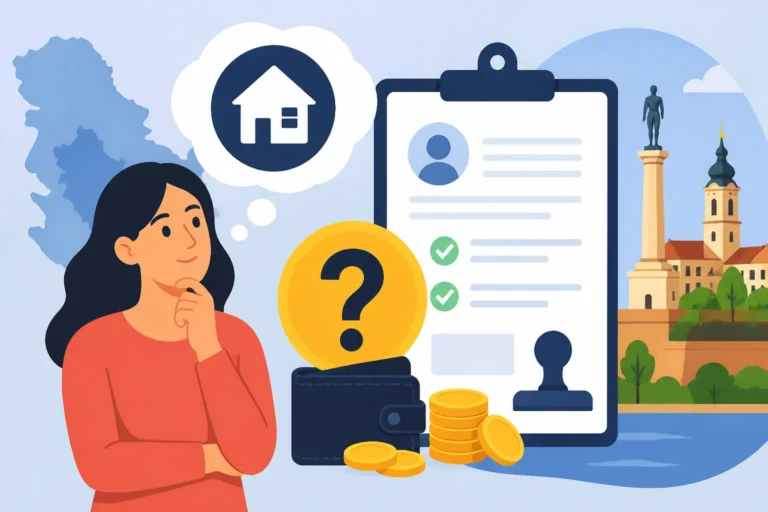
Before you even think about an appointment, you'll need to gather an extensive collection of documents. This isn’t a task to be taken lightly, as even one missing paper can lead to frustrating delays. You’ll need your valid passport, often with a certain period of validity remaining beyond your intended stay. Proof of sufficient funds is paramount, usually in the form of recent bank statements. This demonstrates you can support yourself without becoming a burden on the state. Depending on your grounds for residence, you might need a work contract, proof of company registration, an acceptance letter from a university, or a property ownership certificate.
Crucially, many foreign documents will require certified translation into Serbian by a sworn court translator. Additionally, some documents, depending on their origin and Serbia's international agreements, may need an apostille stamp to be legally recognized. This can be a time-consuming process back in your home country. Don't underestimate the complexity here; detailed information can be found in Understanding Document and Translation Requirements for Serbia Immigration and How Do I Get My Documents Apostilled for a Serbia Visa?. Remember, having all your ducks in a row – original documents, multiple copies, and translations – is key to a smoother process. This meticulous preparation is vital because you’ll be physically presenting these documents, and any discrepancy will be pointed out on the spot.
The MUP Appointment: Your Personal Bureaucracy Adventure
Once your documents are ready, the next step is often the fabled MUP appointment. While some larger cities like Belgrade might offer a rudimentary online appointment booking system, many foreigners find themselves either calling the MUP directly or even visiting in person just to schedule an appointment. This initial contact alone can be a test of patience, especially if you don't speak Serbian.
The day of your appointment is another adventure. Arriving early is always a good strategy. You'll likely encounter queues, various windows, and different departments. This is where you hand over your meticulously prepared documents, and the immigration officer will review them. They will check your originals, take your copies, and likely ask you to provide biometric data – fingerprints and a digital photograph – which absolutely requires your physical presence. They’ll also check your Prijava Boravka, which is your registered address in Serbia, a fundamental step that must be completed within 24 hours of your arrival and typically requires you, your landlord, and often the property deed to be present at the local police station. For more on this, check out How to Register Your Address (Prijava) with the Police in Serbia.
Submitting Your Application: The Physical Handover
The actual submission of your residence application is a very personal, in-person affair. You sit across from an immigration officer, who methodically goes through your pile of papers. This is your chance to present all the hard work you put into gathering and translating everything. They will compare copies to originals, ask questions, and potentially request additional documents if they find anything lacking or unclear.
During this stage, you'll also pay the administrative fees. While some fees can be paid via bank transfer at the post office or bank beforehand, you'll need to present the proof of payment (the payment slip) at the MUP. This payment receipt is another physical document that gets added to your growing file. Once all is reviewed and accepted, you'll receive a confirmation receipt, often a small piece of paper that serves as your proof of application. This receipt is incredibly important, as it contains your unique application number, which you'll need for any future inquiries or status checks. It's truly a moment where you feel like you've officially entered the Serbian system.
| Task Category | Can Be Done Online (Partially/Fully) | Requires In-Person Interaction | Notes |
|---|---|---|---|
| Research Requirements | Yes (Official sites, forums) | No | Information availability varies; official MUP site is mostly Serbian. |
| Download Forms | Yes (Unofficial samples, some MUP) | No | Official fillable forms are rare for initial applications; samples are for preparation. |
| Gather Documents | Partially (digital copies) | Yes (originals, certified copies) | Foreign documents often need apostilles and sworn translations. |
| Health Insurance | Yes (purchase from international providers like Cigna Global) | No (for purchase, but proof is physical) | Proof of insurance must be physically submitted. |
| MUP Appointment | Partially (some cities have basic online booking) | Yes (for scheduling if no online option, or to confirm) | Many still require phone calls or in-person visits to book. |
| Biometric Data | No | Yes | Fingerprints and photo taken at the MUP. |
| Document Submission | No | Yes | Physical handover of all originals, copies, and translations. |
| Address Registration | No | Yes | Requires applicant, landlord, and property deed at local police station (Prijava Boravka). |
| Pay Administrative Fees | No (payment via bank/post office) | Yes (submission of payment slip) | Proof of payment must be physically presented. |
| Status Check | Limited (some email/phone inquiry) | Yes (often best in-person) | No robust online tracking portal for individual applications. |
| Permit Collection | No | Yes | You will need to physically pick up your residence card. |
| Renewals | Partially (some pre-submission online, still often in-person for final steps) | Yes (often still involves MUP visit for final steps) | The process for renewals can be slightly more streamlined than initial applications. Refer to How to Renew Your Temporary Residence in Serbia for details. |
Navigating the System: Tips for a Smoother (Less Online) Process
Since a fully online application isn't an option for initial residence, it's crucial to equip yourself with strategies to navigate the in-person processes effectively. This is where local knowledge and a good dose of realism come into play.
The Power of Local Help
One of the best pieces of advice any veteran expat in Serbia will give you is this: leverage local help. If you don’t speak Serbian, the MUP can be an incredibly daunting place. Even if you do, the specific administrative vocabulary can be confusing. Having a Serbian-speaking friend, colleague, or ideally, a professional immigration lawyer or agency, can make a world of difference.
A local helper can assist with making appointments (which often requires speaking Serbian), clarifying specific document requirements (which sometimes vary based on the officer you get), and navigating the physical layout of the MUP. They can translate questions and answers during your interview, ensuring no misunderstandings. Many expats choose to hire immigration consultants for their initial application, precisely because these professionals know the system inside and out, reducing stress and the likelihood of errors. While it's an added cost, the peace of mind and time saved can be invaluable. This can also help you understand the broader picture of Understanding How to Move to Serbia Legally from Abroad (2026).
Be Prepared and Patient
Preparation is your superpower in Serbian bureaucracy. This means not just gathering your documents, but doing so well in advance. Don't wait until the last minute to get an apostille or a certified translation. Always bring all your original documents, along with several sets of copies, even if you think you only need one. Sometimes, different counters or departments might request their own set.
Patience is also a virtue that will serve you well. Things might take longer than you expect. There might be unexpected delays, or you might be asked for a document you weren’t initially told about. This isn't necessarily inefficiency, but often a result of strict adherence to procedure. Maintain a polite and calm demeanor. Losing your temper won't speed anything up and can even be counterproductive. Remember, the officials are simply following established protocols. Always double-check requirements on the MUP website and cross-reference with expat groups, but be prepared for slight variations in practice. For general advice on residence permits, see Understanding Serbian Residence Permits: Work, Study and Investment (2026).
Follow-Up, But Don't Overwhelm
After submitting your application, the waiting game begins. Unlike some countries with sophisticated online tracking systems, Serbia's MUP generally doesn't offer a real-time online portal for checking the status of individual residence applications.
Your options for following up are typically limited to calling the MUP department where you applied (again, Serbian language skills are a huge asset here), or visiting in person. If you visit in person, make sure you have your application receipt handy with your unique file number. It’s generally advisable to give the authorities a reasonable amount of time (e.g., a few weeks to a month) before you start calling or visiting for updates, unless you have been given a specific timeframe. Persistent but respectful follow-up is better than overwhelming the department with daily calls. If you're working with an immigration lawyer, they will usually handle these follow-ups on your behalf, providing updates as they receive them. For general timelines, refer to Understanding the Cost and Timeline of the Serbia Residence Process.
The Digital Horizon: What to Expect Next
While the present reality for initial residence applications in Serbia largely involves in-person interactions, it’s not to say that the country isn’t moving forward with digitalization. Understanding these ongoing shifts can provide a clearer picture of what to expect in the future.
Online Services for Companies and Renewals
It's important to distinguish between services available for companies and those for individuals, especially concerning initial applications versus renewals. Serbian companies applying for work permits for their foreign employees often utilize online portals to manage these requests. This B2B (business-to-business) interaction with government services is typically more advanced digitally. It allows companies to submit necessary documentation for their employees' permits, which then gets processed, eventually leading to the employee needing to visit the MUP for biometric data capture and finalization.
Furthermore, when it comes to renewing your temporary residence permit, the process can sometimes be slightly more streamlined than the initial application. While still requiring an in-person component for things like biometric updates or signature verification, some preparatory steps or even partial submissions might become available online in the future. The emphasis here is on 'partial' – a full end-to-end online renewal for foreign individuals is not yet commonplace but is likely part of Serbia's long-term digital strategy. Staying informed on updates to How to Renew Your Temporary Residence in Serbia will be useful.
Future Prospects for Fully Online Foreigner Applications
Serbia is actively working on modernizing its public administration, and the introduction of the Single Permit system is a testament to this commitment. The goal is to create a more efficient, transparent, and user-friendly system, which inherently involves greater digitalization.
While fully online initial applications for foreign individuals might still be some years away, it's reasonable to expect continued improvements. This could manifest as more robust online appointment booking systems, clearer digital checklists for required documents, and perhaps even secure online portals for uploading some supporting documents, even if a final in-person visit for biometrics and passport stamping remains necessary. The push for e-Government services is strong in Serbia, and with more foreign residents and businesses choosing Serbia, the demand for accessible online immigration services will only grow. For now, approach your residence application with the understanding that while online research and preparation are invaluable, the journey will ultimately lead you to the doors of the MUP. If you're looking to get a residence permit for work, How to Get a Residence Permit for Work in Serbia provides more in-depth information.
Disclaimer
The information provided in this guide is intended for general informational purposes only and does not constitute legal or immigration advice. While we strive to keep the information up-to-date and accurate, laws and procedures in Serbia can change frequently. Always consult with the official Serbian Ministry of Interior (MUP) or a qualified immigration lawyer for the most current and specific advice regarding your individual situation.